
REVIEW · SUMO TOURNAMENT TICKETS
Tokyo Sumo Tournament Chair Seat Ticket with Entrance Assistant
Sumo is not a staged cultural show. It is a serious sporting contest, and this experience puts you inside Tokyo’s Ryogoku Kokugikan for about four and a half hours of it. You meet an English-speaking assistant near Ryogoku Edo Noren, receive your ticket and snacks, then watch from a second-floor chair seat.
I like the simple setup and the useful food stop: yakitori and dorayaki give you a taste of familiar Japanese treats without adding another purchase. I also like the help at the stadium entrance, especially if you have never attended sumo before. The main caution is that the assistant does not enter the stadium, so the amount of English explanation you receive may be brief.
Key points at a glance
- The tournament is the main event: You get roughly four and a half hours inside Ryogoku Kokugikan.
- Meet at Ryogoku Edo Noren: The meeting time is 1:15 pm, with the activity beginning at about 1:30 pm.
- Food is included: You receive yakitori and dorayaki before entering the stadium.
- Your seat is in the chair section: The ticket is described as a second-floor chair B or C seat.
- The assistant leaves before the match: You receive basic guidance, a pamphlet, and entrance help, but no guide sits with you.
- The price pays for access and convenience: At $70, the value is strongest when tournament tickets are difficult to obtain.
Why a Tokyo sumo afternoon feels different
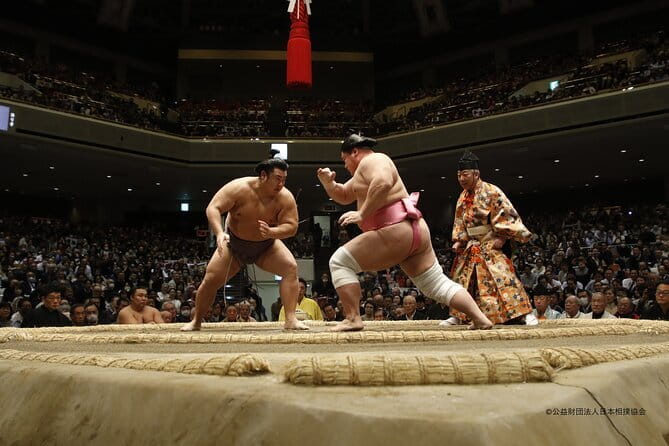
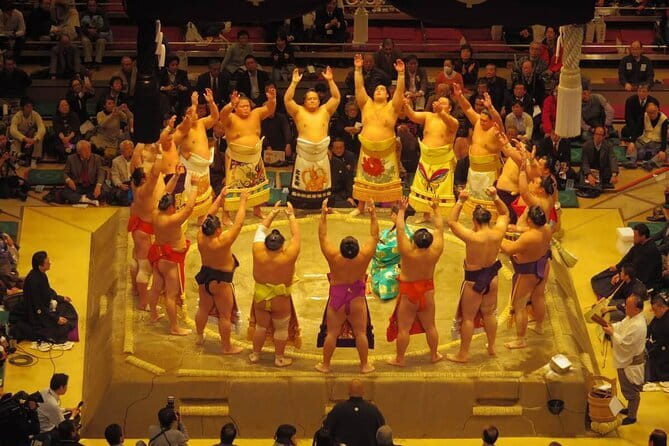
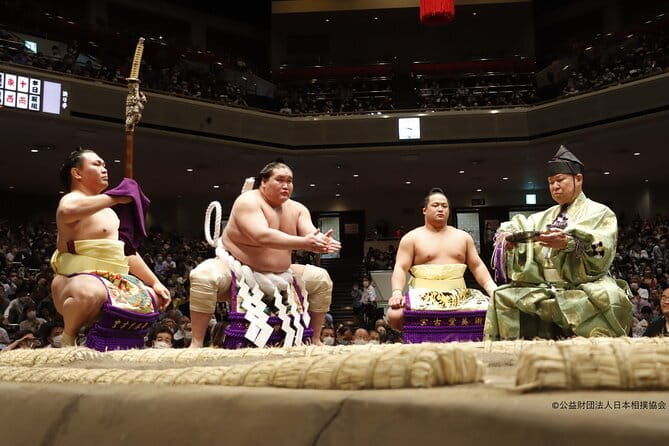
Sumo has a formal rhythm that rewards patience. The ring action is often brief, but the larger event includes ritual, ceremony, preparation, and the steady build toward the most important bouts. You are not simply watching two athletes push each other. You are watching a traditional sport with its own rules, customs, and strict atmosphere.
This experience is aimed at someone who wants to see that atmosphere without arranging every detail alone. The assistant meets you at Ryogoku Edo Noren, gives you the ticket on the day, explains what sumo is, and points you toward the stadium. That is useful if the Japanese ticketing system feels confusing or if you want a fixed plan in an unfamiliar part of Tokyo.
The tradeoff is clear. This is not a five-hour guided lesson. It is an assisted entrance experience followed by independent attendance. If you want someone beside you throughout the tournament, this is not the right format.
More tournament tours in Tokyo:
- Tokyo: Sumo Tournament Tour with Chair Seat Tickets
★ 4.6 · 753 reviews - Tokyo Grand Sumo Tournament Viewing Tour with Tickets
★ 5.0 · 692 reviews - Tokyo Sumo Wrestling Tournament Experience
★ 5.0 · 660 reviews
Meeting at Ryogoku Edo Noren at 1:15 pm
Your starting point is in front of Ryogoku Edo Noren, at 1-chome-3-20 Yokoami in Sumida City. The meeting time is 1:15 pm, with the activity listed as starting at 1:30 pm. Check the meeting-location photo carefully before you go, since a large station area can make a vague meeting point harder to find.
The assistant hands out your ticket on the day. This matters because you are not simply showing a mobile voucher at the entrance and going in alone. You first connect with the person handling the tickets, receive your seat assignment, and get a short introduction to the sport.
The group can have up to 15 people. That is small enough for a basic briefing to be practical, though it is not a private tour. If you arrive late, you risk missing the handoff and the walk to the stadium, so give yourself extra time to reach Ryogoku.
The short walk to Ryogoku Kokugikan
From Edo Noren, the group walks to Ryogoku Kokugikan. The walk itself is described as about five minutes, so this is not a sightseeing route through the neighborhood. Its value is practical: you go directly from the meeting point to the sumo stadium with the person responsible for your ticket.
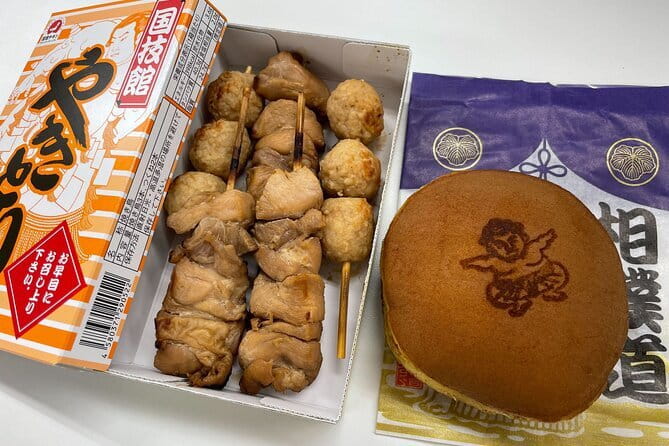
Before entering, you receive two Japanese foods: yakitori and dorayaki. Yakitori is grilled chicken served on a skewer, while dorayaki is a sweet Japanese pancake treat. Together, they make a modest but welcome snack before several hours in your seat.
Do not read too much into the food inclusion. It is a small tasting, not a full meal, and other personal expenses are not included. If you expect to spend most of the afternoon at the stadium, plan your own meal and drink budget as well.
The pre-entry explanation and pamphlet
Before you go inside, the English-speaking assistant is expected to explain the basics of sumo, including its history and rules. You also receive an English pamphlet. This is the part of the experience that helps a first-time spectator understand what is happening in the ring and why the event feels so formal.
A short explanation can make a real difference. Without context, a sumo tournament can look like a series of very fast bouts surrounded by long pauses. With a few basic rules in mind, you can pay attention to how the wrestlers begin, how they try to force each other out, and why a match can end almost as soon as it starts.
Still, you should keep your expectations measured. The written arrangement has the assistant escorting you to the front of the stadium, not accompanying you inside. Some people may receive only a short orientation before being left to find their way around. If the English explanation is the main reason you are booking, confirm the current arrangement before paying.
More tournament tickets in Tokyo:
- Tokyo: Sumo Tournament with Guide & Assigned Reserved Seat
★ 4.6 · 168 reviews - Tokyo: Sumo Practice Tour with Ring-Side Seat and Photoshoot
★ 4.7 · 103 reviews - Tokyo Sumo Morning Practice Tour w/ Ring-Side Seat + Photo Shoot
★ 5.0 · 93 reviews - Official Sumo Tournament Ticket with Guided Experience
★ 4.5 · 19 reviews
What happens inside Ryogoku Kokugikan
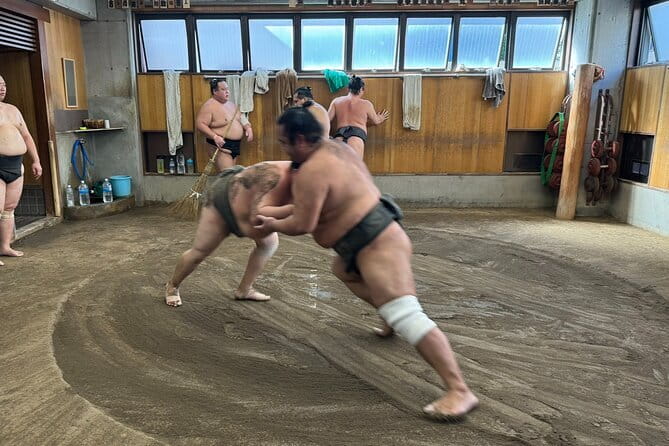
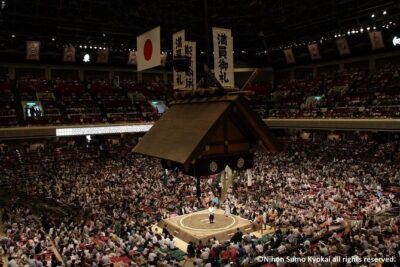
The main portion lasts about four hours and 30 minutes. You sit in a chair B or C seat, described as a second-floor chair B ticket. This gives you a conventional stadium seat rather than a floor cushion or box-style viewing area.
A chair seat is a sensible choice for a long afternoon. You have a fixed seat with a back, and you can focus on the competition without the physical demands of a traditional floor position. The second floor also gives you a wider view of the ring and the surrounding ceremony, though it will not give you the same close view as a premium seat near the dohyo.
The exact position matters, and the wording allows for B or C seating rather than one guaranteed location. That makes the experience less predictable for anyone who cares strongly about distance from the ring. If the ticket itself is worth about $50 at the counter, as one customer calculated, the $70 package leaves roughly $20 for the assistant, pamphlet, snacks, and ticket convenience at the advertised price.
That difference may be reasonable when tickets are hard to secure. It may feel less attractive if you can buy a comparable seat directly. One buyer considered the package overpriced after comparing the ticket value with the amount paid. Another felt the extra cost was worthwhile because tournament tickets had sold out quickly and were difficult to obtain.
That is the central value question here: you are paying for access at a popular event and a simpler entry process, not for a full guided tour.
The serious atmosphere of a tournament day
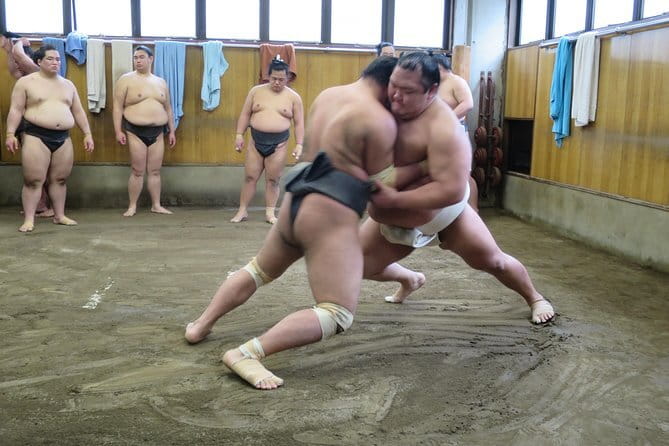
The best reason to book is the chance to experience the tournament in person. Sumo is unusually direct as a spectator sport. The ring is small, the match can be short, and the crowd’s attention is fixed on every movement.
The longer pauses are part of the experience. Ritual, preparation, and the formal presentation of each bout give the afternoon a steady pace. You may find the contrast striking: a quiet, controlled build followed by a sudden burst of force.
That atmosphere is hard to judge from a short online clip. In the stadium, the scale of the event, the sound of the audience, and the ceremony around the bouts give the sport more weight. If you already have an interest in Japanese customs, the tournament can become one of the more memorable parts of your Tokyo visit.
If you are expecting constant action, you may find the four-and-a-half-hour schedule slow. I would treat the entire afternoon as a cultural performance and sporting event, not as a nonstop sequence of matches.
Is the $70 price fair?
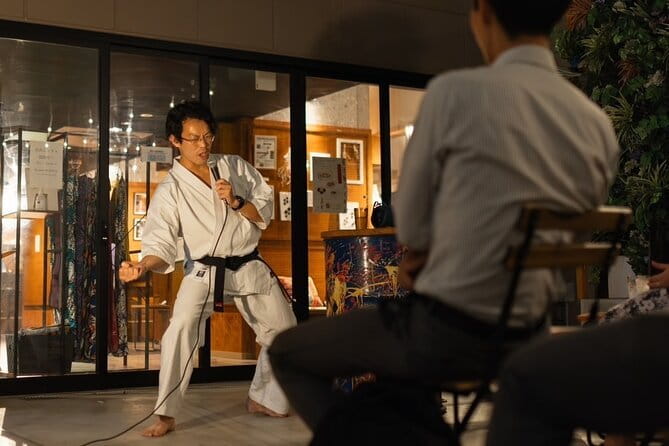
At the stated price of $70, this is not the cheapest way to see sumo. The ticket category is not presented as a premium ringside seat, and the food consists of two snacks rather than a meal. You should not book this expecting luxury or an intimate lesson.
The price becomes easier to defend when tickets are scarce. Sumo tournament seats can sell out quickly, and one positive account described repeated problems trying to secure tickets online before turning to this kind of option. If the package is the practical way to get inside on your chosen date, the added cost may be worth it.
The value is weaker for an experienced Tokyo visitor who can buy a similar chair ticket directly and does not need help finding the stadium. That person is mainly paying for yakitori, dorayaki, a pamphlet, and a short escort.
I would compare three things before booking:
- The direct price of available chair seats for your date.
- The likelihood that the tournament is sold out.
- How much you value a fixed meeting point and English instructions.
The package makes the most sense when availability matters more than saving every yen.
What the assistant does, and what the assistant does not do
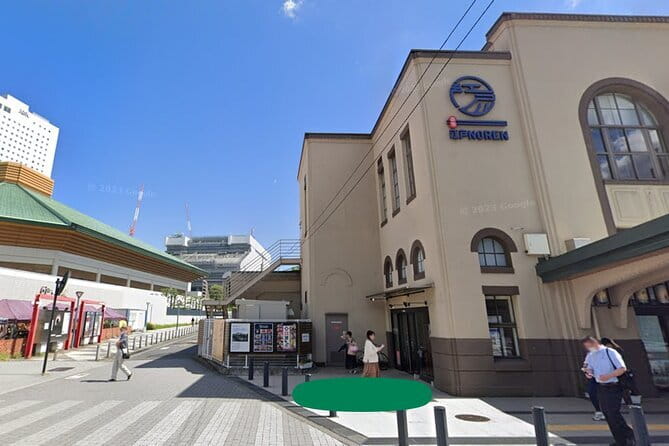
The assistant’s role is limited but useful. You meet at Edo Noren, receive the ticket, walk to the stadium, get snacks, hear an explanation, receive the pamphlet, and are taken to the stadium entrance.
The assistant does not go inside Ryogoku Kokugikan. That means you are responsible for enjoying the tournament on your own once you pass the entrance. You should be comfortable reading your ticket, finding your chair, and managing the rest of the afternoon without a guide beside you.
This point deserves special attention because the phrase English-speaking assistant can sound like a full English-guided experience. It is better to think of the person as an escort and pre-entry host. The actual viewing time is independent.
If you need detailed explanations of every ritual, bout, ranking, and rule, consider a different tour format. If you mainly want help getting the ticket and understanding the basics before entering, this arrangement can work well.
Who should book this sumo experience?
I would recommend it to a first-time sumo spectator who wants a straightforward route into the tournament. It suits you if you value a confirmed seat, a small group, a few snacks, and an English introduction more than a long guided program.
It also suits a short-term visitor who has struggled with ticket availability. The chance to attend a sold-out or difficult-to-book tournament can justify the added cost, particularly if this is one of your main Tokyo goals.
Families and mixed-interest groups may find the chair seating more practical than floor seating, though the long duration means younger children may need patience. The activity information says most people can participate, but it does not give detailed accessibility information, so you should ask the provider directly if you have specific mobility needs.
I would hesitate if you are price-sensitive, already know how to buy sumo tickets, or want a guide to remain with you during the matches. I would also hesitate if you need a guaranteed premium view, since the ticket is described as chair B or C rather than one precise seat.
Timing, cancellation, and practical planning
The activity runs for about five hours in total, with the tournament itself taking around four hours and 30 minutes. The meeting point is also the end point, so the arranged portion finishes back near Ryogoku Edo Noren after you return from the stadium.
The stated start time is 1:30 pm, while the meeting instruction says to arrive at 1:15 pm. Treat 1:15 pm as the real appointment. The assistant needs time to distribute tickets and organize the walk.
A mobile ticket is available, but the assistant hands over the actual tournament ticket on the day. Keep your booking confirmation accessible, and check the meeting-point instructions before leaving your hotel.
You can cancel for a full refund if you do so at least 24 hours before the local start time. Inside that 24-hour window, cancellations and changes are not accepted for a refund. That policy is fairly simple, but it makes early decisions important if your Tokyo schedule is still changing.
Should you book the Tokyo Sumo Tournament Chair Seat Ticket?
Book it if your priority is getting inside Ryogoku Kokugikan with less ticket stress. The experience gives you a real tournament, a second-floor chair seat, two traditional snacks, an English pamphlet, and basic pre-entry help. Its strongest praise comes from the simple pleasure of finally attending an event that can be difficult to book.
Do not book it expecting a guide to sit beside you or explain the action throughout the afternoon. At $70, the package is a convenience purchase. It is worthwhile when ticket availability and ease matter more than securing the absolute lowest price.
My advice is simple: compare the direct ticket cost first, then decide how much you value assistance. If seats are sold out or hard to obtain, this is a sensible way to see sumo. If comparable seats are readily available, buying directly may give you better value.
FAQ
Where do I meet the assistant?
You meet the English-speaking assistant in front of Ryogoku Edo Noren at 1-chome-3-20 Yokoami, Sumida City, Tokyo. The meeting time is 1:15 pm.
What time does the activity start?
The listed start time is 1:30 pm. You should arrive at the meeting point by 1:15 pm for the ticket handoff and group walk.
How long does the experience last?
The full activity lasts about five hours. Approximately four hours and 30 minutes are spent watching the sumo tournament.
What type of seat is included?
The package includes a chair B or C seat, described as a second-floor chair B ticket at Ryogoku Kokugikan.
Is an English guide inside the stadium?
No. The assistant provides an explanation and pamphlet before entry, takes you to the stadium entrance, and does not go inside Ryogoku Kokugikan.
Are food or snacks included?
Yes. You receive yakitori and dorayaki before entering the stadium. Other personal expenses are not included.
Can I cancel for a refund?
Yes, if you cancel at least 24 hours before the experience start time. Cancellations or changes made within 24 hours are not refunded.
Newest sumo experiences in Tokyo
- Tokyo Sumo History Tour with Chanko Nabe Lunch★ 5.0 · 3 reviews
- Tokyo Highlights Tour: Sumo, Sushi, Tea, and Tokyo Tower★ 5.0 · 2 reviews
- Tokyo: Know about Hokusai and Sumo culture in 2.5 hours★ 5.0 · 2 reviews
- TOKYO , No1 Yokozuna Stable Morning Practice in Ryogoku★ 4.5 · 3 reviews
- Tokyo 6hr Private Guided Tour & Sumo Show Lunch★ 5.0 · 3 reviews
- Tokyo Grand Sumo Tournament Viewing Tour★ 5.0 · 2 reviews
- Tokyo Ginza : Sumo and Mikoshi Experience,Open from Sep.★ 5.0 · 8 reviews
- Complete Sumo Experience in Tokyo★ 4.5 · 3 reviews
Sumo Tournament Tickets, compared.
Tokyo Grand Sumo Tournament Viewing Tour with Tickets
Read our review →
Sumo Tournament with Guide & Assigned Reserved Seat
Read our review →
Sumo Practice Tour with Ring-Side Seat and Photoshoot
Read our review →
Sumo Wrestling Tournament with Chair Seat Tickets
Read our review →
Tokyo Sumo Morning Practice Tour w/ Ring-Side Seat + Photo Shoot
Read our review →November Sumo Tournament tour in Fukuoka (Tickets Included)
Read our review →
Official Sumo Tournament Ticket with Guided Experience
Read our review →Browse the lists this tour appears in