
REVIEW · CHANKO NABE EXPERIENCES
Tokyo Sumo History Tour with Chanko Nabe Lunch
Sumo’s story begins before the wrestling bout itself. This three-hour walk follows the sport from Ekō-in Temple, where organized matches began, to the Kokugikan arena and a full-size ring replica where you can study the rituals up close.
I like the clear sense of place and the way the tour works for both newcomers and serious sumo fans. I also like the individual chanko-nabe lunch, a filling meal tied directly to wrestler life. The main drawback is simple: you will not watch wrestlers compete, and the Sumo Museum may be closed on your date.
Key points at a glance
- Start in sumo’s home district: Meet at 10:00 near Ryogoku Station, surrounded by champion portraits and sumo landmarks.
- Connect ritual with modern sport: See Kokugikan from outside, then visit the old Ekō-in Temple grounds where organized sumo matches began.
- Museum or stable visit: On open days, see ceremonial aprons, trophies, and photographs. When the museum is closed, visit two historic stables instead.
- Learn beside a life-sized ring: At Ryogoku Edo Noren, study salt throwing, pre-bout movements, and sumo poses.
- Finish with a wrestler’s hotpot: Your chanko-nabe set is served in an individual pot. Drinks and extra food cost more.
- A compact, small-group outing: The tour lasts about three hours and accepts no more than 20 people.
Why Ryogoku is the right place to learn sumo
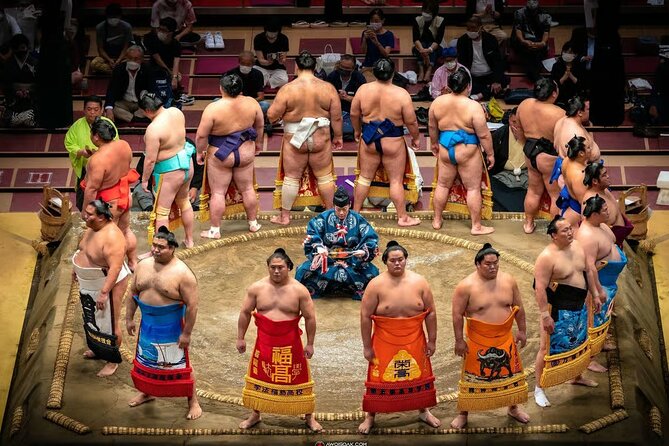
You can read about sumo anywhere in Tokyo, but Ryogoku gives the subject a physical setting. The neighborhood holds the Kokugikan, historic temple grounds, sumo-related displays, and restaurants serving chanko-nabe. You are not being driven from one disconnected sight to another. The story unfolds on foot.
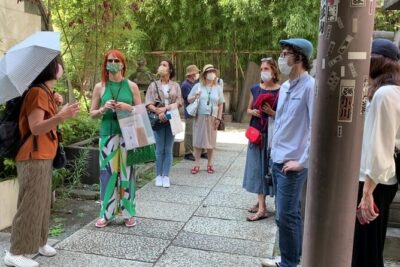
That matters because sumo is more than two wrestlers pushing each other from a ring. The sport blends religion, ceremony, rank, clothing, food, and strict daily routines. A good guide helps you see how those pieces fit together. Maikel T, also referred to as Maik or Malik in the available tour information, leads the walk in English and explains the customs as you move through the district.
The experience is especially useful if you are new to sumo. You do not need to know the difference between a rikishi, a gyōji, or a yokozuna before arriving. The tour gives you the basic terms and visual clues first, then adds detail. If you already follow tournaments, the value comes from seeing the places and objects behind the sport.
The group size is capped at 20 people. That is not a private tour, but it is small enough for questions to be practical, particularly at the temple, museum, and ring replica. Wear comfortable shoes. The walk is not described as strenuous, but the tour moves between several nearby sites and lasts roughly three hours.
More chanko nabe experiences in Tokyo:
- Tokyo: Sumo Show Experience with Chicken Hot Pot and a Photo
★ 4.8 · 6,678 reviews - Tokyo Sumo Entertainment Show with Chicken Hot Pot and Photo
★ 5.0 · 1,205 reviews - Tokyo Sumo Experience: Chanko & Mochi with a Former Pro
★ 4.8 · 567 reviews
Beginning at Ryogoku Station
The meeting point is a 7-Eleven at 1-chōme 3-20 Yokoami, Sumida City, near Ryogoku Station. The tour starts at 10:00 in the morning, so you have a full afternoon afterward for another Tokyo sight.
The station area gives you an immediate introduction to sumo town. Colorful portraits of champions help you place the neighborhood in its sporting context. This first stop lasts about 10 minutes, which is enough to get oriented without using up the best part of the tour.
This is also a useful meeting point for anyone who has never visited Ryogoku. You can find the guide, confirm the group, and begin with the district itself rather than rushing straight into a lecture. Since the tour ends back at the meeting point, it is easy to plan a meal, shopping stop, or train ride afterward.
Seeing Kokugikan without entering the arena
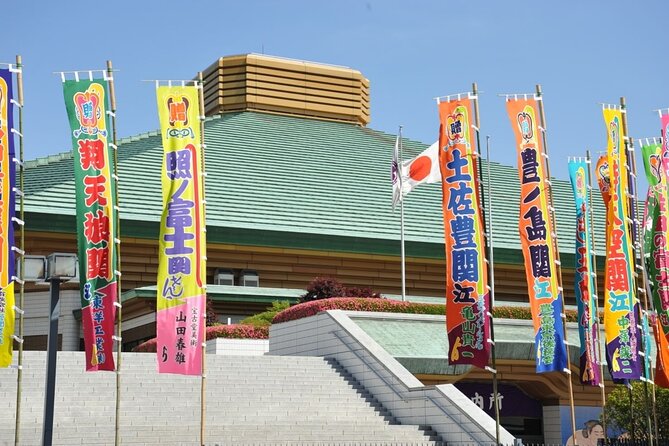
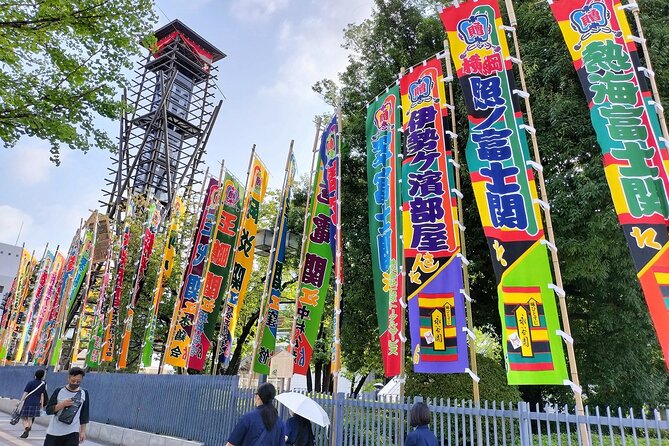
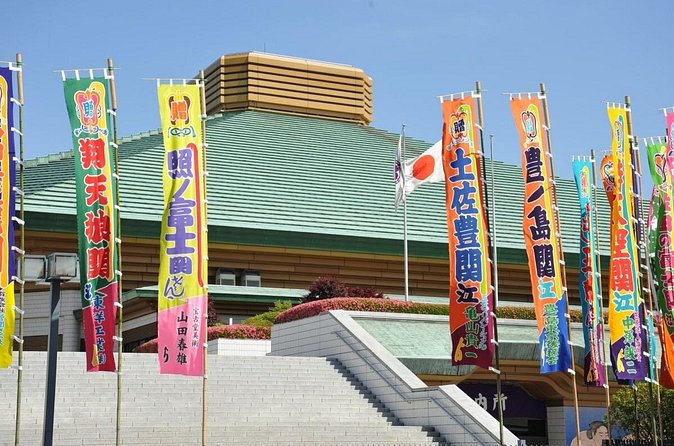
From the station, the group visits Ryogoku Kokugikan from the outside. This is Japan’s best-known sumo stadium and hosts three grand tournaments each year. The guide explains the arena’s role, the colorful banners around the site, and the grand entrance made by wrestlers.
The outside visit lasts about 20 minutes. That is enough time to understand the building and its purpose, but it is not an arena tour. You will not enter the seating area during a tournament unless you already hold a separate ticket. The tour price does not include tournament admission.
That limit is important when you decide what you want from the day. If your main goal is to watch live bouts, book a tournament ticket instead, or add this tour to a trip that already includes one. If you want the background that makes a tournament easier to follow, this stop supplies useful context.
The banners and entrances are not random decoration. They help show how sumo mixes competition with formal display. The guide can explain what you are seeing before you encounter the same symbols on television or at a tournament.
Ekō-in Temple and the Chikara-zuka Monument
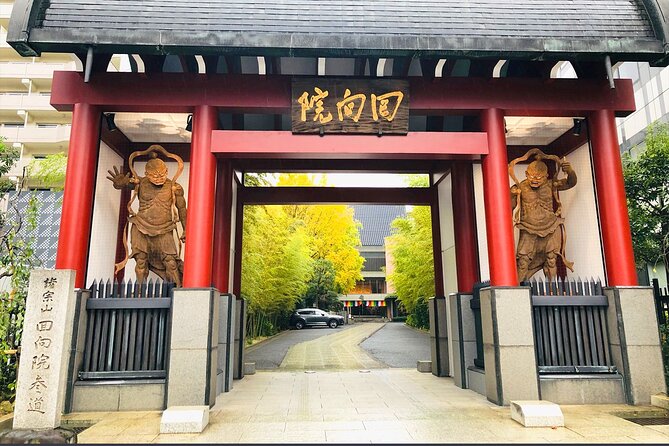
The walk then turns to the former main gate of Ekō-in Temple, the place associated with the beginning of organized sumo matches. Here you visit the Chikara-zuka Monument and pay respect to wrestlers and referees from earlier eras.
This stop lasts about 20 minutes. It is brief, but it changes the way you think about the sport. Kokugikan represents professional sumo as a modern institution. Ekō-in connects it to older religious and community settings, where matches had a ceremonial and public role.
I like this part because it gives the tour a physical beginning. Instead of treating sumo as a list of rules and names, you see where its organized tradition took shape. The temple grounds also offer a quieter contrast to the large arena nearby.
Do not expect a full temple tour or a long visit to religious buildings. The focus is sumo history, especially the monument and the former match site. The guide’s explanation is the reason to come here, not a broad survey of the temple complex.
More sumo tours with a meal in Tokyo:
- Tokyo: Sumo Show and Dining Experience
★ 4.8 · 2,742 reviews - Tokyo:Luxury Sumo Show Experience & Japanese cuisine & Drink
★ 4.7 · 577 reviews - Tokyo: Sumo Experience and Chanko Nabe Lunch
★ 4.8 · 257 reviews - Tokyo: Family Sumo Workshop & Live Wrestling Show with Lunch
★ 4.9 · 99 reviews
The Sumo Museum or two historic stables
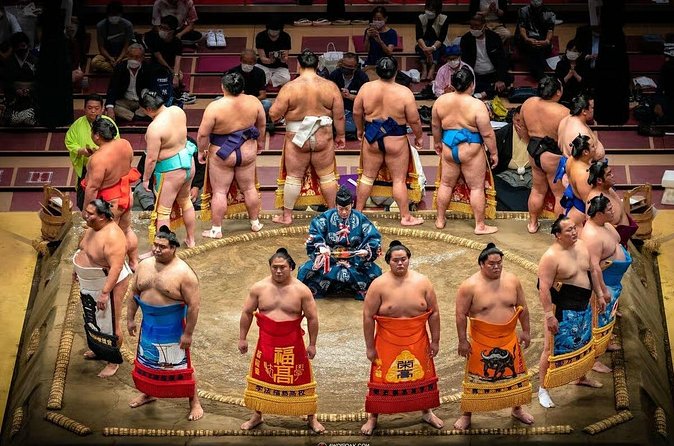
The next part depends on the day. When the Sumo Museum is open, you visit its displays for about 30 minutes. The collection includes ceremonial aprons, photographs, and trophies. These objects show how much meaning is carried by a wrestler’s clothing, public image, and achievements.
The museum is compact, so this is not a half-day museum visit. That is a benefit for a short tour. You get a focused look at sumo objects without losing the walking route or lunch. It is also a useful stop if you want visual proof of the customs discussed at Kokugikan and Ekō-in.
The museum may be closed on some days. When it is, the guide takes you to two historic stables instead. Each has its own design, and the visit focuses on wrestlers’ daily lives. This alternative keeps the tour centered on real sumo settings rather than simply replacing the stop with general sightseeing.
You should not assume that either option means you will watch a practice session or meet wrestlers. The supplied details promise access to two historic stables when the museum is closed, but they do not promise a live training session. The appeal is the chance to understand where and how wrestlers live and train, not guaranteed contact with athletes.
This flexible arrangement is one of the tour’s best practical features. The museum’s schedule does not make the whole outing fall apart. You still get a sumo-focused stop, although the experience changes from objects and trophies to buildings and daily routines.
Standing beside the ring at Edo Noren
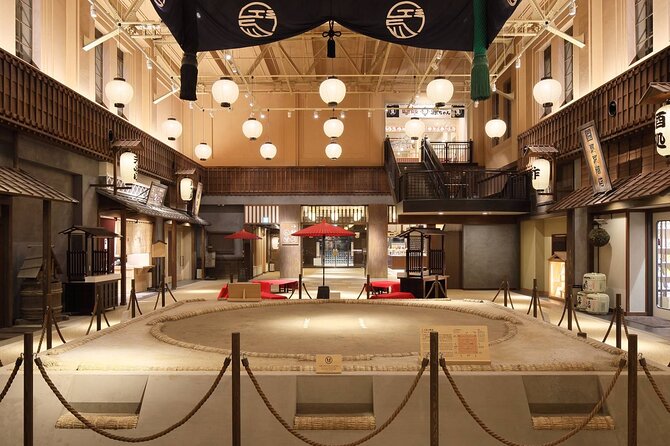
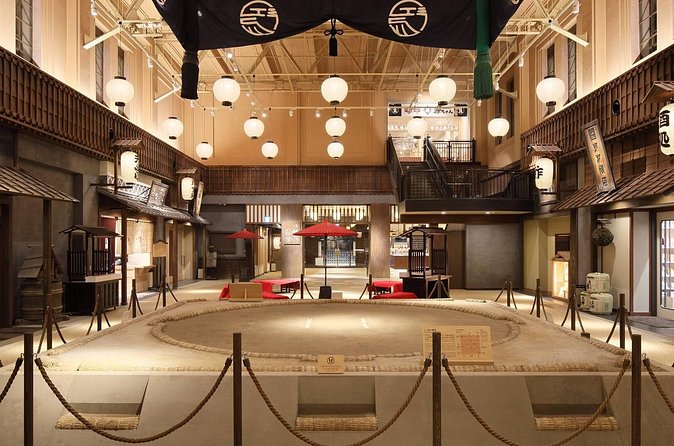
At Ryogoku Edo Noren, you stand beside a life-sized replica of a sumo ring. This is one of the most useful stops for first-time visitors because the ring is often hard to understand from a distant television view.
The guide explains salt throwing, the movements before a bout, and other pre-fight rituals. You can also try sumo poses and take photographs. The stop lasts about 20 minutes, so it has a light, hands-on feel rather than the tone of a formal lecture.
This is where the tour moves from history to physical detail. You can see how small the ring is compared with the arena around it and how much of the contest takes place before the wrestlers even make contact. The gestures, pauses, and positioning are part of the sport’s identity.
For families and visitors who prefer an active explanation, this may be the most memorable stop. It also gives experienced fans a chance to look closely at the ring structure and talk through rituals they may have only seen on television.
Edo Noren is also a convenient setting before lunch, though the tour does not promise free time for browsing or extra activities. Keep your attention on the scheduled visit and ask the guide questions while the group is together.
Chanko-nabe: the meal that closes the story
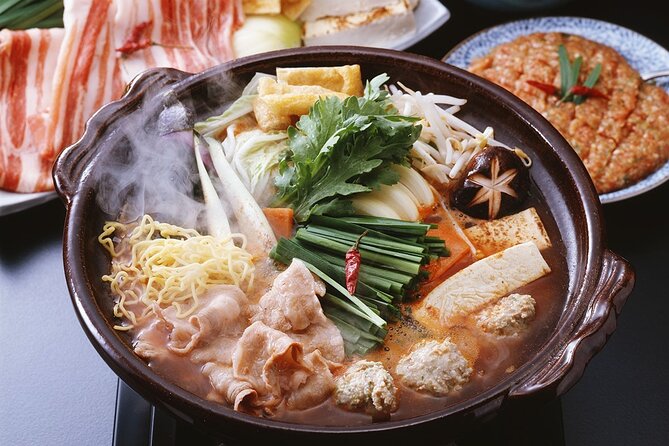
The tour ends at Chanko Edosawa, or another Ryogoku restaurant if availability requires a change. You receive an individual serving of chanko-nabe, the hotpot associated with sumo wrestlers. Lunch lasts about one hour.
This is more than a meal added to the end of a walking tour. Chanko-nabe helps explain how wrestlers eat to support demanding training and large bodies. You get to taste a food connected to the sport rather than simply hearing about it.
The individual pot is a nice touch. You are not just sharing a large dish for the table. Your own serving makes the meal feel like a clear part of the sumo theme, and it is easier to manage if people in your group eat at different speeds.
The included amount is the chanko-nabe set only. Drinks and additional food are extra, so budget for them if you want something beyond the basic lunch. The exact restaurant may vary, but the meal remains tied to the Ryogoku sumo district.
The lunch is also the tour’s most direct link to everyday wrestler life. You have seen the stadium, the temple, the clothing, and the ring. Now you eat one of the dishes associated with the people who train in that world.
What the $91.04 price gets you
At $91.04 per person, this is not the cheapest way to see Ryogoku. The major sights are viewed from public areas, and the tour does not include a tournament ticket. You are paying for the English guide, the connected story, the museum or stable visit, the ring demonstration, and the chanko-nabe lunch.
For me, the value depends on your interest. If you already know Ryogoku well and only want a cheap bowl of hotpot, you can spend less on your own. If you want an organized explanation of sumo’s customs, plus a meal and several linked locations in one morning, the price is easier to justify.
The tour also saves planning time. You do not have to work out which temple site relates to sumo, find the stadium viewpoints, check the museum schedule, and choose a restaurant on your own. That convenience is part of the cost.
The small group cap helps, though the tour is not private. Three hours is a sensible length: long enough to create a clear picture of the sport, short enough to fit around other Tokyo plans. The five or more bookings recorded in the last month suggest ongoing demand, but the overall rating is based on only three published ratings, so treat the perfect score as encouraging rather than final proof.
What the strongest praise tells you
The clearest praise centers on the guide’s teaching and the lunch. The guide is described as an excellent source of sumo information, with Maikel, Maik, or Malik named in the comments. The useful lesson here is that the tour’s main product is explanation, not access to live wrestlers.
One important point is repeated in the feedback: you do not actually see sumo wrestlers during the walk. Instead, you learn how to understand and watch sumo. That distinction should guide your booking decision.
The chanko-nabe also earns specific praise for taste. Food preferences are personal, of course, but the meal is not an afterthought. It is one of the tour’s central experiences and gives the morning a satisfying finish.
I would book this for a first visit to Tokyo if sumo interests you but tournament tickets are unavailable or too costly. I would also recommend it to fans who want the cultural setting behind the bouts. I would skip it if your only goal is live action or a guaranteed encounter with wrestlers.
Timing, transport, and small practical details
The tour starts at 10:00 and ends back at the original meeting point after about three hours. The area is near public transportation, which makes it a sensible morning activity before moving to another part of Tokyo.
Confirmation is provided when you book, and the activity accepts most participants. The maximum group size is 20 people. No special physical limitation is stated, but you should expect a walking tour with several stops and plan footwear accordingly.
Free cancellation is available until 24 hours before the start time for a full refund. Changes or cancellations made within 24 hours are not accepted for a refund. The tour also requires a minimum number of participants, so if the provider cancels for that reason, you are offered another date or experience, or a full refund.
Should you book this sumo tour?
Book it if you want context, places, and food in one compact morning. You will visit the district where sumo lives, see the Kokugikan from outside, connect the sport to Ekō-in Temple, explore a museum or historic stables, practice the rituals beside a full-size ring, and eat chanko-nabe.
Do not book it expecting a tournament, arena seating, or a guaranteed view of wrestlers. This is a walking lesson about sumo, not a live match.
At $91.04, I see the best value for first-time visitors, families, and fans who want an English explanation before attending a tournament. The guide’s teaching, the flexible museum or stable option, and the themed lunch make the morning feel complete. If that sounds like your kind of introduction, it is a sensible Ryogoku choice.
FAQ
Where does the Tokyo sumo tour begin?
It begins at the 7-Eleven Japan at 1-chōme 3-20 Yokoami, Sumida City, near Ryogoku Station.
What time does the tour start?
The tour starts at 10:00 in the morning.
How long does the experience last?
The tour lasts approximately three hours.
Is a tournament ticket included?
No. The tour views Ryogoku Kokugikan from outside and does not include entry to the arena seating area during tournaments.
Will I see sumo wrestlers?
The tour information does not promise a meeting or direct sighting of wrestlers. Its focus is learning about sumo, its history, rituals, and daily life.
What happens if the Sumo Museum is closed?
When the museum is closed, the guide visits two historic stables with the group instead.
Is lunch included?
Yes. An individual chanko-nabe set is included. Drinks and additional food ordered during lunch are not included.
Newest sumo experiences in Tokyo
- Tokyo 6hr Private Guided Tour & Sumo Show Lunch★ 5.0 · 3 reviews
- Tokyo Grand Sumo Tournament Viewing Tour★ 5.0 · 2 reviews
- Tokyo Highlights Tour: Sumo, Sushi, Tea, and Tokyo Tower★ 5.0 · 2 reviews
- Tokyo: Know about Hokusai and Sumo culture in 2.5 hours★ 5.0 · 2 reviews
- TOKYO , No1 Yokozuna Stable Morning Practice in Ryogoku★ 4.5 · 3 reviews
- Tokyo: Watching Sumo and Ryogoku Area Walking Tour★ 4.0 · 5 reviews
- Tokyo Sumo Practice Watching & Visit Town from Samurai era★ 5.0 · 8 reviews
- Unique Afternoon Live Sumo training tour in Tokyo★ 5.0 · 6 reviews
Chanko Nabe Experiences, compared.
Sumo Show Experience with Chicken Hot Pot and a Photo
Read our review →
Tokyo Sumo Entertainment Show with Chicken Hot Pot and Photo
Read our review →
Sumo Show & Experience w/ Optional Kimono & Hot Pot
Read our review →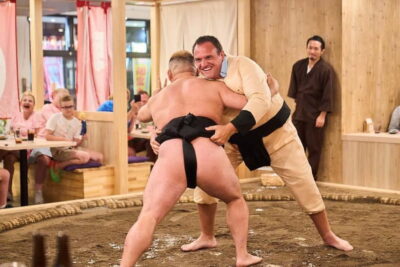
Tokyo Sumo Experience: Chanko & Mochi with a Former Pro
Read our review →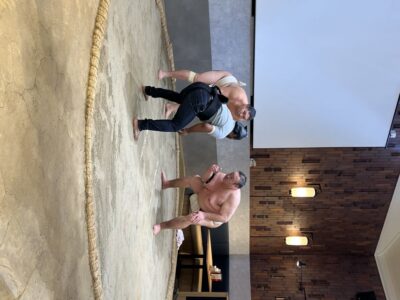
Tokyo Sumo Culture Tour with Chanko-Nabe Lunch in Ryogoku
Read our review →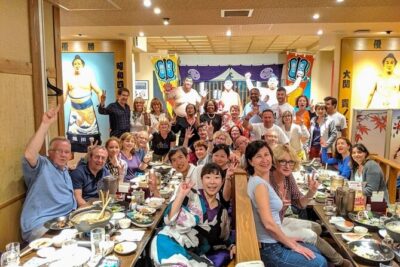
Browse the lists this tour appears in