
REVIEW · SUMO SHOWS
Tokyo: Family Sumo Workshop & Live Wrestling Show with Lunch
In Ryogoku, Tokyo’s sumo district, you can step onto a real dohyo with former professional wrestlers and feel just how hard it is to move a human wall. The show mixes serious sumo customs with broad comedy, so you learn the sport while your family laughs, cheers, and perhaps gets pushed out of the ring.
I like the hands-on training, especially the shiko leg stomps, teppo strikes, and suri-ashi footwork. I also like the hearty chanko hotpot, which turns the wrestler’s famous power meal into a useful part of the lesson, not just an afterthought.
The main consideration is that this is a short, staged exhibition rather than a full tournament day at the Kokugikan. Ring challenges are optional, and the activity works best if you are comfortable with a lively group setting and willing to remove your shoes before entering the dohyo.
Key points at a glance
- Step into the ring: Try basic sumo movements on the dohyo with former professional wrestlers.
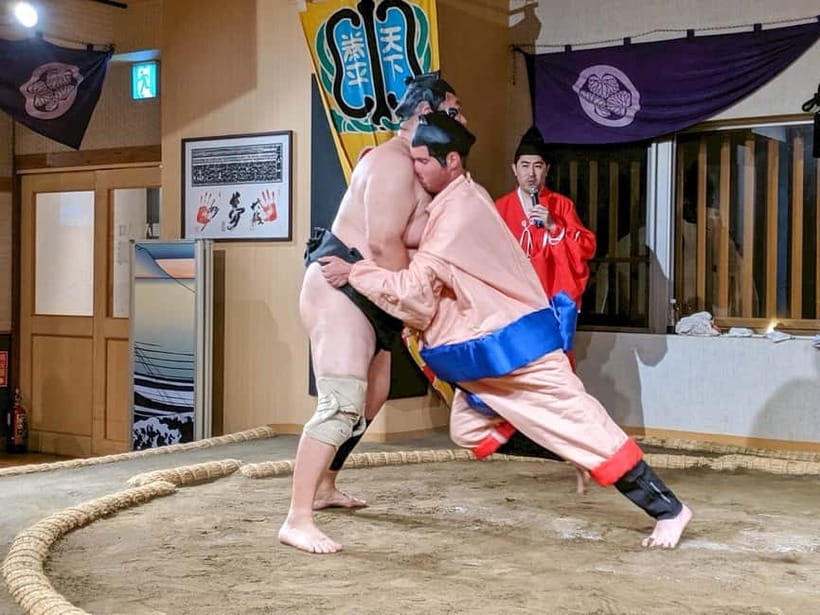
- Watch close-up action: See a full-speed exhibition bout, complete with rituals, impact, and theatrical flair.
- Train as a family: Children and adults can learn together, while anyone who prefers to watch may remain seated.
- Eat like a wrestler: Finish with a filling mini chanko hotpot, with dietary requests arranged ahead of time.
- English guidance throughout: The host explains the rules, salt-tossing, shiko, and sumo customs in an easy way.
- Good value at $60: You get a show, instruction, ring access, photo time, and lunch in 105 minutes.
Why Ryogoku is the right place for a sumo workshop
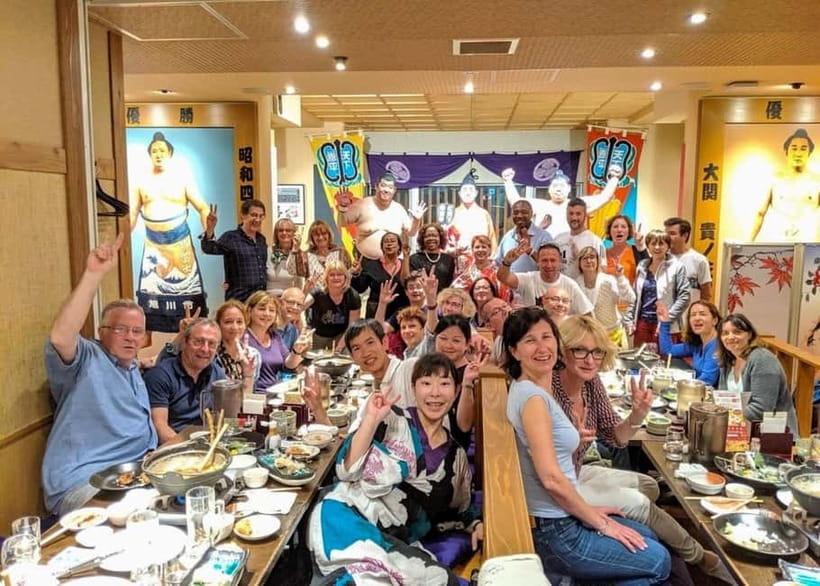
Sumo makes more sense in Ryogoku, the Tokyo neighborhood most closely tied to the sport. This is not a lesson set in a generic entertainment hall with sumo costumes as decoration. You meet former professionals in a space built around the dohyo, where the ring itself carries the ceremony.
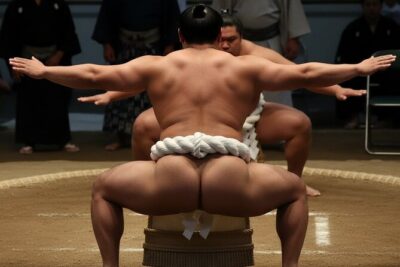
That setting matters because sumo is not only about two large men pushing. The sport has a formal rhythm: wrestlers prepare, stamp, throw salt, face each other, and wait for the right moment. Your English-speaking host explains what these gestures mean, including the role of shiko leg stomps, which are linked to driving away evil spirits.
You meet at the shop entrance, in front of a face-in-hole photo board. Look for a guide holding a smartphone that displays AlvaJapan. The instructions ask you to wait outside until 10:00 AM and not enter the store early, so arrive with enough time to find the meeting point without rushing.
Transport is not included. You need to make your own way to the venue in Ryogoku, and if you lose your bearings, WhatsApp contact is available. The separate entrance helps you avoid a long general queue, though the exact flow can change if the minimum number of participants is not reached.
More sumo shows in Tokyo:
- Tokyo: Sumo Show Experience with Chicken Hot Pot and a Photo
★ 4.8 · 6,678 reviews - Tokyo: Sumo Show and Dining Experience
★ 4.8 · 2,742 reviews - the SUMO show
★ 5.0 · 1,960 reviews
A close-up sumo show with real force
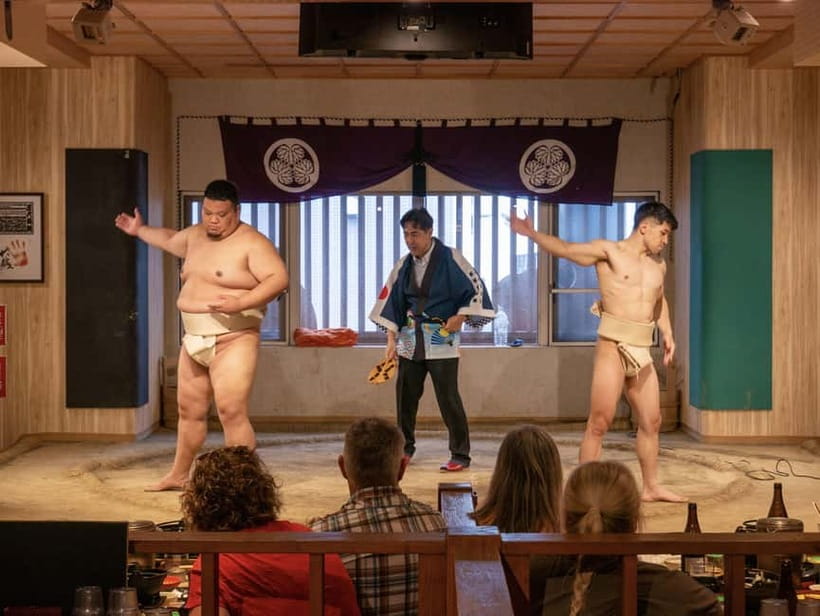
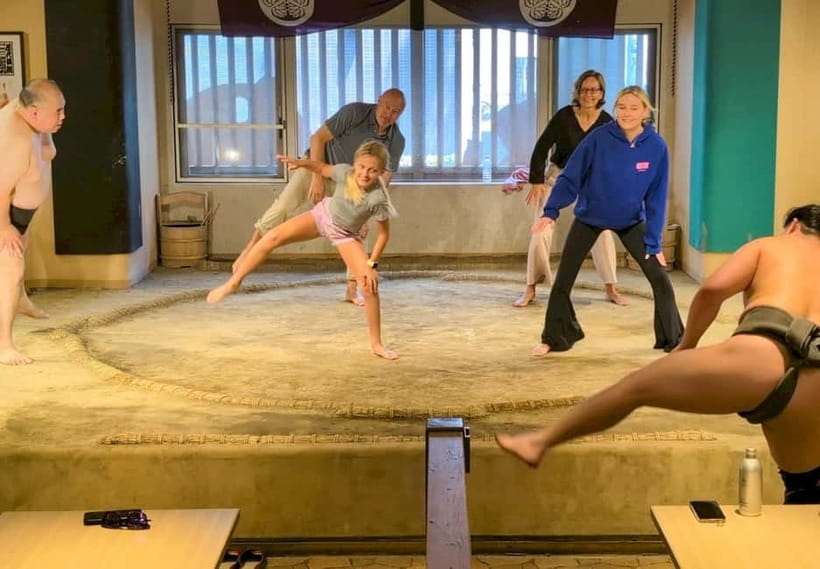
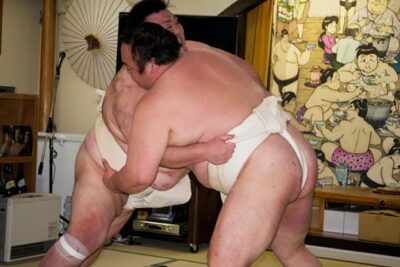
The first part is a compact lesson and exhibition. The wrestlers demonstrate training movements, practice bouts, and the quick, forceful collision that makes sumo so startling in person. From nearby, the slap of a strike and the thud of bodies landing have much more impact than they do on a screen.
The show is designed to entertain, but it also gives you useful context. The host explains what is allowed, how a match can be won, and why the rituals come before the clash. That makes the comedy easier to enjoy because you understand what the wrestlers are acting out.
The former professionals are central to the appeal. People who have taken part describe them as funny, friendly, and willing to answer questions. The hosts also vary, with names such as Yo, Kai, Ede, Alisa, Alyssa, Rio, Yuto, Nozomi, and Ko appearing in recent sessions. You should expect an English-speaking guide, but not necessarily one particular person.
The atmosphere is deliberately inclusive. Solo visitors can join in with families, and families can watch together without pressure to perform. One of the best features is that the exhibition does not depend on every person entering the ring. You can stay seated, film, and cheer if physical participation is not for you.
Learning shiko, teppo, and suri-ashi
The training section gives you three memorable pieces of sumo technique.
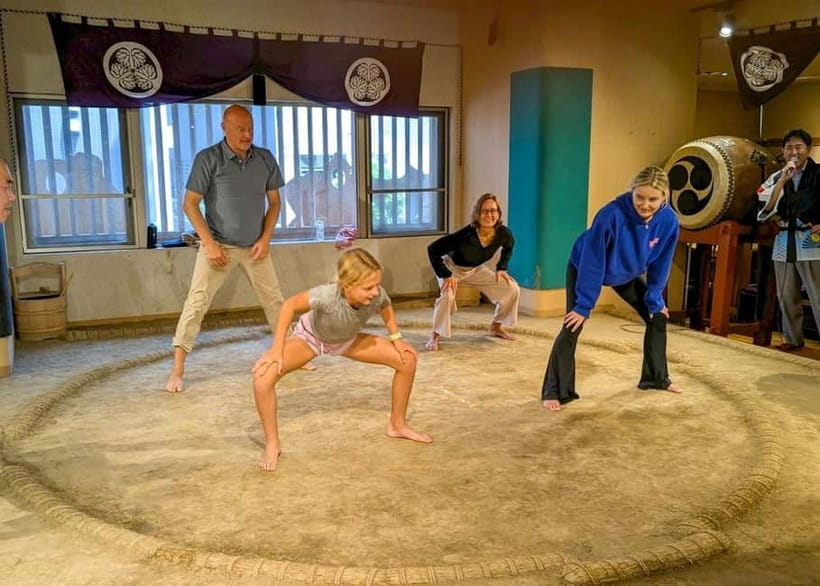
Shiko is the famous leg lift and stomp. It looks simple until you try to hold your balance while lowering your body. The movement is part exercise and part ritual, and it quickly shows you that sumo strength is built from legs, hips, and a very low center of gravity.
Teppo is a basic pushing drill. You practice driving forward against a firm target, using your legs rather than simply leaning with your shoulders. It is a useful reminder that sumo is not a test of arm strength alone.
Suri-ashi is sliding footwork. You keep your feet close to the floor rather than taking normal steps, which helps maintain balance and pressure. It is less flashy than a bout, but it may be the movement you remember when you realize how tiring the sport’s low stance can be.
Loose sportswear is the sensible choice. You remove your shoes before entering the ring, so wear socks you do not mind showing and avoid clothing that restricts your legs. The drills are optional, and anyone with a health concern should remain a spectator rather than volunteering for a challenge.
The padded-suit challenge
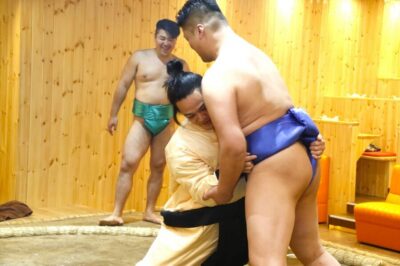
The highlight for many families is the chance to push against a wrestler in a padded sumo suit. It gives you a safe way to feel the difference between ordinary strength and the balance of a former professional. The match is comic, but the physical contrast is real. You are unlikely to move the wrestler far, and that is exactly the joke.
Adults may film or join the action, while children can take part when the hosts consider it suitable. The available information specifically describes the activity as family-friendly and includes children enjoying the training and wrestling. Still, a volunteer challenger needs to be in good health, and no one should feel obliged to enter.
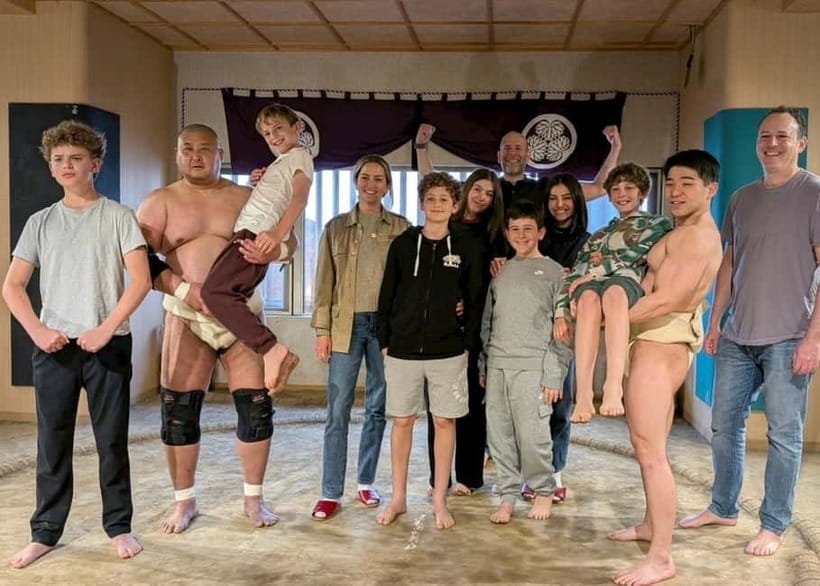
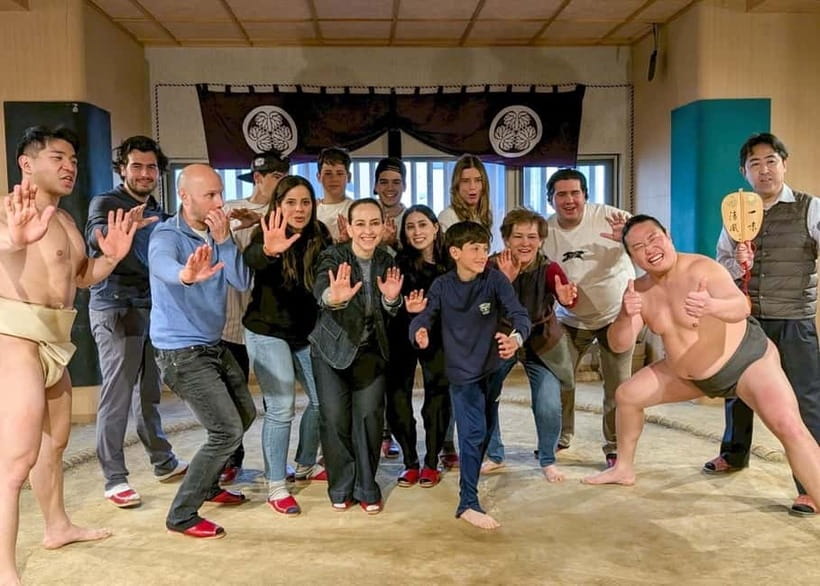
This is also a good photo opportunity. You can take your own pictures and pose with the wrestlers after the action. If you are traveling with children, the photos give them something tangible to remember beyond a standard museum visit. If you are alone, the staff can still make space for a picture, although you should not assume every moment can be professionally photographed.
More sumo tours with a meal in Tokyo:
- Tokyo:Luxury Sumo Show Experience & Japanese cuisine & Drink
★ 4.7 · 577 reviews - Tokyo Sumo Experience: Chanko & Mochi with a Former Pro
★ 4.8 · 567 reviews - Tokyo: Sumo Experience and Chanko Nabe Lunch
★ 4.8 · 257 reviews - Tokyo: Authentic Sumo Wrestling Experience with Lunch
★ 4.9 · 88 reviews
Chanko hotpot makes a useful second act
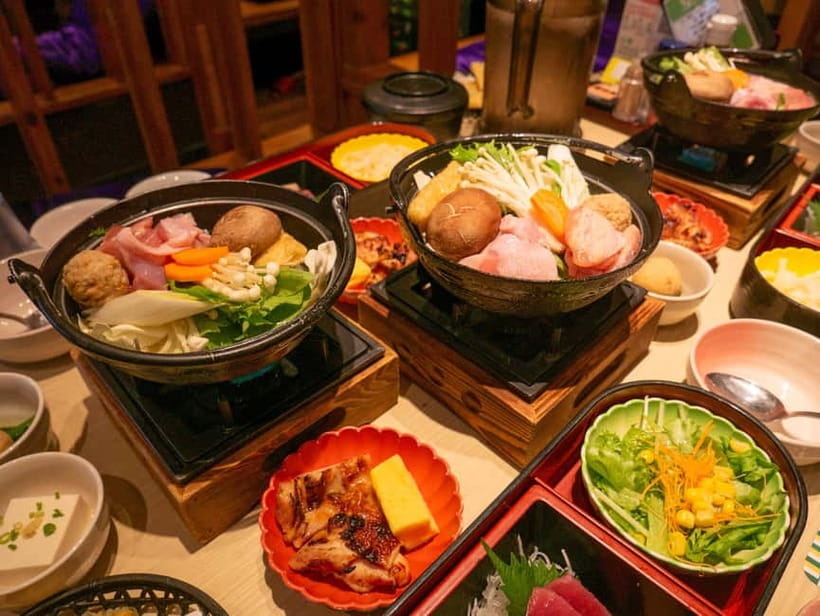
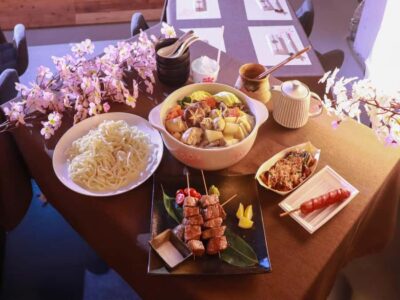
After the drills and bouts, you sit down for mini chanko nabe, the hotpot associated with sumo wrestlers. It usually combines meat and vegetables in a steaming broth, making it a substantial meal after the physical part of the session.
The portion is described as generous for a mini hotpot. Several recent comments point out that you should not eat a large breakfast beforehand, since the lunch can be more filling than expected. The food also gives the host a natural way to explain how chanko fits into a wrestler’s daily life and physique.
I like this part because it connects the performance to ordinary life. You are not only watching a sport; you are learning about the food that supports it. The meal is also a welcome chance to sit down after standing, crouching, and pushing in the ring.
Vegetarian, vegan, and allergy-friendly meals can be arranged, but you need to provide the request at least 48 hours ahead. Pork-free and alcohol-free meals can also be provided, yet the venue does not hold official Halal certification. If you need strict protection from cross-contamination, the kitchen cannot guarantee that, so ask before booking rather than relying on a last-minute request.
Is $60 good value for 105 minutes?
At $60 per person, this is not the cheapest family activity in Tokyo, but the price covers several separate elements: admission, English commentary, former professional wrestlers, instruction, ring access, challenge equipment, photo time, and lunch.
The value is strongest if you take part. A short show alone would feel expensive, but the chance to learn the movements, enter the dohyo, challenge a wrestler, and ask questions makes the session feel more complete. The meal also saves you from finding lunch immediately afterward.
The 105-minute duration suits a busy Tokyo schedule. You get a focused morning or midday activity without giving up half a day. The schedule is described in roughly one hour for the wrestling presentation and training, followed by a lunch period, but the published total is 105 minutes, so allow for the timing to shift slightly.
There are tradeoffs. You do not get a full professional tournament, long sightseeing time in Ryogoku, or a private coaching session. The group setting means your ring time may be brief, especially if many people want to volunteer. If you want an extended cultural lecture or serious athletic instruction, this is not the right format.
Who will enjoy this most
I would choose this for families who want one activity that works for children and adults at the same time. The mix of movement, comedy, food, and photos gives younger children several ways to stay interested. Older children and teenagers may especially enjoy the challenge because it gives them a story to tell.
It also suits first-time visitors who want an introduction to sumo without committing to a tournament ticket. You learn the basic rules and customs in plain English, then see them performed at close range.
Solo visitors can fit in well, too. The activity encourages shared laughter, and the hosts include the audience rather than treating families as the only focus. Couples and small groups should expect a playful event rather than a quiet cultural lecture.
You may want to skip it if you dislike audience participation, cannot remove your shoes, or have a medical reason to avoid physical exertion. You can watch without joining the drills, but the event remains lively and interactive from your seat.
Practical booking advice for families
Pay close attention to the age and meal rules. Children under five do not receive meals under the child rate, so book them at the adult rate if they need lunch. Children aged six and older cannot use the child rate.
Dietary requests should be sent at least 48 hours before the session. That advance notice is especially important for vegan meals, allergies, and pork-free arrangements. Do not assume that saying something at the door will be enough.
The experience is wheelchair accessible, though the ring itself requires shoes to be removed and participation is optional. If you use a wheelchair, contact the operator ahead of time to confirm how you will take part in the viewing and meal portions.
The activity offers free cancellation up to 24 hours before the start and a reserve-now, pay-later option. The operator may cancel if the minimum number of participants is not met. If holding the event is especially important to your plans, a private reservation is the safer choice.
Should you book this sumo experience?
Book it if you want close contact, laughter, and a proper meal rather than a formal stadium performance. The former wrestlers, clear English explanations, optional ring drills, and chanko lunch make this a strong use of a short block of time in Tokyo.
I would be more cautious if your main goal is to watch elite tournament sumo or study the sport in great technical detail. This is a friendly exhibition with real athletic skill, not a tournament match.
For most families, first-time visitors, and anyone curious enough to try pushing a 160-kilogram wrestler, the $60 price is fair. Wear loose clothes, leave room for lunch, send dietary details early, and be ready to laugh at how quickly a former professional can stop you in your tracks.
FAQ
How long does the sumo workshop last?
The total duration is 105 minutes. The session includes the wrestling demonstration, training, optional ring challenges, photo time, and chanko hotpot lunch.
What is included in the $60 price?
The price includes admission to the sumo venue, ring access, English and Japanese commentary from former professional wrestlers, training activities, padded challenge equipment, photo time, and a mini chanko hotpot lunch.
Do I have to wrestle a sumo wrestler?
No. Ring drills and the wrestling challenge are optional. You can remain seated, watch the show, take photos, and cheer for the volunteers.
Can children join the activity?
Yes. The experience is suitable for families, and children can enjoy the demonstrations and optional ring activities. Children under five do not receive meals under the child rate, so book them at the adult rate if they need lunch. Children aged six and older cannot be booked at the child rate.
Are vegetarian, vegan, or allergy-friendly meals available?
Yes, but you must request them at least 48 hours in advance. Pork-free and alcohol-free meals can be arranged, but the venue does not have official Halal certification and cannot guarantee protection from cross-contamination.
What should I wear?
Loose sportswear is recommended. You remove your shoes before entering the ring, and volunteer challengers should be in good health.
Where do I meet the guide?
Meet in front of the face-in-hole photo board at the shop. Look for a person holding a smartphone displaying AlvaJapan, and wait outside until 10:00 AM rather than entering the store early.
More hands-on workshops in Tokyo
- Sumo Wrestling Tournament A-Class Seats & ExpertGuide | Tokyo MAY
★ 5.0 · 14 reviews
Newest sumo experiences in Tokyo
- Tokyo 6hr Private Guided Tour & Sumo Show Lunch★ 5.0 · 3 reviews
- Tokyo Grand Sumo Tournament Viewing Tour★ 5.0 · 2 reviews
- Tokyo Sumo History Tour with Chanko Nabe Lunch★ 5.0 · 3 reviews
- Tokyo Highlights Tour: Sumo, Sushi, Tea, and Tokyo Tower★ 5.0 · 2 reviews
- Tokyo: Know about Hokusai and Sumo culture in 2.5 hours★ 5.0 · 2 reviews
- TOKYO , No1 Yokozuna Stable Morning Practice in Ryogoku★ 4.5 · 3 reviews
- Tokyo: Watching Sumo and Ryogoku Area Walking Tour★ 4.0 · 5 reviews
- Tokyo Sumo Practice Watching & Visit Town from Samurai era★ 5.0 · 8 reviews
Sumo Shows, compared.
Sumo Show Experience with Chicken Hot Pot and a Photo
Read our review →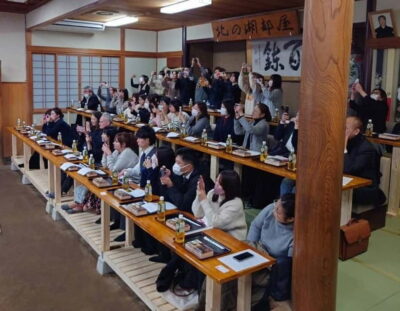
Tokyo Shinjuku Sumo Show & Experience with Photo
Read our review →
Tokyo Sumo Entertainment Show with Chicken Hot Pot and Photo
Read our review →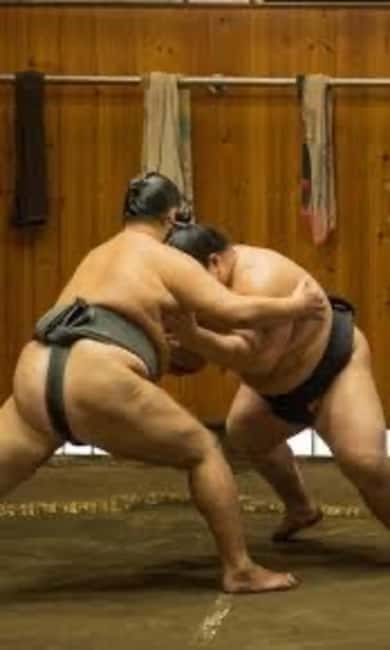
Sumo Show & Experience w/ Optional Kimono & Hot Pot
Read our review →
Luxury Sumo Show Experience & Japanese cuisine & Drink
Read our review →Browse the lists this tour appears in