
REVIEW · CHANKO NABE EXPERIENCES
Tokyo Sumo Experience: Chanko & Mochi with a Former Pro
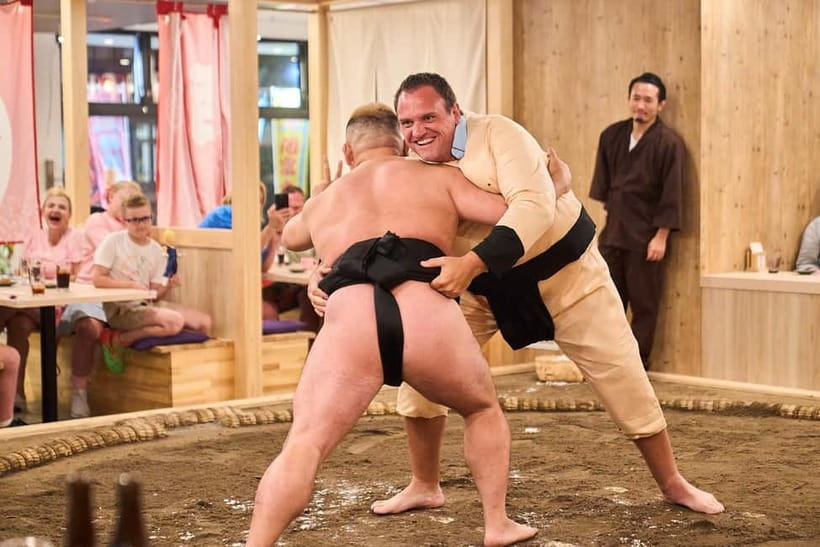
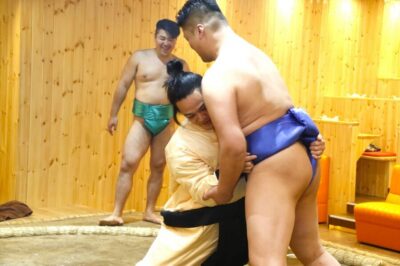
The most fun part of this Tokyo sumo experience is that you do not just sit quietly and watch. Former professional wrestlers demonstrate their strength at close range, then invite you to try mochi pounding, basic sumo techniques, and even a friendly bout on the dohyo. The meal is chanko nabe, the hearty hot pot associated with sumo stables.
I like the genuine connection to Ryogoku, Tokyo’s sumo district, and the way the wrestlers make the sport understandable for first-timers. I also like the mix of food, demonstrations, and hands-on activities, which gives children and adults several ways to join in. The main consideration is that this is an entertaining introduction, not a serious morning practice session, and assigned seating means you cannot choose your exact spot.
Key points at a glance
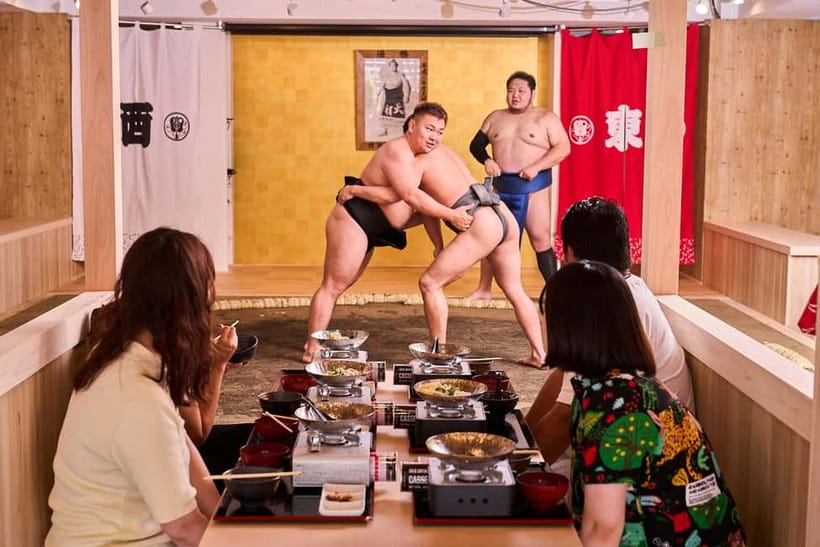
- Former professionals at close range: Watch wrestlers demonstrate sumo techniques and bouts just a few feet away from your table.
- Chanko nabe with a sumo connection: Eat a filling hot pot whose flavor is supervised by wrestlers from an actual stable.
- Three ways to take part: Try mochi pounding, learn sumo movements, and step into a friendly wrestling match.
- Good for families: The activities are designed for adults and children, with plenty of encouragement from the host and wrestlers.
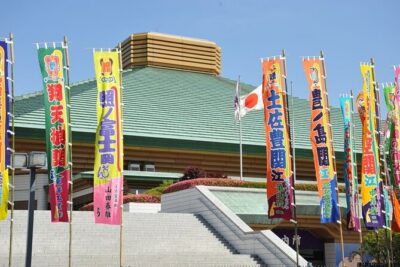
- Ryogoku location: Find the venue on the first floor near Ryogoku Station, marked by a large sumo sign and flags.
- Useful planning detail: Vegetarian, vegan, and gluten-free meals require at least two days’ notice. Halal meals are not available, though you may bring your own food.
Why Ryogoku is the right place for a first sumo experience
Ryogoku is not a random setting for this activity. It is Tokyo’s sumo quarter, and the area around the station is tied closely to the sport’s daily life. Even if you are not visiting during a major tournament, this neighborhood gives the experience a fitting sense of place.
You will find the venue on the first floor, a short walk from Ryogoku Station. Look for the large sumo wrestler sign and the flags outside. One practical tip is to leave yourself extra time to find the entrance. The venue can be a little hard to spot if you arrive at the last minute, so arriving early is sensible.
Ryogoku also works well in a larger day plan. You can pair the activity with Asakusa, Akihabara, Nihonbashi, or Tokyo Skytree. Since the event lasts two hours, it fits neatly into a day of sightseeing instead of taking over your entire schedule.
More chanko nabe experiences in Tokyo:
- Tokyo: Sumo Show Experience with Chicken Hot Pot and a Photo
★ 4.8 · 6,678 reviews - Tokyo Sumo Entertainment Show with Chicken Hot Pot and Photo
★ 5.0 · 1,205 reviews - Tokyo: Sumo Experience and Chanko Nabe Lunch
★ 4.8 · 257 reviews
What the two-hour program feels like
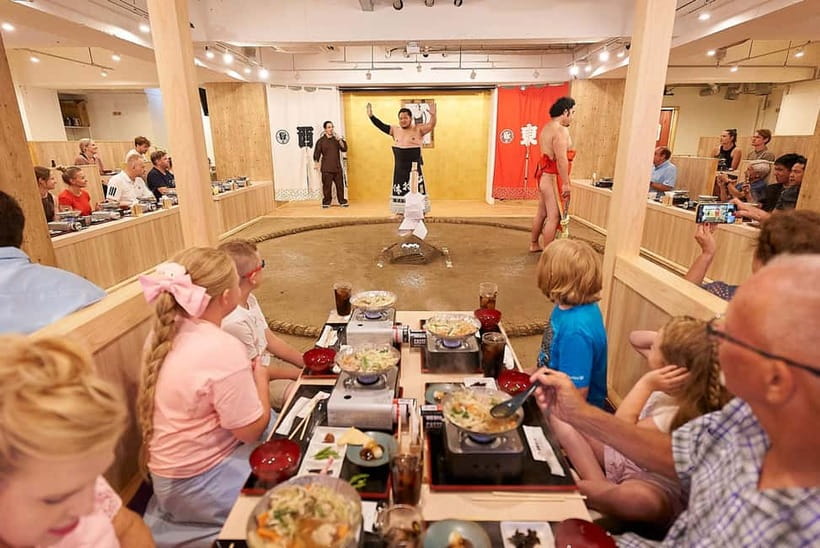
The activity begins with you settling around the dohyo, the raised sumo ring. From there, the format moves between demonstrations, explanations, food, and audience participation. The pace is lively rather than formal, with an English and Japanese host helping explain what is happening.
You will see the wrestlers up close, which matters because sumo is a sport built around force and balance. On television, the bouts can look brief and simple. From nearby, you can better appreciate the speed of the initial charge, the footwork, and the effort needed to push an opponent out of the ring.
The host helps turn those moments into a lesson. You learn about sumo training, techniques, diet, and the lifestyle connected with the sport. The explanations are aimed at people who may know little about sumo, so you do not need to arrive with a rulebook in hand.
The program is also carefully controlled. Participation is encouraged, but you are not thrown into an uncontrolled contest. That makes the activity workable for families and for people who want a laugh without treating it like a real athletic challenge.
Chanko nabe: the meal at the center of the experience
Chanko nabe is the food most closely associated with sumo stables. It is a hot pot meal, and here the recipe is supervised by sumo wrestlers from an actual stable. That connection gives the meal more meaning than a standard restaurant hot pot served beside a show.
You can expect a warm, filling dish that suits the active setting. Several people particularly enjoyed the food’s fresh, healthy feel, while others found the serving generous enough to make the meal a substantial part of the evening. It is not just a token snack between demonstrations.
I like the way the meal helps explain sumo culture. Food is a practical part of a wrestler’s life, and chanko nabe offers a simple way to connect what you eat with what you are learning. The experience does not ask you to study sumo in a museum first. You learn through the food, the wrestlers, and the demonstrations happening around you.
Vegetarian, vegan, and gluten-free versions can be provided if you notify the venue at least two days before your booking date. Halal meals cannot be prepared, but you may bring your own food. If you have an allergy, an alcohol allergy, or another dietary concern, ask clearly in advance. A complimentary sour plum drink may contain alcohol, so do not assume every drink is suitable for you.
Mochi pounding gives you an easy way to join in
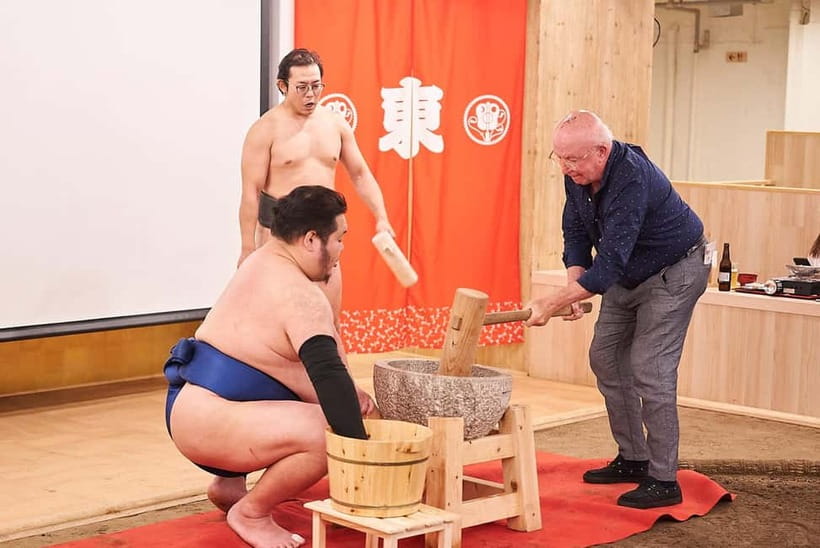
The mochi segment is one of the most approachable parts of the event. You watch the traditional pounding process, then get a chance to help pound the rice with the wrestlers. Afterward, sweet mochi is served for dessert.
This works well for people who might not want to wrestle. Mochi pounding gives you a physical activity, a photograph, and a small piece of Japanese food culture without requiring athletic confidence. It is also an easy choice for children, provided parents follow the venue’s seating and safety instructions.
The demonstration is worth watching even if you only take part briefly. The repeated rhythm, the timing between the person striking the rice and the person turning it, and the transformation from sticky rice to mochi make the process more memorable than simply ordering mochi from a shop.
I would treat this as a shared activity rather than a race to get the mallet. Participation depends on the flow of the program, so be ready to take your turn when invited. The wrestlers and host are there to keep it light and manageable.
More sumo tours with a meal in Tokyo:
- Tokyo: Sumo Show and Dining Experience
★ 4.8 · 2,742 reviews - Tokyo:Luxury Sumo Show Experience & Japanese cuisine & Drink
★ 4.7 · 577 reviews - Tokyo: Family Sumo Workshop & Live Wrestling Show with Lunch
★ 4.9 · 99 reviews - Tokyo: Authentic Sumo Wrestling Experience with Lunch
★ 4.9 · 88 reviews
Stepping onto the dohyo
The most memorable part for many people is the chance to step onto the dohyo and face a sumo wrestler. You can try basic sumo techniques and, for those who want to participate, test your strength in a friendly bout.
Do not expect a serious contest. The wrestlers control the activity, and the point is to show you how sumo feels while keeping the mood safe and funny. That distinction matters. This is a theatrical and educational experience built for mixed ages, not a substitute for watching professional tournament competition or visiting serious training.
The demonstrations come first, so you can watch proper movement before trying it yourself. You may see the wrestlers show training methods, techniques, and several rounds of actual sumo-style wrestling. The contrast between a visitor’s effort and a professional’s balance makes the demonstrations especially entertaining.
You can participate as much or as little as you like. Some people join every activity, while others prefer to watch and photograph the action. Bring a camera, and wear comfortable clothes if you think you will volunteer. You will probably get more from the session if you are willing to step forward, but there is still plenty to see from your seat.
Why the family format works
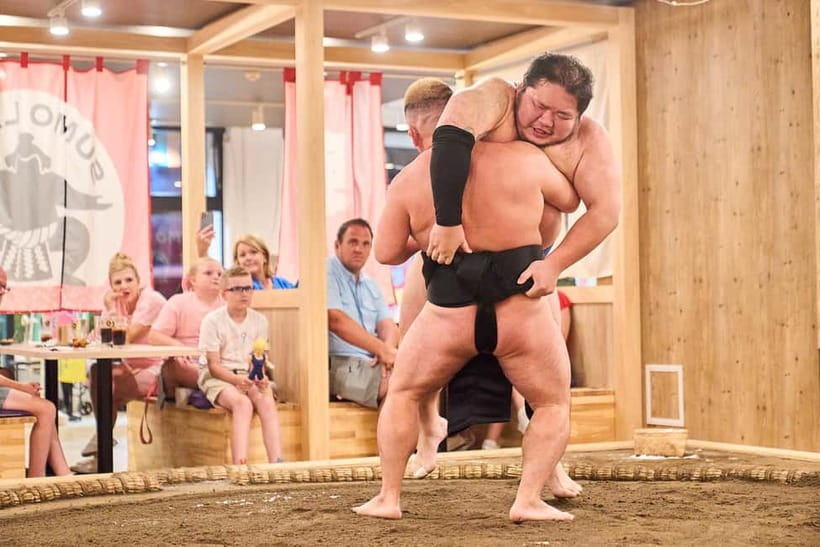
The event is built around interaction, and that helps it work for a family with different interests. Children can watch the wrestlers, help with mochi, learn a few techniques, and try sumo. Adults can focus on the food, the cultural background, and the demonstrations.
The host and wrestlers make a clear effort to include the audience. Their encouragement is a big part of the experience, especially for anyone who feels shy about stepping onto the dohyo. The atmosphere is playful, and the activities create natural moments for photographs.
There are important seating rules for families. Standard seats can be unsafe if you hold a child on your lap, so you should reserve a place for every person, including children. Box seats are safer for this purpose and can seat up to six people, with children allowed to sit on a parent’s lap.
The venue is not suitable for wheelchair users. Smoking is not allowed. These are simple details, but they matter when you are planning an evening around young children or mobility needs.
How the seating and venue affect your visit
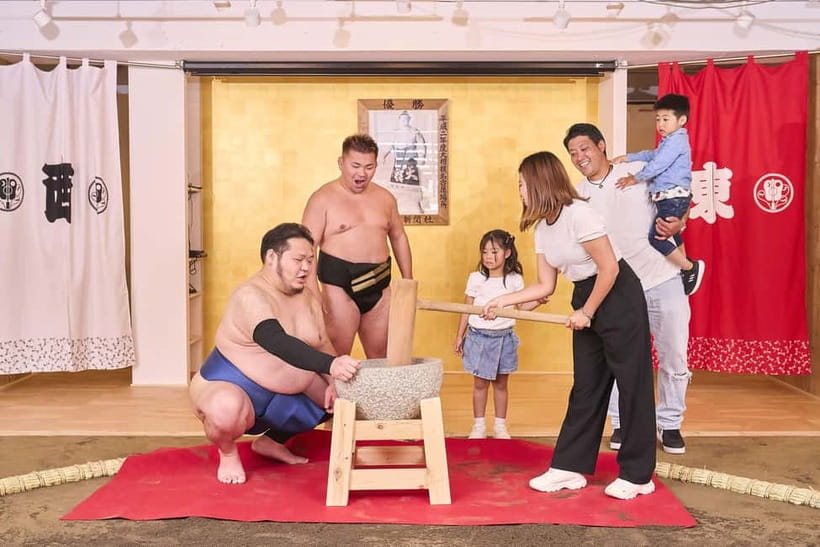
Seat locations are assigned by the venue, and you cannot request a particular table or position. That means you should not book this expecting to choose the closest seat to the dohyo.
The upside is that the action is designed to be seen and heard around the room, with the wrestlers and host encouraging participation throughout. The tradeoff is less control over your view. If sitting in a particular location is important to you, this setup may feel limiting.
A clean, organized room and attentive staff help the program run smoothly. The event is not a casual street performance. You are attending a planned meal and show with a set flow, so arrive at the correct first-floor entrance and be ready to follow the staff’s instructions.
Is $103 a fair price?
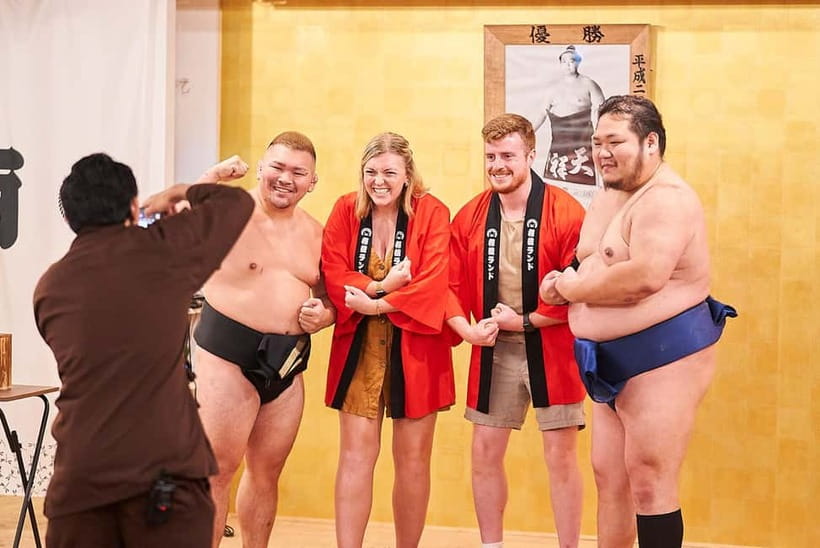
At $103 per person, this is not a cheap meal, but the price covers more than food. You receive a two-hour program, a chanko nabe meal, mochi making, demonstrations, explanations of sumo culture, and the chance to participate in sumo itself.
I consider the value reasonable if you want an easy, organized introduction to sumo. A meal alone would not justify the price, and a simple performance alone might leave you wanting more. The combination is what makes the cost easier to accept.
The value is strongest for families, first-time visitors, and people visiting Tokyo outside tournament dates. You get a structured experience without needing to understand the Japanese language or plan a visit around the sumo calendar. English and Japanese instruction is available.
If your main goal is to watch elite sumo in a quiet, serious setting, spend your money on tournament tickets or seek out a training-related visit instead. This activity is intentionally friendly, interactive, and entertaining. It gives you access and context, but not the solemn atmosphere of a real practice session.
Who should book this Ryogoku activity?
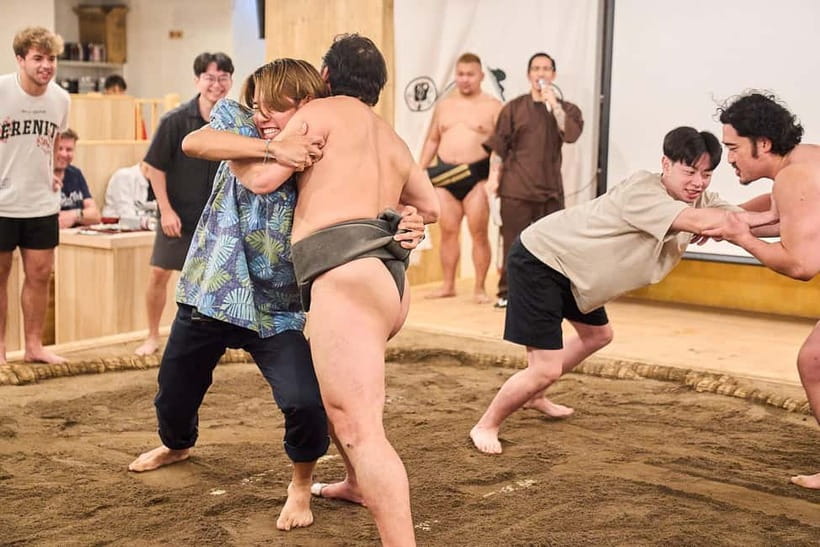
I would recommend it to you if you want to understand sumo through food and participation rather than observation alone. It is especially suitable for families with school-age children and teenagers, since the program gives them several chances to get involved.
It also suits a group of friends or colleagues. The activity creates easy team energy, and the mochi and wrestling segments give everyone something to talk about. You do not need to be fit or experienced, and you can simply watch if you decide not to wrestle.
It is a good pick for a first or short Tokyo visit because the format is efficient. In two hours, you cover a neighborhood, a traditional dish, a Japanese food-making process, and the basics of a major national sport.
I would be more cautious if you dislike audience participation, need guaranteed seating, use a wheelchair, or require halal food. People who want a quiet cultural lecture may also find the host-led format too lively.
Practical planning advice before you go
Reserve the exact number of people in your party, especially when children are included. Standard seating is not designed for a child sitting on an adult’s lap, while box seats have different safety arrangements.
Notify the venue at least two days before the reservation if you need vegetarian, vegan, or gluten-free food. Halal meals are not available, though bringing your own food is permitted.
Wear comfortable clothing and bring a camera. Avoid smoking, and give yourself extra time to locate the first-floor venue near Ryogoku Station. The large sumo sign and flags are the main markers.
The activity offers free cancellation up to 24 hours before the start time for a full refund. You can also reserve now and pay later, which helps if you are still arranging a multi-stop Japan itinerary.
Should you book it?
Book this if you want a friendly, hands-on introduction to sumo with a real meal and plenty of laughs. The wrestlers are the heart of the event, and the combination of close-up demonstrations, chanko nabe, mochi pounding, and a chance to wrestle makes the two hours feel full.
I would not book it expecting a serious training tour or a substitute for a tournament. For that, choose a more formal sumo setting. But if you want to understand the sport while doing something memorable in Ryogoku, the $103 price is sensible, particularly for families and first-time visitors. The activity has a 4.8 rating from 567 bookings, and its strongest appeal is clear: you get to watch sumo, eat like a sumo stable, and take part yourself.
FAQ
Where does the Tokyo sumo experience take place?
It takes place in Ryogoku, near Ryogoku Station. The venue is on the first floor and is marked by a large sumo wrestler sign and flags.
How long does the activity last?
The experience lasts two hours. Starting times vary, so check availability when booking.
Is the activity offered in English?
Yes. Instruction is available in English and Japanese.
What food is included?
A chanko nabe hot pot meal and sweet mochi for dessert are included. The chanko nabe flavor is supervised by sumo wrestlers from an actual stable.
Can vegetarian, vegan, or gluten-free meals be provided?
Yes, but you must notify the venue at least two days before your reservation date. Halal meals cannot be provided, though you may bring your own food.
Can children take part?
Yes. The experience is designed for both children and adults. Standard seats require a reservation for each person because holding a child on your lap can be dangerous. Box seats can seat up to six people and allow a child to sit on a parent’s lap.
Is the experience suitable for wheelchair users?
No. The activity is not suitable for wheelchair users.
Newest sumo experiences in Tokyo
- Tokyo Highlights Tour: Sumo, Sushi, Tea, and Tokyo Tower★ 5.0 · 2 reviews
- Tokyo: Know about Hokusai and Sumo culture in 2.5 hours★ 5.0 · 2 reviews
- TOKYO , No1 Yokozuna Stable Morning Practice in Ryogoku★ 4.5 · 3 reviews
- Tokyo 6hr Private Guided Tour & Sumo Show Lunch★ 5.0 · 3 reviews
- Tokyo Grand Sumo Tournament Viewing Tour★ 5.0 · 2 reviews
- Tokyo Sumo History Tour with Chanko Nabe Lunch★ 5.0 · 3 reviews
- The SUMO Show & Experience with Hot pot lunch★ 5.0 · 4 reviews
- Tokyo: Sumo Keiko Training Tour with Audio Guide & Photo★ 4.8 · 5 reviews
Chanko Nabe Experiences, compared.
Sumo Show Experience with Chicken Hot Pot and a Photo
Read our review →
Tokyo Sumo Entertainment Show with Chicken Hot Pot and Photo
Read our review →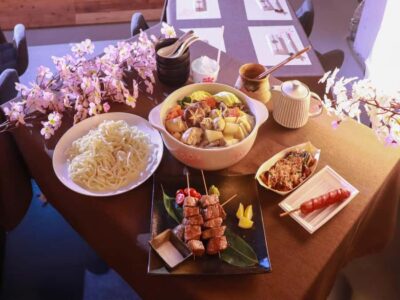
Sumo Show & Experience w/ Optional Kimono & Hot Pot
Read our review →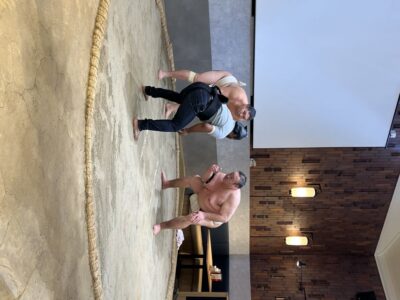
Tokyo Sumo Culture Tour with Chanko-Nabe Lunch in Ryogoku
Read our review →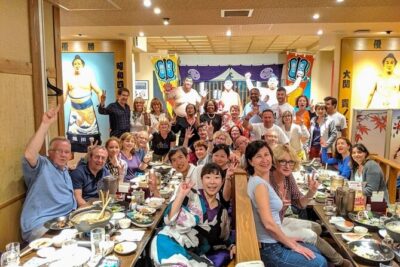
Browse the lists this tour appears in