
REVIEW · CHANKO NABE EXPERIENCES
Tokyo: Sumo Experience and Chanko Nabe Lunch
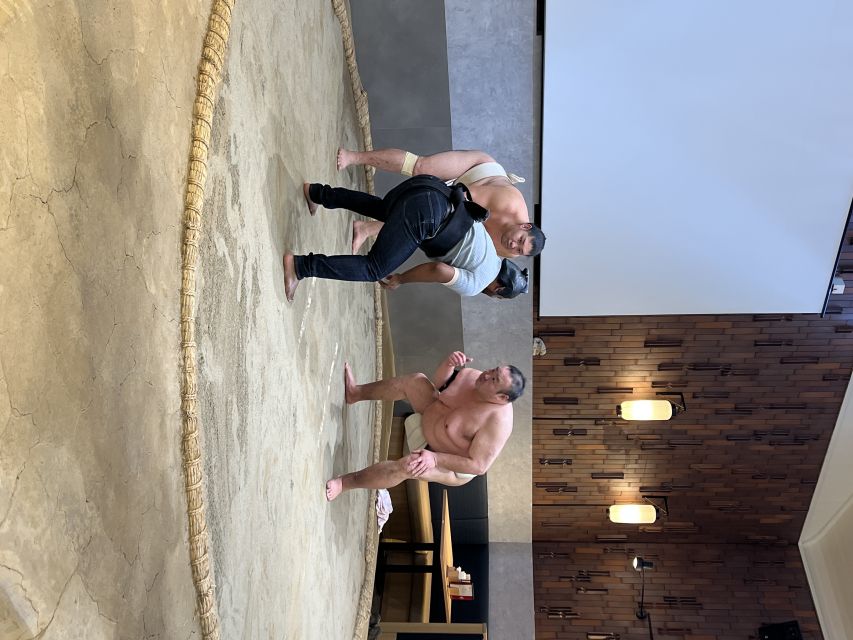
Sumo gets much easier to understand when a retired wrestler explains it from inside the ring. This two-hour Tokyo experience covers the rituals, rules, training, and competitive side of the sport, then lets you test your balance in a playful bout with a professional.
I especially like the small six-person limit and the chance to eat chanko nabe prepared by the wrestlers. The English instruction is clear, and the mix of demonstrations, jokes, photos, and audience participation works well for families. One thing to consider: the experience is lively and interactive, so it may feel less suitable if you prefer a quiet, formal cultural presentation.
I also like the two location options. Choose Monday in Asakusa or Thursday in Ryogoku, Tokyo’s sumo center, then arrive early for the 1:00 PM start. The exact meeting place comes with your voucher, so you should not rely on finding it without that map.
Key points to know before booking
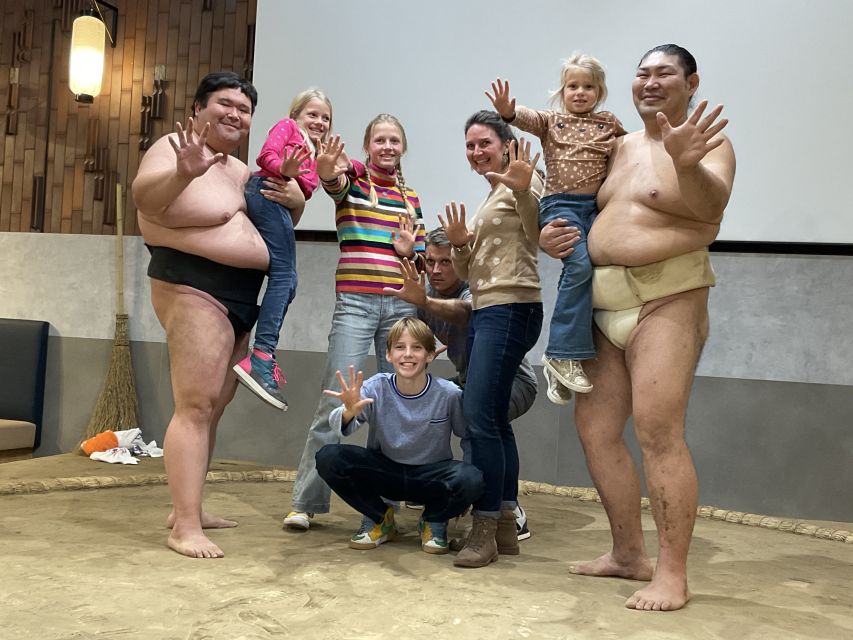
- Former wrestlers lead the session: Learn sumo in English from people who competed professionally.
- You may enter the ring: Some participants are chosen to wear a sumo costume and join the demonstration.
- Chanko nabe is part of the experience: The wrestlers prepare the Japanese hot pot served at lunch.
- Two Tokyo neighborhoods are available: The Monday session is in Asakusa, and the Thursday session is in Ryogoku.
- The group is limited to six: This gives the session a personal feel and makes interaction easier.
- Arrive before 1:00 PM: The activity starts on time, and the exact meeting point is supplied with your voucher.
Why this sumo lesson works for first-time visitors
A sumo match can look simple from the outside. Two large wrestlers face each other, push, pull, and try to force one another out of the ring. But the short contest sits inside a much larger set of customs. The bow, the salt, the foot stamps, the ring itself, and the careful preparation all matter.
This experience gives you a way to make sense of those details without needing prior knowledge of sumo. The instruction is in English, and the retired wrestlers explain both the ceremony and the sport. I like that balance. You are not simply watching a performance. You are learning what to look for the next time you see sumo at a tournament or on television.
The tone is deliberately friendly rather than solemn. The wrestlers demonstrate techniques, explain the demands of training and competition, and use humor to keep the room relaxed. That matters because sumo can seem intimidating at first. A little comic relief makes it easier to ask questions and join in.
The experience has earned a 4.8 rating from 257 reviews, and the most consistent strengths are easy to identify: clear explanations, warm instructors, tasty food, and a good amount of audience participation. I would not book this expecting an official tournament match. I would book it as a personal introduction to the sport, led by people who know it from the inside.
More chanko nabe experiences in Tokyo:
- Tokyo: Sumo Show Experience with Chicken Hot Pot and a Photo
★ 4.8 · 6,678 reviews - Tokyo Sumo Entertainment Show with Chicken Hot Pot and Photo
★ 5.0 · 1,205 reviews - Tokyo Sumo Experience: Chanko & Mochi with a Former Pro
★ 4.8 · 567 reviews
From welcome to demonstration: the first part of the two hours
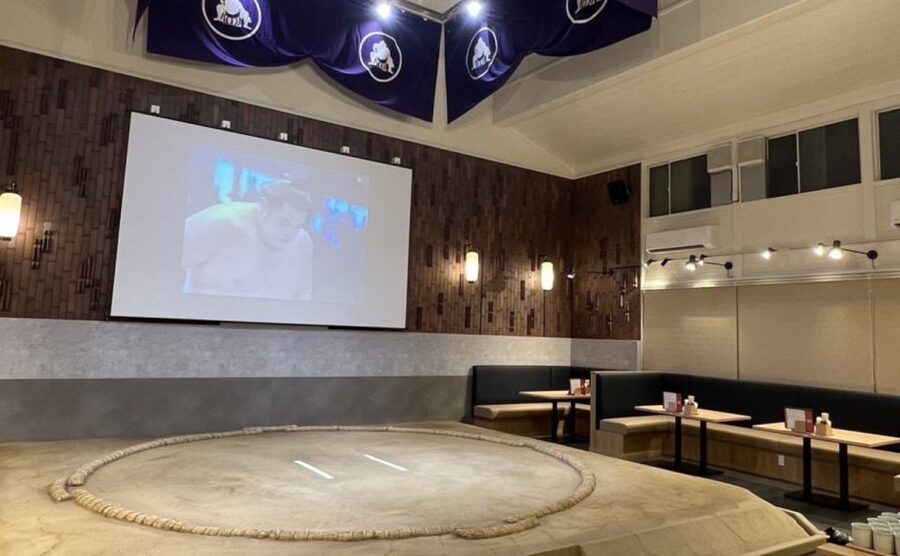
The session begins at the meeting point, with the exact location shown on the voucher map. The Monday program takes place in Asakusa, a convenient choice if you are already visiting the area’s temples and traditional streets. The Thursday program is in Ryogoku, the Tokyo district most closely associated with sumo.
The activity starts at 1:00 PM. You need to arrive before then because the program runs on schedule. The information provided lists the door opening as 12:40, though it gives the time as 12:40 AM, which appears inconsistent with the afternoon start. I would follow the voucher and confirm the arrival time when booking rather than assume the printed door time is correct.
Once inside, you receive an introduction to sumo from former professional wrestlers. The opening explanation covers the sport’s long tradition, its place as Japan’s national sport, and the rituals surrounding a bout. You will also learn about the practical side of competition, including how a wrestler wins and why small changes in balance can decide a match.
This part is useful for adults who want cultural context, but it also works for children. The explanations are not presented as a long lecture. Demonstrations and humor break up the teaching, giving younger participants something to watch while the adults take in the details.
The ring, the rituals, and the playful wrestling match
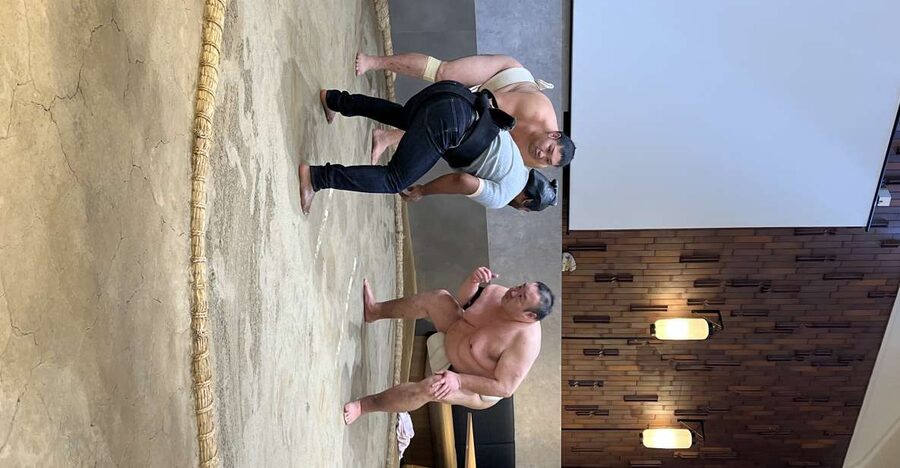
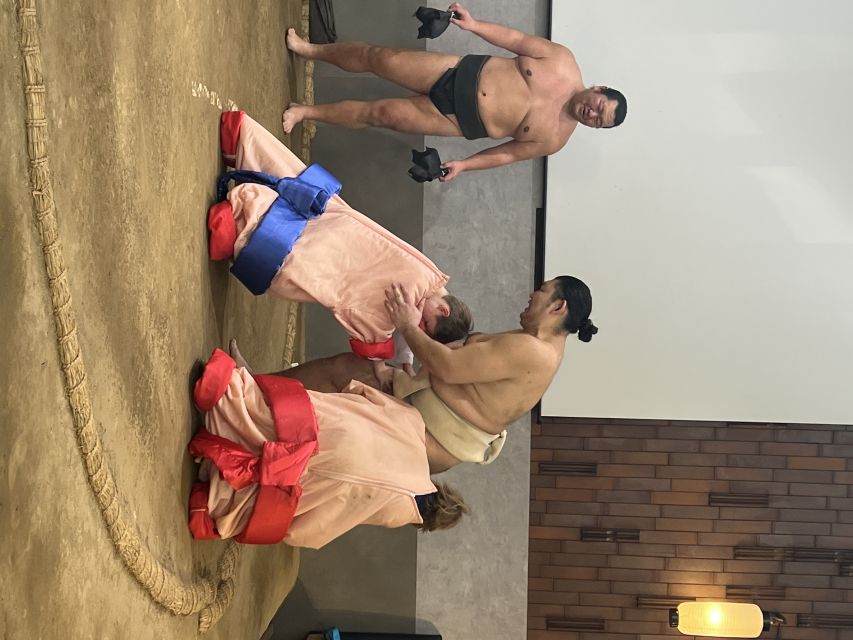
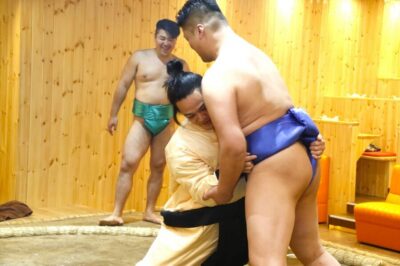
The most memorable part for many people is the chance to interact with the wrestlers. Some audience members may be selected to put on a sumo wrestler costume and help with a demonstration. Not every participant can be chosen, so you should treat this as a possibility rather than a promise.
That point is worth keeping in mind if you are booking for a child or celebrating a birthday. The activity lets participants get close to the wrestlers and take photographs, but the organizers cannot place every person in the ring. If you are not selected, you still watch the demonstration and take part in the wider session.
The playful bouts are not presented as serious contests. They show the difference between ordinary strength and trained sumo technique. One larger participant described feeling like a child against the wrestler’s power, which gives you a useful sense of what the experience is trying to show. Sumo is not simply about being heavy. Timing, stance, balance, and explosive force all matter.
The wrestlers also make the activity approachable for families. Children can watch the demonstrations, learn a few basics, and possibly try a bout. Adults can join in without needing athletic experience. You should wear something that lets you move comfortably, though the supplied information does not list a specific dress code.
The photo time is another practical benefit. You get a chance to take pictures with the wrestlers after the demonstrations, which makes the experience feel more personal than watching from a distant seat. If you care about photographs, keep your phone ready, but stay focused on the explanation too. The value is in seeing how the wrestlers communicate the sport, not just in getting a picture beside them.
Chanko nabe: the meal that completes the lesson
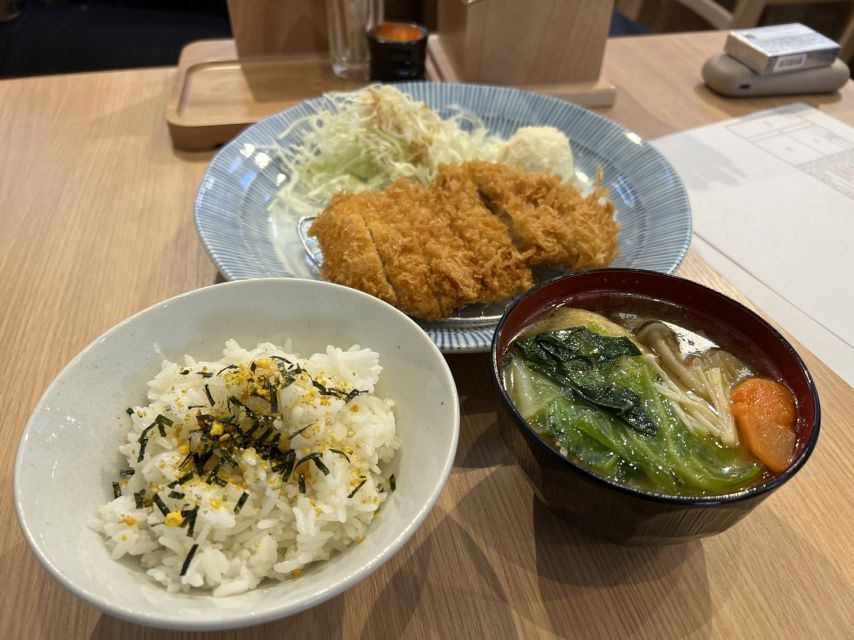
After the wrestling portion, you sit down for chanko nabe, a Japanese-style hot pot associated with sumo wrestlers. The wrestlers prepare the meal themselves, giving the lunch a direct connection to the sport rather than treating it as a separate restaurant stop.
The meal is filling, warm, and social. Hot pot suits this kind of gathering because it gives everyone something to share while the conversation continues. The food was one of the most praised parts of the experience, with repeated approval for the flavor, generous portions, and quick service.
I would not describe chanko nabe as a small tasting course. It is meant to provide energy, which helps explain why it is closely linked with sumo life. The meal gives you another way to understand the wrestlers’ daily world. After hearing about training and physical strength, you eat a dish connected with the stamina needed for that work.
Some people who attended describe the lunch as a three-course Japanese meal and mention drinks and dessert. The official inclusions specify lunch, so I would treat those extra details as dependent on the session rather than guaranteed. If you need vegetarian or Halal food, note it in your reservation or contact the provider at least two days before your visit.
The lunch also makes the $95 price easier to assess. You are paying for a meal, entrance, instruction in English, demonstrations, a small-group setting, and the chance to interact with former professionals. It is not the cheapest way to eat lunch in Tokyo, but the food is only one part of what you are buying.
More sumo tours with a meal in Tokyo:
- Tokyo: Sumo Show and Dining Experience
★ 4.8 · 2,742 reviews - Tokyo:Luxury Sumo Show Experience & Japanese cuisine & Drink
★ 4.7 · 577 reviews - Tokyo: Family Sumo Workshop & Live Wrestling Show with Lunch
★ 4.9 · 99 reviews - Tokyo: Authentic Sumo Wrestling Experience with Lunch
★ 4.9 · 88 reviews
Asakusa or Ryogoku: choosing the better day
The Monday session is held in Asakusa. This is a useful pairing if you plan to visit Senso-ji, browse the traditional shopping streets, or spend part of the day near the Sumida River. You can build a full sightseeing day around the experience without crossing the city afterward.
The Thursday session is held in Ryogoku, Tokyo’s best-known sumo district. For a visitor interested in the sport, Ryogoku gives the activity a fitting setting. You are not just learning about sumo in an unrelated venue. You are spending time in the part of Tokyo most strongly linked with its professional culture.
The supplied information does not promise a tour of a sumo stable or a professional tournament, so do not expect either. The benefit of Ryogoku is the setting and the sense of connection to the sport, while the actual teaching and meal remain the center of the activity.
I would choose based on your wider schedule. Pick Monday in Asakusa if you already want a traditional Tokyo sightseeing day. Pick Thursday in Ryogoku if sumo is a main reason for booking and you want to place the experience in its best-known neighborhood.
Small group, English instruction, and accessibility
The group is limited to six participants, which is a real advantage. A large audience can make a demonstration feel distant, especially when the main appeal is personal interaction. With six people, you have a better chance to ask questions, see the techniques clearly, and get a photo without a long wait.
The instructors speak English, and the activity is designed for people who may know little about sumo. You do not need to study the rules before arriving. The explanations cover the basics in a practical way, using the wrestlers and the ring to show what the words mean.
The activity is listed as wheelchair accessible. If accessibility is important for you, I would still include any specific needs when booking so the provider can prepare for your arrival. The information does not describe the exact seating or ring access arrangements, so it is sensible to confirm details in advance.
The atmosphere is friendly and playful, but it is still a scheduled program. The start time is firm, and the two-hour duration leaves no room for a late arrival. Plan to be near the meeting area before the stated opening time, especially because the exact venue is sent with your voucher.
Who will enjoy this experience most
I would recommend this to families, first-time visitors to Japan, and anyone curious about sumo but unsure how to follow a match. The costume demonstration and playful bouts give children a clear focus, while the explanations provide enough cultural background for adults.
It is also a good choice for a birthday surprise or a shared activity. The wrestlers make a real effort to involve the audience, and the photo opportunity gives the occasion a lasting souvenir. The meal adds a relaxed finish, so the whole outing feels more substantial than a short demonstration.
You may want to skip it if you are looking for a formal, silent presentation or a full professional tournament. The humor and audience participation are central to the format. You may also feel disappointed if you expect every participant to wrestle, since only some people can be selected for the costume and demonstration.
The experience suits people of many ages, but you should judge participation based on comfort and mobility. Watching is still worthwhile if you do not want to enter the ring. The teaching, demonstrations, meal, and photographs do not depend entirely on taking part in a bout.
Is $95 good value?
At $95 per person, this is a specialty activity rather than a bargain lunch. The price includes entrance, participation, and lunch, with no separate charge listed for the English instruction or the demonstrations. You also avoid the difficulty of trying to understand sumo rituals on your own.
I think the price is fair if you value direct contact with retired wrestlers. A standard sumo match gives you the real sport at a much higher level, but it does not necessarily explain every ritual in simple English or let you ask questions face to face.
The small group improves the value. You are not paying only to sit in a crowd and watch a staged show. You receive instruction, see demonstrations at close range, may join the activity, and eat a meal connected to sumo culture.
For a tight budget, you could learn basic sumo rules elsewhere and enjoy a less expensive lunch. For a special Tokyo day, especially with children or first-time visitors, this experience offers more than food and more than a performance. It gives you a clear entry point into a sport that can otherwise seem difficult to read.
Cancellation and meal planning
You can cancel up to 10 days before the activity for a full refund. That deadline is stricter than the short cancellation windows used by some Tokyo activities, so check your plans before booking.
Vegetarian and Halal meals need advance notice. Add the request during reservation or contact the provider at least two days before the date. Do not wait until you arrive, since the meal is planned ahead.
The exact starting point is not listed in the information provided. Your voucher includes a map, and the activity ends back at the same meeting point. Pick-up and drop-off are not included, so you must make your own way there and back.
Should you book it?
I would book this if you want an accessible introduction to sumo with real personal contact, a generous lunch, and a good chance of laughter. The retired wrestlers bring the sport close, explain the parts that are hard to understand from the stands, and give families a way to participate.
Choose Monday in Asakusa or Thursday in Ryogoku according to your sightseeing plan. Arrive early, request any special meal at least two days ahead, and remember that entering the ring is possible but not guaranteed.
Skip it only if you want a formal tournament, a private lesson guaranteed for every participant, or a low-cost lunch. For most first-time visitors, the combination of English teaching, playful demonstrations, chanko nabe, and a six-person group makes this a strong use of two hours in Tokyo.
FAQ
How long does the sumo experience last?
The activity lasts two hours.
What time does the activity start?
It starts at 1:00 PM, and participants need to arrive before the start time. The provided information lists the door opening as 12:40, but gives it as 12:40 AM, so confirm the correct arrival time with your voucher.
Where does the activity take place?
The Monday session takes place in Asakusa. The Thursday session takes place in Ryogoku. Your voucher includes a map with the exact meeting point.
Is the activity taught in English?
Yes. The instructor language is English.
Is lunch included?
Yes. Chanko nabe hot pot prepared by the wrestlers is included as lunch.
Can I wrestle a sumo professional?
Some audience members may be chosen to wear a sumo costume and join a playful demonstration. Participation is not guaranteed for every person.
Can vegetarian or Halal meals be arranged?
Yes, but you need to note the requirement in your reservation or contact the provider at least two days before the activity.
Newest sumo experiences in Tokyo
- Tokyo Highlights Tour: Sumo, Sushi, Tea, and Tokyo Tower★ 5.0 · 2 reviews
- Tokyo: Know about Hokusai and Sumo culture in 2.5 hours★ 5.0 · 2 reviews
- TOKYO , No1 Yokozuna Stable Morning Practice in Ryogoku★ 4.5 · 3 reviews
- Tokyo 6hr Private Guided Tour & Sumo Show Lunch★ 5.0 · 3 reviews
- Tokyo Grand Sumo Tournament Viewing Tour★ 5.0 · 2 reviews
- Tokyo Sumo History Tour with Chanko Nabe Lunch★ 5.0 · 3 reviews
- The SUMO Show & Experience with Hot pot lunch★ 5.0 · 4 reviews
- Tokyo: Sumo Keiko Training Tour with Audio Guide & Photo★ 4.8 · 5 reviews
Chanko Nabe Experiences, compared.
Sumo Show Experience with Chicken Hot Pot and a Photo
Read our review →
Tokyo Sumo Entertainment Show with Chicken Hot Pot and Photo
Read our review →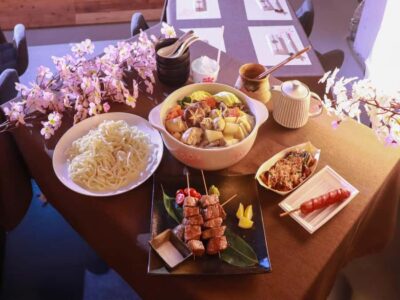
Sumo Show & Experience w/ Optional Kimono & Hot Pot
Read our review →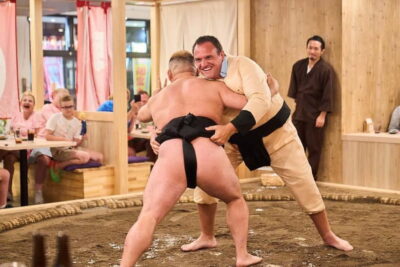
Tokyo Sumo Experience: Chanko & Mochi with a Former Pro
Read our review →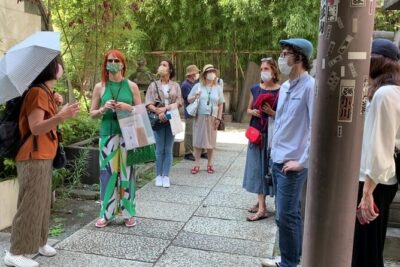
Tokyo Sumo Culture Tour with Chanko-Nabe Lunch in Ryogoku
Read our review →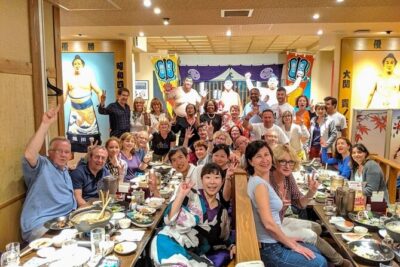
Browse the lists this tour appears in