
REVIEW · SUMO SHOWS
Tokyo: Sumo Show and Experience in Shinjuku
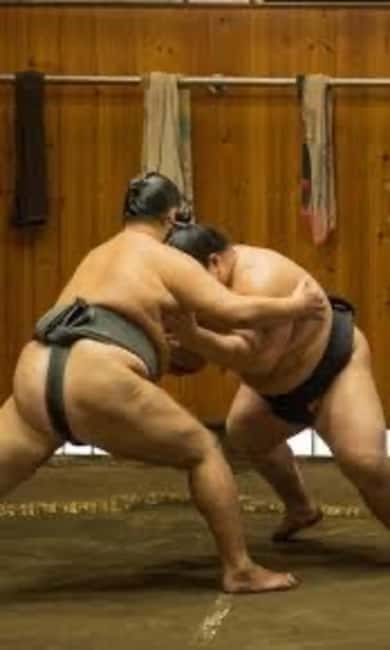
The best part of this Shinjuku experience is that it makes sumo easy to follow. You see the shiko foot stomps, salt throwing, training moves, and live sparring while an English-speaking host explains what is happening, then volunteers get the chance to step into the ring.
I like the clear mix of information and comedy, and I like the personal contact with the wrestlers. Hosts such as Paula, Dai, and Ari have been praised for keeping the room involved, while wrestlers including George and Guchi play along with impressive good humor.
The main thing to understand is that this is not a tournament. It is a staged cultural show with demonstrations and exhibition matches, so serious sumo fans may want to pair it with a real competition.
Key points to know before booking
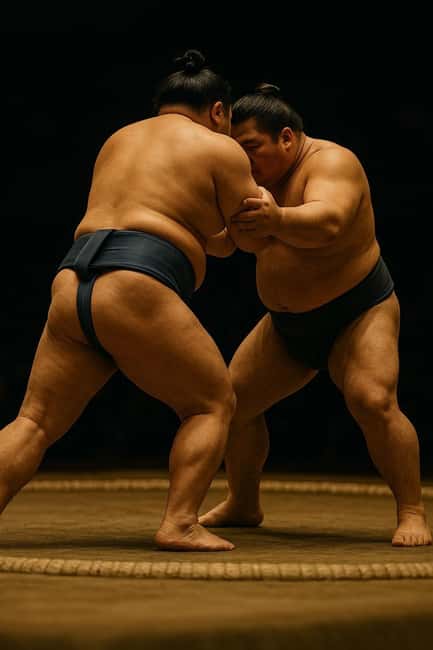
- A 90-minute introduction to sumo: History, rules, rituals, fouls, and techniques are explained in English before the action begins.
- Audience participation is central: You may be invited to wear a sumo outfit and challenge one of the wrestlers in the ring.
- The wrestlers are professional and highly entertaining: Demonstrations show the discipline and force behind the sport without pretending this is a tournament.
- The host makes the difference: Paula, Dai, Ari, and other English-speaking MCs have been praised for humor, clear explanations, and crowd work.
- It suits families and first-timers: Children and adults can follow the program, and the format mixes learning with plenty of laughs.
- Food is not included: You receive bottled water, so plan your meal before or after the show.
Why this Shinjuku sumo show works for first-timers
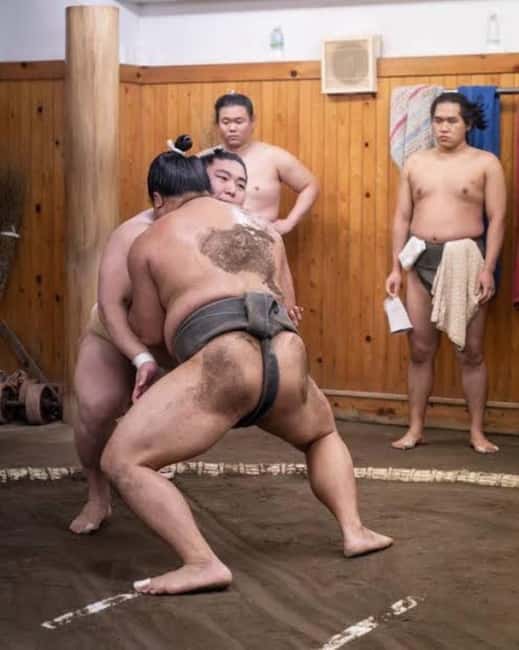
Sumo can look simple from a distance. Two large wrestlers face each other, push, and one steps outside the ring. The details are far more interesting, and this show gives you the basic tools to see them.
You learn that the ceremony matters. The foot stomping, salt throwing, wrestler entrances, and careful movements are not filler before the bout. They are part of the sport’s ritual and help set the tone inside the ring.
The English-speaking MC also explains the rules and techniques in plain language. That matters if you have never watched sumo before, or if you plan to attend a professional tournament later in your trip. One useful feature is the explanation of fouls and legal moves, details that are easy to miss when you are watching sumo on television.
I especially like the way the program changes pace. It does not sit you down for 90 minutes of lecture. You get history, demonstrations, questions, jokes, physical action, and short matches. That rhythm keeps children interested and gives adults enough context to appreciate the skill involved.
More sumo shows in Tokyo:
- Tokyo: Sumo Show Experience with Chicken Hot Pot and a Photo
★ 4.8 · 6,678 reviews - Tokyo: Sumo Show and Dining Experience
★ 4.8 · 2,742 reviews - the SUMO show
★ 5.0 · 1,960 reviews
Finding the entrance beside Daiso
The meeting point is on the second floor of the Sekisaku Building in Shinjuku. The correct entrance is through the front of the building, facing the main door next to Daiso.
This detail matters. The building has a specific access point, and entering from the wrong side could cost you time. The show follows a fixed schedule, so late arrival may not be accepted at the front desk. I would arrive early enough to locate the building and entrance without rushing through Shinjuku.
The setting is convenient if you are already exploring Shinjuku, but the neighborhood can be confusing, especially during busy periods. Keep the Sekisaku Building and the Daiso reference in front of you when navigating rather than relying only on the venue name.
Once inside, the atmosphere begins before the formal program. The room uses Japanese music, staff greet people, and the host may come around to chat with each party. That small welcome helps the event feel personal rather than like a distant performance.
The opening lesson: history, rituals, and rules
The first part gives you the background needed to understand what follows. The host introduces the history and character of sumo, explains its rules, and walks through important rituals.
You will hear about the professional wrestlers, known as rikishi, and the discipline required for the sport. The presentation helps correct the common idea that sumo is only about body size. Position, timing, balance, technique, and mental strength all matter.
This is where the English guide earns the ticket price. Names and rituals can be hard to remember when you encounter them in a large arena, but a smaller room gives you a chance to connect each action with an explanation. Hosts such as Paula and Dai have been singled out for strong humor and clear delivery, while Ari has been praised for keeping the show lively.
The guide also introduces Japanese phrases and explains the meaning behind what you see. You are not expected to know anything in advance. A first-time viewer can follow the basic story, while someone who has watched sumo on television can use the session to answer questions.
There is a good balance here. The talk does not treat sumo as a museum display. The wrestlers remain part of the presentation, and the explanations quickly lead into movement and demonstrations.
Watching shiko, salt throwing, and training moves
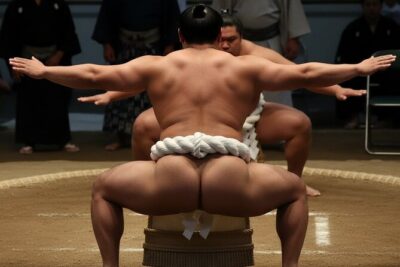
After the introduction, the wrestlers demonstrate the physical side of sumo. You see the heavy foot stomping known as shiko, the gestures before a bout, and the dramatic use of salt.
These rituals are visually memorable, but the demonstrations also show control. The power is obvious, yet the wrestlers must move with precision. A good explanation makes you notice foot placement, stance, balance, and the way a wrestler prepares before making contact.
The training demonstrations are especially useful for anyone planning to attend a professional tournament. At a tournament, the action can be over in seconds. Here, you receive a closer explanation of what the wrestlers are trying to do and why a certain move works.
The program also covers techniques and fouls. That gives you a simple checklist for future matches: watch the feet, notice who controls the center, and pay attention to how each wrestler uses balance. You may not leave ready to judge a championship bout, but you will be far less lost.
More sumo experiences in Tokyo:
- Tokyo Shinjuku Sumo Show & Experience with Photo
★ 5.0 · 1,750 reviews - Tokyo Sumo Entertainment Show with Chicken Hot Pot and Photo
★ 5.0 · 1,205 reviews - Tokyo: Sumo Tournament Tour with Chair Seat Tickets
★ 4.6 · 753 reviews - Tokyo Grand Sumo Tournament Viewing Tour with Tickets
★ 5.0 · 692 reviews
The exhibition matches bring the lesson to life
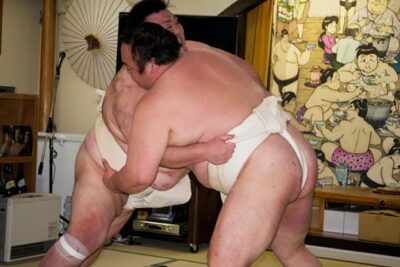
The demonstrations lead into live sparring and exhibition matches between the professional wrestlers. This is the show’s main physical attraction, and the close setting makes the force easy to appreciate.
The bouts are presented for entertainment and instruction, not as a tournament. That distinction is important. The wrestlers are showing the sport and interacting with the audience, so the mood can shift from serious ceremony to broad comedy.
Still, the action is not weightless theater. The wrestlers demonstrate real techniques, training, and physical control. You get a better sense of how hard they work, and why sumo requires more than simply being large.
The wrestlers named in audience accounts include George, Guchi, and Ide. The exact performers may vary, but the pattern remains similar: two rikishi demonstrate moves, perform a match, and then help the audience take part.
I would treat this as a cultural performance with real athletic skill, not as a substitute for a professional tournament. If you want rankings, tournament pressure, and bouts that count toward a championship, this is the wrong event. If you want to understand the sport and enjoy a close, humorous presentation, it makes much more sense.
The ring challenge is the memorable finale
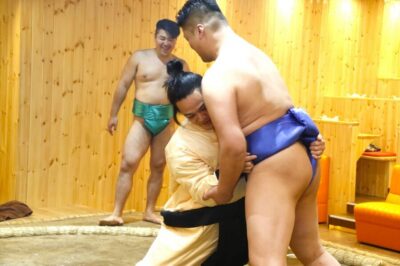
The most personal part comes after the demonstrations, when audience volunteers can put on a traditional sumo outfit and enter the ring to challenge a wrestler.
This is not a serious contest. You have essentially no chance against a trained rikishi, and that is the joke. The wrestlers play along, the room gets involved, and the challenge gives you a physical sense of the size and strength difference.
The format is particularly good for families. Children can watch an adult volunteer attempt the challenge, and some children may also have the chance to enter the ring depending on how the session is managed. One child was especially delighted by the experience, and several families found the audience participation a highlight.
You should not assume that every person will be selected. The opportunity is included, but participation depends on the event and the number of volunteers. Even if you remain in your seat, watching other people try their luck is part of the fun.
The outfit and ring create good photo opportunities as well. The wrestlers are friendly and may pose for pictures, adding a personal ending to the show. Ask about photos during the event rather than assuming that every moment can be recorded.
How the $69 price compares with the experience
At $69 per person, this is not the cheapest way to spend 90 minutes in Tokyo. You are paying for a hosted cultural performance, professional wrestlers, an English explanation, and the chance to participate rather than simply watch.
The value is strongest if you are new to sumo. The guide gives you enough background to understand the rituals, and the demonstrations show the techniques at close range. That combination can make a later tournament visit far more rewarding.
The price is also easier to justify for families and small groups because the entertainment does not depend on prior interest in sumo. The hosts use humor, audience questions, and volunteers to keep the room involved. Children do not need to sit through a long technical lecture.
The value is weaker for someone who wants an authentic tournament atmosphere. This is a polished show in Shinjuku, not a day at a major sumo venue. There are no tournament stakes, and food is not included. You receive bottled water as the welcome drink, so plan to eat separately.
I would compare it with the cost of a short guided cultural activity rather than with the price of a sports ticket. For that purpose, $69 is reasonable if you want instruction, entertainment, and a personal encounter in one compact session.
Who will enjoy it most
This experience is a strong choice for first-time visitors to Japan, especially if sumo is on your list but you cannot fit a full tournament into your schedule. It is also useful before attending a professional competition, since you will understand more of the rituals and rules.
Families should find the format manageable. The 90-minute length is long enough to provide real context but short enough to fit into a day of sightseeing. Audience volunteers and jokes break up the explanations, and the wrestlers make a deliberate effort to connect with the room.
It also works for adults who want an easy evening activity in Shinjuku. After a long day walking through Tokyo, sitting down and watching the action can be a welcome change. The event remains social and lively without requiring you to spend an entire night at a venue.
Serious sumo followers should set their expectations carefully. You may appreciate the demonstrations and the chance to ask questions, but you may not want to repeat the experience. One clear limitation is that the program offers entertainment rather than competitive sport.
The English language is another major advantage. You can follow the presentation without prior Japanese, and the hosts explain the details that often go unnoticed by newcomers.
Timing, cancellation, and practical planning
The activity lasts 90 minutes, with starting times based on availability. Check the exact session when booking and allow time to reach the second floor of the Sekisaku Building.
Late entry can be refused because the show follows a schedule. I would not plan to arrive at the last minute, especially if you are coming from another part of Tokyo.
The experience allows cancellation up to 24 hours in advance for a full refund. You can also reserve now and pay later, which helps if your Tokyo plans are still changing.
There is no food included. Have a meal before the show or plan to eat afterward in Shinjuku. Bottled water is provided, but the listing does not promise other drinks or refreshments.
Should you book the Shinjuku sumo experience?
I would book this if you want to understand sumo without committing to a full tournament day. The English explanations, close demonstrations, funny hosts, and ring challenge create a useful first look at one of Japan’s most distinctive sports.
Book it especially if you are visiting with children, have never watched sumo, or want an activity that combines culture with easy entertainment. The hosts, including Paula, Dai, and Ari, have made a strong impression through humor and audience interaction, while wrestlers such as George and Guchi bring the physical power.
Skip it if you expect a real tournament or serious competitive bouts. In that case, spend your money on a tournament ticket when the schedule allows. For most first-time visitors, though, this Shinjuku show is a lively and practical introduction, with enough genuine sumo technique to make the experience more than a novelty.
FAQ
Is this a real sumo tournament?
No. The activity is a cultural show with professional sumo demonstrations, live sparring, and exhibition matches. It does not offer tournament competition.
How long does the experience last?
The show lasts 90 minutes.
Is the show conducted in English?
Yes. An English-speaking live guide or MC explains the history, rules, rituals, techniques, and action.
Can I challenge a sumo wrestler?
You have the opportunity to wear a traditional sumo outfit and challenge a wrestler in the ring. Audience participation depends on the session and volunteer selection.
What is included in the $69 price?
The price includes professional sumo matches, the English-speaking MC, bottled water, the chance to wear a traditional sumo outfit, and the opportunity to challenge a wrestler. Food is not included.
Where do I meet the group?
You meet on the second floor of the Sekisaku Building in Shinjuku. Entry is through the front of the building facing the main door next to Daiso. Late entry may not be accepted.
Newest sumo experiences in Tokyo
- Tokyo Sumo History Tour with Chanko Nabe Lunch★ 5.0 · 3 reviews
- Tokyo Highlights Tour: Sumo, Sushi, Tea, and Tokyo Tower★ 5.0 · 2 reviews
- Tokyo: Know about Hokusai and Sumo culture in 2.5 hours★ 5.0 · 2 reviews
- TOKYO , No1 Yokozuna Stable Morning Practice in Ryogoku★ 4.5 · 3 reviews
- Tokyo 6hr Private Guided Tour & Sumo Show Lunch★ 5.0 · 3 reviews
- Tokyo Grand Sumo Tournament Viewing Tour★ 5.0 · 2 reviews
- Tokyo: Enjoy Sumo match and know about it! [Ticket included]★ 4.4 · 7 reviews
- Complete Sumo Experience in Tokyo★ 4.5 · 3 reviews
Sumo Shows, compared.
Sumo Show Experience with Chicken Hot Pot and a Photo
Read our review →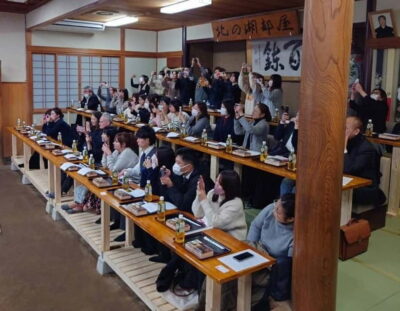
Tokyo Shinjuku Sumo Show & Experience with Photo
Read our review →
Tokyo Sumo Entertainment Show with Chicken Hot Pot and Photo
Read our review →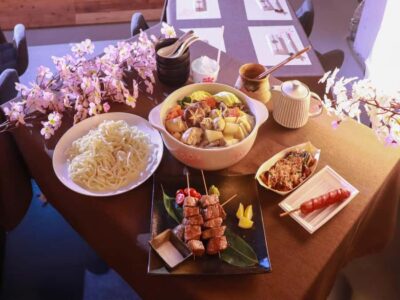
Sumo Show & Experience w/ Optional Kimono & Hot Pot
Read our review →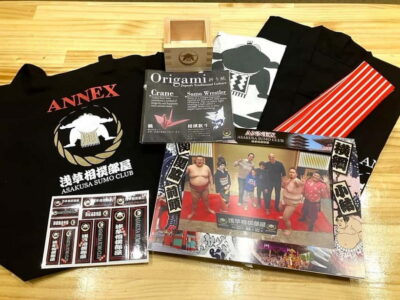
Luxury Sumo Show Experience & Japanese cuisine & Drink
Read our review →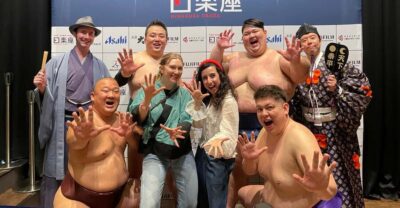
Sumo Stage Show with Bento or Snack + Fight & Photo
Read our review →Browse the lists this tour appears in