
REVIEW · GRAND SUMO TOURNAMENT TOURS
Tokyo: Sanctuary Authentic Grand Sumo Experience & Training
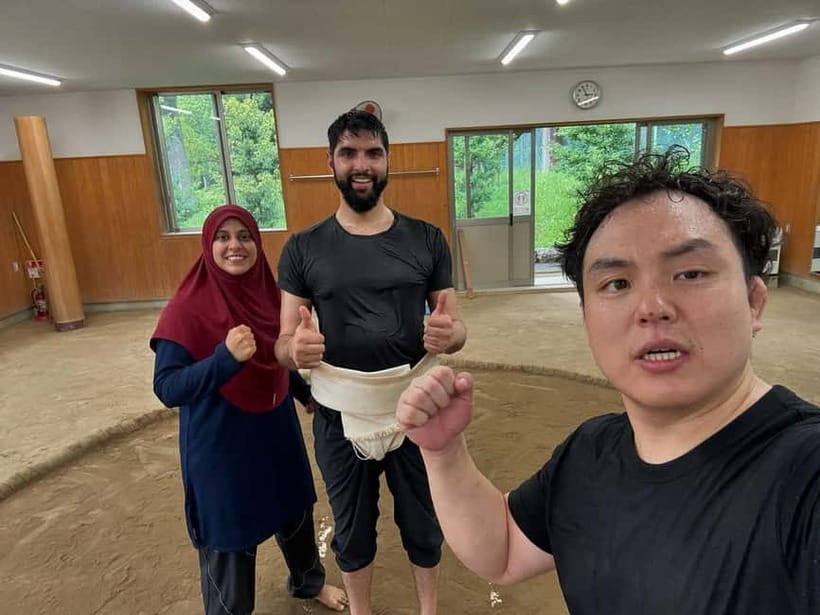
The unusual part here is simple: you do not just watch sumo, you train in a real clay dohyo and wear a proper mawashi, the traditional sumo belt. I like that the two-hour session explains the rituals and rules before asking you to wrestle, and that the coaching can be adjusted for beginners, families, and different fitness levels.
I also like the warm, relaxed approach associated with Takeshi, plus the chance to wrestle friends or even a coach at the end. The main consideration is physical effort. You will sweat heavily, so bring plenty of water, two towels, and modest expectations about leaving fresh and dry.
Key points to know before you book
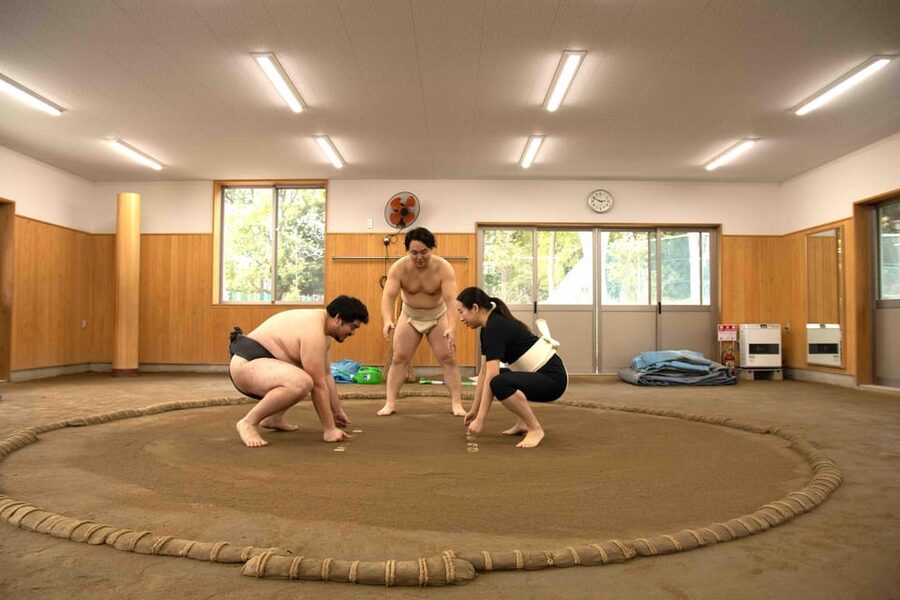
- Train in a real dohyo: You practice on a genuine clay sumo ring rather than watching a staged demonstration.
- Wear a provided mawashi: The traditional belt is included, though you may also train in your own clothes if you prefer.
- Learn the meaning behind the rituals: Warm-ups, ring etiquette, Shinto customs, and wrestling rules are explained in English and Japanese.
- Wrestle after practice: The session ends with friendly matches against your companions and, for those ready, a coach.
- Good for mixed-age groups: Children aged five and older may participate if booked, while younger children can watch.
- Plan for a serious workout: Bring drinks and two towels. A nearby shower costs ¥100 for five minutes.
Why this Tokyo sumo session feels different
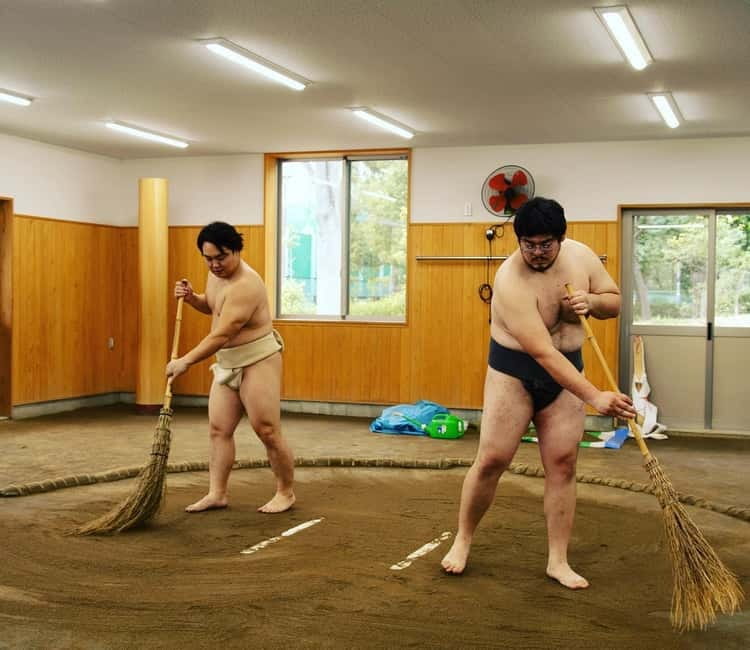
Many sumo activities in Tokyo put you on the spectator side of the dohyo. You sit, watch, take photographs, and leave with a better idea of the sport. This experience takes the opposite approach. It puts you inside the ring and asks you to learn by moving.
That difference matters. Sumo is not only two large wrestlers pushing until one steps out. The sport has a formal rhythm, strict ring rules, ritual gestures, and a demanding physical base. You get a short but useful introduction to those elements before trying them yourself.
The session is run at Heiwanomori Park Sumo-jo in Ota City, not in the main tourist center. That means you need to allow time for the train ride and the final walk, but it also gives the activity a more local setting than a staged show built around sightseeing traffic.
Amita Sumo Dojo welcomes first-timers. You do not need prior wrestling experience, special fitness, or your own equipment. That is important because the mawashi can make the activity feel intimidating before you arrive. If you prefer, you can take part in regular clothes instead.
More morning practice tours in Tokyo:
- Tokyo: Sumo Morning Practice Viewing Tour
★ 4.8 · 570 reviews - Tokyo: Sumo Morning Training Visit
★ 4.4 · 370 reviews - Tokyo: Visit Sumo Morning Practice with English Guide
★ 4.7 · 343 reviews
Getting to Heiwanomori Park Sumo-jo
The meeting point is a small office at 2-1 Heiwanomorikoen, Ota City, Tokyo, 143-0005. Heiwajima Station on the Keikyu Main Line is about a 10-minute walk away.
The station is not close to Tokyo’s major sightseeing districts, so use the listed train times when planning your day. The approximate journeys are 22 minutes from Shinagawa, 28 minutes from Shimbashi, 34 minutes from Nihonbashi, 36 minutes from Shibuya, 39 minutes from Ginza and Tsukiji, and 41 minutes from Akihabara.
From Asakusa, allow about 44 minutes. From Shinjuku, the journey is about 49 minutes, and from Ikebukuro, about 55 minutes. These times are useful for planning, but leave extra margin for transfers and finding the meeting point.
A taxi is possible, though one important warning is provided: taxis will not come to this location unless you arrange one yourself. For most people, the train and short walk are the safer choice. Download or save the walking route before you leave the station so you are not trying to navigate while rushing to a start time.
The opening: stretching, warm-ups, and ring manners
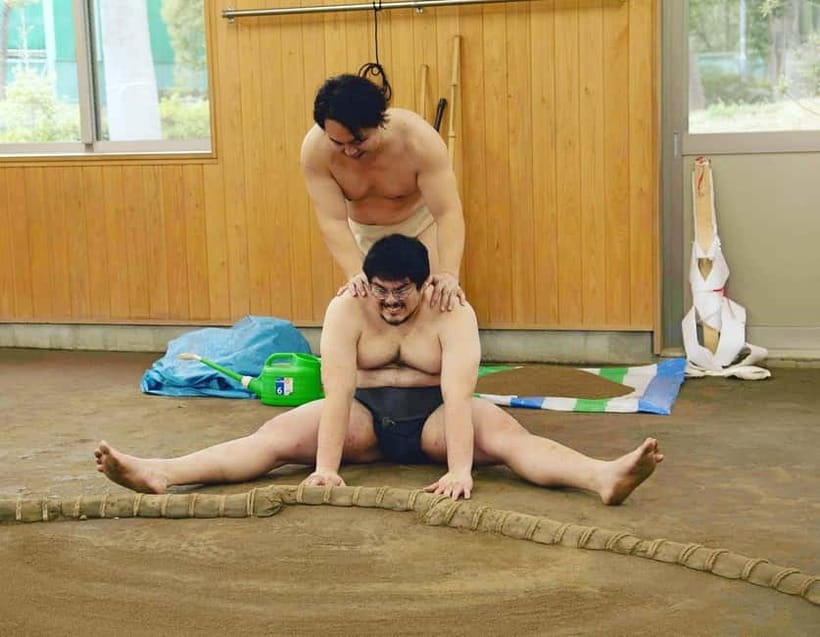
The first part is not a quick photo opportunity. You begin with the basic physical work used in sumo training, including stretching and warm-ups.
This is where the session earns its price. A demonstration alone can show you what sumo looks like, but warm-ups help explain why sumo wrestlers need strength, balance, flexibility, and control. You get a practical sense of the work behind the short matches seen in competition.
The coach also introduces the dohyo and explains the rules for wrestling inside it. Sumo is fought in a limited space, and stepping outside the ring can decide a match. The instructions give you a safer and clearer way to try the sport without treating the ring like an ordinary wrestling mat.
The teaching is offered in English and Japanese. Takeshi is named as a warm and easy-going host, and his role is especially useful for beginners who need simple instructions and encouragement before getting into the ring.
Shinto customs and the meaning of the rituals
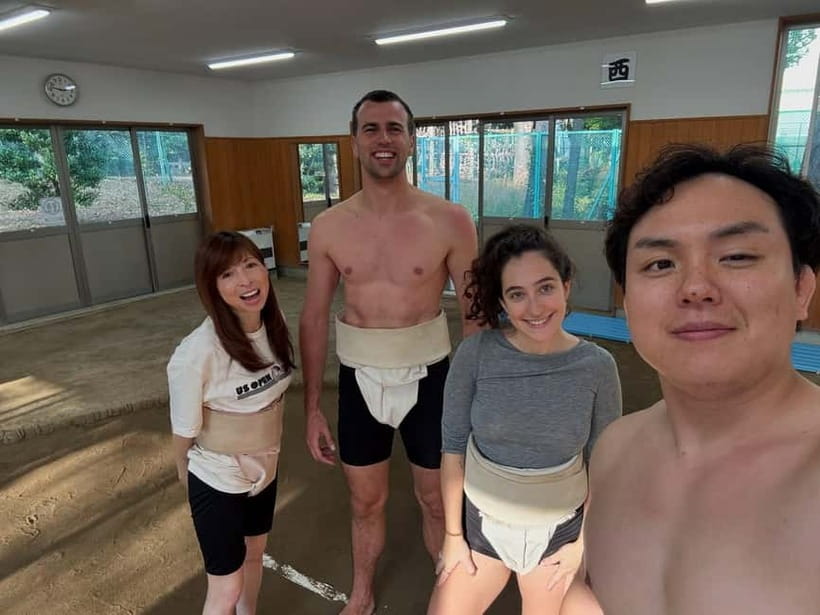
Sumo grew from religious and ceremonial traditions as well as athletic competition. You will follow demonstrations of traditional sumo and Shinto rituals during the session.
The details are not just decoration. Rituals help explain the respect shown toward the dohyo, the controlled behavior before a bout, and the connection between sumo and Japanese custom. You get a better sense of why the sport is presented with such care and formality.
Families may find this part especially helpful. One family of four used the warm-ups and rituals as a way to learn together before trying matches. That order works well because you understand the gestures before being asked to copy them.
Expect a practical lesson rather than a long cultural lecture. The goal is to prepare you for training and wrestling, so the cultural information is tied directly to what you are doing.
More tournament tours in Tokyo:
- Tokyo: Sumo Tournament Tour with Chair Seat Tickets
★ 4.6 · 753 reviews - Tokyo Grand Sumo Tournament Viewing Tour with Tickets
★ 5.0 · 692 reviews - Tokyo Sumo Wrestling Tournament Experience
★ 5.0 · 660 reviews - Ultimate Sumo Tournament: Tokyo, Osaka, Nagoya, Fukuoka
★ 5.0 · 468 reviews
Putting on the mawashi, or choosing your own clothes
A mawashi is provided at no extra cost. This is the traditional belt worn by sumo wrestlers, and wearing one gives the activity a strong sense of place that ordinary sports clothing cannot quite match.
Still, you do not have to wear it. The information for this activity specifically says you may take part in your own clothes if you prefer. That choice can make a big difference for families, people who feel shy about changing, or anyone who wants to participate without committing fully to the traditional outfit.
You should think about comfort and movement. The session includes warm-ups and wrestling, so avoid clothing that restricts your legs or makes you uncomfortable. The dojo provides the mawashi, but you are responsible for bringing what you need for the rest of the workout.
A towel is essential. I would bring two: one for training and one for the shower afterward. The guidance warns that you will sweat heavily, and a nearby shower room costs ¥100 for five minutes.
Learning the basic wrestling before the matches
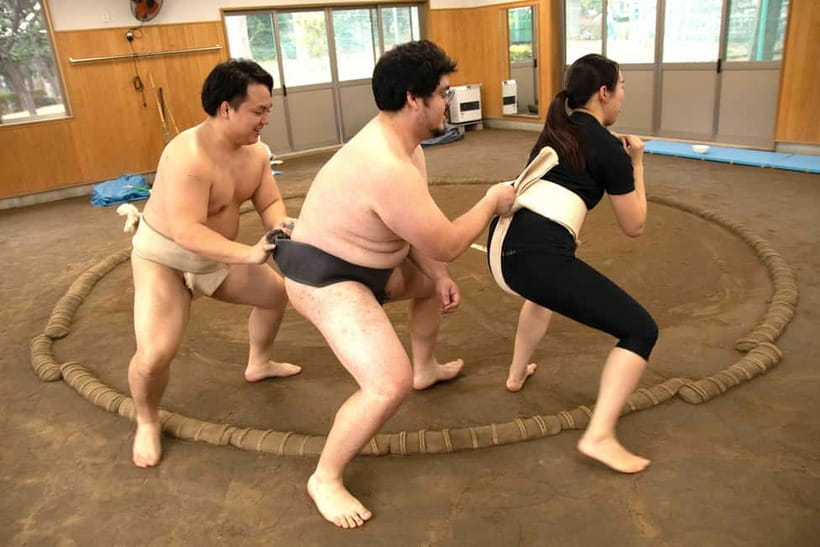
After the introduction, you get to practice the fundamentals of sumo wrestling. The coach demonstrates how to use the ring, how to face an opponent, and how the basic rules affect your movement.
The experience is not designed only for people who are already strong or athletic. The activities can be adapted to each participant’s ability. That makes it a sensible choice for a family or group with different ages and fitness levels.
You should still treat it as a real physical activity. Sumo uses your legs, hips, balance, and upper body. Even a short bout can leave you breathing hard, especially after the warm-ups. Go at the pace set by the coach and pay attention to instructions inside the ring.
This is also the point where the session becomes more personal than a show. You are not watching a professional perform a carefully rehearsed demonstration. You are trying to understand the sport through your own body, with plenty of room for mistakes and laughter.
The final matches with friends and coaches
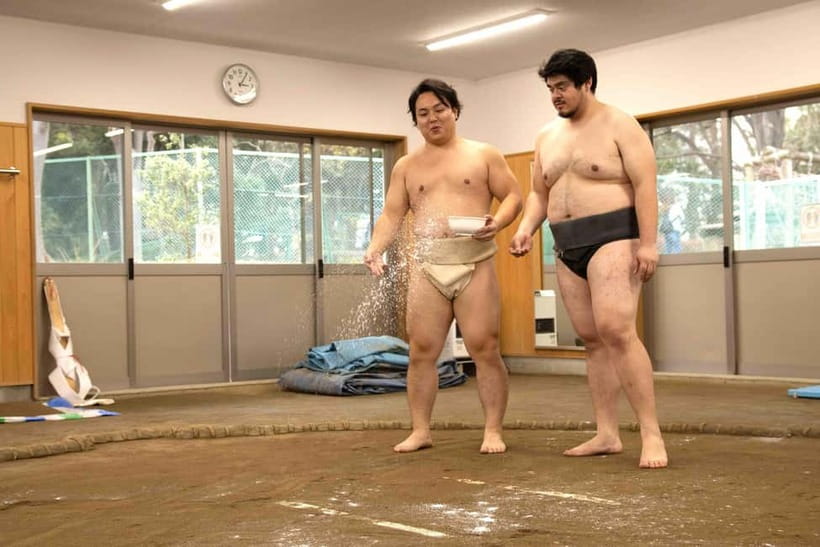
The closing part gives you the chance to wrestle your companions. If you are brave enough, you may also take on a coach.
That final step is likely to be the most memorable part for many people. You have already learned the ring rules and practiced the movements, so the matches feel like a natural payoff rather than a random stunt. Families can compete against one another, friends can test their balance, and children who meet the age requirement can take part alongside adults.
You should not assume that size alone decides the outcome. Sumo depends on balance, positioning, timing, and staying inside the dohyo. A coach can adjust the match to suit the participant, though the activity does not promise a particular type of bout.
One family group included a 13-year-old and an 18-year-old, and both took part. Another participant had a son with five years of wrestling experience and found the session suited his interest. These details suggest the activity can work for both complete beginners and people who already enjoy wrestling, although the coach will determine how each match proceeds.
The attraction of wrestling a coach is not that you are likely to win. It is the chance to feel the difference between casual play with friends and a match against someone who understands the sport. Keep your pride light and enjoy the lesson.
Is ¥19,900 a fair price?
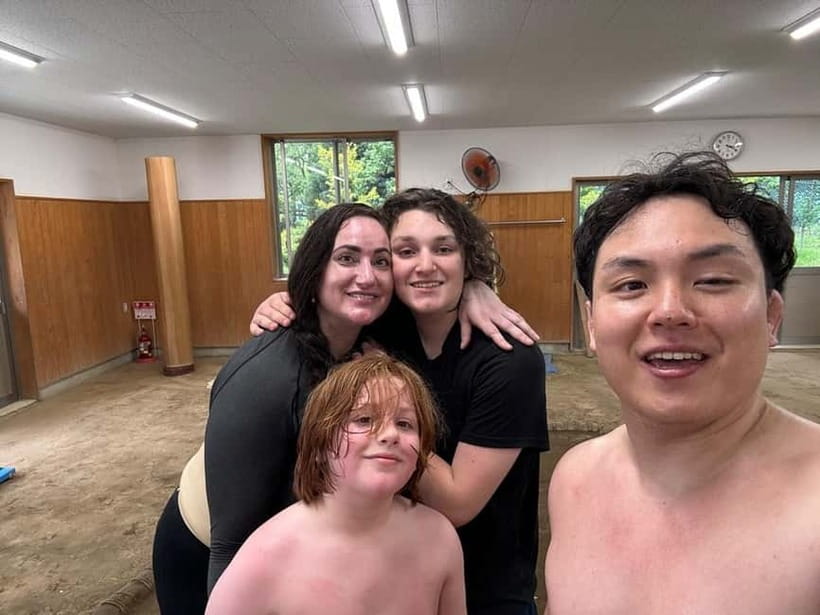
At ¥19,900, or about $199, this is not a cheap two-hour activity. You are paying more than you would for a basic museum visit or a sumo-themed photo stop.
The value comes from access and participation. The fee includes instruction from a real sumo coach, use of a real clay dohyo, a mawashi at no extra charge, explanations of the rituals, and supervised matches. You are paying for something that is difficult to arrange on your own.
For a family or small group that wants one memorable activity in Tokyo, the price may be reasonable because everyone can take part. It is also a better fit for someone who wants to understand sumo physically rather than simply collect a photograph.
The value is weaker if you only want to watch professional sumo. You may prefer a tournament ticket or a simpler demonstration. This session is for participation, exercise, and cultural context, not passive entertainment.
The two-hour length is well judged. It gives you enough time for instruction and several stages of practice without turning the day into a full athletic commitment. You should still protect the rest of your schedule from being too tight, since changing, showering, and getting back to the station take time.
Who should book this experience?
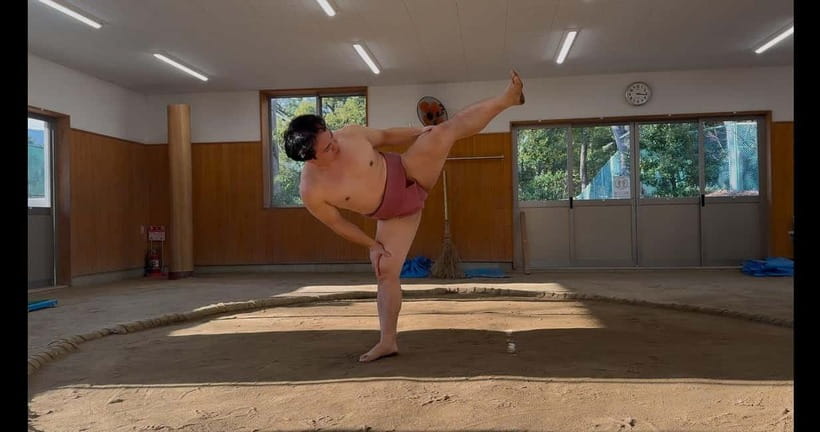
I would recommend it to families with children aged five and older, friends who enjoy trying unusual activities, and anyone who wants more than a standard Tokyo sightseeing stop. It also suits people who are curious about Japanese martial arts but have no prior training.
Children under four may accompany you but can only observe. Children aged five and older may watch without charge, but each child who participates needs a separate booking. That distinction is easy to miss, so plan your reservation around the children who will actually enter the ring.
The experience suits all genders and a wide range of fitness levels, based on the way the activity is structured. You do not need to be a sumo fan before arriving. The instruction gives you enough background to understand what you are doing.
I would hesitate to recommend it to anyone who dislikes close physical contact, changing clothes, or sweating. You should also skip it if you want a polished stage performance with no exertion. This is a workout in a real training space, not a comfortable theater show.
Practical details that make the day easier
Book at least two days ahead, even though the booking system may accept reservations closer to the start time. Early booking gives the dojo more time to prepare and reduces the risk of losing your preferred session.
Bring several bottles of water. One drink may not be enough for warm-ups and matches, especially if you are visiting Tokyo during hot weather. Pack two towels, one for the workout and one for the shower.
Photography and video are allowed, including sharing on social media, but your camera cannot interfere with other participants. Do not record anyone who has not given permission, and follow any additional instructions from the staff.
There is no food served during the activity. Eat beforehand, but avoid arriving after a heavy meal because the session includes bending, pushing, and physical exertion.
The activity offers free cancellation up to 24 hours before the start time, and you can reserve now and pay later. Those policies help if your Tokyo schedule is still moving, but they do not remove the need to arrive on time at the park.
My verdict: a strong choice for active Tokyo sightseeing
I would book this if I wanted a hands-on introduction to sumo rather than a performance built for spectators. The chance to train in a real dohyo, wear a mawashi, learn the rituals, and wrestle friends gives the two hours a clear purpose.
The best parts are the personal coaching, the family-friendly structure, and the move from explanation to actual matches. Takeshi’s relaxed style also seems suited to people who may feel nervous about trying a traditional sport for the first time.
The tradeoffs are the price, the trip to Ota City, and the amount of sweat involved. You need water, towels, and enough time around the session for changing and showering.
Book it if you want to leave Tokyo with a story that comes from doing something, not just seeing it. Skip it if you prefer a quiet cultural visit or only want to watch professional sumo.
FAQ
Do I need previous sumo or wrestling experience?
No. The activity is designed for beginners, and the coach teaches the fundamentals, warm-ups, rituals, and ring rules before the matches.
Is the mawashi included?
Yes. A mawashi is provided at no extra cost. You may also participate in your own clothes if you prefer.
Is the training conducted in English?
Yes. Instruction is offered in both English and Japanese.
Can children participate?
Children under four may accompany you but can only observe. Children aged five and older may observe for free, and each child who wants to participate needs a separate booking.
What should I bring?
Bring drinks and a towel. Two towels are strongly recommended, one for training and one for showering afterward.
Is there a shower nearby?
Yes. A shower room near the venue costs ¥100 for five minutes.
Is food included?
No. Food is not served during the activity.
Where is the meeting point?
The meeting point is the small office at Heiwanomori Park Sumo-jo, 2-1 Heiwanomorikoen, Ota City, Tokyo, 143-0005. It is about a 10-minute walk from Heiwajima Station on the Keikyu Main Line.
Newest sumo experiences in Tokyo
- Tokyo 6hr Private Guided Tour & Sumo Show Lunch★ 5.0 · 3 reviews
- Tokyo Grand Sumo Tournament Viewing Tour★ 5.0 · 2 reviews
- Tokyo Sumo History Tour with Chanko Nabe Lunch★ 5.0 · 3 reviews
- Tokyo Highlights Tour: Sumo, Sushi, Tea, and Tokyo Tower★ 5.0 · 2 reviews
- Tokyo: Know about Hokusai and Sumo culture in 2.5 hours★ 5.0 · 2 reviews
- TOKYO , No1 Yokozuna Stable Morning Practice in Ryogoku★ 4.5 · 3 reviews
- Tokyo: Watching Sumo and Ryogoku Area Walking Tour★ 4.0 · 5 reviews
- Tokyo Sumo Practice Watching & Visit Town from Samurai era★ 5.0 · 8 reviews
Grand Sumo Tournament Tours, compared.
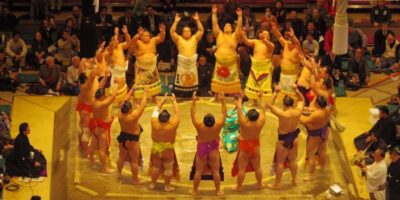
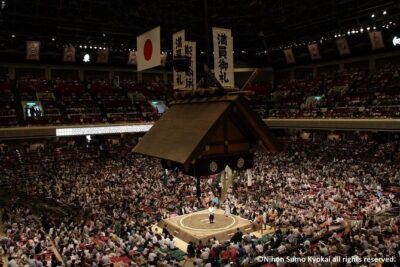
Tokyo Grand Sumo Tournament Viewing Tour with Tickets
Read our review →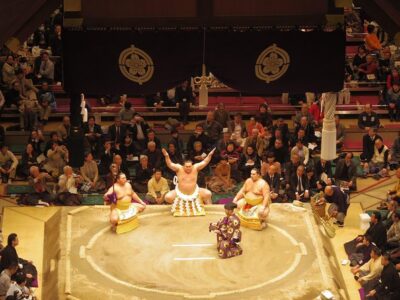
Ultimate Sumo Tournament: Tokyo, Osaka, Nagoya, Fukuoka
Read our review →
Sumo Tournament with Guide & Assigned Reserved Seat
Read our review →
Sumo Wrestling Tournament with Chair Seat Tickets
Read our review →November Sumo Tournament tour in Fukuoka (Tickets Included)
Read our review →Browse the lists this tour appears in