
REVIEW · SUMO MORNING PRACTICE TOURS
Tokyo: Sumo Morning Practice Viewing Tour
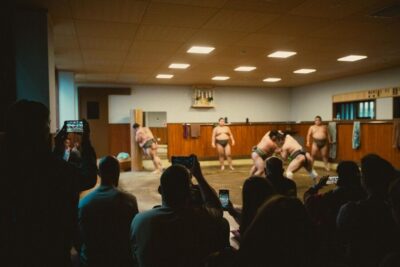
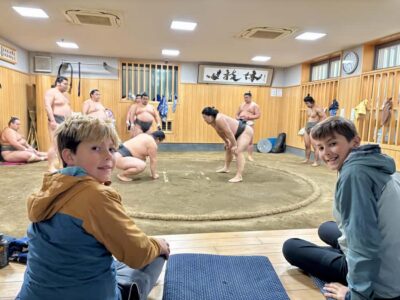
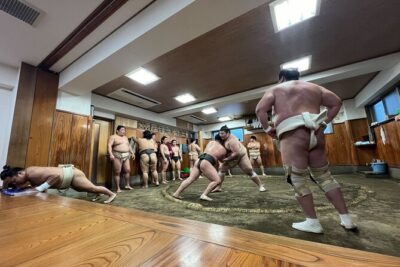
Watching sumo from a stadium seat is one thing. Sitting quietly inside a working sumo stable, only a few feet from wrestlers as they train, is another. You see the strain, noise, rituals, and concentration that a tournament crowd can hide.
I like two things here. First, the access feels real: this is where wrestlers live and practice, not a staged dinner show. Second, the guides, including Yuko, Noriko, Oku San, Mako, and Kaz, add useful context without drowning out the action. The main drawback is that you must sit still and silent on the floor, and you cannot leave until practice ends.
Key points to know before booking
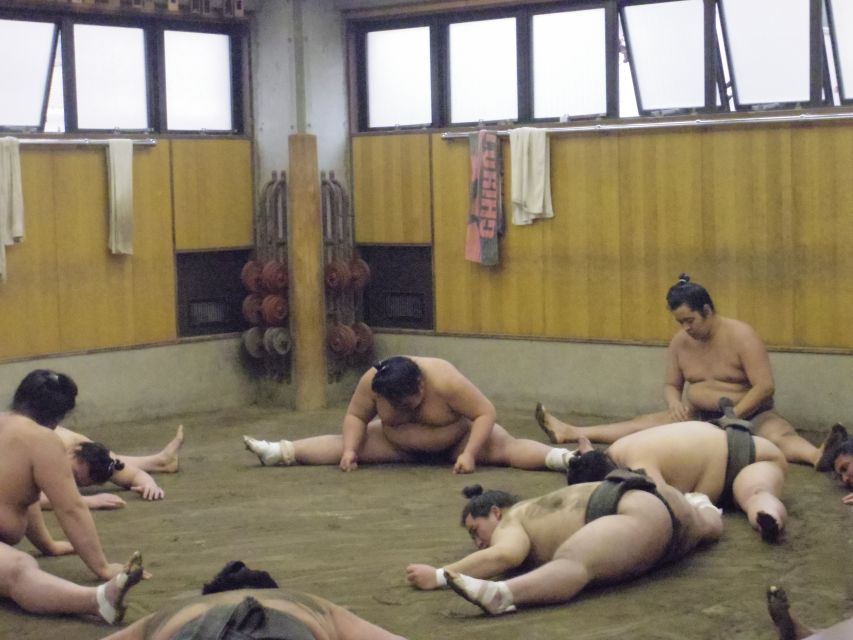
- Training happens up close: You watch wrestlers work through drills and bouts from only a few feet away.
- Ryogoku is the right setting: The stable is in Tokyo’s sumo district, near the National Sumo Arena and other stables.
- Silence is part of the experience: Your guide may use written notes or quiet explanations during practice.
- Photos are possible, not promised: A picture with wrestlers depends on the day and the stable’s schedule.
- The session can change length: Practice usually lasts 60 to 90 minutes, and the full activity takes about 90 minutes to two hours.
- This suits patient adults: Children under 11 cannot join, and the experience is not suitable for people with mobility impairments.
Why a sumo stable is more revealing than a tournament
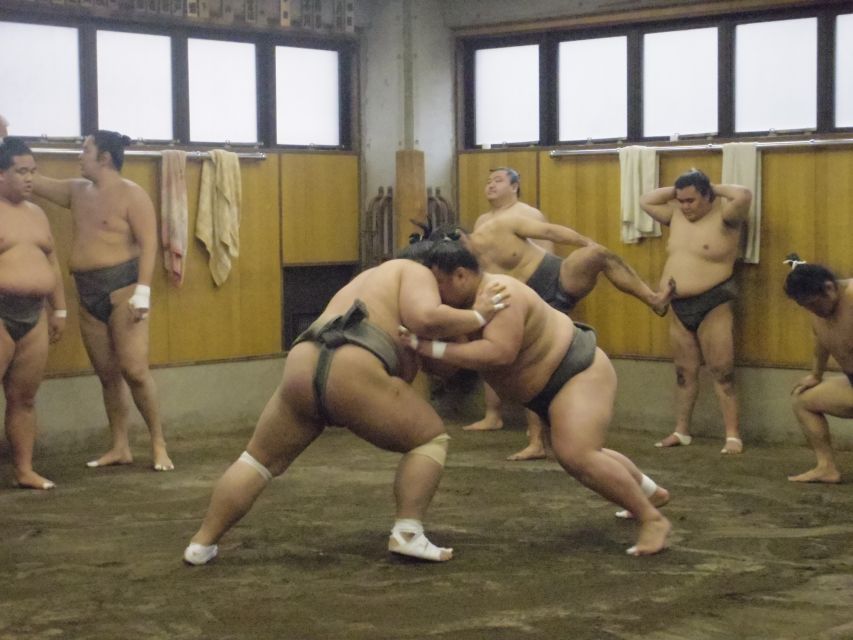
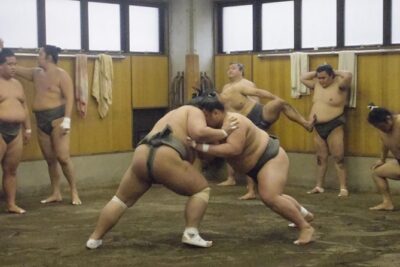
A sumo tournament gives you the spectacle: banners, formal introductions, a packed arena, and bouts that can end in seconds. A morning practice shows the work behind those brief contests. You watch wrestlers repeat movements, push through drills, and test one another under the eye of the stable master and coaches.
That difference matters. Sumo is built around small changes in balance, footwork, timing, and force. From close range, you can see how much effort goes into a sport that may look simple when viewed from a distance. A bout can be over almost instantly, but the training that prepares a wrestler for it is demanding and methodical.
The setting also gives you a glimpse of the wrestlers’ shared way of life. A stable is their home and workplace, so the atmosphere is not arranged for visitors. You are being allowed into a private place during working hours. That privilege comes with rules, and respecting them is central to the experience.
For me, this is especially useful if you cannot get tournament tickets. It is not a substitute for a live tournament, but it gives you a close look at the people and techniques you would otherwise see from far away. If you attend a tournament later, you will understand much more of what happens in the ring.
More morning practice tours in Tokyo:
- Tokyo: Sumo Morning Training Visit
★ 4.4 · 370 reviews - Tokyo: Visit Sumo Morning Practice with English Guide
★ 4.7 · 343 reviews - Tokyo: Sumo Morning Practice Tour at Sumida City
★ 4.8 · 308 reviews
Meeting in Ryogoku and reaching the stable
The tour begins in Ryogoku, the Tokyo district most closely tied to sumo. Meeting points vary by the option you book, so check the exact location carefully rather than assuming every departure starts at the same place. After meeting your guide, you may take a train to the stable, followed by a walk.
The route itself can add to the morning. Ryogoku has several stables, and you might pass other training facilities on the way. The National Sumo Arena is also nearby. One particularly useful detail is that the end point may differ from the meeting point, so do not plan a tight connection immediately afterward.
Arrive early. Seating may be arranged by arrival, and early groups can get the front row. That matters here because the viewing area is intimate and the wrestlers may be only a few feet away. A late arrival could mean sitting farther to the side or behind another group, making photographs and sightlines less favorable.
Guides have been praised for keeping groups together and explaining the rules before arrival. Oku San, for example, has been described as careful about safety and clear about what to do inside. That preparation is valuable because the stable is not a casual sightseeing stop. You need to know the etiquette before you cross the threshold.
Entering a working sumo stable
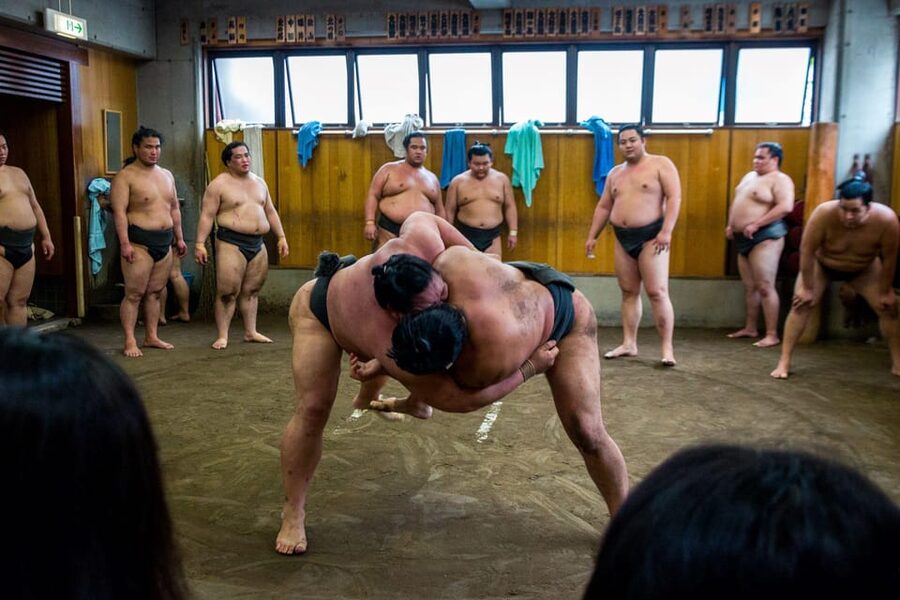
The first few minutes inside set the tone. You remove yourself from normal sightseeing mode and become a quiet observer. Hats and sunglasses are not allowed, and modest clothing is expected. Put your phone on silent before practice begins.
You must not stand up or move around while the wrestlers are training. Food and drinks are prohibited, as are flash photographs and video recordings. The no-video rule may disappoint you, but it also protects the working atmosphere. You have to watch closely instead of thinking about filming the best moment.
The seating is generally on the floor, so this is not a comfortable theater setup. You may be there for an hour or longer, mostly still and quiet. If you have trouble sitting on the floor, or if you need to move around often, this activity will be difficult. The operator specifically excludes people with mobility impairments.
The stable master and coaches oversee the session, while the wrestlers train in front of you. On some days, the person leading the stable may answer questions after practice. One session included a question-and-answer period with a former wrestler who had detailed insight into the sport and stable life. That kind of access depends on the day, so treat it as a possible bonus rather than a guarantee.
What the 60 to 90 minute practice looks like
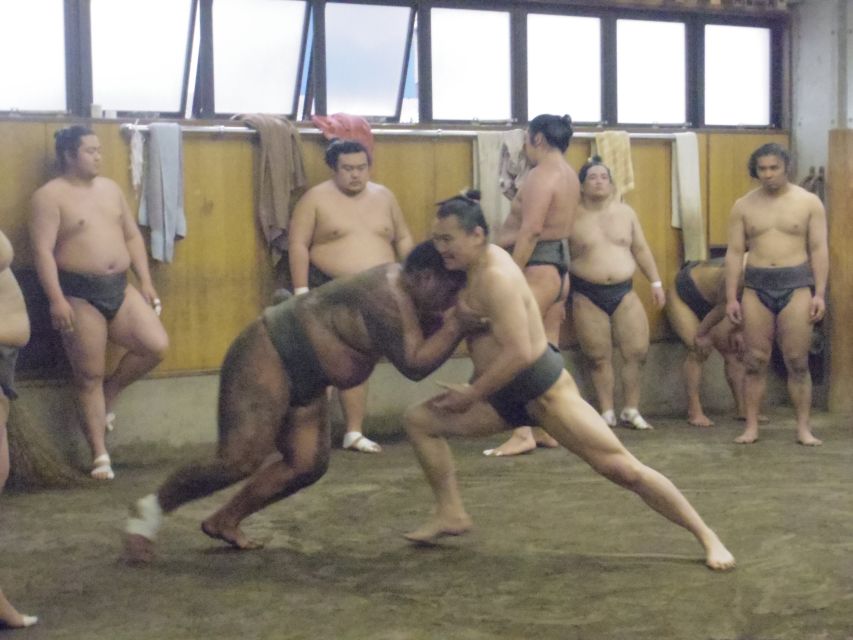
The formal outline is simple. Your guide first explains sumo, then leads you to the stable. You watch the practice through to its end, usually for 60 to 90 minutes, and then the tour finishes.
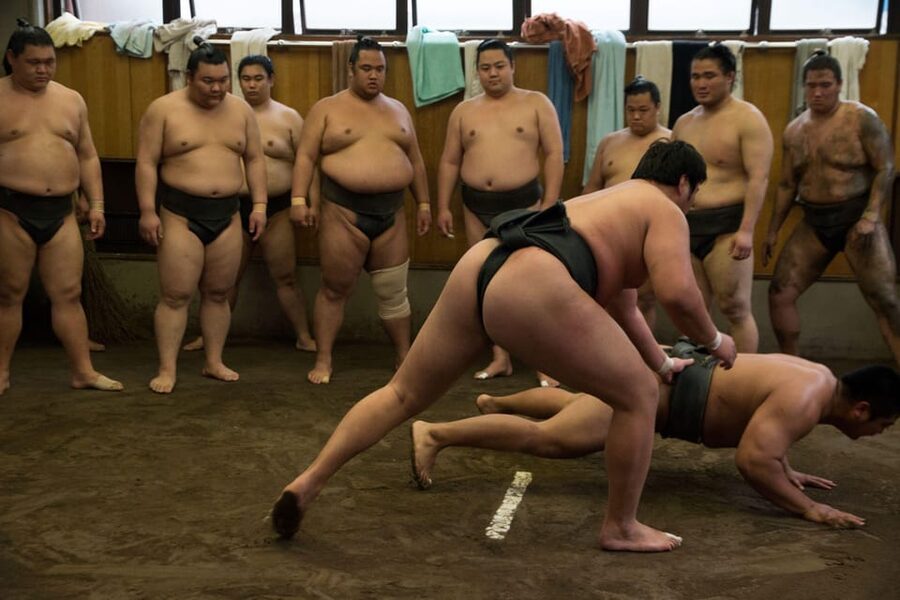
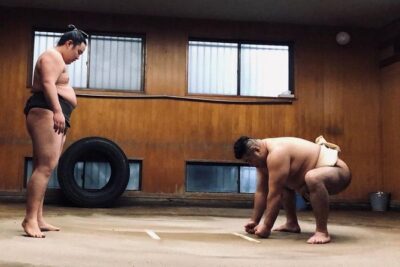
The practice itself can include warmups, repeated drills, technique work, and live bouts. You may see wrestlers take turns pushing, grappling, and trying to force an opponent out of the ring or onto the ground. The physical impact is more striking in person. The sound of bodies meeting and feet working against the floor can be startling at first.
Do not expect a staged performance with a neat beginning, middle, and finale. Training follows the stable’s routine, not a sightseeing timetable. Some sections may feel repetitive, especially if you know little about sumo. That is why the guide’s explanations matter.
During practice, guides may stay quiet so they do not disturb the wrestlers. Yuko has used written information and notes to explain names, techniques, and customs without breaking the silence. Other guides may pass around explanation cards or answer questions on paper. You should listen before the session begins and use the quiet materials during the bouts.
The need for silence can make some explanations hard to hear. One visitor found that even the guide’s audio explanations were difficult to catch during loud clashes because everyone had to remain quiet. I would treat that as part of the tradeoff: the less talking in the room, the more genuine the training feels.
The wrestlers’ intensity is the main reward. You may see young athletes pursuing higher ranks, as well as established names, depending on the stable and the day. One morning included former yokozuna Terunofuji overseeing a group of wrestlers, along with well-known competitors such as Enho and Takerufuji. There is no promise that particular wrestlers will be present, but the chance of seeing serious athletes at work adds to the appeal.
More sumo experiences in Tokyo:
- Tokyo: Sumo Show Experience with Chicken Hot Pot and a Photo
★ 4.8 · 6,678 reviews - Tokyo: Sumo Show and Dining Experience
★ 4.8 · 2,742 reviews - the SUMO show
★ 5.0 · 1,960 reviews - Tokyo Shinjuku Sumo Show & Experience with Photo
★ 5.0 · 1,750 reviews
The guide’s role before and during practice
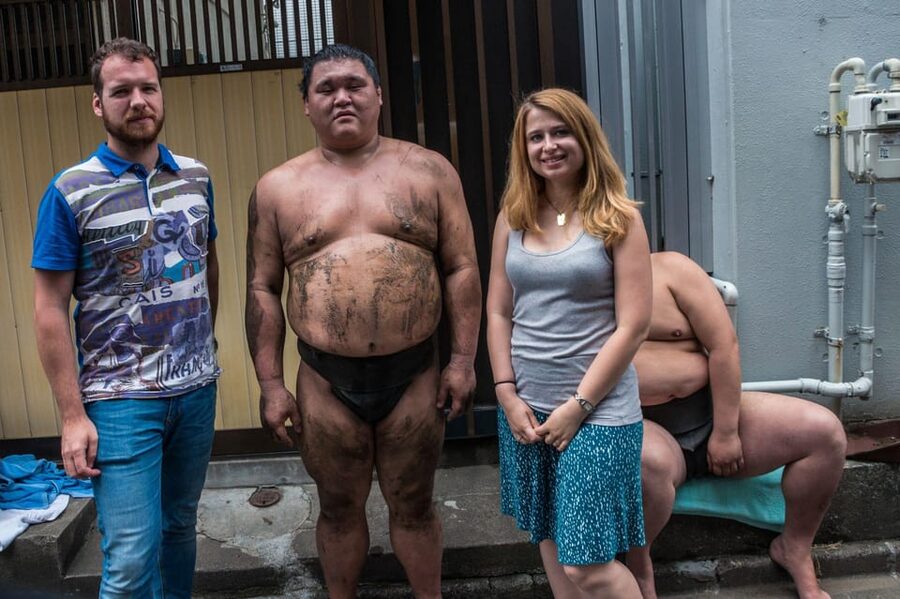
The English-speaking guide is more than a person who leads you from a station. The guide provides the cultural frame that turns physical training into something you can understand.
You learn why sumo is tied to Shinto beliefs, how a bout is won, and what the wrestlers are preparing for. Sumo tournaments take place six times a year, and the practice you see may be part of the build-up to one of them. The guide can also point out local sights and explain why Ryogoku is associated with the sport.
The strongest guiding style here is restrained. Jack, one guide, was appreciated for explaining the technical side and history without talking constantly. That balance is important. You need enough information to follow the action, but not so much that you spend the whole session looking at your guide instead of the wrestlers.
Guides named in the available tour details include Yuko, Yoko, Noriko, Oku San, Mako, Kaz, Taku, Nobu, Miwako, and Tad. Your guide will depend on the date and departure. The consistent feature is English-language support, with an emphasis on rules, customs, and practical behavior inside the stable.
Photos and contact with the wrestlers
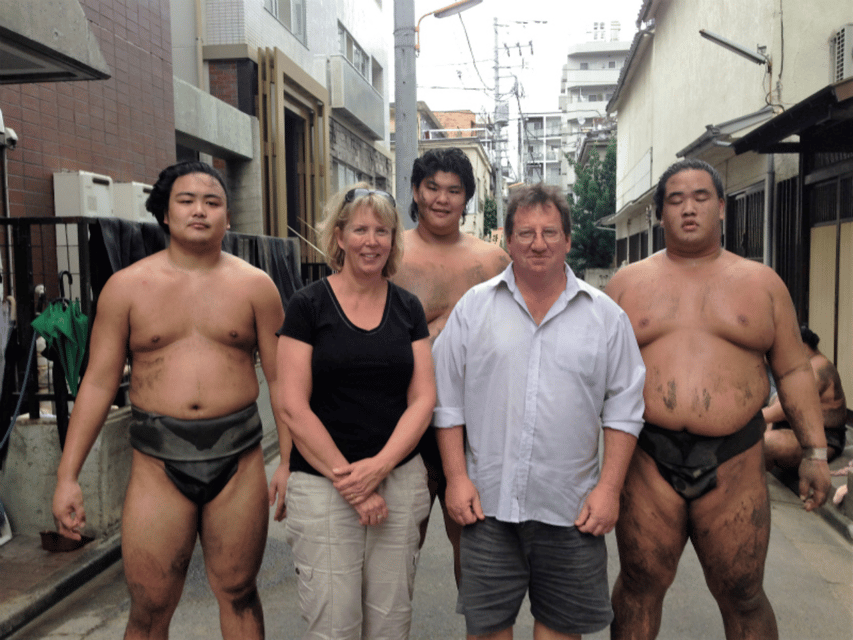
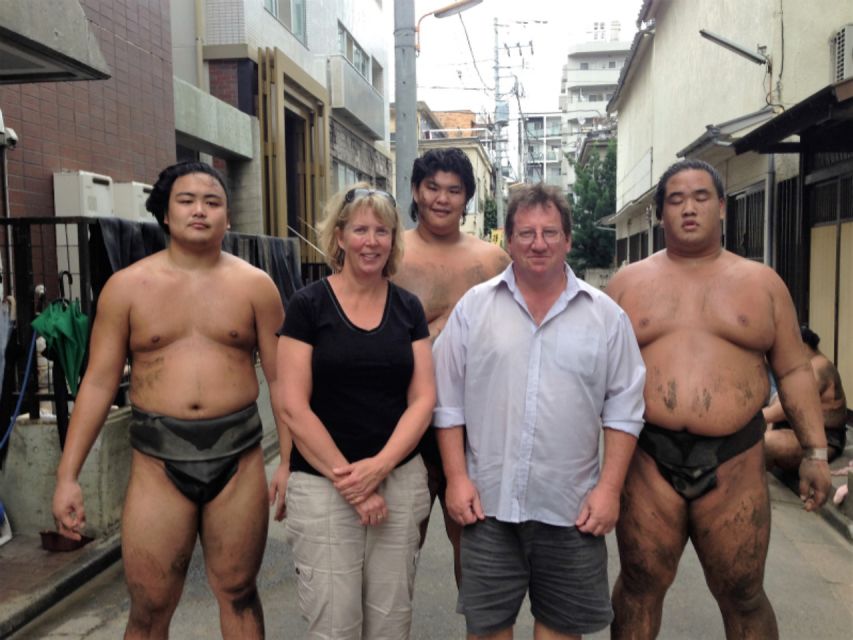
A photograph with wrestlers may be available after practice. It is not guaranteed, and you should not expect it to happen every day. The timing depends on the stable, the wrestlers’ schedules, and whether the atmosphere allows it.
When photos are offered, they can be a memorable finish because you have already watched the athletes work. It feels different from posing with performers at a show. Still, the wrestlers are at work, so keep the interaction brief and follow your guide’s instructions.
Some sessions include a chance to speak with the stable master or ask questions after training. This can help explain the daily discipline behind what you have just seen. You might learn more about technique, the wrestlers’ lives, or the customs of the stable, but the exact format varies.
Do not plan on video footage. Recording is forbidden, as is flash photography. Bring your attention instead of a camera plan. You can take photos only when permitted, and a front-row position will give you a better chance of getting useful pictures without disturbing anyone.
Is $81 a fair price?
At $81 per person, this is not a cheap morning activity. You are paying for access that is normally restricted, a licensed English-speaking guide, local coordination, and a small window into a workplace that is not generally open to casual visitors.
The value depends on what you want from Tokyo. If you only want to watch a few sumo bouts, a tournament ticket may be a better match. If you want an easy, polished attraction with plenty of movement, food, and photography, this may feel too strict.
I think the price makes sense for three types of visitor. First, a sumo fan gets close access and a chance to see training rather than only competition. Second, a first-time visitor gets a clear introduction to a major Japanese tradition. Third, anyone unable to attend a tournament gets a more personal look at the sport.
The activity can last from 90 minutes to two hours, but the practice itself may run shorter or longer than expected. Build in extra time after the tour. You are required to stay until the end, usually around 9:00 to 10:00 in the morning, and once you leave the stable, you cannot re-enter.
Free cancellation up to 24 hours before the activity and a reserve-now, pay-later option reduce the risk if your Tokyo schedule is still changing. Those policies are useful, but they do not change the basic need to keep your morning open.
Who will enjoy this most
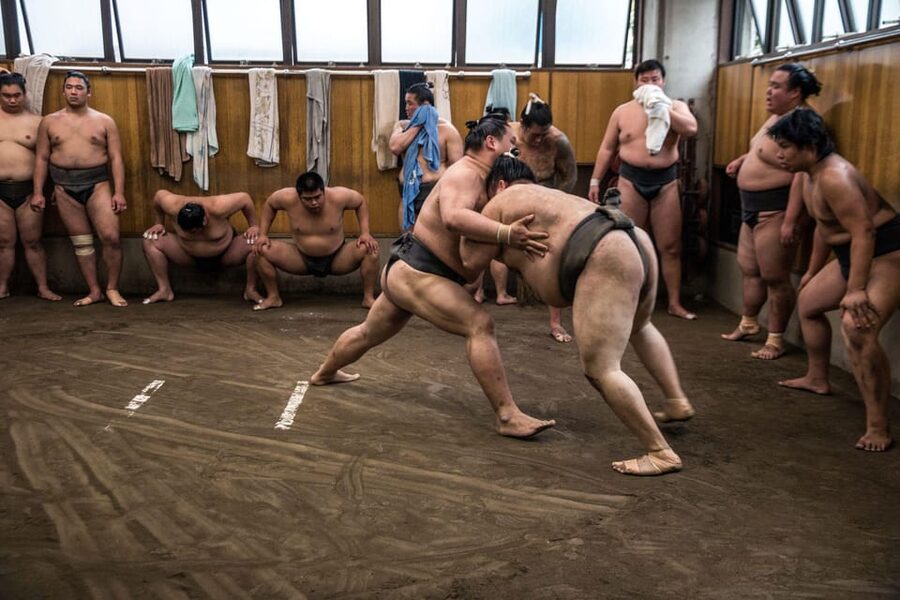
I would recommend this to adults and older teenagers who can sit quietly and pay attention for an extended period. The minimum age is 11. Even older children may find the slow, silent format hard if they are expecting a show.
It is a strong choice for anyone interested in martial arts, Japanese customs, sports training, or local life beyond the standard sightseeing route. One martial artist appreciated seeing the drills, tactics, and customs in person. You do not need a prior interest in sumo, but curiosity helps.
It is less suitable if you need accessible seating, cannot sit on the floor, dislike strict rules, or have a firm appointment soon afterward. The group may also be larger than you expect. One account described around 30 people, although group size can vary. Larger groups make an early arrival even more useful.
You should also be comfortable with uncertainty. You may see famous wrestlers, meet the stable master, or take a photo afterward. You may instead watch practice quietly and leave when it ends. The core promise is the training session, not a particular wrestler or a guaranteed photo.
Useful planning tips for the morning
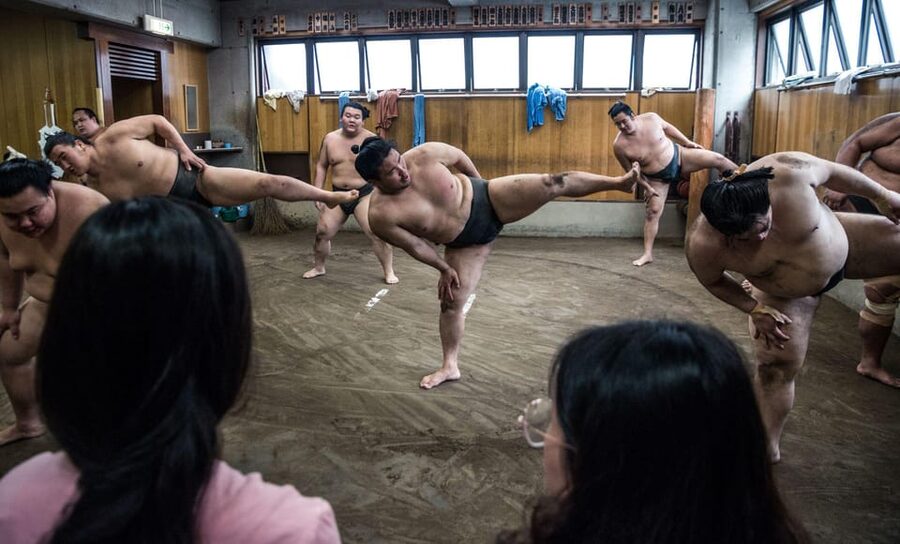
- Arrive early so you have the best chance of a clear view.
- Wear modest clothing suitable for a working religious and athletic setting.
- Leave hats, sunglasses, food, and drinks behind.
- Silence your phone before entering.
- Do not use flash photography or record video.
- Avoid scheduling a tight appointment after the tour.
- Tell the operator in advance if you must leave at a particular time, though leaving early is not normally allowed.
- Check the meeting point and possible ending location carefully.
- Be ready to sit on the floor without standing or moving during practice.
Afterward, Ryogoku makes a natural place to continue your morning. Sumo-related restaurants are easy to reach, and the National Sumo Arena is nearby. You can also use the neighborhood walk to place the stable visit in context, especially if this is your first time in the district.
Should you book the Tokyo sumo morning practice?
Book it if you want a close, serious look at sumo rather than a tourist show. The best parts are the proximity, the quiet concentration, and the chance to see how hard the wrestlers train before a tournament. Guides such as Yuko and Noriko can help you follow what is happening without taking attention away from the practice.
Skip it if you need flexible timing, dislike floor seating, want to film everything, or expect a guaranteed meeting with famous wrestlers. The tour asks you to behave like a respectful visitor in someone else’s workplace.
For the right person, $81 buys something rare: a view of sumo before the lights, crowds, and formal ceremony. Arrive early, stay still, listen closely, and let the training speak for itself.
FAQ
Where does the sumo morning practice tour take place?
It takes place at a real sumo stable in Ryogoku, Tokyo, an area known for its sumo stadium and sumo-related facilities.
How long does the experience last?
The full activity lasts about 90 minutes to two hours. The morning practice itself usually lasts 60 to 90 minutes, but the exact length can change.
Is the tour conducted in English?
Yes. An English-speaking live guide leads the experience and explains sumo, its history, customs, and training.
Can I take a photo with the wrestlers?
A photo with wrestlers may be available after practice, but it depends on the day and the stable’s schedule. It is not guaranteed.
Can I record video inside the stable?
No. Video recording, flash photography, hats, sunglasses, food, and drinks are not allowed.
Do I have to stay until the practice ends?
Yes. You must remain until the end of practice, usually around 9:00 to 10:00 in the morning. Once you leave the stable, re-entry is not allowed.
Is the experience suitable for children?
No. The tour is not suitable for children under 11. Participants also need to remain quiet and still during practice.
Is the tour suitable for people with mobility impairments?
No. The activity is listed as unsuitable for people with mobility impairments, and seating may require sitting on the floor.
Can the meeting and ending points be different?
Yes. The meeting point depends on the option booked, and the ending location may differ from where you started. You may also take a train to the stable after meeting your guide.
Newest sumo experiences in Tokyo
- Tokyo Sumo History Tour with Chanko Nabe Lunch★ 5.0 · 3 reviews
- Tokyo Highlights Tour: Sumo, Sushi, Tea, and Tokyo Tower★ 5.0 · 2 reviews
- Tokyo: Know about Hokusai and Sumo culture in 2.5 hours★ 5.0 · 2 reviews
- TOKYO , No1 Yokozuna Stable Morning Practice in Ryogoku★ 4.5 · 3 reviews
- Tokyo 6hr Private Guided Tour & Sumo Show Lunch★ 5.0 · 3 reviews
- Tokyo Grand Sumo Tournament Viewing Tour★ 5.0 · 2 reviews
- Tokyo: Enjoy Sumo match and know about it! [Ticket included]★ 4.4 · 7 reviews
- Complete Sumo Experience in Tokyo★ 4.5 · 3 reviews
Sumo Morning Practice Tours, compared.
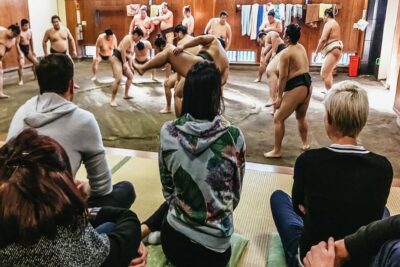
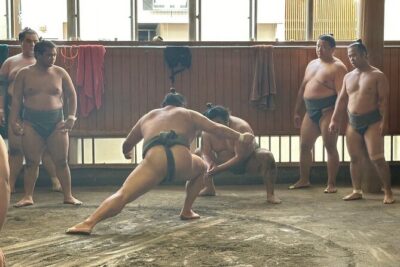
Tokyo Ryogoku Sumo Morning Practice + Photo Shoot with Wrestlers
Read our review →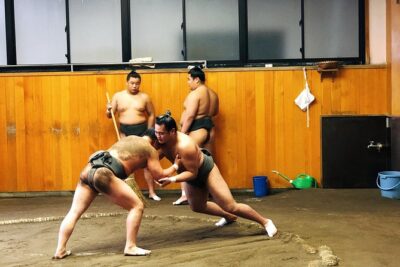
Tokyo Sumo Morning Training/ Sumo Practice with Wrestlers
Read our review →Browse the lists this tour appears in