
REVIEW · RYOGOKU SUMO TOURS
Tokyo Ryogoku Sumo Morning Practice + Photo Shoot with Wrestlers
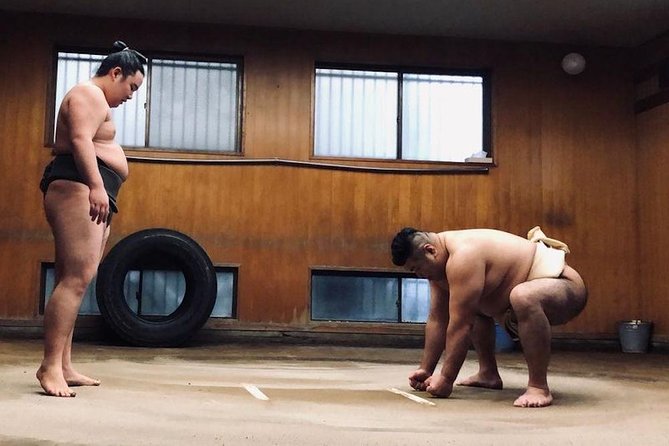
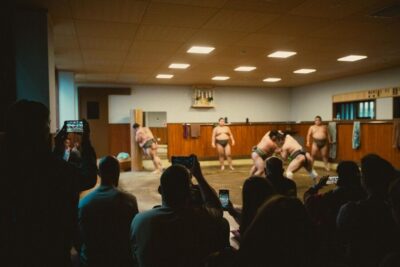
Sumo morning practice is not a staged show. You sit quietly on a tatami floor while wrestlers stretch, perform drills, and face one another in hard, full-contact bouts. That close view of daily training is the heart of the experience. I especially like the small group size, capped at seven, and the chance to see a working stable rather than only a tournament bout.
I also like that a guide handles the tricky part: gaining entry and explaining what you are watching. Guides including Mayu, Masao, Ayaka, and Yumiko have been praised for clear background on sumo life and training. The main drawback is simple: you may sit on the floor for more than an hour in silence, and photo opportunities and front-row seats are not guaranteed.
Key points
- Real morning practice: Watch wrestlers train in an unstaged stable setting, often from only a few feet away.
- A quiet, rule-bound visit: No talking during practice, and stable rules can limit photography, movement, and toilet access.
- Small group format: The stated maximum is seven people, though larger bookings may be split between stables.
- First-come seating: Arriving late can mean sitting two or three rows back on the tatami.
- Possible wrestler photos: A posed photo may follow practice, but the stable decides if photos are allowed.
- Ryogoku context: A short walk around sumo town and a visit near Ryogoku Kokugikan add local context after training.
Seeing Sumo Before the Tournament Crowd Arrives
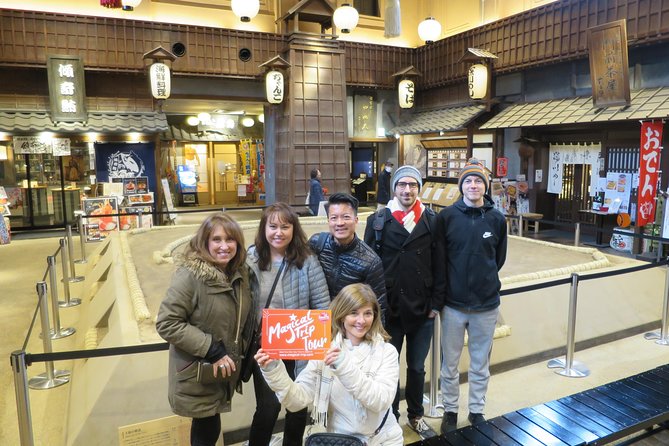
At 8:00 a.m., you meet your guide at the East Exit of JR Ryogoku Station. The guide holds a red or orange MagicalTrip board, making the group easier to spot.
Pay close attention to the station name. Ryogoku has two stations, and this meeting point is at JR Ryogoku Station, not Ryogoku Station on the Toei Oedo Line. The meeting point is near Re.Ra.Ku Ryogoku Ekimae beneath the elevated tracks.
After introductions, your guide explains the basic plan and walks the group to a stable that is accepting visitors that day. The walk can take about five to 30 minutes. That wide range matters because the available stable changes according to the morning schedule and the stable’s own decision.
This is not a tour where you stroll into a permanent museum exhibit at a fixed address. Sumo stables are working places, and practice times can change. You are visiting on the stable’s terms.
That uncertainty is part of the value, but it also calls for flexibility. A stable may adjust or cancel practice because of a tournament schedule, an injured wrestler, or the wrestlers’ condition. If the operator cancels because practice changes, you are offered a full refund. You may also be asked to change the date or time if the schedule shifts.
More Ryogoku sumo tours in Tokyo:
- Tokyo: Sumo Morning Practice Tour at Sumida City
★ 4.8 · 308 reviews - Sumo Wrestlers Morning Practice Tour – Tokyo Sumida District
★ 5.0 · 54 reviews - Tokyo: Sumo Morning Practice Tour in Ryogoku and Photo Shoot
★ 4.7 · 47 reviews
Inside the Stable: Quiet, Close, and Very Physical
Once inside, you sit in the permitted tatami areas and watch practice. The stable’s other areas are off-limits, so follow your guide closely and do not wander.
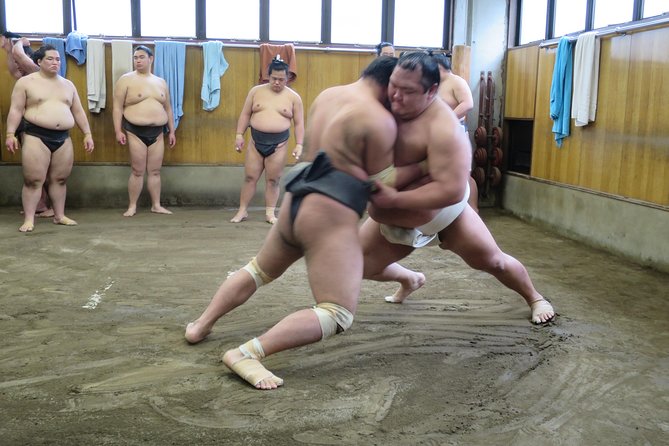
The practice may include warmups, stretching, strength work, technique drills, and bouts between wrestlers. You may see wrestlers preparing for upcoming tournaments, not performing a tourist demonstration. That distinction is important. The physical effort is the point, and the quiet room lets you notice the repetition, discipline, hierarchy, and routine behind a public match.
Several guides have added useful context about stable rankings, the way wrestlers train, and daily life inside the sumo system. One guide, Yumiko, has used written notes during practice to help explain what the group was seeing without breaking the rule against conversation. Other guides, including Masao, Mayu, Ayaka, and Tommy, have been praised for giving a fuller introduction before entering the stable.
The quality of the explanation can vary by guide. Some visitors have found the practice itself so compelling that they stayed absorbed for the full session. Others wanted more background on sumo’s origins, the wrestlers’ way of life, and what each exercise meant. If you want a detailed lesson, ask questions before practice begins or after it ends. During training, silence is part of the etiquette.
Do not expect a loud sports event. The stable is a workplace. You may be asked to wear a mask, sit in a particular way, avoid photographs, and remain quiet. Rules can differ from one stable to another, and the stable has final authority.
Why the Floor Seating Matters
Most stables do not provide chairs. You may sit on tatami for an hour and 20 minutes, or longer if practice runs late. One session has lasted around two hours instead of the more typical hour, so allow extra time after the scheduled finish.
For many people, the floor position adds to the sense that you are visiting a traditional training room. For others, it becomes uncomfortable quickly. If you have trouble sitting on the floor, this is one of the most important points to consider before paying.
You may not be allowed to leave for the toilet during practice. Use the facilities before the tour starts. Also bring water in hot weather and consider a hat for the walk. Tokyo summers can be hot and humid, and the early start does not remove that problem.
Seating is first come, first served. Arriving at the meeting point on time gives you the best chance of a favorable position, but it does not guarantee the front row. If several tour groups are visiting the same stable, late arrivals may sit two or three rows back.
Photography and the Post-Practice Photo Opportunity
The tour includes photos, but that wording needs a practical explanation. The stable decides if you may photograph the wrestlers during training and if you may take a posed photo afterward.
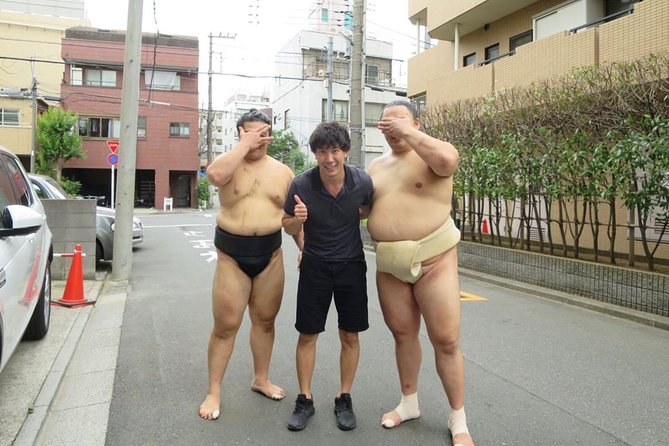
Some groups have been allowed to photograph practice and pose with wrestlers once the session ended. In other cases, photography has been restricted. Do not assume that a photo with a wrestler is part of the guaranteed booking.
The correct approach is to wait for the guide’s instructions. Do not copy another person who is taking photographs if your group has been told not to. Rules can be strict because this is daily training, not a performance arranged for visitors.
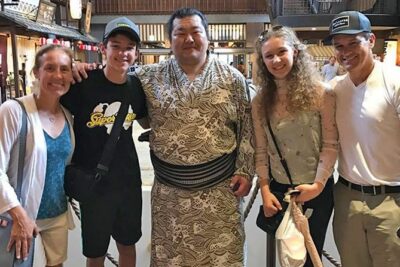
When photos are permitted, the chance to stand beside wrestlers after practice can be a memorable extra. Still, the authentic value of the visit is the training itself. I would book this for the close look at sumo first, and treat the photo as a pleasant possibility.
More chances to meet a wrestler in Tokyo:
- Tokyo Sumo Morning Training/ Sumo Practice with Wrestlers
★ 5.0 · 135 reviews - Tokyo Sumo Morning Practice: Viewing & Exclusive Interaction
★ 4.9 · 74 reviews - Tokyo Sumo Morning Practice: Viewing & Exclusive Interaction
★ 4.5 · 59 reviews - Tokyo Sumo Morning Practice: Witness the Life of a Wrestler
★ 4.8 · 56 reviews
From the Stable to Ryogoku Kokugikan
After practice, the guide walks with you back toward the station. The outing also includes a short look at Ryogoku, Tokyo’s sumo district, with about ten minutes near Ryogoku Kokugikan.
This portion is brief, but it helps place the stable in its neighborhood. Ryogoku Kokugikan is the area’s major sumo landmark, and seeing the district after watching practice connects the athletes’ private training world with the public side of the sport.
Some guides have added a small side stop at Ekoin Temple, a place associated with memorial traditions. That addition is not presented as a guaranteed part of every departure, so treat it as guide and schedule dependent.
Be clear about the timing. The listed duration is about two hours, but the stable portion can run long. The group returns to the original meeting point, and the guide’s formal role ends there. There is no lunch included, and no meal is part of the standard plan, though one past experience included hot-pot food as an extra detail.
What You Are Paying For at $98.16
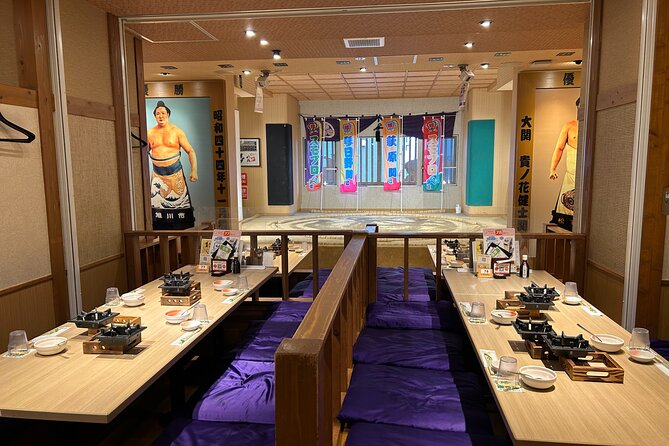
At $98.16 per person, this is not a cheap way to spend two hours. The price makes the most sense if you value access and interpretation rather than a packed schedule.
You are paying for the local arrangement that gets you into a stable, the guide who meets you at the station, the walk and orientation, and the chance to observe training up close. Access can be difficult to arrange independently, especially when stable schedules change and rules are not designed around casual drop-in visits.
The value is strongest for someone who already cares about sumo, Japanese customs, or behind-the-scenes sports training. A sumo fan may recognize wrestlers and appreciate the routines. A newcomer can also learn a great deal, especially with a guide who explains the ranking system, training structure, and daily life.
The value is weaker if you expect a polished stage show, constant narration, guaranteed photos, or a full sightseeing program. You may spend most of the tour sitting quietly in one room. That is exactly what makes it real, but it may not match everyone’s idea of a guided activity.
The overall rating is strong, at 4.7 from 277 ratings, with 94 percent recommending it. That fits the experience well: the central event is unusual and often memorable, but the guide, seating position, stable rules, and length of practice can shape your day.
Meeting at 8:00 a.m. Means Taking the Start Seriously
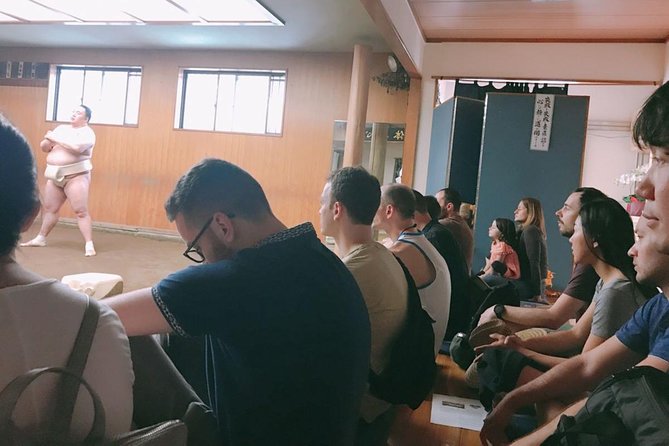
The early meeting time is not flexible. You must arrive on time, and the operator says that anyone more than 15 minutes late, measured from the required arrival time before the start, cannot join, receive a refund, or reschedule.
That rule is understandable inside a quiet stable. A late arrival would interrupt practice and force the group to reorganize. Still, it means you should plan your train route carefully, confirm which Ryogoku station you need, and allow time to find the East Exit.
If you miss the group, contacting support at the last minute may not solve the problem. The tour has already arranged stable access and guide time, so late arrival is treated as a missed activity.
The maximum group size is seven, which is a useful limit for a small indoor space. If a booking creates a larger group, it may be split and sent to different stables. That can mean people in the same booking do not see precisely the same practice.
The Rules Are Part of the Experience
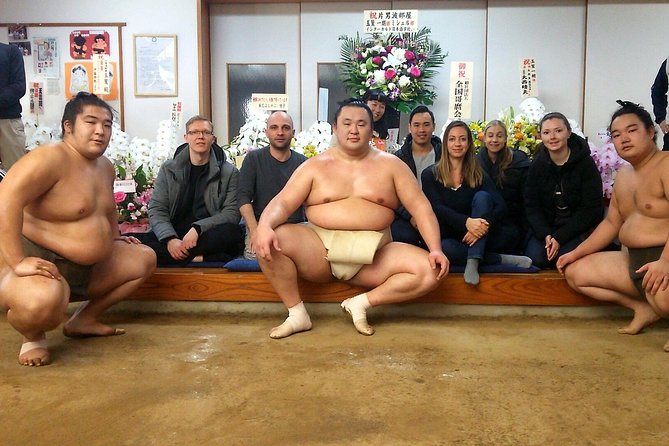
You must follow stable etiquette. Stay in the permitted tatami areas, remain quiet during practice, and follow the guide’s instructions about masks, posture, movement, and photography.
The stable can refuse entry to anyone who breaks its rules, with no refund. This is not a place for casual conversation or free movement. The wrestlers are working, and the visit depends on the stable allowing outsiders into that routine.
That may feel strict, but it gives you a more honest view of sumo. The quiet stretches can seem long at first. Then you begin to notice how wrestlers repeat motions, prepare for contact, and wait for their turn. The experience rewards patience more than constant activity.
Who Will Get the Most From This Visit
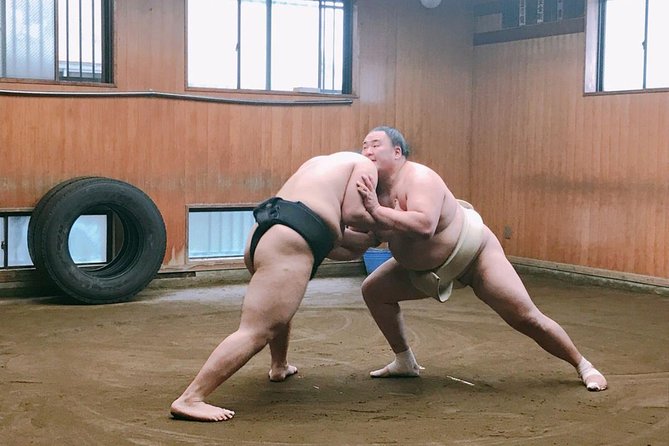
I would recommend this tour to you if you want to see sumo beyond the arena. It is particularly suited to sports fans, visitors with an interest in Japanese customs, and people who prefer a working cultural setting to a staged presentation.
It also works well as a solo activity. You must sit quietly during practice, so you do not need a companion to keep you entertained. The guide provides the social structure before and after the session.
You should think twice if you need comfortable chairs, frequent movement, guaranteed photos, or a fixed end time. Children under 12 cannot enter the stable, and the tour is only for people aged 12 and over.
I would also avoid booking it immediately before another fixed appointment. Practice can last longer than expected, and the walk to the stable can take up to 30 minutes.
Should You Book the Ryogoku Sumo Morning Practice?
Book it if your main goal is to watch serious sumo training from close range and you can accept the rules. The best parts are the rare stable access, the physical intensity of practice, the small group format, and the chance to understand sumo through a local guide.
Do not book it expecting a guaranteed wrestler photo, front-row seating, a full lecture, or a theatrical performance. Arrive early, use the toilet beforehand, dress for the season, and prepare to sit quietly on the floor.
For a visitor who cannot attend one of Tokyo’s official tournaments, this is a strong alternative. It gives you the less polished but more revealing side of the sport: repetition, discipline, silence, and hard work before the public spectacle begins.
FAQ
Where do I meet the guide?
Meet at Re.Ra.Ku Ryogoku Ekimae near the elevated tracks at the East Exit of JR Ryogoku Station. The guide holds a red or orange MagicalTrip board.
Which Ryogoku station should I use?
Use JR Ryogoku Station. Do not go to Ryogoku Station on the Toei Oedo Line.
What time does the tour start?
The tour starts at 8:00 a.m. You should arrive early because late arrivals cannot join if they miss the group or are more than 15 minutes late.
How long does the experience last?
The estimated duration is about two hours. Practice can run longer than expected, sometimes for around two hours by itself, so avoid scheduling another activity too closely afterward.
Can children join?
Only people aged 12 and over can enter the sumo stable. Children under 12 are not permitted and will not receive a refund if they arrive for the tour.
Will I sit on a chair?
You may have to sit on the tatami floor because most sumo stables do not provide chairs.
Can I take pictures of the wrestlers?
The stable decides if photography is allowed during practice and if posed photos with wrestlers are permitted afterward. Photos are not guaranteed.
What happens if the stable cancels practice?
The stable may change or cancel practice because of its tournament schedule or the wrestlers’ condition. If the booking is canceled for that reason, you receive a full refund or may be offered a different date.
Can I cancel my booking?
You can cancel for a full refund up to 24 hours before the experience starts. Changes or cancellations made less than 24 hours before the start time are not accepted for a refund.
More photo experiences in Tokyo
- Tokyo: Sumo Show Experience with Chicken Hot Pot and a Photo
★ 4.8 · 6,678 reviews - Tokyo Shinjuku Sumo Show & Experience with Photo
★ 5.0 · 1,750 reviews - Tokyo Sumo Entertainment Show with Chicken Hot Pot and Photo
★ 5.0 · 1,205 reviews - Tokyo: Exclusive Access to Sumo Morning Practice with Photos
★ 4.8 · 107 reviews
More morning practice tours in Tokyo
- Tokyo: Sumo Morning Practice Viewing Tour
★ 4.8 · 570 reviews - Tokyo: Sumo Morning Training Visit
★ 4.4 · 370 reviews - Tokyo: Visit Sumo Morning Practice with English Guide
★ 4.7 · 343 reviews - Tokyo Sumo Morning Practice Tour at Stable
★ 5.0 · 298 reviews
Newest sumo experiences in Tokyo
- Tokyo Sumo History Tour with Chanko Nabe Lunch★ 5.0 · 3 reviews
- Tokyo Highlights Tour: Sumo, Sushi, Tea, and Tokyo Tower★ 5.0 · 2 reviews
- Tokyo: Know about Hokusai and Sumo culture in 2.5 hours★ 5.0 · 2 reviews
- TOKYO , No1 Yokozuna Stable Morning Practice in Ryogoku★ 4.5 · 3 reviews
- Tokyo 6hr Private Guided Tour & Sumo Show Lunch★ 5.0 · 3 reviews
- Tokyo Grand Sumo Tournament Viewing Tour★ 5.0 · 2 reviews
- Tokyo: Enjoy Sumo match and know about it! [Ticket included]★ 4.4 · 7 reviews
- Private Ryogoku Walking Tour with Sumo Wrestler and Master Guide★ 4.5 · 7 reviews
Ryogoku Sumo Tours, compared.

Sumo Wrestlers Morning Practice Tour – Tokyo Sumida District
Read our review →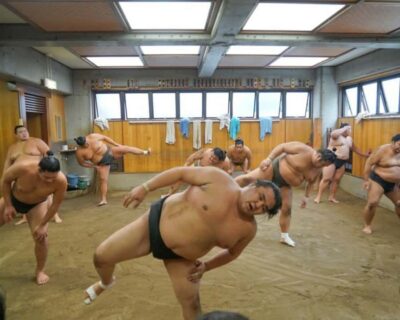
Sumo Morning Practice Tour in Ryogoku and Photo Shoot
Read our review →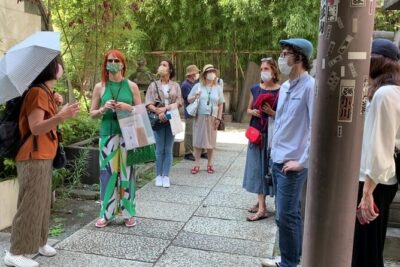
Tokyo Sumo Culture Tour with Chanko-Nabe Lunch in Ryogoku
Read our review →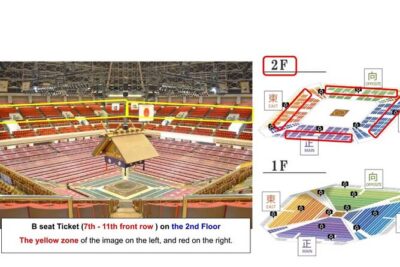
Seat B Ticket Tokyo Sumo Wrestling Tournament in Ryogoku
Read our review →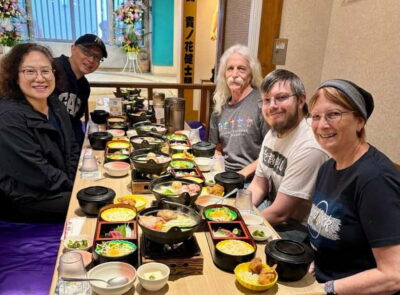
Private Ryogoku Walking Tour with Sumo Wrestler and Master Guide
Read our review →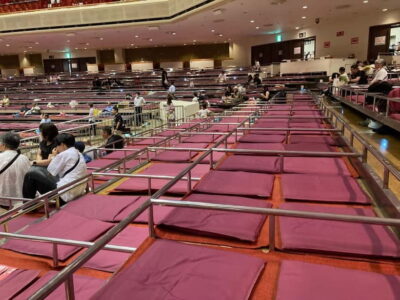
Browse the lists this tour appears in