
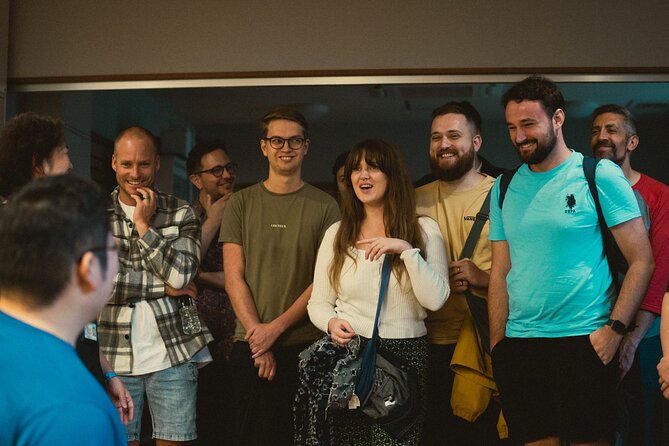
REVIEW · RYOGOKU SUMO TOURS
Sumo Wrestlers Morning Practice Tour – Tokyo Sumida District
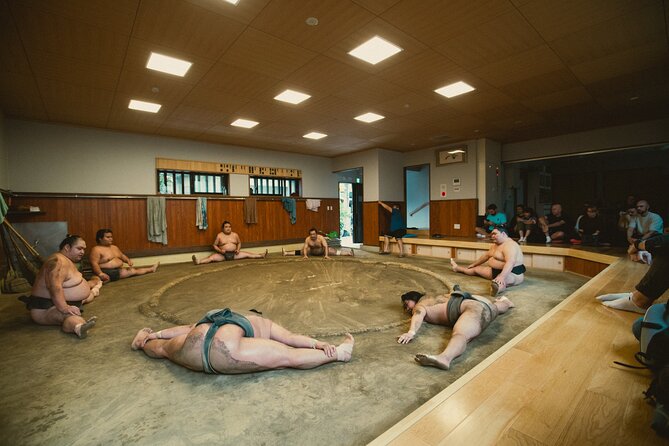
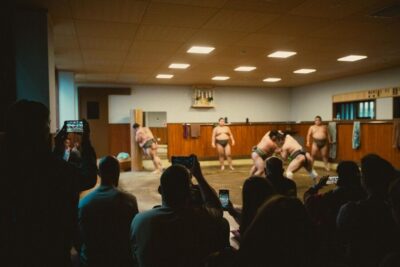
Sumo practice is not a staged show. It is a quiet, intense morning of athletes repeating footwork, stretching, pushing, and wrestling drills inside a working stable. You sit close to the ring and watch the discipline behind Japan’s national sport, often close enough to notice the wrestlers’ speed and flexibility.
I like the authentic setting and the chance to see training rather than only a polished tournament bout. I also like the early finish, which leaves most of the day free for Tokyo, plus the guide’s help with Japanese customs and translation.
The main consideration is the seating: you sit cross-legged on the floor for about 90 minutes, with no chairs. Practice can also be less dramatic than the promotional images suggest, and the session may finish early if the stable master changes the schedule.
Key points before you book
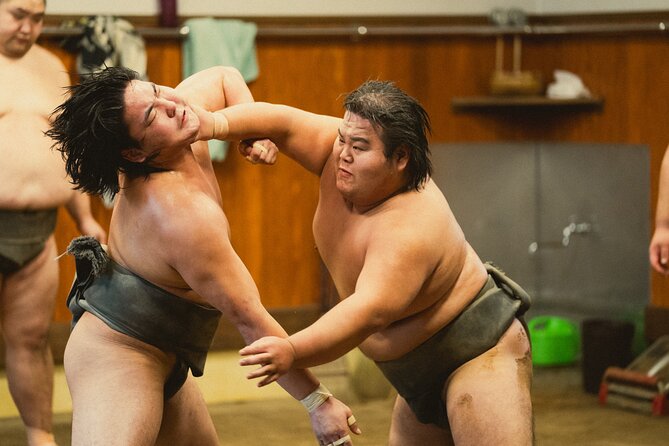
- Watch a real morning practice: The wrestlers train for themselves, not for an audience, so the mood is serious and respectful.
- Meet near Tokyo Skytree: The 7:30am meeting point is at Oshiage Station, followed by a walk of about 15 minutes to the stable.
- Sit on the floor: There are no chairs, and you must keep your legs tucked away from the ring.
- Learn through translation: Your guide explains the rules, customs, and training, helping you avoid mistakes inside the stable.
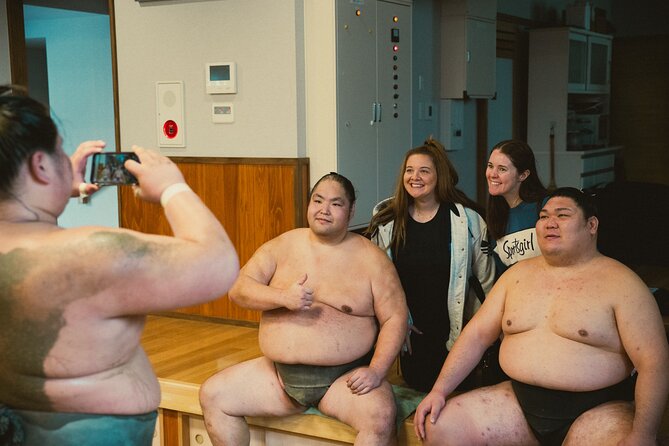
- Photos may be possible afterward: A photo with wrestlers is offered after practice when conditions allow, but it is not the main event.
- Allow for a flexible finish: Practice may last a little less or more than the planned two hours, especially during tournament season.
Seeing sumo before the city wakes up
This experience begins at 7:30am near the foot of Tokyo Skytree in Oshiage, a useful location if you are staying in eastern Tokyo or want to pair the morning with sights in Sumida. You are asked to arrive by 7:10am. The group leaves at 7:30 sharp, and the stable cannot be entered without contacting the tour team if you arrive late.
That early start is part of the value. You get to see a working part of Tokyo before the day’s crowds build, then finish with time for the Skytree, Asakusa, Ueno, or another part of the city. The activity lasts about two hours, though the actual practice schedule controls the end time.
The meeting point is not the stable itself. You walk for roughly 15 minutes from Oshiage to the training room. This keeps the stable’s location private and gives your guide time to explain basic etiquette before you enter. If rain is expected, bring a small towel because you will remove your shoes on arrival and may need to wipe your feet.
The group can include up to 25 people. That is not a tiny private visit, but the size is reasonable for a compact viewing area. Your position may depend on where you sit, and a larger group can mean one row of people sits behind another. You should not expect every person to have an unobstructed front-row view.
More Ryogoku sumo tours in Tokyo:
- Tokyo: Sumo Morning Practice Tour at Sumida City
★ 4.8 · 308 reviews - Tokyo Ryogoku Sumo Morning Practice + Photo Shoot with Wrestlers
★ 4.5 · 277 reviews - Tokyo: Sumo Morning Practice Tour in Ryogoku and Photo Shoot
★ 4.7 · 47 reviews
Walking into a working sumo stable
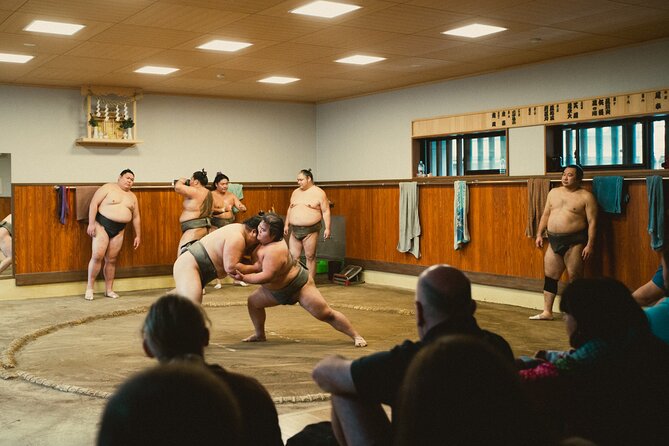
The stable is not a theater. It is a training space with its own rules, religious meaning, and daily rhythm. Sumo grew from Shinto traditions, and the ring is treated as a sacred place. You do not step onto the ring or the sandy ground, even if it looks close enough to touch.
Before practice starts, take off your shoes on the raised wooden floor. Wear modest clothing and choose something comfortable enough for sitting on the floor. Hats and sunglasses are not allowed inside. You should also use the restroom before the tour, since leaving during practice is discouraged and movement around the room is restricted.
The guide plays an important role here. A stable is not a place for casual sightseeing, and a visitor who does not understand the customs could easily distract the wrestlers. Your guide translates explanations, gives instructions, and helps you understand when it is appropriate to take a photograph or ask a question.
The tone is quiet. Cellphones must be on silent, and photographs are allowed only without flash or shutter sounds. You may record video, but you cannot upload photos or videos from the stable to social media. That rule helps protect the private nature of the practice.
What you actually watch during the 90-minute practice
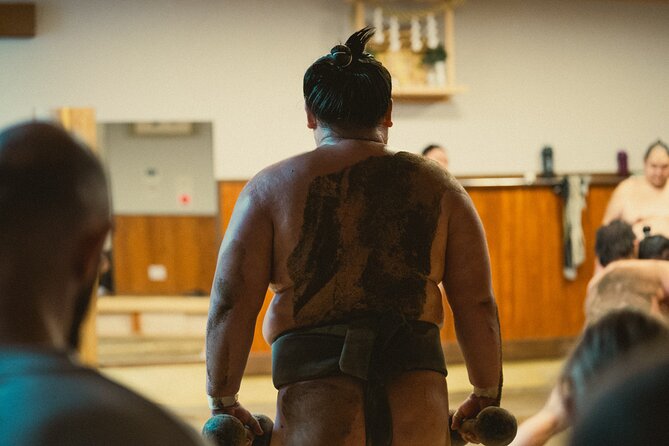
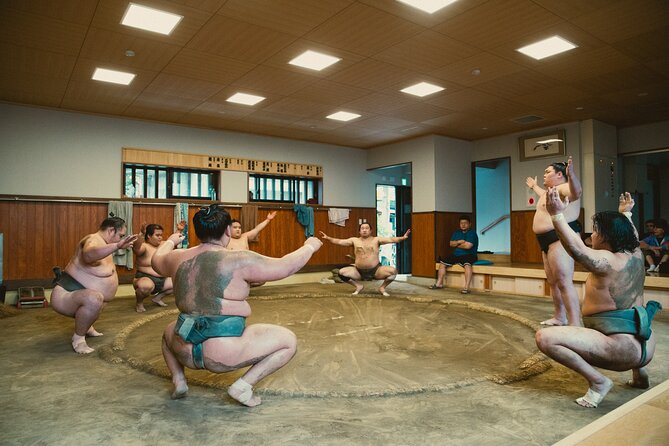
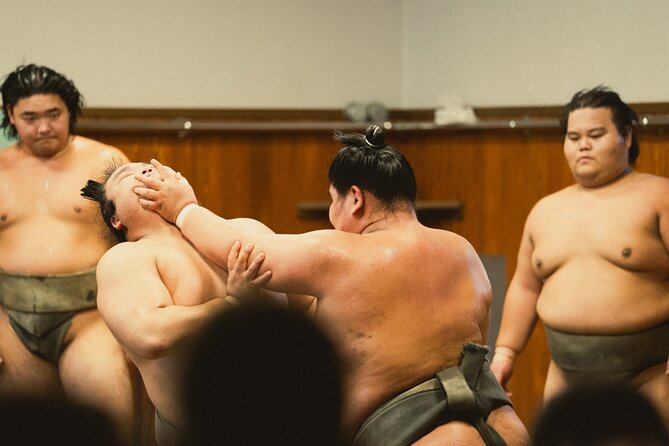
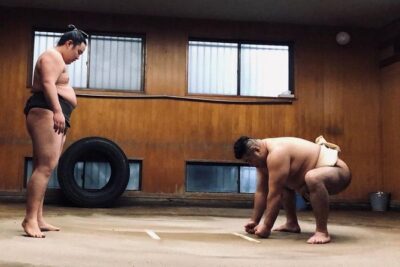
The main part of the visit lasts about an hour and a half. You sit close to the training area and watch the wrestlers work through their routine. The practice can include stretching, balance work, repeated movement, pushing drills, and bouts, though the exact mix changes from day to day.
This is where expectations matter. If you want a sequence of full-contact matches with constant shouting and dramatic throws, a tournament is the better choice. A morning practice may include wrestling, but it can also focus heavily on repetition and conditioning. The wrestlers are training, not performing a show designed around your visit.
That restraint is also what makes the experience worthwhile. You see the discipline behind the spectacle. The wrestlers may look enormous, yet they need remarkable flexibility, balance, speed, and control. Watching them move through exercises can change your understanding of sumo from a simple contest of size into a demanding athletic practice.
The best moments may be small ones: the concentration before a bout, the force of a push, the way a wrestler regains balance, or the repeated work that looks simple until you consider doing it for an entire morning. You are close enough to see the physical effort without the distance and noise of a tournament arena.
The stable may not follow the advertised timing exactly. Practice can finish earlier than expected, or run a little longer, depending on the content of the session. During tournament season, the schedule may also change, so check the tour provider’s direct message before you go.
Learning the rules and customs in plain English
Watching sumo without context can leave you wondering what each ritual means. The guide helps explain the sport’s rules, history, and regulations, as well as the customs of the stable. This is especially useful if you have never attended a tournament.
The quality of explanation can vary with the guide and the pace of the practice. One guide named Yuriko is specifically praised for being patient and for translating Japanese into English clearly. Other visitors have found the guide helpful but wished for more background about the training and the sport. I would treat the guide as an interpreter and cultural bridge first, then use the question period for more detailed discussion.
A useful part of the visit comes after practice, when you may have a Q&A with the stable master or manager. This can cover daily life, training, and diet. It gives you a chance to ask the questions that often do not fit into a standard sightseeing talk.
Remember that the wrestlers are working. Do not stand up, move around, stretch your legs toward the ring, or speak during practice. Showing the soles of your feet toward the wrestlers is considered impolite, so sit cross-legged or in another position that keeps your feet tucked away.
More chances to meet a wrestler in Tokyo:
- Tokyo Sumo Morning Training/ Sumo Practice with Wrestlers
★ 5.0 · 135 reviews - Tokyo Sumo Morning Practice: Viewing & Exclusive Interaction
★ 4.9 · 74 reviews - Tokyo Sumo Morning Practice: Viewing & Exclusive Interaction
★ 4.5 · 59 reviews - Tokyo Sumo Morning Practice: Witness the Life of a Wrestler
★ 4.8 · 56 reviews
The photo opportunity at the end
After practice, you may be able to take a photo with some of the wrestlers. This is a pleasant finish, especially for families and first-time visitors, but it should be viewed as a possible extra rather than the reason to book.
The exact photo arrangement can depend on the day, the stable, and the time available. Do not assume you will get a picture with every wrestler in the room. The important part of the experience is the training itself, and the photo comes only after you have respected the stable’s rules and watched quietly.
The wrestlers are described as friendly and approachable once practice ends. Still, keep the exchange brief and follow the guide’s instructions. You are entering their workplace, not meeting performers after a scheduled stage show.
Sitting comfort and practical preparation
The floor seating is the biggest physical issue. You may sit cross-legged for about 90 minutes, with no chairs available. If that position is difficult for you, this is not the right activity. The stable does not appear to offer a chair option, so do not book assuming you can change seats once inside.
Children from age six may join, but they must remain quiet and still. If a child becomes noisy, moves around, or cannot watch respectfully, the family may be asked to leave the stable. That makes the experience better suited to older children who can follow instructions than to restless young children.
Bring water if you need it, but do not bring food, chewing gum, or candy into the stable. Smoking is not allowed. Dress modestly, keep your phone silent, and avoid anything that makes noise when you move.
Public transportation serves the meeting point, and the walk to the stable takes around 15 minutes. Wear shoes that are easy to remove. On a wet day, the towel for your feet is a small but useful detail.
Is the $83.23 price good value?
At $83.23 per person, this is not a cheap photo stop. You are paying for access to a working sumo stable, a guide who handles translation and etiquette, and the chance to watch training at close range. For someone already interested in sumo or Japanese culture, that access can justify the cost.
The value is weaker if you mainly want a dramatic wrestling show. You could leave feeling that the practice was too calm or ended too soon, especially if the day contains more warm-ups and drills than full bouts. The experience works best when you value the setting and the training process as much as the action.
The maximum group size of 25 also matters. You are not guaranteed a private viewing position, and some people may sit behind others. A smaller group would feel more personal, but this format keeps the price below what a fully private visit would likely cost.
The 98 percent recommendation rate and 4.9 rating from 54 ratings point to strong satisfaction overall, especially for the close access, guide support, and cultural value. I would still read those numbers with the practical warnings in mind: floor seating, an early start, a flexible duration, and no promise of a full-contact spectacle.
How to fit it into your Tokyo morning
The tour ends back at the meeting point near Tokyo Skytree. That makes it easy to continue around Sumida after the stable, and the morning timing leaves plenty of room for another district later in the day.
You can use the location as a simple plan rather than trying to cross Tokyo immediately. Start with the practice, continue around Skytree or nearby Sumida, and then decide whether you want to head toward Asakusa or another area. The tour does not consume an entire day, which is one of its strongest practical features.
Because the start is early, think about your route the night before. You need to reach Oshiage by 7:10am, not merely arrive at the station at 7:30. A late arrival creates real problems because you may have to walk to the stable alone, and you will not be admitted unless you contact the provider first.
Free cancellation is available if you cancel at least 24 hours before the start time. Changes or cancellations made inside that window are not accepted for a refund. Keep the local cut-off time in mind when your plans are still shifting.
Who should book this sumo experience?
I would recommend it to you if you want a close look at Japanese sporting culture, enjoy observing real work rather than a staged performance, and can sit quietly on the floor. It is also a good choice if you are not visiting Tokyo during a sumo tournament and want some contact with the sport.
It suits adults, respectful older children, photographers who can work without flash or shutter noise, and visitors who value a guide’s translation. The possible Q&A with the stable master adds a human side that you do not get from watching a match in a large arena.
I would hesitate if you need accessible seating, dislike early mornings, or want guaranteed bouts. I would also think twice if your children cannot stay quiet and still for 90 minutes. The rules are firm because the wrestlers are training, and the stable is treated with respect.
Final verdict: book it for access, not spectacle
I like this experience because it puts you close to the daily work behind sumo. You see the strength, flexibility, repetition, and discipline that a tournament audience can easily miss. The guide, the stable setting, and the chance for a short Q&A make it more useful than simply watching a match without context.
Book it if you can accept the floor seating and the uncertain mix of drills and bouts. Skip it if you want guaranteed high-contact action or a polished entertainment show. For the right visitor, the quietness is not a flaw. It is the point.
FAQ
Where does the tour meet?
The meeting point is at 1-chōme-8-21 Oshiage, Sumida City, near Tokyo Skytree. The group meets at 7:10am and leaves at 7:30am.
How long does the experience last?
The tour is scheduled for about two hours. The practice can finish earlier or run longer depending on the day’s training, and tournament-season times may differ.
How far is the sumo stable from the meeting point?
The stable is about a 15-minute walk from the meeting point. Bring a towel if rain may leave your feet wet before you remove your shoes.
Are chairs available inside the stable?
No. You sit on the floor, usually cross-legged, for about 90 minutes. If this is not comfortable or possible for you, the tour is not recommended.
Can I take photos and videos?
Photos are allowed without flash or shutter sounds. Video is also allowed, but photos and videos from the stable cannot be uploaded to social media.
Can I take a photo with the wrestlers?
A photo opportunity may be available after practice. The exact arrangement depends on the day, and you should not assume that every wrestler will be included.
More morning practice tours in Tokyo
- Tokyo: Sumo Morning Practice Viewing Tour
★ 4.8 · 570 reviews - Tokyo: Sumo Morning Training Visit
★ 4.4 · 370 reviews - Tokyo: Visit Sumo Morning Practice with English Guide
★ 4.7 · 343 reviews - Tokyo Sumo Morning Practice Tour at Stable
★ 5.0 · 298 reviews
Newest sumo experiences in Tokyo
- Tokyo Sumo History Tour with Chanko Nabe Lunch★ 5.0 · 3 reviews
- Tokyo Highlights Tour: Sumo, Sushi, Tea, and Tokyo Tower★ 5.0 · 2 reviews
- Tokyo: Know about Hokusai and Sumo culture in 2.5 hours★ 5.0 · 2 reviews
- TOKYO , No1 Yokozuna Stable Morning Practice in Ryogoku★ 4.5 · 3 reviews
- Tokyo 6hr Private Guided Tour & Sumo Show Lunch★ 5.0 · 3 reviews
- Tokyo Grand Sumo Tournament Viewing Tour★ 5.0 · 2 reviews
- Tokyo Ginza : Sumo and Mikoshi Experience,Open from Sep.★ 5.0 · 8 reviews
- Complete Sumo Experience in Tokyo★ 4.5 · 3 reviews
Ryogoku Sumo Tours, compared.
Tokyo Ryogoku Sumo Morning Practice + Photo Shoot with Wrestlers
Read our review →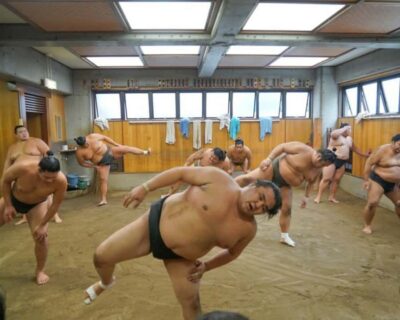
Sumo Morning Practice Tour in Ryogoku and Photo Shoot
Read our review →
Tokyo Sumo Culture Tour with Chanko-Nabe Lunch in Ryogoku
Read our review →
Seat B Ticket Tokyo Sumo Wrestling Tournament in Ryogoku
Read our review →
Private Ryogoku Walking Tour with Sumo Wrestler and Master Guide
Read our review →
Browse the lists this tour appears in