
REVIEW · SUMO MORNING PRACTICE TOURS
Unique Afternoon Live Sumo training tour in Tokyo
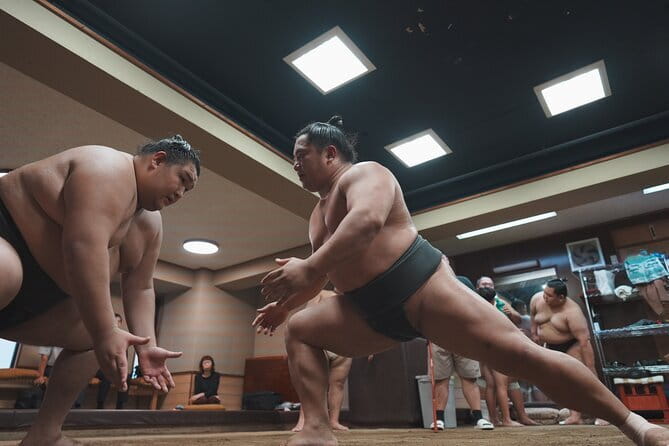
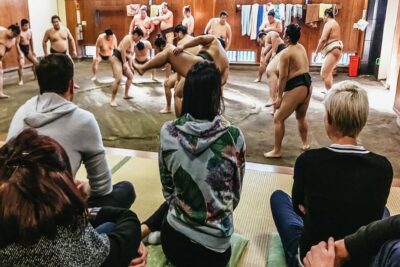
Sumo training is not a staged cultural show. At Nakamura-beya Sumo Stable, you watch professional wrestlers work through the real routines of keiko, from slow warm-ups to hard collisions. I like the small group, capped at 10, and the useful extras: free Wi-Fi, phone charging, a pamphlet, and a photo with the wrestlers.
I also like that this visit shows the quiet work behind a match, not just the famous ring ceremony. The first 20 to 30 minutes may feel slow while the wrestlers warm up, and seating is limited: only 8 to 10 people get chair-style seats, while others sit on the floor. That is the main comfort issue to consider.
Key points to know before booking
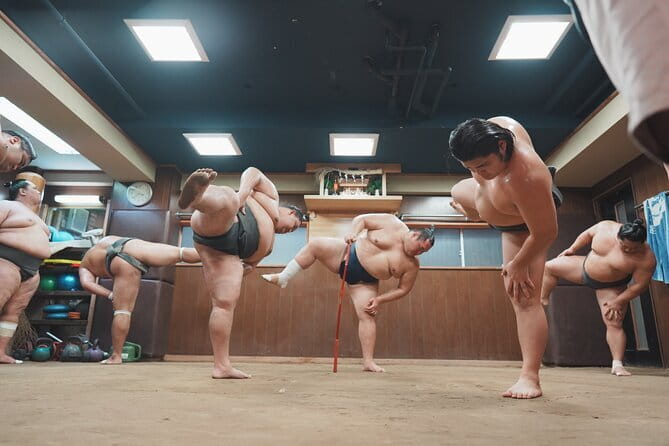
- Real training at Nakamura-beya: You watch wrestlers prepare and practice, rather than a performance arranged only for tourists.
- A compact 90-minute visit: The session is short enough to fit into a Tokyo afternoon without taking over your day.
- A small group of up to 10: This gives the visit a more personal feel than a large arena tour.
- The opening warm-up takes patience: The first 20 to 30 minutes can be quiet before the strongest wrestling begins.
- Seating varies: Chairs are available for 8 to 10 people, and the rest sit on the floor.
- A useful souvenir is included: You receive a photo with the sumo wrestlers, along with an explanatory pamphlet.
Why this sumo visit feels different from a tournament
If you have only seen sumo on television, this visit gives you a better sense of the daily labor behind the sport. You are not waiting for a tournament bout with a crowd, announcements, and a packed stadium. You are watching wrestlers train at their stable, where the focus is on repetition, discipline, and physical preparation.
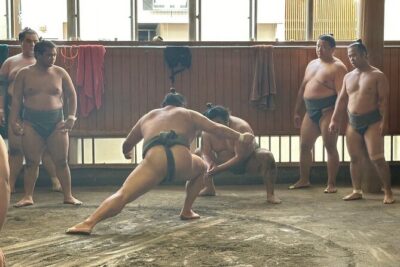
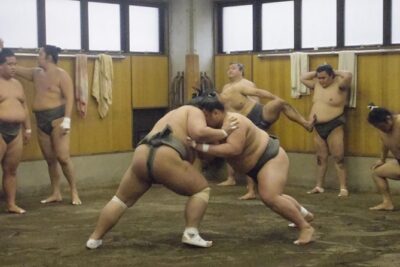
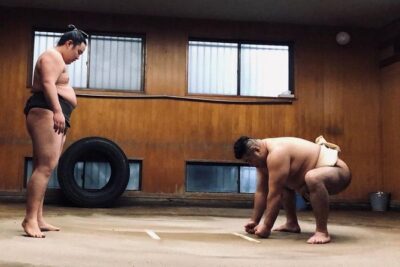
The word keiko refers to this training. You can expect to see warm-ups, powerful foot stomps, body movement, and clashes between wrestlers. The session begins in a measured way. That matters because sumo training is not built for quick entertainment. The athletes prepare their bodies and minds before the harder wrestling begins.
I appreciate that this makes the experience feel more grounded. You see sumo as a demanding athletic practice, not only as a colorful Japanese custom. The training can also help you understand why the sport requires such control. Even the slower movements carry purpose, and the contrast becomes clearer once the wrestlers begin their more intense bouts.
The visit lasts about 1 hour and 30 minutes. That is a good length for a first look. You have enough time to settle in, watch the routine develop, and ask questions through the guide without committing half a day to the activity.
More morning practice tours in Tokyo:
- Tokyo: Sumo Morning Practice Viewing Tour
★ 4.8 · 570 reviews - Tokyo: Sumo Morning Training Visit
★ 4.4 · 370 reviews - Tokyo: Visit Sumo Morning Practice with English Guide
★ 4.7 · 343 reviews
Arriving at Nakamura-beya in Ryogoku
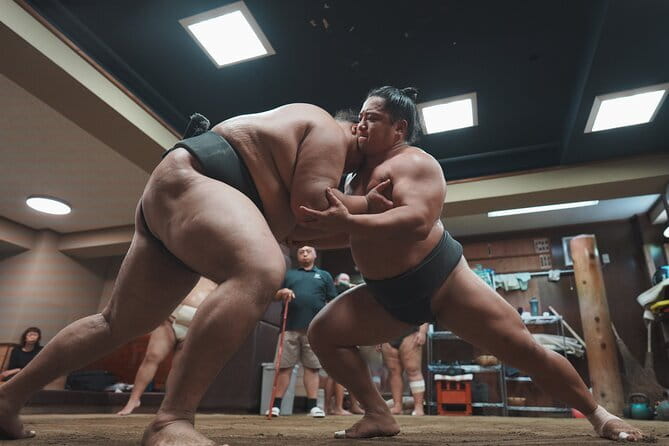
The meeting point is Nakamura-beya Sumo Stable at 1-chōme-18-7 Ryōgoku, Sumida City, Tokyo 130-0026. The area is near public transportation, but pickup and drop-off are not included, so you need to make your own way there and return on your own.
Allow time to find the stable. A sumo stable is not the same kind of attraction as a large museum or stadium with an obvious entrance. Your confirmation will give you the details you need, but you should still check the meeting time and plan your route before leaving.
The training usually takes place in the afternoon, which fits neatly with a day spent sightseeing in Tokyo. However, the time can sometimes shift to the morning. Check the time carefully when you book, especially if you are arranging other activities around it.
The tour ends back at the meeting point. That makes planning simple. You will not be dropped at a second location, so you can decide afterward where to eat or what to see next in Ryogoku.
The first 20 to 30 minutes: patience pays off
The warm-up is the part that requires the most realistic expectations. The first 20 to 30 minutes can seem uneventful, particularly if you expect immediate wrestling. The wrestlers are preparing, not performing a fast-paced show for an audience.
I would treat this opening as part of the lesson. Watch the repeated motions and the careful physical preparation. The point is not only to see an opponent thrown out of the ring. It is to understand the routine that comes before the clash.
This slower beginning may suit you if you enjoy watching process and ritual. It may test your patience if you need constant action. Families should know this in advance, particularly those with young children who may find the opening quiet.
Once the wrestlers begin the harder bouts, the mood changes. The movement becomes forceful and direct. The sound and physical impact make the small setting important. You are close enough to notice the power of the athletes, rather than seeing everything from a distant stadium seat.
When the wrestling gets intense
The most exciting section comes after the warm-up, when the wrestlers begin to clash. The training includes powerful movements, stomps, and bouts that show how much strength and balance the sport demands.
You may find the transition striking. The opening minutes build slowly, then the action becomes much more physical. This is where the visit earns its price for many people. You are seeing professional athletes train at close range, with no attempt to turn the session into a theatrical show.
The experience is especially suitable for anyone interested in sports. It also works well for visitors who have already seen Tokyo’s major temples, shopping districts, and museums and want a more specific look at Japanese culture. You do not need to be a sumo expert to follow the basic action.
A guide speaks English, Japanese, and Korean. An audio guide is also included, with language support listed as 10 languages in the included details. The tour description also refers to 11 language choices, so check the current language selection at booking if this is important to you.
More sumo experiences in Tokyo:
- Tokyo: Sumo Show Experience with Chicken Hot Pot and a Photo
★ 4.8 · 6,678 reviews - Tokyo: Sumo Show and Dining Experience
★ 4.8 · 2,742 reviews - the SUMO show
★ 5.0 · 1,960 reviews - Tokyo Shinjuku Sumo Show & Experience with Photo
★ 5.0 · 1,750 reviews
Seating, space, and comfort
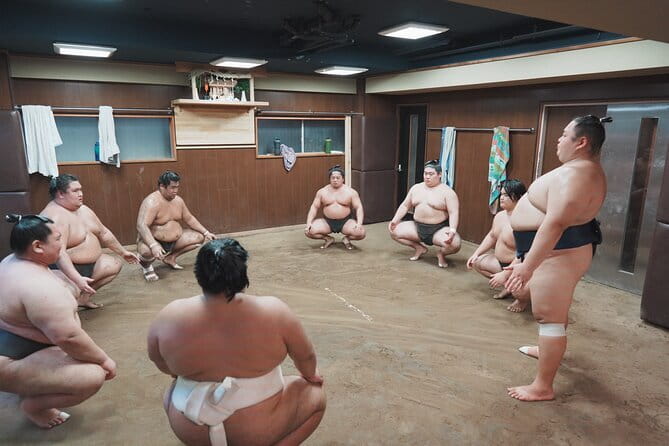
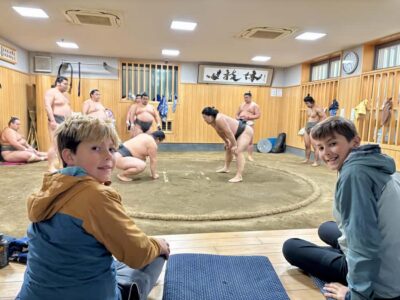
The seating arrangement is the main practical limitation. Chair-style seats are available for 8 to 10 people. The remaining audience members sit on the floor.
That arrangement may be perfectly comfortable for some people, but it is worth considering before you pay. If sitting on the floor is difficult for you, contact the operator before booking rather than assuming a chair will be available. The group maximum is 10, but the seating note suggests that not every place is a chair.
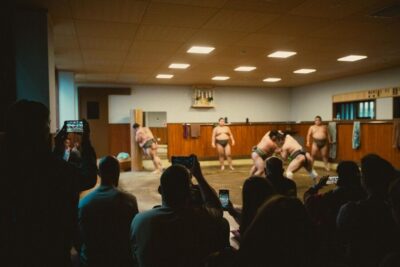
The small group is a real advantage. You are not joining a busload of people, and the setting should feel more focused. A group of up to 10 also makes it easier to follow the guide and watch the training without a large crowd blocking your view.
Free Wi-Fi and phone charging points are included. These are modest details, but they can be helpful during a full day in Tokyo, especially if you use your phone for maps, translation, or train information.
The guide and language support
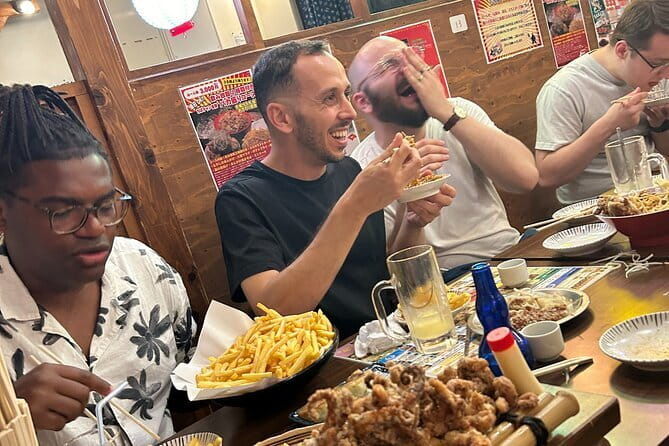
The guide can speak English, Japanese, and Korean. That gives you direct support during the visit, while the audio guide adds help in more languages.
The included pamphlet explains sumo keiko. Keep it with your photos and notes, since the warm-up period can make more sense once you know what to watch for. A short explanation can turn repeated movements into part of a larger training routine.
This is not presented as a lecture-heavy activity. The main event is the training itself. You will spend most of the time observing, while the guide helps explain the customs and answers questions.
Because the visit is small, the guide’s role matters. You can expect the best value if you come ready to watch closely and ask about what you are seeing. If you want a full, detailed history of sumo, this 90-minute visit may feel limited. If you want a direct look at training with enough explanation to understand it, the format makes sense.
The photo with the wrestlers

A photo with the sumo wrestlers is included. This gives you a clear souvenir instead of only a pamphlet or a few distant pictures from your seat.
The photo also marks the difference between this activity and simply watching sumo from outside a tournament venue. You leave with a personal record of the visit and a reminder of the stable where you saw the training.
The supplied details do not specify when the photo is taken or how many people appear in it. If the photo matters to you, listen carefully to the guide’s instructions on the day. As with any visit involving athletes, follow the stable’s rules about where to stand, touching, and photography.
Is $137.71 a fair price?
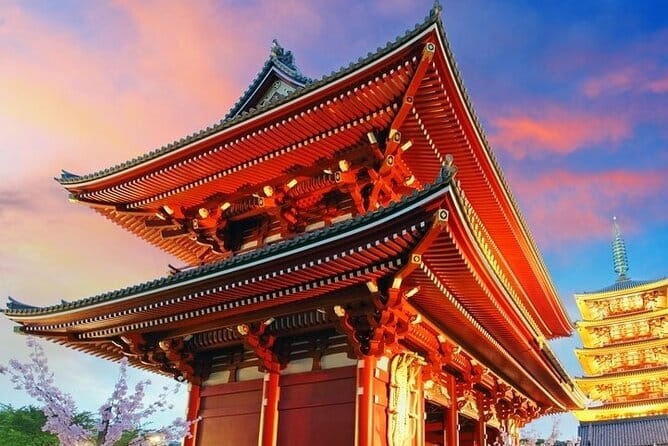
At $137.71 per person, this is not a cheap way to fill an hour and a half in Tokyo. The value depends on what you want from your trip.
You are paying for access to a small-group visit at a working sumo stable, not a general sightseeing walk. The price includes the training session, a guide, multilingual audio support, a pamphlet, Wi-Fi, charging service, and a photo with the wrestlers. Admission is included, and you do not need to arrange separate entry.
I think the cost is easier to justify if authentic cultural access is high on your list. A first-time visitor who wants only a quick photo of sumo may find it expensive. A repeat visitor who has already covered the major sights may see it as a worthwhile way to experience a side of Tokyo that is harder to arrange independently.
The group size helps the value. With no more than 10 people, the visit is more personal than a large public show. You also avoid spending several hours at a tournament if your schedule is tight.
The price is less attractive if you dislike sitting on the floor, expect nonstop wrestling, or want hotel transportation. Those are not minor details. They affect how comfortable and convenient the visit will feel.
Who should book this experience?
I would point this tour toward several kinds of visitors:
- First-time Tokyo visitors who want a culture-focused activity beyond the main sights.
- Repeat visitors who have already seen the usual attractions.
- Families with older children or teenagers who are interested in sport.
- People who prefer a small group over a large guided excursion.
- Visitors who want to see real practice rather than a staged demonstration.
- Anyone who can accept a quiet opening and possible floor seating.
The activity may be less suitable for very young children who need constant movement. It may also be a poor fit if you need guaranteed chair seating or cannot comfortably sit on the floor.
The family appeal is strong once you explain the format. Children may not care about the opening warm-up, but the physical strength of the wrestling can hold their attention later. Older children and teenagers are likely to get more from seeing the athletes prepare and compete at close range.
Timing and planning tips for Ryogoku
Check the session time before you finalize your Tokyo plans. The training is usually in the afternoon, but it sometimes takes place in the morning. Do not assume the time will always match the standard schedule.
Build in enough time to reach the meeting point. Since there is no pickup, you are responsible for getting to Nakamura-beya and returning afterward. The area is near public transportation, so public transit is the practical choice, but the supplied details do not specify a particular station or walking time.
Keep your phone charged before arrival, even though charging points are available. You may need your phone for directions and confirmation details, and the included Wi-Fi is a useful backup rather than a reason to arrive unprepared.
The operator confirms bookings at the time of reservation. Free cancellation is available up to 24 hours before the start time for a full refund. Changes or cancellations inside that 24-hour window are not accepted for a refund, and the cut-off follows local Tokyo time.
Should you book Nakamura-beya Sumo Stable?
Book it if you want to see authentic sumo training in a small setting and you can accept a gradual start. The strongest parts are the access to real keiko, the intense wrestling after the warm-up, the compact group, and the photo with the wrestlers.
Think twice if you expect a tournament atmosphere, guaranteed chair seating, hotel transportation, or action from the first minute. This is a focused cultural visit, not a polished stage show.
For most sports fans, repeat Tokyo visitors, and families with older children, the experience offers a memorable look at a side of Japan that is easy to miss. Plan for the meeting point, check the time, and give the warm-up the patience it deserves. If you do, the later clashes should feel all the more powerful.
FAQ
Where does the sumo training tour meet?
The meeting point is Nakamura-beya Sumo Stable at 1-chōme-18-7 Ryōgoku, Sumida City, Tokyo 130-0026, Japan.
How long does the experience last?
The visit lasts approximately 1 hour and 30 minutes.
Does the tour include transportation?
No. Pickup and drop-off are not included, and the activity ends back at the meeting point.
What time of day does the training take place?
The training is usually in the afternoon, but it sometimes takes place in the morning. Check the time when booking.
How many people can join the group?
The maximum group size is 10 people.
Will I sit on a chair?
Chair-style seats are available for 8 to 10 people. Other participants may sit on the floor, so contact the operator in advance if this is a concern.
What is included in the booking?
The booking includes admission, a multilingual audio guide, a guide who can speak English, Japanese, and Korean, a photo with the sumo wrestlers, a sumo keiko explanation pamphlet, free Wi-Fi, and charging service.
Newest sumo experiences in Tokyo
- Tokyo Sumo History Tour with Chanko Nabe Lunch★ 5.0 · 3 reviews
- Tokyo Highlights Tour: Sumo, Sushi, Tea, and Tokyo Tower★ 5.0 · 2 reviews
- Tokyo: Know about Hokusai and Sumo culture in 2.5 hours★ 5.0 · 2 reviews
- TOKYO , No1 Yokozuna Stable Morning Practice in Ryogoku★ 4.5 · 3 reviews
- Tokyo 6hr Private Guided Tour & Sumo Show Lunch★ 5.0 · 3 reviews
- Tokyo Grand Sumo Tournament Viewing Tour★ 5.0 · 2 reviews
- Complete Sumo Experience in Tokyo★ 4.5 · 3 reviews
- Tokyo Ginza : Sumo and Mikoshi Experience,Open from Sep.★ 5.0 · 8 reviews
Sumo Morning Practice Tours, compared.
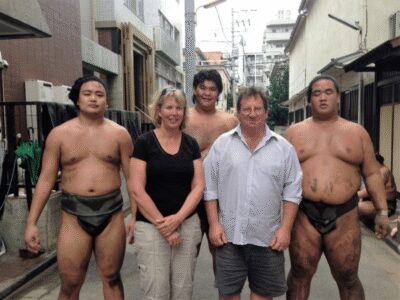
Tokyo Ryogoku Sumo Morning Practice + Photo Shoot with Wrestlers
Read our review →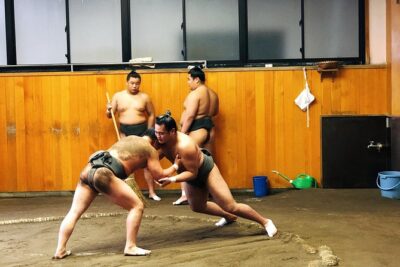
Browse the lists this tour appears in