
REVIEW · RYOGOKU SUMO TOURS
Tokyo: Sumo Morning Practice Tour at Sumida City
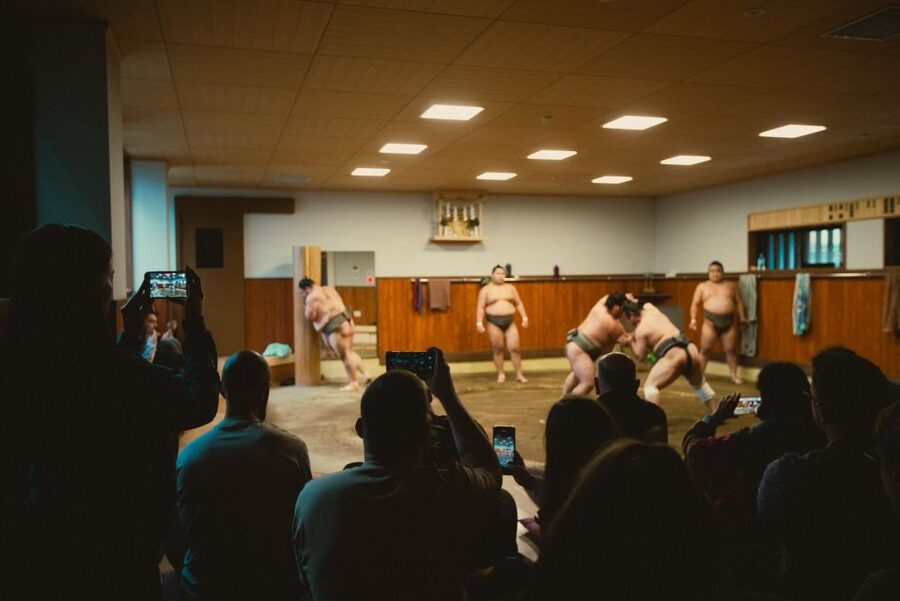
The best part of this morning tour is the distance between you and the action. You sit inside a working sumo stable, close enough to see the wrestlers’ feet grip the floor and to feel the force of each clash. This is practice, not a staged show, so the mood is serious and quiet.
I like the direct access to daily sumo life, followed by a question-and-answer session with the stable master. I also like the guides’ practical help, with Tadashi, Yoko, Yukiko, Oku, and others helping visitors understand what they are seeing. The main drawback is simple: you sit on the floor for about 90 minutes, with no chairs and no restroom break.
Key points to know before you book
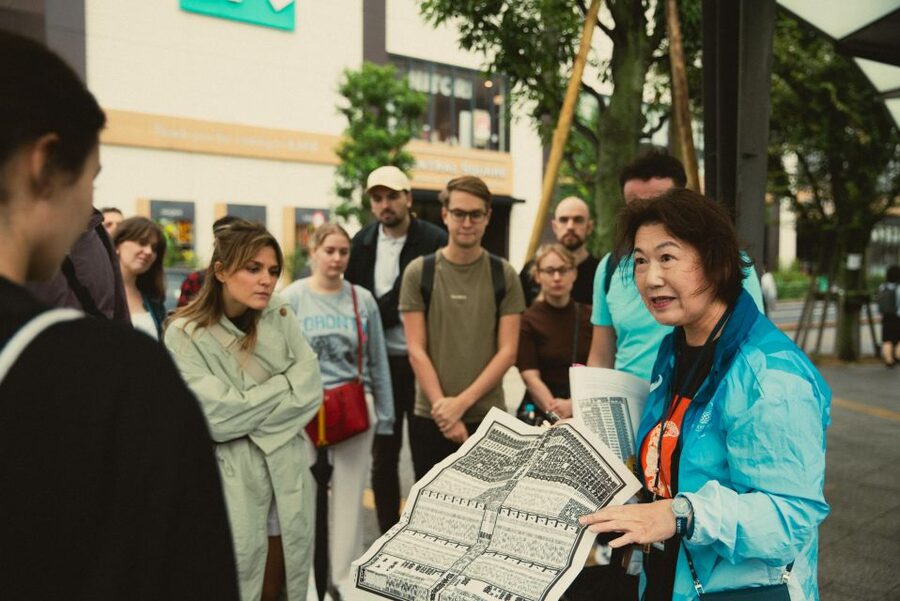
- Meet at 7:15 AM at Oshiage Station: The stable is a 15 to 20-minute walk from the station.
- Watch real morning practice: The wrestlers train for about 1.5 hours, often including bouts and demanding warm-up drills.
- Ask the stable master questions: The final part can reveal more about the wrestlers’ lives than the practice itself.
- Expect floor seating: There are no chairs, and cross-legged sitting for a long period is required.
- Photography has strict rules: No flash or shutter sounds, and photos or videos cannot be posted on social media.
- Plan around the sumo calendar: Morning practice tours are not held in March, July, or November.
Why this two-hour morning feels different from watching a tournament
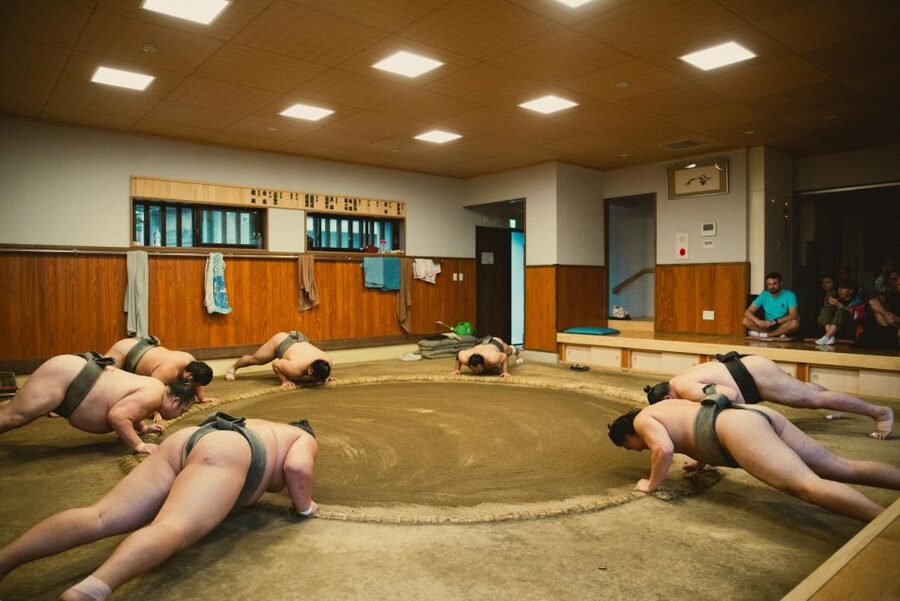
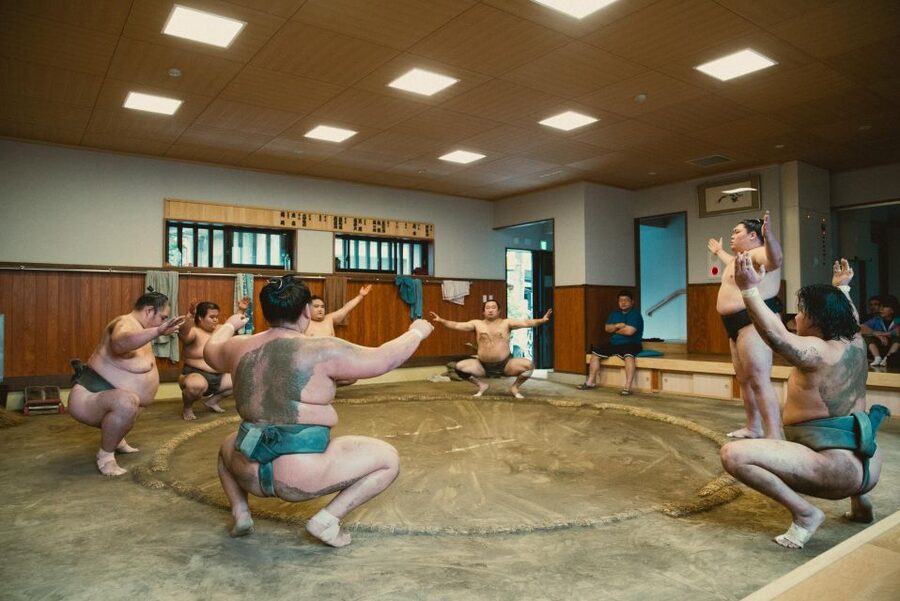
A sumo tournament gives you polished spectacle. This tour gives you the work behind it: repeated foot stamps, stretching, strength drills, ritual gestures, and practice bouts. You are not watching the most famous rikishi under bright arena lights. You are seeing wrestlers in training, including trainees who may not yet be household names.
That difference matters. The stable is not arranged for your entertainment. The wrestlers follow their own routine, and the guide’s job is to explain the customs and keep the group respectful. At times, you may simply watch in silence while the men repeat the same movement until it is right.
The scale is striking. Sumo wrestlers are large, but the practice also shows their flexibility, balance, and speed. Several people who arrived with little interest in sumo found that the physical preparation was the most surprising part. You can see how much effort goes into the sport before anyone steps into a tournament ring.
The tour is rated 4.8 from 308 bookings, and the most consistent praise centers on the practice itself, the friendly stable master, and the guides’ help. That does not mean every morning is identical. The intensity can vary, and a tournament period may affect how much full-contact practice you see.
More Ryogoku sumo tours in Tokyo:
- Tokyo Ryogoku Sumo Morning Practice + Photo Shoot with Wrestlers
★ 4.5 · 277 reviews - Sumo Wrestlers Morning Practice Tour – Tokyo Sumida District
★ 5.0 · 54 reviews - Tokyo: Sumo Morning Practice Tour in Ryogoku and Photo Shoot
★ 4.7 · 47 reviews
Meeting at Oshiage Station before the city wakes up
You meet at 7:15 AM on the ground floor outside Exit A1 at Oshiage Station, also called Tokyo Skytree Mae Station. The station serves both the Tokyo Metro and Toei Asakusa Line. The official practice begins at 7:30 AM, so arrive early enough to locate the exit and join the group without rushing.
The meeting point is close to Tokyo Skytree Town, but the tour does not take you up the tower. After a short walk of about five minutes through the Skytree area, the group continues on foot to the stable. The full walk from the meeting point takes roughly 15 to 20 minutes.
This walk is part of the practical challenge. You need to arrive at an early hour, and the route may feel long if you are tired or if the weather is hot. In August, bring water for the walk, though food and drinks are not permitted inside the stable. If rain is expected, carry a small towel to wipe your feet.
Wear shoes that come off easily. You will remove them before entering, and the floor is where you will sit. Loose, comfortable clothing is useful, especially if sitting cross-legged is not natural for you.
If you are late, contact the activity provider. You may be sent the stable’s address and told to go there on your own. Do not enter by yourself, ring the doorbell, or disturb the building. Wait outside until the guide meets you.
Entering a working sumo stable
The stable is the heart of the tour. It is not a museum or a theatrical set. The room is used for training, and the wrestlers’ attention needs to remain on their work. Your guide will explain the rules before you enter, including the need to watch quietly.
You will remove your shoes and take a place on the floor. There are no chairs, and the practice can last about 1.5 hours. One person in a group may find the position too uncomfortable, so take the seating rule seriously. This activity is not a good choice if you cannot sit on the ground for that long.
The group may not have a perfect view throughout. Seating can be affected by other groups or visiting athletes, and people have sometimes found themselves behind others at the start. Guides may adjust positions or rotate viewers when possible, but you should not expect everyone to sit in the front row for the whole practice.
That said, even a less direct view can still be worthwhile. You are close to the ring, and the sound and movement carry through the room. The stable’s small scale makes the training feel personal rather than distant.
What you will watch during the 90-minute practice
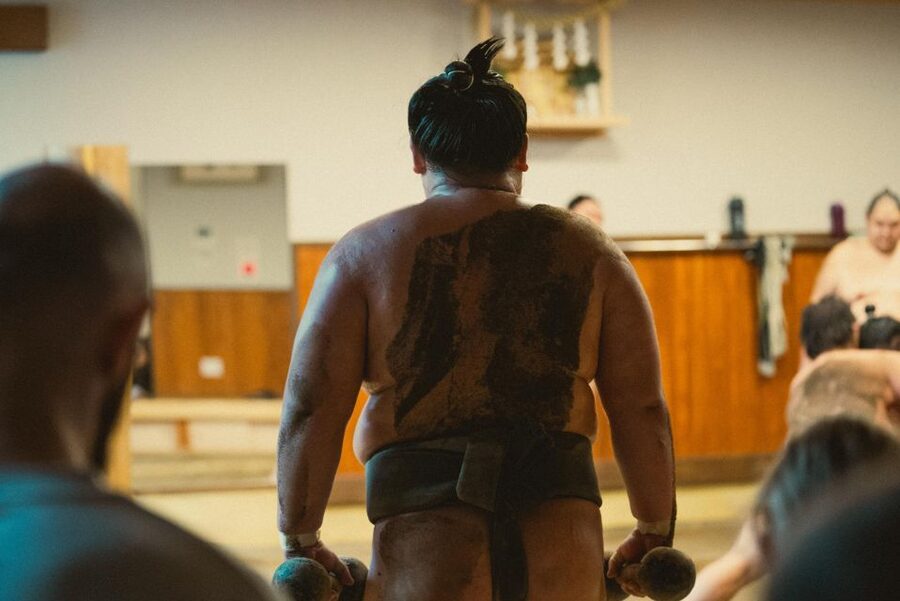
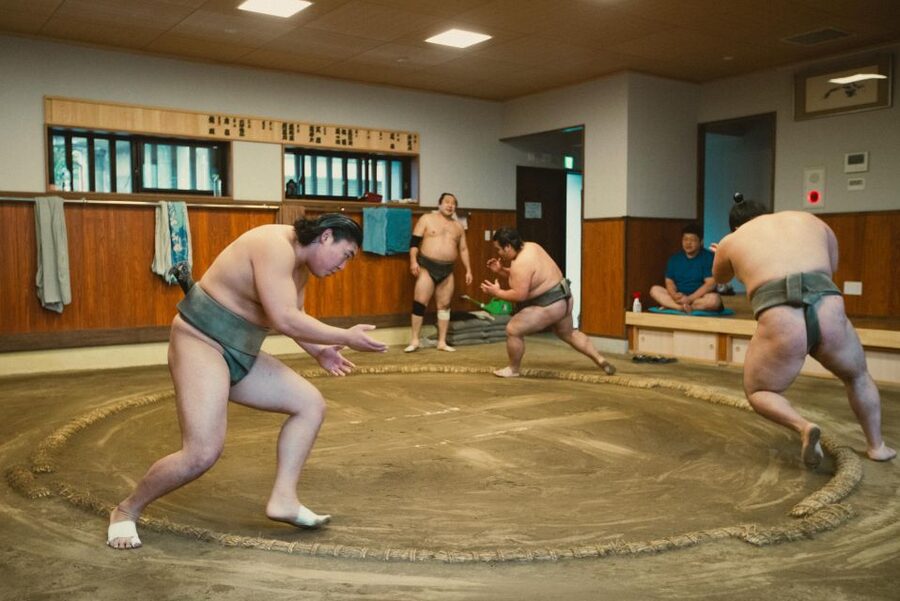
The practice is the main event, and it may not follow a neat schedule for spectators. You might see stretching, footwork, preparation drills, and bouts between wrestlers. The training can look repetitive at first, but the repetition is the point. Sumo depends on balance, timing, controlled force, and exact technique.
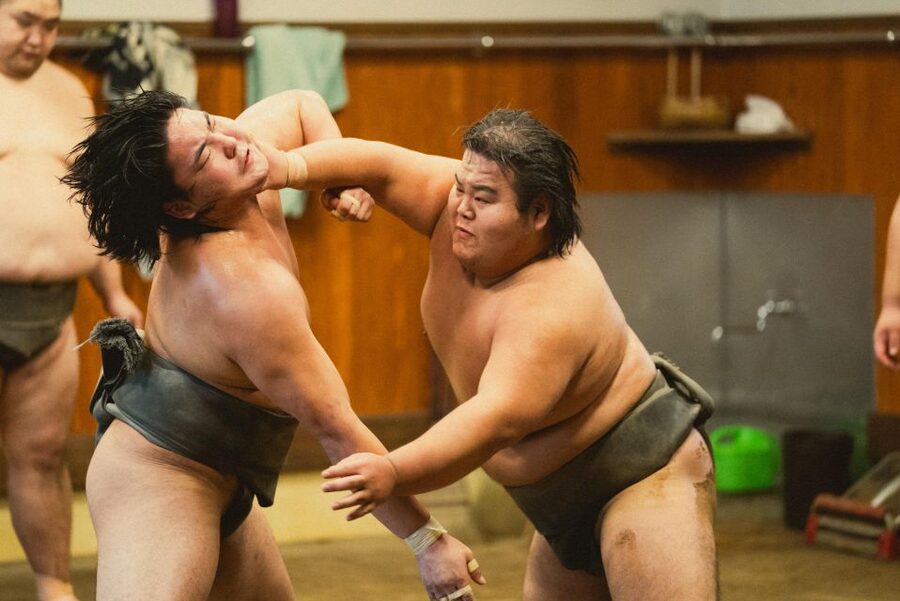
A bout can be brief but powerful. Two wrestlers drive into each other, test position, and try to push or throw the other off balance. You can watch how they use their feet and hips, not just their upper-body strength. The contrast between their size and agility is one of the most memorable parts.
This is also a place to notice the quiet discipline of the stable. The wrestlers are not performing for applause. If the room falls silent, follow its lead. Do not call out, clap at every bout, or move around to take pictures.
The amount of full-contact action can vary. During one May visit, practice was lighter because of the tournament period, and there were no bouts. That does not make the morning worthless, but it is worth knowing if you are booking mainly to see repeated one-on-one fights.
You may also see trainees rather than the sport’s top stars. That gives you a useful look at the early stages of the sumo system, but it is not the same as seeing a major tournament champion. If your main goal is to watch elite competition, buy a tournament ticket instead.
More morning practice tours in Tokyo:
- Tokyo: Sumo Morning Practice Viewing Tour
★ 4.8 · 570 reviews - Tokyo: Sumo Morning Training Visit
★ 4.4 · 370 reviews - Tokyo: Visit Sumo Morning Practice with English Guide
★ 4.7 · 343 reviews - Tokyo Sumo Morning Practice Tour at Stable
★ 5.0 · 298 reviews
The guide’s role, from Yoko to Tadashi
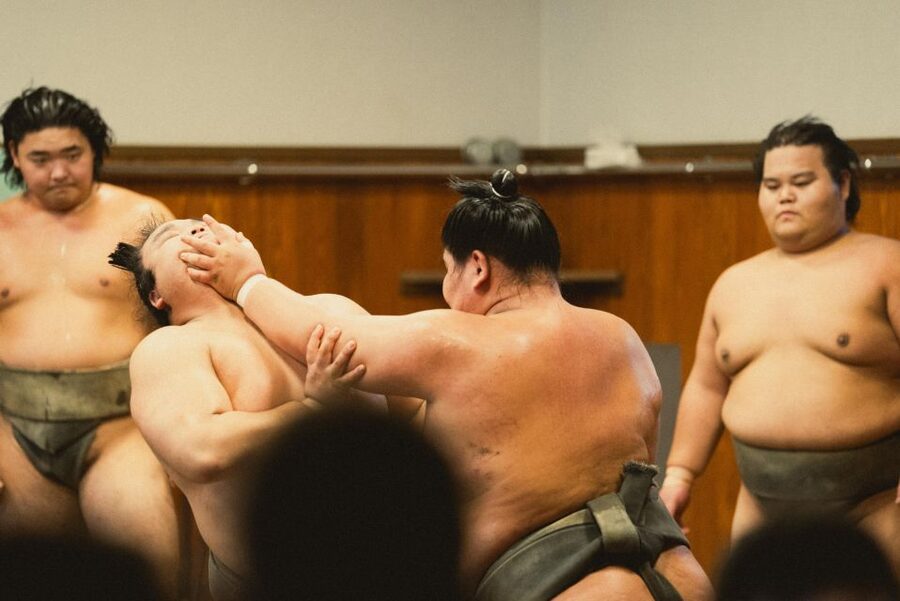
The English-speaking guide helps you understand what would otherwise be easy to miss. Sumo has rules, gestures, religious links, and stable customs that are not always obvious from the floor. Several guides have received special praise for being calm, friendly, and helpful.
Yoko has been particularly appreciated for her enthusiasm and clear answers. Yukiko has helped visitors understand what to expect and even offered directions for onward sightseeing after the tour. Oku has been praised for explaining the wrestlers’ habits quietly without interrupting the practice.
Tadashi has also been singled out for practical help before and after the visit. On one morning, he checked whether the nearby sumo museum was open when a visitor asked for directions. These small details matter at 7:30 AM, when Tokyo can still feel unfamiliar.
The guide’s style may vary. One visitor found it hard to hear explanations in a large group, while another felt the information before the practice was limited to a leaflet. If you want a long lecture on sumo history, this may feel light. If you prefer learning while watching the action, the format works better.
Some visitors have also found the meeting instructions confusing, so double-check the exact station exit and arrive early. The tour starts at the station, not at the stable.
The stable master’s question-and-answer session
After practice, the atmosphere usually loosens. The stable master may answer questions about training, the wrestlers’ daily lives, and the way the stable operates. This is often the most useful part for understanding sumo as a way of life rather than just a contest.
You can ask about what you have just seen, which makes the conversation more useful than a general talk. If a particular wrestler caught your attention, you may be able to ask about him. One visitor discovered that a wrestler seen during practice was quite well known.
The question period is not rushed in every group. Some mornings include around 30 minutes for questions and photos, though the exact balance can change. The stable master has been described as welcoming and generous with time, but keep your questions respectful and concise.
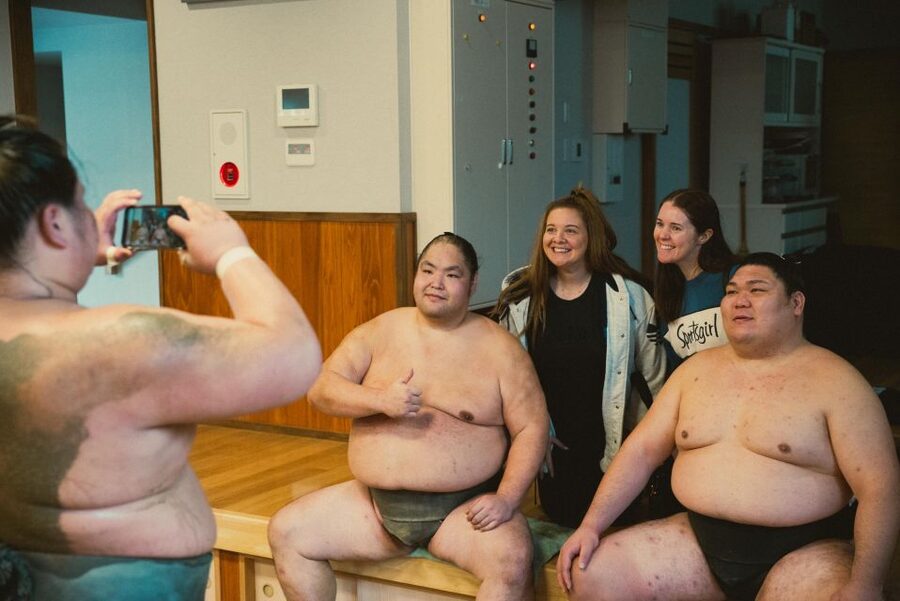
A photo with the wrestlers may be possible after practice. It is not guaranteed, so treat it as a bonus rather than the purpose of the tour. Photos and videos must be taken without flash or shutter sounds, and you cannot upload them to social media. Ask your guide before raising your phone.
Practical rules that shape the morning
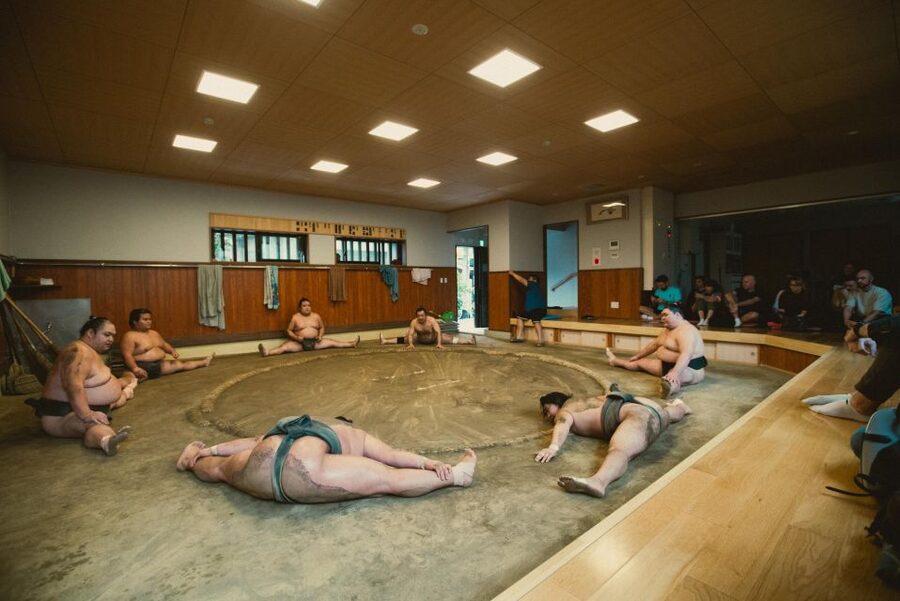
The restrictions are not minor fine print. They protect the stable’s routine and make the visit workable.
Do not bring food, large bags, luggage, hats, sunglasses, or a baby stroller. Use the restroom before meeting the group because you cannot leave for a toilet break during practice. Children must be at least six years old, and they need to remain quiet and still. If a child becomes noisy or keeps moving, the family may be asked to leave.
The tour is not suitable for people with mobility impairments. The walk to the stable, shoe removal, floor seating, and lack of chairs all add up. If you need a chair or cannot sit on the ground for 90 minutes, choose another sumo activity.
Respect also affects what you see. This is a training session, not a photo opportunity. Your silence helps the wrestlers concentrate and lets you notice details that would disappear in a noisier group.
Is $116 a fair price for two hours?
At $116 per person, this is not a budget activity. You are paying for access to a working stable, an English-speaking guide, the entrance fee, and help with customs and etiquette. Food, drinks, transport, and hotel pickup are not included.
The value depends on what you want. If you only want to see sumo wrestlers for a few minutes, the price may feel high. If you want a close look at training and the chance to ask the stable master questions, the cost is easier to justify. You also avoid the uncertainty of trying to locate a stable and enter respectfully on your own.
The experience is strongest for visitors who value access over comfort. You walk from the station, sit on the floor, follow strict rules, and accept that the practice is not staged. In return, you get a rare look at the daily work behind a sport that is often seen only in tournament settings.
Free cancellation is available until two days before the activity. Bookings are accepted once the schedule is known, usually one to two months ahead. Check availability early, especially because tours do not operate in March, July, or November when Grand Sumo tournaments take place outside Tokyo.
Who should book this sumo morning?
I would choose this for anyone curious about Japanese customs, sports training, or daily life behind a public tradition. It works well for adults, older children who can stay quiet, and visitors who want something more personal than a large sightseeing attraction.
It is also a good choice if you are staying near Tokyo Skytree or planning to visit Sumida afterward. The early finish leaves the rest of the day open, though you should allow time to get your shoes back on, collect your belongings, and continue at a relaxed pace.
I would skip it if you need comfortable seating, dislike early starts, or want guaranteed star wrestlers and dramatic bouts. I would also avoid booking for a young child who cannot sit still. The stable is generous in allowing visitors inside, but it is still a working place.
FAQ
Where do I meet the guide?
Meet at 7:15 AM on the ground floor outside Exit A1 of Oshiage Station, also called Tokyo Skytree Mae Station. The tour starts at 7:30 AM.
How long does it take to reach the sumo stable?
The walk from the meeting point to the stable takes about 15 to 20 minutes. The group also passes through the Tokyo Skytree Town area during the walk.
How long do I watch the practice?
The practice lasts about 1.5 hours. The full activity lasts about two hours, including the walk, explanations, questions, and possible photographs.
Can I take photographs or videos?
You may take photos and videos without flash or shutter sounds. You cannot upload them to social media, and a photo with the wrestlers is only possible if the stable permits it that day.
Do I need to sit on the floor?
Yes. There are no chairs in the stable, and you may need to sit cross-legged on the ground for about 1.5 hours. The provider does not recommend this activity if you cannot sit comfortably for that length of time.
Does the tour operate all year?
No. Morning practice and tours are not held in March, July, or November because Grand Sumo tournaments take place outside Tokyo during those months. The schedule is usually available one to two months before your desired date.
Should you book it?
Book this tour if you want to see sumo as disciplined daily work, not just as a tournament spectacle. The close seating, quiet room, stable master’s answers, and chance of a photo make it one of Tokyo’s more personal cultural activities.
Just arrive early, wear easy-to-remove shoes, use the restroom first, and be ready to sit on the floor. At $116, it asks a lot from your morning and your wallet, but for the right visitor, the direct look at sumo training can be worth both.
Newest sumo experiences in Tokyo
- Tokyo Sumo History Tour with Chanko Nabe Lunch★ 5.0 · 3 reviews
- Tokyo Highlights Tour: Sumo, Sushi, Tea, and Tokyo Tower★ 5.0 · 2 reviews
- Tokyo: Know about Hokusai and Sumo culture in 2.5 hours★ 5.0 · 2 reviews
- TOKYO , No1 Yokozuna Stable Morning Practice in Ryogoku★ 4.5 · 3 reviews
- Tokyo 6hr Private Guided Tour & Sumo Show Lunch★ 5.0 · 3 reviews
- Tokyo Grand Sumo Tournament Viewing Tour★ 5.0 · 2 reviews
- Complete Sumo Experience in Tokyo★ 4.5 · 3 reviews
- Tokyo Ginza : Sumo and Mikoshi Experience,Open from Sep.★ 5.0 · 8 reviews
Ryogoku Sumo Tours, compared.
Tokyo Ryogoku Sumo Morning Practice + Photo Shoot with Wrestlers
Read our review →
Sumo Wrestlers Morning Practice Tour – Tokyo Sumida District
Read our review →
Sumo Morning Practice Tour in Ryogoku and Photo Shoot
Read our review →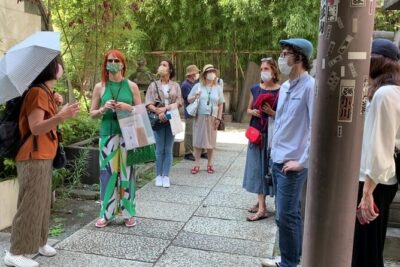
Tokyo Sumo Culture Tour with Chanko-Nabe Lunch in Ryogoku
Read our review →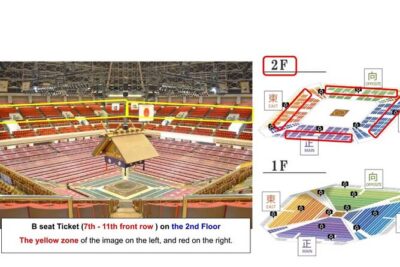
Seat B Ticket Tokyo Sumo Wrestling Tournament in Ryogoku
Read our review →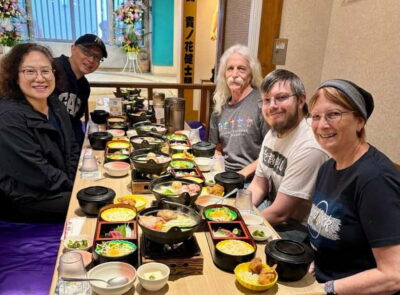
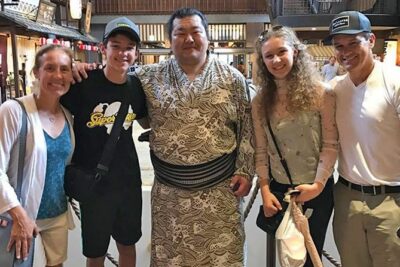
Private Ryogoku Walking Tour with Sumo Wrestler and Master Guide
Read our review →
Browse the lists this tour appears in