
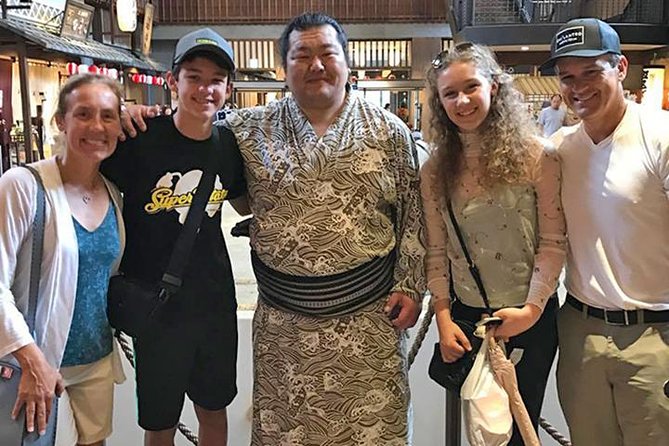
REVIEW · RYOGOKU SUMO TOURS
Private Ryogoku Walking Tour with Sumo Wrestler and Master Guide
Ryogoku is Tokyo’s sumo heartland, and this private walk gives you something a stadium visit cannot: direct time with a sumo wrestler. You’ll see the Kokugikan arena, learn how the sport works, and visit Nomi Sukune Shrine, where new yokozuna champions pay their respects.
I like the small private group, limited to five people, and the mix of sumo culture with Asakusa’s Senso-ji Temple and Nakamise Street. I also like having a translator included, since it lets you ask real questions rather than simply watch a short demonstration.
The main concern is price. At $402.32 per person, this is a costly two-hour experience, especially for a couple. The value makes the most sense if meeting a wrestler and getting a personal introduction to sumo is a major Tokyo priority.
Key points to know before you book
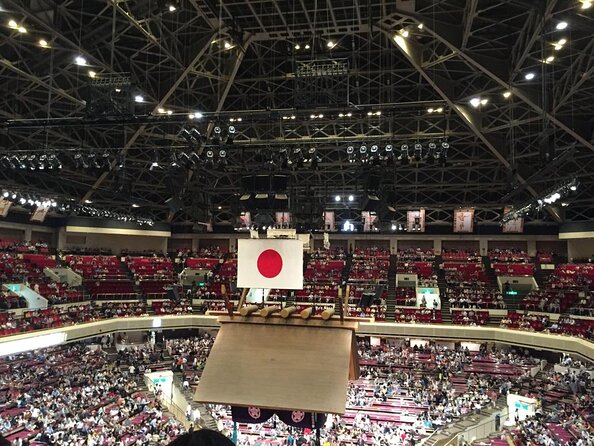
- A sumo wrestler leads the experience, with a local translator helping you follow the conversation.
- Ryogoku Kokugikan and Nomi Sukune Shrine provide the strongest sumo context.
- The group is private and capped at five people, which keeps questions and conversation easy.
- The route combines Ryogoku with Asakusa, including Senso-ji Temple and Nakamise Street snacks and shops.
- Your guide may be recently retired, depending on tournament schedules and wrestler availability.
- The price is high, but the personal access is the reason to consider it.
Why a wrestler changes the Ryogoku experience
Sumo can seem mysterious from the outside. You see enormous athletes in a ring, hear unfamiliar terms, and perhaps catch a tournament on television. A wrestler can explain the customs and daily world behind those few dramatic minutes of competition.
That personal link is the central reason to choose this tour. The guide is not only pointing out buildings. He can explain the sport’s traditions and answer questions about the sumo world through the translator. One important detail is that an active wrestler is not guaranteed. If tournaments or other duties prevent one from joining, the guide may be a just-retired sumo wrestler instead.
That should not be treated as a major downgrade. The operator says the retired guide offers the same quality and knowledge about sumo. Still, if your heart is set on meeting an active competitor, you should understand that availability can change.
The translator matters here. Sumo has its own vocabulary and customs, and a translation service gives the visit more substance than a quick photo opportunity. You can ask follow-up questions and keep the conversation moving. A private group also means you are not trying to compete with 30 other people to be heard.
More Ryogoku sumo tours in Tokyo:
- Tokyo: Sumo Morning Practice Tour at Sumida City
★ 4.8 · 308 reviews - Tokyo Ryogoku Sumo Morning Practice + Photo Shoot with Wrestlers
★ 4.5 · 277 reviews - Sumo Wrestlers Morning Practice Tour – Tokyo Sumida District
★ 5.0 · 54 reviews
Starting at historic Ryogoku Station
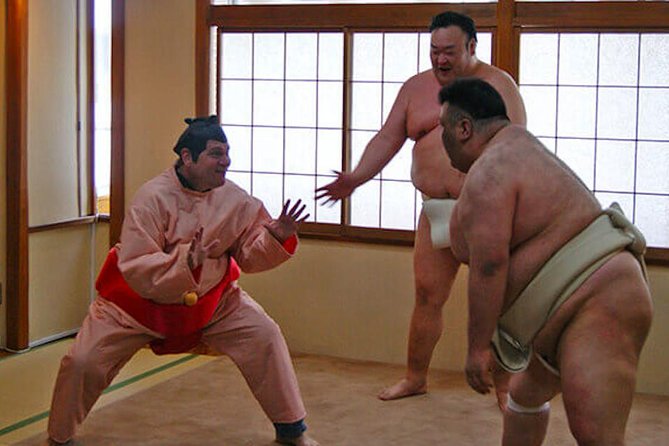
The meeting point is Ryogoku Station, at 1-chōme-3-20 Yokoami in Sumida City. The tour starts at 1:30 p.m. and ends back at the meeting point, which keeps the day simple for anyone planning an evening meal or another Tokyo activity.
The first stop is Ryogoku Edo Noren, a shopping and dining center set inside the restored former Ryogoku Station building. The original 1929 façade remains, giving the stop a touch of old Tokyo character before the sumo-focused walk begins.
You have about 30 minutes here, and admission is included. This is not just a place to pass through on the way to the arena. It gives you a useful introduction to Ryogoku as a neighborhood built around food, local life, and sumo. The complex includes restaurants and shops, so it can also help you get your bearings.
I would not book this experience solely for Edo Noren. Its value comes from the setting and the way it opens the tour. If you are hungry, remember that food and drinks are not included, so any purchase here is your own expense.
Seeing Ryogoku Kokugikan from the outside
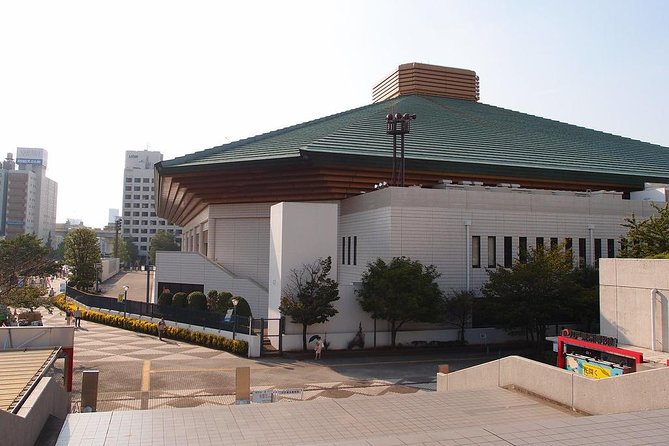
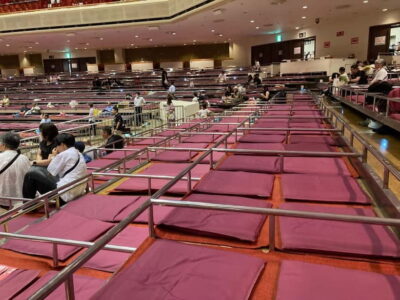
Next comes Ryogoku Kokugikan, Tokyo’s main sumo stadium. Built in 1985, the arena can hold more than 10,000 people. During a tournament, it is where the sport’s ceremonial customs, rivalries, and powerful bouts come together.
This tour does not promise a tournament ticket. Instead, you explore the stadium area with your sumo guide and learn about its role in the sport. That distinction matters. If you want to watch live competition, you need a separate plan and ticket. If you want context for what you see at a tournament, this stop gives you a useful foundation.
The planned visit lasts about 30 minutes. That is enough for orientation and explanation, but not a full stadium experience. Your guide can make the building more meaningful by connecting it to the wrestlers, tournaments, and rituals that define sumo.
The arena is also where you begin to understand why Ryogoku is the right neighborhood for this subject. Sumo is not treated as a detached museum display here. It is part of the district’s identity.
Nomi Sukune Shrine and the roots of sumo
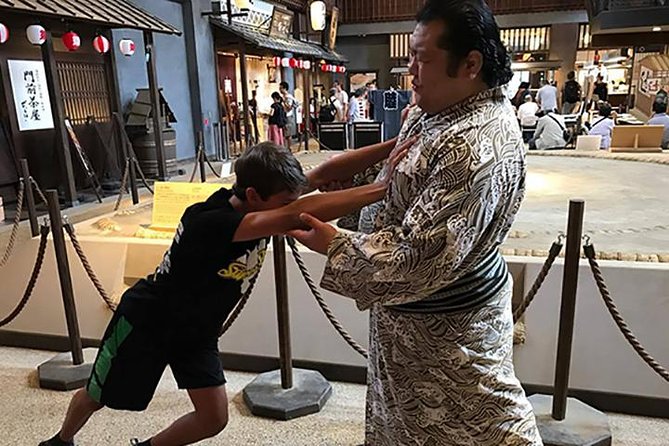
Nomi Sukune Shrine is a smaller, more focused stop. It is dedicated to the deity associated with the beginnings of sumo in ancient Japan. New yokozuna champions visit and worship here, and a stone statue in the garden records the names of yokozuna.
You have around 20 minutes at the shrine. That short visit should be enough to appreciate its role without turning the tour into a long temple stop. The list of yokozuna names gives you a direct link between the sport’s past and its modern champions.
This is the sort of place that is easy to miss if you explore Ryogoku alone. You might walk past the larger stadium and never learn why this small shrine matters. With the wrestler and translator present, the stop becomes a chance to ask about rank, ceremony, and the standing of a yokozuna.
For me, this is one of the strongest parts of the route. The Kokugikan shows you the public face of sumo. Nomi Sukune Shrine adds the spiritual and traditional side.
More chances to meet a wrestler in Tokyo:
- Tokyo Sumo Morning Training/ Sumo Practice with Wrestlers
★ 5.0 · 135 reviews - Tokyo Sumo Morning Practice: Viewing & Exclusive Interaction
★ 4.9 · 74 reviews - Tokyo Sumo Morning Practice: Viewing & Exclusive Interaction
★ 4.5 · 59 reviews - Tokyo Sumo Morning Practice: Witness the Life of a Wrestler
★ 4.8 · 56 reviews
A possible Hokusai addition in Ryogoku
The tour information also points to the Hokusai Museum as an option for visitors who like his work. The details do not specify a visit length or confirm that admission is included, so you should treat it as an optional suggestion rather than a guaranteed stop.
That caveat is important in a short tour. Two and a half hours is not much time for Ryogoku, Asakusa, sumo explanations, and extra museum time. If Hokusai is a priority, ask the operator how it fits into your specific route before booking.
The museum mention does show that the area offers more than sumo. Ryogoku can suit a broader interest in Japanese art and local culture, but this experience remains primarily a sumo and walking tour.
Moving from sumo town to Asakusa
The second half of the experience takes you toward Asakusa, one of Tokyo’s best-known historic districts. The advertised route includes Senso-ji Temple and Nakamise Street, so you get a change of pace after the specialist sumo discussion.
Senso-ji is the major landmark here. The temple gives the tour a wider picture of Tokyo, moving from a national sport to one of the city’s most important religious and cultural sites. You will also have time around Nakamise Street, where you can browse traditional-style shops and sample snacks.
Food is not included, but sampling something along Nakamise is part of the appeal. Budget separately if you want to try local sweets or small bites. The street is also useful for souvenirs, though a short guided tour cannot offer unlimited shopping time.
The supplied timing creates one point to clarify before you pay. The experience is described in some places as about two hours and elsewhere as 2.5 hours. The overview also promises Asakusa, while the detailed stop list gives more precise times for Ryogoku locations. Ask for the current route and duration if you need to coordinate transport or another reservation.
What the private format is really worth
The booking limit is five people, and only your group participates. That is a meaningful advantage in a conversation-based tour. You can ask about wrestling ranks, customs, or the guide’s own experience without waiting for a large crowd to move along.
It is especially useful for families or close friends who want to stay together. The minimum age is 10, and most people can take part. Because the activity involves walking between neighborhood sights, you should be comfortable walking for the duration, though no special physical requirement is stated.
The private format also helps if your group has mixed interests. One person can ask about tournament life while another focuses on shrines, food, or Tokyo history. The translator can help keep those questions part of the same conversation.
The drawback is simple: privacy costs money. At $402.32 per person, two people pay $804.64 before food or other expenses. A larger group of five may find the per-person cost easier to justify, but a solo visitor or couple needs to place a high value on the personal sumo access.
What the experience does well
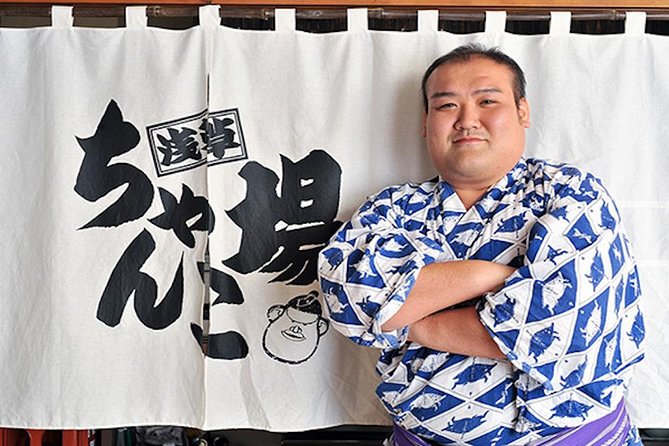
The strongest praise centers on the people, not just the sights. The sumo guide and translator are described as friendly and easy to talk with, and the personal conversation adds value beyond the formal route. That matters because a short walking tour can otherwise feel like a list of stops.
The educational side also comes through clearly. You learn a lot about sumo while walking through a part of Tokyo where the sport is part of everyday identity. The combination of instruction, local sites, and informal conversation is what gives the tour its appeal.
One couple considered it their favorite Tokyo activity, largely because the sumo guide and translator were enjoyable to talk with as well as informative. That is a useful clue about the right expectations. Book this for human contact and explanation, not only for a photo beside a famous arena.
The criticism is equally useful. One participant found the tour informative and enjoyable but felt the price was too high for the amount of time. I agree that this is not a budget walk. You are paying for a private setup, translation, and access to a sumo guide. If those elements are not central to your trip, the cost will feel harder to defend.
Timing, meeting point, and practical details
The scheduled start is 1:30 p.m. at Ryogoku Station. The tour returns to the same meeting point, so you do not need to arrange a separate pickup at the end. Transportation to and from the meeting point is not included.
The activity is near public transportation, which makes Ryogoku Station a practical start. Allow enough time to reach the station without rushing. Confirmation is sent within 48 hours of booking, subject to availability.
This is a non-refundable experience, and changes are not accepted after booking. That policy is particularly important because wrestler availability can vary and because illness or other last-minute problems may leave you unable to recover the cost. One booking had to be missed because of illness, with no refund available under the stated rules.
Food and drinks are also excluded. You can buy snacks in Asakusa or stop for food afterward, but do not expect the tour fee to cover refreshments. All taxes, fees, and handling charges are included in the listed price.
Who should book this sumo walk
I would recommend it most strongly to someone who has a real interest in sumo but cannot arrange a tournament visit. It is also a good fit if you want a private guide who can connect Ryogoku’s sites to the sport’s customs and explain what you are seeing.
Families with children aged 10 and older may appreciate the direct contact and short duration. A private group makes it easier to keep the pace comfortable and ask questions. Couples can also enjoy it, provided they are comfortable paying a premium for a two-person experience.
I would be more cautious if your main goal is shopping, food, or a long visit inside a museum. The tour includes Asakusa and Nakamise Street, but it is not primarily a food tour. It also does not replace a full sumo tournament ticket.
Should you book the Private Ryogoku Walking Tour?
Book it if meeting a sumo wrestler, learning the sport’s traditions, and seeing Ryogoku with a translator are worth the premium. The small group, Nomi Sukune Shrine, Kokugikan area, and Asakusa finish give you more than a simple stadium photo stop.
Skip it if $402.32 per person feels excessive for a roughly two to 2.5-hour walk, or if you mainly want Senso-ji and Nakamise Street. You can visit those Asakusa sights without this specialist guide.
Before booking, confirm the current duration, the exact Asakusa portion, and whether the guide will be active or recently retired. If those details suit your plans, this is a personal and memorable way to understand Tokyo’s sumo district.
FAQ
How long does the tour last?
The experience is described as approximately two to 2.5 hours. The advertised tour overview gives 2.5 hours, while another summary lists about two hours.
Where does the tour start?
It starts at Ryogoku Station, at 1-chōme-3-20 Yokoami, Sumida City, Tokyo 130-0015, Japan.
What time does the tour begin?
The scheduled start time is 1:30 p.m.
Where does the tour end?
The activity ends back at the meeting point.
Is the tour private?
Yes. Only your group participates, with a maximum of five people per booking.
Will the guide always be an active sumo wrestler?
No. If an active wrestler is unavailable because of tournaments or other reasons, the guide may be a just-retired sumo wrestler.
Are food, drinks, and transportation included?
No. Food and drinks, as well as transportation to and from the meeting point, are not included. Taxes, fees, and handling charges are included.
More private sumo experiences in Tokyo
- Tokyo:Luxury Sumo Show Experience & Japanese cuisine & Drink
★ 4.7 · 577 reviews - Tokyo: Exclusive Access to Sumo Morning Practice with Photos
★ 4.8 · 107 reviews - Exclusive Sumo Morning Practice in Tokyo with Photo Opportunity
★ 5.0 · 68 reviews - 1.5 Hour VIP Sumo Event in Tokyo
★ 4.5 · 24 reviews
More sumo walking tours in Tokyo
- Tokyo Walking Tour : Sumo, Sushi, Tea, Temples and Tokyo Tower
★ 5.0 · 21 reviews - Ryogoku: Sumo Town Guided Walking Tour with Lunch
★ 4.8 · 9 reviews - Tokyo: Watching Sumo and Ryogoku Area Walking Tour
★ 4.0 · 5 reviews
Newest sumo experiences in Tokyo
- Tokyo Highlights Tour: Sumo, Sushi, Tea, and Tokyo Tower★ 5.0 · 2 reviews
- Tokyo: Know about Hokusai and Sumo culture in 2.5 hours★ 5.0 · 2 reviews
- TOKYO , No1 Yokozuna Stable Morning Practice in Ryogoku★ 4.5 · 3 reviews
- Tokyo 6hr Private Guided Tour & Sumo Show Lunch★ 5.0 · 3 reviews
- Tokyo Grand Sumo Tournament Viewing Tour★ 5.0 · 2 reviews
- Tokyo Sumo History Tour with Chanko Nabe Lunch★ 5.0 · 3 reviews
- Tokyo: Sanctuary Authentic Grand Sumo Experience & Training★ 5.0 · 7 reviews
- The SUMO Show & Experience with Hot pot lunch★ 5.0 · 4 reviews
Ryogoku Sumo Tours, compared.
Tokyo Ryogoku Sumo Morning Practice + Photo Shoot with Wrestlers
Read our review →
Sumo Wrestlers Morning Practice Tour – Tokyo Sumida District
Read our review →
Sumo Morning Practice Tour in Ryogoku and Photo Shoot
Read our review →
Tokyo Sumo Culture Tour with Chanko-Nabe Lunch in Ryogoku
Read our review →
Seat B Ticket Tokyo Sumo Wrestling Tournament in Ryogoku
Read our review →
Browse the lists this tour appears in