
REVIEW · SUMO MORNING PRACTICE TOURS
Exclusive Sumo Morning Practice in Tokyo with Photo Opportunity
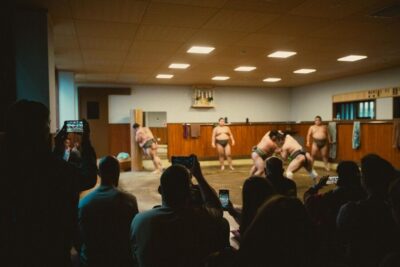
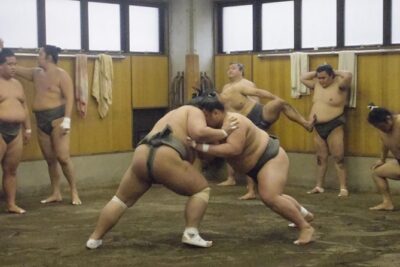
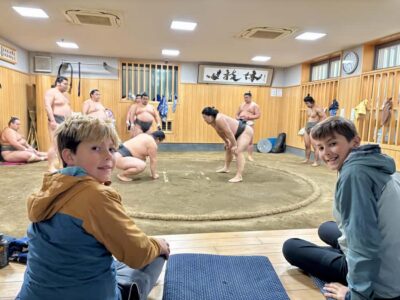
The remarkable part here is the access. You are not watching a staged cultural show, but a real morning practice inside a sumo stable near Tokyo Skytree. Wrestlers work through warm-ups and hard sparring at close range, giving you a clear look at the focus, force, and ritual behind Japan’s national sport.
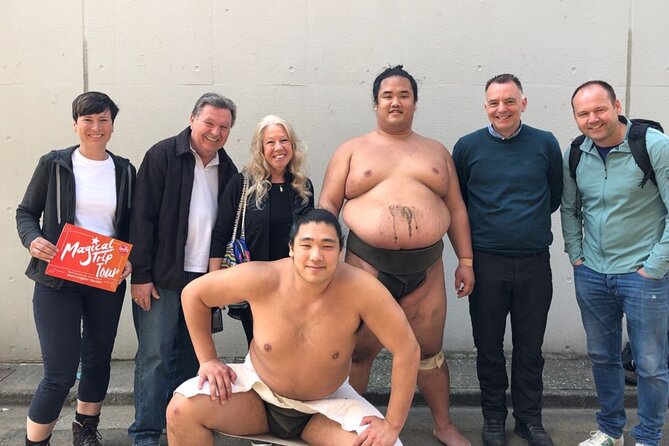
I like the small group of up to 10 people, which makes it easier to hear the guide and understand what is happening. I also like that the tour includes a photo opportunity with the wrestlers and stable master, something you will not get from a tournament seat alone. The main drawback is simple: practice can become repetitive, and late arrival may mean sitting two or three rows back.
Key points to know before booking
- Real morning practice: Watch wrestlers train, warm up, and spar rather than perform a tourist show.
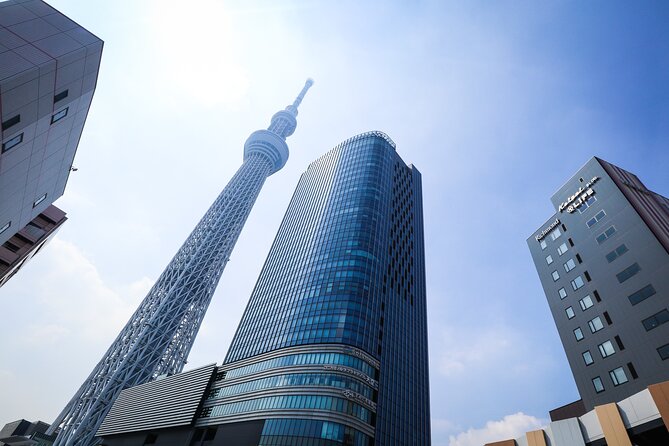
- Near Tokyo Skytree: Meet at Oshiage Station, a useful central point for this part of Tokyo.
- Short two-hour outing: The 8:00 a.m. start leaves most of your day free.
- Guides add essential context: Hana, Kentake, and Yuki have been praised for clear explanations of sumo customs and history.
- Photos are part of the experience: You can pose with the wrestlers and the stable master at the end.
- First-come seating: Arrive on time because seating is not reserved and the stable can host several tour groups.
Seeing sumo before the public arrives
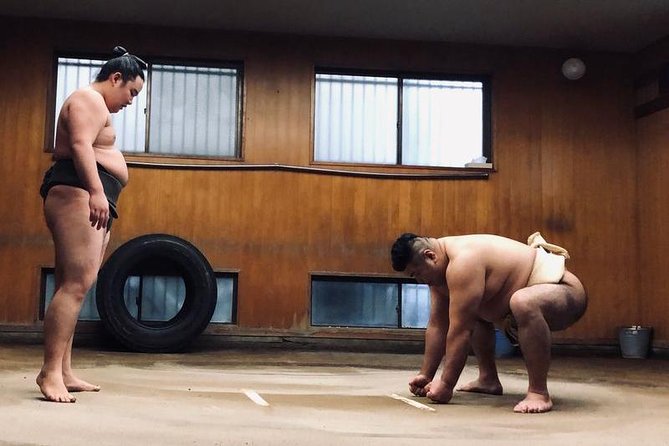
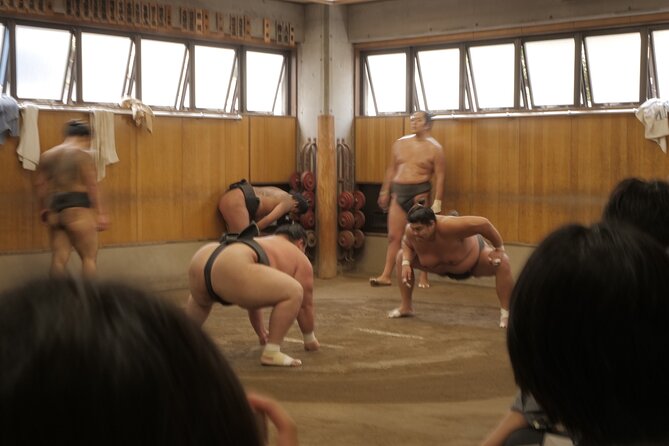
Sumo practice has a different feel from a tournament. At a tournament, the crowd, ceremony, music, and competition create the drama. Here, you see the daily work that comes first: warm-ups, repeated movements, bouts, and long stretches of concentration.
That difference matters. The wrestlers are not putting on a show for the room. They are training. You may notice how serious and physically demanding the practice is, even when the movements look slow from a distance. The force arrives suddenly in the attacks, and the close setting lets you appreciate how much control is involved.
This is also a useful choice when no tournament is scheduled in Tokyo. You get a genuine look at sumo culture without arranging your visit around tournament dates or buying arena tickets.
The practice takes place at a stable near Tokyo Skytree. A stable is the training home for a group of wrestlers, so the setting feels more personal than a stadium. At the same time, remember that this is still a working place. Visitors are not free to walk through it or explore the building. The tatami areas are the only permitted visitor spaces.
More morning practice tours in Tokyo:
- Tokyo: Sumo Morning Practice Viewing Tour
★ 4.8 · 570 reviews - Tokyo: Sumo Morning Training Visit
★ 4.4 · 370 reviews - Tokyo: Visit Sumo Morning Practice with English Guide
★ 4.7 · 343 reviews
Starting at Oshiage Station at 8:00 a.m.
The meeting point is at the taxi stand inside the station rotary at Oshiage Station, in Sumida City. The address is listed as 1-chōme1, Oshiage, and the start time is 8:00 a.m.
Station meeting points can take a moment to sort out, especially in Tokyo, where large stations have several exits and signs. One guide, Hana, has been especially appreciated for helping make the experience easy once the group is together, but you should still allow time to find the taxi stand. Do not treat 8:00 as a loose suggestion.
From the station, the group visits one of the sumo stables around Tokyo Skytree. The tour ends back at the same meeting point, so you do not need to work out a new pickup location afterward.
The early hour is part of the value. You get a cultural activity finished before lunch, leaving the rest of the day open for Skytree, Asakusa, museums, shopping, or another part of Tokyo. It does mean you need to plan the morning carefully. If you have a late night before, the early start may feel less convenient.
What happens inside the stable
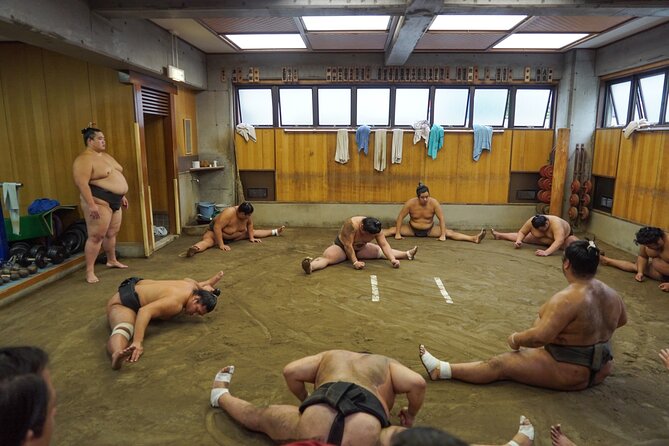
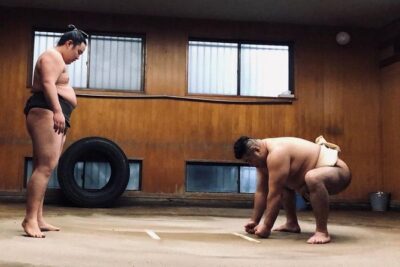
The exact order and length of each training segment can vary, but you should expect to watch the wrestlers warm up and spar during their morning session. The action may include repeated drills and bouts rather than one continuous contest.
That repetition is useful if you want to understand practice as work. It can also test your patience. One hour of watching the same general rhythm may feel like plenty, especially if you are mainly interested in the spectacle of a tournament. I would choose this experience for the setting, access, and context, not because every minute will bring a new event.
The wrestlers’ focus is one of the strongest parts. You can see that the practice is serious, not a short demonstration designed only for cameras. The physical size of the wrestlers can also surprise you. The training shows athletes who are powerful, fast, and highly conditioned, rather than the simple caricature of sumo as only large bodies pushing one another.
Your guide helps translate what you see. Kentake has been praised for fluent English and for explaining the background of the sport and its wrestlers. Yuki has also been noted for explaining the philosophy and context of the practice in a clear way. Hana is another guide associated with an enthusiastic, well-informed presentation.
Guide quality matters here because the practice itself may not explain its meaning to you. Without context, you might see a series of collisions and stretches. With good explanation, you can better understand the respect, discipline, and ritual surrounding the sport.
Photos with the wrestlers and stable master
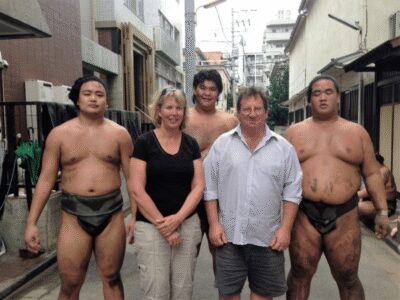
The photo opportunity comes after the practice. You may take pictures with the wrestlers and pose with the stable master, also called the oyakata in sumo culture.
This is a special part of the outing, but approach it with good manners. You are visiting a working stable, not entering a photo studio. Follow the guide’s instructions, stay in the permitted tatami areas, and avoid assuming you can move closer or take pictures at any point during practice.
The chance to stand beside the full stable gives the outing a clear finish. It also helps make the experience worthwhile for families and sports fans who want a lasting record of the morning. The photo is not the entire point, but it turns an observation session into something you can remember and share.
The information provided does not promise a set number of photos or a guaranteed length of time for pictures. Think of it as an included opportunity rather than a private photo shoot.
More photo experiences in Tokyo:
- Tokyo: Sumo Show Experience with Chicken Hot Pot and a Photo
★ 4.8 · 6,678 reviews - Tokyo Shinjuku Sumo Show & Experience with Photo
★ 5.0 · 1,750 reviews - Tokyo Sumo Entertainment Show with Chicken Hot Pot and Photo
★ 5.0 · 1,205 reviews - Tokyo Ryogoku Sumo Morning Practice + Photo Shoot with Wrestlers
★ 4.5 · 277 reviews
Why the small group makes a difference
The maximum group size is 10 people. That is small enough for the guide to answer questions and keep everyone together on the way from the station to the stable.
It also matters once you are seated. A sumo stable is not a theater with rows of numbered chairs. Space is limited, and the seating is first come, first served because several tour companies may visit. Arrive on time if getting a close view matters to you.
Late arrivals may sit two or three rows back. That is not necessarily a bad view, but it changes the feeling of the experience. Sumo training is physically close and visually powerful, so even a few rows can affect how clearly you see the wrestlers’ movements.
You should also respect the stable’s rules. The tatami flooring is the visitor area, and other parts of the stable are off-limits. This is an important limitation, but it is also part of responsible cultural tourism. The stable remains a place where wrestlers live and train.
Is $99.10 a fair price?
At $99.10 per person, this is not a cheap way to fill two hours. It is worth judging against the access rather than against the length alone.
You are paying for a small-group visit, a guide who explains the sport in English, transport guidance from a central station meeting point, access to a working stable, and a photo opportunity with the wrestlers and stable master. Most people in Japan, including many local residents, never see this kind of practice up close. That rarity gives the price some weight.
The value is strongest if you care about Japanese culture, sports, photography, or experiences that are difficult to arrange independently. It is also useful if your schedule does not allow a full tournament visit. The short format lets you fit sumo into a busy Tokyo itinerary.
The value is weaker if you want nonstop action or a full day centered on sumo. Practice can feel repetitive, and you are not guaranteed a tournament atmosphere. You also cannot choose your seat, so the closest possible view is not guaranteed.
The high rating and 99 percent recommendation suggest that the experience has worked well for most people who booked it. Still, the practical details matter more than the score: arrive early, accept that this is a quiet working environment, and choose it for authenticity rather than a polished stage show.
Heat, clothing, and practical comfort
Tokyo mornings can be hot and humid in summer. Bring water and wear a hat for the journey to the stable and while waiting outside. Comfortable clothing is sensible because you will be moving from the station and sitting in a traditional stable setting.
The activity is near public transportation, and most people can participate. Specific accessibility details are not provided, so you should confirm directly if you need special arrangements.
The experience uses a mobile ticket, and confirmation is provided when you book. Free cancellation is available up to 24 hours before the 8:00 a.m. start. A cancellation made less than 24 hours in advance is not refunded, and late changes are not accepted.
Who will enjoy this morning most?
I would recommend it first to anyone who wants to understand sumo beyond the tournament ring. The session gives you a close look at training, concentration, and the daily side of the sport.
It also suits:
- Sports fans who want to see serious preparation rather than only competition
- First-time visitors looking for a distinctly Japanese cultural activity
- Photographers who value a personal picture with the wrestlers
- Families and couples who prefer a short morning outing
- People visiting Tokyo outside tournament dates
- Anyone staying near Tokyo Skytree or planning to visit the area afterward
You may want to skip it if you dislike sitting quietly, have no interest in sports, or need a fully predictable schedule. You should also think twice if you expect to roam around the stable. The rules are strict, and the experience is built around watching from the permitted area.
My booking advice
I would book this experience if you want a close, respectful look at sumo and can handle an early start. The guide is not an optional extra here. Names such as Hana, Kentake, and Yuki have been associated with clear explanations that make the practice easier to follow, especially if sumo is new to you.
Arrive before 8:00, bring water in summer, and expect first-come seating. If you do those three things, you give yourself the best chance of enjoying the outing.
Book it for the access, the serious practice, and the chance to meet the stable afterward. Do not book it expecting a tournament, constant action, or guaranteed front-row seats. For the right reader, $99.10 buys a rare and personal look at a part of Tokyo that most sightseeing plans never reach.
FAQ
Where does the sumo morning practice tour meet?
The meeting point is the taxi stand inside the station rotary at Oshiage Station in Sumida City, Tokyo.
What time does the activity begin?
The tour starts at 8:00 a.m.
How long does the experience last?
The activity lasts approximately two hours and ends back at the Oshiage Station meeting point.
How many people can join the tour?
The group size is limited to a maximum of 10 people.
Can I take photos with the sumo wrestlers?
Yes. The experience includes an opportunity to take photos with the wrestlers and pose with the stable master after the practice.
Can I sit anywhere inside the sumo stable?
No. Visitors may only use the tatami areas. Seating is first come, first served, and late arrivals may be placed two or three rows from the front.
Can I cancel for a full refund?
Yes, if you cancel at least 24 hours before the local start time. Cancellations made less than 24 hours before the activity are not refunded.
More private sumo experiences in Tokyo
- Tokyo:Luxury Sumo Show Experience & Japanese cuisine & Drink
★ 4.7 · 577 reviews - Tokyo: Exclusive Access to Sumo Morning Practice with Photos
★ 4.8 · 107 reviews - Tokyo Sumo Morning Practice: Viewing & Exclusive Interaction
★ 4.9 · 74 reviews - Tokyo Sumo Morning Practice: Viewing & Exclusive Interaction
★ 4.5 · 59 reviews
Newest sumo experiences in Tokyo
- Tokyo Highlights Tour: Sumo, Sushi, Tea, and Tokyo Tower★ 5.0 · 2 reviews
- Tokyo: Know about Hokusai and Sumo culture in 2.5 hours★ 5.0 · 2 reviews
- TOKYO , No1 Yokozuna Stable Morning Practice in Ryogoku★ 4.5 · 3 reviews
- Tokyo 6hr Private Guided Tour & Sumo Show Lunch★ 5.0 · 3 reviews
- Tokyo Grand Sumo Tournament Viewing Tour★ 5.0 · 2 reviews
- Tokyo Sumo History Tour with Chanko Nabe Lunch★ 5.0 · 3 reviews
- Tokyo Sumo Tournament Chair Seat Ticket with Entrance Assistant★ 4.0 · 4 reviews
- Tokyo: Sanctuary Authentic Grand Sumo Experience & Training★ 5.0 · 7 reviews
Sumo Morning Practice Tours, compared.
Tokyo Ryogoku Sumo Morning Practice + Photo Shoot with Wrestlers
Read our review →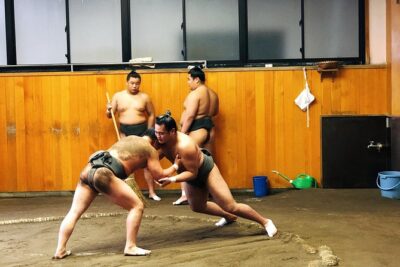
Browse the lists this tour appears in