
REVIEW · SUMO MORNING PRACTICE TOURS
Tokyo: Visit Sumo Morning Practice with English Guide
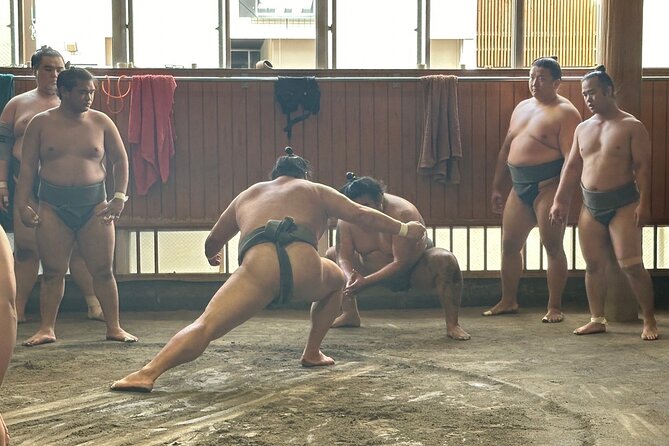
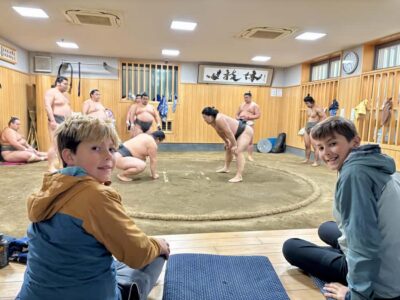
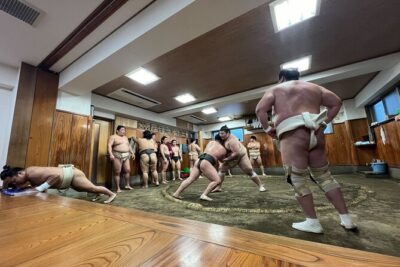
Tokyo’s sumo wrestlers do not perform a tourist show here. They train. You sit close, stay quiet, and watch the heavy slaps, footwork, stretching, and repeated bouts that shape professional rikishi. It is a rare look at real morning practice inside Takasago stable, a respected school that has produced six yokozuna and eight ozeki.
I like the direct access and the useful English guidance, especially when a booklet or handout explains the exercises as they happen. I also like the photo at the end, which gives the morning a friendly finish. The main catch is sitting for up to two hours on a floor cushion or tiny stool, and some people find the $96 price high for an experience centered on observation.
Key points before you book
- Watch genuine training, not a staged demonstration: The wrestlers carry on with their normal work while you observe quietly from nearby.
- Takasago stable has serious credentials: Its former wrestlers include six yokozuna and eight ozeki.
- Meet at 7:45 a.m. at Ryogoku Station: Look for staff by the elevator at Exit A-3 of the Toei Oedo Line.
- Expect 90 to 120 minutes inside the stable: Training may finish sooner or continue longer, depending on the wrestlers’ schedule.
- Plan for floor seating: Cushions and small stools are used, though some seats may be available for those who need them.
- Bring cash for the photo custom: A 1,000-yen tip may be requested after the commemorative photograph.
Why this morning feels different from a sumo tournament
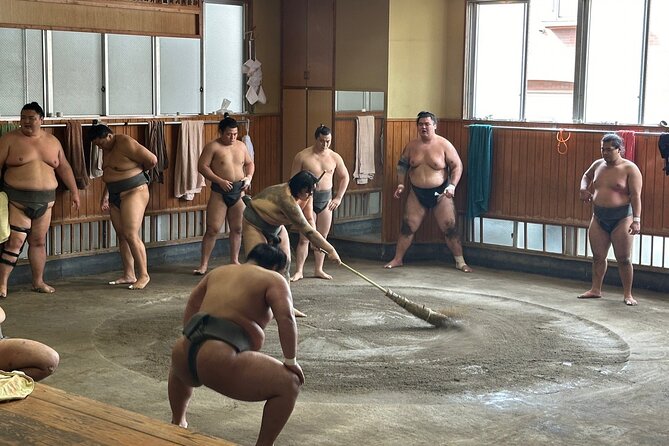
A Tokyo sumo tournament gives you the drama of official bouts, cheering crowds, rankings, and a full day of competition. This visit gives you something quieter and more revealing: the work behind the spectacle.
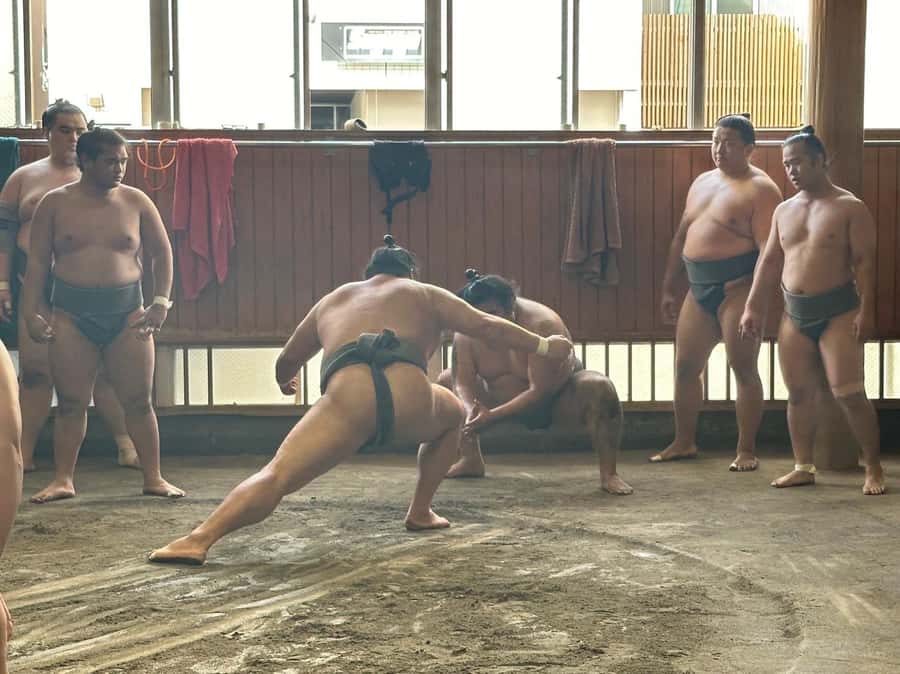
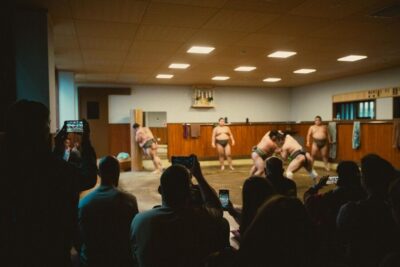
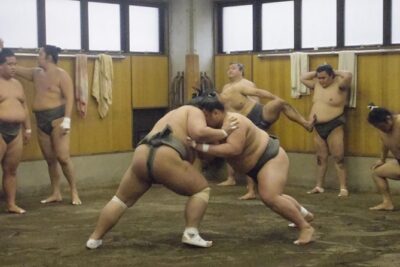
You watch wrestlers repeat basic movements, prepare their bodies, and test one another in short bouts. The rhythm can seem simple at first, but the close view helps you notice the force of each collision and the control needed to stay balanced. You are not seeing a polished show built around an audience. You are watching athletes follow their normal training routine.
That difference matters. The wrestlers generally do not stop to entertain the group during practice. They carry on with the session, which gives the experience a more authentic feel. You must accept that the morning is observational rather than interactive until the final photograph.
The guide explains sumo customs, techniques, and what you are seeing. English and Japanese guiding are available, and written material may also be provided. Several guides have received praise for being warm and helpful, with Keiko and Naomi singled out for their clear communication and enthusiasm in past sessions. The quality of the spoken explanation may vary by guide, so the printed notes are useful if you prefer to study the movements at your own pace.
More morning practice tours in Tokyo:
- Tokyo: Sumo Morning Practice Viewing Tour
★ 4.8 · 570 reviews - Tokyo: Sumo Morning Training Visit
★ 4.4 · 370 reviews - Tokyo: Sumo Morning Practice Tour at Sumida City
★ 4.8 · 308 reviews
From Ryogoku Station to Takasago stable
Your morning begins at 7:45 a.m. at Ryogoku Station on the Toei Oedo Line. Find Exit A-3, specifically the elevator area, where the staff wait for the group. This detail is worth taking seriously. Ryogoku has several exits and multiple rail connections, so arriving at the correct one saves a frantic start.
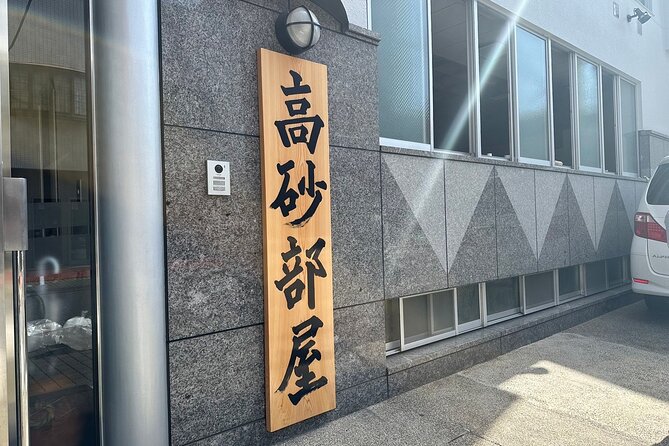
From the station, you walk for about 10 minutes to Takasago-beya. The guide leads the way and gives an introduction before you enter. This short walk is not a sightseeing tour, but it helps you shift from ordinary Tokyo street life into the more private world of a sumo stable.
Arrive early. The start is fixed around 8 a.m., and the practice is already the main event. If you arrive late, you may interrupt a quiet training room or miss the opening explanation. One past participant who got lost was helped by the guide, but you should not count on being rescued from a late start.
Inside one of Tokyo’s historic sumo stables
Takasago is not just a convenient venue. It has a notable record in the sport, producing six yokozuna, the highest rank, and eight ozeki, the rank just below it. That gives the visit added weight. You are not simply looking at a generic sports hall. You are entering a stable with a long record of producing top-level wrestlers.
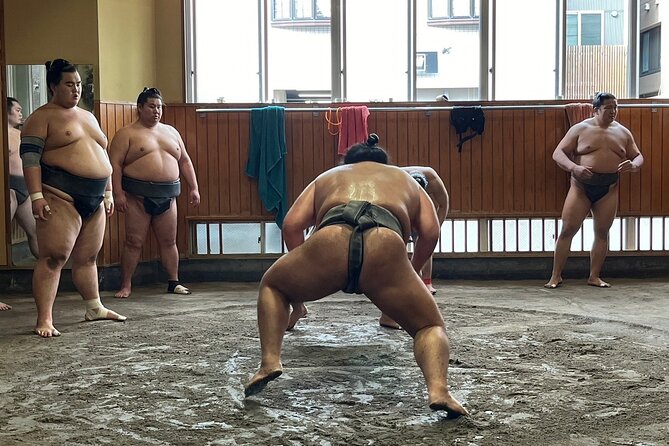
The atmosphere is deliberately restrained. You sit and watch. The wrestlers train close by, often near enough for you to see their foot placement, body position, and preparation between bouts. The guide may point out the purpose of different exercises and explain the rules and positions in the supplied material.
You will need to keep quiet during practice. This is the stable’s workplace, not a photo set. That rule is part of the value of the visit, since the wrestlers can concentrate rather than perform for the group.
The room can be warm, although air conditioning and fans have been available during some sessions. Chilled water has also been provided on occasion. Conditions may not feel luxurious, and you should think of the setting as a working stable first and a visitor attraction second.
What you actually watch during the 90 to 120 minutes
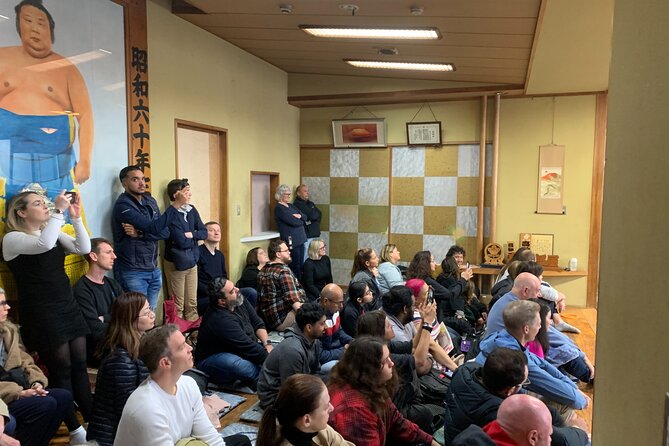
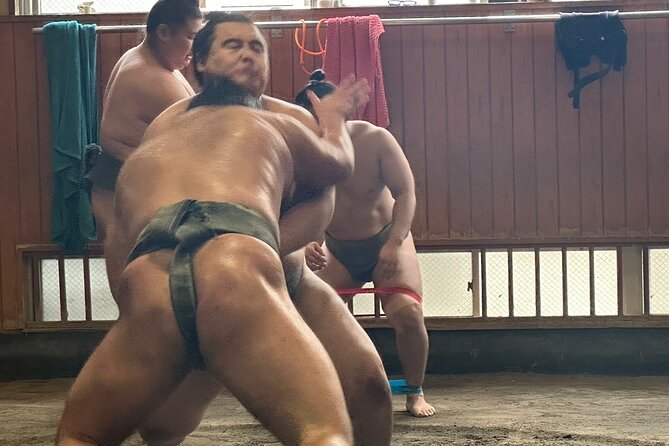
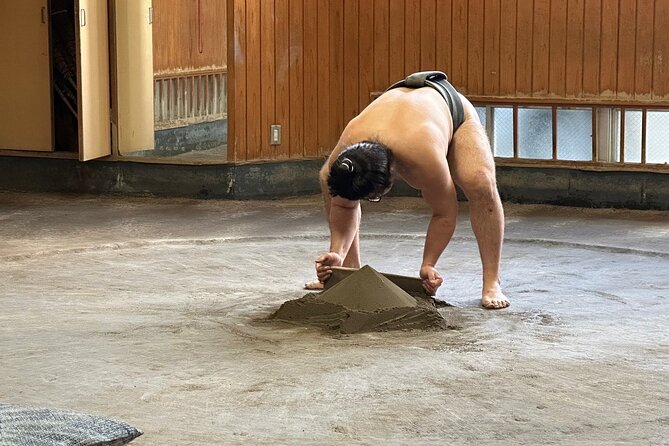
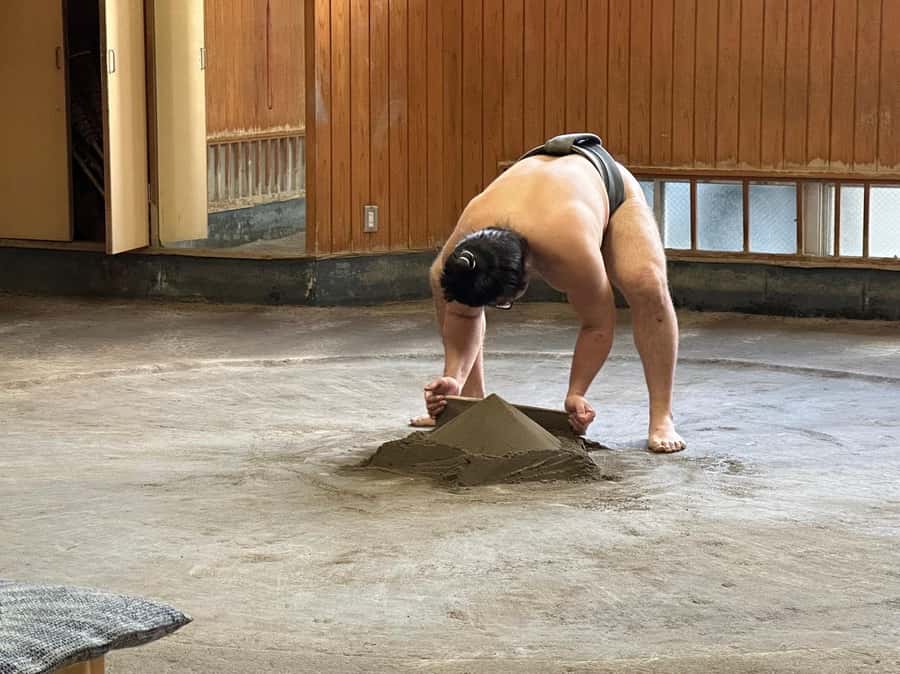
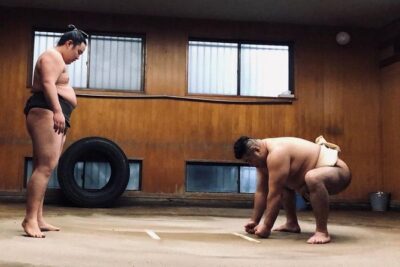
The practice is not one continuous wrestling match. You see a series of exercises and bouts, with periods of preparation and waiting. The supplied handout can help you identify the different positions and movements, while the guide adds context before or during appropriate pauses.
The most interesting moments come when the wrestlers spar. You can see how much preparation lies behind even a brief clash. The repeated drills also show that sumo is not only about size. Timing, balance, leg strength, posture, and force all matter.
The session usually lasts 90 to 120 minutes, but the schedule is controlled by the stable. Training can finish sooner, or continue longer than expected. One group remained after three hours but had to leave for other plans. Build flexibility into your morning and avoid booking a tight appointment immediately afterward.
This uncertainty can be a drawback if you are trying to fit several Tokyo sights into a strict schedule. It is also part of the honest nature of the experience. You are watching a working practice, not a timed stage performance that stops exactly when the ticket says it will.
More English-guided sumo tours in Tokyo:
- Sumo Morning Training Watch in Tokyo,Hotel-pickup w/English guide
★ 5.0 · 72 reviews - Tokyo: Visit Sumo Morning Practice with English Guide
★ 4.5 · 22 reviews - Grand Sumo Tournament Tour w/an English Guide ,Tokyo January 2026
★ 5.0 · 3 reviews - Kyushu Grand Sumo Tournament Viewing Tour with English Guide
★ 5.0 · 22 reviews
Seating, heat, and the quiet rules
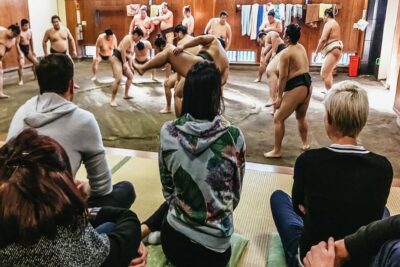
The biggest practical issue is comfort. You may sit on a floor cushion or a very small stool for much of the session. Some people find that manageable and worthwhile. Others find 90 minutes or more on the floor genuinely uncomfortable.
If you have trouble sitting low, tell the guide early. Seats toward the rear or near a fan may be available, depending on the arrangement. One useful tip from a past visit is to accept a chair or small seat near the beginning if you need one, rather than waiting until the room fills.
You should also dress for a warm indoor setting. The stable may have cooling, but conditions can still feel hot. Water has been supplied during some sessions, though it is sensible to arrive prepared.
Cellphones are listed as not allowed, so do not plan to use yours during the practice. The practical rule is that photographs may be taken only when they do not interfere with training. Ask the guide before using a camera, keep it quiet, and follow the stable’s instructions. The safest assumption is that you will watch first and photograph only when permitted.
Children may attend if they can observe quietly. The adult and child fee is the same. This can be a strong educational outing for older children and teenagers, but a restless child would make the experience difficult for everyone in the room.
The photograph with the rikishi
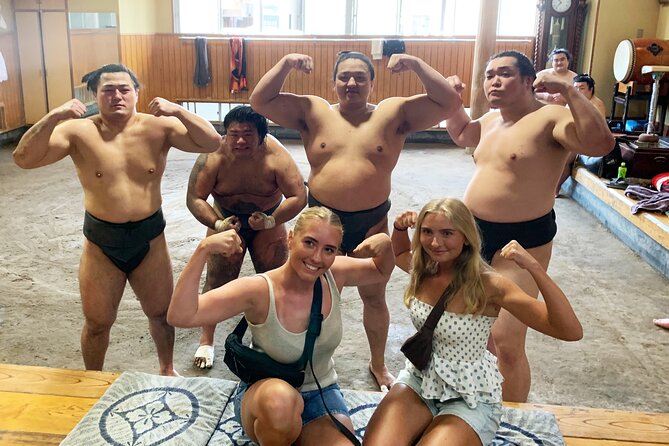
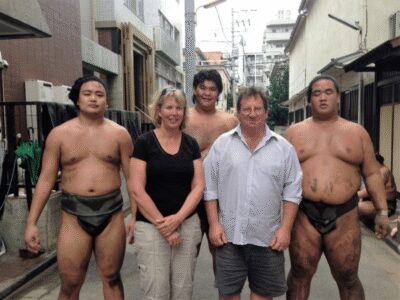
After practice, the mood changes. You have a chance to pose with some of the wrestlers and take a commemorative photograph. This is the most personal part of the visit, especially after spending so long watching them work without interaction.
The photo is included in the activity, but keep some cash handy. A 1,000-yen tip may be requested for the photograph. That extra custom is not obvious from the headline price, and you should know about it before you arrive.
You may also get additional photo opportunities around the end of the session, depending on the stable and the day. Do not expect every wrestler to pose, and do not treat the photograph as the main event. The training is what makes the picture meaningful.
The guide can help organize the group and explain when it is appropriate to approach the wrestlers. This is also the right time to ask questions about sumo, since silence is required during much of the practice.
Is $96 a fair price?
At $96 per person, this is not a cheap two-hour activity. You are paying for access to a private training environment, an English-speaking guide, the walk from the station, explanations, and the chance to take a photograph with rikishi. You are not paying for a tournament ticket, a meal, or a full day of sumo-related sightseeing.
I think the value depends on your interest. If you are curious about sumo and would otherwise struggle to understand a tournament, the close view and explanations can make the sport far easier to follow. One useful benefit is that the training can prepare you for a tournament later in your trip. You will recognize more of the movements and have a better sense of the discipline behind each bout.
If you already know sumo well, or if you expect a long guided lecture and lots of wrestler interaction, the price may feel steep. The guide’s role can be fairly light on some days, with the main service being entry to the stable and basic orientation. Some sessions include strong spoken explanations, while others rely more on a detailed booklet.
There is also the extra 1,000-yen photo tip to consider. Add that to the ticket price when setting your budget. The free cancellation window, up to 24 hours before the start, and the option to reserve now and pay later make planning easier, but they do not change the basic value question.
Who will enjoy this most
I would choose this for someone who wants an authentic cultural activity before the city wakes up. It suits first-time visitors who have heard of sumo but do not yet understand the ranks, rituals, or training. It also works well for families with older children who can sit quietly.
It is a good match for you if:
- You want to see a working sumo stable rather than a theatrical performance.
- You value access and atmosphere more than a long lecture.
- You can sit quietly for at least 90 minutes.
- You are willing to start early and keep your later schedule flexible.
- You plan to attend a tournament and want useful context beforehand.
I would hesitate if you need comfortable chairs, dislike quiet observation, or expect the wrestlers to chat with the group throughout. The session is also less suitable if your morning itinerary cannot tolerate a possible extension.
Practical details that make the morning smoother
Use the Toei Oedo Line and go to the A-3 elevator exit at Ryogoku Station. Aim to arrive before 7:45 a.m., not at 8 a.m. The walk to the stable takes about 10 minutes, and the guide’s opening explanation comes before practice.
Wear clothes that allow you to sit comfortably. If you need a raised seat, ask at once. Keep your phone put away unless the guide confirms that use is permitted, and bring cash for the possible photo tip.
The experience is offered in English and Japanese. The main visit lasts about two hours, but the practice itself may be shorter or longer. Leave room in your day afterward, particularly if you plan to visit the nearby sumo district or catch a train across Tokyo.
Should you book the Takasago morning practice?
Book it if you want to see sumo as daily work rather than a packaged performance. The close distance, serious training, respected stable, and final photograph create a memorable morning, and the English guidance helps you understand what your eyes are seeing.
Skip it if $96 feels too high for sitting and watching, or if floor seating will make the session painful. You should also choose a tournament instead if you want competition, crowd energy, and formal bouts.
For most first-time sumo visitors, I think the access is the strong point. Go in expecting quiet observation, a warm room, basic seating, and an early start. With those expectations, Takasago offers a rare and unusually direct look at the discipline behind Japan’s national sport.
FAQ
Where do I meet the guide?
Meet at 7:45 a.m. at Ryogoku Station on the Toei Oedo Line. Staff wait at the A-3 elevator exit.
How far is the stable from Ryogoku Station?
Takasago-beya is about a 10-minute walk from the meeting point. The guide leads you there.
How long does the sumo practice last?
The practice usually lasts 90 to 120 minutes, though it may be shorter or longer depending on the training schedule.
Can I take photographs during practice?
Photos may be taken as long as they do not interfere with training. Cellphones are listed as not allowed, so follow the guide’s instructions and do not assume phone use is permitted.
Are children allowed to attend?
Children may attend if they can observe quietly. The fee is the same for children and adults.
Is a photograph with the wrestlers included?
A commemorative photograph with the sumo wrestlers is included. A 1,000-yen tip may be requested after the photo, so bring some cash.
Newest sumo experiences in Tokyo
- TOKYO , No1 Yokozuna Stable Morning Practice in Ryogoku★ 4.5 · 3 reviews
- Tokyo 6hr Private Guided Tour & Sumo Show Lunch★ 5.0 · 3 reviews
- Tokyo Grand Sumo Tournament Viewing Tour★ 5.0 · 2 reviews
- Tokyo Sumo History Tour with Chanko Nabe Lunch★ 5.0 · 3 reviews
- Tokyo Highlights Tour: Sumo, Sushi, Tea, and Tokyo Tower★ 5.0 · 2 reviews
- Tokyo: Know about Hokusai and Sumo culture in 2.5 hours★ 5.0 · 2 reviews
- Tokyo: Sumo Keiko Training Tour with Audio Guide & Photo★ 4.8 · 5 reviews
- Tokyo: Watching Sumo and Ryogoku Area Walking Tour★ 4.0 · 5 reviews
Sumo Morning Practice Tours, compared.
Tokyo Ryogoku Sumo Morning Practice + Photo Shoot with Wrestlers
Read our review →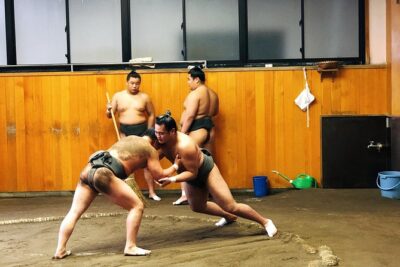
Tokyo Sumo Morning Training/ Sumo Practice with Wrestlers
Read our review →Browse the lists this tour appears in