
REVIEW · SUMO MORNING PRACTICE TOURS
Tokyo: Visit Sumo Morning Practice with English Guide
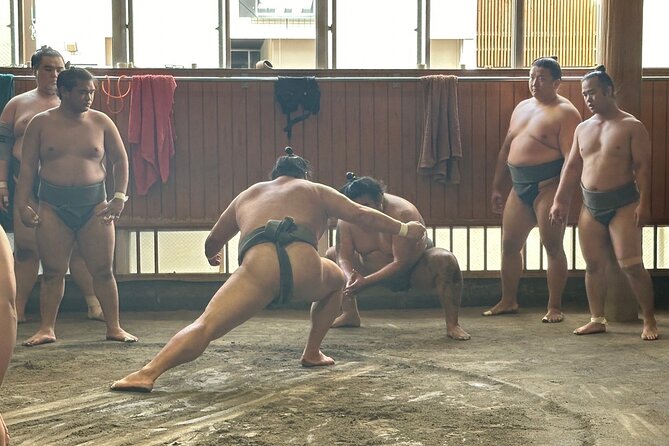
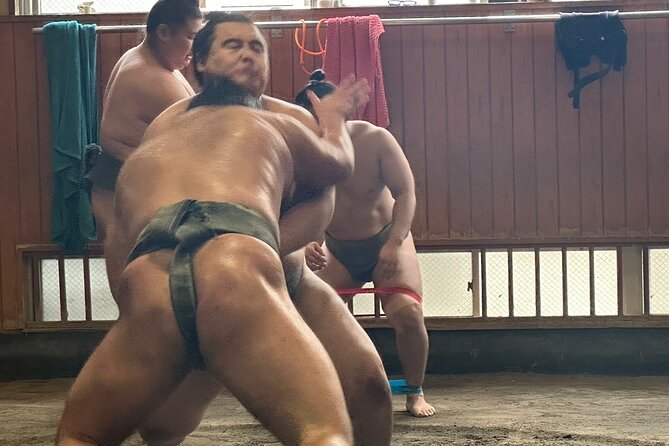
Seeing sumo wrestlers train at close range is the real draw here. This is not a staged demonstration or a polished arena show. You sit near a working stable and watch athletes stretch, drill, collide, and test one another under serious conditions. The sound and force are hard to understand until you are close enough to feel them.
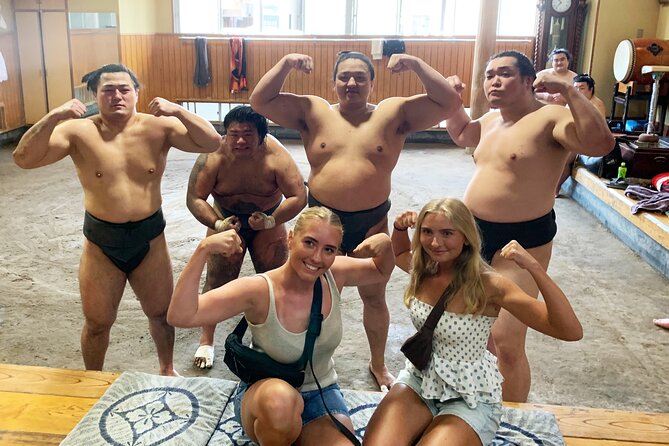
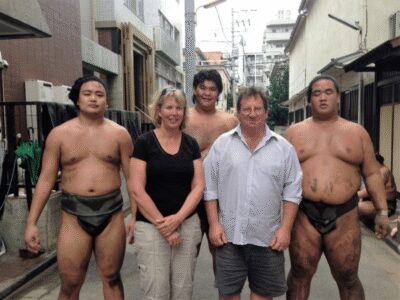
I like the small-scale access and the guide’s role. An English-speaking guide explains the sport, answers questions, and helps you follow the rhythm of practice. I also like the commemorative photo at the end, a simple keepsake from an experience most visitors cannot arrange alone.
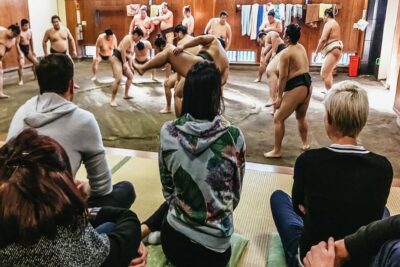
The main caution is that this is observation, not entertainment on demand. You may sit on the floor or on a small seat for roughly 90 minutes, and the room can feel crowded if another group or a Japanese fan club arrives. Arrive early and be ready for a quiet, traditional setting.
Key points to know before booking
- Serious morning practice: Watch real training rather than a staged sumo performance.
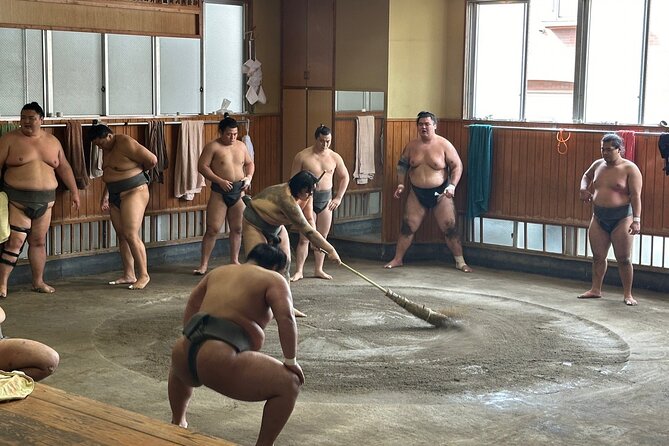
- Close view of the action: The stable setting puts you near the wrestlers, with little between you and the practice bouts.
- English guidance: Guides explain terminology, customs, exercises, and what is happening in the room.
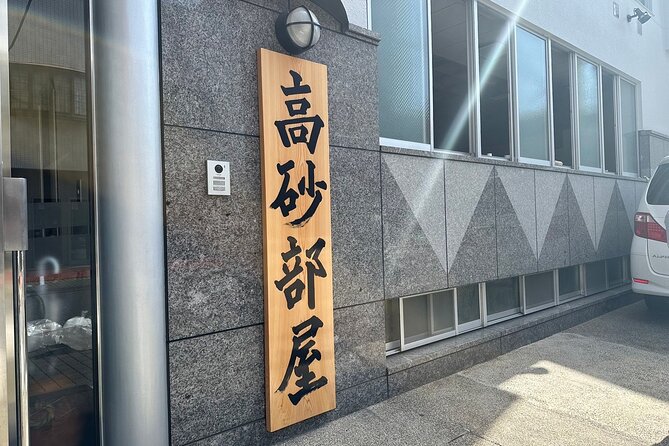
- Takasago Stable: The visit takes place at a Tokyo stable associated with many champions.
- Traditional seating: Expect floor seating or small seats, which may be uncomfortable for some people.
- Ryogoku start: Meet near Ryogoku Station, then walk with the guide to the stable.
Why this sumo practice feels different from a tournament
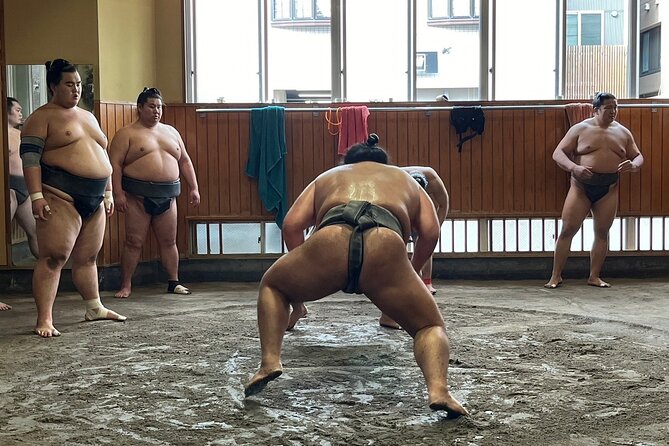
A formal sumo tournament gives you spectacle: a large venue, named bouts, banners, crowds, and the clear drama of competition. At Takasago Stable, you see the work behind that spectacle. The morning is built around preparation, repetition, and discipline.
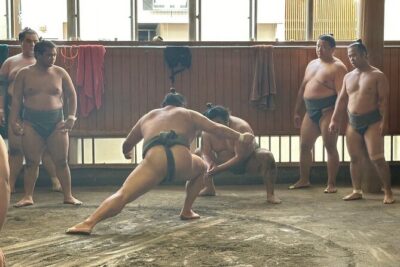
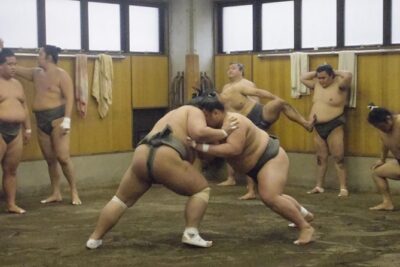
The session can begin with stretching and exercises that prepare the wrestlers’ bodies. Younger wrestlers may challenge one another first, followed by more powerful wrestlers in harder practice bouts. The order and length can vary, since this is a working training session rather than a fixed show.
That difference matters. You will not receive a neat program with a guaranteed sequence of matches. Instead, you watch athletes do what they normally do in training. One moment may be quiet and methodical. The next may bring a sudden collision, a burst of effort, and the heavy sound of bodies meeting the floor.
I think this is the best reason to book the experience. You are not simply learning what sumo looks like. You are seeing how much repetition and physical work supports the short bouts seen in competition.
More morning practice tours in Tokyo:
- Tokyo: Sumo Morning Practice Viewing Tour
★ 4.8 · 570 reviews - Tokyo: Sumo Morning Training Visit
★ 4.4 · 370 reviews - Tokyo: Visit Sumo Morning Practice with English Guide
★ 4.7 · 343 reviews
Meeting near Ryogoku Station at 8:00 in the morning
The advertised start time is 8:00 a.m., with the meeting point near Ryogoku Station at 1-chōme-4-29 Yokoami in Sumida City. The most useful practical detail is to find the correct station exit before the morning of the tour.
The A3 exit is specifically mentioned in the meeting instructions. One guide has been reported waiting there with a large sign, while the group leaves at about 7:45. That creates a small timing wrinkle, so do not treat 8:00 as a casual arrival time. Check your confirmation carefully, reach the A3 exit early, and allow an extra ten minutes if you are unfamiliar with Ryogoku Station.
This advice is worth taking seriously. Tokyo stations can have several exits on different sides of the tracks, and arriving at the wrong one can cost more time than expected. The operator has indicated that a confirmation message is sent the day before, along with a guide’s WhatsApp number for day-of problems. Keep that message handy.
The walk to the stable is short, pleasant, and guided. The guide takes you from the meeting point to the sumo room, so you do not need to find Takasago Stable on your own. A taxi can also be useful if you are coming from a distant part of Tokyo, though the supplied meeting details are centered on Ryogoku Station.
Inside Takasago Stable, watch the routine unfold
Takasago Stable is the one scheduled stop, and it is the heart of the experience. The stable is a training place, not a theater built for sightseeing. That explains both the intimacy and the limits of the visit.
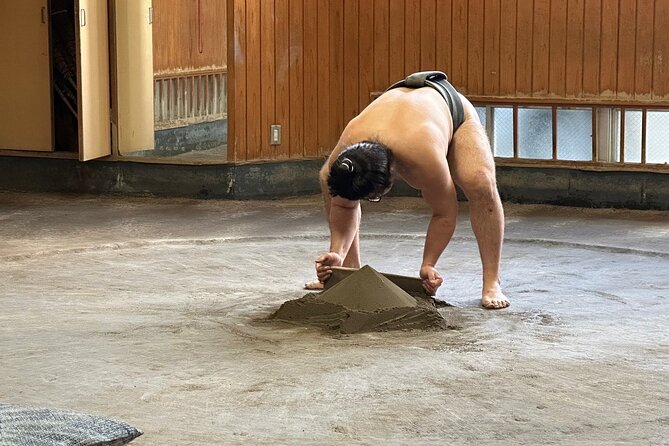
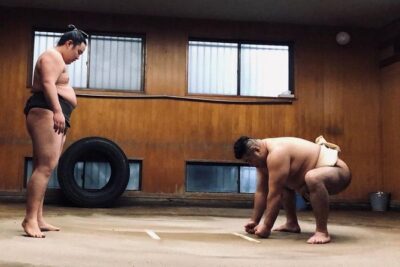
You may first see wrestlers stretching and preparing their bodies. These exercises can last around 30 minutes or a little longer. After that, the younger wrestlers may begin practice bouts, giving you a chance to see the structure of sumo training before the stronger wrestlers take their turns.
The physical contrast is striking. Stretching can look slow and controlled, while the practice bouts are sudden and forceful. From nearby, you notice not only the movement but also the sound, breathing, footwork, and effort. The room lets you see the sport as physical labor rather than just a contest between two large athletes.
You are expected to watch quietly and respectfully. This is someone’s workplace and daily training environment. The guide helps you understand what you are seeing, but the wrestlers are not there to perform for a tourist audience.
That makes the photo opportunity at the end especially appealing. After practice, you can take a commemorative photo with the sumo wrestlers. It gives the visit a clear finish, while the main value remains the training itself.
What the English guide adds
Without context, a sumo practice could become a long stretch of watching bodies move across a room. The guide helps you tell the difference between warm-up exercises, technical drills, and practice bouts.
The guides have been praised for clear English, friendliness, punctuality, and patience with questions. Naomi is one guide singled out for answering more than 20 questions before and after the session. Another guide was described as speaking English, French, and Japanese and carrying a book packed with information about sumo.
You may also receive a fact sheet explaining sumo terms, the sport’s history, and training details. That is useful because the action can be difficult to follow at first. Once you know a few basic terms and understand the purpose of each exercise, the session becomes much easier to read.
I especially value the chance to ask questions while the experience is fresh. You can ask about the wrestlers’ routines, the customs of the stable, or what separates ordinary practice from a formal match. The guide’s job is not only to get you into the room, but to help you make sense of it.
The quality of the guide also matters at the meeting point. One earlier problem involved a host leaving the group before everyone had reached the stable, forcing some participants to call for help. The operator apologized and clarified its meeting instructions afterward. The sensible response is simple: arrive early, confirm the guide’s contact information, and stay with the group during the walk.
More English-guided sumo tours in Tokyo:
- Sumo Morning Training Watch in Tokyo,Hotel-pickup w/English guide
★ 5.0 · 72 reviews - Grand Sumo Tournament Tour w/an English Guide ,Tokyo January 2026
★ 5.0 · 3 reviews - Kyushu Grand Sumo Tournament Viewing Tour with English Guide
★ 5.0 · 22 reviews - Nagoya: Visit Sumo Morning Practice with English Guide
★ 4.9 · 5 reviews
Seating, space, and the limits of a traditional stable
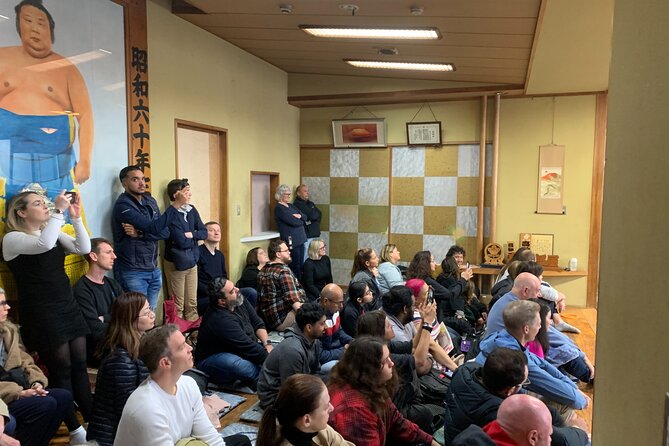
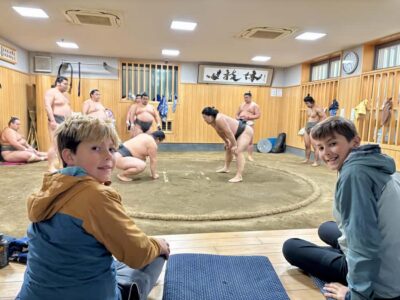
Comfort is the largest physical drawback. Seating may be on the floor or on small stools and seats, and you could remain in that position for much of the 90-minute session. If sitting low is difficult for you, this is an important point to consider before booking.
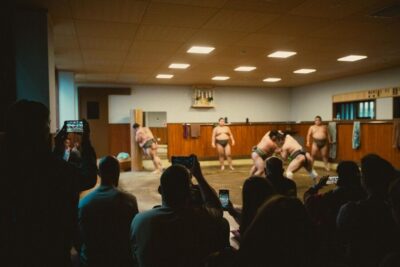
The room is small, which is part of the appeal. You are close enough to hear the impact of the bouts and see the athletes clearly. The same small room can feel crowded, though, especially if another tour group joins or a Japanese fan club arrives unexpectedly.
The operator limits the group to a maximum of 20 people, but the stable itself is not a large visitor venue. An unplanned group can affect personal space and sightlines. Guides have worked to seat their own participants comfortably, but you should not expect wide aisles, theater seating, or much room to move around.
This is a tradeoff rather than a flaw. A larger, more comfortable room would also make the practice feel less authentic. If you need guaranteed comfort and personal space, a tournament seat may suit you better. If you care most about being close to the working environment, the traditional setup is part of what you are paying to see.
How much value do you get for $98.53?
At $98.53 per person, this is not a budget activity. The price makes more sense when you consider what you are buying: access to a stable that is normally closed to spectators, an English-speaking guide, transportation on foot from the meeting point, explanations during the practice, and a commemorative photo.
You are not paying for two hours of continuous action. Some of the session may involve stretching, preparation, or quiet observation. If your idea of value means constant entertainment, the price may disappoint you.
I see better value if you have a real interest in Japanese sport, athletic training, or cultural customs. A formal sumo tournament can cost more, require careful scheduling, and place you farther from the wrestlers. This morning visit gives you a closer look at the work behind the event without requiring you to understand sumo in advance.
The experience also works well as a first introduction. You do not need a background in the sport to appreciate the force of the bouts, and the guide provides enough explanation to make the practice understandable. If you later attend a tournament, you will have a better sense of what the wrestlers have trained to do.
The free cancellation policy adds some flexibility. You can cancel for a full refund at least 24 hours before the local start time. Changes or cancellations made inside that window are not accepted for a refund.
Pair the morning with Ryogoku and Asakusa
The tour ends at Takasago Stable, at 2-chōme-30-1 Ishiwara in Sumida City. You are not returned to the original station, but the guide shows you how to reach your next destination.
That makes the experience easy to combine with nearby sightseeing. Ryogoku is Tokyo’s sumo district, and Asakusa is also within reach for a day of sightseeing. The tour itself does not include an Asakusa visit, so plan that as your own next stop.
Because the practice begins early, you still have much of the day available afterward. That is one of the strongest practical features of the schedule. You can watch the athletes train in the morning, eat lunch, and continue sightseeing instead of giving up an entire day.
Just keep your expectations clear. The tour’s listed duration is about one hour and 30 minutes to two hours, but the pace depends on the stable’s practice. The end time can therefore be less exact than a museum admission or a scheduled theater performance.
Who should book this experience?
I would choose this tour for you if you want an authentic look at sumo and prefer access to a working setting over a polished tourist production. It is especially well suited to visitors who enjoy sports, physical training, Japanese culture, and asking questions.
Families with older children and teenagers may find it memorable. The close-up view makes the sport feel real, and the intense bouts can hold attention better than a long explanation in a museum. Parents should decide if their children can sit quietly in a small room for the required period.
It is also a good fit if you have never watched sumo before. The guide’s explanations and fact sheet give you enough background to follow the basics. You do not need to know the names of wrestlers or understand every rule before arriving.
I would think twice if you dislike floor seating, need a spacious environment, or expect a show with a guaranteed schedule. I would also avoid booking it if you plan to arrive at the last moment. The early meeting time and station layout reward careful planning.
My verdict on the Tokyo morning practice
This is a strong choice for seeing sumo at its most direct. The best parts are the close distance, the serious training, and the English-speaking guide who gives the action meaning. The experience feels special because it takes place in a real stable, not because it adds a long list of extras.
The drawbacks are clear: the price is fairly high, seating may be uncomfortable, and the room can become crowded. The practice is not a performance, so there may be stretches of preparation rather than nonstop bouts.
Book it if you want to watch athletes work, hear the impact up close, and understand more about sumo before visiting a formal tournament. Skip it if you need comfort, certainty, or constant action. For the right visitor, this can be one of the most memorable mornings in Tokyo, followed neatly by Ryogoku or Asakusa.
FAQ
Where does the sumo morning practice tour begin?
The meeting point is near Ryogoku Station at 1-chōme-4-29 Yokoami, Sumida City, Tokyo. The A3 exit is specifically noted in the meeting information.
What time does the tour start?
The listed start time is 8:00 a.m. Some meeting instructions state that the group leaves the A3 exit at 7:45, so you should arrive early and follow the exact time in your confirmation.
Where does the tour end?
The tour ends at Takasago Stable, at 2-chōme-30-1 Ishiwara, Sumida City, Tokyo. The guide shows you how to reach your next destination after the visit.
How long does the experience last?
The expected duration is about one hour and 30 minutes to two hours. The scheduled practice viewing itself is listed as approximately one hour and 30 minutes.
Is the tour conducted in English?
Yes. An English-speaking guide accompanies the group, explains the practice, helps with language barriers, and answers questions about sumo. Some guides may speak additional languages.
Can I take a photo with the sumo wrestlers?
Yes. A commemorative photo with the wrestlers is included as part of the experience after the training session.
Is the tour suitable for most people?
The activity information states that most people can participate. Seating may be on the floor or on small seats, which can be uncomfortable for some people during the practice.
Can I cancel for a refund?
Yes. You can receive a full refund if you cancel at least 24 hours before the experience start time. Cancellations or changes made less than 24 hours before the start time are not accepted for a refund.
Newest sumo experiences in Tokyo
- Tokyo Highlights Tour: Sumo, Sushi, Tea, and Tokyo Tower★ 5.0 · 2 reviews
- Tokyo: Know about Hokusai and Sumo culture in 2.5 hours★ 5.0 · 2 reviews
- TOKYO , No1 Yokozuna Stable Morning Practice in Ryogoku★ 4.5 · 3 reviews
- Tokyo 6hr Private Guided Tour & Sumo Show Lunch★ 5.0 · 3 reviews
- Tokyo Grand Sumo Tournament Viewing Tour★ 5.0 · 2 reviews
- Tokyo Sumo History Tour with Chanko Nabe Lunch★ 5.0 · 3 reviews
- The SUMO Show & Experience with Hot pot lunch★ 5.0 · 4 reviews
- Tokyo: Sumo Keiko Training Tour with Audio Guide & Photo★ 4.8 · 5 reviews
Sumo Morning Practice Tours, compared.
Tokyo Ryogoku Sumo Morning Practice + Photo Shoot with Wrestlers
Read our review →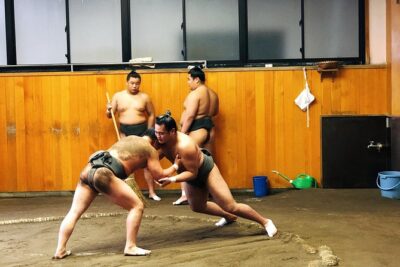
Browse the lists this tour appears in