
REVIEW · GRAND SUMO TOURNAMENT TOURS
Kyushu Grand Sumo Tournament Viewing Tour with English Guide
Sumo in Fukuoka is more than a few men pushing one another out of a ring. The sport combines ceremony, rank, ritual, and sudden bursts of force. This tour gives you a short introduction first, then places you inside Fukuoka Kokusai Center for the final Makuuchi bouts of the day, including the 15:40 wrestler entrance and the 18:00 bow-twirling ceremony.
I like the small group of up to nine people, which gives the English-speaking guide room to answer questions. I also like the practical extras: an English booklet and banzuke ranking sheet help you follow the wrestlers instead of watching a blur of unfamiliar names. The main drawback is price: at $261, this is a serious splurge, and your third-floor chair may not be next to the rest of your group.
Key points to know before booking
- The 20-minute lecture makes the bouts easier to follow: Learn the rules, rituals, rankings, and cultural meaning before entering the arena.
- You watch the final major bouts of the day: The schedule includes the Makuuchi entrance at 15:40, Makuuchi matches from 16:00, and the bow-twirling ceremony at 18:00.
- Your ticket is A-class reserved chair seating: Seats are on the third floor, with a fixed chair rather than floor-level box seating.
- A guide joins you at the venue: The National Government Licensed English Guide Interpreter accompanies the group into Fukuoka Kokusai Center.
- Mimi made the sport personal for one participant: Her explanations covered rituals, history, and backstories about the rishiki, helping that person recognize and support favorite wrestlers later on Japanese television.
- Pack light and plan your exit: The venue has no coin lockers or luggage storage, and the tour ends at the arena after the matches.
Why the Fukuoka tournament is worth understanding
A sumo bout can last only seconds, yet the event around it takes time. Wrestlers enter by rank, perform set movements, and follow rituals that give the match a formal shape. If you arrive without context, you may see repeated squats, salt throwing, and staring contests without knowing what they mean.
This tour handles that problem at the start. The guide gives a 20-minute lecture at Fukuoka Sunpalace Hotel before taking you into the arena. That short lesson will not turn you into a sumo expert, but it should give you enough structure to watch with purpose.
You will learn about the rules and the long cultural tradition behind the sport. The tour presents sumo as a Japanese tradition that reaches back roughly 1,500 years, not simply as a modern sporting event. That framing matters, especially if this is your first time seeing a tournament in person.
I especially value the ranking sheet, called a banzuke-hyo. Sumo has its own hierarchy, and wrestler names can be hard to catch when they are announced or printed in Japanese. Having the rankings in hand gives you a useful reference during the bouts.
More tournament tours in Japan:
- Tokyo: Sumo Tournament Tour with Chair Seat Tickets
★ 4.6 · 753 reviews - Tokyo Grand Sumo Tournament Viewing Tour with Tickets
★ 5.0 · 692 reviews - Tokyo Sumo Wrestling Tournament Experience
★ 5.0 · 660 reviews
The 1:45 meeting at Fukuoka Sunpalace Hotel
The tour begins at 1:45 pm at Fukuoka Sunpalace Hotel & Hall, at 2-1 Chikkōhonmachi in Hakata Ward. The meeting point and the arena are at neighboring addresses, with Fukuoka Kokusai Center at 2-2 Chikkōhonmachi.
That makes the opening simple from a location point of view. You do not need a long transfer between the lecture and the tournament. Still, give yourself time to reach the hotel before 1:45. The tour does not include transportation to the meeting point, and arriving late could mean missing part of the introduction or having to catch up at the arena.
The group is limited to nine people. That is small enough for a guide to explain an unfamiliar sport in plain language and respond to individual questions. It also avoids the feel of being herded through a large package group.
The guide is a National Government Licensed English Guide Interpreter and a sumo fan. One particularly useful guide named in the feedback is Mimi. Her approach included ritual, history, and personal backstories about the rishiki, the wrestlers who compete in sumo. That sort of detail can change the way you watch. Instead of seeing anonymous competitors, you may begin to recognize names and choose a few wrestlers to follow.
The 20-minute sumo lesson before the matches
The opening talk is short, which is a good choice. A long lecture would delay the main event, while no explanation at all would leave many first-time viewers guessing.
Expect the guide to explain basic rules and rituals, then connect them to the cultural role of sumo. You should also receive the English booklet, The Sumo, and the banzuke ranking sheet. Keep both with you inside the venue.
The booklet is useful for quick reference. The ranking sheet helps you place wrestlers within the sport’s system. Together, they give you something to study during pauses and between bouts. I would look over them before the first match begins, then keep the ranking sheet handy.
The guide’s value is not limited to facts. A good explanation gives meaning to the movements you are about to see. Salt, ring entrances, ritual stomping, and other formal actions make more sense when you know they are part of a larger ceremony rather than empty delays.
The time is still limited. If you want a detailed lesson on every rank, rule, stable, and historical period, this tour will not provide that. It is an orientation designed to make the live tournament more rewarding.
Entering Fukuoka Kokusai Center for the final bouts
The main portion lasts about three and a half hours at Fukuoka Kokusai Center. Your admission includes an A-class reserved chair in the third-floor seating area.
A reserved chair has a clear practical advantage. You do not need to worry about finding a seat after entering, and you have a fixed place from which to watch the ceremony and matches. A-class seating is a good level for a first sumo experience, though third-floor viewing is not the same as sitting close to the dohyo, the raised ring.
Your seat may not be beside the rest of your group. Seating depends on the reservations, and specific seat requests are not accepted. If sitting together is essential, this is an important limitation. You may be sharing the same general section while seated separately.
The guide accompanies the group into the venue. That is helpful at the transition point, when you are moving from the lecture into a large public arena and working out where to go. The guide can also explain the route back toward public transportation after the event, but you are responsible for making your own way onward.
Smoking is not allowed inside the venue. There is also no free Wi-Fi access, so download anything you need before you arrive and do not count on using the arena as a place to get online.
More English-guided sumo tours in Japan:
- Tokyo: Visit Sumo Morning Practice with English Guide
★ 4.7 · 343 reviews - Sumo Morning Training Watch in Tokyo,Hotel-pickup w/English guide
★ 5.0 · 72 reviews - Tokyo: Visit Sumo Morning Practice with English Guide
★ 4.5 · 22 reviews - Nagoya: Visit Sumo Morning Practice with English Guide
★ 4.9 · 5 reviews
What happens from 3:40 to 6:00 pm
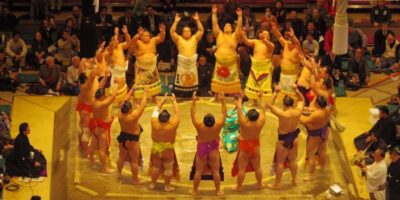
The key schedule begins at 3:40 pm with the ceremonial entrance of the Makuuchi wrestlers. Makuuchi is the top division, so this procession introduces the competitors you will see in the major matches that follow.
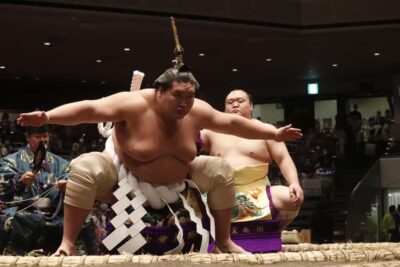
At the same time, the Yokozuna Grand Champion ring entrance may take place. This ceremony is not held if no Yokozuna is present in the tournament. Do not treat it as guaranteed, but if a Yokozuna is competing, it can be one of the most memorable formal moments of the afternoon.
The Makuuchi Division matches begin at 4:00 pm. These are the bouts most casual fans are hoping to see, with higher-ranked wrestlers and more attention focused on the action. The guide’s earlier explanation should help you notice more than just who wins.
A sumo match may be over quickly. That does not make the event thin. The buildup, entrance rituals, ring preparation, and formal rhythm are part of the experience. Watch the wrestlers’ posture and concentration before the clash, then pay attention to how quickly a bout can turn.
The day finishes at about 6:00 pm with the bow-twirling ceremony. It is a formal closing moment, and it gives the tournament day a clear ending rather than simply stopping after the final bout.
There is one timing issue to keep in mind. If a match, wrestler entrance, Yokozuna ceremony, ritual stomping ceremony, or a speech by the Sumo Association is happening when the group arrives, you may wait before being taken to your seats. On the last tournament day, a Sumo Association speech may be part of that delay. You will be seated when the event finishes.
That is a sensible venue rule, but it means your first few minutes inside may not look exactly as planned. If you are making dinner plans or catching a train immediately afterward, leave room for a delay.
Is $261 a fair price?
At $261, this is not a cheap way to fill an afternoon. The price includes the A-class tournament ticket, the English guide, the lecture, the booklet, and the banzuke ranking sheet. It does not include meals, drinks, transportation to the meeting point, transportation after the event, hotel pick-up, hotel drop-off, gratuities, or personal spending.
The value depends on how much help you want. If you already understand sumo and can secure your own ticket, you may find the package hard to justify. You would be paying mainly for the guide and the convenience of arranged admission.
For a first-time visitor, the calculation is different. A live tournament can be difficult to decode, especially when the wrestlers, rank names, and rituals are unfamiliar. Here, the guide gives you a framework before you enter and remains with the group at the venue. The prebooked ticket also removes the worry of arriving in Fukuoka and finding the tournament sold out.
The A-class chair is another part of the value. You are not paying for a vague promise of entry. You receive a reserved seat in a specified seating category, though it is on the third floor and the group may be split among seats.
I would call the price reasonable for someone who places a high value on explanation and guaranteed admission, but expensive for a casual sports fan. The more prepared you are to follow the event on your own, the less useful the guide portion becomes.
Who should book this sumo tour?
I would recommend it most strongly to a first-time sumo spectator who wants the sport explained in English. The small group, the licensed guide, the booklet, and the ranking sheet all help you get your bearings before the serious bouts begin.
It also suits anyone who wants cultural context rather than just a ticket. Sumo is tied to formal ritual and rank, and the opening talk gives you a way to understand those elements.
This is a good choice for a short stay in Fukuoka when you do not want to spend time arranging a tournament ticket yourself. The start and end points are both by Fukuoka Kokusai Center, and the schedule offers a focused afternoon and evening activity.
It may not suit you if you need seats together, require luggage storage, or want to leave the venue at a tightly fixed time. It also may not suit families with very young children unless you understand the seating rules. One child aged 0 to 3 may join free per adult, but no tournament seat is provided. The child must sit on a parent or guardian’s lap. If the child needs a seat, book the adult rate.
Participants under 18 need written parental permission. Anyone under 15, or anyone not yet enrolled in middle school, must be accompanied by a parent or guardian.
Practical planning for the afternoon
Keep your belongings to a minimum. Fukuoka Kokusai Center has no coin lockers or luggage storage service, so large bags need to be left at a storage counter, locker, or another suitable location before you arrive.
Plan transportation on both sides of the experience. You make your own way to the Sun Palace Hotel, and the tour ends at the Kokusai Center after the matches. You can ask the guide how to reach the nearest station, but there is no hotel drop-off or arranged ride at the end.
If you are coming from Kyoto, Hiroshima, or another city, leave generous time in your schedule. The tour begins at 1:45 pm, and delays in reaching Fukuoka could cost you the opening lecture. On the other end, the event is expected to finish around 6:00 pm, but seating delays can occur if a ceremony or speech is underway.
Book only when your schedule is firm. Free cancellation is available if you cancel at least 24 hours before the local start time. Cancellations or changes made within 24 hours are not refunded or accepted, and no refund is provided if you choose not to enter the facility.
My booking verdict
Book this tour if you want your first Fukuoka sumo tournament to make sense from the opening ceremony to the final bow. The guide-led introduction, English materials, small group, and guaranteed A-class chair turn a complicated afternoon into an organized one.
Skip it if $261 feels too high for a sporting event, if you already know sumo well, or if you must sit beside every member of your party. For everyone else, especially a visitor who wants cultural insight and a dependable ticket during the year’s final tournament, this is a strong, focused way to see sumo in Fukuoka.
FAQ
Where does the sumo tour begin?
The tour begins at 1:45 pm at Fukuoka Sunpalace Hotel & Hall, 2-1 Chikkōhonmachi, Hakata Ward, Fukuoka, 812-0021, Japan.
Where does the tour end?
The tour ends at Fukuoka Kokusai Center, 2-2 Chikkōhonmachi, Hakata Ward, Fukuoka, 812-0021, after the sumo matches. You make your own way to your next destination.
What type of seating is included?
The ticket provides A-class reserved chair seating on the third floor of Fukuoka Kokusai Center.
Can members of the same group sit together?
Not necessarily. Depending on reservations, members of the same group may receive separate seats. Requests for specific seats are not accepted.
What sumo events are scheduled during the tour?
The schedule includes the Makuuchi wrestler ceremonial entrance at 3:40 pm, the Yokozuna Grand Champion ring entrance if a Yokozuna is present, Makuuchi Division matches from 4:00 pm, and the bow-twirling ceremony at about 6:00 pm.
Are meals, drinks, and transportation included?
No. Meals, drinks, transportation to the meeting point, transportation from the end point, hotel pick-up, hotel drop-off, gratuities, and personal expenses are not included.
Can I cancel for a full refund?
Yes, if you cancel at least 24 hours before the experience start time. Cancellations or changes within 24 hours are not refunded or accepted.
Newest sumo experiences in Japan
- November Sumo Tournament tour in Fukuoka (Tickets Included)★ 4.5 · 76 reviews
- Kyushu Fukuoka Grand Sumo Tournament Viewing Tour★ 4.5 · 4 reviews
- Tokyo Highlights Tour: Sumo, Sushi, Tea, and Tokyo Tower★ 5.0 · 2 reviews
- Osaka: Sumo Show and Kimono Haori Experience★ 3.0 · 2 reviews
- Sumo Stable Intimate Morning Practice★ 5.0 · 2 reviews
- Tokyo: Know about Hokusai and Sumo culture in 2.5 hours★ 5.0 · 2 reviews
- Tokyo 6hr Private Guided Tour & Sumo Show Lunch★ 5.0 · 3 reviews
- Tokyo Grand Sumo Tournament Viewing Tour★ 5.0 · 2 reviews
Grand Sumo Tournament Tours, compared.
Tokyo Grand Sumo Tournament Viewing Tour with Tickets
Read our review →
Ultimate Sumo Tournament: Tokyo, Osaka, Nagoya, Fukuoka
Read our review →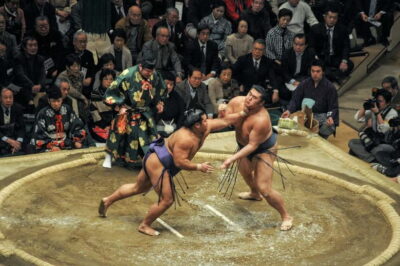
Sumo Tournament with Guide & Assigned Reserved Seat
Read our review →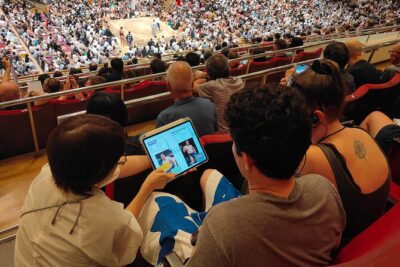
Sumo Wrestling Tournament with Chair Seat Tickets
Read our review →November Sumo Tournament tour in Fukuoka (Tickets Included)
Read our review →Browse the lists this tour appears in