
REVIEW · GRAND SUMO TOURNAMENT TOURS
Kyushu Fukuoka Grand Sumo Tournament Viewing Tour
The best part of this Fukuoka tour is simple: you get a real ticket to the Kyushu Grand Sumo Tournament, an event that can be difficult to arrange on your own. I like the English commentary and the choice between elevated Chair-Seat B and more traditional, floor-level Masu-Seat C seating. The catch is that C boxes are shared by four people and require sitting on mats, so they are not a good fit for everyone.
I also like the easy meeting point at Gofukumachi Station and the freedom to re-enter the venue until 5 p.m. Your guide, listed as Takeshi or Takaya, helps explain the ceremonies and rules as the tournament unfolds. You cannot choose exact seat numbers, and the tournament ends when the day’s action is over, so your return time is not fixed.
Key points at a glance
- Live Kyushu Basho action: Watch one of Japan’s six major annual sumo tournaments at Fukuoka International Center.
- Two seating styles: Choose Chair-Seat B or shared Masu-Seat C on the second floor.
- English help during the bouts: Hear explanations of sumo rules, history, rituals, and important moments.
- Simple city meeting point: Meet at Exit 2 of Gofukumachi Station, then walk about 15 minutes to the venue.
- Useful flexibility: Re-entry is allowed as many times as you like from opening until 5 p.m.
- A practical ticket solution: The tour handles admission at a time when buying directly can be difficult.
Why this tournament is worth your afternoon
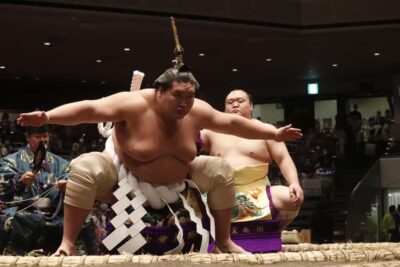
Sumo is easiest to understand when you see the full setting, not just a short clip online. At Fukuoka’s Kyushu Grand Sumo Tournament, the match itself is only part of the show. You are also watching a formal sequence of entrances, ritual movements, salt throwing, concentrated staring, and sudden bursts of strength.
The Kyushu tournament, known as the Kyushu Basho, is one of six major sumo tournaments held in Japan each year. It takes place in mid-November at Fukuoka International Center, close to the Tenjin and Hakata areas. That location makes it a practical cultural event to add to a city stay.
I especially like this tour for first-time sumo viewers. The guide gives real-time commentary in English, so you do not have to understand every rule before you arrive. The English pamphlet adds another layer, helping you follow the action and recognize the basic customs around the ring.
You should still do a little reading before the day. One useful tip is to learn the main rules and ceremonies ahead of time. That lets you spend less energy trying to work out what is happening and more time watching the wrestlers and picking a favorite rikishi.
More tournament tours in Japan:
- Tokyo: Sumo Tournament Tour with Chair Seat Tickets
★ 4.6 · 753 reviews - Tokyo Grand Sumo Tournament Viewing Tour with Tickets
★ 5.0 · 692 reviews - Tokyo Sumo Wrestling Tournament Experience
★ 5.0 · 660 reviews
Meeting Takeshi or Takaya at Gofukumachi Station
The tour begins at Gofukumachi Station Exit 2, above ground. You meet your English-speaking guide there, then walk roughly 15 minutes to Fukuoka International Center. The station meeting point keeps the start fairly straightforward, but you are responsible for getting to Gofukumachi and arranging your own transportation after the event.
This short walk is useful in practical terms. You do not need to find the arena alone, and you can ask early questions before taking your seat. It also gives the guide a chance to explain what to expect once you enter.
Be sure to use the correct exit and arrive with enough time to find the group. The meeting point is at 10 Kamigofukumachi in Hakata Ward. The venue address is 2-2 Chikkōhonmachi, also in Hakata Ward.
The tour has a maximum of 40 participants. That is large enough to make the guide easy to find, but small enough to keep the meeting more manageable than a huge coach group. Seating requests for people booking together should be made when you reserve. Staff will try to place your group together, but no arrangement is guaranteed.
Walking into Fukuoka International Center
After the station walk, you enter Fukuoka International Center for about three hours of sumo viewing. Admission is included, along with either a Chair-Seat B ticket or a Masu-Seat C ticket.
The arena is near central Fukuoka, so the location works well if you are staying around Tenjin or Hakata. The tour does not include transportation from your hotel, meals, or transportation after dismissal. Plan those parts yourself, especially since the exact finishing time depends on when the tournament activity ends.
The guide’s role matters most once you are inside. Sumo can look mysterious if you do not know why wrestlers throw salt, how a bout begins, or what the officials are watching. The commentary explains the rules, ceremonies, history, and key highlights in real time.
That support makes this more than a simple ticket handoff. You still watch the action for yourself, but you have someone to point out details that are easy to miss. If this is your first sumo event, the guidance should help you follow the rhythm of the day without constantly checking your phone.
Choosing between Chair-Seat B and Masu-Seat C
Your seat type will shape the experience more than almost anything else.
Chair-Seat B is the simpler choice for most people. You sit in a chair rather than on the floor, making it a better option if you have limited mobility or do not want to spend several hours sitting on a mat. Exact seat locations and numbers cannot be selected, so you should not book expecting a particular view.
Masu-Seat C gives you a more traditional setting. These are box-style seats on the second floor, with mats on the floor. The seating is arranged for four people, and you may share the box with other tour participants. The closer, floor-based setup can feel more connected to the ring than the Chair-Seat B option, but it comes with a clear physical drawback.
If you have multiple sclerosis, knee trouble, back problems, or limited mobility, think carefully before choosing Masu-Seat C. Sitting on the floor for several hours can be difficult. There are some bleacher-style seats in the venue, but this tour does not promise that you can switch to one, so contact the provider with any seating request before booking.
For a group, ask to sit together at the time of booking. The request may be honored, but it is not guaranteed. Exact seats are assigned by the tour arrangements, not selected by you.
More sumo experiences in Japan:
- Tokyo: Sumo Show Experience with Chicken Hot Pot and a Photo
★ 4.8 · 6,678 reviews - Tokyo: Sumo Show and Dining Experience
★ 4.8 · 2,742 reviews - the SUMO show
★ 5.0 · 1,960 reviews - Tokyo Shinjuku Sumo Show & Experience with Photo
★ 5.0 · 1,750 reviews
Understanding the action instead of just watching it
The included English pamphlet is a small but useful touch. Sumo has a lot of structure, and a printed guide gives you something to consult between bouts. You can learn the basic language of the sport, follow the ceremonies, and keep track of what the guide is explaining.
The guide also helps you notice the contrast between long preparation and very short contests. A match may build tension through ritual and posture before the actual clash is over quickly. Without context, you might miss why a particular exchange matters.
This is also a good setting for choosing a favorite rikishi. You can watch the wrestlers enter, notice their styles, and cheer for the one who catches your attention. The activity invites you to take part without requiring you to know the full ranking system beforehand.
For a stronger experience, bring an ocular or small viewing aid. The dohyo can look distant from some seats, and magnification helps you see the wrestlers’ movements more clearly. The provided information does not promise binocular rental or equipment at the venue, so bring your own if you have one.
Re-entry until 5 p.m. gives you breathing room
You are allowed to leave and re-enter as many times as you like from the venue opening until 5 p.m. That is helpful if you want food, need a break from the seating, or would like to look around the surrounding area.
Lunch and dinner are not included. You will need to arrange meals yourself, either before the tournament, during a permitted break, or after leaving the arena. Since re-entry ends at 5 p.m., keep that time limit in mind if you plan to step out.
The tournament itself lasts about three hours on this tour, but the event is dismissed as soon as the sumo is over. Your end time is therefore not presented as a fixed departure. This is normal for a live sporting event, but it means you should avoid booking a tight evening connection or an inflexible dinner reservation.
The stated total duration is about three hours and 15 minutes, including the station meeting and walk. Treat that as an estimate rather than a promise of an exact finish.
Is $385 a fair price?
At $385, this is not a cheap afternoon activity. The price includes admission to the tournament, an English-speaking local guide, and an English sumo commentary pamphlet. It does not include transportation, food, or drinks.
The value comes from access and guidance. Direct ticket buying can be difficult, particularly for a major tournament day. If securing a ticket is the main obstacle, paying more for a packaged option may be worthwhile. You are also paying for someone to explain the event in English and guide you from the station to the arena.
The price makes less sense if you already have a sumo ticket, speak Japanese comfortably, or prefer to arrange every detail yourself. In that case, the guide and ticket service may duplicate what you can manage independently.
For a first visit to a major sumo tournament, I see the price as a convenience fee with real purpose. You are not simply buying a seat. You are reducing the risk of missing the event and gaining context that can make the experience easier to follow.
Who should book this sumo tour?
I would recommend it most strongly to:
- First-time sumo spectators who want English explanations
- Visitors who have struggled to find tournament tickets
- People staying near Tenjin or Hakata
- Small groups that want help getting to the arena
- Sports and culture fans who prefer a live event to a museum visit
- People who want a traditional Masu-Seat C option and are comfortable sitting on the floor
I would be more cautious if you have limited mobility, dislike shared seating, or need a fixed ending time. Chair-Seat B is the safer seating choice for comfort, but exact location is not selectable.
Children three years old and under may attend without their own admission ticket, but they must sit on a parent or guardian’s lap. Children aged four and older need a ticket. The activity is near public transportation, and most people can take part, but the floor seating remains the main physical concern.
Booking, confirmation, and cancellation details
Confirmation is sent within 48 hours of booking, subject to availability. That matters because the tour depends on access to tournament tickets, so do not assume your place is final until confirmation arrives.
You can cancel for a full refund if you do so at least 24 hours before the local start time. Cancellations within 24 hours are not refunded, and changes made within that period are not accepted.
Keep your mobile ticket available for entry. You should also save the meeting details and allow time to reach Gofukumachi Station Exit 2 above ground.
Should you book it?
Book this tour if seeing live sumo is high on your Fukuoka list and you want the practical help of an English-speaking guide. The combination of a hard-to-secure ticket, clear commentary, and a simple station meeting point makes it a useful choice for a first visit.
Choose Chair-Seat B if comfort and easier sitting matter most. Choose Masu-Seat C if you want the more traditional floor setting and can comfortably share a four-person box. Skip it if $385 feels too high for a sporting event, if you need guaranteed seat placement, or if you cannot sit on the floor and do not want to rely on an assigned chair.
For the right person, this is a memorable way to see Japan’s national sport in its proper setting, with enough explanation to turn a powerful spectacle into an understandable one.
FAQ
Where does the tour begin?
The meeting point is Gofukumachi Station Exit 2 above ground, at 10 Kamigofukumachi in Hakata Ward, Fukuoka.
How do I reach the tournament venue?
You meet the guide at Gofukumachi Station and walk about 15 minutes to Fukuoka International Center.
Where is the Kyushu Grand Sumo Tournament held?
The tournament is held at Fukuoka International Center, 2-2 Chikkōhonmachi, Hakata Ward, Fukuoka.
What kind of seat is included?
The ticket is for either Chair-Seat B or Masu-Seat C. You cannot choose specific seat numbers or exact seat locations.
What is a Masu-Seat C?
Masu-Seat C is a four-person box on the second floor with floor mats. You may share the box with other people.
Is the guide English-speaking?
Yes. An English-speaking local guide provides real-time commentary on sumo rules, history, ceremonies, and highlights. An English commentary pamphlet is also included.
Can I leave and return during the tournament?
Yes. Re-entry is allowed as many times as you like from the venue opening until 5 p.m.
Are children allowed to join?
Children up to three years old may attend but must sit on a parent or guardian’s lap. Children aged four and older need an admission ticket.
What happens if I need to cancel?
You receive a full refund if you cancel at least 24 hours before the experience start time. Cancellations or changes within 24 hours are not accepted, and no refund is provided.
Newest sumo experiences in Japan
- November Sumo Tournament tour in Fukuoka (Tickets Included)★ 4.5 · 76 reviews
- Kyushu Grand Sumo Tournament Viewing Tour with English Guide★ 5.0 · 22 reviews
- Sumo Stable Intimate Morning Practice★ 5.0 · 2 reviews
- Tokyo: Know about Hokusai and Sumo culture in 2.5 hours★ 5.0 · 2 reviews
- Tokyo 6hr Private Guided Tour & Sumo Show Lunch★ 5.0 · 3 reviews
- Tokyo Grand Sumo Tournament Viewing Tour★ 5.0 · 2 reviews
- Tokyo Sumo History Tour with Chanko Nabe Lunch★ 5.0 · 3 reviews
- TOKYO , No1 Yokozuna Stable Morning Practice in Ryogoku★ 4.5 · 3 reviews
Grand Sumo Tournament Tours, compared.
Tokyo Grand Sumo Tournament Viewing Tour with Tickets
Read our review →
Ultimate Sumo Tournament: Tokyo, Osaka, Nagoya, Fukuoka
Read our review →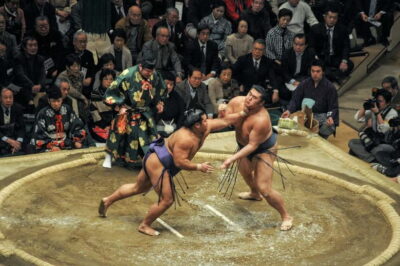
Sumo Tournament with Guide & Assigned Reserved Seat
Read our review →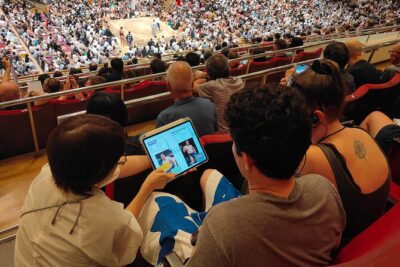
Sumo Wrestling Tournament with Chair Seat Tickets
Read our review →November Sumo Tournament tour in Fukuoka (Tickets Included)
Read our review →Browse the lists this tour appears in