
REVIEW · SUMO STABLE VISITS
Sumo Stable Intimate Morning Practice
A morning at a real sumo stable gives you something a tournament cannot: a close look at the quiet work behind the spectacle. You watch wrestlers train at close range, hear explanations through an audio headset, then sit down for tea and conversation with the athletes themselves. I especially like the later 8:00 AM start and the small group of no more than 16 people. One drawback is the price, $198, and the fact that the booking is non-refundable.
I also like the practical comfort here. You are not expected to sit cross-legged on the floor for four hours without relief, and low chairs may be requested in advance. The main consideration is that cushions are the standard seating, low chairs are limited, and you must arrive at Warabi Station at least 10 minutes early because the group may not be able to wait.
Key points at a glance
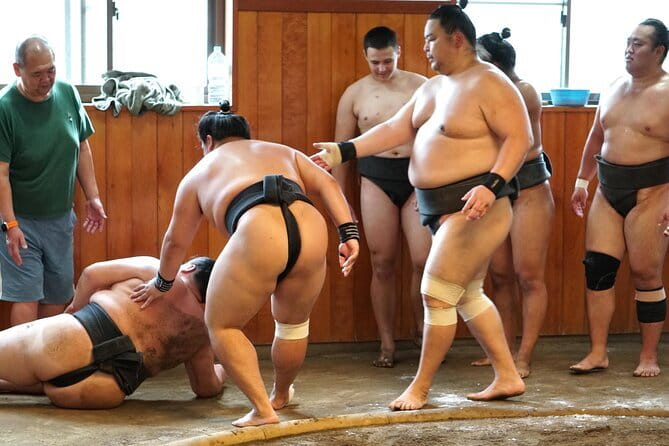
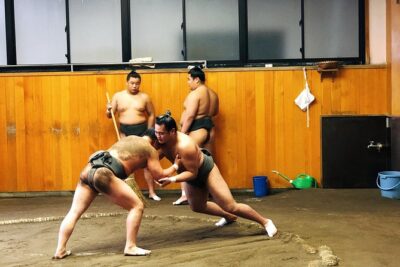
- Watch genuine morning practice: See wrestlers work through training rituals inside a real sumo stable.
- Start at 8:00 AM: The later meeting time is easier than tours that begin around 6:00 AM.
- Small group of 16 or fewer: A limited headcount makes the stable feel more personal and keeps the viewing area less crowded.
- Hear the guide inside: An English-speaking sumo expert explains techniques, customs, and famous wrestlers through an audio headset.
- Meet the wrestlers afterward: Share morning tea, ask questions, and take photographs without flash.
- Add chanko lunch: Sample the hearty meal commonly served to sumo athletes, with dishes changing from day to day.
Why this morning offers more than a tournament ticket
A sumo tournament gives you the drama: formal entrances, ranked bouts, cheering crowds, and a packed schedule. This visit shows the less polished side of the sport. You see repeated drills, intense effort, and the daily discipline that comes before an official match.
That difference matters. Sumo is not only a contest between two large athletes. It is a traditional sport with strict customs, stable communities, and a demanding training routine. With the guide speaking through your headset, you can follow what you are seeing instead of watching a silent sequence of movements with no context.
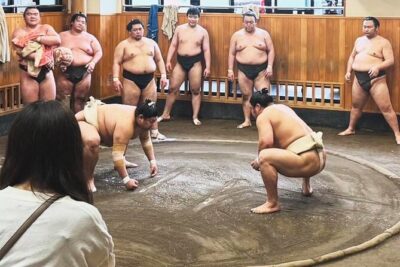
The tour is designed for a small group, capped at 16 people. That is a useful limit in a working stable, where space may be tight and the wrestlers are there to train rather than perform for visitors. A smaller group also gives you a better chance of hearing the explanations and seeing the practice clearly.
The visit lasts about four hours and begins at 8:00 AM. That timing is one of its strongest practical points. Some sumo stable visits begin around 6:00 AM, which can mean a very early start from central Tokyo. You still need to get to Saitama in time, but the schedule is more forgiving.
More stable visits in Japan:
- Tokyo Sumo Morning Practice Tour at Stable
★ 5.0 · 298 reviews - Watch Sumo Morning Practice at Stable in Tokyo
★ 4.0 · 268 reviews - Tokyo: Sumo Morning Practice Viewing Tour at a Real Stable
★ 5.0 · 73 reviews
Meeting at Warabi Station at 8:00 AM
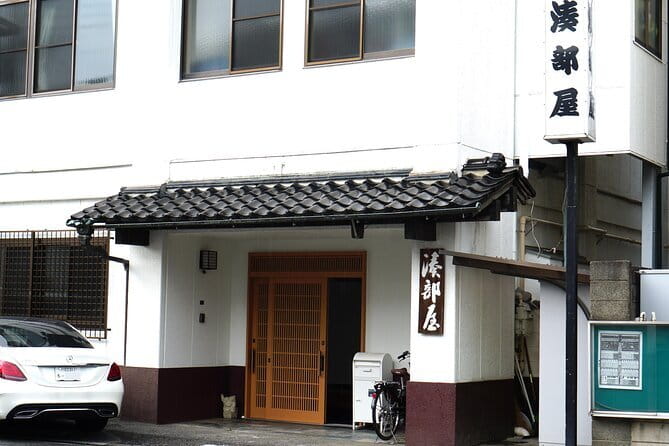
You meet at Warabi Station, at 1-chōme-23-1 Chūō, Warabi, Saitama 335-0004. Hotel pickup is not included, so you handle your own journey to the station. The activity ends back at the meeting point, which makes your return route simple to plan.
I would arrive at least 10 minutes before 8:00 AM. This is a group activity, and the organizers may not be able to hold the group for late arrivals. If you miss the start, there is no refund, so build in extra time for finding the station exit and meeting location.
The stable’s exact location and the day’s arrangements are handled as part of the booking. Sumo wrestlers can spend only a few months in one place before moving for tournaments and events, so access is offered only on selected dates. That limited schedule is one reason to book early, ideally about three months ahead, or at least one month before your visit.
The experience is near public transportation, but you should not treat it as a casual walk-up activity. Stable access takes planning, and a date may not be available if you wait until the last minute.
Inside the stable, watch the work, not a staged show
Once inside, you watch the morning practice from close range. The wrestlers are training, not putting on a performance for the group. That makes the mood more serious and gives you a better sense of sumo as a way of life.
Practice can include intense physical work and repeated technique drills. The provided information does not promise a fixed sequence, named wrestlers, or a particular number of bouts, so you should expect the content to vary by day. That is normal for a working stable.
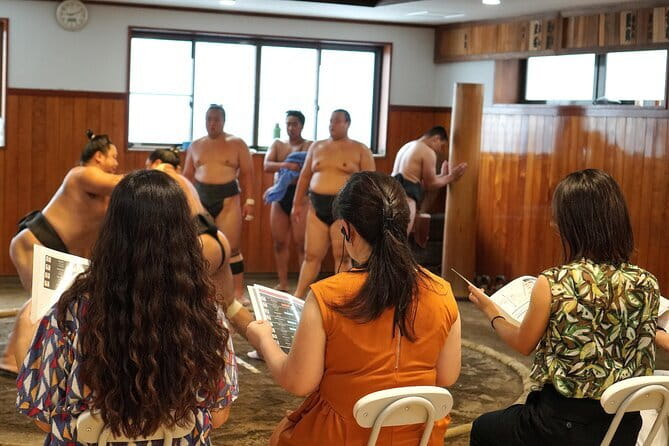
The guide provides commentary through an audio headset. This is a major advantage in a quiet, compact room. You can listen to explanations about sumo’s culture, training customs, techniques, and notable wrestlers without needing the guide to raise their voice over the activity.
A pamphlet with sumo information is also included. I would keep it for reference after the tour, especially if this is your first close look at the sport. The headset should help you understand the action as it happens, while the pamphlet gives you something to revisit later.
Photography and video are allowed, but flash is not. Check your phone settings before entering. A flash can interrupt a serious training session and is best avoided out of respect for the wrestlers.
There is also a small but important seating rule. You may sit in the way that is comfortable for you, but do not point the soles of your feet toward the ring. Extending your legs so the bottoms of your feet face the practice area is considered disrespectful.
Seating comfort and the four-hour question
The default seating is on cushions on the floor. You are not required to sit in one rigid pose, but floor seating can still be tiring during a long morning. This is the main physical point to consider before booking.
Low chairs may be available if you request them in advance. Supply is limited, and priority goes to people with mobility issues or other needs. If a chair would make the visit manageable for you, ask before the tour date rather than assuming one will be available.
The effort to offer more comfortable seating is useful because traditional settings do not always match the needs of every visitor. At the same time, this is still a sumo stable, not a modern theater with rows of adjustable seats. You should plan for a close, informal environment with limited space.
Children age six and older can participate, but they must be accompanied by an adult age 18 or older. Adult pricing applies to everyone, including children. You may need to show identification at the venue to confirm age.
More morning practice tours in Japan:
- Tokyo: Sumo Morning Practice Viewing Tour
★ 4.8 · 570 reviews - Tokyo: Sumo Morning Training Visit
★ 4.4 · 370 reviews - Tokyo: Visit Sumo Morning Practice with English Guide
★ 4.7 · 343 reviews - Tokyo: Sumo Morning Practice Tour at Sumida City
★ 4.8 · 308 reviews
Morning tea and a rare chance to talk with wrestlers

After practice, the experience shifts from observation to conversation. You can share morning tea and speak with the sumo wrestlers. This is one of the most memorable parts of the visit because it gives you a chance to meet the people you have just watched train.
The format is informal, but you should remain respectful. The wrestlers are taking part in a demanding workday, and the stable is their training home. Ask questions, listen carefully, and follow the guide’s instructions about when photographs are appropriate.
Photo opportunities are included, giving you a chance to record the meeting. Keep the flash off. You may bring bottled water or tea for personal use, but outside food and drinks are not allowed inside the stable.
The conversation also helps put the practice into human terms. A bout seen from the stands can feel distant. A face-to-face meeting after training shows the personalities and daily routines behind the large figures in the ring.
Chanko lunch and the food sumo athletes eat
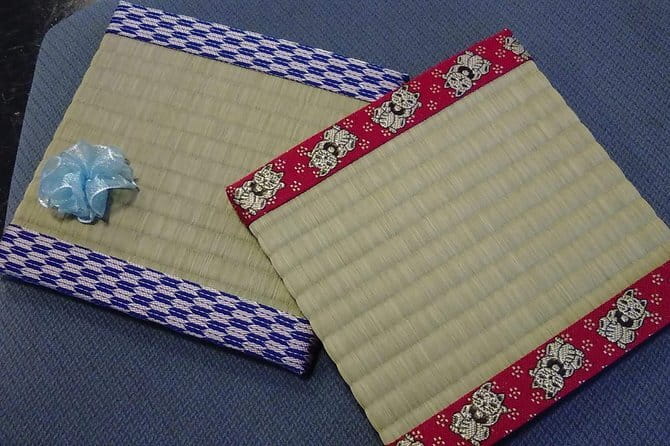
If you select the lunch option, you enjoy an authentic chanko meal after the stable visit. Chanko is closely associated with sumo life and is served as part of the athletes’ daily diet. The menu changes from day to day, so you should expect variety rather than one fixed set meal.
This is more than a convenient lunch stop. Food is an important part of how sumo wrestlers build and maintain their bodies, and chanko gives you a direct connection to that routine. The meal lets you move from watching training to tasting one part of the stable’s food culture.
Drinks at lunch are not included. Budget for anything you want to order separately. Also note that the meal is described as included when selected, so check the booking option carefully before paying. If lunch is important to you, do not assume every price choice includes it.
The meal is served by sumo wrestlers, adding another personal element to the morning. The exact dishes can change, which is useful if you prefer a meal that reflects the day’s cooking rather than a standardized tourist menu.
Is $198 fair value?
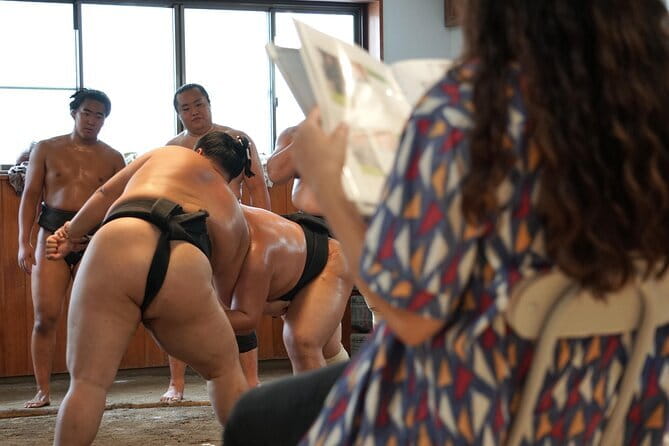
At $198, this is not a budget activity. The price makes more sense if you care about access, small groups, expert interpretation, and the chance to meet wrestlers. You are paying for a rare visit to a working stable, not simply for a seat near a sumo bout.
The value is strongest for first-time visitors who want help understanding what they are seeing. The headset commentary fills in the customs and techniques, while the small group limits the feeling of being processed through a large attraction.
The price is harder to justify if you mainly want to see a formal tournament. Tournament tickets can offer more competitive action, while this morning is built around practice and conversation. It is also a poor fit if you need fully accessible seating without arranging it ahead of time.
Group discounts are available, which may help families or friends traveling together. Still, the non-refundable policy deserves attention. Once the booking is accepted, changes cannot be made within one week of the tour date, and cancellations or amendments do not receive a refund.
The activity also requires a minimum number of participants. If that minimum is not reached and the tour is canceled, you will be offered another date or experience, or receive a full refund.
Who will enjoy this experience most
I would recommend this morning to you if you want cultural context along with the spectacle. It is especially suitable for:
- First-time visitors to Japan who want an introduction to sumo customs
- Families with children age six or older
- Sports fans interested in training, technique, and discipline
- Visitors who prefer a small group to a large coach-style outing
- People who value personal conversation and photographs after the main activity
- Anyone willing to plan ahead for a limited-date experience
It may not suit you if you dislike floor seating, need guaranteed chair seating, or want a fast, low-cost activity. It is also not ideal for a very casual schedule, since the group cannot necessarily wait for late arrivals and the booking cannot be canceled for a refund.
Practical advice before you reserve
Book early. The stable’s schedule depends on where the wrestlers are staying, and access is limited to selected dates. Three months ahead is the safest target, with one month as the minimum recommended lead time.
Wear something comfortable for sitting and moving around the stable. The provided information does not set a dress code, but you should choose practical clothing that lets you sit on a cushion without discomfort.
Bring a phone or camera if you want photographs, but confirm that the flash is disabled. Bring bottled water or tea if needed, and leave outside food behind.
If you want low-chair seating, request it before the visit. It is not guaranteed, and priority goes to people with mobility concerns or other needs.
Finally, plan your route to Warabi Station carefully. You need to arrive at least 10 minutes early, and there is no refund for missing the meeting.
Should you book the Sumo Stable Intimate Morning Practice?
Book it if you want to see sumo where the real work happens, with clear English commentary and a small group. The best parts are the close viewing, the chance to share tea with wrestlers, and the chanko lunch option. Those elements create a more personal morning than simply watching a tournament from the stands.
Skip it if $198 feels too high for a practice session, if you need guaranteed chair seating, or if your schedule may change. For the right visitor, though, this is a rare and respectful look at sumo training, and the later start makes it easier to fit into a Tokyo-area itinerary.
FAQ
Where does the sumo stable morning practice begin?
The meeting point is Warabi Station at 1-chōme-23-1 Chūō, Warabi, Saitama 335-0004, Japan.
What time does the activity start?
The activity starts at 8:00 AM. You should arrive at least 10 minutes early.
How long does the experience last?
The activity lasts approximately four hours and ends back at the meeting point.
Is hotel pickup included?
No. Hotel pickup is not included. You are responsible for reaching Warabi Station.
How many people can join the tour?
The group has a maximum of 16 participants.
Is lunch included?
An authentic chanko lunch is included if you select the lunch option. Lunch drinks are not included.
Can I take photographs inside the stable?
Yes. Photography and videography are permitted, but flash photography is not allowed.
Is the experience suitable for children?
Children age six and older may participate, but they must be accompanied by an adult age 18 or older. Adult pricing applies to all participants.
More private sumo experiences in Japan
- Tokyo:Luxury Sumo Show Experience & Japanese cuisine & Drink
★ 4.7 · 577 reviews - Tokyo: Exclusive Access to Sumo Morning Practice with Photos
★ 4.8 · 107 reviews - Tokyo Sumo Morning Practice: Viewing & Exclusive Interaction
★ 4.9 · 74 reviews - Exclusive Sumo Morning Practice in Tokyo with Photo Opportunity
★ 5.0 · 68 reviews
Newest sumo experiences in Japan
- November Sumo Tournament tour in Fukuoka (Tickets Included)★ 4.5 · 76 reviews
- Kyushu Grand Sumo Tournament Viewing Tour with English Guide★ 5.0 · 22 reviews
- Kyushu Fukuoka Grand Sumo Tournament Viewing Tour★ 4.5 · 4 reviews
- Tokyo: Know about Hokusai and Sumo culture in 2.5 hours★ 5.0 · 2 reviews
- Tokyo 6hr Private Guided Tour & Sumo Show Lunch★ 5.0 · 3 reviews
- Tokyo Grand Sumo Tournament Viewing Tour★ 5.0 · 2 reviews
- Tokyo Sumo History Tour with Chanko Nabe Lunch★ 5.0 · 3 reviews
- TOKYO , No1 Yokozuna Stable Morning Practice in Ryogoku★ 4.5 · 3 reviews
Sumo Stable Visits, compared.
Sumo Morning Practice Viewing Tour at a Real Stable
Read our review →Sumo Morning Practice Viewing Tour at a Real Stable
Read our review →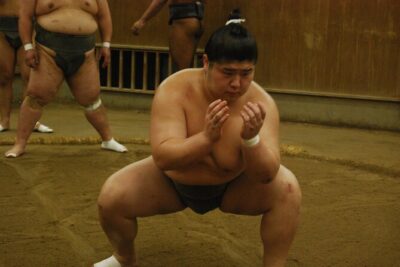
Sumo Morning Practice -Stable Visit Tour with a Guide
Read our review →Sumo Morning Practice -Stable Visit Tour with a Guide
Read our review →
Up-Close Sumo Experience at Ochi Stable: Wear Kimono in Osaka
Read our review →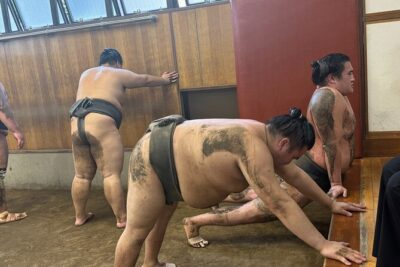
Browse the lists this tour appears in