
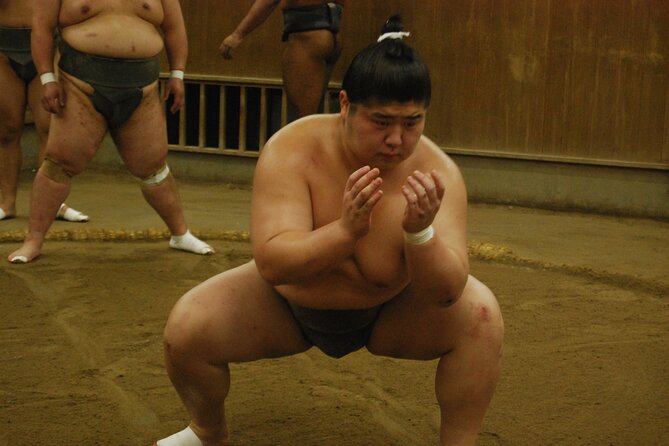
REVIEW · SUMO STABLE VISITS
Tokyo: Sumo Morning Practice -Stable Visit Tour with a Guide
Sumo practice is far more intimate than a tournament seat at the Kokugikan. At the Ikazuchi Sumo Stable, you can watch wrestlers and apprentices work at close range, hear bodies collide, and catch the strain in their faces and breathing. I like the small group of no more than 10, and I like that the session ends with questions and photos with the rikishi. The main drawback is that this is a quiet, tightly controlled visit, not a casual meet-and-greet.
I also like the special brochure, which gives you a useful introduction before the action starts. Keep in mind that the morning begins early, lasts about an hour of practice within a roughly two-hour experience, and requires strict rules about talking, food, video, and flash photography.
Key points to know before booking
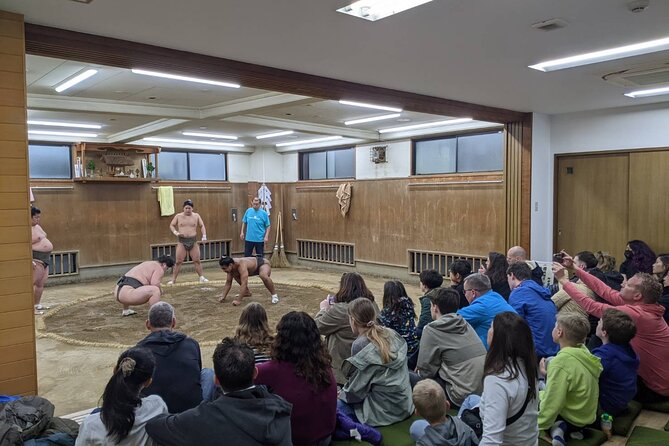
- Close-up stable practice: Watch the wrestlers train much nearer than you would from seats at a formal tournament.
- Small group of up to 10: A limited group helps preserve the serious mood inside the stable.
- Questions and photos afterward: The post-practice contact gives you a chance to ask about what you have just seen.
- 8:30 am start in Oshiage: Plan your route carefully and arrive ready for a prompt morning visit.
- No video or flash photography: Still photographs without flash are allowed, but the training comes first.
- $82 for a rare Tokyo experience: The price makes the most sense if you value access to a working stable rather than a polished show.
Seeing sumo before the public arrives
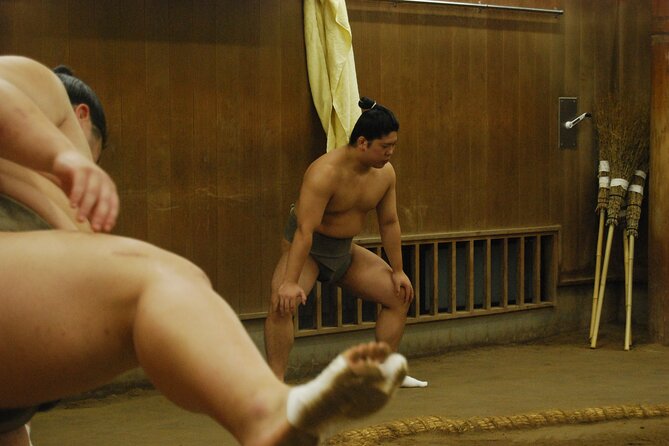
A sumo tournament is a scheduled event with ceremony, packed seating, formal bouts, and a clear division between performer and audience. Morning practice is different. You are seeing wrestlers prepare for their work, not present a finished product for the public.
That difference matters. At the stable, the focus is on repetition, discipline, and correction. You may notice the force of a collision before you fully understand the movement. You may also notice the pauses, the heavy breathing, and the sharp voice of the coach directing the session.
The sound is part of the experience. A body hitting the training surface can be startling at close range, and the coach may sound harsh to someone unfamiliar with sumo practice. The tour explains that this stern tone comes within a relationship built on trust between coach and rikishi. You are not watching an argument. You are watching a demanding training system at work.
I find that context useful because it keeps you from judging the scene by ordinary social standards. The raised voice, hard instruction, and repeated effort all serve the practice. The stable survives by passing sumo from one generation to the next, and the morning routine is the daily work behind that tradition.
More stable visits in Tokyo:
- Tokyo Sumo Morning Practice Tour at Stable
★ 5.0 · 298 reviews - Watch Sumo Morning Practice at Stable in Tokyo
★ 4.0 · 268 reviews - Tokyo: Sumo Morning Practice Viewing Tour at a Real Stable
★ 5.0 · 73 reviews
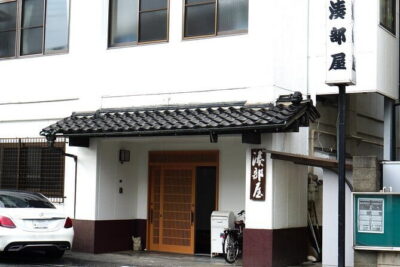
Entering the Ikazuchi Sumo Stable in Sumida
The meeting point is at Water section 1-chome-1-1 in Oshiage, Sumida City, Tokyo. The tour starts at 8:30 am and ends back at the meeting point, so this is a simple out-and-back visit rather than a walking tour through several Tokyo neighborhoods.
Oshiage is a practical base for a morning activity, but you still need to allow enough time to find the exact meeting point. The booking information places the start near public transportation, and confirmation is provided when you book. Since the tour depends on a morning training schedule, arriving late could be especially awkward inside a working stable.
The group limit is 10 people. That number is important here. A large crowd would work against the quiet concentration required by the rikishi, while a small group gives you a better chance of seeing the action without a wall of people in front of you.
Once inside, follow the guide’s instructions closely. This is not a place to wander around, chat with the people beside you, or treat practice like a stage show. The stable is a working training space, and your behavior affects the wrestlers’ concentration.
What the one-hour practice session is like
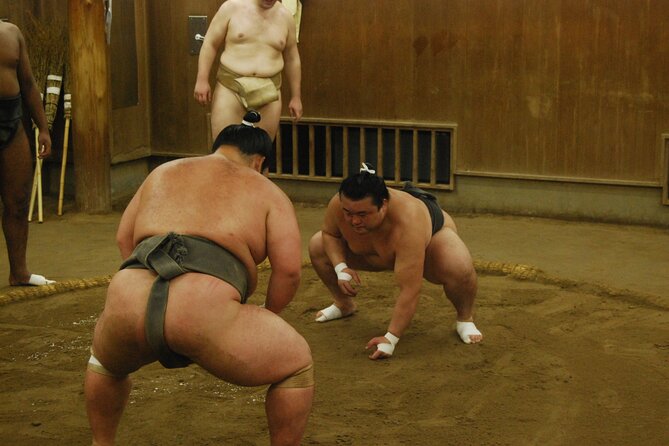
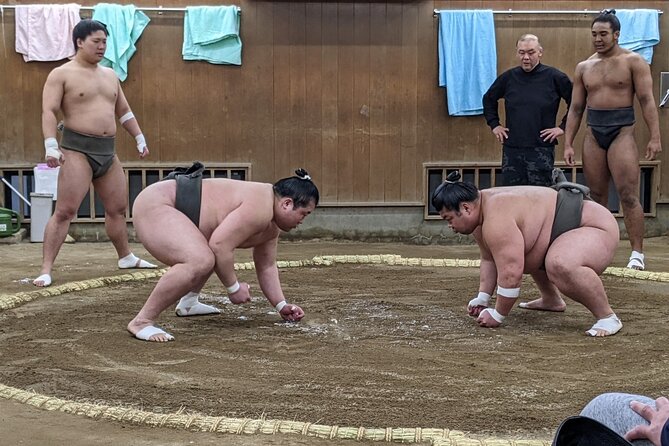
The main part of the visit lasts about one hour. You watch wrestlers and apprentices train as part of their regular morning practice, with the guide helping you understand what you are seeing.
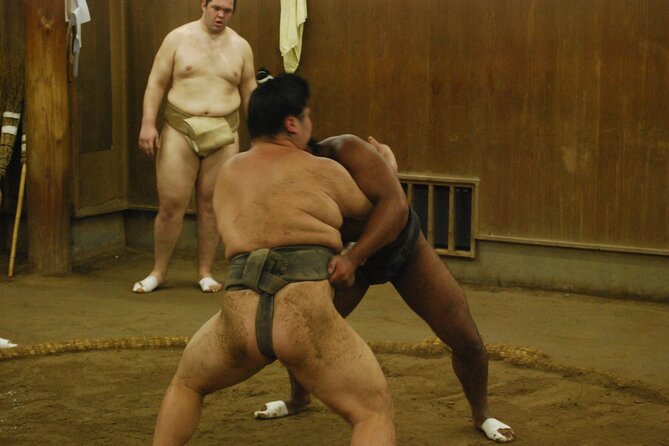
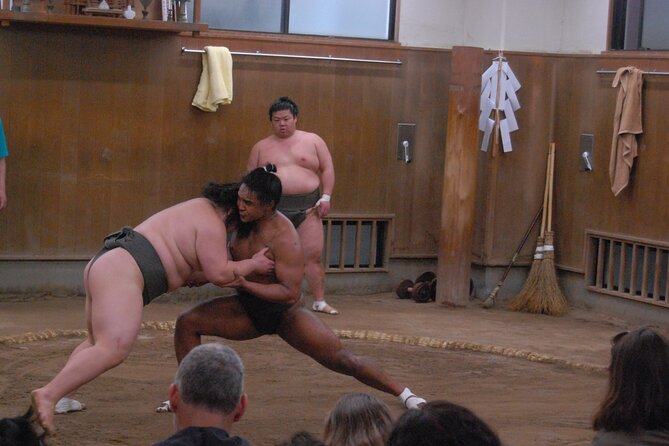
The strongest feature is proximity. You can see facial expressions and breathing, not just the broad shape of a bout from a distant seat. You can also hear the impact of bodies colliding, which gives the physical side of sumo a force that photographs cannot convey.
The session may feel more intense than entertaining. That is a good thing if you want an authentic look at sumo, but it may surprise anyone expecting a light cultural demonstration. The wrestlers are there to train, and the coach’s commands are aimed at improving their work.
You should expect periods when you simply watch. Private conversation is discouraged during the tour because the rikishi and apprentices need to concentrate. I would treat the silence as part of the experience, not as a restriction to endure. It lets you pay attention to the details: posture, breathing, effort, and the rhythm of repeated practice.
The description gives the practice portion as one hour, while the overall activity lasts about two hours. The extra time allows for the guide’s explanation, the material provided, and the contact after practice. Exact timing may depend on the stable’s schedule, so do not plan a tightly timed activity immediately afterward.
Photos, questions, and contact with the rikishi
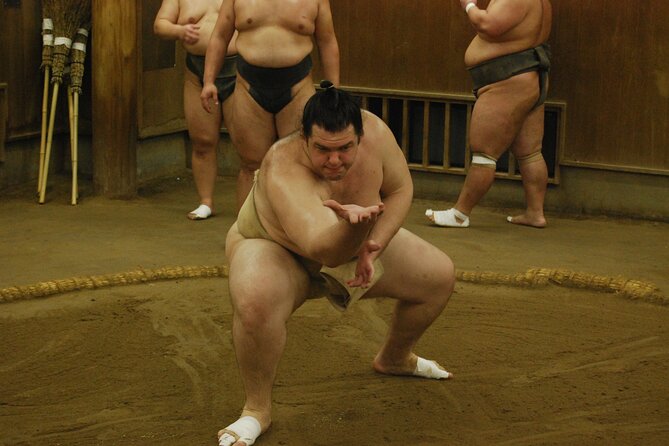
After practice, you can take photos with sumo wrestlers and ask questions. This is the most relaxed part of the visit, since the intense training has ended and you have a chance to connect what you saw with the guide’s explanations.
The question period is especially useful for families. A child may not have the words to ask about a particular movement during practice, but can raise that question afterward. The available feedback also points to the question-and-answer portion as a highlight for a family visit, with children finding the experience fun and interesting.
Photography comes with clear limits. Video is prohibited inside the stable, as is flash photography. Still photographs without flash are allowed. You should keep your camera ready but use it sparingly, and never let taking a picture distract you from the practice or disturb the wrestlers.
If you would like a photo with the rikishi, save that for the designated time after training. Do not try to create a private conversation during the session. The rules are simple, and following them helps protect the access that makes this tour special.
The tour also notes that you may leave a tip for the rikishi after practice if you feel inclined to support them. It is presented as optional, not as a required fee. Carrying a little cash may be useful if you decide to do so, though the information does not specify a required amount or payment method.
More morning practice tours in Tokyo:
- Tokyo: Sumo Morning Practice Viewing Tour
★ 4.8 · 570 reviews - Tokyo: Sumo Morning Training Visit
★ 4.4 · 370 reviews - Tokyo: Visit Sumo Morning Practice with English Guide
★ 4.7 · 343 reviews - Tokyo: Sumo Morning Practice Tour at Sumida City
★ 4.8 · 308 reviews
The brochure adds useful context
A special brochure is included with the tour. That may sound like a minor extra, but it helps if you know little about sumo before arriving.
Sumo has its own vocabulary, roles, customs, and training structure. Without some background, you might see a series of powerful collisions without understanding how the session fits into the wrestlers’ daily work. The brochure gives you a way to follow along and notice more than the spectacle.
I like that the written material supports the live experience instead of replacing it. You are not sent off to read a long lesson while the action happens elsewhere. You can use the brochure before or after practice to make sense of what you watched.
The guide is also part of the value. The experience includes a tour guide, though no guide’s personal name is provided in the booking information. You should expect the guide to explain the setting, manage the group, and help with questions rather than provide a long sightseeing tour around Tokyo.
What the rules mean for your morning
The restrictions are worth taking seriously because they shape the visit. Private conversation is discouraged, video is prohibited, and flash photography is not allowed. Snacks, bread, rice balls, and other food cannot be brought into the morning practice.
You may bring your own drinks, but they must have lids. This is a practical detail that is easy to miss. Bring water or another drink in a closed container, and finish any food before entering the stable.
These rules may feel strict if you are used to open cultural attractions. Here, they protect a live training session. Noise, movement, spilled drinks, and flashes would all pull attention away from the rikishi and apprentices.
For that reason, I would recommend dressing and preparing for a short period of stillness. The supplied information does not specify a dress code, so I would not invent one. The important point is to arrive ready to listen, watch quietly, and follow the guide’s directions.
Is $82 a fair price?
At $82, this is not the cheapest way to spend a morning in Tokyo. You are paying for a guide, a small group, the special brochure, and access to a setting that is not normally part of a standard sightseeing route.
The value depends on what you want. If you only want to see a few sumo bouts, a formal tournament may be a better match when one is taking place. If you want to understand how wrestlers train before competition, this tour offers a closer view and a more personal setting.
The small group improves the calculation. With no more than 10 people, you are less likely to feel lost in a crowd, and the question period has a better chance of being useful. The practice is also much closer than the view from official games at the Kokugikan.
I would not book this because it promises a long list of sights. It does not. I would book it because it provides access to one focused, working environment and lets you see the physical effort behind sumo. For someone who already has an interest in the sport, $82 is easier to justify. For someone only mildly curious, the price may feel high for a two-hour activity centered on watching.
Who will enjoy this visit most
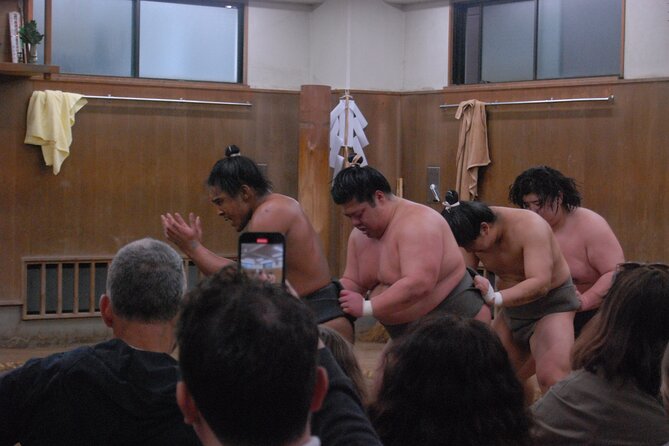
This tour suits anyone who wants a real training session rather than a staged demonstration. It is a good fit for visitors who have seen sumo on television or at the Kokugikan and want to understand what happens away from the public arena.
Families can also do well here, especially if children can remain quiet during practice. The post-training questions and photo opportunity give younger participants a clear moment of interaction, while the close view of the wrestlers makes the sport easier to understand.
It is less suitable for someone who wants a flexible morning with snacks, video, and constant conversation. The stable asks you to respect its routine. If you need an activity where you can come and go freely, this is not the right choice.
The format also favors people who care about detail. The experience is not built around a long speech or a list of Tokyo landmarks. Its appeal comes from watching carefully and noticing how the wrestlers work.
Planning the morning around the 8:30 start
The early start is part of the value and part of the challenge. Sumo wrestlers practice in the morning, so you receive access at a time when the stable is functioning as a training space rather than a tourist attraction.
Book the start into a light morning schedule. The activity lasts approximately two hours and returns to the meeting point, but the practice itself is listed as about one hour and 30 minutes is also associated with the stable visit details. Allow extra time around the activity rather than assuming you can make a tight connection afterward.
The tour is available with a mobile ticket, and confirmation is provided at booking. The meeting point and return point are the same, which makes the basic route easy to understand. Public transportation is nearby, but the information does not identify a specific station or train route, so check your own route before the morning.
The experience can accept most people, and the group is capped at 10. No special physical requirements are listed. Still, the need to remain quiet and attentive is more important than physical fitness.
Cancellation and booking flexibility
You can cancel for a full refund up to 24 hours before the experience begins. Cancellations made within 24 hours are not refunded, and changes inside that window are not accepted.
The cut-off uses Tokyo local time, so check the exact start time before making changes. The experience also requires a minimum number of participants. If the operator cancels because that minimum is not met, you are offered another date or experience, or a full refund.
That policy gives you reasonable flexibility, but the 24-hour limit is firm. I would make the decision before the final day, especially since the activity starts early and depends on a specific practice schedule.
Should you book this sumo stable tour?
Book it if you want to see sumo at close range, hear the force of practice, and accept the quiet rules that protect the wrestlers’ concentration. The small group, question period, and post-practice photos give the visit more substance than a quick look through a doorway.
Skip it if you mainly want a polished show, a flexible schedule, or permission to film. At $82, the price asks you to value access and authenticity over volume.
For families, sumo fans, and curious visitors who want a side of Tokyo that most standard sightseeing does not provide, I think this is a strong choice. Arrive on time, keep your drink sealed, leave the snacks behind, and let the morning practice take center stage.
FAQ
Where does the sumo practice tour meet?
The meeting point is at Water section 1-chome-1-1, Oshiage, Sumida City, Tokyo 131-0045, Japan.
What time does the tour start?
The tour starts at 8:30 am.
How long does the experience last?
The overall experience lasts approximately two hours. The stable practice portion is listed as about one hour, with additional time for the tour and post-practice contact.
How large is the group?
The activity has a maximum of 10 participants.
Is photography allowed inside the sumo stable?
Still photography without flash is allowed. Video and flash photography are prohibited inside the stable.
Can I bring food into the morning practice?
No. Snacks, bread, rice balls, and other food are not allowed during the practice. You may bring a drink if it has a lid.
Can I ask the sumo wrestlers questions?
Yes. After practice, you can ask questions and take photos with the sumo wrestlers.
Can I cancel for a full refund?
Yes. You can cancel at least 24 hours before the start time for a full refund. Cancellations or changes made within 24 hours are not accepted, and no refund is provided.
Newest sumo experiences in Tokyo
- Tokyo Sumo History Tour with Chanko Nabe Lunch★ 5.0 · 3 reviews
- Tokyo Highlights Tour: Sumo, Sushi, Tea, and Tokyo Tower★ 5.0 · 2 reviews
- Tokyo: Know about Hokusai and Sumo culture in 2.5 hours★ 5.0 · 2 reviews
- TOKYO , No1 Yokozuna Stable Morning Practice in Ryogoku★ 4.5 · 3 reviews
- Tokyo 6hr Private Guided Tour & Sumo Show Lunch★ 5.0 · 3 reviews
- Tokyo Grand Sumo Tournament Viewing Tour★ 5.0 · 2 reviews
- Tokyo Ginza : Sumo and Mikoshi Experience,Open from Sep.★ 5.0 · 8 reviews
- Complete Sumo Experience in Tokyo★ 4.5 · 3 reviews
Sumo Stable Visits, compared.
Sumo Morning Practice Viewing Tour at a Real Stable
Read our review →Sumo Morning Practice Viewing Tour at a Real Stable
Read our review →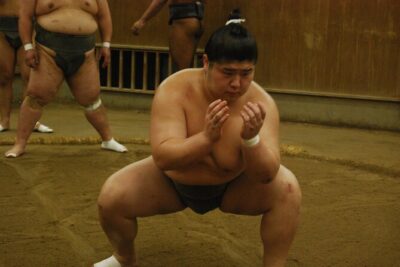
Sumo Morning Practice -Stable Visit Tour with a Guide
Read our review →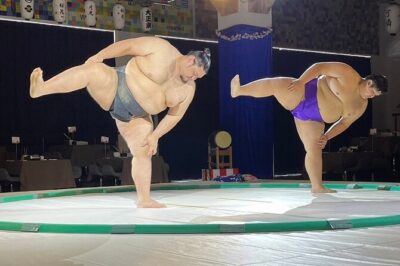
Up-Close Sumo Experience at Ochi Stable: Wear Kimono in Osaka
Read our review →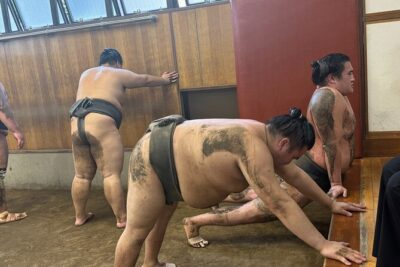
Browse the lists this tour appears in