
REVIEW · SUMO STABLE VISITS
Tokyo: Sumo Morning Practice -Stable Visit Tour with a Guide
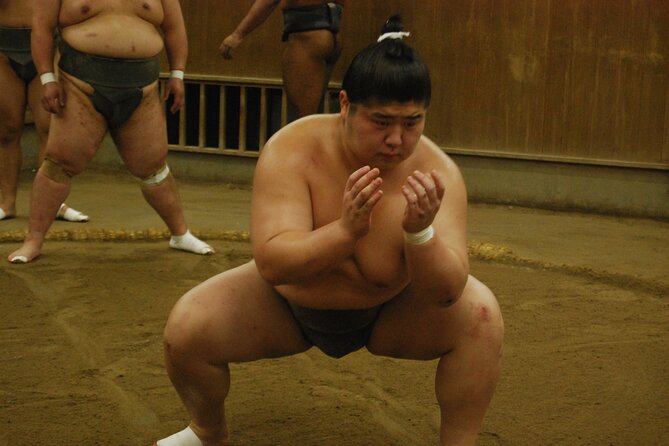
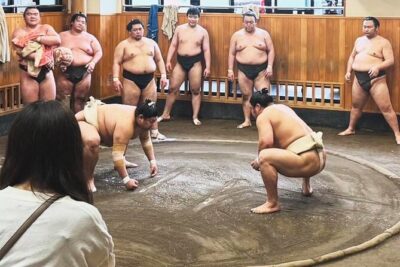
Sumo morning practice gives you a close view of Japan’s national sport, far nearer than a seat at the Kokugikan. From cushions inside Ikazuchi Sumo Stable, you can hear bodies collide, watch faces tighten with effort, and feel how seriously the wrestlers and apprentices work.
I like the clear introduction to basic sumo rules and wrestler life, and I like that guide Ishida helps you understand what you are seeing rather than leaving you to guess. The chance to take photos without flash is another welcome touch.
The main drawback is the strict etiquette. You must stay quiet, switch off video recording, avoid flash, and leave all food outside. Children under 10 cannot join, and the strong voice of the coach may surprise you at first.
Key points to know before you go
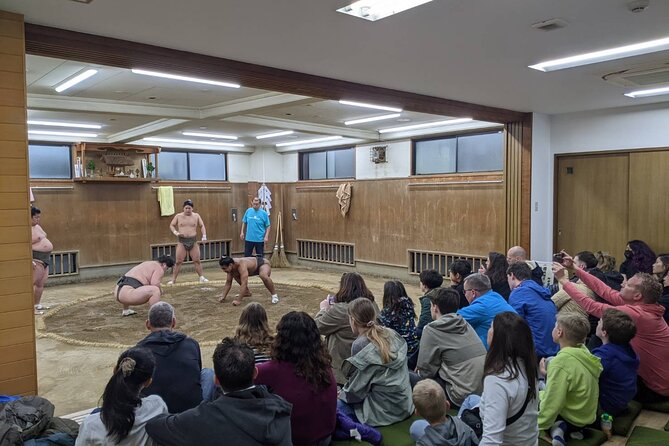
- Watch real training from cushions: You sit close enough to see breathing, facial expressions, and the impact of each collision.
- Meet near Tokyo Skytree: The meeting point is in front of the Memorial Statue of Soramachi Hiroba.
- Learn from guide Ishida: Expect explanations of basic rules, stable life, sumo history, and the relationship between coaches and wrestlers.
- Respect the stable’s quiet rules: Private conversation, video, flash photography, and food are not allowed during practice.
- Allow two hours and $90: The price includes an English-speaking guide and a special sumo brochure.
- Best for adults and older children: The experience is not suitable for anyone under 10.
Why morning practice feels different from tournament sumo
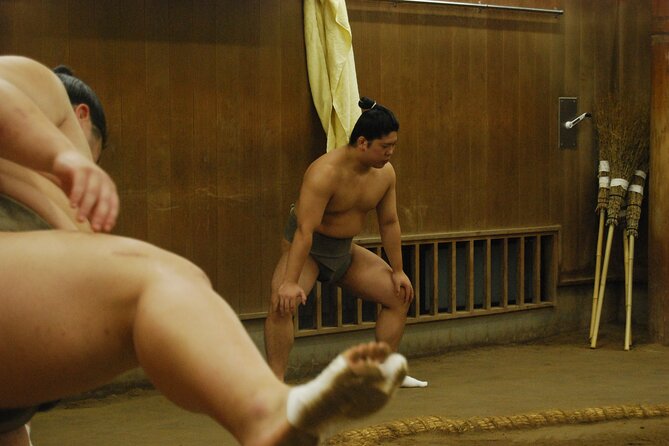
At a tournament, you see a polished public contest. Morning practice is less about spectacle and more about repetition, correction, and discipline. The wrestlers and apprentices are working to preserve the sport and pass it on, not putting on a show for an audience.
That difference matters. You are not watching a string of formal bouts with a large crowd around you. You are watching the work behind the contest. The sound of bodies meeting can be startling in such a close room, and the coach’s sharp voice may seem severe when you first hear it.
The tone makes more sense as practice continues. The coach is correcting and pushing the rikishi, the Japanese term for sumo wrestler, while the wrestlers focus on the task. The relationship depends on trust between coach and students. You get a glimpse of that demanding system without needing to understand every rule before you arrive.
I find this kind of access more revealing than simply buying a ticket and watching the finished product. It shows you the effort that makes a professional bout possible.
More stable visits in Tokyo:
- Tokyo Sumo Morning Practice Tour at Stable
★ 5.0 · 298 reviews - Watch Sumo Morning Practice at Stable in Tokyo
★ 4.0 · 268 reviews - Tokyo: Sumo Morning Practice Viewing Tour at a Real Stable
★ 5.0 · 73 reviews
Meeting near Tokyo Skytree
The tour begins in front of the Memorial Statue of Soramachi Hiroba, near Tokyo Skytree. This meeting point is useful because the area is easy to connect with a visit to the tower, though you should allow enough time to locate the statue before the scheduled start.
From there, your English-speaking guide leads you to the sumo stable. The stable is not presented as a normal sightseeing attraction. It is a working place where wrestlers and apprentices train, so your guide’s job is partly to explain the customs and partly to help you behave in a way that does not interrupt the session.
Guide Ishida is specifically identified with this experience. You can expect help with the basic rules before or around the beginning of practice, along with explanations of stable life and the history of sumo. That preparation is important because a morning session can otherwise look like a series of powerful but unfamiliar movements.
The guide also helps you find the stable, something you might not manage easily on your own. Exact starting times depend on availability, so check the schedule when you book.
Sitting close to the action
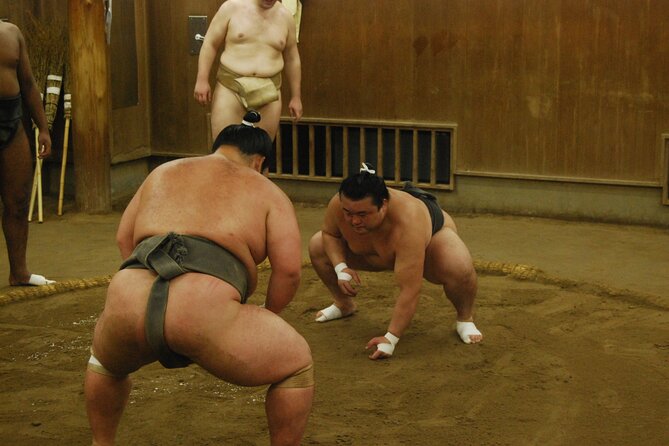
Inside the stable, you watch from cushions. This is a traditional and practical arrangement, but it may not suit everyone. You are sitting on the floor rather than in a standard chair, and the close setting means you must remain still and quiet.
The reward is a much more direct view. You can see the wrestlers’ breathing and facial expressions, hear the impact of their bodies, and notice the tension in the room as practice develops. At the Kokugikan, the scale of the arena puts more space between you and the athletes. Here, the details become easier to notice.
The room’s silence is part of the experience. The rules ask you to avoid private conversation because the rikishi and apprentices need concentration. That can feel unusual for a tour, but it also keeps the stable from becoming a noisy viewing room.
Do not expect the wrestlers to perform for you. Their practice continues according to the stable’s routine. That makes the visit feel more genuine, but it also means the experience depends on your interest in observing rather than being entertained every minute.
What the training reveals about sumo
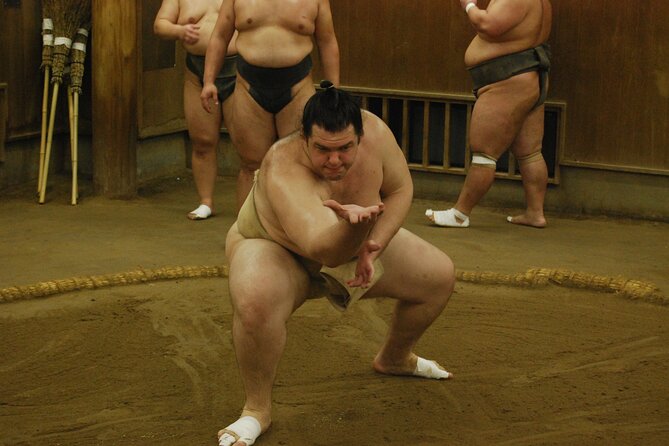
The session offers more than large athletes pushing against one another. You begin to see the discipline behind the sport. Each wrestler is working under the direction of a coach, and each apprentice is part of a system built around training, respect, and repetition.
A good guide gives those movements meaning. Learning the basic rules helps you understand why a position, push, or collision matters. Learning about life inside the stable adds another layer, since the wrestlers are not simply athletes arriving for a short class. The stable protects and continues the sport through the daily lives of the people who train there.
The harsh sound of the coach’s voice may be the first detail that catches you off guard. It is loud and forceful, but the explanation offered here connects that voice to the trust between coach and wrestler. The point is not to soften the intensity. It is to help you understand why the practice has that tone.
I appreciate that the experience does not pretend sumo is gentle or theatrical. You see a demanding sport in a demanding setting. That honesty is one of the tour’s strongest features.
More morning practice tours in Tokyo:
- Tokyo: Sumo Morning Practice Viewing Tour
★ 4.8 · 570 reviews - Tokyo: Sumo Morning Training Visit
★ 4.4 · 370 reviews - Tokyo: Visit Sumo Morning Practice with English Guide
★ 4.7 · 343 reviews - Tokyo: Sumo Morning Practice Tour at Sumida City
★ 4.8 · 308 reviews
Photos after practice, with strict limits
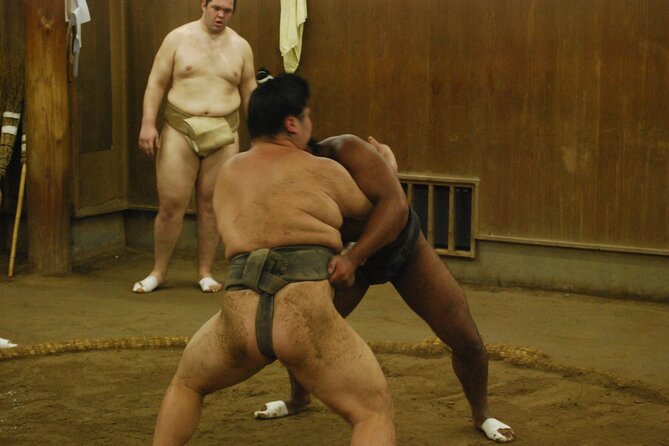
Photography is allowed, but only without flash. Video recording is prohibited inside the stable. These rules are not minor suggestions, so set your phone or camera before practice begins and keep it ready for still photos only.
The restriction protects concentration. A flash would interrupt the session, while filming could change a private training environment into a public production. If you want a record of the visit, still photography gives you that option without turning the practice into a photo opportunity.
A photo shoot with the wrestlers is included among the highlights of the experience. The available information does not specify exactly how every photo moment is arranged, so follow your guide’s instructions and wait for the appropriate time. Do not assume that you can approach athletes during training.
This is also a good reason to keep your camera use modest. The best part of the visit is watching the practice as it happens. Photos should support the memory, not distract you from the session.
The brochure adds useful context
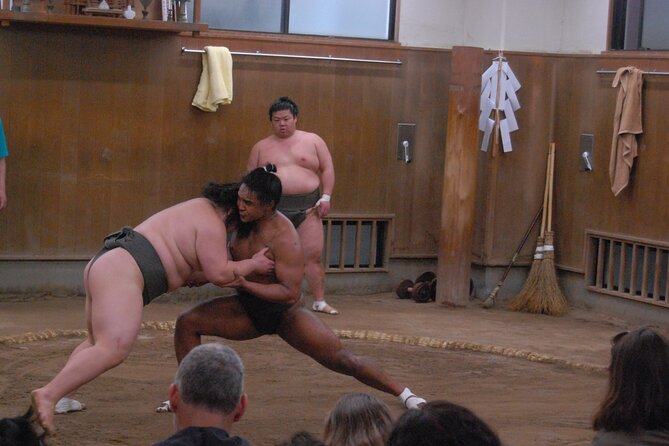
Your price includes a special brochure about sumo. That may sound like a small extra, but it is useful when the activity moves quickly. You can use it to remember terms, rules, and points about the stable after you leave.
The brochure also helps if you know little about sumo. The sport has its own vocabulary and customs, and a short introduction makes the practice easier to follow. Guide Ishida’s explanations provide the spoken context, while the brochure gives you something to keep.
I would not treat the brochure as the main reason to book. Its value comes from how it supports the live session. The real draw is being close enough to see and hear training in a working stable.
Price, timing, and what the $90 covers
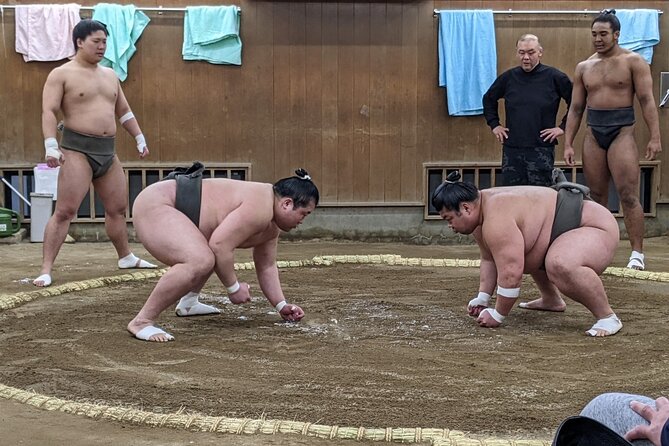
The cost is $90 per person for two hours. That is not a cheap sightseeing stop, but it pays for access to a setting that most people living in Japan do not see as part of an ordinary day. You are paying for the stable visit, an English-speaking guide, interpretation of the rules and customs, and the chance to watch practice at close range.
The value depends on your interest. If you only want a quick photograph of a sumo wrestler, the price may feel high. If you want to understand how training works and why the stable matters, two hours gives the experience more weight.
The two-hour length is also sensible. It gives your guide time to explain the setting and lets you watch enough practice to understand its rhythm. The exact starting time varies, so check availability before planning other Tokyo activities around it.
The booking terms add some flexibility. You can reserve now and pay later, and cancellation is free up to 24 hours in advance for a full refund. Those policies are useful if your Tokyo schedule is still changing, but they do not change the need to arrive prepared and on time.
Etiquette that protects the practice
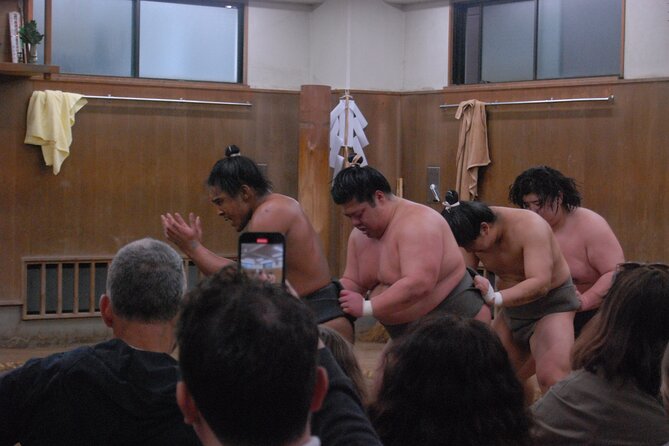
This is not a tour where you can snack, chat, or wander around while listening. The stable has clear rules, and following them is part of showing respect to the wrestlers.
Keep these points in mind:
- Do not make noise during practice.
- Avoid private conversation.
- Do not use flash photography.
- Do not record video.
- Leave snacks, bread, rice balls, and other food outside.
- Bring drinks only in containers with lids.
- Take still photographs without flash.
- If you feel you would like to support the rikishi after practice, you may leave a tip.
The food rule is easy to overlook. A morning schedule may make you want breakfast, but food is not allowed during practice. Eat beforehand or wait until afterward, and bring a lidded drink if needed.
The quiet rule may be the hardest adjustment for some people. Your guide can explain what is happening, but conversation must not compete with the coach’s instructions or the wrestlers’ concentration.
Who will enjoy this stable visit most
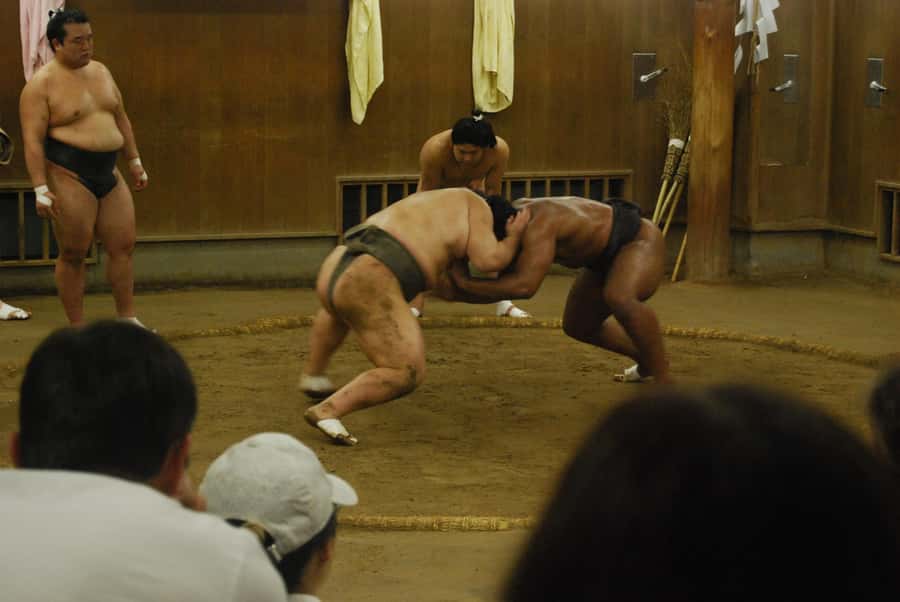
I would recommend this experience to anyone curious about the work behind sumo, especially if you prefer local institutions to polished tourist shows. It suits visitors who enjoy watching carefully, learning rules, and respecting a formal setting.
It is also a good choice if you have already seen Tokyo’s major sights and want something tied to Japanese culture rather than another observation deck or shopping area. The location near Tokyo Skytree makes it possible to pair the visit with time in the same part of the city, though you should not treat the stable as a quick drop-in.
The tour is less suitable for young children, and the minimum age is 10. It may also frustrate anyone who wants casual conversation, continuous photos, or video clips. The experience asks you to be quiet and patient.
If you have a strong interest in sports, the tour gives you a closer look at training than a normal spectator ticket. If you are mainly interested in the grand atmosphere of a formal tournament, you may prefer the Kokugikan instead. These are different experiences, and the stable visit is strongest when you want the daily work rather than the public contest.
My practical verdict on the $90 experience
I like this tour because it gives meaning to what you see. The close seating, the sound of training, the guide’s explanation of stable life, and the chance to observe trust between coach and wrestlers make it more than a photo stop.
Book it if you want a quiet, serious look at sumo and can follow the rules without complaint. Guide Ishida’s explanations are especially useful for first-time viewers, since basic rules and stable customs are not always obvious.
Skip it if you need a flexible, noisy, family-friendly activity, or if you want to film everything. For the right visitor, $90 is a fair price for access to a working sumo stable near Tokyo Skytree, especially because this is a view of the sport that even people living in Japan may not see every day.
FAQ
Where does the tour meet?
The meeting point is in front of a Memorial Statue of Soramachi Hiroba, near Tokyo Skytree.
How long does the sumo stable visit last?
The experience lasts two hours.
How much does the tour cost?
The listed price is $90 per person.
Is an English-speaking guide included?
Yes. An English-speaking live tour guide is included, and guide Ishida is associated with the experience.
What does the guide explain?
The guide explains basic sumo rules, sumo history, life inside the stable, and the relationship between wrestlers and their coaches.
Can I take photographs inside the stable?
Yes, still photographs without flash are allowed.
Can I record video?
No. Video recording is prohibited inside the sumo stable.
Can I eat during morning practice?
No. Snacks, bread, rice balls, and other food are not allowed during practice. Drinks must be in containers with lids.
Is the tour suitable for children?
The experience is not suitable for children under 10.
Can I cancel the booking?
Yes. You can cancel up to 24 hours in advance for a full refund. You can also reserve now and pay later.
Newest sumo experiences in Tokyo
- Tokyo 6hr Private Guided Tour & Sumo Show Lunch★ 5.0 · 3 reviews
- Tokyo Grand Sumo Tournament Viewing Tour★ 5.0 · 2 reviews
- Tokyo Sumo History Tour with Chanko Nabe Lunch★ 5.0 · 3 reviews
- Tokyo Highlights Tour: Sumo, Sushi, Tea, and Tokyo Tower★ 5.0 · 2 reviews
- Tokyo: Know about Hokusai and Sumo culture in 2.5 hours★ 5.0 · 2 reviews
- TOKYO , No1 Yokozuna Stable Morning Practice in Ryogoku★ 4.5 · 3 reviews
- Tokyo Sumo Practice Watching & Visit Town from Samurai era★ 5.0 · 8 reviews
- Unique Afternoon Live Sumo training tour in Tokyo★ 5.0 · 6 reviews
Sumo Stable Visits, compared.
Sumo Morning Practice Viewing Tour at a Real Stable
Read our review →Sumo Morning Practice Viewing Tour at a Real Stable
Read our review →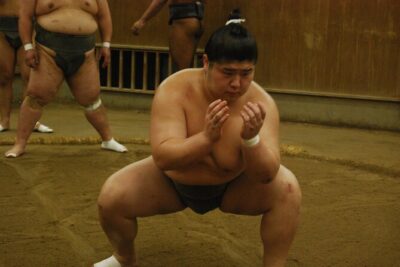
Sumo Morning Practice -Stable Visit Tour with a Guide
Read our review →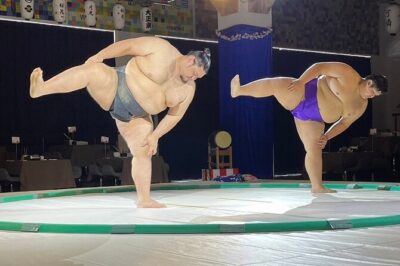
Up-Close Sumo Experience at Ochi Stable: Wear Kimono in Osaka
Read our review →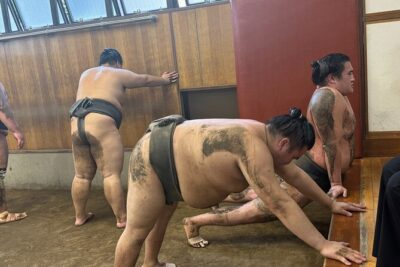
Browse the lists this tour appears in