
REVIEW · SUMO STABLE VISITS
Tokyo: Sumo Morning Practice Viewing Tour at a Real Stable
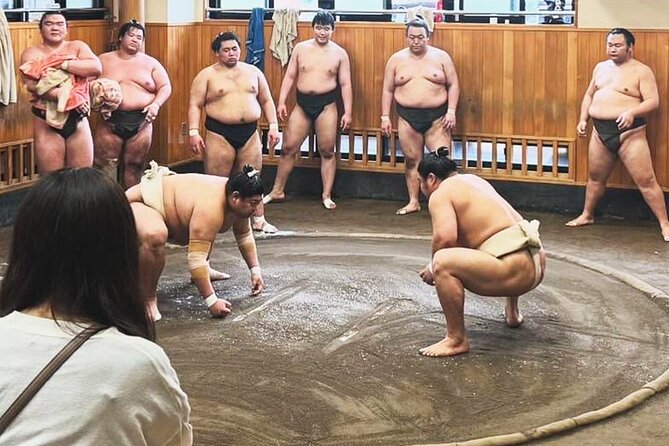
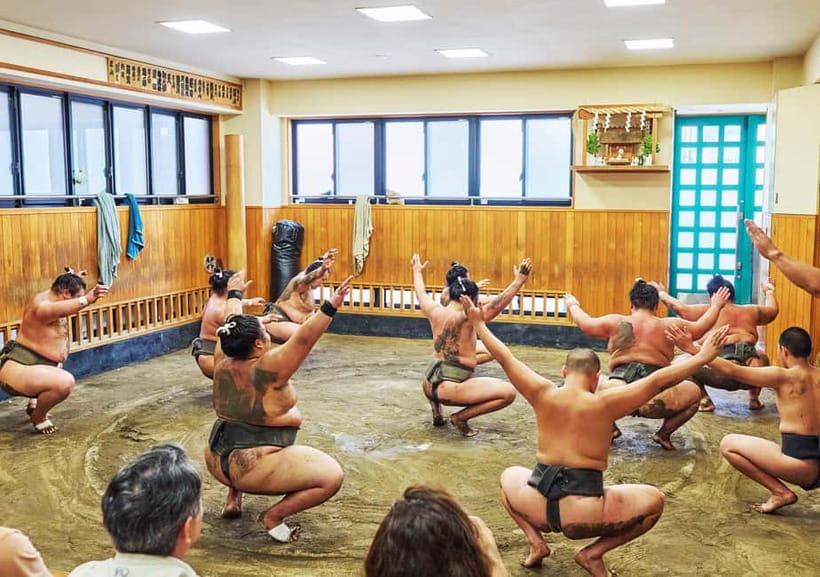
Sumo training is not a stage show. You sit close to the ring while wrestlers slap flesh, stamp, stretch, and crash into one another with startling speed. The stable is also their home and workplace, so you are watching a serious daily ritual, not a performance arranged for tourists.
I like the genuine access and the clear explanations from guides such as Mao, Yuki, Kawa, and Tomo. I also like that you learn why the rituals matter, rather than simply watching large men wrestle. The main drawback is strict timing: arrive late, make noise, or leave before practice ends, and you may miss the visit or be unable to return.
Key points to know before booking
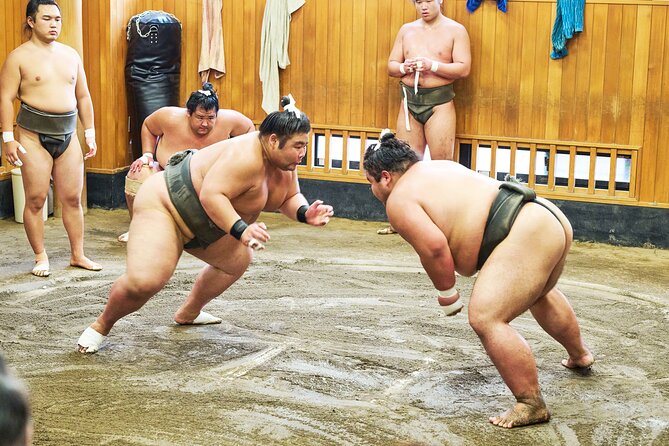
- Watch real morning practice: Wrestlers train at close range while carrying on with their normal routine.
- Learn the meaning behind the rituals: Your English-speaking guide explains sumo rules, Shinto customs, and tournament preparation.
- Meet wrestlers outside training hours: There may be a chance to speak with them after practice.
- Expect strict stable etiquette: Wear modest clothing, silence your phone, stay seated, and do not make noise.
- Plan for an early, fixed schedule: You must remain until the end, usually around 9:00 to 10:00 AM.
- Meet at Kiyosumi-Shirakawa Station: Find the guide with the Local Guide Stars sign at Exit A1.
What makes this sumo visit different
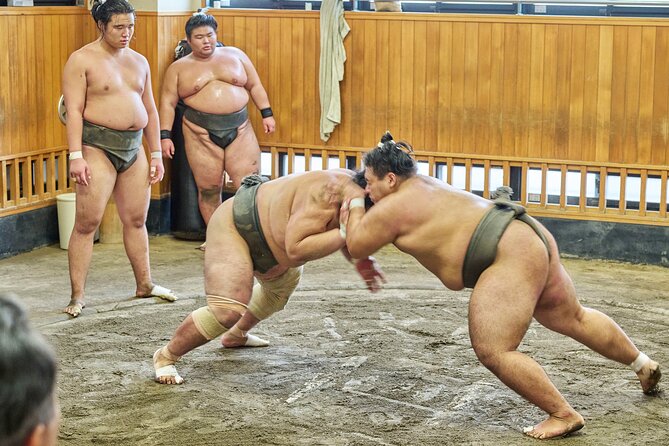
Tokyo offers many polished cultural shows, but this visit takes you into a working sumo stable. The distinction matters. A stable is where wrestlers live, eat, train, and prepare for the demanding world of professional sumo. You are not watching a simplified demonstration built around audience reaction. You are watching practice.
That can feel surprisingly intimate. The ring is close, and the sounds carry: feet striking the floor, palms hitting bodies, and wrestlers breathing through hard exertion. The wrestlers generally continue as if you are not there, which gives the session its unusual sense of reality.
You should also understand the limits. This is a place of work, not a photo studio or a casual meet-and-greet. The stable expects quiet, modest dress, and stillness during training. If you need to move often, talk through the session, or leave early for another appointment, this may not suit you.
More stable visits in Tokyo:
- Tokyo Sumo Morning Practice Tour at Stable
★ 5.0 · 298 reviews - Watch Sumo Morning Practice at Stable in Tokyo
★ 4.0 · 268 reviews - Tokyo: Sumo Morning Practice Viewing Tour at a Real Stable
★ 5.0 · 73 reviews
Meeting at Kiyosumi-Shirakawa Station
The tour begins at Kiyosumi-Shirakawa Station, Exit A1. You can reach the station on the Toei Oedo Line or the Hanzomon Line. Look for a guide holding a sign marked Local Guide Stars.
Give yourself plenty of time. The meeting point is not the stable itself, and the group may take a train after meeting. The stable’s exact ending point can also differ from the original meeting place, so do not assume you will finish right where you started.
Late arrival is a serious problem here. Entry may not be possible if you miss the group. I would aim to reach the station at least 30 minutes before the stated meeting time, especially if you are changing train lines or navigating Tokyo for the first time. One late arrival can also shorten the group’s viewing time, since practice follows the stable’s schedule rather than the tour’s convenience.
The guide’s introduction before practice
Before entering the stable, your guide gives you the basic tools for watching sumo. This is an important part of the experience. Without some background, the action can look like a series of short collisions. With an explanation of the rules and rituals, each movement carries more meaning.
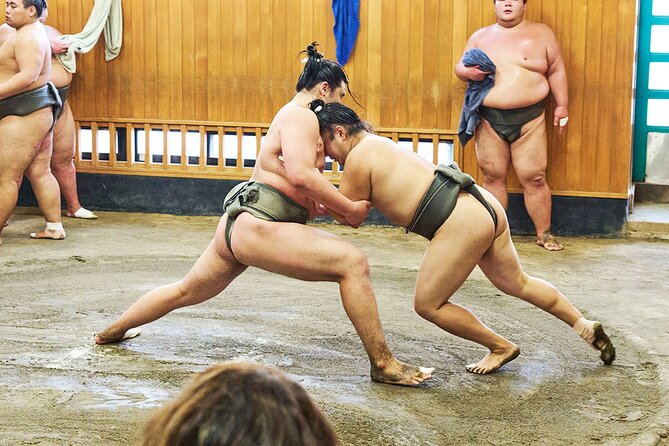
You learn that a match is won by forcing an opponent out of the ring or making any part of the opponent’s body, other than the soles of the feet, touch the ground. The guide also explains how sumo connects with ancient Shinto beliefs and why actions around the ring matter.
Guides including Mao, Yuki, Kawa, and Tomo have led this experience. The strongest praise has focused on explanations that are clear without becoming a lecture. Mao, in particular, is described as well prepared, patient, and able to answer questions about both sumo and Japanese life. Yuki’s explanations cover the sport and its past, while Kawa has helped visitors understand the connection between the stable and everyday life in Japan.
This briefing also gives you a chance to ask questions before silence becomes necessary. Pay attention here. Once practice begins, you may not be able to chat with the guide or move around freely.
Sitting beside the ring during morning practice
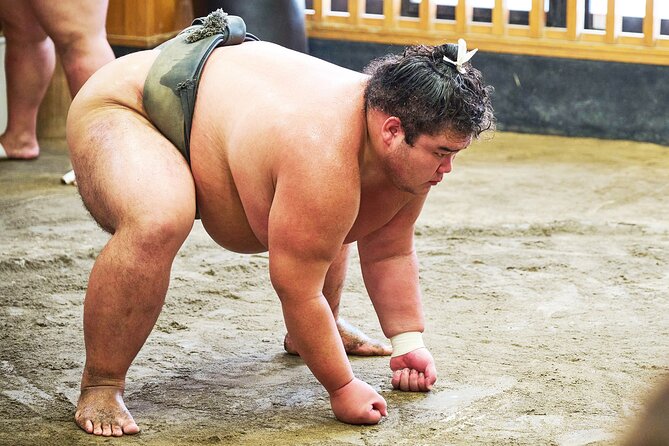
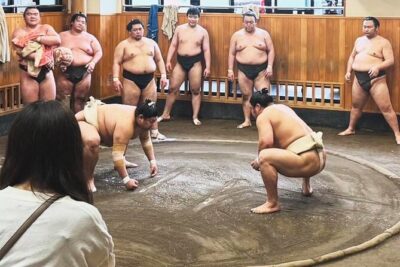
The main event is the practice session. You sit on the side of the ring, close enough to see the wrestlers’ speed, flexibility, strength, and effort. The size of the wrestlers is striking, but their athletic control is just as impressive. Their movements require balance, timing, and serious physical preparation.
Morning training begins early because sumo demands a strict daily routine. You see young wrestlers working toward higher ranks, giving full effort even when the exercise looks repetitive. The session offers a glimpse of the discipline behind tournament appearances. These athletes are not simply waiting for a bout. They are building the strength and technique needed to compete.
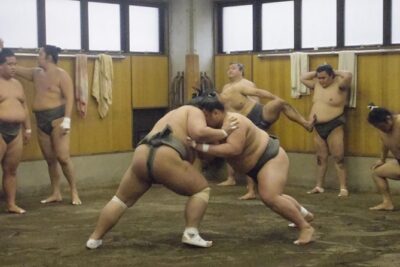
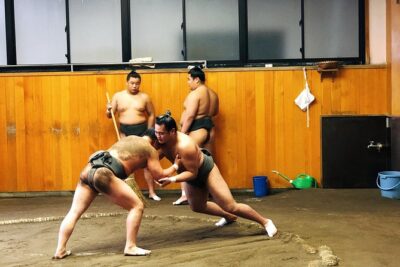
The physical sounds can surprise you. The force of a body hitting another body is plain to hear, and the training has a roughness that television often softens. This is one reason the close seating matters. You are close enough to notice the effort, the pauses, and the difference between ritual preparation and full-contact practice.
A particularly memorable possibility is seeing a top-ranked wrestler, even a yokozuna, during training. That is not guaranteed, and you should not book the tour expecting a particular wrestler. Still, the chance adds interest to a session that already offers a rare look at the sport.
More morning practice tours in Tokyo:
- Tokyo: Sumo Morning Practice Viewing Tour
★ 4.8 · 570 reviews - Tokyo: Sumo Morning Training Visit
★ 4.4 · 370 reviews - Tokyo: Visit Sumo Morning Practice with English Guide
★ 4.7 · 343 reviews - Tokyo: Sumo Morning Practice Tour at Sumida City
★ 4.8 · 308 reviews
Why silence and stillness matter
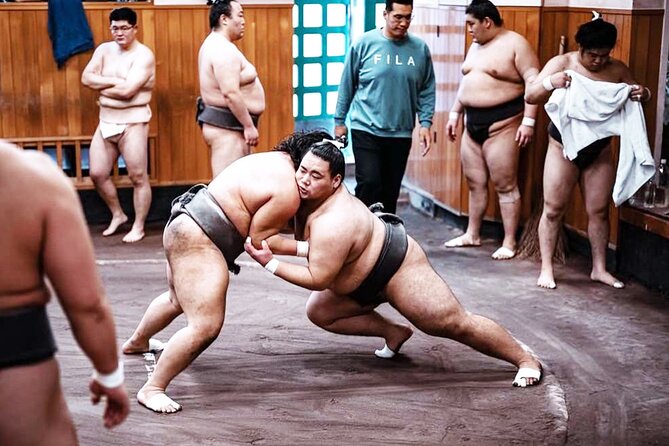
The quiet rules are not needless fussiness. The stable is functioning, and your presence should not interrupt the wrestlers’ concentration. You must keep your phone on silent, avoid making noise, and remain seated during practice.
Do not plan to stand for a better view, walk around for photographs, or leave for a quick break. Once you leave the stable, re-entry is not allowed. Go to the restroom before the session, wear clothing that lets you sit comfortably, and bring only what you need.
Eating and drinking are not part of the viewing experience. Water may be acceptable, but you should not expect to snack inside. Modest clothing is required, and this is not the place for beachwear, flashy outfits, or anything that feels too casual for a working religious and athletic setting.
These rules may feel restrictive if you are used to open sightseeing. I think they improve the visit. The less attention you draw to yourself, the more clearly you can watch the training.
Speaking with wrestlers after practice
The tour includes an opportunity to speak with wrestlers outside training hours. This is one of the most appealing parts for anyone curious about the human side of sumo. You may gain a better sense of the athletes behind the formal rituals and competition.
Keep your expectations sensible. The stable’s schedule and the wrestlers’ duties come first. A conversation is not guaranteed to be long, and the tour does not promise a private interview with a particular wrestler. The key value is access to a working stable and a chance to connect after you have watched the training.
Photography may be possible at an appropriate time, but you should follow the guide’s instructions and never interrupt practice to take a picture. During the session, your best record is often simply paying attention. The action is close, fast, and easy to miss if you spend the whole time looking at your phone.
The spiritual side of sumo
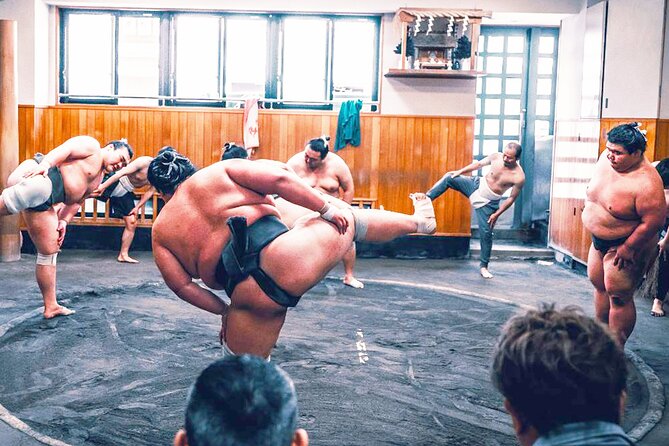
Sumo’s rituals can seem mysterious if you only know it as a form of wrestling. The guide helps connect those gestures with Shinto beliefs and the sport’s long religious roots. Stamping, preparing the ring, and other formal movements are not random flourishes. They help frame sumo as a serious cultural practice.
This context changes the way you watch. A wrestler’s movement around the ring is not only about physical readiness. It also reflects respect, ceremony, and a tradition that links competition with spiritual practice.
You do not need prior sumo knowledge. The tour is designed to explain the basics in English, and the guides keep the focus practical. You come away with a clearer understanding of what you are seeing and why the wrestlers repeat certain actions before the physical work begins.
Timing, group size, and the $98 price
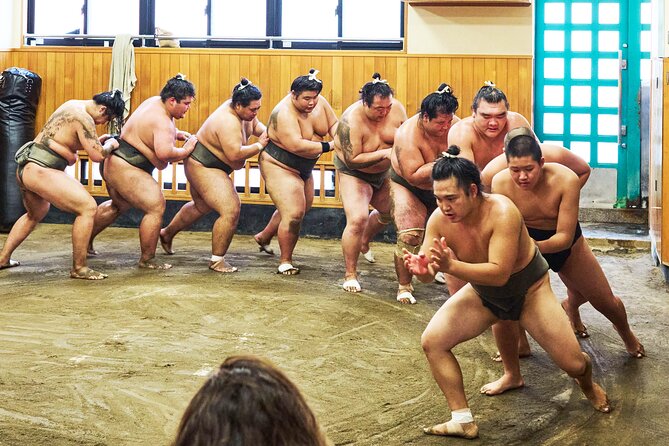
The tour lasts about two hours and costs $98 per person. That is a substantial price for a short Tokyo activity, but the value comes from access rather than duration. A regular sumo tournament ticket shows you a public competition. This visit takes you inside a stable that is normally closed to the public and lets you watch daily training from close range.
The group size can vary. Some sessions have had around 11 people, while another group had 14. A smaller group makes it easier to see and hear, though the experience still depends on where you are seated and how crowded the stable is that day.
The fixed timing is more important than the two-hour label suggests. Practice can be a little shorter or longer than expected, and the tour asks you to stay until the end. Practice commonly finishes around 9:00 to 10:00 AM, but you should not book a tight onward commitment. If you have a train, flight, reservation, or other appointment, tell the operator in advance.
Free cancellation is available up to 24 hours before the activity for a full refund, and you can reserve now and pay later. Those options help if your Tokyo schedule is still moving, but they do not change the strict arrival and stable rules.
Who will enjoy this most
I would choose this tour if you want a close look at Japanese culture that feels less polished and more like daily life. It suits adults and children aged 11 or older who can sit quietly, follow instructions, and stay focused for the full practice.
It is especially useful for:
- First-time sumo viewers who want the rules explained in English
- Visitors who cannot attend a tournament but still want to see serious training
- People interested in Shinto traditions and Japanese sporting culture
- Photographers who can respect the no-movement and no-noise rules
- Anyone curious about how professional wrestlers prepare outside the public arena
It is less suitable if you need a flexible schedule, dislike early starts, or want an interactive show where performers respond to the audience. It also is not suitable for children under 11, and the stable’s quiet atmosphere may be hard for anyone who cannot remain seated.
Practical advice for a smooth visit
Wear modest, comfortable clothing. You may be seated for the practice, and you should not plan on moving around once it begins.
Silence your phone before entering. Do not count on using it freely, and do not let photographs distract you from the training.
Arrive early at Kiyosumi-Shirakawa Station. Find Exit A1 and look for the Local Guide Stars sign. Allow extra time for Tokyo’s train system and for finding the correct exit.
Use the restroom before entering the stable. You must remain until practice ends, and leaving means no re-entry.
Keep your morning open after the tour. The session may run a little longer or finish somewhere other than the meeting point.
Listen closely during the guide’s introduction. Understanding the rules and rituals makes the practice much easier to follow.
Should you book the sumo morning practice tour?
Book it if you want the real working side of sumo, not a theatrical version. The close view, strict silence, strong physical effort, and chance to speak with wrestlers give the two-hour visit unusual value for anyone interested in Japanese culture.
The $98 price is fair only if access to a normally closed stable matters to you. It is not a bargain if you want a broad Tokyo sightseeing tour or a flexible morning activity. The rules are firm, the start is early, and leaving before the end is not an option.
For the right visitor, those limits are part of the appeal. Arrive early, dress modestly, put away your phone, and give the wrestlers your full attention. You will see sumo as a demanding way of life, not simply a match in a ring.
FAQ
Where does the tour meet?
Meet your guide in front of Kiyosumi-Shirakawa Station at Exit A1. The station is served by the Toei Oedo Line and the Hanzomon Line.
How do I find the guide?
Look for a guide holding a sign that says Local Guide Stars.
How long does the experience last?
The stated duration is two hours. The practice and tour may be a little shorter or longer than expected.
When does the practice usually end?
Practice usually ends around 9:00 to 10:00 AM. You must stay until the practice ends.
Can I leave the stable early?
You should not leave early. Once you leave the stable, re-entry is not allowed.
Can I arrive late?
Late arrival may mean you cannot enter the stable. Allow plenty of travel time before meeting the guide.
Is transportation to the stable included?
After meeting at the station, the group may take a train to the sumo stable.
Can I speak with the wrestlers?
The tour provides an opportunity to speak with wrestlers outside training hours.
What should I wear?
Modest clothing is required because the stable is a place of work.
Are children allowed?
The tour is not suitable for children under 11 years old.
Can I use my phone during practice?
Your phone must be on silent. You must also remain seated and avoid making noise or moving around during practice.
Is the tour offered in English?
Yes. The tour includes a live English-speaking guide.
Can I cancel the booking?
You can cancel up to 24 hours in advance for a full refund. You can also reserve now and pay later.
Newest sumo experiences in Tokyo
- Tokyo Highlights Tour: Sumo, Sushi, Tea, and Tokyo Tower★ 5.0 · 2 reviews
- Tokyo: Know about Hokusai and Sumo culture in 2.5 hours★ 5.0 · 2 reviews
- TOKYO , No1 Yokozuna Stable Morning Practice in Ryogoku★ 4.5 · 3 reviews
- Tokyo 6hr Private Guided Tour & Sumo Show Lunch★ 5.0 · 3 reviews
- Tokyo Grand Sumo Tournament Viewing Tour★ 5.0 · 2 reviews
- Tokyo Sumo History Tour with Chanko Nabe Lunch★ 5.0 · 3 reviews
- The SUMO Show & Experience with Hot pot lunch★ 5.0 · 4 reviews
- Tokyo: Sumo Keiko Training Tour with Audio Guide & Photo★ 4.8 · 5 reviews
Sumo Stable Visits, compared.
Sumo Morning Practice Viewing Tour at a Real Stable
Read our review →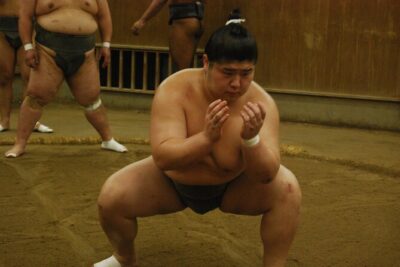
Sumo Morning Practice -Stable Visit Tour with a Guide
Read our review →Sumo Morning Practice -Stable Visit Tour with a Guide
Read our review →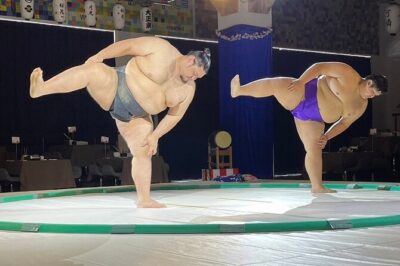
Up-Close Sumo Experience at Ochi Stable: Wear Kimono in Osaka
Read our review →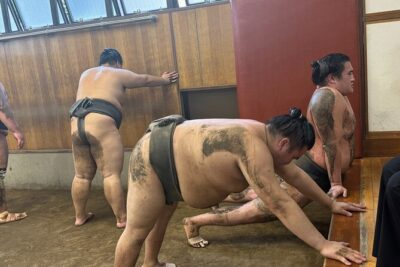
Browse the lists this tour appears in