
REVIEW · GRAND SUMO TOURNAMENT TOURS
Tokyo: Grand Sumo May Tournament
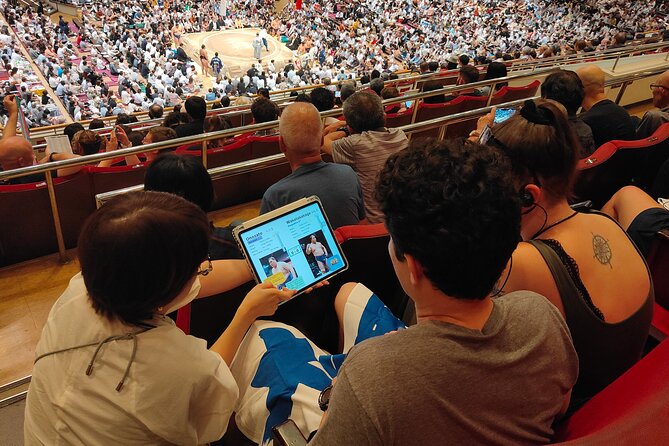
The best part of this six-hour experience is that it turns a sumo match into a cultural lesson. You walk through Ryogoku, Tokyo’s sumo district, then watch the action at Ryogoku Kokugikan with explanations that make the rituals, rankings, and bouts easier to follow. Guides such as Yoko, Aki, Ken, and Ali have led this experience, and the tour may include an information pack and small cheering goods.
I like the walking route before the match, especially the chance to see sumo-related sites, a stable from the outside, and a sumo shrine. I also like the personal earphones, which let you hear live commentary without needing to sit beside the guide. The optional chanko-nabe dinner adds a filling, distinctly sumo-related finish.
The main caution is value. At $198.20 per person, you are paying for the ticket, guidance, planning, and cultural context, not just admission. A quiet guide or a seat far from the guide can make the commentary feel less useful, so ask questions and check which seating option you are booking.
Key points at a glance
- Ryogoku before the bout: Walk through Tokyo’s sumo neighborhood and visit sumo-related landmarks before entering the arena.
- Inside Ryogoku Kokugikan: See the large murals, championship prizes, sumo museum, and displays about past yokozuna.
- Commentary during the action: Listen to English explanations through personal headsets, with headsets provided for groups of three or more.
- Chair seating option: Balcony chair sections B or C are more comfortable than first-floor box seating, where you sit on cushions on a flat floor.
- Chanko-nabe finish: Add a hearty hot-pot dinner near the arena, with drinks ordered separately.
- Advance planning matters: Sumo tournament tickets are limited, and this experience is commonly booked well before the event date.
Why sumo makes a fine Tokyo afternoon
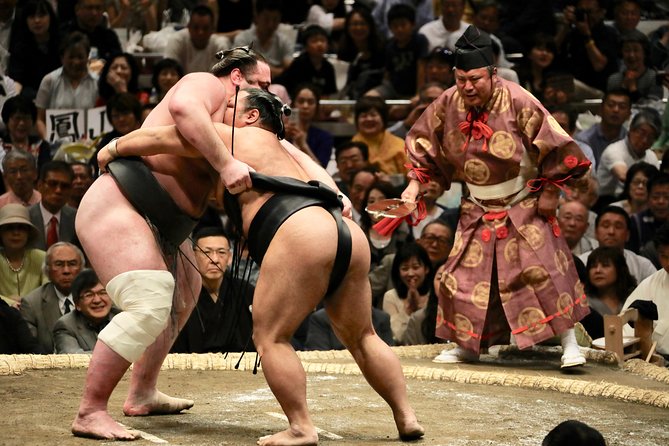
A grand tournament is not simply a string of wrestling matches. The formal entrances, shouts, salt-throwing, referee signals, rankings, and changing pace all matter. If you arrive without context, you can still enjoy the force of the athletes, but much of the meaning may pass you by.
This tour places the match inside its proper setting. Ryogoku has long been associated with sumo, and the two-hour pre-match walk helps you connect the sport to the neighborhood. I especially like this structure because you are not rushed straight into a large arena with no idea what to watch for.
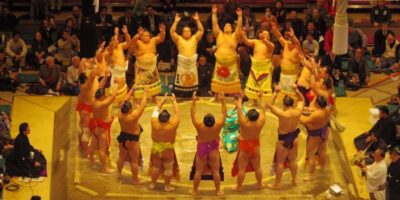
The event also includes bouts by top-division wrestlers and grand champions, along with their formal ring-entering ceremonies. The exact day of the tournament affects which wrestlers you see and how meaningful a particular bout may be in the championship race, but the setting remains impressive throughout the afternoon.
More tournament tours in Tokyo:
- Tokyo: Sumo Tournament Tour with Chair Seat Tickets
★ 4.6 · 753 reviews - Tokyo Grand Sumo Tournament Viewing Tour with Tickets
★ 5.0 · 692 reviews - Tokyo Sumo Wrestling Tournament Experience
★ 5.0 · 660 reviews
The Ryogoku walking tour from 1 to 3 p.m.
The first section is an optional two-hour walking tour around Ryogoku. It is not a filler before the main event. Its purpose is to give you enough background to understand what happens once you take your seat.
You visit sumo-related historical landmarks and may see locations connected with training stables. One guide, Ken, has taken visitors to the exterior of a sumo stable and a nearby sumo shrine, where he also shared local sumo lore and sang a sumo song. You should not expect to enter a stable, since the stable visit is described as an exterior stop.
This portion suits anyone who wants more than a photograph from the arena. Your guide can explain the sport’s customs, the role of the wrestlers, and the meaning behind the ceremony. The information pack includes tournament details, rankings, and profiles of prominent wrestlers, giving you something useful to refer to during the matches.
The tradeoff is time and walking. If your only goal is to watch sumo, the neighborhood route may feel long. I would keep it if you are new to the sport or interested in Japanese customs. If you already follow sumo closely, you may prefer to focus on the arena portion and dinner option.
Meet-up details place the starting point in Ryogoku, near public transportation. Hotel pick-up and drop-off are not included, so plan your route to the meeting point and allow time to find your guide. Guides have used signs with their names, including one sign reading I am Yoko, so pay attention to the actual meeting instructions rather than expecting one exact sign design.
Entering Ryogoku Kokugikan at 3 p.m.
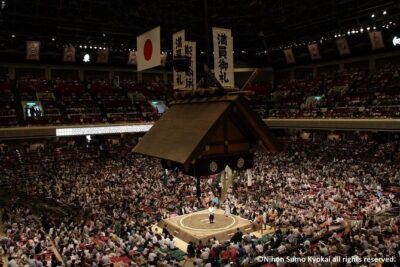
The arena portion runs from approximately 3 to 6 p.m. Your guide walks you through the building before or around the bouts, pointing out features that are easy to miss when you enter on your own.
The tour includes a look at the arena’s large murals, championship prizes, the sumo museum, and paintings or photographs showing successive yokozuna. These stops give you a visual introduction to the sport’s champions and symbols before the competition becomes the focus.
The sumo museum is a worthwhile part of the visit for anyone who wants historical context in a compact form. The listed timing allows about 15 minutes there, with about 10 minutes each for the murals and championship prizes. That is enough for orientation, not an exhaustive museum visit.
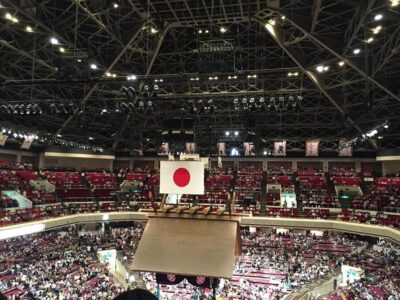
Your ticket is included, and chair seating is available as a specific option. Chair B or C seats are on the balcony. If you choose the first floor, you may sit on a cushion on a flat floor, including traditional box-style seating where four people share a small square area measuring about 1.3 meters by 1.3 meters.
That seating difference matters. First-floor seating places you closer to the action and closer to the traditional atmosphere, but it is less forgiving if you want back support or have trouble sitting on the floor. Balcony chairs may be the smarter choice for a long afternoon, especially since the tour lasts several hours.
Check the selected option carefully before paying. The experience has several combinations of walking tour, arena viewing, dinner, and chair seating. The headline price does not necessarily describe every possible combination.
Making sense of the bouts
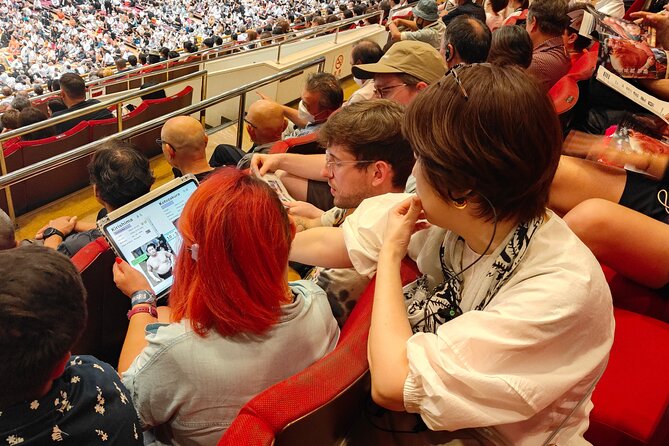
The guide’s main job during the tournament is to explain what you are seeing as it happens. The commentary covers rituals, routines, wrestlers, and the flow of the bouts. For groups of three or more, headsets are provided so you can hear clearly even when you are some distance from the guide.
This is a real advantage in a large venue. You can watch the ring rather than keep turning around to catch a spoken explanation. Several guides, including Aki, Yoko, Yosh, Yasu, Ichirio, and Ali, have been praised for explaining sumo history and answering questions. The quality can depend on the individual guide, so do not treat the experience as a fixed performance with one host.
A practical tip: ask questions early. Some guides are naturally talkative, while others are quieter and respond best when you raise a specific point. Ask about rankings, the meaning of a ritual, or why a particular wrestler is important. The tour works better when you take part in the conversation rather than waiting for a constant lecture.
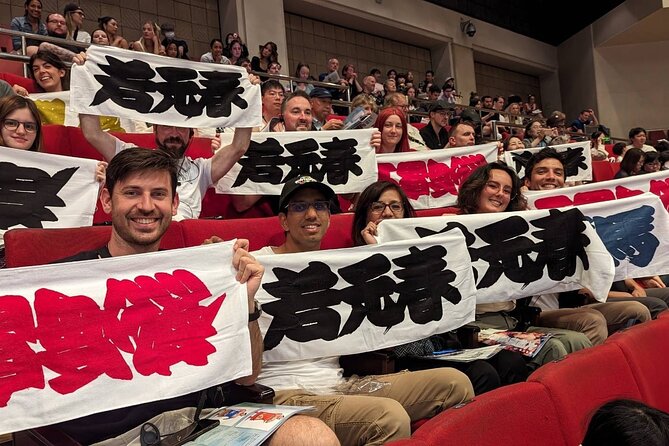
You also receive cheering goods to support a particular wrestler. That small touch helps you join the crowd, especially if you are new to sumo and do not yet have a favorite. The tournament atmosphere carries much of the excitement, but understanding the stakes gives the afternoon more shape.
More sumo experiences in Tokyo:
- Tokyo: Sumo Show Experience with Chicken Hot Pot and a Photo
★ 4.8 · 6,678 reviews - Tokyo: Sumo Show and Dining Experience
★ 4.8 · 2,742 reviews - the SUMO show
★ 5.0 · 1,960 reviews - Tokyo Shinjuku Sumo Show & Experience with Photo
★ 5.0 · 1,750 reviews
Chanko-nabe near the arena
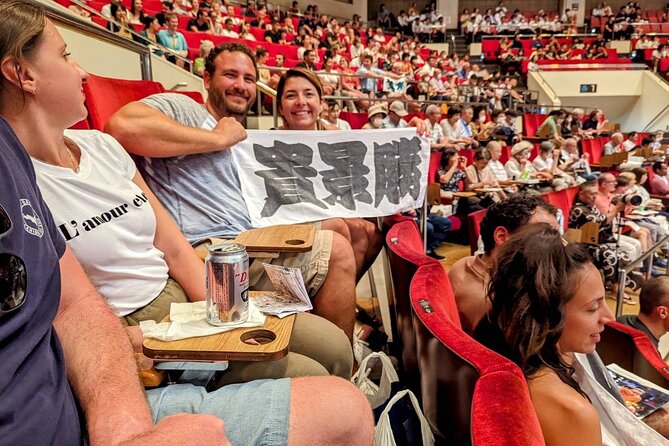
The optional dinner takes you to a nearby restaurant for chanko-nabe, the hot-pot dish associated with sumo wrestlers’ diets. It is designed as a hearty meal, with ingredients cooked together in a shared pot and served as the centerpiece of dinner.
The location near the arena is convenient. You can finish the match and take a short walk rather than cross Tokyo for a meal. One useful detail is that the dinner is arranged to be ready upon arrival, so you may not face a long wait after the tournament.
The dish may include fish, which matters if you have strong food preferences. Drinks are not included and must be ordered separately. The dinner is optional, so you can choose it for the full sumo-themed day or skip it if you want a lighter evening or a different restaurant.
I would add the meal if you want the experience to feel like one complete outing. If you are mainly buying the ticket and guide, the dinner is not essential. Consider the extra cost, your appetite, and whether a hot-pot meal suits everyone in your group.
What $198.20 buys you
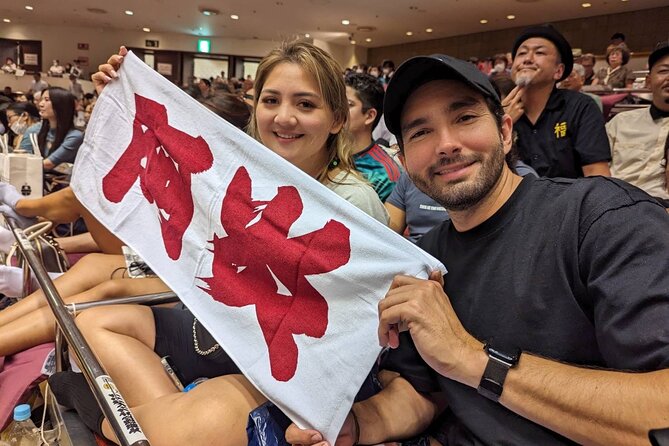
The price is high compared with the cost of attending a match on your own. One critical comparison is that the tour price includes the arena ticket, English-language guiding, the neighborhood walk, arena orientation, tournament information, and the planning needed to secure a seat during a limited event.
Sumo tickets can sell quickly, particularly for popular tournament days. Booking about 41 days ahead on average suggests that waiting until the last moment is risky. If seeing a grand tournament is one of your main Tokyo goals, the premium may be worthwhile simply because it combines ticket access with a guide who can help you understand the occasion.
Still, the value depends on how much help you need. A devoted sumo follower who can secure a ticket and explain the rules independently may find the markup hard to justify. A first-time spectator who wants the customs explained, the neighborhood introduced, and dinner arranged may get more from the package.
The strongest value comes when you use the full program: walking tour, arena tour, commentary, and chanko-nabe. If you choose only the match and receive little explanation, the price feels less attractive. That is why I would read the option details carefully and confirm whether chair seating and dinner are included in your selected version.
Who should book this sumo experience
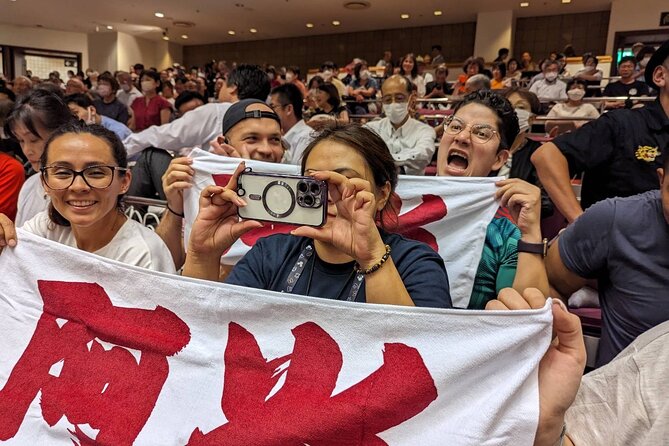
I would recommend it most to first-time sumo spectators, fans of Japanese culture, and families or small groups who want someone to explain the event in English. The private-tour format promises more personal attention than a large standard group, although the overall activity can have up to 35 participants, so do not assume you will receive one-on-one guiding all afternoon.
It also suits sports fans who like ceremony as much as competition. The ring entrances, arena displays, rankings, and formal routines are important parts of the afternoon. You do not need to know the rules beforehand, but curiosity helps.
I would be more cautious if you are watching your budget, already understand sumo well, or dislike sitting on the floor. In that case, choose the chair option if available and compare the price with arranging a ticket and neighborhood visit independently.
The walking portion is also worth considering if you have limited energy. It adds two hours before the three-hour arena visit, followed by an optional hour for dinner. The total can become a full afternoon and evening, so wear comfortable shoes and keep your schedule open.
Booking details worth knowing
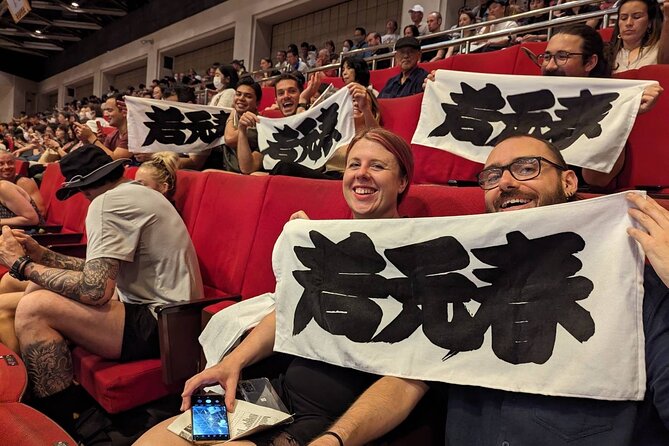
Confirmation is provided at booking, and the meeting point is near public transportation in Ryogoku. Hotel transfers are not included. The activity is listed as suitable for most participants, but the walking route and traditional seating mean you should consider your own comfort before booking.
Free cancellation is available if you cancel at least 24 hours before the local start time. Cancellations or changes made less than 24 hours ahead are not accepted for a refund.
The experience is offered with a mobile ticket. Keep the ticket and meeting details easy to access, especially when you are arriving at a busy station or trying to identify your guide.
Should you book it?
Book this experience if a Tokyo sumo tournament is a priority and you want the afternoon explained rather than simply watched. The walk through Ryogoku, arena displays, real-time commentary, and optional chanko-nabe create a fuller cultural outing than a bare admission ticket.
Skip it if you are confident arranging your own ticket, already follow the sport closely, or consider the $198.20 price too steep for guided context. If you do book, choose your seating carefully, confirm whether dinner is included, and ask questions throughout the bouts. That is how you get the most from the guide and the ticket.
FAQ
How long does the sumo experience last?
The main experience lasts about six hours, with a two-hour Ryogoku walking tour from approximately 1 to 3 p.m. and about three hours viewing bouts in Ryogoku Kokugikan from 3 to 6 p.m. The optional chanko-nabe dinner adds about one hour.
Is the sumo walking tour required?
The landmark and history walk is optional. It visits sumo-related sites around Ryogoku and is intended to help you understand the tournament before entering the arena.
Is the arena ticket included?
Yes. Admission to Ryogoku Kokugikan is included in the experience. The exact seating depends on the option you select.
Can I choose a chair seat?
Chair seating is available as an option in balcony sections B or C. First-floor seating uses cushions on a flat floor, including box-style areas measuring about 1.3 meters by 1.3 meters for four spectators.
Is dinner included?
Chanko-nabe dinner is an optional part of the experience. Drinks are not included and must be ordered separately.
Can I cancel for a full refund?
You can cancel for a full refund up to 24 hours before the experience start time. Cancellations or changes made less than 24 hours before the local start time are not accepted.
Newest sumo experiences in Tokyo
- Tokyo Grand Sumo Tournament Viewing Tour★ 5.0 · 2 reviews
- Tokyo Sumo History Tour with Chanko Nabe Lunch★ 5.0 · 3 reviews
- Tokyo Highlights Tour: Sumo, Sushi, Tea, and Tokyo Tower★ 5.0 · 2 reviews
- Tokyo: Know about Hokusai and Sumo culture in 2.5 hours★ 5.0 · 2 reviews
- TOKYO , No1 Yokozuna Stable Morning Practice in Ryogoku★ 4.5 · 3 reviews
- Tokyo 6hr Private Guided Tour & Sumo Show Lunch★ 5.0 · 3 reviews
- Unique Afternoon Live Sumo training tour in Tokyo★ 5.0 · 6 reviews
- Grand Sumo Tournament Tour w/an English Guide ,Tokyo January 2026★ 5.0 · 3 reviews
Grand Sumo Tournament Tours, compared.
Tokyo Grand Sumo Tournament Viewing Tour with Tickets
Read our review →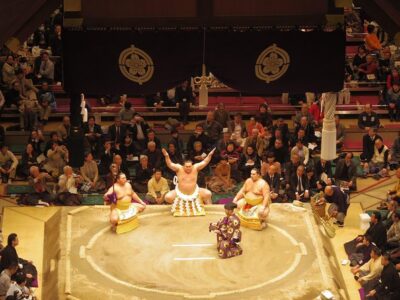
Ultimate Sumo Tournament: Tokyo, Osaka, Nagoya, Fukuoka
Read our review →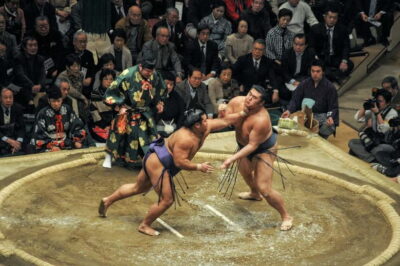
Sumo Tournament with Guide & Assigned Reserved Seat
Read our review →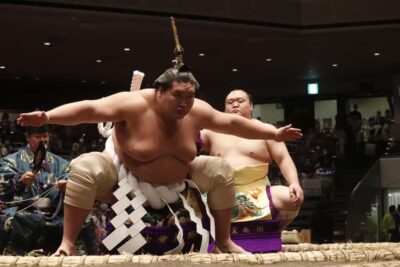
Sumo Wrestling Tournament with Chair Seat Tickets
Read our review →November Sumo Tournament tour in Fukuoka (Tickets Included)
Read our review →
Browse the lists this tour appears in