
REVIEW · SUMO MORNING PRACTICE TOURS
Sumo Training Watching Experience in Tokyo
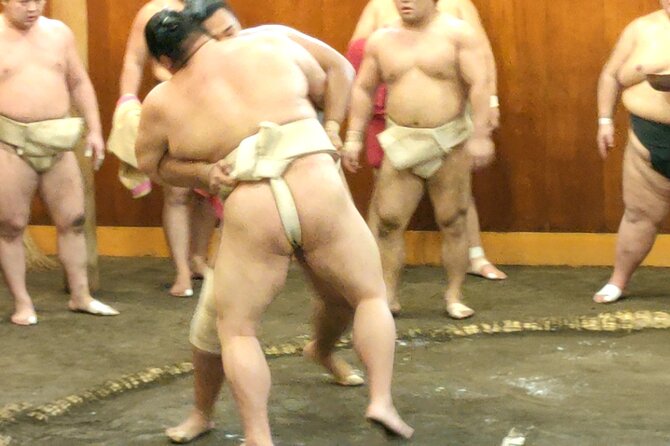
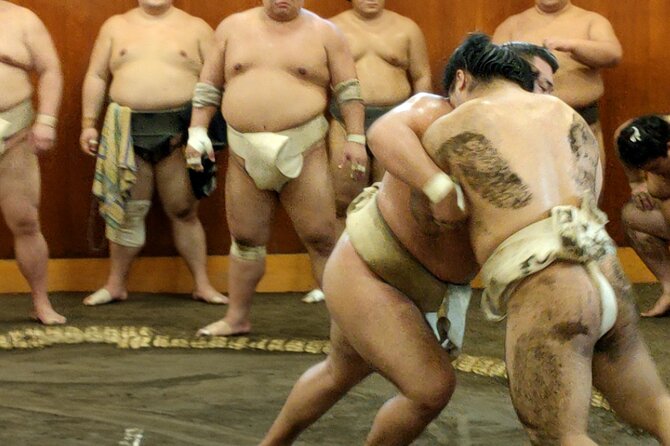
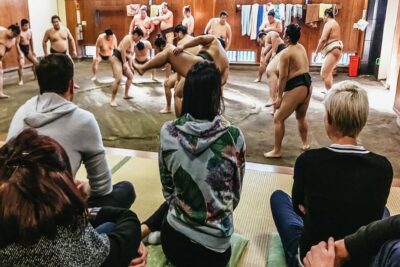
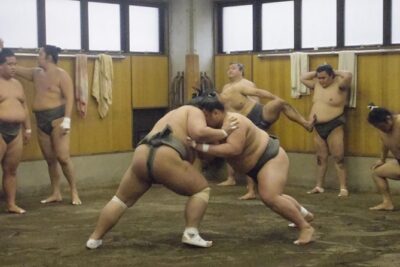
Real sumo training is the heart of this experience. You sit close to an active stable as wrestlers stretch, work their strength, practice basic moves, and clash in serious match-style bouts. This is authentic training, not a staged comedy show, and the sound of bodies hitting the floor gives the visit a force you cannot get from distant arena seats.
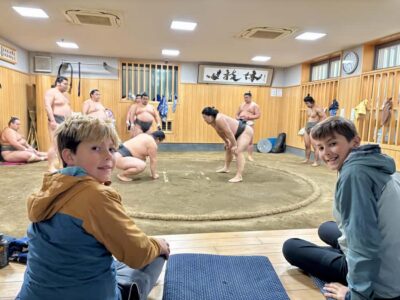
I like the small group of no more than eight people, and I like the live explanations from guide Alisa of NicoTour Japan, supported by original diagrams. The main concern is comfort: you sit on cushions directly on the floor, remain quiet, and must arrive on time. The meeting point is also not the JR station or the Kokugikan itself.
Key points before you book
- Watch real wrestlers train: This is a working sumo stable, not a performance arranged for tourists.
- Get close to the action: You may feel the impact and hear the force of training more clearly than at a large tournament.
- Learn as you watch: Alisa provides live commentary and uses original documents and diagrams to explain the drills.
- Choose your arrival carefully: A 7:45 arrival includes the full program, while an 8:20 arrival usually misses stretching and strength training.
- Prepare for floor seating: Japanese-style cushions replace chairs, which can be difficult with bad knees, a sore back, or during pregnancy.
- Keep the room respectful: No eating or drinking, no casual conversation, and phones must be silent.
Why this Tokyo sumo visit feels different
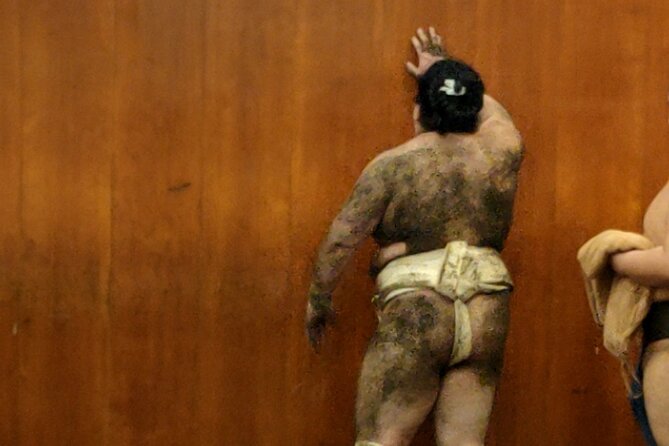
A tournament gives you the formal spectacle: banners, judges, ceremony, crowds, and a packed schedule of bouts. This visit gives you the working side of sumo. You see the preparation that happens before a wrestler enters an arena, often from only a short distance away.
That closeness matters. Training is not polished for an audience. The wrestlers are there to work, and the mood is serious. You may hear the slap of feet, the sharp impact of a collision, and the breathing that follows a hard exchange. Sumo can look slow on television, but from nearby, the physical effort is plain.
The setting also changes how you watch. You are not simply waiting for the next bout. You are learning to notice footwork, posture, balance, and the different stages of practice. Alisa adds explanations as the session goes on, using diagrams and original materials to make the movements easier to follow.
I would not choose this for a loud, casual morning out. It rewards patience and attention. You are entering a place treated as sacred by the people who train there, so the rules are part of the experience rather than minor technicalities.
More morning practice tours in Tokyo:
- Tokyo: Sumo Morning Practice Viewing Tour
★ 4.8 · 570 reviews - Tokyo: Sumo Morning Training Visit
★ 4.4 · 370 reviews - Tokyo: Visit Sumo Morning Practice with English Guide
★ 4.7 · 343 reviews
Walking from Ryogoku to the stable
You meet near Ryogoku Station at 1-chōme-4-29 Yokoami in Sumida City, Tokyo. From there, the group walks to the stable. The walk is described as about seven to ten minutes, though you should allow extra time because one published description of the route gives a longer ten to fifteen minute estimate.
This is not the JR station meeting point, and the stable is not next to the Kokugikan. That detail is easy to miss if you picture the tour beginning inside the main sumo district. Check your route before leaving and arrive early. The group leaves on time and does not wait for late arrivals.
The walk itself is short, but punctuality matters more than distance. Once practice begins, the stable is not a place where the group can pause at the door for latecomers. If you arrive at 7:45, you can normally see the entire program. If you arrive at 8:20, you will generally join during the basic training section.
That later arrival may suit someone who cannot manage an early start, but it gives you less time. The full visit can last from about 60 to 120 minutes inside the stable, while the shorter version may run 30 to 90 minutes. The overall activity lasts about two hours and twenty minutes, including the walk and the time around the practice.
The four stages of the morning practice
The session follows four broad parts. The exact pace depends on the stable and the day, but the order helps you know what you are watching.
Stretching and strength training
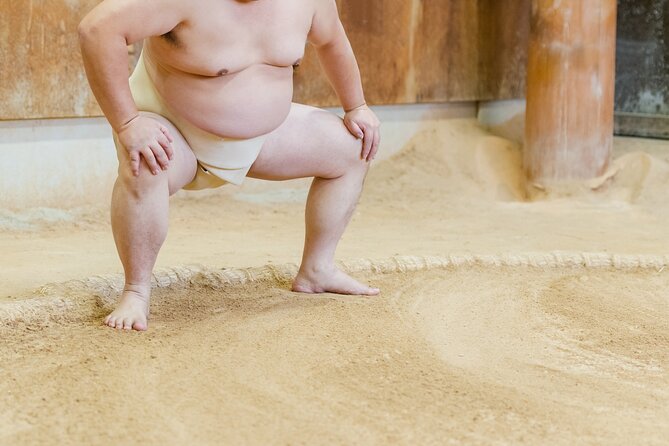
The earliest part is stretching and strength work. This is one reason the 7:45 arrival is worth protecting. You see the wrestlers prepare their bodies before the more recognizable clashes begin.
For a first-time visitor, this stage gives useful context. Sumo is not only about pushing an opponent out of a ring. Flexibility, leg strength, balance, and control all matter. The warm-up may seem less dramatic than the bouts, but it shows the physical base behind the sport.
If your interest is mainly in seeing wrestlers collide, you might be tempted to arrive later. I think that misses part of the story. The training sequence helps you understand that the bout is the final piece of a demanding routine.
More sumo experiences in Tokyo:
- Tokyo: Sumo Show Experience with Chicken Hot Pot and a Photo
★ 4.8 · 6,678 reviews - Tokyo: Sumo Show and Dining Experience
★ 4.8 · 2,742 reviews - the SUMO show
★ 5.0 · 1,960 reviews - Tokyo Shinjuku Sumo Show & Experience with Photo
★ 5.0 · 1,750 reviews
Basic training
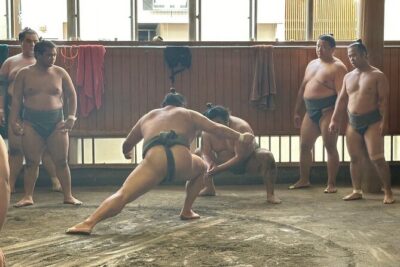
The second stage brings more recognizable sumo exercises and movements. This is also where those arriving at 8:20 will generally begin.
Alisa’s commentary is useful here because a first visit can blur several movements together. Her diagrams and explanations give you something specific to watch for instead of leaving you to guess what each drill means. The group is small, so the viewing position should feel more personal than a large public event, although the stable itself remains a working place rather than a theater.
You should remember that the guide cannot turn the practice into a running conversation. The room must stay quiet, and the group basically does not talk during the tour. Explanations are offered as appropriate, but this is not a question-and-answer session in the usual sightseeing sense.
Match-style training
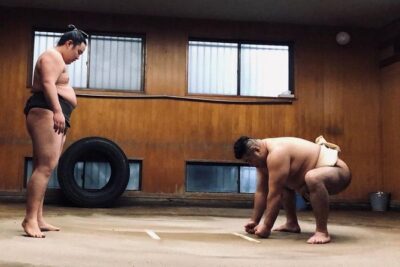
The third part is the most intense. Wrestlers face one another in bouts that resemble competition, but you are still watching practice rather than a tournament match.
This is where the experience earns its price for many people. At $84.70 per person, it is not a cheap add-on, yet you are paying for access to a setting that is not easy to visit independently, along with a guide who explains what is happening. The action is close, and you can feel the force more directly than you usually can from arena seating.
The tradeoff is that you do not control the schedule. You cannot request a particular date or assume that every stage will have the same length. Training camps, tournament periods, and the stable’s own routine affect availability. If your Tokyo dates are fixed, book early. This activity averages booking about 77 days ahead, a useful warning that last-minute planning may not work.
Photos after practice
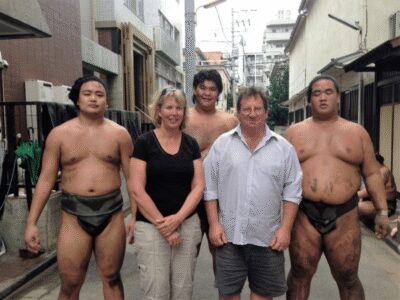
The final stage is photo time. You might be able to take a picture with wrestlers after the training ends.
Treat this as a possible extra, not a guaranteed centerpiece. The training comes first, and the end time does not include unlimited time for photos. One practical account points out that a stated 10 a.m. finish did not cover the time needed for pictures or the walk afterward. If you need to reach another appointment, leave a cushion.
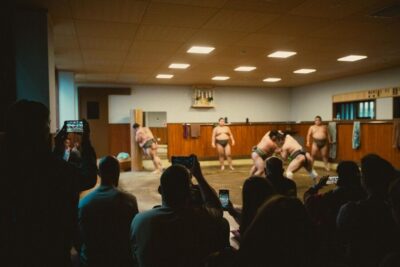
Set your phone to silent before entering. Photos are allowed, but you should use a silent camera setting. A loud shutter or notification can break the room’s quiet mood and may lead to being asked to step outside temporarily.
What the live commentary adds
The guide’s role is more than leading you from the station. Alisa explains the practice with original documents and clear diagrams, helping you connect what you see with the larger structure of sumo.
That matters most if you have never watched sumo before. Without help, you might see a series of powerful movements without knowing which part is warm-up, which part is basic training, and which part is match-style practice. The commentary gives the morning a clear shape.
I also like that the explanations do not appear to replace the training. The wrestlers remain the focus. You are not watching a guide perform a scripted show while the sumo acts as decoration. The balance is right for this kind of visit: listen when information is offered, then let the room return to its quiet concentration.
The small group helps here. With a maximum of eight participants, the guide can keep the experience more orderly than a large tour. It also limits the number of phones and bodies in the room, which is important in a place where silence and respect are expected.
The rules are part of the experience
You must treat the stable as a working and sacred place. No eating or drinking is allowed inside. Conversation is kept to a minimum, and your phone must be silent.
Wear clothing that is not revealing. If you have a cold or another infectious illness on the day, cancel rather than attend. These are not unusual requests in a close indoor setting, and they protect both the wrestlers and the other participants.
Children must be at least six years old. Age alone is not the only issue, though. Even a child over eight who cannot sit still may not be allowed to participate. This is a poor choice for a restless young child, no matter how much they like sumo on television.
If someone breaks the rules, they may be asked to go outside temporarily. That possibility tells you how firm the stable’s standards are. I see this as a positive for the quality of the visit, but it means you should prepare your group before arrival.
Floor cushions, timing, and physical comfort
You sit directly on cushions on the floor in the Japanese style. There are no standard chairs.
For some people, this is a welcome part of the setting. For others, it is the biggest drawback. Bad knees, back problems, limited mobility, and pregnancy can make a 60 to 120 minute floor session uncomfortable. The provided information specifically advises caution for people in these situations.
Think honestly about how long you can sit on the floor without shifting around. Constant movement is distracting in a quiet stable, and getting up may not be simple. If you need chair seating, this is not the right activity.
The early start adds another practical point. The full program begins with stretching and strength work for people who arrive at 7:45. That means arranging breakfast before you enter, since food and drink are not permitted inside. It also means building in time to find the meeting point and walk to the stable.
Is $84.70 a fair price?
At $84.70, this is a specialized experience rather than a budget attraction. I think the value depends on what you want from sumo.
If you simply want to see a match, the price may seem high, especially since this does not include a tournament ticket. If you want access to a real training stable, close viewing, guided explanations, and the chance of a post-practice photograph, the cost makes more sense. Independent access is not easy, even for people living in Japan, so the guide and stable arrangement carry real value.
The small group also changes the calculation. A maximum of eight people is far more manageable than a large coach group, especially in a quiet room where everyone must remain seated and restrained. You are paying for a focused visit, not a long list of stops.
Still, do not expect a polished entertainment package. The program depends on the stable’s routine, the duration can vary, and a photo with wrestlers is not promised. The best value comes when you care about the training itself.
Who should book this experience?
I would recommend it to anyone who wants to understand sumo beyond the tournament surface. It suits first-time visitors because Alisa’s explanations give structure to what you see, and it suits serious sports fans because the wrestlers are active and the training is genuine.
It is also a good match for visitors who prefer small groups and quiet cultural experiences. The 4.6 rating from eight published evaluations reflects strong satisfaction, with particular praise for the helpful guide, the close training area, the clear explanations, and the chance to enjoy something difficult to arrange alone.
I would be cautious if you need flexible timing, cannot sit on the floor, dislike strict rules, or want a guaranteed photo opportunity. Families should think carefully about children’s age and ability to remain still. Anyone with a tight late-morning schedule should allow time beyond the stated end for photos and the return walk.
The free cancellation policy gives you some protection if you cancel at least 24 hours before the start time. Changes or cancellations inside that window are not accepted for a refund, so do not wait until the morning if your plans change.
Should you book the Ryogoku sumo training visit?
Book it if you want real practice rather than a staged show, can sit quietly on the floor, and can manage the early meeting time. The close view, small group, and live diagrams turn a powerful but unfamiliar sport into something you can follow.
Skip it if you need chairs, a relaxed drop-in schedule, or guaranteed access to a specific wrestler. For the right visitor, this is one of the more direct ways to see the discipline and physical strain behind Japan’s national sport. Just arrive early, silence your phone, and remember that you are entering the wrestlers’ workplace.
FAQ
Where does the sumo training experience begin?
It begins near Ryogoku Station at 1-chōme-4-29 Yokoami, Sumida City, Tokyo 130-0015, Japan. The stable is reached on foot in about seven to ten minutes.
Is the stable inside the Kokugikan?
No. The meeting point is not the JR station, and the stable is not near the Kokugikan. You walk from the stated meeting point to the stable.
How long does the experience last?
The listed duration is about two hours and twenty minutes. Time inside the stable can range from 60 to 120 minutes for those arriving at 7:45, or from 30 to 90 minutes for those arriving at 8:20.
What happens during the training?
The program includes stretching and strength training, basic training, match-style training, and photographs. Those arriving at 7:45 can normally see the full program, while those arriving at 8:20 generally begin with basic training.
Can children participate?
Children must be at least six years old. Children who cannot sit still are not allowed to participate, including some children over eight.
Can I cancel for a refund?
Yes, if you cancel at least 24 hours before the experience start time. Cancellations and changes made less than 24 hours before the start are not accepted for a refund.
Newest sumo experiences in Tokyo
- Tokyo Sumo History Tour with Chanko Nabe Lunch★ 5.0 · 3 reviews
- Tokyo Highlights Tour: Sumo, Sushi, Tea, and Tokyo Tower★ 5.0 · 2 reviews
- Tokyo: Know about Hokusai and Sumo culture in 2.5 hours★ 5.0 · 2 reviews
- TOKYO , No1 Yokozuna Stable Morning Practice in Ryogoku★ 4.5 · 3 reviews
- Tokyo 6hr Private Guided Tour & Sumo Show Lunch★ 5.0 · 3 reviews
- Tokyo Grand Sumo Tournament Viewing Tour★ 5.0 · 2 reviews
- Tokyo Ginza : Sumo and Mikoshi Experience,Open from Sep.★ 5.0 · 8 reviews
- Complete Sumo Experience in Tokyo★ 4.5 · 3 reviews
Sumo Morning Practice Tours, compared.
Tokyo Ryogoku Sumo Morning Practice + Photo Shoot with Wrestlers
Read our review →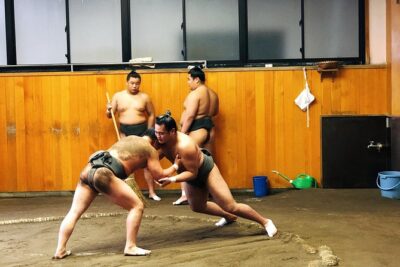
Browse the lists this tour appears in