
REVIEW · SUMO TOURNAMENT TICKETS
Tokyo Sumo Morning Practice Tour w/ Ring-Side Seat + Photo Shoot
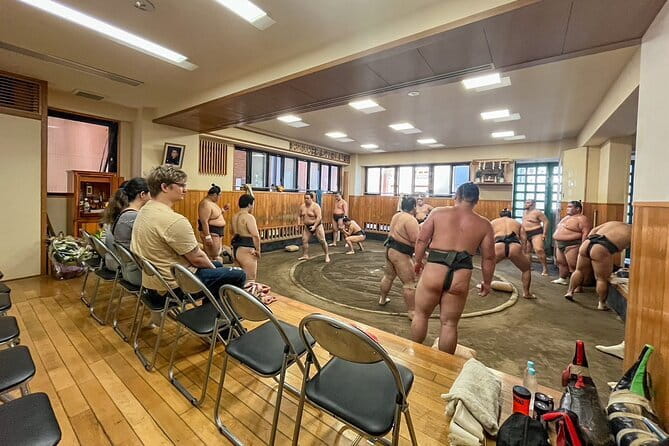
Sumo morning practice is not a staged show. You sit quietly on tatami inside a working stable while wrestlers stretch, repeat drills, and crash into one another in practice bouts. The ritual feels serious, physical, and close enough to show the sport’s raw power.
I like the small group of up to 10 and the chance to ask questions through a guide such as Marie, whose passion for sumo comes through clearly. I also like the smart timing: about 90 minutes at the stable, followed by a gentle 30-minute finish at Kiyosumi Gardens.
The main caution is that the stable controls the experience. Seating is first come, practice times can change, photography may be restricted, and late arrivals cannot join. Arrive early, follow the rules, and treat this as a respectful training visit rather than a guaranteed photo opportunity.
Key points at a glance
- Watch real training, not a staged wrestling demonstration: Stretching, repetitive drills, and practice bouts reveal the work behind tournament day.
- Meet at Kiyosumi Shirakawa Station at 8:30 a.m.: A local guide leads you to the stable, so you do not need to find it alone.
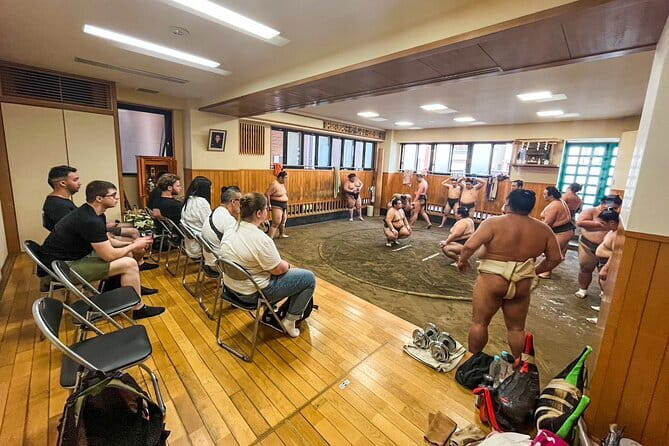
- Sit on tatami near the ring: Seating is first come, first served, and later arrivals may be farther back.
- Ask questions through your guide: Marie has been praised for making the sport easier to understand and for explaining what you are seeing.
- A wrestler photo may be part of the visit: The photo session is included in the experience, but the stable can restrict photography on a particular day.
- Finish with Kiyosumi Gardens: The quiet garden gives you 30 minutes to cool down after the intensity of practice.
Why a sumo stable is more revealing than a tournament
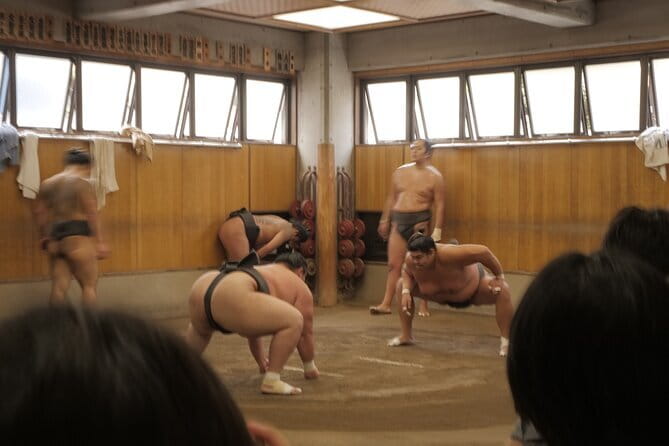
A tournament gives you the polished public version of sumo. This morning visit shows the work that comes before it: bodies preparing, drills repeated until they become instinct, and wrestlers testing one another under the eye of their stable master and trainers.
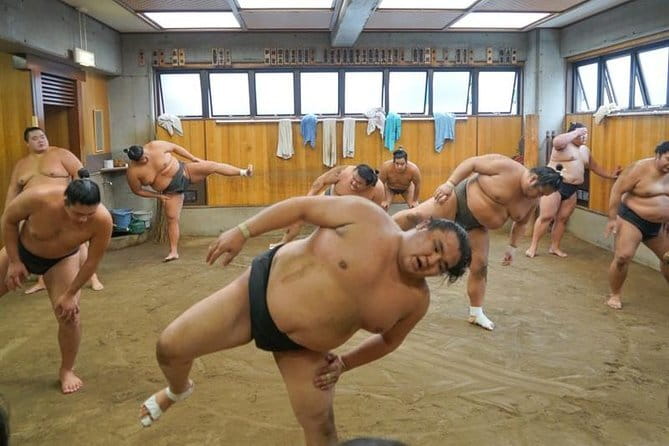
You may see a mix of stretching, basic exercises, and practice bouts. The action is not packaged for entertainment, and that is the point. The wrestlers remain focused on their training while you watch from the edge of the room. One moment may look controlled and repetitive. The next shows just how much strength and agility the sport demands.
I especially like this option for people who want sumo as a sport, not a novelty act. There is no promise that you will enter the ring or wrestle with a professional. Instead, you observe a real working environment and respect the rules that make it possible.
The setting also helps explain why sumo feels different from many sports. The stable is a place of training, tradition, and discipline. Guests sit on tatami and must stay within the permitted area. The atmosphere depends on quiet attention, not applause or constant conversation.
More morning practice tours in Tokyo:
- Tokyo: Sumo Morning Practice Viewing Tour
★ 4.8 · 570 reviews - Tokyo: Sumo Morning Training Visit
★ 4.4 · 370 reviews - Tokyo: Visit Sumo Morning Practice with English Guide
★ 4.7 · 343 reviews
Meeting at Kiyosumi Shirakawa at 8:30 a.m.
The tour begins at 3-chōme-11-1 Kiyosumi, near Kiyosumi Shirakawa Station. The guide takes you from the meeting point to the sumo stable, which removes much of the uncertainty that comes with finding a private training location in Tokyo.
The early start matters. Morning practice is the heart of this experience, so you need to be ready to move promptly. The tour begins on time, and a late arrival cannot join the group. There is no refund or rescheduling for missing the start, so build in extra time for the train and station exit.
Use the restroom before meeting. Access to a restroom may not be available once practice begins. You should also dress for the season. Tokyo summers can reach 40°C, while winter temperatures can fall as low as -5°C. The stable may be indoors, but the walk to and from it still requires sensible clothing.
The tour uses a mobile ticket and is available to people aged 12 and over. Children under 12 cannot enter the stable. Most people can take part, but this is not a casual drop-in activity. You need to be comfortable sitting on the tatami area and following the stable’s instructions.
Inside the stable: what the 90 minutes can show you
The main visit lasts about an hour and a half, though the exact practice length can change. You may watch wrestlers warm up, perform repeated movements, and take part in bouts that look far more demanding than the short contests seen during tournament broadcasts.
The close distance is the great advantage. You can see the physical effort in a way that television cannot show. Sumo wrestlers are not simply large men pushing each other. The training displays balance, timing, leg strength, agility, endurance, and concentration.
You may also notice the relationship between wrestlers and their stable master or head trainer. The practice has an organized rhythm, with the athletes working under supervision and responding to instruction. That structure gives the visit its sense of purpose.
Do not expect a running commentary throughout. The wrestlers are training, not performing for an audience. Your guide provides context and answers questions, but the strongest moments may come when you watch quietly and let the practice speak for itself.
Some people find the session most rewarding after learning a few basic rules and a little background. If you have never watched sumo before, ask the guide to explain the basics after practice. One useful approach is to save your questions for a short discussion once the wrestlers are finished, rather than interrupting the training.
Ring-side seating, with a practical catch

The tour description emphasizes close seating near the ring, but you should read that promise carefully. Seating inside the stable is first come, first served. If you arrive later, you may be placed farther from the front.
The group is limited to 10, which helps keep the visit personal. Still, the total number inside a stable can vary if several small groups are assigned together. On some days, the overall audience may be larger than your own booking group, and the operator may divide people among different stables.
A few practical details make a real difference:
- Arrive before 8:30 a.m., not at 8:30.
- Keep your phone quiet and follow the guide’s instructions.
- Stay only in the permitted tatami areas.
- Do not assume you can wander around the stable.
- If you leave before practice ends, you cannot re-enter.
- Be prepared to sit quietly for a substantial period.
The seating arrangement may not suit everyone. If you need to stand, move around, or take frequent breaks, ask about the conditions before booking. The information provided confirms that only the tatami areas are accessible, but it does not promise a particular seating arrangement or special accommodation.
More tournament tickets in Tokyo:
- Tokyo: Sumo Tournament Tour with Chair Seat Tickets
★ 4.6 · 753 reviews - Tokyo Grand Sumo Tournament Viewing Tour with Tickets
★ 5.0 · 692 reviews - Tokyo: Sumo Tournament with Guide & Assigned Reserved Seat
★ 4.6 · 168 reviews - Tokyo: Sumo Practice Tour with Ring-Side Seat and Photoshoot
★ 4.7 · 103 reviews
The guide adds the context that a quiet stable cannot
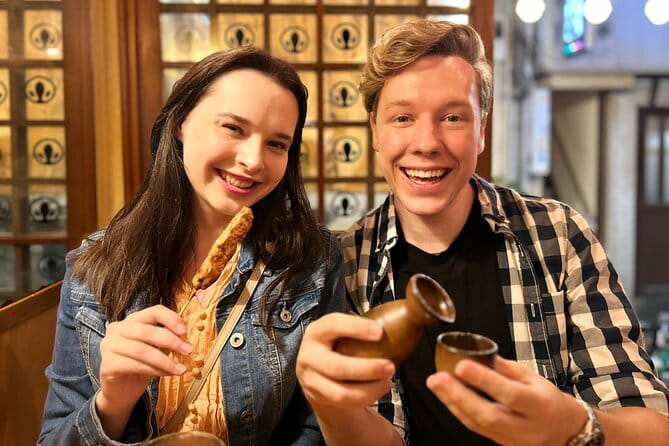
A guide is especially useful here because the practice itself may not explain what you are seeing. Marie has been singled out for her enthusiasm and for helping people understand the dedication behind sumo. A strong guide can point out the difference between warm-up movements, repetitive drills, and practice bouts without turning the session into a lecture.
You can ask about basic rules, the structure of training, or the roles of the stable master and head trainer. The guide also helps you behave appropriately in a space where the group must respect strict rules.
This is one of the best reasons to choose a guided visit rather than trying to arrange a stable visit alone. The guide handles the meeting and walk to the stable, then gives you a way to make sense of a sport that can seem mysterious at first.
The experience is likely to work best if you bring curiosity rather than a checklist. You may not get every answer before practice ends, and you may not receive a long formal lesson. But the chance to ask focused questions can turn a powerful spectacle into a better understanding of sumo.
Photography and the promised wrestler photo
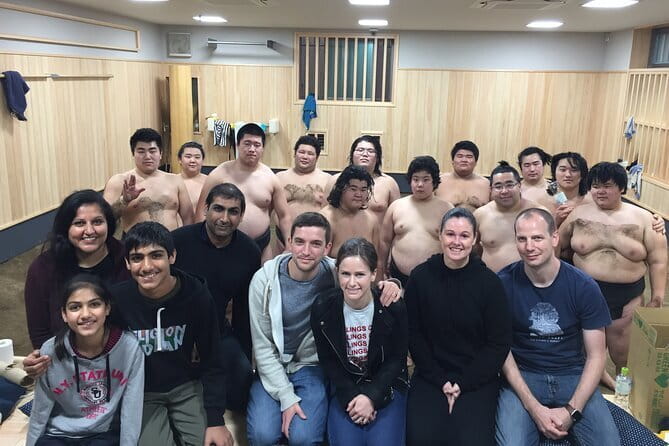
A photo with sumo wrestlers is included as part of the experience, but there is an important qualification. Each stable sets its own photography rules, and on some days, photos of the wrestlers or photos with them may not be allowed.
That means you should enjoy the photo opportunity if it is available, but do not book this solely for a guaranteed picture. The training session is the core of the visit. Photography is a welcome extra, not the reason to ignore the rules.
During practice, follow the stable’s policy exactly. Flash photography, movement around the room, or repeated phone use could disturb the session. Your guide can tell you when photos are permitted and what is appropriate.
If the photo session goes ahead, it gives you a personal reminder of a morning that is otherwise based on quiet observation. If it does not, the visit can still deliver its main purpose: a close look at serious sumo training.
Kiyosumi Gardens provides a calm finish
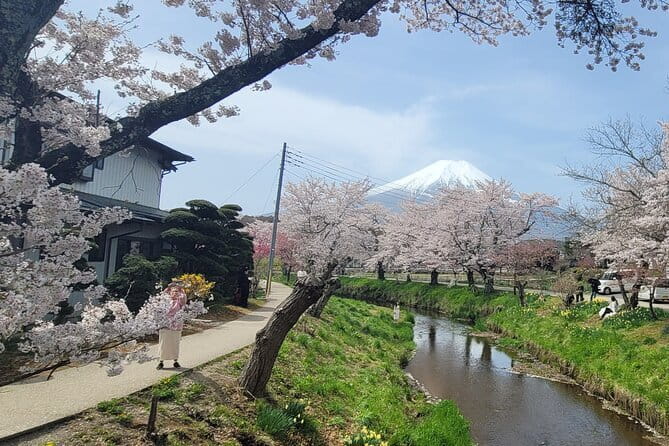
After the stable, the tour ends at Kiyosumi Gardens, with about 30 minutes to cool down. This is a useful contrast to the concentrated, physical atmosphere of practice.
The garden stop is not presented as a long guided garden tour. Think of it as a peaceful ending and a chance to process what you have seen. The morning schedule remains compact, with the full experience lasting about two hours.
This final stop also makes the tour feel more like a neighborhood morning than a single indoor attraction. You begin near Kiyosumi Shirakawa, visit a private sumo setting, then finish in one of the area’s traditional green spaces.
The garden portion may feel brief if your main interest is sumo. That is fair. The value comes from the balance: intense training first, quiet surroundings afterward.
Is $99.10 a fair price?
At $99.10 per person, this is not the cheapest way to spend two hours in Tokyo. There is no separate entrance fee for the sumo practice itself, so you are paying mainly for access arrangements, the guide, the small-group structure, and the chance to enter a place that is not normally open for casual sightseeing.
That makes the value depend on your priorities. If you are a sumo fan who cannot fit a tournament into your schedule, the price is easier to justify. You get a rare look behind the public event, and you avoid the risk of trying to locate or approach a stable without guidance.
It is also a reasonable choice for a first-time sumo viewer who wants help understanding the sport. The guide can answer questions, and the close setting shows the athletic demands more clearly than a distant seat in a large arena.
The value is weaker if you mainly want a guaranteed photo, a long formal history lesson, or a theatrical performance. The stable can change its schedule, restrict photography, adjust the practice length, or cancel if wrestlers have other commitments. A stable cancellation brings a full refund, but the uncertainty remains part of the arrangement.
With a maximum booking size of 10, the tour offers a more personal format than a large bus excursion. Keep in mind that the stable may combine groups, so your exact audience size can vary.
Who should book this morning?
I would choose this tour for:
- Sumo fans missing a tournament during their Tokyo stay.
- First-time viewers who want rules and context from a guide.
- Adults and children aged 12 or older who can sit quietly and follow instructions.
- Sports fans interested in training, not just competition.
- People who value access to a working cultural setting over a polished show.
- Photographers who understand that stable rules come first.
I would think twice if you need flexible timing. The start is strict, late arrival means missing the experience, and same-day changes cannot be accepted. I would also reconsider if you are uncomfortable with tatami seating or with a quiet, rule-bound environment.
Book at least 24 hours ahead if you need the free-cancellation option. Cancellation later than that is not refundable, and changes made within 24 hours are not accepted.
Final verdict: a strong choice for authentic sumo
You should book this if you want to see the discipline behind sumo rather than a simplified demonstration. The close practice setting, small group, guide support, and possible wrestler photo make it a memorable two-hour introduction to one of Japan’s most distinctive sports.
Go in with realistic expectations. You may sit farther back, photography may be limited, and the practice schedule can shift. Arrive early, use the restroom first, dress for the weather, and treat the stable with respect.
For a sumo enthusiast, this is one of the better ways to fill a Tokyo morning when tournament tickets are unavailable. For everyone else, it offers a rare look at athletic training that feels genuine, focused, and far removed from a tourist performance.
FAQ
Where does the tour begin?
The tour begins at 3-chōme-11-1 Kiyosumi, Koto City, Tokyo 135-0024, near Kiyosumi Shirakawa Station. The start time is 8:30 a.m., and a local guide leads the group to the sumo stable.
How long does the experience last?
The tour lasts about two hours. Around 90 minutes are allocated to watching sumo practice, followed by about 30 minutes at Kiyosumi Gardens. The practice length can vary, so the end time may be earlier or later.
Is the tour suitable for children?
Only people aged 12 and over may participate. Children under 12 are not permitted inside the sumo stable.
Can I take photos inside the stable?
Photography depends on the rules of the particular stable on the day of your visit. Photos of wrestlers or photos with wrestlers may not always be allowed.
Is seating guaranteed near the ring?
Seating is on a first-come, first-served basis. Later arrivals may be seated farther from the front. Depending on participation levels, the group may also be divided among different stables.
What happens if the stable cancels practice?
A stable may cancel or change its practice schedule because of the wrestlers’ condition or tournament commitments. If the stable cancels, a full refund is issued.
More photo experiences in Tokyo
- Tokyo: Sumo Show Experience with Chicken Hot Pot and a Photo
★ 4.8 · 6,678 reviews - Tokyo Shinjuku Sumo Show & Experience with Photo
★ 5.0 · 1,750 reviews - Tokyo Sumo Entertainment Show with Chicken Hot Pot and Photo
★ 5.0 · 1,205 reviews - Tokyo Ryogoku Sumo Morning Practice + Photo Shoot with Wrestlers
★ 4.5 · 277 reviews
Newest sumo experiences in Tokyo
- Tokyo 6hr Private Guided Tour & Sumo Show Lunch★ 5.0 · 3 reviews
- Tokyo Grand Sumo Tournament Viewing Tour★ 5.0 · 2 reviews
- Tokyo Sumo History Tour with Chanko Nabe Lunch★ 5.0 · 3 reviews
- Tokyo Highlights Tour: Sumo, Sushi, Tea, and Tokyo Tower★ 5.0 · 2 reviews
- Tokyo: Know about Hokusai and Sumo culture in 2.5 hours★ 5.0 · 2 reviews
- TOKYO , No1 Yokozuna Stable Morning Practice in Ryogoku★ 4.5 · 3 reviews
- Tokyo: Watching Sumo and Ryogoku Area Walking Tour★ 4.0 · 5 reviews
- Tokyo Sumo Practice Watching & Visit Town from Samurai era★ 5.0 · 8 reviews
Sumo Tournament Tickets, compared.
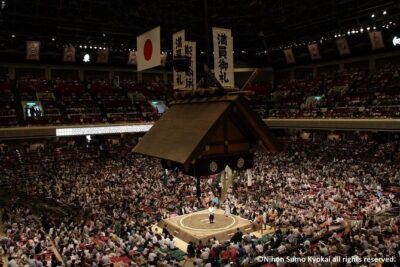
Tokyo Grand Sumo Tournament Viewing Tour with Tickets
Read our review →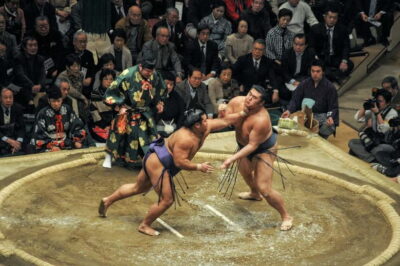
Sumo Tournament with Guide & Assigned Reserved Seat
Read our review →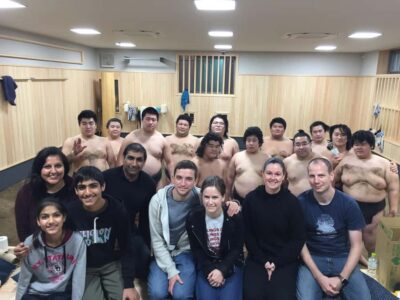
Sumo Practice Tour with Ring-Side Seat and Photoshoot
Read our review →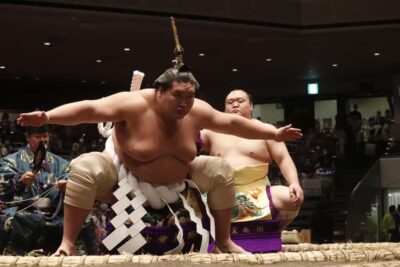
Sumo Wrestling Tournament with Chair Seat Tickets
Read our review →November Sumo Tournament tour in Fukuoka (Tickets Included)
Read our review →
Official Sumo Tournament Ticket with Guided Experience
Read our review →
Chair Seat Guaranteed SUMO Practice +Photo +Culture Option
Read our review →Browse the lists this tour appears in