
REVIEW · SUMO TOURNAMENT TICKETS
Sumo Wrestling Tournament Chair Seats & Expert Guide | Osaka Mar
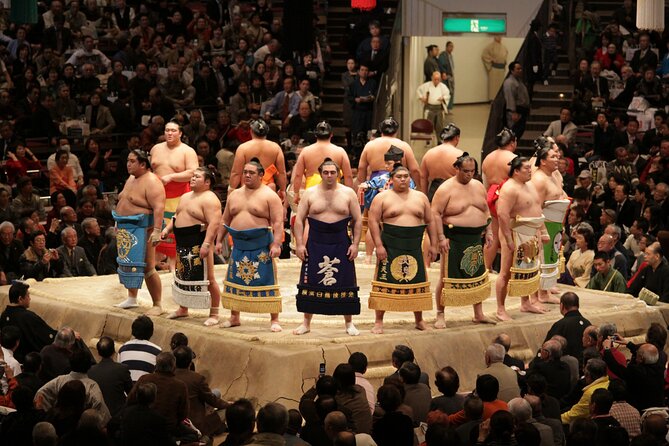
The main attraction here is simple: you watch Japan’s top sumo wrestlers from close seats while a guide explains what is happening. The action builds through the afternoon, with the most important bouts beginning around 4 p.m. and continuing until the final match at about 6.
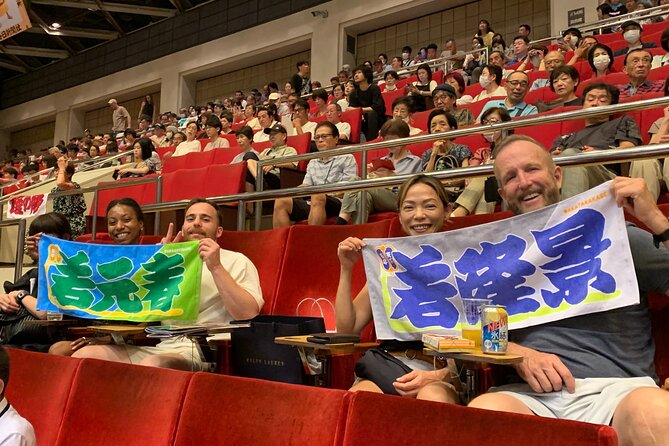
I like the small group of up to five, since you can ask questions without shouting across a bus. I also like the practical comfort of chair seating, where you can eat and drink at your place without kneeling. The main thing to check before booking is the seat description: the tour is promoted as A-class, front-row or second-row seating, but the detailed information also describes second-floor S-seat chairs, with no seat location chosen in advance.
Key points to know before booking
- Top bouts run from about 4 to 6 p.m., when Japanese television coverage begins and the strongest wrestlers enter the ring.
- A guide sits with you, explaining rules, rituals, ranks, and the meaning behind the ceremonies.
- The group is limited to five people, creating a more personal lesson than a large arena tour.
- Chair seating lets you eat and drink at your place, a useful comfort advantage during a four-hour session.
- A guidebook and tour photos are included, but snacks and transportation are not.
- Seat details need clarification, because the supplied information refers to A-class front rows and also to second-floor S-seat chairs.
Why this Osaka sumo tour works for first-time spectators
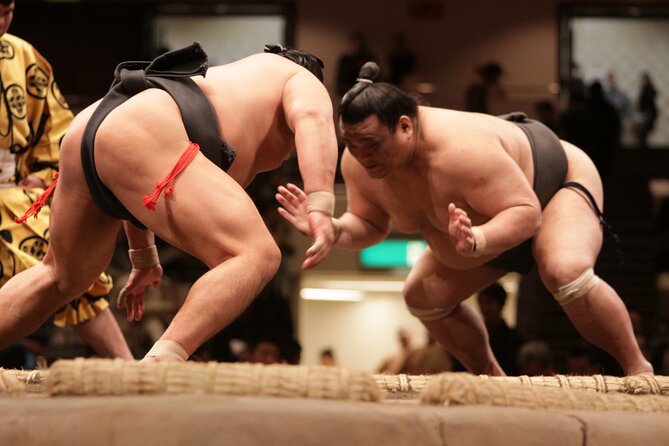
Sumo looks easy to understand until you try to follow a full tournament day. Two wrestlers enter, bow, stamp, stare, and suddenly one is out of the ring. The actual bout can last only a few seconds, while the surrounding ritual carries much of the meaning.
This is where a guide earns the price. You are not simply handed a ticket and left to guess why the wrestlers throw salt, why the referee wears an elaborate costume, or why the arena grows quiet before the charge. Your guide remains with the group and can explain the customs as they happen.
The format is especially useful if this is your first tournament. Guides named Yuki, Yuko, and Mai have led this experience, and the supplied feedback consistently highlights friendly explanations and help with the venue. Since the exact guide can vary, treat those names as examples rather than a guarantee.
You also get the benefit of timing. The tour begins at 2 p.m., before the strongest matches, so you have time to get inside and settle in. The afternoon builds toward the main event instead of dropping you into the arena halfway through the program.
More tournament tours in Japan:
- Tokyo: Sumo Tournament Tour with Chair Seat Tickets
★ 4.6 · 753 reviews - Tokyo Grand Sumo Tournament Viewing Tour with Tickets
★ 5.0 · 692 reviews - Tokyo Sumo Wrestling Tournament Experience
★ 5.0 · 660 reviews
Meeting at Edion Arena Osaka at 2 p.m.
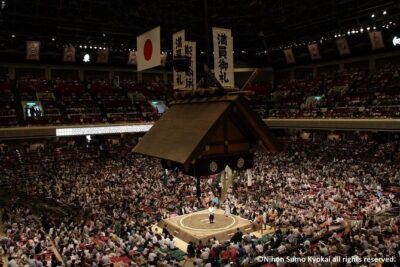
You meet at the front of Edion Arena Osaka in Naniwa Ward. The address is 3-4-36 Nanbanaka, inside the Osaka Prefectural Gymnasium, and the venue is near public transportation.
The precise meeting details are sent two to three days before the event. That matters in a busy city, so read the final instructions rather than relying only on the general venue address. Look for the guide near the front of the arena at 2 p.m.
The tour lasts about four hours, and the start time cannot be shifted for individual schedules. If you arrive late, you may miss the introduction or the entry into the arena. I would plan to reach the area early, especially if this is your first visit to Edion Arena Osaka.
The experience is described as a private activity for your group, with a maximum of five people. That wording gives you a small party rather than a large tour crowd. It does not mean you receive a separate arena or a privately arranged tournament session. You still watch the public tournament from the seats assigned to the booking.
Entering the arena and finding your place
Once the group enters, you go to the assigned seats. After that, you are free to move around the venue, and the guide remains available for questions.
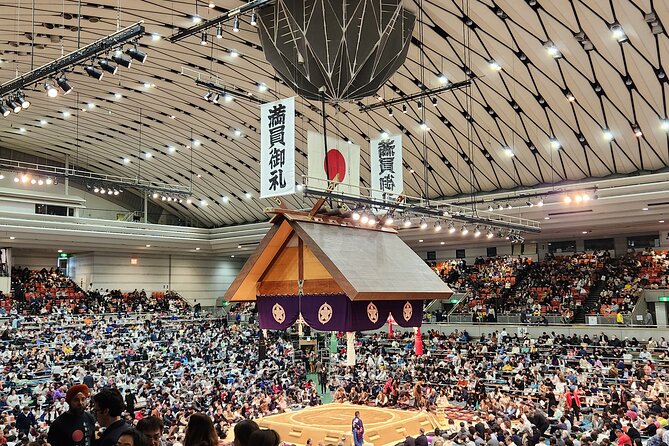
The seating information deserves a careful look. The tour summary calls these A-class seats in the front one or two rows. The detailed description calls them S-seat chairs on the second floor and says the exact seating area cannot be specified. Those descriptions do not line up perfectly.
That does not automatically make the experience poor. Second-floor chair seats can give you a broad view of the full ring and the activity around it. You can watch the bout itself while also seeing the referee, attendants, ceremonies, and crowd response. Still, anyone booking mainly for a front-row view should ask the provider to confirm the actual seat category and location for the chosen date.
The chair setup is a practical plus. You do not need to sit in the traditional seiza position, with your legs folded beneath you. For a four-hour sporting event, that makes a real difference. Eating and drinking at your seat is allowed, so you can stay focused on the program rather than constantly leaving to find a place to rest.
What happens from 2 to 3:40 p.m.
The early part of the session gives you time to get oriented. Sumo tournaments include many bouts, and the afternoon program gradually moves toward higher-ranked wrestlers. The guidebook included with your ticket can help you follow the basic structure, while the guide can fill in the details that are easy to miss.
This is also the best time to ask basic questions. You might want to know how a match is won, how wrestlers are ranked, or why certain rituals happen before the action. Asking early means you can watch the later bouts with a better sense of what matters.
The tour does not include snacks, despite the fact that eating and drinking at your seat is permitted. You should budget separately for anything you want during the session. The supplied information does not state that food or drinks are provided, so do not assume the reference to refreshments means they are included in the $182 price.
The venue also has a museum and gift store. A past guide made sure the group saw both, but the exact amount of time available for these stops can vary. The primary purpose of the tour is the tournament, so treat the museum and shop as useful extras rather than guaranteed, extended visits.
More tournament tickets in Japan:
- Tokyo: Sumo Tournament with Guide & Assigned Reserved Seat
★ 4.6 · 168 reviews - Tokyo: Sumo Practice Tour with Ring-Side Seat and Photoshoot
★ 4.7 · 103 reviews - Osaka: Sumo Wrestling Tournament with Chair Seat Tickets
★ 4.7 · 102 reviews - Tokyo Sumo Morning Practice Tour w/ Ring-Side Seat + Photo Shoot
★ 5.0 · 93 reviews
The 3:40 p.m. nakabi ceremony
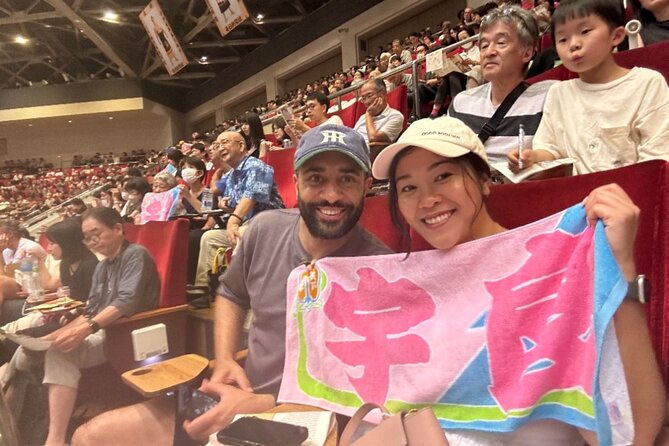
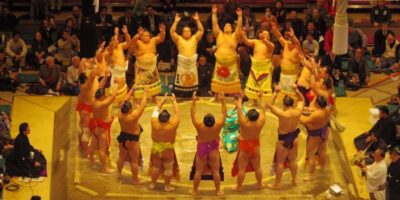
Around 3:40 p.m., the tournament reaches nakabi, the ceremony before the bouts involving particularly strong wrestlers. This is a turning point in the afternoon.
The ceremony helps you see that sumo is not just a series of matches. The ring, the wrestler introductions, the referee, and the formal gestures all carry weight. A guide can point out what you are seeing and explain why the ceremony matters before the most intense part begins.
Watching this from your own seat is convenient. You do not need to leave the arena or find a new position in the crowd. If you have questions, the guide is sitting with you, so you can ask while the event continues around you.
For many people, this may be the most useful section of the tour. The bouts are exciting on their own, but the ceremony gives the competition a cultural setting. You begin to understand why a short contest can command so much attention.
The strongest matches from 4 to 6 p.m.
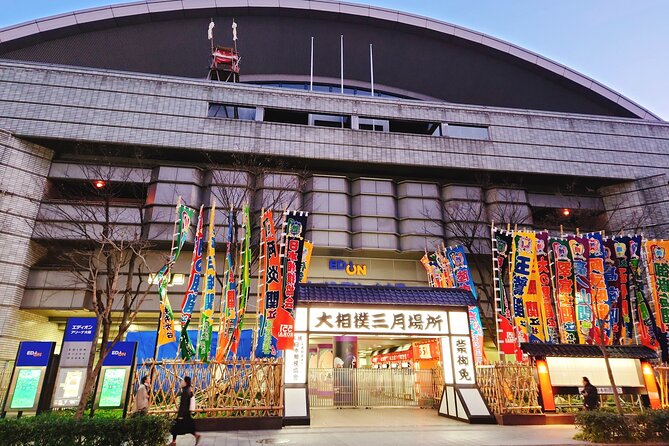
From about 4 p.m. until the final match near 6, the top wrestlers enter the ring. Japanese television broadcasts begin during this period, which signals the importance of the bouts.
This is when the guide’s commentary is most helpful. Sumo has its own language, rules, and visual cues. A new spectator may not know why a match is delayed, what happens if a wrestler touches the ground first, or how to read the behavior of the referee and attendants. Explanations during the live action make the sport easier to follow than a lecture beforehand.
The contrast between the calm ceremony and the sudden contest is part of the appeal. Wrestlers may spend time preparing, then settle the bout almost instantly. From a good seat, you can appreciate both the force of the collision and the small technical details that decide the result.
The second-floor chair arrangement, if that is the seat you receive, should provide a broad view of the ring. That is useful for understanding movement and position. A lower seat might feel closer, but a wider angle can help you follow the whole bout. Because the seat cannot be specified, do not book this experience with the expectation of choosing an exact row or side.
What the $182 price includes
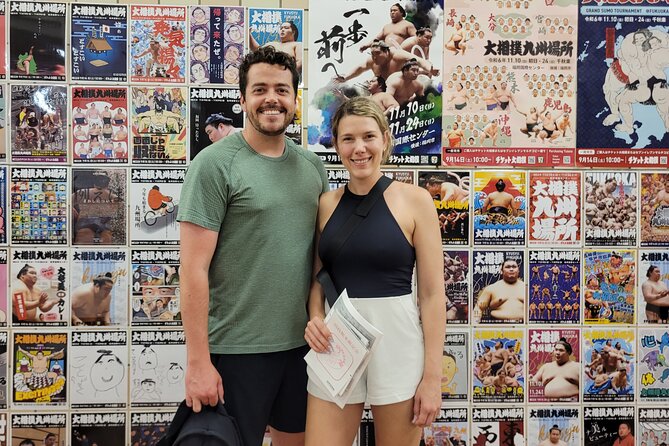
At $182, this is not a bargain admission ticket. You are paying for more than entry to the tournament, though. The package includes the sumo ticket, a professional guide, an original sumo guidebook, and tour photos.
The strongest value comes from the combination of ticket and explanation. If you already understand sumo, speak Japanese comfortably, and are happy to make sense of the tournament alone, you may find a standard ticket more economical. The guide matters most when you want context and a smoother first visit.
The small party also affects the value. A group of five gives you more access to the guide than a large coach tour would. You can ask about a particular ritual or match while it is happening. That personal attention is one of the better reasons to pay extra.
The price does not include transportation, snacks, or drinks. Since the tour starts and ends at the arena, you must make your own way there and onward afterward. The experience ends back at the meeting point around 6 p.m., so it is easy to plan dinner in Osaka afterward, but no onward transfer is supplied.
A useful mix of comfort and access
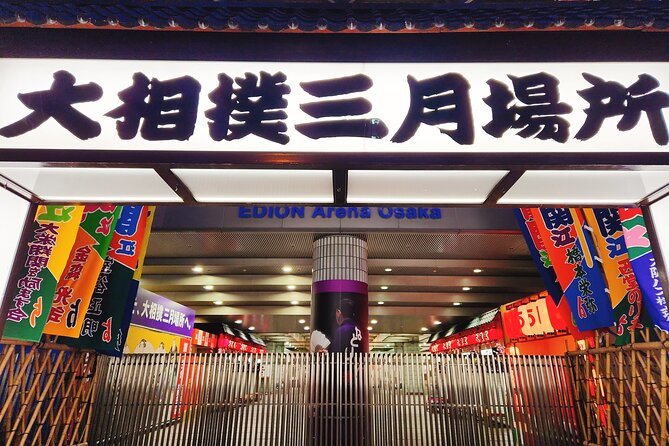
The tour’s best practical feature is the chair seating. You can sit normally, eat and drink at your place, and avoid the strain of kneeling for several hours.
Re-entry is allowed once per day. If you need to leave the venue, tell the guide first. That instruction matters because the guide needs to know where the group is, and the re-entry allowance is limited rather than unlimited.
You are also free to move around after reaching your seat. The guide stays with you, but the session is not described as a continuous lecture. You can watch quietly, visit parts of the venue, or ask questions as the schedule allows.
The four-hour duration is long enough to see the important section of the tournament without making this an all-day commitment. It is still a substantial block of time. If you are hoping for a quick photo stop or a short introduction to sumo, this is more than you need. If you want to watch the buildup and strongest matches, the timing is sensible.
Who should book this experience
I would recommend this tour to a first-time sumo spectator who wants to understand what is happening rather than simply sit in an arena. It also suits anyone who values a small group, chair seating, and the chance to ask a Japanese guide questions during the event.
Families and older visitors may appreciate the normal seats and the ability to eat at the venue. The activity states that most people can participate, and it is near public transportation. Specific accessibility details are not provided, so anyone with mobility needs should confirm the seat route and venue arrangements before paying.
This is also a good choice for a visitor who has only one chance to see a tournament. The program covers the ceremony and the stronger bouts, with the final match finishing around 6 p.m. You get a clear beginning, middle, and end instead of an unstructured arena visit.
You may want to skip it if your priority is the absolute closest possible seat or complete control over your row. The seating description does not guarantee a precise location. You should also consider another option if you are comfortable learning the sport on your own and want to spend less.
Booking details that matter
Your booking confirmation arrives at the time of booking. The final meeting point details arrive two to three days before the event, so keep an eye on your booking messages.
The tour has free cancellation up to 24 hours before the local start time. Cancel at least 24 hours ahead for a full refund. Within 24 hours, the payment is not refunded, and changes made during that period are not accepted.
The date and schedule are fixed for the group. You cannot shift the session time to suit a late arrival or another appointment. Plan your Osaka day around the 2 to 6 p.m. window.
Should you book the Osaka sumo chair-seat tour?
Book it if you want a guided introduction, a small group, and comfortable seats during the tournament’s most important hours. The guidebook, photos, and live explanations add useful value, especially when sumo is new to you.
Before paying, confirm the seat category. The published details refer both to A-class front one or two rows and to second-floor S-seat chairs, while also saying the seating area cannot be selected. That is the one point I would settle in advance.
If the provider confirms a seat arrangement you are happy with, this is a strong pick for a first sumo tournament in Osaka. You get the formal ceremony, the televised bouts, and a guide who can turn a confusing spectacle into a sport you can follow.
FAQ
Where does the sumo tour meet?
The meeting point is at the front of Edion Arena Osaka, at 3-4-36 Nanbanaka, Naniwa Ward, Osaka, inside the Osaka Prefectural Gymnasium.
What time does the activity start?
The group meets at 2 p.m. The session finishes around 6 p.m. after the final match.
How long does the experience last?
The activity lasts approximately four hours.
What seating is included?
The tour includes a Class A ticket. The information also describes S-seat chairs on the second floor and says the seating area cannot be specified, so confirm the exact arrangement with the provider.
Can I eat and drink at my seat?
Yes. Eating and drinking at your seat is allowed, although snacks and drinks are not included in the price.
Are snacks included?
No. Snacks are not included.
Is transportation included?
No. Private transportation is not included. You make your own way to and from Edion Arena Osaka.
Can I leave and return to the venue?
Yes. Re-entry is possible once per day. Tell the guide if you need to leave.
What is included besides the ticket?
The experience includes a professional guide, an original sumo guidebook, and tour photos.
Can I cancel for a full refund?
Yes, if you cancel at least 24 hours before the experience start time. Cancellations within 24 hours are not refunded, and changes during that period are not accepted.
Newest sumo experiences in Japan
- November Sumo Tournament tour in Fukuoka (Tickets Included)★ 4.5 · 76 reviews
- Kyushu Grand Sumo Tournament Viewing Tour with English Guide★ 5.0 · 22 reviews
- Kyushu Fukuoka Grand Sumo Tournament Viewing Tour★ 4.5 · 4 reviews
- Osaka: Sumo Show and Kimono Haori Experience★ 3.0 · 2 reviews
- Sumo Stable Intimate Morning Practice★ 5.0 · 2 reviews
- Tokyo: Know about Hokusai and Sumo culture in 2.5 hours★ 5.0 · 2 reviews
- Tokyo 6hr Private Guided Tour & Sumo Show Lunch★ 5.0 · 3 reviews
- Tokyo Grand Sumo Tournament Viewing Tour★ 5.0 · 2 reviews
Sumo Tournament Tickets, compared.
Tokyo Grand Sumo Tournament Viewing Tour with Tickets
Read our review →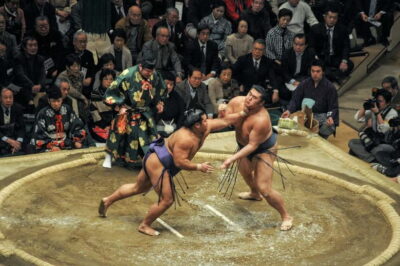
Sumo Tournament with Guide & Assigned Reserved Seat
Read our review →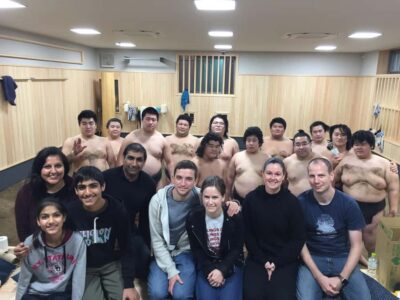
Sumo Practice Tour with Ring-Side Seat and Photoshoot
Read our review →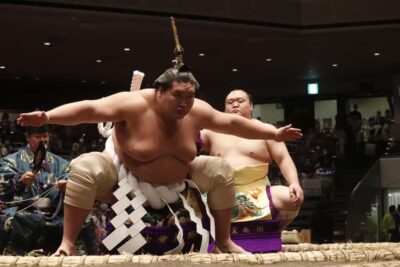
Sumo Wrestling Tournament with Chair Seat Tickets
Read our review →
Tokyo Sumo Morning Practice Tour w/ Ring-Side Seat + Photo Shoot
Read our review →November Sumo Tournament tour in Fukuoka (Tickets Included)
Read our review →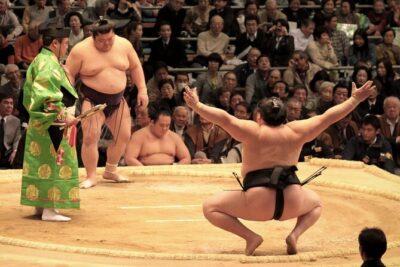
Official Sumo Tournament Ticket with Guided Experience
Read our review →Browse the lists this tour appears in