
REVIEW · SUMO TOURNAMENT TICKETS
Osaka: Sumo Wrestling Tournament with Chair Seat Tickets
The best part of this Osaka sumo experience is not simply seeing two enormous athletes collide. It is learning why a wrestler throws salt, how the ranking system shapes each bout, and which matches matter before the action begins. The guide turns a puzzling Japanese spectacle into a sport you can follow.
I like two things here: your tournament ticket is included, a real help when official seats have sold out, and the guides bring printed notes, rankings, and wrestler profiles to the arena. Guides such as Tadashi Okumura, Yoko, Keiko, Midori, and Yuji have been praised for their passion and clear explanations.
The catch is price and seating. At $122 per person, this costs more than an official ticket when you can buy one directly, and some B-seat holders ended up near the back. Sumo also involves long pauses between very short bouts, so it suits sports fans better than restless children.
Key points before you book
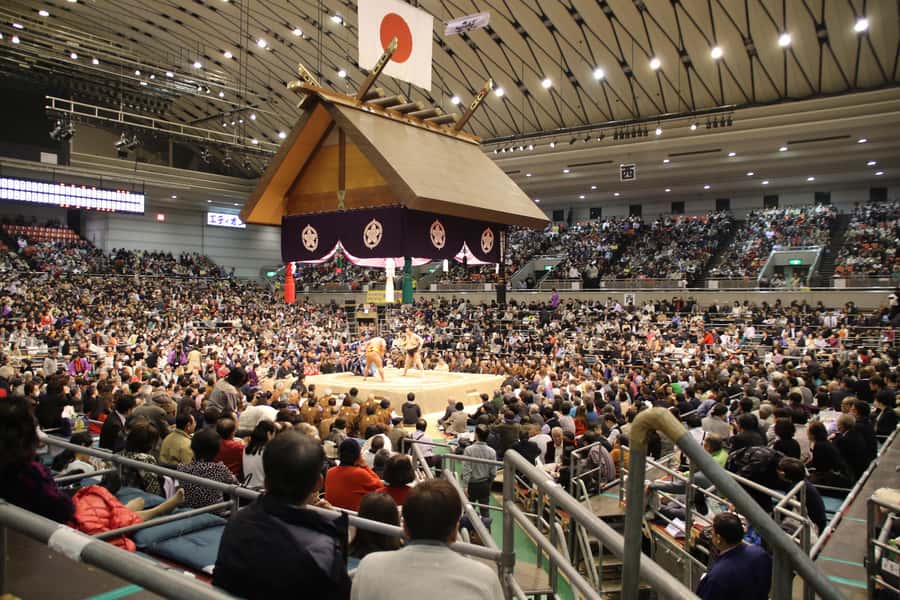
- Osaka’s March tournament: Osaka hosts one of Japan’s six major sumo tournaments each year, usually in March.
- Afternoon access: Meet at 2:15 PM, when the day is building toward the higher-ranked bouts and the dohyo-iri ceremony around 3:30 PM.
- An English-speaking guide: Your guide explains rules, customs, wrestler rankings, and the people worth watching.
- Included chair seating: S, A, B, C, or D chair seats are available depending on the option, but you cannot select a particular seat.
- Useful for first-timers: Printed sheets and match notes can help you follow a sport whose rituals may seem baffling at first.
- A full sporting event: Matches can last less than a minute, with plenty of waiting between them. Know what you are signing up for.
Why sumo is worth seeing in Osaka
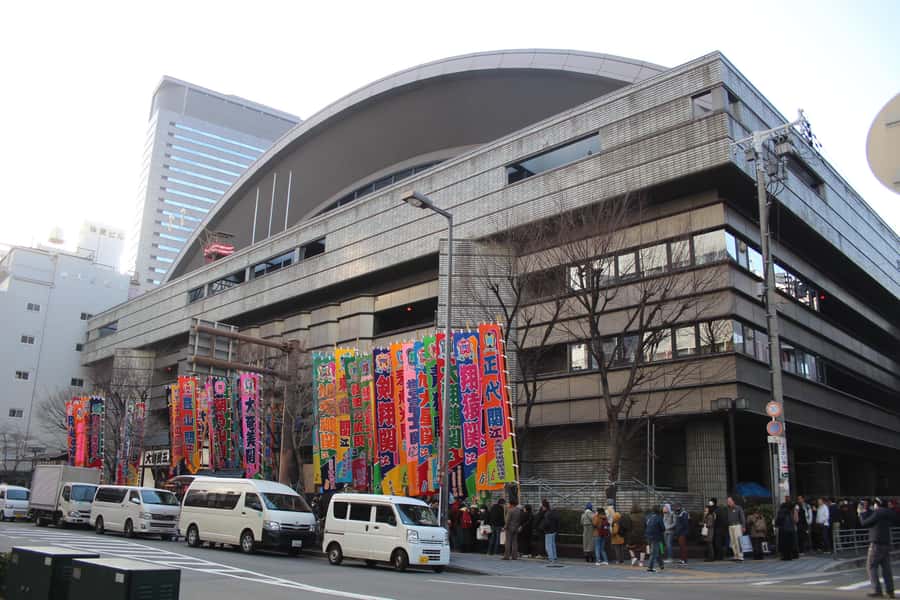
Sumo is often introduced as Japan’s national sport, but it is also tied to Shinto ceremony. According to tradition, sumo began as a performance for the gods and later became part of rituals linked to good harvests.
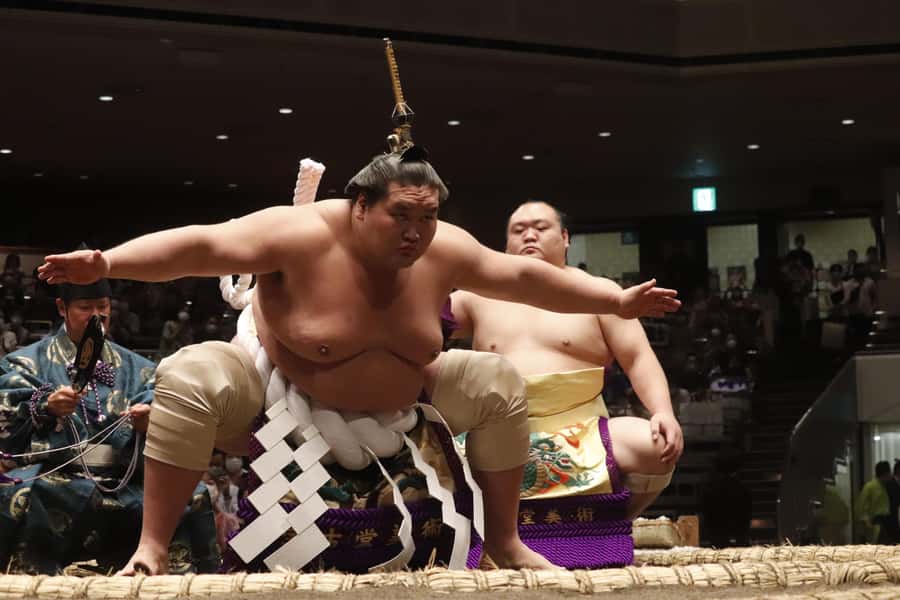
That religious connection still appears inside the arena. Wrestlers purify the ring with salt, perform formal movements, and show respect before the bout begins. These gestures are not filler. They are part of the sport’s identity, and they help explain why a match can feel ceremonial before it becomes explosive.
Sumo became popular entertainment during the Edo period, from 1603 to 1868. Today, you see both sides of its past: an old ritual with strict customs, and a highly competitive sporting event shaped by rankings, records, and local loyalties.
I think that mix makes sumo a useful cultural outing for visitors who want more than a quick photo at a temple. You are not merely watching wrestling. You are seeing a traditional Japanese institution operate in public, with its rules and symbols intact.
More tournament tours in Japan:
- Tokyo: Sumo Tournament Tour with Chair Seat Tickets
★ 4.6 · 753 reviews - Tokyo Grand Sumo Tournament Viewing Tour with Tickets
★ 5.0 · 692 reviews - Tokyo Sumo Wrestling Tournament Experience
★ 5.0 · 660 reviews
Meeting at Namba Post Office at 2:15 PM
The meeting point is in front of the Namba Post Office. It is a one-minute walk from the third-floor North Exit of the Nankai Line and about two minutes from Exit 5 of the Osaka Metro.
Your guide carries a Japan Wonder Travel signboard. That detail matters in Namba, where station exits, shopping areas, and underground routes can make a simple meeting point less simple than it sounds. Give yourself extra time, and check the exact route from your station before setting out. One participant specifically found the meeting-point directions unclear, so arriving early is sensible.
This is not a morning-to-closing guided day. The tournament itself begins around 8 AM with lower-ranked wrestlers, but this tour meets at 2:15 PM. That timing lets you skip the earliest bouts and arrive as the more important afternoon action approaches.
For many people, that is the right trade. You avoid spending the entire day in the arena, while still seeing the ceremony and stronger wrestlers. If you want every bout from the opening matches onward, this three-and-a-half-hour outing will not provide that.
The walk and arrival at Edion Arena Osaka
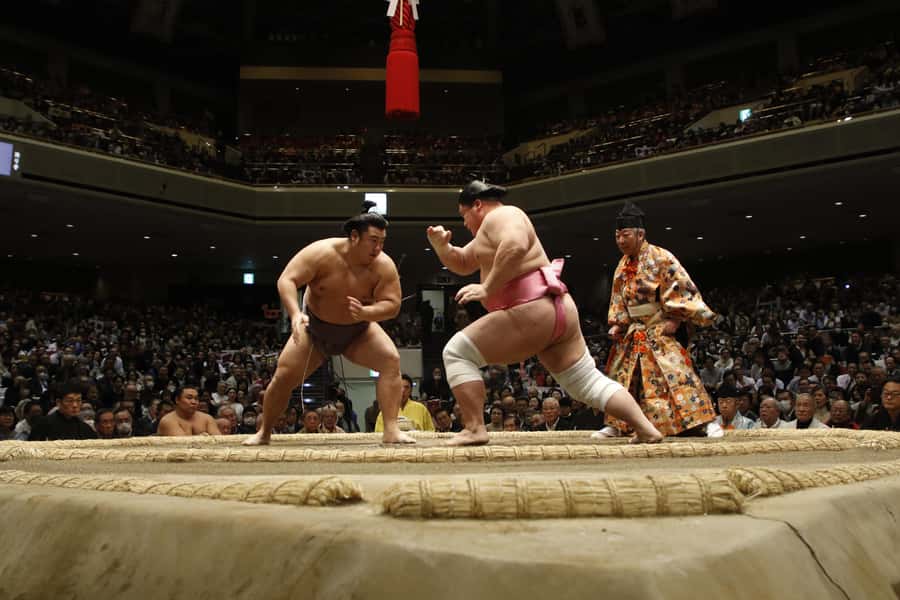
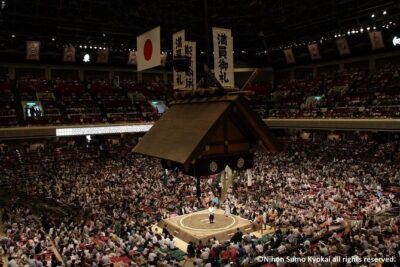
From Namba, the group makes its way to Edion Arena Osaka. The route is part of the practical value of joining a guide, especially if you are unfamiliar with the area or trying to reach the arena during a busy tournament day.
The tour finishes at Edion Arena Osaka, so the guide helps you reach the venue, but the main guided attention takes place around the event itself. Do not expect a long city sightseeing tour. The focus is sumo, and the arena is the destination.
Large luggage cannot be brought into the seating area. Baby strollers are not allowed, and the activity is not suitable for wheelchair users. Keep your belongings compact and make plans for anything you do not want to carry into the arena.
Your chair seat and what $122 buys
The price is $122 per person, with a sumo ticket and professional English-speaking guide included. Depending on your selected option, you may receive a second-floor S, A, B, C, or D chair seat. You cannot choose a specific chair, and your guide hands over the ticket on the day.
This is the part to judge carefully. A B ticket may sound like a reasonably close view, but one person reported being placed in the last two rows. Another participant said even the farthest seats still provided a good view of the action. Both points can be true: the arena is built for spectators, but you should not book this expecting a ringside perspective.
The strongest value comes when official tickets are sold out. Several people found this tour after failing to obtain seats themselves, and one late booker felt it was a less expensive way to see the tournament than other resale options. The included ticket also removes the stress of figuring out the Japanese ticketing system.
Still, check official ticket availability and prices before committing. One participant felt the tour markup was high compared with buying directly. If official seats are available and you are comfortable arranging the visit yourself, the $122 price may not be the best deal. If seats have disappeared and sumo is high on your Osaka list, the premium may be reasonable.
More tournament tickets in Japan:
- Tokyo: Sumo Tournament with Guide & Assigned Reserved Seat
★ 4.6 · 168 reviews - Tokyo: Sumo Practice Tour with Ring-Side Seat and Photoshoot
★ 4.7 · 103 reviews - Tokyo Sumo Morning Practice Tour w/ Ring-Side Seat + Photo Shoot
★ 5.0 · 93 reviews - November Sumo Tournament tour in Fukuoka (Tickets Included)
★ 4.5 · 76 reviews
How the afternoon develops
The higher-ranked wrestlers begin appearing later in the day, with the dohyo-iri ring-entering ceremony around 3:30 PM. This is a key moment, not just a parade. The wrestlers enter together, display their formal styles, and prepare the audience for the top division bouts.
Your guide helps explain who is entering, where each wrestler sits in the rankings, and which records matter. That context changes the experience. Without it, you may see a series of brief shoves and throws. With it, you can recognize a local favorite, understand the importance of a winning record, and see why one bout draws more attention than another.
The guides have different personalities, but the strongest pattern is their enthusiasm for the sport. Tadashi Okumura has used laminated sheets showing top matches, wrestlers to watch, and current win-loss records. Yoko has been praised for answering questions, taking photos, and pointing out local favorites. Yuji has supplied cheering signs and detailed backstories about competitors.
The guide does not necessarily sit beside every person throughout every match. In larger groups, a guide may move along the row to answer questions. One group of nine found that sitting at the far end made it harder to hear the commentary. If you are in a big party, ask where the guide will position themselves and stay alert for explanations between bouts.
What the matches are really like
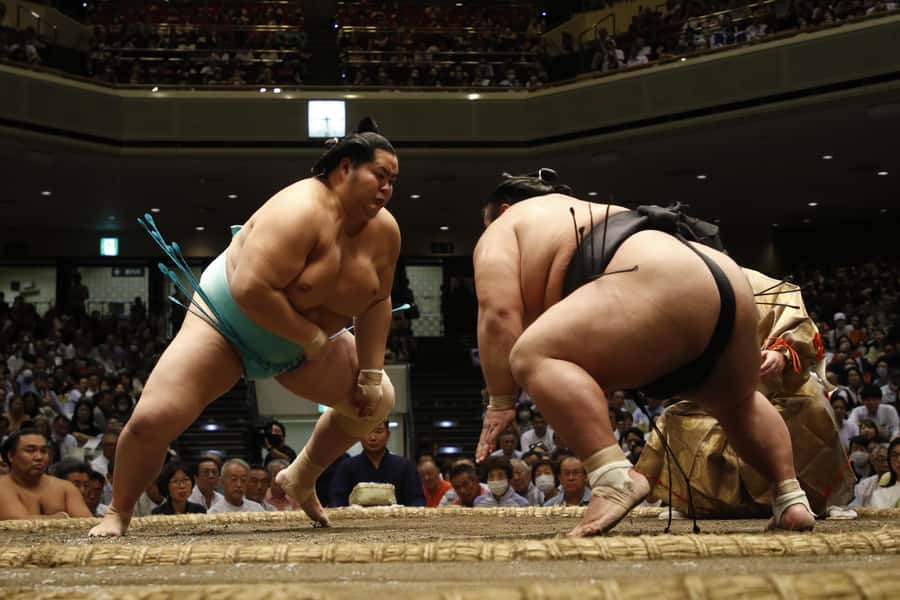
Sumo rewards patience. A bout may last less than a minute, but the preparation can take much longer. Wrestlers enter, face one another, perform ritual movements, and may reset before the actual charge. The pauses between matches are part of the rhythm.
That pattern can surprise people who expect nonstop action. One person noted that adults and children left after an hour because they found the waiting difficult. Seats can also be compact, which matters if you dislike sitting closely packed for several hours.
On the other hand, the short bouts make each clash sharp. When the wrestlers finally charge, the result can be decided almost instantly. The contrast between slow ceremony and sudden force is one of sumo’s great pleasures.
I would not book this simply because you want to see a famous Japanese tradition. You need at least some interest in sport, competition, or ritual. If you enjoy learning the story behind a contest, the downtime becomes useful. Your guide can explain rankings, past performance, rivalries, and the technique that just won the match.
Why the guide changes the experience
A solo visitor can attend sumo without a guide, but the sport has a steep learning curve. The rules are not impossible, yet the ranking system, ceremonial order, wrestler names, and meaning of the rituals take time to absorb.
The guide gives you a framework before the matches become serious. You learn what to watch, why certain wrestlers matter, and how to read the energy in the arena. Guides have been described as fluent in English, approachable, and willing to answer questions throughout the afternoon.
That quality may vary slightly by guide. Most of the named guides received warm praise for their English and subject knowledge, but one person found a guide’s English less effective. I would treat the guide as a major benefit, not a guaranteed private teacher. You are part of a group, and the amount of individual attention depends on group size and where you sit.
The printed material is especially useful. A simple record sheet or list of wrestlers can keep you oriented when unfamiliar names come thick and fast. It also gives you something to consult during the pauses, rather than waiting for the next bout without knowing why it matters.
Food, children, and practical comfort
Food can be brought into the arena, and food may also be available there, though the selection is not extensive. Plan around that rather than assuming you will find a full meal once seated.
Children three and under can enter free, but they do not receive their own seat and must sit on an adult’s lap. Children four and older need their own ticket. Because the event includes long gaps and compact chairs, this is not an easy outing for every young child.
For adults, the main comfort issue is duration. The activity lasts 210 minutes, or three and a half hours, and the tournament day has an unhurried pace. Wear something comfortable and be ready to remain seated for long stretches.
Free cancellation is available up to 24 hours before the activity, and you can reserve now and pay later. Those terms are useful if your Osaka schedule is still shifting, but they do not change the seating limitations or the fixed meeting time.
Who should book this sumo experience?
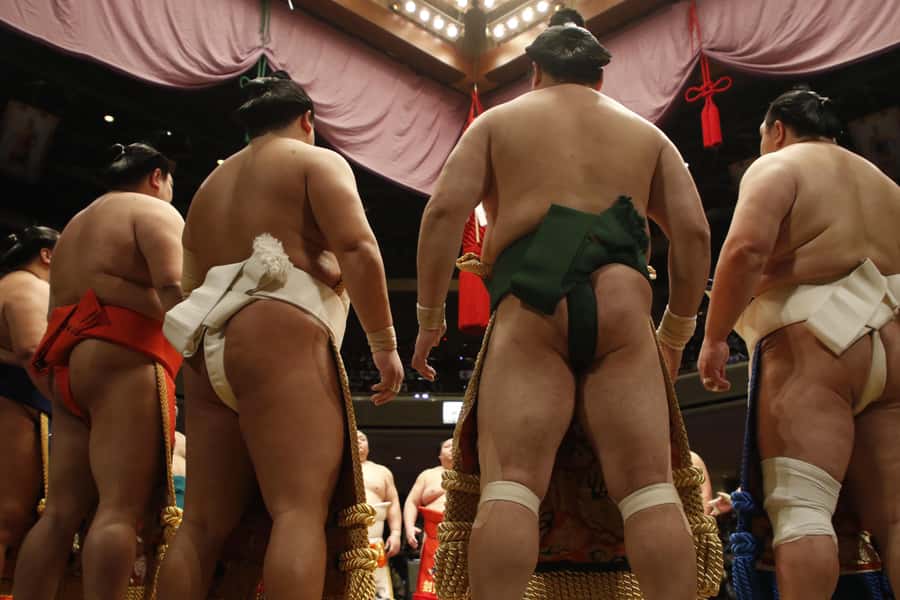
I recommend it most strongly for a first-time sumo spectator who wants help understanding the event and has been unable to buy official tickets. The guide, printed material, and included seat solve three common problems at once: access, orientation, and language.
It is also a good choice if you are curious about Shinto customs and Japanese sporting culture. The salt purification, ring ceremony, ranking system, and formal behavior give you plenty to notice beyond the physical contest.
I would hesitate if you are watching your budget closely and can still buy official tickets. I would also hesitate if you dislike waiting, cramped seating, or sports where the decisive action lasts only seconds.
Families should think carefully. Older children with an interest in competition may enjoy the atmosphere and ceremony. Toddlers and easily bored children may struggle, especially since strollers are not allowed and the younger ones must sit on a lap.
Should you book it?
Book this Osaka sumo tour if access matters more than getting the lowest possible price. At $122, you are paying for a chair seat, an English-speaking guide, help reaching the arena, and the chance to attend when official tickets may already be gone.
Do not book it expecting a close-up seat or constant action. Your view may be from the back, the chairs may feel tight, and the event moves slowly between short bouts. But if you give the rituals and pauses their due, the afternoon can become one of Osaka’s most memorable cultural experiences.
FAQ
Where does the sumo tour meet?
Meet your guide at 2:15 PM in front of Namba Post Office. The guide carries a Japan Wonder Travel signboard.
How do I reach Namba Post Office?
The post office is a one-minute walk from the third-floor North Exit of the Nankai Line and a two-minute walk from Exit 5 of the Osaka Metro.
What is included in the price?
The price includes a professional English-speaking guide and a sumo tournament chair ticket. Available categories are S, A, B, C, and D, depending on the option selected.
Can I choose my exact seat?
No. Depending on the option, you receive a second-floor chair seat, but you cannot select a specific seat. The guide hands you the ticket on the tour date.
Can young children attend?
Children three years old and under can enter free, but they do not have their own seat and must sit on an adult’s lap. Children four and older need their own tickets.
Can I cancel or pay later?
You can cancel up to 24 hours in advance for a full refund. The activity also offers reserve now and pay later booking.
Newest sumo experiences in Japan
- November Sumo Tournament tour in Fukuoka (Tickets Included)★ 4.5 · 76 reviews
- Kyushu Grand Sumo Tournament Viewing Tour with English Guide★ 5.0 · 22 reviews
- Kyushu Fukuoka Grand Sumo Tournament Viewing Tour★ 4.5 · 4 reviews
- Sumo Stable Intimate Morning Practice★ 5.0 · 2 reviews
- Tokyo: Know about Hokusai and Sumo culture in 2.5 hours★ 5.0 · 2 reviews
- Tokyo 6hr Private Guided Tour & Sumo Show Lunch★ 5.0 · 3 reviews
- Tokyo Grand Sumo Tournament Viewing Tour★ 5.0 · 2 reviews
- Tokyo Sumo History Tour with Chanko Nabe Lunch★ 5.0 · 3 reviews
Sumo Tournament Tickets, compared.
Tokyo Grand Sumo Tournament Viewing Tour with Tickets
Read our review →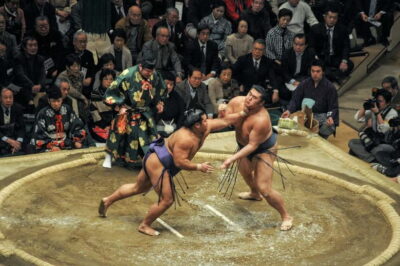
Sumo Tournament with Guide & Assigned Reserved Seat
Read our review →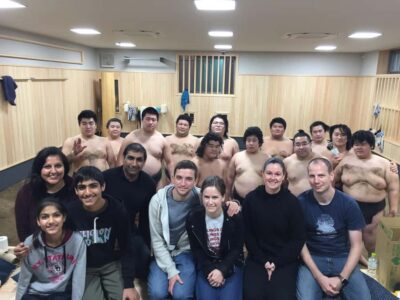
Sumo Practice Tour with Ring-Side Seat and Photoshoot
Read our review →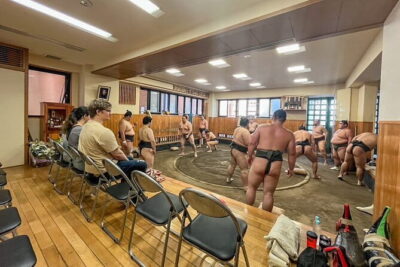
Tokyo Sumo Morning Practice Tour w/ Ring-Side Seat + Photo Shoot
Read our review →November Sumo Tournament tour in Fukuoka (Tickets Included)
Read our review →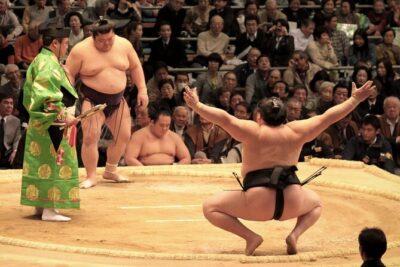
Official Sumo Tournament Ticket with Guided Experience
Read our review →
Chair Seat Guaranteed SUMO Practice +Photo +Culture Option
Read our review →Browse the lists this tour appears in