
REVIEW · SUMO TOURNAMENT TICKETS
Fukuoka: Sumo Wrestling Tournament Chair Seats & ExpertGuide
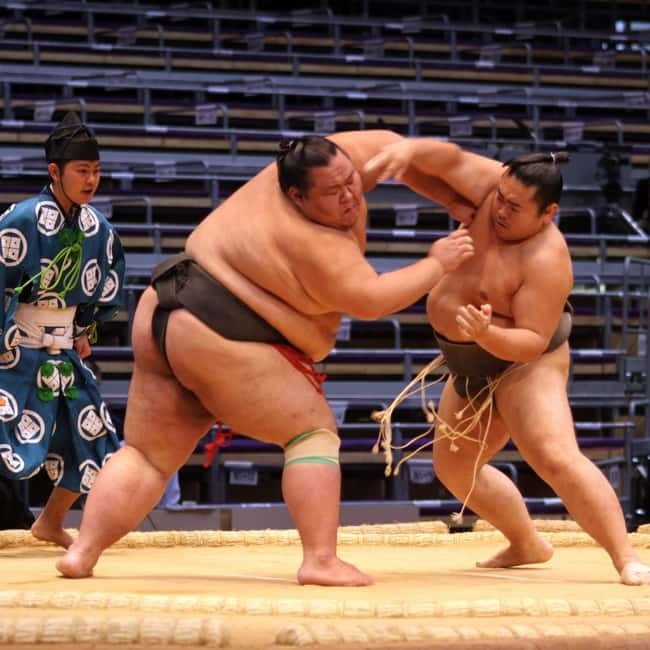
Fukuoka’s sumo tournament changes character as the day moves along. You begin with an English-speaking guide who explains the sport’s rules and customs, then watch the arena build toward the strongest bouts from A or B chair seats. By late afternoon, Japanese television is broadcasting and the top wrestlers are entering the ring.
I like the small group of up to seven because it gives the guide room to answer questions. I also like the second-floor view, where you can see the full ring area rather than only the action directly in front of you. The main consideration is the fixed schedule: you must meet at 2:00 PM, and the guided session cannot be shifted to fit a late train or a changing sightseeing plan.
Key points
- Strongest matches from 4:00 to about 6:00 PM: The final part of the session covers the tournament’s most intense bouts.
- Second-floor panoramic view: A or B chair seating lets you watch the full arena from above.
- Small English-speaking group: The group is limited to seven people, with an interpreter-guide explaining rules, customs, and history.
- Nakabi around 3:20 PM: You’ll see the ceremony before the matches involving particularly strong wrestlers.
- One re-entry per day: You can leave and return once, but you must tell the guide before going out.
- Guide Hiro Matsuo: He is praised for being punctual, friendly, detailed, and helpful with photo locations.
Why the 2:00 PM start works for a full sumo afternoon
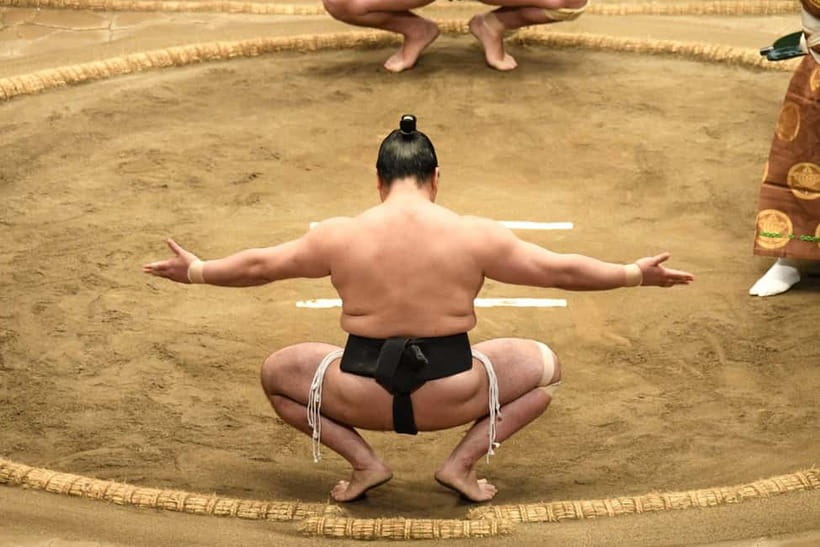
This is not a quick ticket handoff. The activity runs from about 2:00 to 6:00 PM, giving you time to understand what you are watching before the highest-ranking wrestlers appear.
You meet at 2:00 PM near the main entrance, to the left of the ticket counter. The exact instructions are sent two or three days before the event. The directions also refer to the left of the Akira Suisan sign, marked by a red sun motif, so check the final meeting information carefully rather than relying only on a general map pin.
A friendly English-speaking interpreter meets you there. You then enter the venue together, and the guide explains sumo culture, rules, history, and codes. That early orientation matters. Sumo can look simple at first glance, two wrestlers pushing or throwing each other from a circular ring, but the decisions are quick and the rules are not always obvious. A short explanation helps you see why a bout ends, what counts as a winning move, and how the formal side of the sport fits around the physical contest.
The group size is one of this experience’s strongest practical features. With no more than seven people, you have a better chance to hear the guide clearly and ask about details as they come up. It also avoids the loose, impersonal feel of a large walking group.
More tournament tours in Japan:
- Tokyo: Sumo Tournament Tour with Chair Seat Tickets
★ 4.6 · 753 reviews - Tokyo Grand Sumo Tournament Viewing Tour with Tickets
★ 5.0 · 692 reviews - Tokyo Sumo Wrestling Tournament Experience
★ 5.0 · 660 reviews
What the second-floor A and B chair seats are like
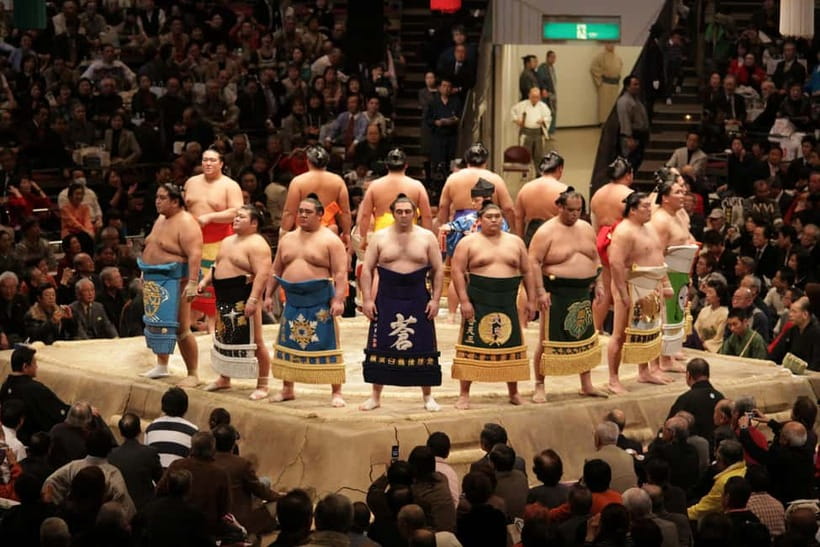
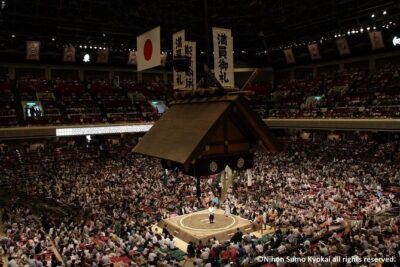
The ticket places you in A or B class chair seating, rather than asking you to stand or squeeze into a temporary viewing area. The second-floor position gives you a broad view of the arena and the ring. You can follow the overall ceremony, the movement around the dohyo, and the crowd’s reaction without losing the larger picture.
That view comes with a tradeoff. You are not at ringside, so the wrestlers will look smaller than they would from the closest seats. For many first-time visitors, though, the higher angle is useful. You can see the full layout and watch the rhythm of the tournament without constantly turning your head.
Once you reach your seat, you are free to move around the venue. That gives you some independence after the guided introduction. You can stay in your chair for the matches, look around the venue, or use the permitted re-entry option if you need to leave. If you plan to go out, tell the guide first. Re-entry is allowed once per day, not as many times as you wish.
The listing’s overview refers to drinks and snacks, but the included items specifically cover the ticket, interpreter, and explanations, while snacks are listed as not included. I would budget separately for food and avoid assuming refreshments are part of the $162 price. The supplied information does not clearly confirm that drinks are included, so ask before ordering or planning your afternoon around them.
The 3:20 PM nakabi ceremony gives the afternoon a lift
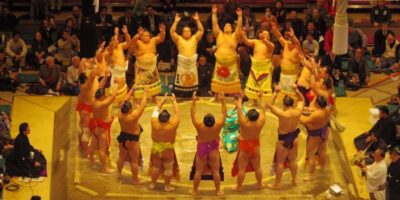
Around 3:20 PM, the nakabi begins. This is the ceremony before bouts involving particularly strong sumo wrestlers. You watch it from your chair seats, with the guide helping you understand what is taking place.
The ceremony is important because it marks the change from the earlier part of the day to the more anticipated contests. Sumo is not only about the brief clash inside the ring. The entrances, gestures, preparation, and formal presentation all help set the mood. With the guide’s explanations, you have a better chance of noticing those details instead of seeing them as delays between matches.
The timing also makes this a good point to settle in. You have already had the first explanation and found your seat. From here, the pace and attention in the arena begin to build. If you are taking photographs, this is one of the parts of the afternoon when the ceremony itself may offer more interesting images than a single fast bout.
The guide’s help with photos is worth noting. Hiro Matsuo is specifically praised for showing people places where they could get memorable impressions and photographs. That does not mean every seat or viewing point changes, but it does suggest that the guide can help you make better use of the venue than simply walking in and sitting down.
From 4:00 to 6:00 PM, the best bouts arrive
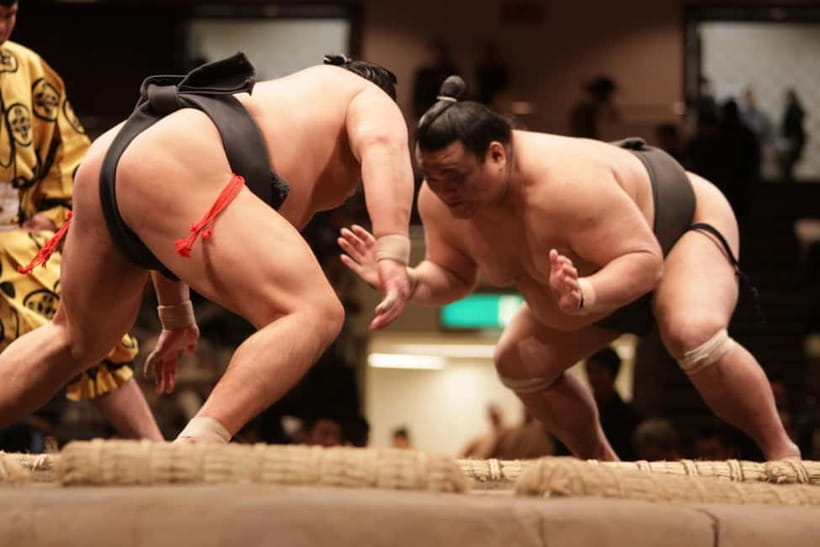
The main attraction comes from about 4:00 PM until 6:00 PM. This is when the particularly strong wrestlers begin their intense matches, and Japanese television broadcasts start as well.
For a first visit, this timing makes the four-hour session feel well planned. You are not paying for only the final few minutes, but you also do not spend the whole afternoon watching without context. The guide gives you a base in the rules and culture, then you see the ceremony, then you remain for the strongest contests.
The bouts themselves are short, but the tension around them is not. A match can finish quickly, which is part of sumo’s character. From the second floor, you can watch the formal lead-up, the explosive clash, and the crowd’s response as one complete event.
I would not treat the activity as a casual drop-in. The most important matches occur during the final two hours, and the group disbands around 6:00 PM after the final match. Leaving early means giving up the part of the tournament that the schedule is built around.
At the end, the activity finishes back at the meeting point. Since the session time is fixed, plan your dinner or evening train after the expected end rather than trying to make a tight connection. The information provided does not promise an early finish.
More tournament tickets in Japan:
- Tokyo: Sumo Tournament with Guide & Assigned Reserved Seat
★ 4.6 · 168 reviews - Tokyo: Sumo Practice Tour with Ring-Side Seat and Photoshoot
★ 4.7 · 103 reviews - Osaka: Sumo Wrestling Tournament with Chair Seat Tickets
★ 4.7 · 102 reviews - Tokyo Sumo Morning Practice Tour w/ Ring-Side Seat + Photo Shoot
★ 5.0 · 93 reviews
Is $162 a fair price for this sumo experience?
At $162 per person, this is a premium ticket-and-guide outing rather than the cheapest way to enter a sumo tournament. The value depends on what you need.
If you already understand sumo, know the venue, and are comfortable arranging your own ticket, you may prefer to buy independently. This experience charges for more than the seat. Your price includes the tournament ticket, an English-speaking interpreter, a small group, and an explanation of sumo culture, rules, and codes.
For a visitor who wants the sport to make sense, that added guidance has real value. You are not left to guess why the ceremony matters or which matches deserve your attention. The A or B chair seat and second-floor view also give you a defined place to watch the afternoon, rather than leaving the quality of the experience to last-minute ticket availability.
The price does not include private transportation or snacks. You need to make your own way to the venue and plan for food separately. Since the meeting instructions arrive close to the date, keep an eye on your email and allow enough time to find the main entrance.
The group limit helps justify the cost more than a large coach-style setup would. A maximum of seven means the guide can speak to the group directly, and you can ask questions without waiting through a long line of people. Still, you should choose this only if the included explanation matters to you. The ticket alone is not the whole product.
What makes the guide useful
The guide’s role is central. You are not simply being escorted to a chair and left alone. The guide introduces the history and rules, explains sumo culture and codes, and remains part of the group’s arrival and orientation.
Hiro Matsuo is the named guide praised for punctuality, friendliness, and detailed explanations. He also repeatedly pointed out places for memorable views and photos. Those are practical qualities, especially when the venue feels unfamiliar and the schedule has several different stages.
The available information does not guarantee that Hiro will lead every departure, so treat him as an example of the guiding standard rather than a promise for your particular date. The service is offered in English, and the listed language is English only.
The best fit is someone who wants context but does not want a long academic lecture. You get a focused introduction followed by time to watch the tournament. If you are already a sumo expert, you may find the basic rules familiar, though the seat and access still have value.
Who should book, and who should skip it
I would recommend this to a first-time sumo spectator, a solo visitor who wants help navigating the venue, or a couple who prefers a planned afternoon with a clear meeting point. It also suits anyone who wants to watch the major matches without trying to decode the schedule alone.
The small group makes it a good choice for people who like asking questions. The second-floor seats suit anyone who values an overview of the arena, while the late-afternoon timing places you in the venue for the contests that draw the most attention.
I would think twice if your schedule cannot protect the full 2:00 to 6:00 PM window. The session cannot be changed, and the strongest matches come late. I would also compare the price with a self-booked ticket if you are comfortable handling the venue and already know the rules.
You can reserve now and pay later, and cancellation is allowed up to 24 hours before the activity for a full refund. Those terms help if your plans are still taking shape, but they do not solve the fixed start time. The schedule remains the key commitment.
FAQ
Where does the sumo experience begin?
Meet at 2:00 PM near the main entrance, to the left of the ticket counter. Final meeting-point details are provided two or three days before the event.
What time does the activity finish?
The session runs from about 2:00 PM to 6:00 PM. It ends after the final match, with the activity ending back at the meeting point.
How many people can join the group?
The small group is limited to seven people.
Is the guide English-speaking?
Yes. The experience includes an English-speaking interpreter-guide, and English is the listed language.
Who is one of the guides?
Hiro Matsuo is a named guide associated with the experience. He is described as punctual, friendly, detailed in his explanations, and helpful with photo locations.
What kind of seats are included?
You receive A or B class chair seats. The seating is on the second floor and offers a panoramic view of the arena.
When are the strongest matches?
The particularly strong wrestlers begin their intense matches from about 4:00 PM until around 6:00 PM.
What is the nakabi ceremony?
Nakabi begins around 3:20 PM. It is the ceremony before matches involving particularly strong sumo wrestlers.
Can I leave and come back?
Yes. Re-entry is possible once per day. Tell the guide if you need to leave the venue.
Are snacks included?
No. Snacks are listed as not included. Private transportation is also not included, so you must arrange your own way to the meeting point.
Should you book this Fukuoka sumo outing?
Book it if you want more than a tournament ticket. The strongest reasons are the small English-speaking group, the A or B chair seat, the broad second-floor view, and the guide’s clear introduction before the main bouts begin.
Skip it if you only need the cheapest available seat or cannot commit to the fixed 2:00 PM start. For everyone else, the $162 price is reasonable when you value interpretation, a planned route into the venue, and help spotting the details that make sumo more than a series of very fast collisions.
Newest sumo experiences in Japan
- November Sumo Tournament tour in Fukuoka (Tickets Included)★ 4.5 · 76 reviews
- Kyushu Grand Sumo Tournament Viewing Tour with English Guide★ 5.0 · 22 reviews
- Kyushu Fukuoka Grand Sumo Tournament Viewing Tour★ 4.5 · 4 reviews
- Tokyo Highlights Tour: Sumo, Sushi, Tea, and Tokyo Tower★ 5.0 · 2 reviews
- Osaka: Sumo Show and Kimono Haori Experience★ 3.0 · 2 reviews
- Sumo Stable Intimate Morning Practice★ 5.0 · 2 reviews
- Tokyo: Know about Hokusai and Sumo culture in 2.5 hours★ 5.0 · 2 reviews
- Tokyo 6hr Private Guided Tour & Sumo Show Lunch★ 5.0 · 3 reviews
Sumo Tournament Tickets, compared.
Tokyo Grand Sumo Tournament Viewing Tour with Tickets
Read our review →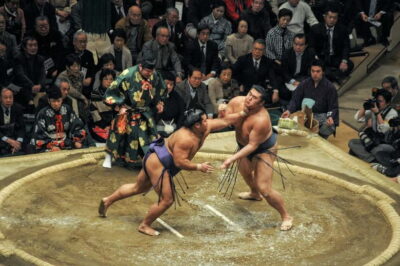
Sumo Tournament with Guide & Assigned Reserved Seat
Read our review →
Sumo Practice Tour with Ring-Side Seat and Photoshoot
Read our review →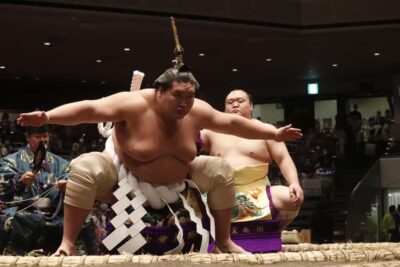
Sumo Wrestling Tournament with Chair Seat Tickets
Read our review →
Tokyo Sumo Morning Practice Tour w/ Ring-Side Seat + Photo Shoot
Read our review →November Sumo Tournament tour in Fukuoka (Tickets Included)
Read our review →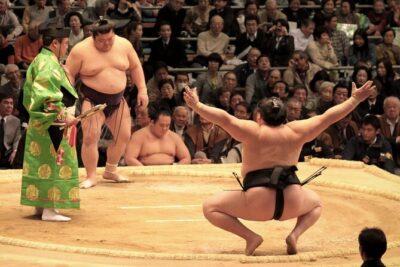
Official Sumo Tournament Ticket with Guided Experience
Read our review →Browse the lists this tour appears in