
REVIEW · SUMO TOURNAMENT TICKETS
Tokyo: Sumo Tournament Tour with Chair Seat Tickets
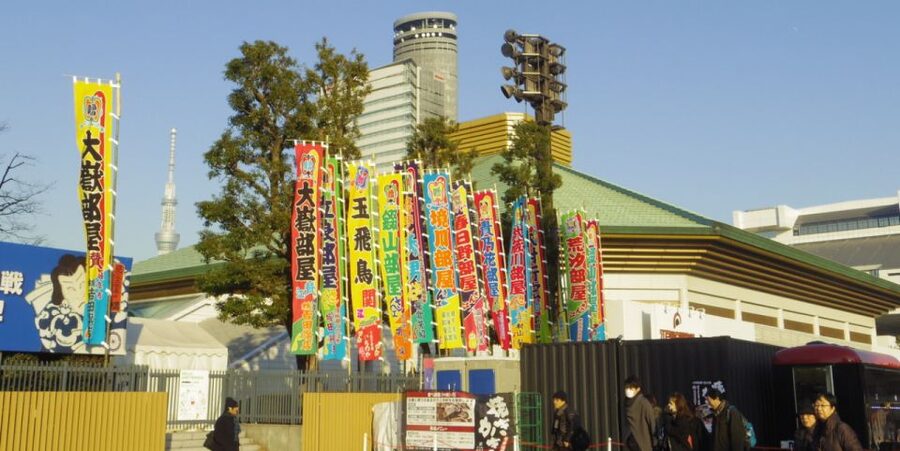
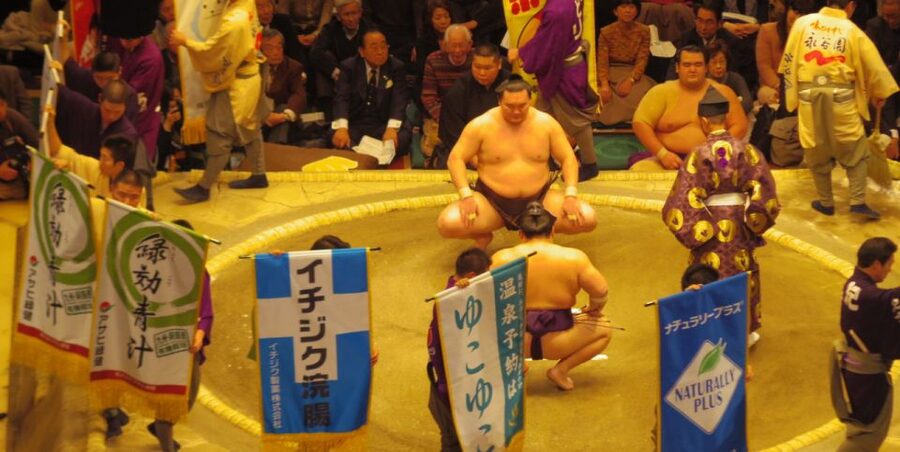
A Tokyo sumo tournament is not a staged cultural show. It is the real competition, with ranked wrestlers, formal ceremonies, sponsor banners, roaring fans, and bouts that can end in seconds. You watch from Ryogoku Kokugikan, the city’s main sumo arena, during one of the limited tournament periods held in Tokyo each year.
I like two things right away: the guide makes the sport understandable, and the tickets solve a real problem because official seats can sell out quickly. Guides such as Mieko, Taka, Mia, Hiro, and Sho have been praised for explaining wrestlers, rankings, rituals, and tactics while keeping the group involved.
The main drawback is your seat position is assigned. Most options use 2F chair seats, and some are high in the arena. The view is still good in this relatively compact stadium, but you cannot choose a particular seat. The 1F option uses box seating and costs more.
Key points before you book
- Real tournament action: Watch the Makuuchi and Yokozuna divisions, not a demonstration staged for tourists.
- Useful English guidance: Learn how wrestlers win, why the ceremonies matter, and which bouts deserve your attention.
- Carefully timed afternoon: Meet at 2:15 PM, see the top-division ring ceremonies at 3:40 and 3:55 PM, and watch the main bouts from 4:10 to 6 PM.
- Two seating choices: Select 2F chair seats or 1F box seats, depending on the option you book.
- Optional cheering extras: Some packages include a sumo supporter kit, and lunch may be available as a separate choice.
- Good ticket alternative: At $141 per person, you pay more than face value, but you gain a ticket, a guide, and help getting into the arena.
Why a live sumo tournament feels different
Sumo is easy to misunderstand if you see only a few clips online. Two huge athletes step into a small ring, perform a series of ritual movements, and then the match may be over before you have worked out what happened.
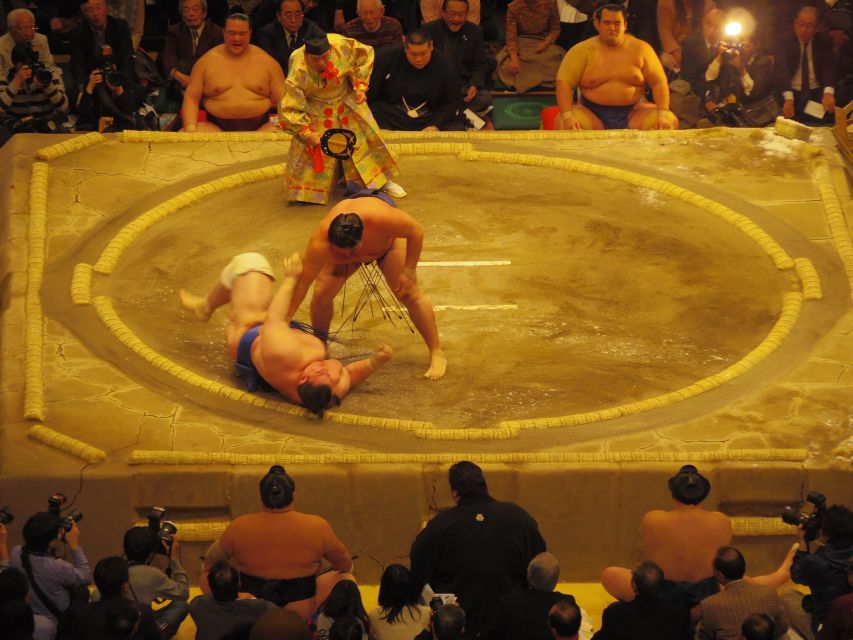
The guide gives you the basic rules first. A wrestler wins by forcing his opponent outside the circular ring or making any part of the body other than the soles of the feet touch the ground. That simple rule creates a sport of timing, balance, pressure, and quick decisions.
I like the way this tour connects the action to the wider culture. You learn why wrestlers have different ranks, why some bouts attract more sponsors, and why the crowd reacts strongly to certain names. A guide may also point out a wrestler’s signature move or explain the importance of the match in the current tournament.
Sumo tournaments are held for only a limited part of the year, and Tokyo hosts three of the six major annual tournaments. If your visit lines up with one, this is one of Japan’s more unusual sporting experiences. If it does not, the tour simply cannot be taken on another day, so check the tournament dates before building your Tokyo plans around it.
More tournament tours in Tokyo:
- Tokyo Grand Sumo Tournament Viewing Tour with Tickets
★ 5.0 · 692 reviews - Tokyo Sumo Wrestling Tournament Experience
★ 5.0 · 660 reviews - Ultimate Sumo Tournament: Tokyo, Osaka, Nagoya, Fukuoka
★ 5.0 · 468 reviews
Meeting at Ryogoku Station at 2:15 PM
The meeting point is at the West Gate of JR Ryogoku Station. You meet in the afternoon, then walk with the group to Ryogoku Kokugikan, the sumo stadium.
The meeting process can be busy because several groups may gather in the same area. Check your booking message closely for the meeting details, including any group color or number. I would arrive early, especially if you are not connected to the internet or are unfamiliar with Japanese railway stations.
Some versions of the experience use an entrance assistant rather than a guide who remains with you. In that case, staff take you to the stadium but do not enter with you. If explanations throughout the matches matter to you, choose the option that clearly includes the professional guide.
The guide generally helps the group find the stadium entrance and seats, which removes a fair amount of stress. This is useful when you are dealing with Japanese signage, assigned tickets, and a large crowd arriving for the afternoon program.
Seeing the Makuuchi and Yokozuna ceremonies
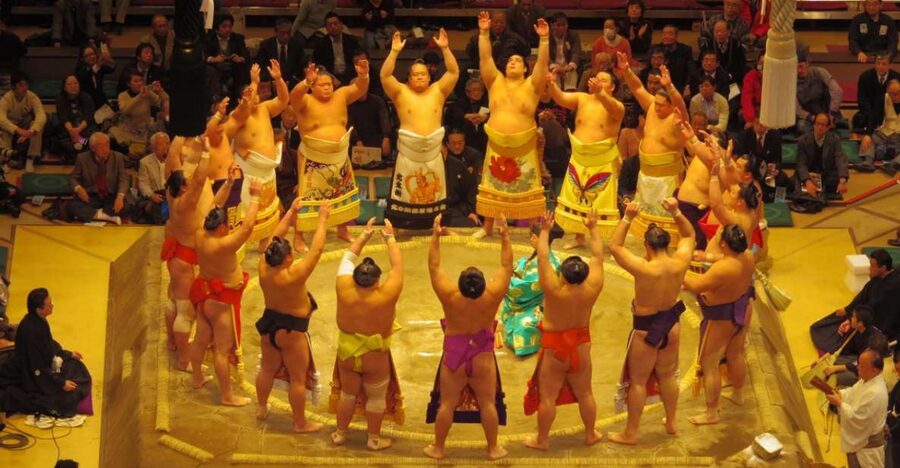
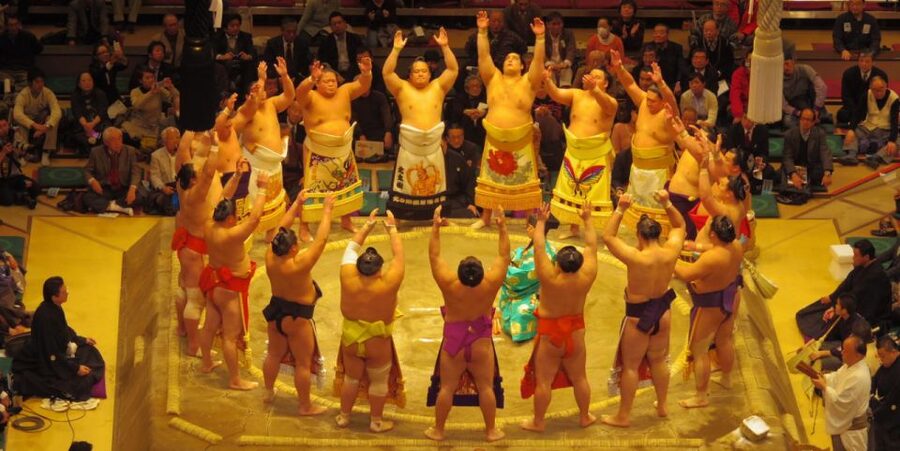
The afternoon schedule is one of the strong points of this experience. The top division’s ring-entering ceremony begins at about 3:40 PM. The Yokozuna ceremony follows at 3:55 PM.
These are not warm-up events in the usual sporting sense. They are formal displays of rank, costume, movement, and tradition. The wrestlers enter in their ceremonial attire, and the atmosphere changes as the arena prepares for the highest-ranked bouts.
Your guide can explain what you are seeing instead of leaving you to guess. This matters because sumo has plenty of customs that are easy to miss, from the opening rituals to the way wrestlers prepare before a bout.
Arriving for the top divisions also gives you a better sense of the tournament’s build-up. The lower-ranked matches take place earlier in the day, while the arena becomes more animated as the leading wrestlers appear. You do not need to spend the whole day at the stadium to catch the part most first-time viewers want to see.
The main bouts from 4:10 to 6 PM
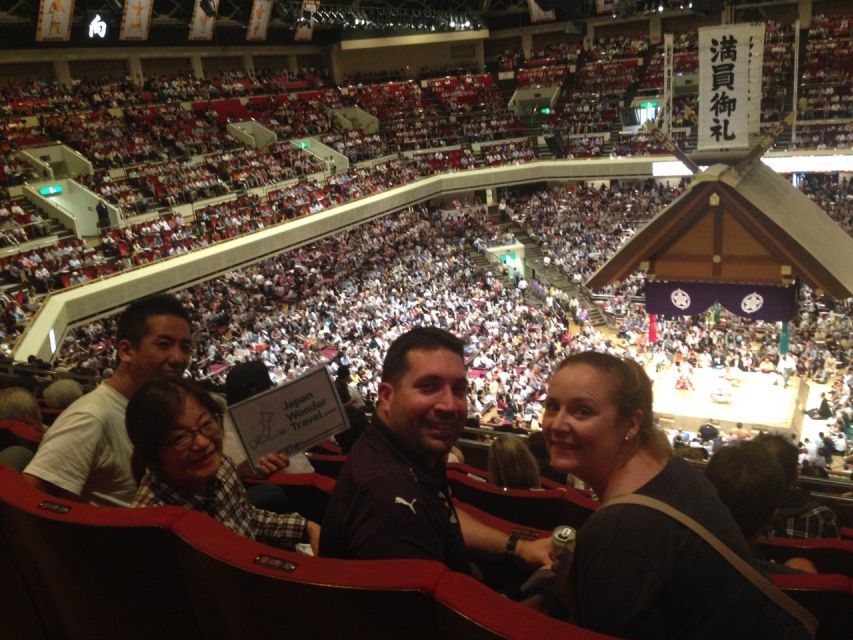
Makuuchi division bouts begin at about 4:10 PM, and the tournament finishes around 6 PM. This gives you nearly two hours of the strongest scheduled action, along with the rituals between bouts.
Do not expect every match to last several minutes. Many end quickly. That is part of the appeal, but it also means the guide’s explanations are valuable between bouts. You learn what to watch for in the initial charge, how a wrestler uses grip and balance, and why a short match can still be strategically important.
The guide may also help you choose wrestlers to support. Guides such as Sho and Taka have been praised for encouraging their groups to cheer for their favorite competitors. A supporter kit, when included with your option, adds to the fun without turning the event into a tourist performance.
The crowd is part of the experience. You hear applause, shouts, and reactions to powerful throws or unexpected wins. Sumo fans follow rankings and rivalries closely, so even a small amount of background information helps you understand why one bout receives more attention than another.
More tournament tickets in Tokyo:
- Tokyo: Sumo Tournament with Guide & Assigned Reserved Seat
★ 4.6 · 168 reviews - Tokyo: Sumo Practice Tour with Ring-Side Seat and Photoshoot
★ 4.7 · 103 reviews - Tokyo Sumo Morning Practice Tour w/ Ring-Side Seat + Photo Shoot
★ 5.0 · 93 reviews - Official Sumo Tournament Ticket with Guided Experience
★ 4.5 · 19 reviews
What your seat is really like
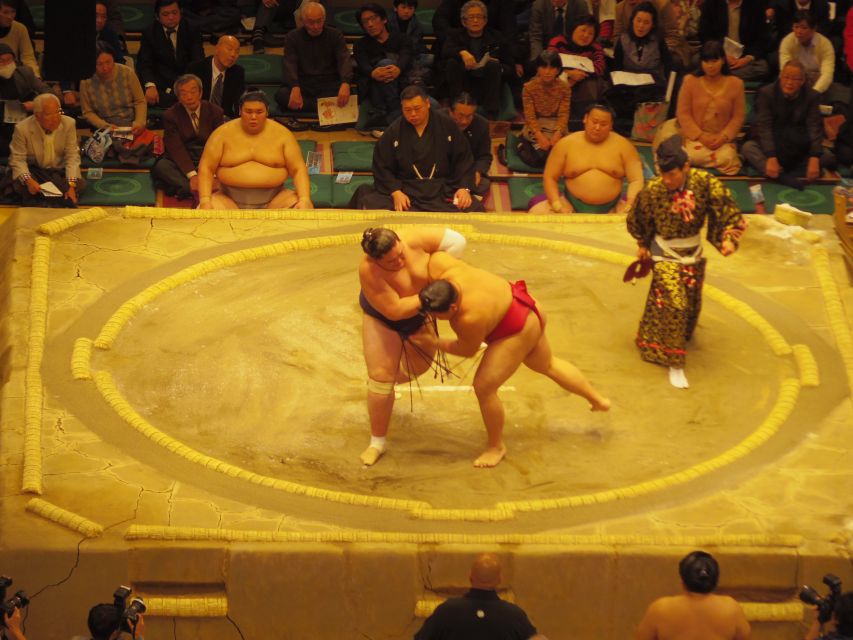
The standard option provides a 2F chair seat, with the exact location assigned by the operator. You cannot select a particular seat in advance, and the guide hands over the ticket on the day.
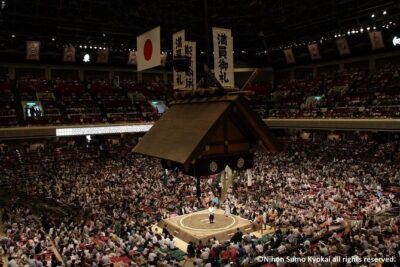
Some people find these seats farther away than expected, especially when looking at the stadium map. The arena is not enormous, though, and high seats can still offer a clear overall view of the ring. You see the complete movement of each bout and avoid having your view blocked by the people sitting in front.
The tradeoff is intimacy. You will not feel as close to the wrestlers as you would from a lower position. One useful tip is to bring glasses if you normally use them for distant viewing. Large luggage cannot be brought into the seating area, so leave suitcases at your hotel or use an appropriate storage service before you arrive.
The 1F choice is different. First-floor seating is provided in box seats only, and the option gives your party its own seating space rather than sharing with other people. This is the better choice if comfort, closeness, and a more traditional arena setting matter more than keeping the price down.
The guide makes the biggest difference
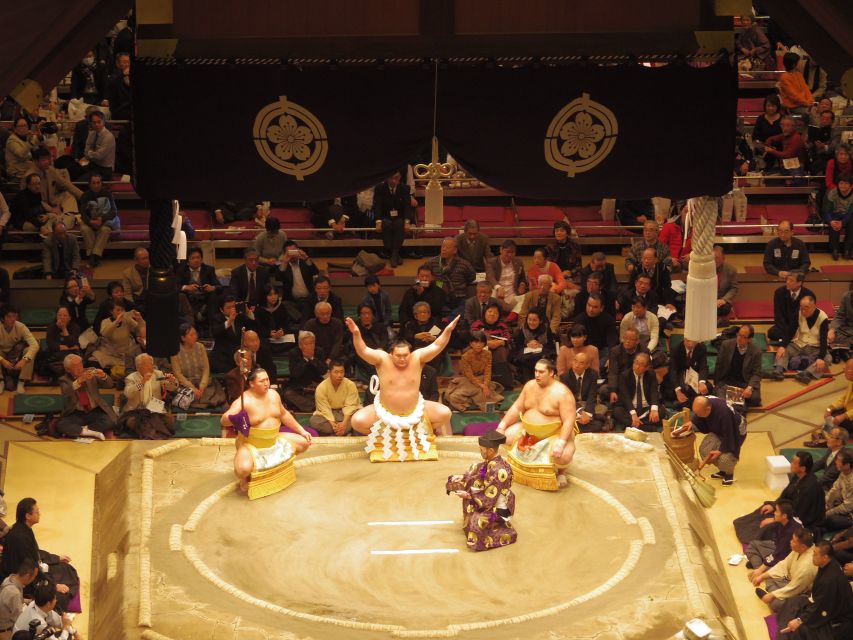
The guide is not just someone who leads you to the stadium door. The strongest part of the experience is the human explanation layered onto the action.
Mieko has been praised for preparing a bout sheet showing the day’s wrestlers and their current positions. That kind of simple handout can be more useful than a long lecture because you can refer to it as the tournament unfolds.
Other guides mentioned by name include Taka, Mia, Hiro, Sho, Mieko, Yuko, Michiko, Naomi, Tochi, Kaz, Maddie, and Skip. The quality of the experience may depend partly on who leads your group, but the repeated praise for guides sharing rules, customs, and wrestler details is a good sign.
You should still expect some independent viewing time. The guide may not provide constant commentary during every bout, and the tour is not a private lesson. Think of it as a supported visit: you receive context, can ask questions, and then enjoy the matches yourself.
That balance suits me. Sumo is best experienced as a live sporting event, not as a nonstop lecture.
Lunch, drinks, and the supporter kit
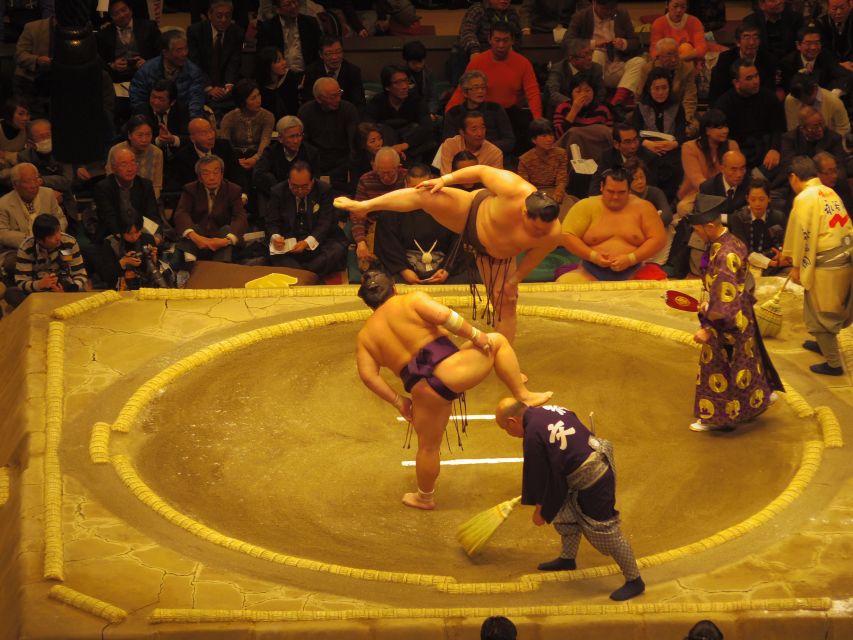
Food and drinks are not included in the standard package. You can buy food inside the stadium, and the arena has reasonably priced options according to the supplied visitor information.
Some booking choices include lunch, and the exact meal depends on the option selected. Chanko nabe, the hot-pot meal associated with sumo wrestlers, is available with certain versions. If you have allergies or dietary restrictions, state them when you book.
Read the lunch description carefully. The available packages are not identical, and a lunch box or hot-pot meal should not be assumed unless it is clearly listed in your selected option. This is one area where a few people have felt the package description was not clear enough.
The sumo fan cheer kit is also optional. If included, it gives you a small way to join the crowd and support a wrestler. It is not essential, but families and first-time spectators may enjoy having something tangible connected to the event.
Is $141 a fair price?
At $141 per person, this is not the cheapest way to enter the stadium. You are paying a markup over direct ticket prices, especially if you choose a basic 2F seat.
The value comes from access and ease. Sumo tickets can sell out rapidly through the official site, and buying them directly may be difficult if you do not read Japanese or do not know the release system. This package gives you a confirmed entry ticket, a meeting point, an English-speaking guide, and help reaching the correct seats.
I would compare the price with the risk of missing the tournament entirely. If official tickets are gone and your Tokyo dates are fixed, the extra cost can be reasonable for a rare event that may not return during your trip. If you are flexible and comfortable arranging tickets yourself, you may prefer to save the difference.
The 1F box option should be judged separately. It costs more, but your party gets its own seating space and a lower position. For a special occasion or a family group, that extra comfort may be worth it.
Who will enjoy this most?
This tour suits first-time sumo viewers, sports fans, families with older children, and anyone curious about a part of Japanese culture that is still practiced as a serious national sport.
It is especially useful if you want explanations in English. You will get more from the rituals and matchups when you understand the rankings, the wrestlers’ positions, and the reasons behind the crowd’s reactions.
Children three and under may enter free, but they do not receive their own seat and must sit on an adult’s lap. Children four and older need their own tickets. Strollers are not allowed, and the experience is not suitable for wheelchair users.
You should also be comfortable sitting through an afternoon program in an assigned seat. This is not a hands-on activity, and the guide cannot let you choose the exact chair location.
Practical advice for a smoother afternoon
Arrive early at the West Gate of JR Ryogoku Station. Keep your booking details available, and check the group color or number if your confirmation provides one.
Wear clothing that lets you sit comfortably for several hours. Eat beforehand or select a lunch option if you want a meal arranged, and remember that food and drinks are otherwise your responsibility.
Do not bring large luggage into the arena seating area. If you want the guide’s help during the matches, confirm that you booked the guided version rather than the entrance assistant option.
The experience ends back at the meeting point after the stadium visit. Cancellation is allowed up to 24 hours before the start for a full refund, and the reserve-now, pay-later feature can help if your Tokyo plans are still changing.
Should you book the Tokyo sumo tour?
Book it if your visit matches a Tokyo tournament and you want a real event without the hassle of finding scarce tickets yourself. The English guidance is worth a lot for first-time viewers, especially when a guide such as Mieko, Taka, Mia, or Sho helps you follow the wrestlers and rituals.
Choose 2F chair seats for the best balance of price and a broad view. Choose 1F box seats if you want your own seating space and a closer setting. Skip the tour only if you already have tickets, prefer to arrange everything independently, or dislike assigned seating.
For most first-time visitors, this is a strong way to see sumo as it is actually practiced: formal, loud, quick, highly competitive, and unmistakably Japanese.
FAQ
Where does the sumo tour meet?
The standard meeting point is the West Gate of JR Ryogoku Station at 2:15 PM. The exact meeting point may vary according to the option you book, so check your confirmation details.
How long does the tournament visit last?
The main scheduled visit runs from the 2:15 PM meeting time until about 6 PM. The Makuuchi ring-entering ceremony is at 3:40 PM, the Yokozuna ceremony is at 3:55 PM, and top-division bouts begin at 4:10 PM.
What seats are included?
Depending on your selected option, you receive a 2F chair seat or a 1F box seat. Specific 2F seats cannot be selected in advance. First-floor seating is available only in box seats.
Is food included?
Food and drinks are not included in the standard experience. Some options include lunch, such as a lunch box or chanko nabe, so check the exact package details before booking. Report allergies or dietary restrictions when making your reservation.
Can young children attend?
Children three and under can enter free, but they do not have their own seat and must sit on an adult’s lap. Children four and older need their own tickets.
Is the tour suitable for wheelchair users?
No. The experience is not suitable for wheelchair users. Baby strollers are also not allowed, and large luggage cannot be taken into the seating area.
Newest sumo experiences in Tokyo
- Tokyo Sumo History Tour with Chanko Nabe Lunch★ 5.0 · 3 reviews
- Tokyo Highlights Tour: Sumo, Sushi, Tea, and Tokyo Tower★ 5.0 · 2 reviews
- Tokyo: Know about Hokusai and Sumo culture in 2.5 hours★ 5.0 · 2 reviews
- TOKYO , No1 Yokozuna Stable Morning Practice in Ryogoku★ 4.5 · 3 reviews
- Tokyo 6hr Private Guided Tour & Sumo Show Lunch★ 5.0 · 3 reviews
- Tokyo Grand Sumo Tournament Viewing Tour★ 5.0 · 2 reviews
- Private Ryogoku Walking Tour with Sumo Wrestler and Master Guide★ 4.5 · 7 reviews
- Grand Sumo Tournament Tour w/an English Guide ,Tokyo January 2026★ 5.0 · 3 reviews
Sumo Tournament Tickets, compared.
Tokyo Grand Sumo Tournament Viewing Tour with Tickets
Read our review →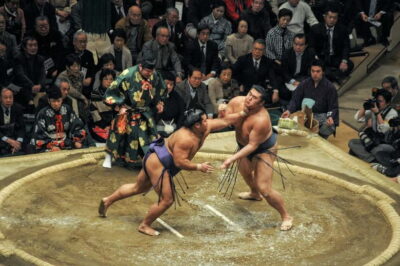
Sumo Tournament with Guide & Assigned Reserved Seat
Read our review →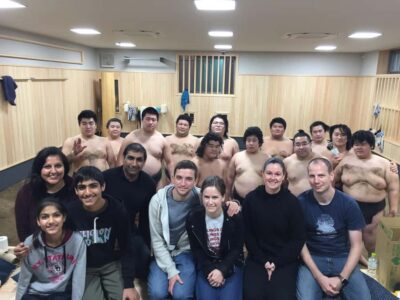
Sumo Practice Tour with Ring-Side Seat and Photoshoot
Read our review →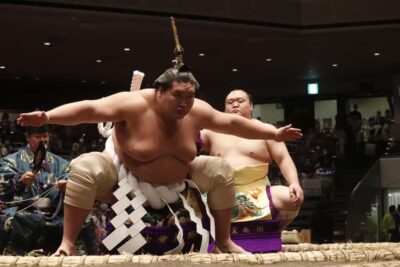
Sumo Wrestling Tournament with Chair Seat Tickets
Read our review →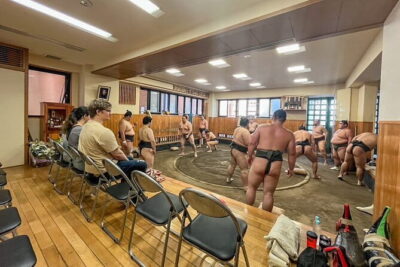
Tokyo Sumo Morning Practice Tour w/ Ring-Side Seat + Photo Shoot
Read our review →November Sumo Tournament tour in Fukuoka (Tickets Included)
Read our review →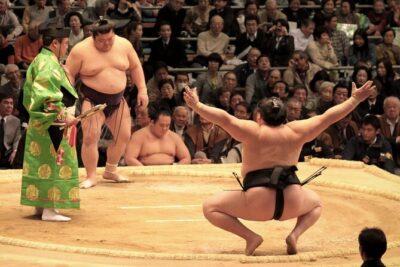
Official Sumo Tournament Ticket with Guided Experience
Read our review →
Chair Seat Guaranteed SUMO Practice +Photo +Culture Option
Read our review →Browse the lists this tour appears in