
REVIEW · GRAND SUMO TOURNAMENT TOURS
Tokyo – Grand Sumo Tournament
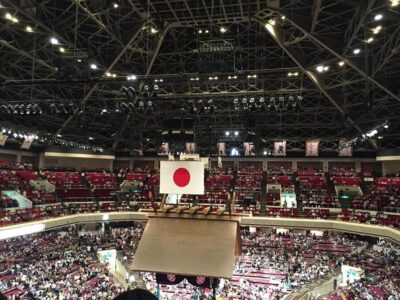
A sumo tournament is part sporting event, part sacred ceremony, and part grand theater. Inside Tokyo’s Ryogoku Kokugikan, you’ll watch powerful athletes perform ritual movements, collide with startling force, and leave the ring to the roar of a crowd that treats every bout like a championship game. The action is easy to follow, even if you know nothing about the rules.
I like two things right away: your admission is secured in advance, which matters during Japan’s six major tournament periods, and you can choose an upgraded seat for a better view. I also like the setting in Ryogoku, Tokyo’s sumo district, where the sport is woven into the character of the neighborhood.
The main catch is price. At $565 per person, this is a serious splurge for about two hours, and it is not a guided cultural tour. You receive a paper ticket, but transportation, commentary, and any temple or training visit are not included.
Key points to know before booking
- The tournament dates are fixed: Tokyo sessions run January 11 to 25 and May 10 to 24, 2026. The March tournament is in Osaka, not Tokyo.
- Ryogoku Kokugikan is the main attraction: You watch live sumo in Japan’s best-known sumo arena.
- This is ticket-only: No guide, transportation, training-stable visit, or added sightseeing is promised.
- The crowd is part of the show: Expect cheering that feels closer to a major league sports game than a quiet cultural performance.
- Seats can be upgraded: The listed price covers admission, while better seats require an additional fee.
- Plan for a paper ticket: Confirmation arrives when you book, but the experience uses a physical ticket rather than a simple mobile entry pass.
What you are really buying at Ryogoku Kokugikan
I would think of this experience as reserved access to a major Japanese sporting event, not as a traditional guided tour. You meet at Ryogoku Edo NOREN at 10:00 a.m., receive or use your paper ticket, and make your way to the Kokugikan for the tournament. The activity then ends back at the meeting point.
The wording around the schedule can be confusing. The experience is listed as about two hours, but a sumo tournament day is a larger event, with bouts and activity taking place across the day. Your exact viewing time and seat matter, so check the ticket details carefully when booking. Do not assume that a two-hour booking gives you a full day inside the arena.
The basic appeal is simple: you get to see professional sumo in its proper home, surrounded by Japanese fans. Television gives you the impact of a bout, but not the shared reaction of the audience. A sudden cheer, a sharp clap, or a wave of disappointment can help you understand the match even before you know every rule.
More tournament tours in Tokyo:
- Tokyo: Sumo Tournament Tour with Chair Seat Tickets
★ 4.6 · 753 reviews - Tokyo Grand Sumo Tournament Viewing Tour with Tickets
★ 5.0 · 692 reviews - Tokyo Sumo Wrestling Tournament Experience
★ 5.0 · 660 reviews
Why sumo feels like more than a wrestling match
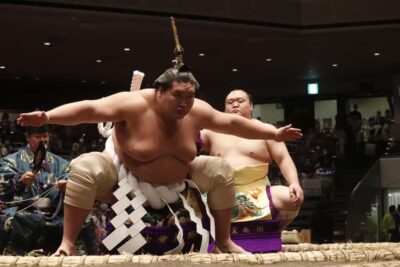
Sumo is often presented as a contest between two large athletes, but that misses much of what makes it special. Before the push and throw, wrestlers perform movements tied to ritual and discipline. They enter the ring, prepare themselves, and follow customs that connect modern competition with older religious traditions.
You do not need a lecture to notice the difference from an ordinary sporting event. The pace has pauses. The ceremony matters. The silence before a bout can be as striking as the impact when the wrestlers meet.
The experience information promises cultural significance, but it does not include a guide to explain each movement. I recommend reading a short introduction to sumo before you go, especially if this is your first tournament. Even a basic understanding of the ring, winning conditions, rankings, and opening rituals will make the two hours far more rewarding.
Some related sumo experiences in Ryogoku use hosts such as Ken and Shin, and past bookings connected with those programs have included explanations, training demonstrations, temple visits, and even hands-on practice. Those extras are not part of this ticket-only booking. You should not arrive expecting a personal introduction, a lesson, or a chance to wrestle a professional.
The atmosphere inside Tokyo’s sumo arena
The crowd is one of the strongest reasons to attend. Sumo can look formal and restrained from the outside, but the arena becomes loud when a favorite wrestler enters or a bout ends in a dramatic throw.
I like this mix of dignity and noise. One minute, the ring feels almost ceremonial. The next, the audience reacts like fans at a major baseball or football game. You can enjoy the event even if you cannot speak Japanese, because the basic drama is physical and immediate.
Language is less of a problem here than it would be during a guided history talk. You can watch the wrestlers, read the visual cues, and follow the crowd. Still, the lack of a guide means you will miss some context unless you prepare on your own.
A paper ticket also has an old-fashioned feel that suits the occasion, though it is less convenient than a mobile voucher. Keep it safe, and do not assume that your booking confirmation alone is the entry document unless the operator tells you otherwise.
Picking the right Tokyo tournament date
The 2026 Tokyo tournament periods listed for this experience are:
- January 11 to 25, 2026
- May 10 to 24, 2026
The March 8 to 22, 2026 tournament takes place in Osaka. That distinction matters if you are building a Tokyo itinerary. Booking the March option while expecting Ryogoku Kokugikan would be a costly mistake.
The tournament dates are popular, and the experience is usually booked well ahead of time, with an average lead time of about 38 days. I would reserve earlier if your Japan schedule is fixed, especially if you care about seat quality.
The listing gives a 10:00 a.m. meeting time. Confirm the precise arrangements after booking, since the event itself and the meeting point are not necessarily the same place. The stated meeting point is Ryogoku Edo NOREN, at 1-3-20 Yokoami, Sumida City, Tokyo 130-0015.
More sumo experiences in Tokyo:
- Tokyo: Sumo Show Experience with Chicken Hot Pot and a Photo
★ 4.8 · 6,678 reviews - Tokyo: Sumo Show and Dining Experience
★ 4.8 · 2,742 reviews - the SUMO show
★ 5.0 · 1,960 reviews - Tokyo Shinjuku Sumo Show & Experience with Photo
★ 5.0 · 1,750 reviews
Understanding the $565 price
At $565 per person, this is not a casual add-on. The value depends almost entirely on your interest in seeing a live tournament and the quality of the seat supplied.
I can see the value for a devoted sumo fan who has planned a Japan trip around the sport. Securing entry during a major tournament can remove a difficult booking hurdle, and the live atmosphere cannot be duplicated by watching online. If the ticket gives you a strong view, the price may feel justified for a once-in-a-lifetime event.
For a casual visitor, the calculation is harder. The booking does not include transportation, a guide, meals, a training visit, a temple stop, or a longer cultural walk. It also does not promise upgraded seating at the listed price. You are paying primarily for access to the tournament.
Before paying, I would ask exactly where the included seat is and what the paper ticket covers. An upgrade may improve the view, but it also pushes the total price higher. If you are comparing this with other sumo options, compare the actual seat location and inclusions, not just the headline price.
What the itinerary includes, and what it does not
The formal stop is Ryogoku Kokugikan, with admission included. That is the heart of the experience.
The tour does not include transportation. You must get to the meeting point and account for the trip between Ryogoku Edo NOREN and the arena if the operator does not escort you. The information supplied says the activity ends back at the meeting point, so plan your onward schedule with that return in mind.
There is no tour guide. That is important enough to repeat, because some sumo programs in the Ryogoku area include guides named Ken, Shin, Kevin, or other instructors. Those programs may cover temples, shrines, gardens, museums, training areas, lunch, or demonstrations. This booking should be judged on its live tournament access alone.
The maximum group size is listed as 20 people, but the ticket-only format means you should not expect the group to move as a guided unit for the entire event. Service animals are allowed, the meeting point is near public transportation, and most people can participate.
How to make the most of a short visit
Arrive prepared. Since you have only about two hours listed for the activity, do not spend your limited time trying to understand the basics after you take your seat.
I would learn these points first:
- The bout takes place inside the circular dohyo.
- A wrestler wins by forcing the opponent out or making any part of the body other than the soles of the feet touch the ground.
- Ritual movements before the bout are not filler. They are part of sumo’s identity.
- Rank and status affect how wrestlers are presented and received.
- The audience reaction can help you spot an important or dramatic matchup.
I would also leave room in your day for the area around Ryogoku, but I would treat that as your own sightseeing rather than part of the booking. The experience itself does not promise a temple, shrine, garden, museum, lunch, or training stable.
The best seat is not always simply the closest one. A slightly higher view may help you see the full ring and the wrestlers’ footwork. If you are considering an upgrade, ask what changes in practical terms: distance, angle, section, or visibility.
Who will enjoy this most
I would recommend this to a serious sumo fan, a first-time visitor who wants one memorable Japanese cultural event, or anyone who enjoys live sports even without knowing every rule. Families can appreciate the spectacle, though younger children may find the ritual pauses less exciting than the bouts.
It suits independent visitors who are comfortable making their own way to the arena and reading the event as it unfolds. The lack of language barriers is a real advantage, but the lack of a guide means you need to be self-directed.
I would be more cautious if your main goal is to meet wrestlers, watch stable training, practice sumo moves, or learn from a host. Some past sumo programs in the area have included those activities, but they are separate from this ticket-only tournament booking.
I would also hesitate if $565 would force you to cut other important parts of your Japan trip. Sumo is special, but this is a premium price for a short, narrowly focused event.
Booking and cancellation details worth noticing
You receive confirmation at the time of booking. The experience is non-refundable and cannot be changed for any reason, so I would not book until your Tokyo dates are firm.
The activity is offered by Island Travel Specialists. Since dates, venue, seating, and city vary by tournament period, read the final confirmation carefully. In particular, verify that you selected Tokyo rather than Osaka and understand the seat arrangement before committing to the non-refundable purchase.
My verdict on the Tokyo Grand Sumo Tournament
I would book this if seeing live professional sumo is one of the main reasons you are visiting Japan. The arena, the rituals, the force of the bouts, and the Japanese crowd make this far more meaningful than a quick photo stop. Prearranged admission also saves you from trying to solve the ticket problem at the last minute.
I would skip it if you want a guided lesson, a stable visit, a temple tour, or hands-on practice. At $565, the ticket must deliver the experience you actually want. For a committed sumo fan, it can be a powerful memory. For everyone else, compare the seat and inclusions carefully before spending this much.
FAQ
Where does the Tokyo sumo experience take place?
The main event takes place at Ryogoku Kokugikan in Tokyo.
What is the meeting point?
The listed meeting point is Ryogoku Edo NOREN, 1-3-20 Yokoami, Sumida City, Tokyo 130-0015.
What time does the activity start?
The stated start time is 10:00 a.m.
How long does the experience last?
The experience is listed as approximately two hours.
Is admission included?
Yes. Admission to the sumo tournament is included in the listed booking.
Are upgraded seats available?
Yes. Upgraded seats are available for an additional fee.
Is transportation included?
No. Transportation is not included.
Is a tour guide included?
No. This is described as a ticket-only event with no tour guide.
Does the booking include a training-stable visit?
No training-stable visit is included in the stated itinerary.
Is the March 2026 tournament in Tokyo?
No. The March 8 to 22, 2026 tournament is listed for Osaka. The Tokyo dates are January 11 to 25 and May 10 to 24, 2026.
Newest sumo experiences in Tokyo
- Tokyo Sumo History Tour with Chanko Nabe Lunch★ 5.0 · 3 reviews
- Tokyo Highlights Tour: Sumo, Sushi, Tea, and Tokyo Tower★ 5.0 · 2 reviews
- Tokyo: Know about Hokusai and Sumo culture in 2.5 hours★ 5.0 · 2 reviews
- TOKYO , No1 Yokozuna Stable Morning Practice in Ryogoku★ 4.5 · 3 reviews
- Tokyo 6hr Private Guided Tour & Sumo Show Lunch★ 5.0 · 3 reviews
- Tokyo Grand Sumo Tournament Viewing Tour★ 5.0 · 2 reviews
- Tokyo Ginza : Sumo and Mikoshi Experience,Open from Sep.★ 5.0 · 8 reviews
- Complete Sumo Experience in Tokyo★ 4.5 · 3 reviews
Grand Sumo Tournament Tours, compared.
Tokyo Grand Sumo Tournament Viewing Tour with Tickets
Read our review →
Ultimate Sumo Tournament: Tokyo, Osaka, Nagoya, Fukuoka
Read our review →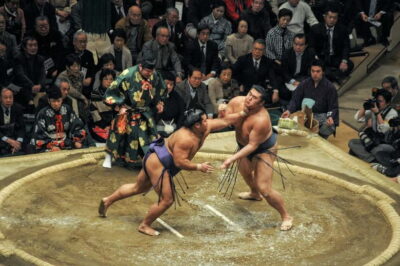
Sumo Tournament with Guide & Assigned Reserved Seat
Read our review →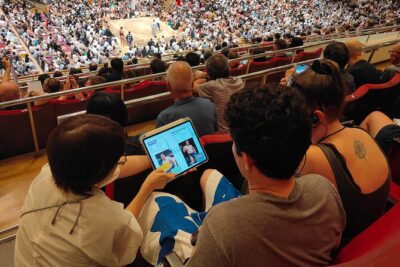
Sumo Wrestling Tournament with Chair Seat Tickets
Read our review →November Sumo Tournament tour in Fukuoka (Tickets Included)
Read our review →Browse the lists this tour appears in