
REVIEW · SUMO TOURNAMENT TICKETS
Tokyo Grand Sumo Tournament Viewing Tour with Tickets
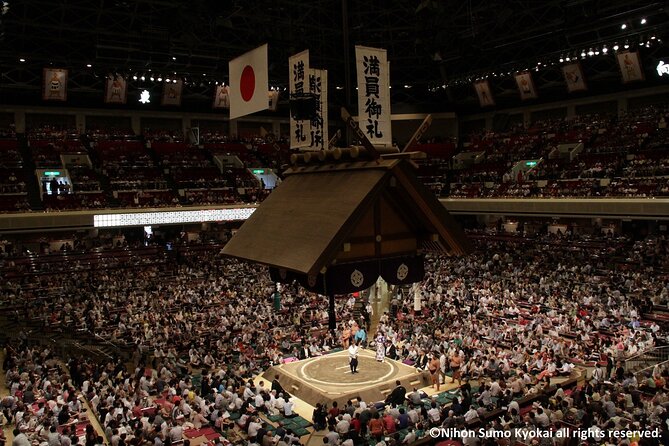
Tokyo’s Grand Sumo Tournament is not just a sporting event. It is a carefully staged display of ritual, rank, costume, noise, and raw force. You meet near Ryogoku Kokugikan, get a short introduction to sumo, then enter the arena for the afternoon bouts and ceremonies.
I like two things here. First, your English-speaking guide gives the customs and ranking system some shape before the action starts. Second, the ticket solves the hardest part of the day: getting into a tournament that can sell out quickly. Guides including Miki, Michiko, Halle, Shin, Ako, and Edi have been praised for adding useful backstories and humor.
The main drawback is the short lecture and the price. At about $124, this is a premium way to attend, and the B seats do not include the snack or cheering towel. If you already understand sumo and can secure a ticket yourself, the tour may offer more help than you need.
Key points to know before booking
- A real Grand Sumo Tournament: Watch the afternoon bouts at Ryogoku Kokugikan, not a demonstration made only for tourists.
- A useful English introduction: Learn about rituals, ranks, wrestlers, and the daily schedule before the higher-ranked matches begin.
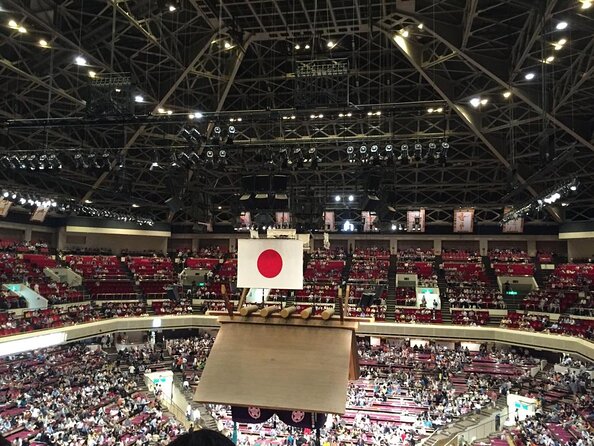
- Second-floor chair seating: You get a proper arena seat, though groups may be spread across different sections and seat locations are not always assigned in advance.
- S and A seat extras: These categories include one yakitori snack, one drink, and a cheering towel. B seats do not.
- A four-hour afternoon: The main schedule runs from the early afternoon until about 6:00 PM, with the best-known wrestlers appearing later.
- A guide who can make the difference: The strongest part of the tour is the explanation, especially for a first visit.
Why sumo is best seen at Ryogoku Kokugikan
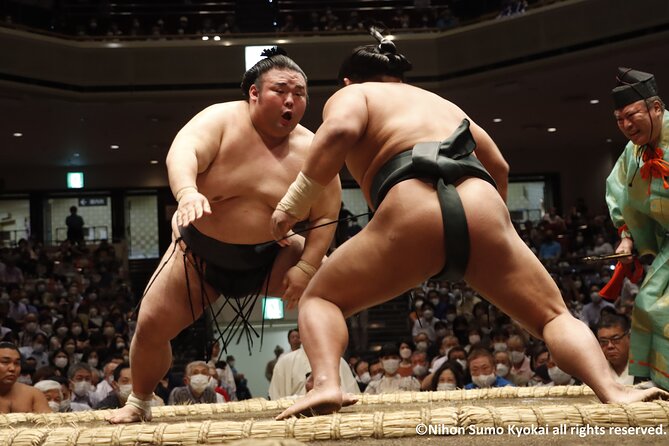
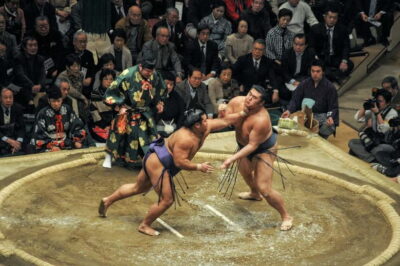
Sumo can look simple on television: two large athletes push, slap, and throw until one steps outside the ring. In the arena, the build-up matters just as much as the bout.
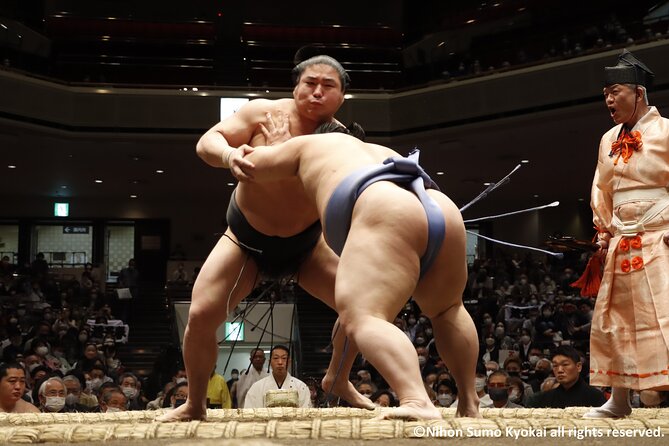
The wrestlers enter a raised clay ring covered with sand. They face one another, stamp their feet, throw salt, and repeat the formal movements before the match begins. The slow start makes the sudden clash feel even sharper.
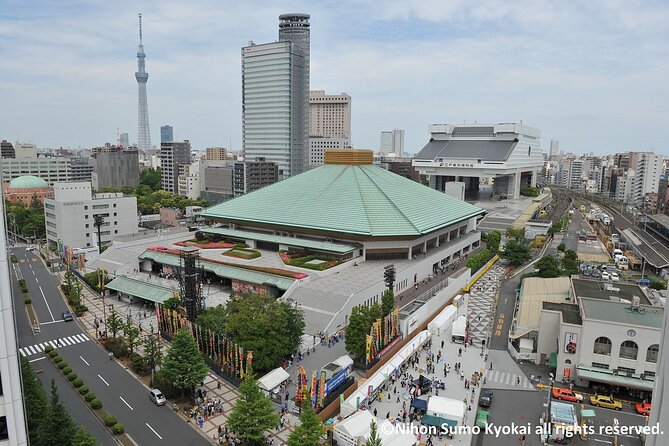
The Grand Sumo Tournament is held at Tokyo’s Ryogoku Kokugikan, the city’s main sumo arena. This experience gives you access during the tournament itself, when the building is filled with spectators, banners, ceremony, and the steady rhythm of matches.
I would not book this expecting a nonstop sports show. Sumo includes waiting, ritual, short bouts, and long gaps between some moments of action. That is part of the experience. The event is built around ceremony and rank, not just speed.
More tournament tours in Tokyo:
- Tokyo: Sumo Tournament Tour with Chair Seat Tickets
★ 4.6 · 753 reviews - Tokyo Sumo Wrestling Tournament Experience
★ 5.0 · 660 reviews - Ultimate Sumo Tournament: Tokyo, Osaka, Nagoya, Fukuoka
★ 5.0 · 468 reviews
Meeting near the arena and learning the basics
You meet your guide at the Ryogoku View Hotel, at 2-chōme-19-1 Ryōgoku. The hotel is close to the arena and near public transportation, but you should still arrive at least 10 minutes before the stated meeting time. Late arrivals can lose their reservation, so this is not a good place to cut things close.
The opening talk lasts about 20 minutes. A licensed English guide interpreter explains sumo traditions, the lives of the rikishi, the structure of the professional divisions, and the customs you are about to see.
You also receive an English sumo pamphlet and a ranking list for the day. Keep both. The ranking sheet helps you identify the wrestlers, and the pamphlet gives you something to read during the quieter stretches.
The introduction is useful, but keep your expectations sensible. One critical experience described the lecture as only about 15 minutes and felt it did not justify the extra cost. That is a fair warning. The value is not in a long classroom session. It is in combining a short orientation with a hard-to-get event ticket and assistance inside the arena.
What you see before the first major bouts
The arena and its lobby offer more than a route straight to your seat. Check the entrance area for championship flags and objects presented to successful sumo wrestlers. It is also a popular place for photographs.
The Sumo Museum inside the arena displays items linked to the sport, including woodblock prints and folding screens. You can also look for kesho-mawashi, the richly decorated ceremonial aprons worn by wrestlers in the top division, called makuuchi.
These details help explain why sumo is not simply wrestling in a Japanese setting. Clothing, banners, entrances, rankings, and gestures all carry meaning. If you arrive focused only on the final bouts, you may miss the visual language of the sport.
The schedule gives you time to look around, though the exact flow may depend on the day and your seat access. The guide can help you find the museum, lobby displays, seating area, and vendors.
Understanding the tournament schedule
The afternoon is arranged by rank. Junior division matches usually come first, followed by the higher-ranked wrestlers later in the day.
The timing listed for this experience is:
- 1:10 PM to 6:00 PM for S and A seating
- 2:30 PM to 6:00 PM for B seating
- 3:40 PM: Makuuchi wrestlers’ ceremonial entrance
- 3:40 PM: Yokozuna grand champion ring entrance, if a Yokozuna is present
- 4:00 PM: Makuuchi division matches
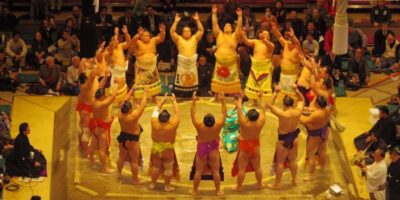
- 6:00 PM: Bow-twirling ceremony
This order is important when you plan the rest of your Tokyo day. The headline wrestlers do not appear first. If you have a B seat, you arrive later and miss some of the lower-division action. That may suit you if you mainly want the top division. If you want a fuller picture of sumo, the earlier S or A schedule gives you more time in the arena.
The Yokozuna entrance does not take place if no Yokozuna is present. That is a useful detail to understand before booking. You are paying to attend the tournament, not to guarantee every possible ceremonial moment.
More tournament tickets in Tokyo:
- Tokyo: Sumo Tournament with Guide & Assigned Reserved Seat
★ 4.6 · 168 reviews - Tokyo: Sumo Practice Tour with Ring-Side Seat and Photoshoot
★ 4.7 · 103 reviews - Tokyo Sumo Morning Practice Tour w/ Ring-Side Seat + Photo Shoot
★ 5.0 · 93 reviews - Official Sumo Tournament Ticket with Guided Experience
★ 4.5 · 19 reviews
What the guide adds during the matches
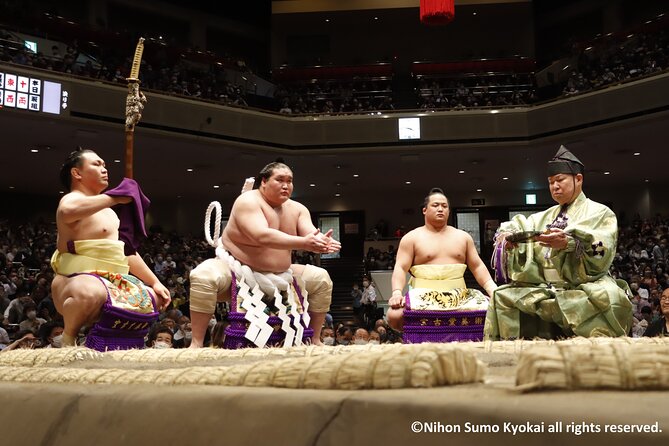
Once you are seated, the guide’s role becomes less formal. Your guide may explain the rules, ranking lists, rituals, and the wrestlers’ backgrounds. Several guides have been singled out for making the event easier to follow, including Miki, Michiko, Halle, Shin, Ako, and Edi.
The best guides do more than translate words. They point out why a wrestler receives a particular level of attention, explain what happens before the bout, and give you a reason to care about the names on the sheet.
One particularly useful kind of commentary is the backstory. Knowing a wrestler’s nickname, recent status, or position in the ranking can turn a short bout into a contest with some meaning. You are no longer watching two unfamiliar athletes collide. You have a little context for the people in the ring.
The guide may not be able to talk during every ceremony. You must wait before entering your seating area if a match, speech by the Sumo Association, Makuuchi entrance, Yokozuna entrance, or ritual stomping ceremony is underway. That rule protects the audience and the performers, but it can be inconvenient if you are returning from the lobby.
The guide may also sit near the group or check on you during the tournament, but the exact arrangement can vary. Treat the guide as a helpful escort and interpreter, not as a private commentator for every second of the event.
Choosing between S, A, and B seats
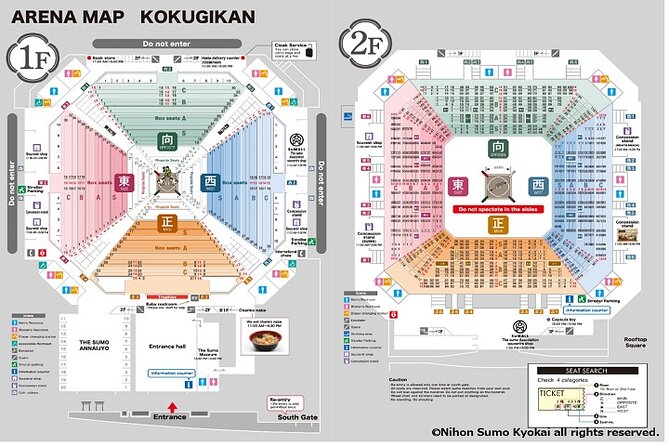
The experience includes second-floor chair seating, but the available category depends on what you book. Seat locations may not be designated until the day of the event.
Groups can be split across the main, opposite, east, and west sides of the arena. Even people booked together may not sit in one uninterrupted row. If staying side by side is essential, ask about this before purchasing, since the supplied conditions do not promise adjacent seats.
The S and A categories include:
- One light snack, normally Kokugikan specialty yakitori
- One drink
- One cheering towel
The B category does not include these extras. The yakitori is not vegetarian, and no vegetarian alternative is provided. If you choose not to eat it, no replacement is offered.
Second-floor seating is a sensible compromise. You are not at floor level, but you have a proper chair and a broad view of the ring. One account specifically described A seating as somewhat far away while still offering a good view. That is the right way to think about it: you gain access and perspective, but this is not the same as sitting beside the ring.
Bring your attention, not a large bag. Suitcases and big luggage cannot go into the seating area, and luggage cannot be left at the meeting hotel. Store it at your accommodation or in a coin locker before arriving.
The snack, vendors, and arena rules
If you have S or A seating, the yakitori and drink make a pleasant part of the day, but they are not a meal. You can buy more food and refreshments from shops on the first and second floors of the arena.
You cannot bring food or drinks, including alcohol, into Kokugikan. Plan to purchase inside if you need more than the included serving.
The cheering towel is a small but useful souvenir. You receive one per person, with no choice of color or wrestler name. B-seat holders do not receive one.
Families can bring children up to age three, but the child must sit on a parent or guardian’s lap. Very young children do not receive the snack, drink, or towel included with S and A seating. Strollers cannot enter the seating area, though storage areas are available on the first and second floors. The storage area is not supervised for theft.
Participants under 18 need written parental permission. Anyone under 15, or not yet enrolled in middle school, must be accompanied by a parent or guardian.
Is $124 good value for a sumo ticket?
At $124, this is not a cheap afternoon. The value depends on what you are buying.
You are paying for more than a chair. The package combines a tournament ticket, a guide, an English pamphlet, a ranking list, and, with S or A seating, the snack, drink, and towel. Most important, it gives you a practical route into an event that can sell out very quickly.
For a first-time visitor, that convenience has real value. Buying directly may be cheaper in theory, but it requires planning, availability, and the confidence to understand the arena and schedule on your own. The guide also removes some of the confusion around the rituals and ranking system.
For a committed sumo fan who already knows the sport, the lecture may feel basic. If you can obtain a suitable ticket independently, you may prefer to spend less and explore the arena on your own.
The ticket is non-refundable and cannot be changed after booking. Confirm availability within 48 hours, but do not treat the reservation as flexible. You should be certain of your date before paying.
Who will enjoy this most
I would recommend this experience most strongly to a first-time sumo spectator, a visitor who wants English explanations, and anyone who is visiting Tokyo during a tournament without local help.
It also works well for families with school-age children, provided everyone understands the seating and luggage rules. The short lesson gives children a simple framework, while the matches provide bursts of action that are easy to watch.
It may be less suitable for someone who wants a private guide, guaranteed adjacent seating, a vegetarian snack, or a long cultural lecture. The group can include up to 19 people, and groups of 20 or more are divided. The guide’s attention is shared.
You should also allow enough time for the full afternoon. Leaving before the main division may mean missing the most anticipated matches and the closing bow-twirling ceremony.
My practical advice for getting the most from the day
Arrive early. The meeting location is close to the arena, but you need time to find the hotel, meet your guide, and avoid losing your place.
Read the ranking list before the Makuuchi matches begin. Even a few familiar names will make the action easier to follow.
Take time in the lobby and museum. The woodblock prints, folding screens, flags, and ceremonial aprons give the event a visual and historical frame.
Do not plan a tight evening appointment immediately after 6:00 PM. The advertised end is around 6:00 PM at Kokugikan, and you must make your own way to the next destination.
Bring a small bag only. A phone, wallet, pamphlet, and ranking sheet are enough. Large luggage will create a problem.
Pay attention to the rituals. The salt, stomping, entrances, and bow-twirling ceremony are not filler. They show how sumo connects athletic competition with formal ceremony.
Should you book the Tokyo sumo tour?
Book it if seeing a real Grand Sumo Tournament is high on your Tokyo list and you want the ticket, route, and English explanation handled together. The guides can turn an unfamiliar sport into an engaging afternoon, and the chance to see the Makuuchi entrance and top-division bouts is hard to replace.
Think twice if you already understand sumo, need seats together, or are mainly seeking the lowest ticket price. The lecture is brief, the seating category matters, and the booking cannot be changed or refunded.
For most first-time visitors, I think the convenience is worth the premium, especially during a busy tournament date. Just choose your seat category carefully, arrive early, store your luggage elsewhere, and accept that the afternoon is a shared group experience rather than a private tour.
FAQ
Where does the tour begin?
You meet your guide at Ryogoku View Hotel, 2-chōme-19-1 Ryōgoku, Sumida City, Tokyo 130-0026. The hotel is near Ryogoku Kokugikan and public transportation.
Where does the tour end?
The tour ends at Ryogoku Kokugikan National Sumo Arena around 6:00 PM. You make your own way to your next destination.
How long does the experience last?
The experience lasts approximately four hours. S and A seating is listed from 1:10 PM to 6:00 PM, while B seating is listed from 2:30 PM to 6:00 PM.
What is included with the ticket?
The package includes second-floor chair seating, a professional guide, an English sumo information pamphlet, and a sumo-ranking list. S and A seating also includes one yakitori snack, one drink, and one cheering towel.
Are food and drinks allowed inside Kokugikan?
No. Bringing food and drinks, including alcohol, into the arena is prohibited. You can purchase refreshments from vendors inside.
Can I choose my exact seat?
Seats may not be designated until the day of the tour. Groups may be seated separately, and seating can be spread across the main, opposite, east, and west sides of the arena.
Can I bring a suitcase or stroller?
Large luggage cannot be brought into the seating area, and luggage cannot be stored at the meeting hotel. Stroller storage is available on the first and second floors, but strollers cannot enter the seating area.
Newest sumo experiences in Tokyo
- Tokyo Grand Sumo Tournament Viewing Tour★ 5.0 · 2 reviews
- Tokyo Sumo History Tour with Chanko Nabe Lunch★ 5.0 · 3 reviews
- Tokyo Highlights Tour: Sumo, Sushi, Tea, and Tokyo Tower★ 5.0 · 2 reviews
- Tokyo: Know about Hokusai and Sumo culture in 2.5 hours★ 5.0 · 2 reviews
- TOKYO , No1 Yokozuna Stable Morning Practice in Ryogoku★ 4.5 · 3 reviews
- Tokyo 6hr Private Guided Tour & Sumo Show Lunch★ 5.0 · 3 reviews
- Unique Afternoon Live Sumo training tour in Tokyo★ 5.0 · 6 reviews
- Sumo Training Watching Experience in Tokyo★ 4.5 · 8 reviews
Sumo Tournament Tickets, compared.
Sumo Tournament with Guide & Assigned Reserved Seat
Read our review →
Sumo Practice Tour with Ring-Side Seat and Photoshoot
Read our review →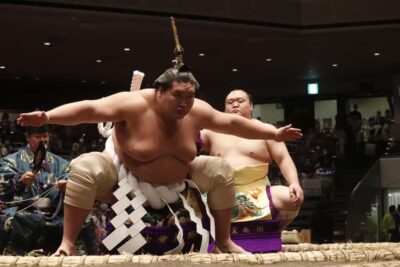
Sumo Wrestling Tournament with Chair Seat Tickets
Read our review →
Tokyo Sumo Morning Practice Tour w/ Ring-Side Seat + Photo Shoot
Read our review →November Sumo Tournament tour in Fukuoka (Tickets Included)
Read our review →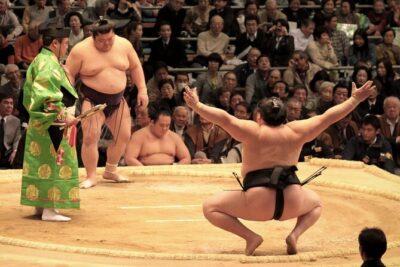
Official Sumo Tournament Ticket with Guided Experience
Read our review →
Chair Seat Guaranteed SUMO Practice +Photo +Culture Option
Read our review →Browse the lists this tour appears in