
REVIEW · SUMO TOURNAMENT TICKETS
November Sumo Tournament tour in Fukuoka (Tickets Included)
Sumo is not simply wrestling. It is a formal contest wrapped in ritual, from the salt thrown across the ring to the slow ring-entering ceremony and the sudden, explosive bouts. This Fukuoka tour gives you a reserved seat at the November tournament and an English-speaking guide to explain what is happening.
I like two things right away: tickets are included, which matters when tournament seats sell quickly, and the afternoon timing brings you to the arena for the stronger wrestlers. Guides such as Yuko, Masa, Asa, and Tam Tam have been praised for explaining rules, wrestler backgrounds, and the customs behind the sport.
The main caution is the seating. Your ticket is for a 3F Chair A or B seat, chosen for you, and some seats are near the back with small, tightly spaced chairs. At $261, you are paying for access and guidance, not a close-up view of the ring.
Key points before you book
- Fukuoka hosts the November tournament: This is the city’s one annual chance to see a major 15-day sumo meet.
- The afternoon focuses on top-level action: The strongest wrestlers appear from about 3:30 PM onward, with the tournament ending at 6 PM.
- Reserved 3F seating is included: You cannot select your exact seat, and the ticket will be either Chair A or Chair B.
- The guide adds essential context: You receive explanations of sumo rules, rituals, wrestler rankings, and traditions.
- Food and beer are available inside: Yakitori, drinks, and other purchases are not included, so bring spending money.
- The group is advertised at up to 15 people: Arrive early and confirm the meeting instructions, since the meeting point has caused confusion for some people.
Why Fukuoka’s November sumo tournament matters
Japan holds six major sumo tournaments each year. Tokyo hosts three, while Osaka, Nagoya, and Fukuoka each host one. Fukuoka’s tournament takes place in November, making it one of the city’s most distinctive seasonal events.
The tournament lasts 15 days. Wrestlers compete through a demanding schedule, and each afternoon brings a mix of lower-ranked and top-ranked matches. The early bouts begin around 8 AM, but this tour starts at 2:30 PM, when the day becomes more exciting for most first-time viewers.
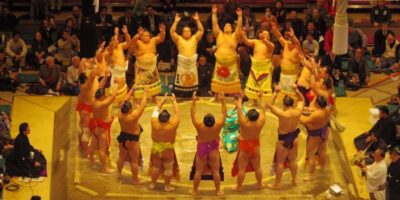
At about 3:30 PM, the top wrestlers take part in the dohyo-iri, the ring-entering ceremony. They step into the arena in a formal procession before the afternoon’s main contests. The ceremony helps you see that sumo is not just about pushing an opponent out of a circle. Rank, ritual, discipline, and public ceremony all matter.
The tournament finishes around 6 PM. This tour lasts about three and a half hours, so you see the heart of the afternoon program without committing to the full eight-hour event.
More tournament tours in Japan:
- Tokyo: Sumo Tournament Tour with Chair Seat Tickets
★ 4.6 · 753 reviews - Tokyo Grand Sumo Tournament Viewing Tour with Tickets
★ 5.0 · 692 reviews - Tokyo Sumo Wrestling Tournament Experience
★ 5.0 · 660 reviews
Meeting at Fukuoka Kokusai Center at 2:15 PM
The meeting point is Fukuoka Kokusai Center, 2-2 Chikkōhonmachi, Hakata Ward. The stated meeting time is 2:15 PM, with the group leaving at 2:30 PM sharp.
That 15-minute window matters. This is a group tour, and the guide cannot wait indefinitely for late arrivals. Make the venue your target, not simply the general Hakata waterfront area, and allow enough time to find the entrance and your guide.
The meeting instructions deserve careful attention. Some people have found the location and guide identification less clear than expected, so read the pickup information closely before leaving your hotel. The guide may be identified by a red jacket and green board, but confirm the current instructions with your booking details.
Once assembled, the guide leads the group toward the convention center and explains the sport before or around the start of the event. The exact balance of instruction and live commentary can vary by guide, but the goal is to help you understand what you are seeing instead of watching a series of mysterious collisions.
What the guide adds to the afternoon
Sumo is easy to watch and surprisingly hard to understand at first. A bout can last only a few seconds, but the formal preparation may take much longer. Wrestlers face each other, stamp their feet, scatter salt, and return to position. Without context, these actions can look repetitive. With a guide, they begin to make sense.
The tour covers the basic rules and the sport’s history and traditions. You can also ask questions during the matches. That is useful when you want to know why a bout ended immediately, what a wrestler’s rank means, or why a particular ritual takes place.
Several guides have received especially warm praise for their personal approach. Yuko has been described as making the experience memorable, while Masa has been noted for answering questions throughout the afternoon. Asa has earned praise for her enthusiasm and attention to the group. Tam Tam has been singled out for showing how sumo is as much ritual as sport.
You should not assume a particular guide will lead your departure. Names such as Yuko, Masa, Asa, and Tam Tam come from individual tour experiences, not a guaranteed guide assignment. The important point is that the tour depends heavily on the person leading it. A strong guide can turn an unfamiliar sport into a compelling cultural experience.
One practical improvement is the use of an audio guide alongside live explanations. This can help when the group is larger or when the arena noise makes it hard to hear. The advertised maximum is 15 people, though some past groups were described as larger. If personal attention is important to you, ask about the expected group size before booking.
Inside the arena: rituals, noise, and sudden action
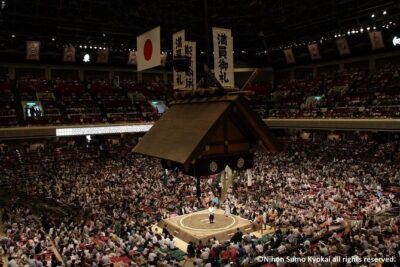
The Fukuoka Kokusai Center becomes a serious sporting venue during the November meet. The atmosphere changes as the higher-ranked wrestlers prepare to enter. Conversations quiet, attention turns toward the dohyo, and the formal movements carry as much weight as the bout itself.
The actual contests are short and forceful. A wrestler can win by pushing his opponent out of the ring or forcing part of the body, other than the soles of the feet, to touch the ground. Your guide can explain the decisions and the techniques as they happen.
The arena is also relaxed in a distinctly Japanese way. You can buy beer, yakitori, and other food inside and eat or drink at your seat. Food and beverages are not part of the tour price, so carry money for purchases. One useful tip is to bring cash for food, drinks, and merchandise.
You may also bring your own food and drink into the arena, according to the tour information and direct experience described for this activity. Keep your space tidy, especially if you are sharing a compact seating area with other people. The sumo hall is a place for excitement, but it is also a formal public venue.
More tournament tickets in Japan:
- Tokyo: Sumo Tournament with Guide & Assigned Reserved Seat
★ 4.6 · 168 reviews - Tokyo: Sumo Practice Tour with Ring-Side Seat and Photoshoot
★ 4.7 · 103 reviews - Osaka: Sumo Wrestling Tournament with Chair Seat Tickets
★ 4.7 · 102 reviews - Tokyo Sumo Morning Practice Tour w/ Ring-Side Seat + Photo Shoot
★ 5.0 · 93 reviews
The 3F Chair A and B seats
The ticket included with this tour is a 3F Chair A or B seat. You cannot choose the exact seat, and the guide hands out the tickets on the tour date.
This is the most important detail to understand before paying $261. The tour does not promise a ringside or premium view. Some people have found the upper-level view perfectly enjoyable, especially with the guide’s explanations, while others have felt disappointed by a last-row position and small chairs.
From the third floor, you should expect a broad view of the ring rather than the close physical detail you would get near the dohyo. You can still follow the match, see the ceremonies, and absorb the noise of the hall. But if your dream is to watch every expression and impact at close range, this may not be the right seat category.
Past booking descriptions have also caused confusion about seat quality. The current information clearly states 3F Chair A or B, but check the details attached to your own booking and do not rely on an assumption that you are receiving an S-class seat. The value of this tour is access plus interpretation. The seat is not the strongest part of the package.
Is $261 a fair price?
At $261, the price needs careful thought. You are not paying only for a standard admission ticket. You are paying for a ticket secured in a popular tournament, an English-speaking guide, explanations of the sport, and assistance at an event where direct tickets can sell out quickly.
That convenience has real value if you tried and failed to buy through the official site. Sumo tickets are known to disappear quickly, and the Fukuoka tournament is held only once a year. For a visitor with one possible date in Fukuoka, guaranteed entry may matter more than getting the lowest ticket price.
The weak point is that the official face value of the seat may be much lower than the tour price. One past booking experience involved a seat near the back and a large markup over the ticket’s listed value. The guide can add useful cultural context, but you need to decide how much that service is worth to you.
I would book this at $261 only if one of these points applies:
- You have limited time in Fukuoka and want a ready-made plan.
- You could not secure official tickets.
- You want an English explanation of the rules and customs.
- You are comfortable with a 3F seat and do not expect a close view.
- You value having someone direct you through a busy, sold-out event.
If you are mainly buying a premium seat, this is not a safe choice. Compare the seat category and the official ticket price before booking, and treat the guide as the main added service.
Family details, luggage, and access
Most people can take part, and the venue is near public transportation. The tour is not described as physically demanding, but you should be ready to remain in your assigned arena seat for the afternoon.
Children aged three and under can enter free, but they do not receive their own seat. They must sit on an adult’s lap. Children aged four and older need their own tickets.
Baby strollers can be stored in a designated area, but they cannot be taken up to the seats. Large luggage is also not permitted at your seat. Travel light for this outing, especially if you are going directly from a hotel or train station.
The tour ends back at the meeting point after the event. The cancellation policy allows a full refund when you cancel at least 24 hours before the start time. Cancellations made within 24 hours are not refunded, and changes inside that period are not accepted.
Who will enjoy this tour most
This is a good fit if you are new to sumo and want the rules explained in plain English. The sport has layers that are easy to miss, and a guide can point out the meaning behind the rituals and help you follow the wrestlers.
It also suits people who want a lively cultural afternoon without spending the full day at the arena. You arrive in time for the stronger wrestlers, the dohyo-iri, and the main contests, then finish around 6 PM.
Families can join, but the seating limits matter. A child aged three or under will need to sit on your lap, and strollers stay downstairs. Older children need their own tickets.
This is less suitable if you want a private guide, a small guaranteed group, or a premium seat close to the ring. The advertised group limit is 15, and some past experiences involved larger groups. Ask about the group size if close interaction is a major reason for booking.
How to make the afternoon better
Arrive before 2:15 PM. Do not aim for a 2:30 PM arrival, since the group leaves at that time.
Bring cash for beer, yakitori, merchandise, and other purchases. Food and drinks are not included, although you can buy them inside or bring your own food and drink into the arena.
Read the seating terms carefully. Expect a 3F Chair A or B seat, not a selectable seat and not a guaranteed close-up position.
Listen for the explanations before the bouts begin, then ask questions during the matches. The value of the tour rises sharply when you use the guide to understand the rituals, rankings, and decisions rather than simply watching the action.
Finally, keep your expectations realistic. Sumo itself is the star. The guide can make it easier to appreciate, but no explanation can turn an upper-level seat into a ringside one.
Should you book the Fukuoka sumo tour?
Book it if you want a secure way into the November tournament and you value an English-speaking guide more than seat location. The afternoon schedule is smart, the event is genuinely distinctive, and the best guides can make the ceremony and rules far easier to follow.
Skip it if $261 feels high for a 3F seat, or if you are likely to be upset by a back-row view. In that case, try the official ticket route first and compare prices and seat categories carefully.
My advice is simple: book for access and explanation, not luxury seating. If you accept that trade-off, this can be one of Fukuoka’s most memorable cultural afternoons.
FAQ
When does the tour meet?
The meeting point is Fukuoka Kokusai Center, 2-2 Chikkōhonmachi, Hakata Ward, Fukuoka. Meet at 2:15 PM for a 2:30 PM start.
Where does the tour end?
The activity ends back at the meeting point after the sumo tournament experience.
Which sumo tournament does this tour visit?
It visits the Fukuoka tournament held in November. Fukuoka hosts one of Japan’s six major annual sumo tournaments.
What type of seat is included?
You receive a 3F Chair A or B seat. The exact seat cannot be selected, and the guide hands out the ticket on the tour date.
Are food and drinks included?
No. You can buy beer, yakitori, and other food and drinks inside the venue. The information also states that you may bring your own food and drink.
Can children join the tour?
Children aged three and under can enter free but must sit on an adult’s lap without their own seat. Children aged four and older need their own tickets.
What happens if I need to cancel?
You receive a full refund if you cancel at least 24 hours before the experience start time. Cancellations and changes made within 24 hours are not accepted or refunded.
Newest sumo experiences in Japan
- Kyushu Grand Sumo Tournament Viewing Tour with English Guide★ 5.0 · 22 reviews
- Kyushu Fukuoka Grand Sumo Tournament Viewing Tour★ 4.5 · 4 reviews
- Tokyo Highlights Tour: Sumo, Sushi, Tea, and Tokyo Tower★ 5.0 · 2 reviews
- Osaka: Sumo Show and Kimono Haori Experience★ 3.0 · 2 reviews
- Sumo Stable Intimate Morning Practice★ 5.0 · 2 reviews
- Tokyo: Know about Hokusai and Sumo culture in 2.5 hours★ 5.0 · 2 reviews
- Tokyo 6hr Private Guided Tour & Sumo Show Lunch★ 5.0 · 3 reviews
- Tokyo Grand Sumo Tournament Viewing Tour★ 5.0 · 2 reviews
Sumo Tournament Tickets, compared.
Tokyo Grand Sumo Tournament Viewing Tour with Tickets
Read our review →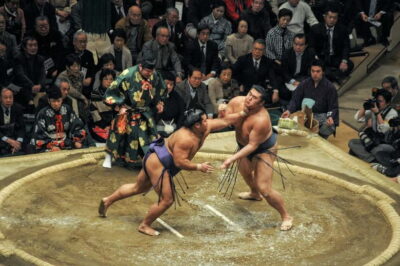
Sumo Tournament with Guide & Assigned Reserved Seat
Read our review →
Sumo Practice Tour with Ring-Side Seat and Photoshoot
Read our review →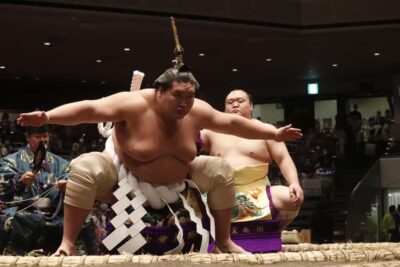
Sumo Wrestling Tournament with Chair Seat Tickets
Read our review →
Tokyo Sumo Morning Practice Tour w/ Ring-Side Seat + Photo Shoot
Read our review →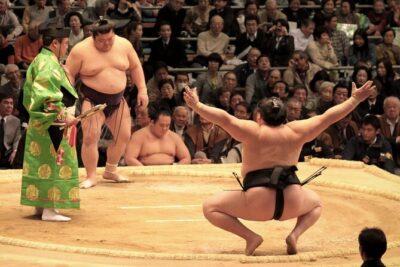
Official Sumo Tournament Ticket with Guided Experience
Read our review →
Chair Seat Guaranteed SUMO Practice +Photo +Culture Option
Read our review →Browse the lists this tour appears in