
REVIEW · SUMO PHOTO EXPERIENCES
Sapporo Sumo Show Experience with Japanese Food and Photo
At this Sapporo show, retired sumo wrestlers explain the sport, demonstrate its techniques, and then invite a few brave people into the ring. The best part is the shift from watching to taking part, with a real chance to challenge a former rikishi in a friendly match.
I like the small group size, listed at no more than six people, and the close view of the dohyo from every seat. I also like the mix of food, instruction, demonstrations, and a souvenir photo, since you get more than a short performance.
The main consideration is that this is entertainment by retired wrestlers, not a professional tournament. Meal details also vary in the description, so check exactly what your selected plan includes before booking.
Key points at a glance
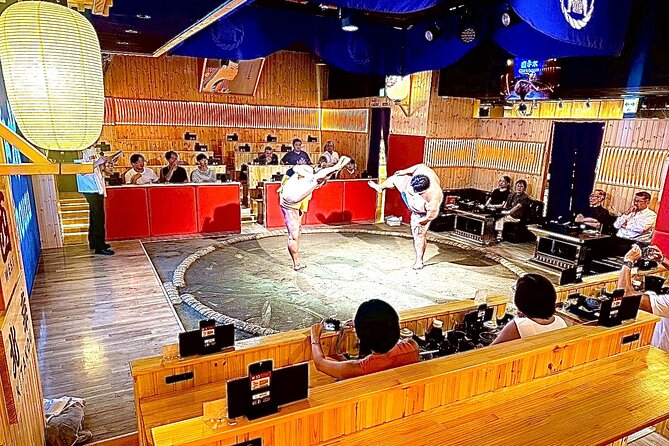
- A chance to enter the dohyo: A limited number of people can challenge the retired wrestlers, with a lottery used if too many volunteer.
- Retired rikishi lead the show: You see former competitors demonstrate exercises, rules, and winning techniques.
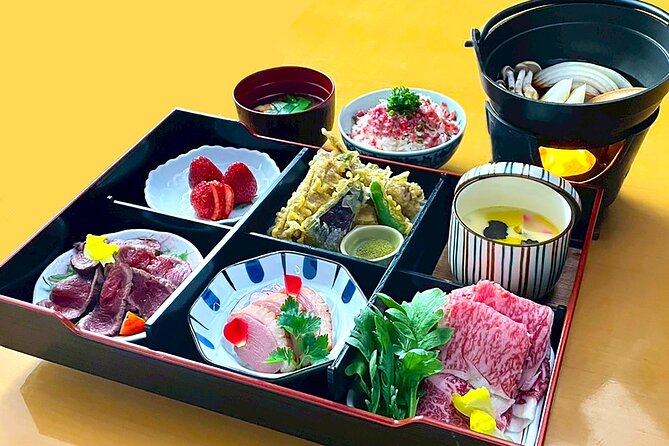
- Food is part of the event: Meal plans include Japanese cuisine and one drink, with references to chanko-nabe, wagyu beef sukiyaki, and tempura.
- Every seat faces the action: Front-row seating is available as an upgrade for a closer view.
- The format suits families: The show mixes explanation, humor, food, dance in some sessions, and audience participation.
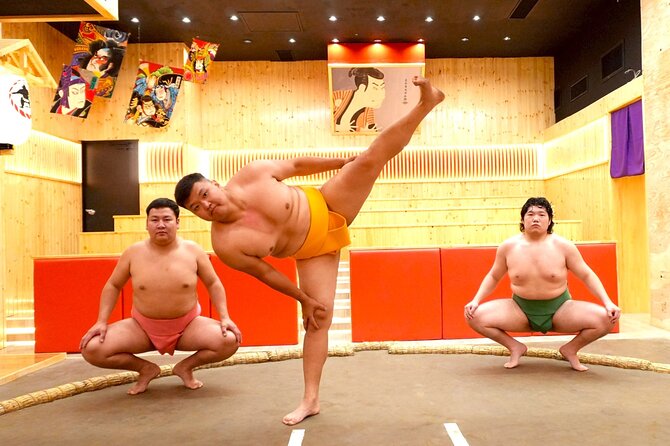
- You leave with a keepsake: A framed photo with the wrestlers and a souvenir bag are included.
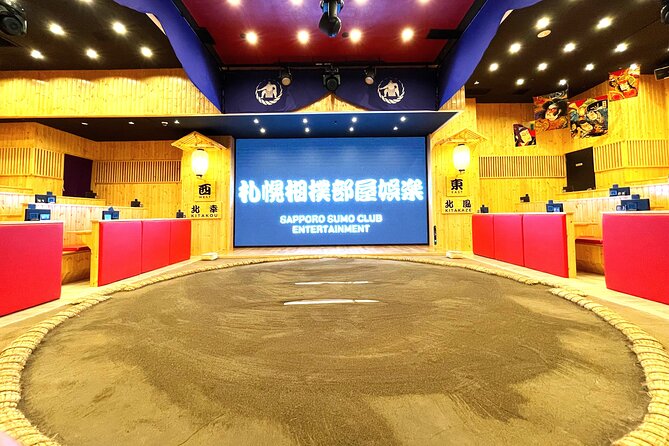
A small Sapporo room with a sumo ring at its center
Sumo can look simple from a distance: two large wrestlers, one small ring, and a quick burst of movement. This show helps you see the ritual and skill behind that brief collision.
You meet at 2-chōme-10-1 Minami 4 Jōnishi in Sapporo’s Chuo Ward. The activity lasts about two hours and ends where it begins. It is near public transportation, so you do not need to arrange a private transfer. The group limit is six people, which should make the room feel more personal than a large stage production.
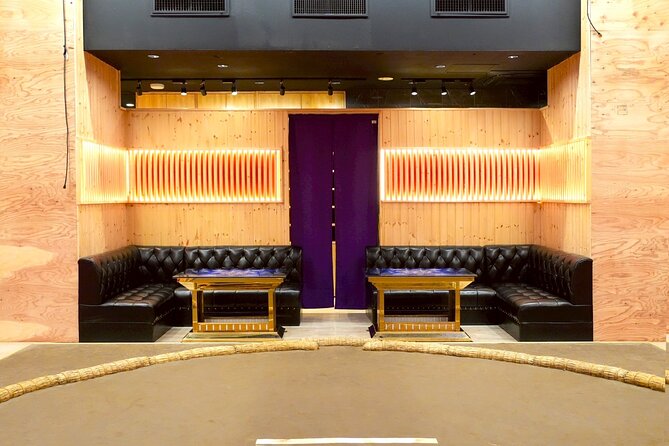
The central feature is the dohyo, the raised ring used for sumo. Seating is arranged so you can watch the action clearly. If being close matters to you, a front-row upgrade is offered. I would consider it if you want the strongest connection to the demonstrations or hope to take sharp photos.
The setting is designed for contact with the performers. This is not a lecture about sumo from a distant guide. You sit near the ring, eat while the program unfolds, and may be called into the action.
More sumo shows in Japan:
- Tokyo: Sumo Show Experience with Chicken Hot Pot and a Photo
★ 4.8 · 6,678 reviews - Tokyo: Sumo Show and Dining Experience
★ 4.8 · 2,742 reviews - the SUMO show
★ 5.0 · 1,960 reviews
Learning sumo through movement, rules, and ritual
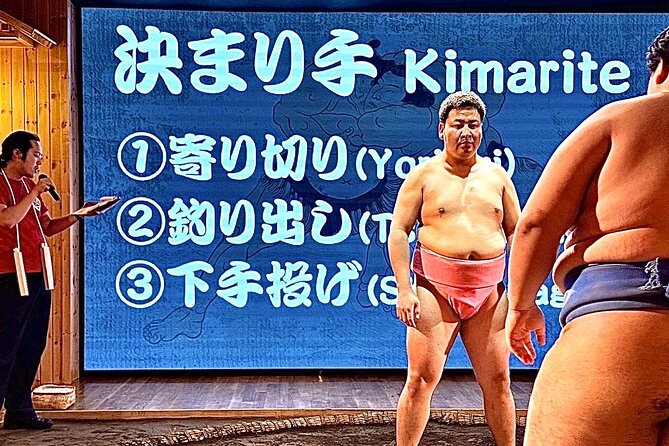
The program begins with an introduction to sumo and its long place in Japanese culture. You learn how the sport has changed over time, along with basic rules and the behavior expected inside and around the ring.
The demonstrations include morning exercises known as asa geiko. These exercises show the strength, balance, and repetition that support a wrestler’s performance. You also see selected kimarite, the named techniques used to defeat an opponent.
This is a useful part of the show for first-time viewers. Without some explanation, a bout can appear to end almost before it starts. Once you know what to watch for, the footwork, grip, push, and timing make more sense.
The presenters also explain what you should and should not do around sumo. That context matters because sumo is not only a contest of size. Its rules, gestures, and pre-match actions carry meaning, and the show gives you a basic framework without requiring prior knowledge.
The program is delivered in English and Japanese according to the information provided, making it suitable for international visitors. The staff member identified in the feedback as Kitadai-chi was singled out for helping create a lively and welcoming atmosphere.
The retired-wrestler bout is the main event
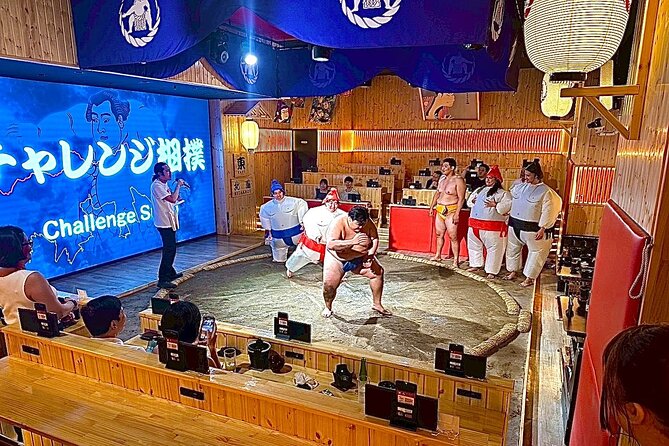
After the demonstrations, the former wrestlers compete in a best-of-three tachiai-style contest. You get to see the techniques explained earlier used in a real match between retired athletes.
The bout is staged for entertainment, and that distinction is important. You are not watching an official professional tournament, nor are you seeing active wrestlers competing for a championship. Still, retired competitors bring genuine experience and physical presence to the ring. Their movement gives the explanations more weight.
I like this format because the show does not ask you to admire sumo from a distance. You first learn the basics, then see them applied. The sequence helps children and adults follow the action.
The atmosphere is meant to be friendly and energetic rather than solemn. Staff help involve the whole room, and the program can include humor and audience interaction. Some sessions have also included a traditional geiko dance, adding another Japanese performance style to the meal and sumo program. Since the schedule may vary, treat that as a possible extra rather than a guaranteed part of every booking.
Your chance to face a former rikishi
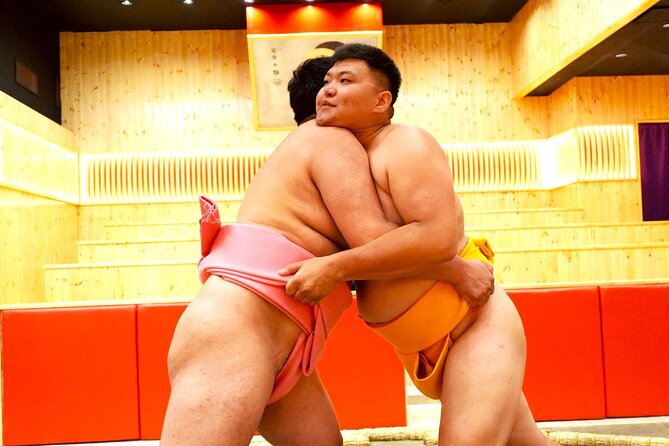
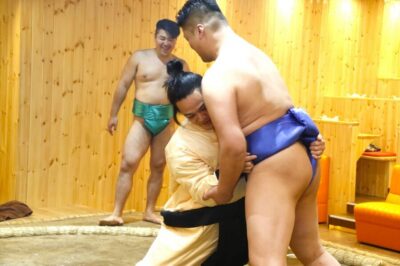
The most memorable part for many people will be the audience challenge. You can volunteer to enter the ring and face one of the retired wrestlers in a sumo match.
Only a limited number of people can take part. If too many people want a turn, the participants are selected by lottery. That means you should not book this expecting a guaranteed bout, especially if challenging a wrestler is the main reason you are coming.
If you are selected, the match is presented as a friendly entertainment segment. The point is participation, not proving that you can defeat a former competitor. A teenager or reluctant companion may enjoy this more than expected because the mood is playful and the rules are explained first.
You can also enjoy the show without entering the ring. The demonstrations, food, and main bout provide a full program for anyone who would rather remain seated. Families may find this helpful because different people can join in at different levels.
Wear something that allows comfortable movement if you hope to volunteer. The provided information does not specify a dress code, so I would avoid arriving in clothing that makes bending or stepping difficult.
More photo experiences in Japan:
- Tokyo Shinjuku Sumo Show & Experience with Photo
★ 5.0 · 1,750 reviews - Tokyo Sumo Entertainment Show with Chicken Hot Pot and Photo
★ 5.0 · 1,205 reviews - Osaka: Sumo Stage Show with Bento or Snack + Fight & Photo
★ 4.3 · 364 reviews - Tokyo Ryogoku Sumo Morning Practice + Photo Shoot with Wrestlers
★ 4.5 · 277 reviews
Japanese food served during the show
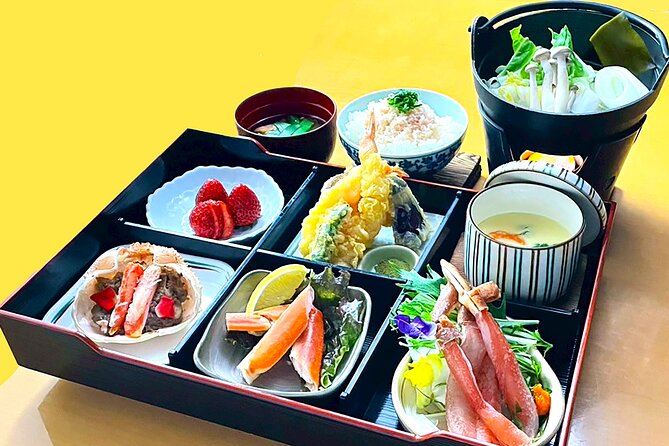
The meal plan is a major part of the value. The included dining option is described as a set of Japanese dishes with one drink. The information also refers to chanko-nabe, the hearty hot-pot meal associated with sumo wrestlers, as well as wagyu beef sukiyaki and tempura.
Because these details are not presented in exactly the same way throughout the description, check the wording for the date and plan you select. You should confirm whether your option includes chanko-nabe, wagyu sukiyaki, tempura, or a combination of dishes.
The food gives you time to settle in while watching the action. It also makes the two-hour schedule feel less like a performance you simply sit through. You eat, listen, watch demonstrations, and take part in the room’s energy.
Vegetarian meals are available if requested in advance. Do not wait until you arrive. Send the request before the activity so the provider has time to prepare it.
One possible drawback is that the meal plan costs more than an admission-only option, if such an option is available for your date. For someone who mainly wants a short sumo demonstration, the full package may feel costly. For someone who wants dinner, a cultural introduction, and audience participation in one evening, the meal helps justify the price.
Is $79.07 fair for two hours?
At $79.07 per person, this is not a cheap meal or a basic cultural presentation. You are paying for a small-group program, former wrestlers, Japanese food, one drink with the meal plan, an interactive format, and a commemorative photo.
I see the best value for three kinds of people. First, this suits anyone who wants a gentle introduction to sumo without arranging a tournament visit. Second, it works well for families who want an activity with food and a clear entertainment element. Third, it is useful for people with limited time in Sapporo who want one compact cultural outing.
The value is weaker if you already know sumo well and want serious sporting competition. The wrestlers are retired, and the event is openly designed for entertainment. A devoted sumo follower may still enjoy meeting a former rikishi, but the show should not be confused with attending an official bout.
The small capacity helps. With a maximum of six participants, you should have more room to see, hear, and possibly interact than at a large group event. The exact seating arrangement and front-row surcharge matter, so check those details if photography or proximity is important to you.
The photo and souvenir are useful finishing touches
At the end, each person receives a commemorative photo with the former wrestlers. The description specifies a framed photo of you and your group, along with a souvenir bag.
This is more useful than a generic paper ticket or small giveaway. A photo with the performers records the fact that you took part in a cultural program, and it can be especially meaningful for children or anyone selected for the ring challenge.
Photo opportunities are also built into the show itself. If you care about pictures, the front row should give you a better angle, but remember that the room is active and the action can be quick. The best photographs may come during the demonstrations, the bout, or the audience challenge rather than during the meal.
Do not expect a formal portrait session with unlimited poses. The included photo is a fixed part of the program, so enjoy it as a souvenir rather than treating it like a private photography appointment.
Who will enjoy this Sapporo sumo show most?
I would recommend it to you if you want:
- A first look at sumo with the rules explained clearly
- A family activity that mixes food and participation
- A small room rather than a huge group tour
- A chance to meet retired wrestlers
- A cultural activity that does not require a full day
- A souvenir photo that includes the performers
It is also a good pick for a mixed group. One person can be fascinated by sumo technique, another can focus on the food, and someone else can enjoy the dance or comedy elements. The program gives everyone several ways to take part.
I would think twice if you want an official match, a long technical seminar, or a guaranteed chance to wrestle. The challenge is limited and may be decided by lottery. The show is friendly and interactive, but it remains a staged entertainment program.
The location in central Sapporo makes it easy to pair with an evening in the city. Since the activity returns to its meeting point and private transportation is not included, plan your own route to and from the venue. Confirmation is provided at booking, and mobile tickets make entry straightforward.
Booking advice before you commit
Check which meal plan you are choosing. The description refers to chanko-nabe, wagyu beef sukiyaki, tempura, Japanese cuisine, and one drink. Those details may reflect different plans, so read the exact option carefully.
Request a vegetarian meal in advance if needed. Also decide if front-row seating is worth the upgrade for you. Every seat has a view, so the upgrade is about closeness and photo angles rather than basic visibility.
The cancellation terms are simple but firm. You can receive a full refund if you cancel at least 24 hours before the local start time. Cancellations or changes made within 24 hours are not accepted for a refund.
Should you book it?
Book this Sapporo sumo show if you want an easy, entertaining introduction to Japanese sumo with dinner, former wrestlers, and a real chance to join the action. The food, small group, clear instruction, and framed photo give the $79.07 price practical value.
Skip it if your goal is to watch active professionals in a serious tournament. This is a friendly show by retired rikishi, built around participation and cultural explanation. For most first-time visitors, that is the appeal: you learn enough to understand the sport, see genuine skill up close, and leave with more than a quick performance.
FAQ
How long does the Sapporo sumo show last?
The activity lasts approximately two hours.
Where does the experience begin?
It begins at 2-chōme-10-1 Minami 4 Jōnishi, Chuo Ward, Sapporo, Hokkaido 064-0804, Japan.
Where does the activity end?
The activity ends back at the meeting point.
Is transportation included?
Private transportation is not included. The venue is near public transportation.
Are the wrestlers active professional sumo competitors?
No. The show features retired wrestlers and is presented for entertainment purposes.
Can I challenge a wrestler in the ring?
You can apply to challenge one of the wrestlers. Participation is limited, and if too many people volunteer, challengers are chosen by lottery.
What food is included?
Meal plans include a set of Japanese cuisine and one drink. The description refers to chanko-nabe, wagyu beef sukiyaki, and tempura, so check the exact meal details when selecting your plan.
Can I request a vegetarian meal?
Yes. You must request a vegetarian meal in advance by message.
What is the cancellation policy?
You can cancel at least 24 hours before the local start time for a full refund. Cancellations or changes made less than 24 hours before the start time are not refunded or accepted.
More food and drink stops in Japan
- Sapporo: Sumo Show Experience with Japanese food & Photo
★ 4.9 · 81 reviews
Newest sumo experiences in Japan
- November Sumo Tournament tour in Fukuoka (Tickets Included)★ 4.5 · 76 reviews
- Kyushu Grand Sumo Tournament Viewing Tour with English Guide★ 5.0 · 22 reviews
- Kyushu Fukuoka Grand Sumo Tournament Viewing Tour★ 4.5 · 4 reviews
- Tokyo Highlights Tour: Sumo, Sushi, Tea, and Tokyo Tower★ 5.0 · 2 reviews
- Osaka: Sumo Show and Kimono Haori Experience★ 3.0 · 2 reviews
- Sumo Stable Intimate Morning Practice★ 5.0 · 2 reviews
- Tokyo: Know about Hokusai and Sumo culture in 2.5 hours★ 5.0 · 2 reviews
- Tokyo 6hr Private Guided Tour & Sumo Show Lunch★ 5.0 · 3 reviews
Sumo Photo Experiences, compared.
Sumo Show Experience with Chicken Hot Pot and a Photo
Read our review →
Tokyo Shinjuku Sumo Show & Experience with Photo
Read our review →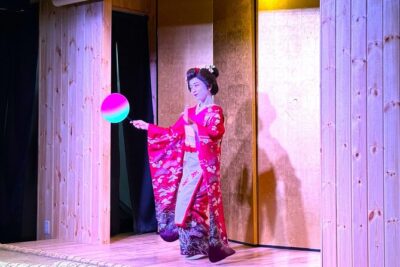
Tokyo Sumo Entertainment Show with Chicken Hot Pot and Photo
Read our review →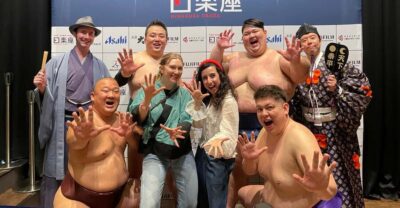
Sumo Stage Show with Bento or Snack + Fight & Photo
Read our review →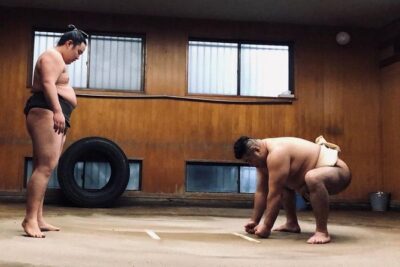
Tokyo Ryogoku Sumo Morning Practice + Photo Shoot with Wrestlers
Read our review →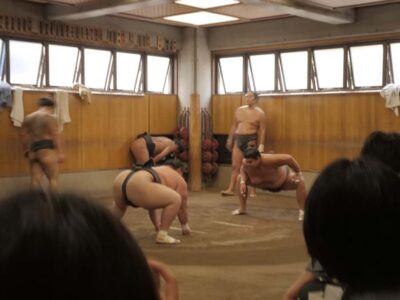
Exclusive Access to Sumo Morning Practice with Photos
Read our review →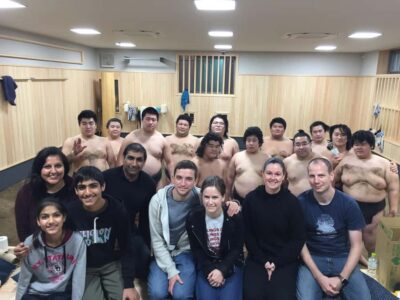
Sumo Practice Tour with Ring-Side Seat and Photoshoot
Read our review →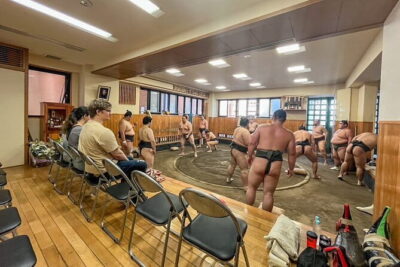
Tokyo Sumo Morning Practice Tour w/ Ring-Side Seat + Photo Shoot
Read our review →Browse the lists this tour appears in