
REVIEW · GRAND SUMO TOURNAMENT TOURS
Grand Sumo Tournament Tour w/an English Guide ,Tokyo January 2026
The real value here is not simply getting into a sumo tournament. It is having someone beside you explain why the referee wears that outfit, how the wrestlers’ rankings shape each bout, and what you are seeing before the action sweeps past. At the Kokugikan, the ceremony matters almost as much as the throws.
I like the reserved S chair seat, the best chair seating available, and the small group capped at 10 people. I also like the clear focus on the Sumo Museum, traditional clothing, architecture, etiquette, and match customs. Those details turn a loud afternoon of wrestling into a more complete look at Japanese culture.
The main drawback is price. At $124.26 per person, this costs more than a regular tournament ticket might cost if you can secure one yourself. You are paying for access, guidance, and a simpler experience, not only for the seat.
Key points about the January 2026 sumo tour
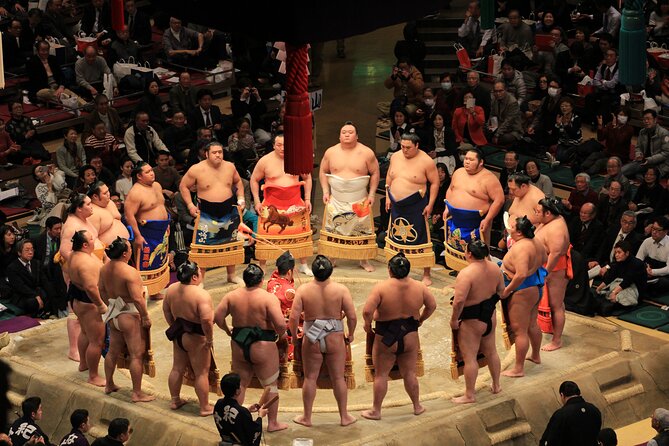
- S seat included: You receive the best available chair seating rather than being left to find a place on your own.
- English explanations: Your guide explains rankings, rules, rituals, clothing, and winning techniques as the tournament unfolds.
- Kokugikan and Sumo Museum: The visit covers the arena’s Japanese design, ceremonial details, and museum displays.
- Small group format: The tour allows a maximum of 10 people, which should make questions easier.
- Afternoon start: Meet at Ryogoku Station at 2:15 pm for about 3 hours and 45 minutes.
- Guides with personal touches: Jeff has offered friendly, detailed explanations, while Yuki has prepared an extra information sheet about the wrestlers.
Why sumo makes a better afternoon with a guide
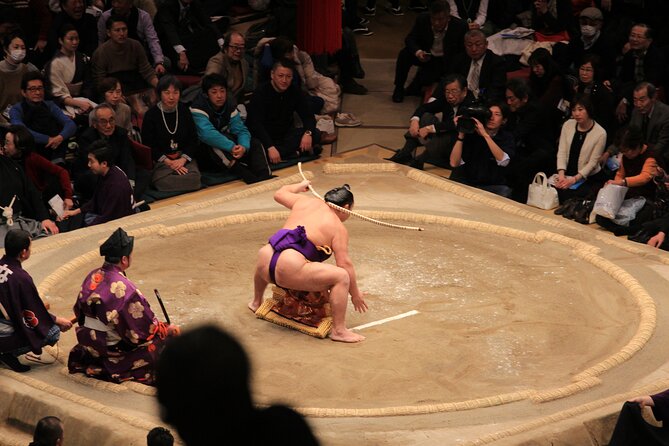
Sumo can look simple at first glance. Two wrestlers crouch, charge, and try to force one another out of the ring. The bout may last only seconds.
The rules and customs underneath that brief clash are much less obvious. You may not know which division you are watching, why a particular wrestler has a certain rank, or why the referee and announcer wear traditional clothing. You may also miss the importance of a winning move unless someone identifies the kimarite, the official technique that decided the bout.
This tour is built around filling those gaps. Your guide escorts you to your reserved seat, then provides explanations during the tournament. That matters because the action does not pause for an English lesson. You can watch the match and get the context while the details are still in front of you.
I especially like this approach for a first sumo tournament. You do not need to arrive already familiar with yokozuna, ozeki, sanyaku, or makuuchi. The guide explains how the professional ranking system works and helps you understand why some bouts carry more weight than others.
The small group also helps. With no more than 10 people, the outing should feel more personal than a large coach-style tour. The available feedback points to guides who answer questions and add useful material, including a wrestler information sheet prepared by Yuki. Guide assignments can change, but Jeff and Yuki are names associated with this experience.
More tournament tours in Tokyo:
- Tokyo: Sumo Tournament Tour with Chair Seat Tickets
★ 4.6 · 753 reviews - Tokyo Grand Sumo Tournament Viewing Tour with Tickets
★ 5.0 · 692 reviews - Tokyo Sumo Wrestling Tournament Experience
★ 5.0 · 660 reviews
Meeting at Ryogoku Station at 2:15 pm
The tour begins at Ryogoku Station, at 1-chome-3-20 Yokoami in Sumida City. The station meeting point is practical because the area is closely tied to Tokyo’s sumo world and is served by public transportation.
You meet at 2:15 pm, so this is an afternoon commitment rather than an early-morning outing. Allow enough time to reach the station without rushing. The stated duration is approximately 3 hours and 45 minutes, and the tour ends back at the meeting point.
That return is useful if you plan to continue exploring Tokyo afterward. You are not left at an unfamiliar part of the city at the end of the event. Still, the exact timing of the tournament portion may affect how long you spend in each part of the visit, so treat the duration as an estimate.
Bring your mobile ticket and keep your meeting details easy to access. Confirmation is sent within 48 hours of booking, subject to availability. Since the January tournament is a popular seasonal event, I would not leave this booking until the last minute.
Inside the Kokugikan arena
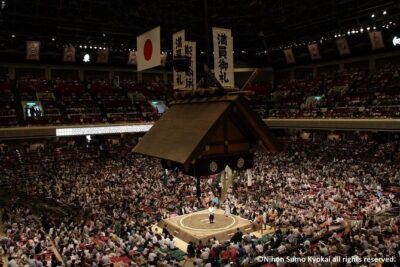
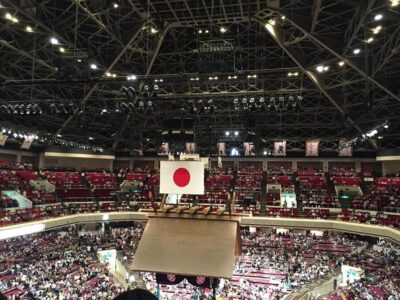
The Kokugikan is more than a place to watch a contest. The building, clothing, decorations, and formal gestures all help create the setting. The tour gives you a chance to notice these elements instead of treating the arena as a backdrop.
Your guide introduces aspects of Japanese architecture and explains how the space connects with sumo tradition. You will also hear about etiquette, which is useful because the event has its own rhythm and expected behavior. Sumo is not presented as a modern sports match with the ceremony stripped away. Ritual remains part of the experience.
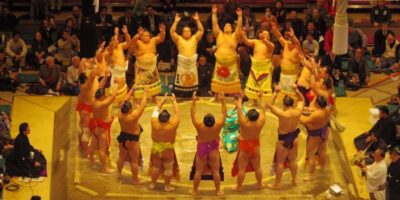
From your chair, you can watch the atmosphere build as wrestlers prepare to enter the ring. That preparation is an important part of the afternoon. The pause before the charge, the formal movements, and the growing tension give the bout its shape.
S seating is the strongest chair option offered here. That does not mean a private box or a guaranteed view beyond the stated seat category. It means you receive the best available chair seating within this tour’s arrangement. If comfort and a straightforward view matter to you, that is a useful advantage.
Understanding the early matches and divisions
A tournament session is not only about the biggest names. The guide explains the different divisions and helps you follow the progression from earlier matches toward the higher-ranked competitors.
This is one of the most useful parts of the tour for a newcomer. Without context, early bouts can blur together. With an explanation of the divisions, you can begin to see how professional sumo is organized and why rank matters.
You will learn the terms used for major ranks, including yokozuna and ozeki, along with sanyaku and makuuchi competitors. These words are not just labels. They tell you something about a wrestler’s position within the professional system and help you understand why the later matches may carry special attention.
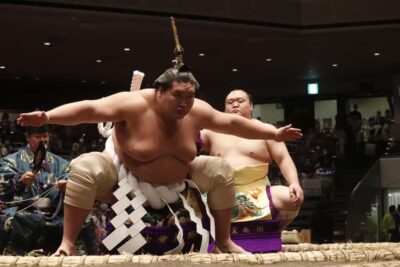
The guide also explains the roles of the gyoji, or referee, and the yobidashi, or announcer. Their clothing and duties are part of the visual language of the tournament. Once you know what to watch for, the officials stop being background figures and become part of the story.
More English-guided sumo tours in Tokyo:
- Tokyo: Visit Sumo Morning Practice with English Guide
★ 4.7 · 343 reviews - Sumo Morning Training Watch in Tokyo,Hotel-pickup w/English guide
★ 5.0 · 72 reviews - Tokyo: Visit Sumo Morning Practice with English Guide
★ 4.5 · 22 reviews - Kyushu Grand Sumo Tournament Viewing Tour with English Guide
★ 5.0 · 22 reviews
Reading the action through kimarite
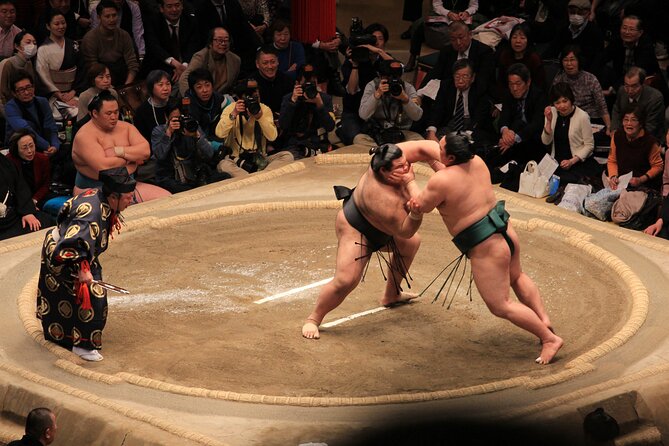
Sumo bouts move fast. A match can turn on balance, grip, timing, or a sudden change of direction. If you are new to the sport, it can be hard to know exactly how one wrestler won.
The tour helps by explaining kimarite, the named winning techniques used in sumo. That vocabulary gives you a way to read the match. Instead of seeing only a push or a fall, you begin to recognize the type of maneuver that ended the contest.
Your guide also discusses match highlights during the event. This is where the tour’s timing works well. You receive an explanation while the bout is fresh, rather than trying to remember the details during a lecture later.
The balance is important. You still watch the wrestling yourself. The guide does not replace the excitement of the arena. The added commentary simply gives you more to notice.
For a first visit, this can make the difference between a short burst of action and a sport you can actually follow. For someone already familiar with sumo, the benefit may depend on how much extra explanation you want. The focus is educational and cultural, not a specialist-level analysis of every competitor.
The Sumo Museum and the cultural details
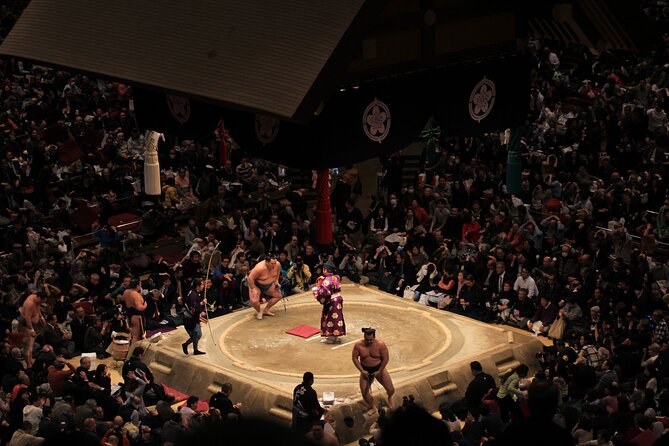
The Sumo Museum adds a quieter part to the visit. Here you can look beyond the live bouts and consider the objects, clothing, and traditions connected with the sport.
The tour also covers the Kokugikan’s symbolic decorations and traditional design. These details are easy to skip when you are focused on finding your seat or watching the ring. Having a guide point them out gives the arena more meaning.
I like that the museum is part of the plan because it broadens the experience. You are not simply buying a sports ticket with commentary attached. You are seeing how sumo fits into Japanese tradition through its visual symbols, clothing, and formal behavior.
The available information does not promise a fixed list of museum exhibits or a separate length of time inside. The exact flow can vary, so you should think of it as a guided introduction rather than a long museum visit.
What the $124.26 price really covers
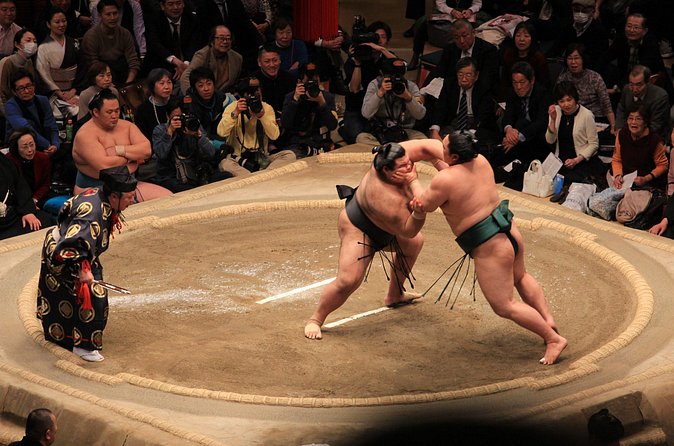
At $124.26 per person, this is not a bargain seat. It can be expensive if your only goal is to sit inside the arena and watch the bouts.
The value improves if you want a smoother first visit. The price includes the tournament admission arrangement, a reserved S chair, escorting to your seat, and guided explanations about the venue and sport. You are also paying for the chance to ask questions in a small group rather than sorting out the customs alone.
A regular ticket may cost less if you manage to obtain one directly. The challenge is that tournament tickets can be difficult to secure, and a cheaper ticket does not include an English-speaking guide or a planned introduction to the Sumo Museum.
I would compare this with the cost of your time. If you have only one chance to see a Tokyo tournament, the added guidance may be worth it. If you are comfortable researching sumo beforehand and finding your own way through the arena, the premium may feel harder to justify.
The strongest value is for first-time visitors who want both the spectacle and the explanation. The weakest value is for repeat sumo followers who mainly want the lowest possible admission price.
The January 2026 seat schedule
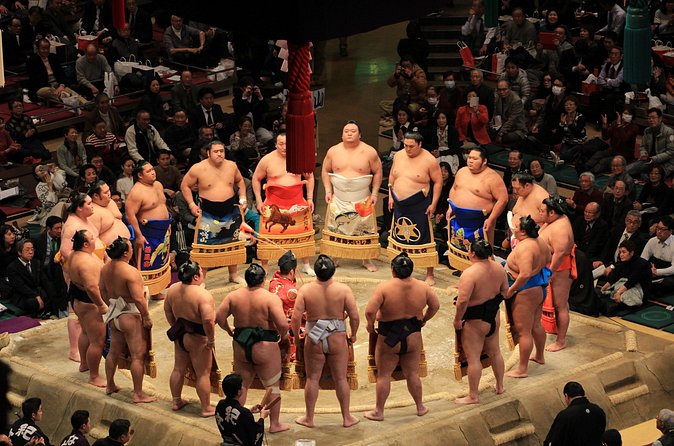
The January 2026 tournament schedule differs by seat type. The S seat dates are listed as to be released soon, and the A seat schedule is also to be released soon. B seat dates are shown for January 11, 13, 15, 21, 22, and 23.
Because the S seat dates are not yet specified in the available information, check the date carefully before paying. Do not assume every January tournament day is offered under the S seat option.
This is especially important if you have fixed plans in Tokyo. Confirmation is subject to availability, and the booking confirmation can take up to 48 hours. I would choose your preferred date first, then make sure the selected seat category matches what you want.
The tour begins at 2:15 pm, but the event itself may have a changing rhythm. Keep the rest of your day flexible enough to accommodate the approximate duration.
Who will get the most from this experience
I would recommend this tour most strongly to a first-time sumo spectator, especially if you want someone to explain the customs as they happen. Families and mixed-age groups may also find the structure helpful, since the guide can give everyone a common starting point.
It also suits visitors who care about cultural context. The combination of the Kokugikan, Sumo Museum, clothing, etiquette, rankings, and live bouts offers more range than simply dropping into the arena.
A small group of no more than 10 is another plus for people who prefer questions and conversation over a large organized crowd. The available feedback highlights friendly guidance from Jeff and Yuki, but the assigned guide for your date may be different.
Children aged 4 and above require admission. The activity notes that most people can participate, but no special accessibility details are provided. If you need a particular seating or mobility arrangement, ask before booking.
Who may want to skip the guide
You may not need this tour if you already understand the ranking system, officials, rituals, and common winning techniques. In that case, the guided commentary may add less value, while the $124.26 price remains the same.
It may also be a poor fit if your schedule cannot handle an afternoon activity lasting almost four hours. The meeting time is fixed at 2:15 pm, and the experience ends back at the station meeting point.
Finally, do not book it only because you want the cheapest possible ticket. The tour’s purpose is convenience and explanation. If you would rather study sumo independently and hunt for a regular ticket, that route may suit you better.
Booking and cancellation details
You receive a mobile ticket, and booking confirmation arrives within 48 hours when space is available. Free cancellation is offered up to 24 hours before the local start time for a full refund.
Cancellations or changes made less than 24 hours before the activity are not accepted for a refund. The experience also requires a minimum number of participants. If that minimum is not reached, or if poor weather causes cancellation, you are offered another date or experience, or a full refund.
The weather condition is worth noting even though the main event takes place indoors. The stated policy still makes weather one of the conditions that can affect the activity, so keep an eye on provider messages.
Should you book the January 2026 sumo tour?
Book it if you want a reserved S chair, a small group, and clear English guidance through a sport that can be confusing at first. The best parts are the explanations of rankings, kimarite, officials, clothing, and etiquette, along with the chance to see the Kokugikan and Sumo Museum in one outing.
Skip it if you already know sumo well or care mainly about paying the lowest admission price. The cost is fair only when you value the guide and the ease of having someone lead you through the experience.
For most first-time visitors with room in their Tokyo budget, I would choose it, then confirm the exact January date and seat availability before making other plans.
FAQ
Where does the tour meet?
The meeting point is at Ryogoku Station, 1-chome-3-20 Yokoami, Sumida City, Tokyo 130-0015, Japan.
What time does the tour start?
The tour starts at 2:15 pm.
How long does the experience last?
The stated duration is approximately 3 hours and 45 minutes.
Where does the tour finish?
The activity ends back at the meeting point.
What type of seat is included?
The tour includes an S chair seat, described as the best available chair seating.
What will the guide explain?
The guide explains professional sumo divisions, rankings, kimarite winning techniques, match highlights, the roles of the gyoji and yobidashi, traditional clothing, etiquette, and the meaning of the arena’s design and decorations.
Is the Sumo Museum included?
Yes. The tour includes a guided visit involving the Kokugikan and the Sumo Museum.
Is the tour suitable for children?
An admission fee applies to children aged 4 and above. The activity states that most people can participate.
Can I cancel for a full refund?
Yes. You can cancel at least 24 hours before the local start time for a full refund. Cancellations or changes made less than 24 hours before the start are not accepted for a refund.
Newest sumo experiences in Tokyo
- Tokyo 6hr Private Guided Tour & Sumo Show Lunch★ 5.0 · 3 reviews
- Tokyo Grand Sumo Tournament Viewing Tour★ 5.0 · 2 reviews
- Tokyo Sumo History Tour with Chanko Nabe Lunch★ 5.0 · 3 reviews
- Tokyo Highlights Tour: Sumo, Sushi, Tea, and Tokyo Tower★ 5.0 · 2 reviews
- Tokyo: Know about Hokusai and Sumo culture in 2.5 hours★ 5.0 · 2 reviews
- TOKYO , No1 Yokozuna Stable Morning Practice in Ryogoku★ 4.5 · 3 reviews
- Tokyo: Watching Sumo and Ryogoku Area Walking Tour★ 4.0 · 5 reviews
- Tokyo Sumo Practice Watching & Visit Town from Samurai era★ 5.0 · 8 reviews
Grand Sumo Tournament Tours, compared.
Tokyo Grand Sumo Tournament Viewing Tour with Tickets
Read our review →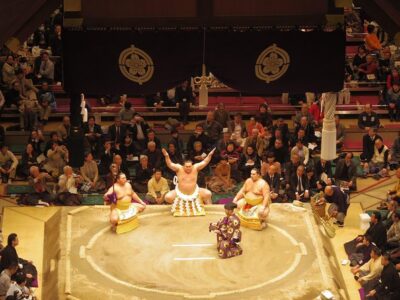
Ultimate Sumo Tournament: Tokyo, Osaka, Nagoya, Fukuoka
Read our review →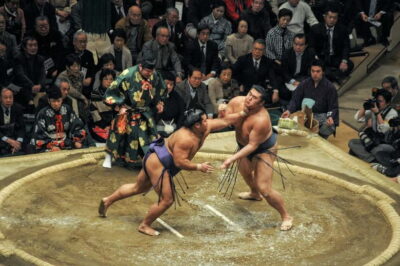
Sumo Tournament with Guide & Assigned Reserved Seat
Read our review →
Sumo Wrestling Tournament with Chair Seat Tickets
Read our review →November Sumo Tournament tour in Fukuoka (Tickets Included)
Read our review →Browse the lists this tour appears in