
REVIEW · SUMO MORNING PRACTICE TOURS
Tokyo Sumo Practice Watching & Visit Town from Samurai era
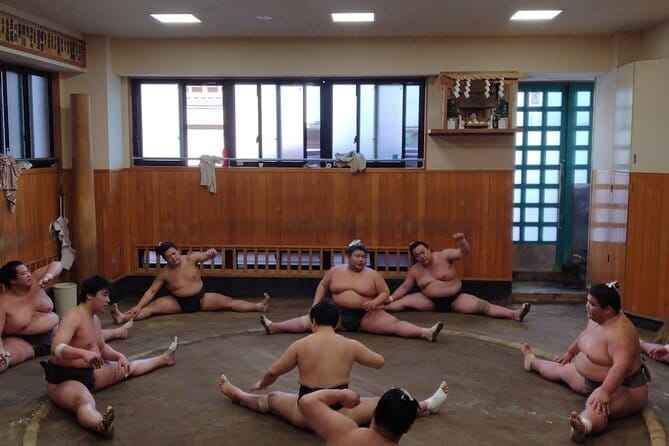
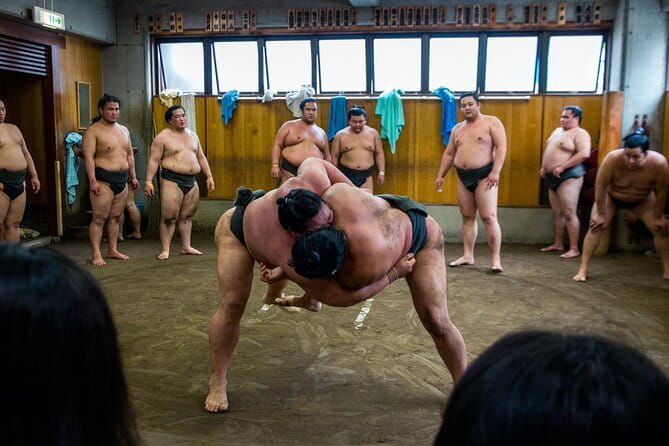
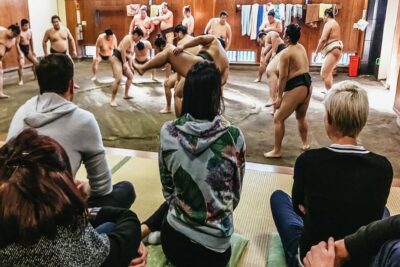
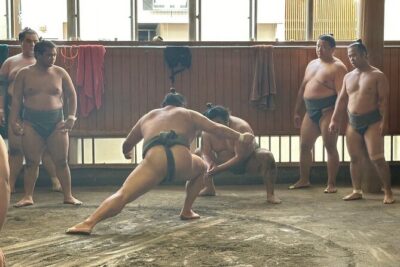
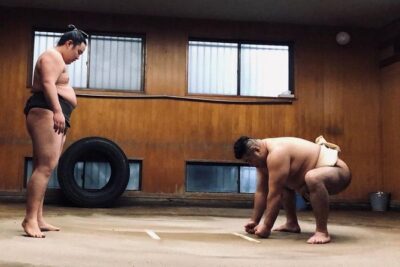
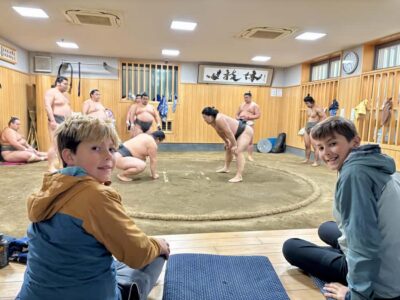
Real sumo practice is the heart of this morning tour, and you watch from the ringside of Shikoroyama-beya, not from a distant stadium seat. The wrestlers train close by, giving you a direct look at the effort, ritual, and concentration behind the sport.
I like two things especially: Ken’s personal guiding and the smart mix of stops. He explains sumo, then connects it to a Japanese garden and an Edo-period town recreation. The possible drawback is that the sumo practice itself may be more compelling than the later visits, especially if you already know Kiyosumi Teien or have limited time.
Key points
- Ringside sumo practice: Watch real wrestlers train inside a stable with special permission.
- Guide Ken: Expect English-language help with sumo customs, Tokyo history, and questions along the way.
- A rare photo chance: The tour includes the opportunity for a photoshoot with sumo wrestlers.
- Kiyosumi Teien: Walk through a quiet Japanese garden with koi, water, and carefully shaped scenery.
- Fukagawa Edo Museum: See a life-size reproduction of an Edo-period Tokyo street, complete with household objects, sound, and lighting.
- Small morning group: The maximum group size is 15, with a total duration of about three and a half hours.
Why the sumo stable makes this morning special
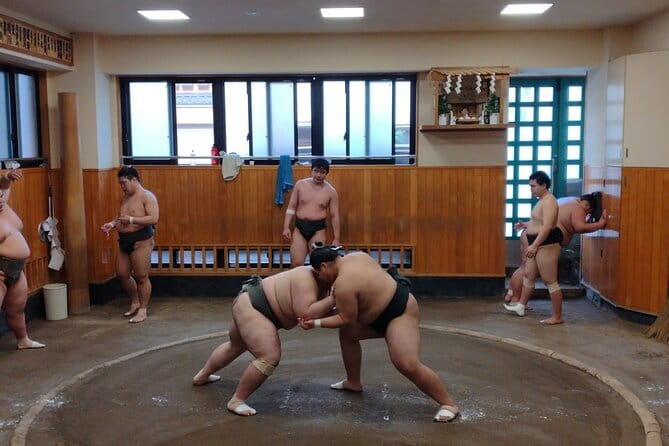
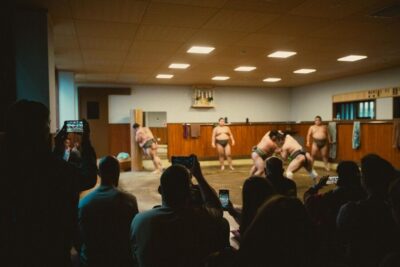
Many visitors see sumo only as a ticketed tournament in a large arena. This tour takes you somewhere more intimate: a working sumo stable where wrestlers practice. You watch from ringside, close enough to see that sumo is not simply a dramatic bout. It is also repetition, discipline, physical preparation, and strict tradition.
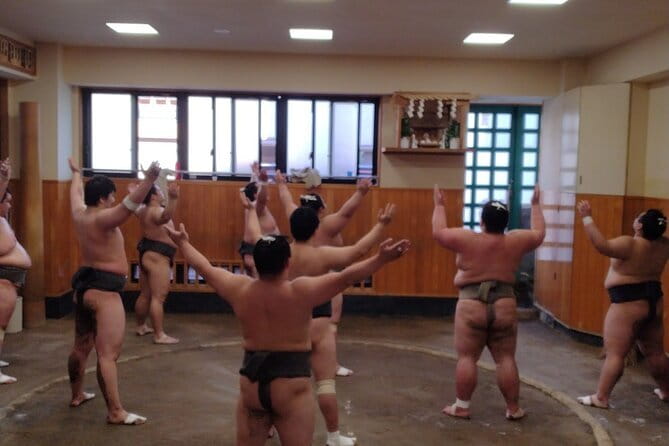
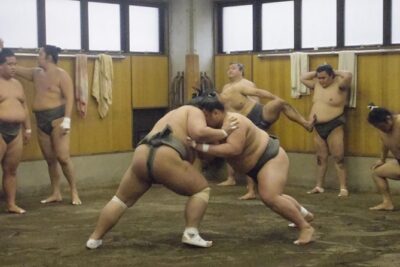
The practice lasts about 90 minutes. That gives you enough time to see more than one quick demonstration. You can watch the wrestlers warm up and work through their training routines while Ken explains what you are seeing.
The stable is Shikoroyama-beya. Entry requires special permission, which is an important part of the value here. You are not simply walking into a public gym or watching a staged cultural show. The setting is part of the experience, and the access is unusual for a short Tokyo tour.
The atmosphere also asks something of you. This is a practice session, not a tournament with announcers, bright lights, or constant action. You may find quiet stretches while the wrestlers repeat exercises. That is useful if you want to understand sumo as a daily discipline, but less ideal if you want nonstop spectacle.
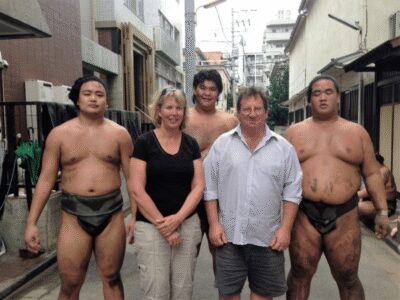
A photoshoot with sumo wrestlers is also included as a possibility. Since the wording presents it as a chance rather than a guaranteed formal session, I would treat it as a welcome extra, not the main reason to book.
More morning practice tours in Tokyo:
- Tokyo: Sumo Morning Practice Viewing Tour
★ 4.8 · 570 reviews - Tokyo: Sumo Morning Training Visit
★ 4.4 · 370 reviews - Tokyo: Visit Sumo Morning Practice with English Guide
★ 4.7 · 343 reviews
Ken’s role changes the way you see sumo
Ken is the named guide for this experience, and the tour depends heavily on his explanations. He speaks English and has been praised for being punctual, polite, patient, and well organized. Those qualities matter when you are dealing with a subject that has rules and customs unfamiliar to many first-time visitors.
I particularly like the way the tour moves from observation to conversation. You do not simply watch the practice and leave. Ken can answer questions about sumo tradition and connect what you see in the stable with Japanese culture and Tokyo’s past.
Several parts of the experience are flexible in the best sense. You can ask questions as they arise, rather than waiting for a long speech at the end. Families and first-time visitors should find this helpful, especially if sumo is new to them.
There is one fair limitation. One person who enjoyed the practice wanted more detail about sumo, the Edo period, and recent competitions, along with a short handout. If you want a structured introduction to rankings, tournament history, or current wrestlers, you may need to ask direct questions and do some extra reading before or after the tour.
That is not a major flaw, but it is worth knowing. Ken’s value is strongest as a personal guide who helps you make sense of the places and customs in front of you, rather than as a full academic lecture on every part of sumo.
Meeting at Kiyosumi-shirakawa Station at 8:30 am
The tour begins at ground level near Exit B1 of Kiyosumi-shirakawa Station. The listed meeting address is 1-chōme-6-13 Shirakawa, Koto City, Tokyo 135-0021. Ken meets you there and walks with the group to the first stop.
An early start is useful in Tokyo. You reach the sumo stable before the day gets away from you, then have time for two nearby cultural stops. The meeting point is near public transportation, and private transportation is not included, so you need to make your own way to the station.
The first meeting segment is listed as about 10 minutes. Use that short period to get settled, confirm you are with the correct group, and listen closely to any instructions before entering the stable. The total group size is capped at 15 people, which should keep the walking portion manageable and make it easier to hear Ken.
The tour ends back at the meeting point. That makes planning simpler than a tour that drops you in a different part of Tokyo, especially if you have another reservation later in the day.
Kiyosumi Teien offers a quiet change of pace
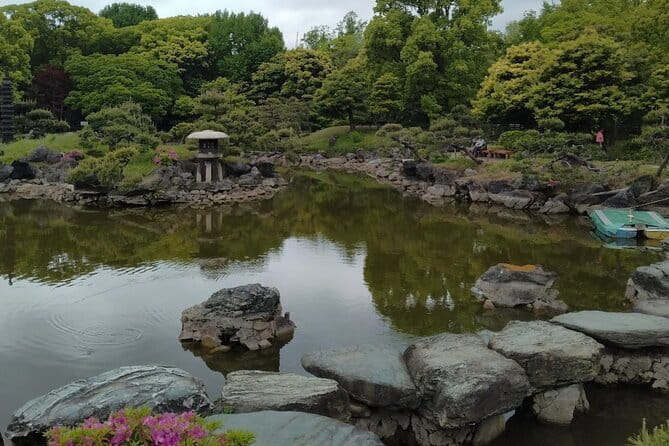
After the sumo practice, the group visits Kiyosumi Teien for about 50 minutes. This is a traditional Japanese garden known for its calm setting, artistic scenery, and walking paths around water.
The change in mood is one of the tour’s strengths. Sumo gives you physical force and concentrated action. The garden slows everything down. You have time to look at the arrangement of the grounds, notice koi, and enjoy the silence without rushing from one major sight to another.
The garden is also a useful setting for understanding Japanese ideas about space and beauty. The experience is not just a quick photo stop. Ken can point out how the garden presents nature in a carefully shaped way, while still giving you the feeling of a walk through a wooded place.
Fifty minutes is enough for a guided introduction, but it is not a long private garden visit. If you want to linger at every pond or take a slow independent walk, you may wish for more time. The tradeoff is that the tour fits several distinct experiences into one morning.
For many first-time visitors, Kiyosumi Teien may be the most restful stop. It gives you a side of Tokyo that feels far removed from the city’s busiest shopping streets and major stations, while still fitting into a practical half-day plan.
More Japanese culture experiences in Tokyo:
- Tokyo Sumo Culture Tour with Chanko-Nabe Lunch in Ryogoku
★ 5.0 · 26 reviews - Tokyo Walking Tour : Sumo, Sushi, Tea, Temples and Tokyo Tower
★ 5.0 · 21 reviews - Chair Seat Guaranteed SUMO Practice +Photo +Culture Option
★ 4.5 · 17 reviews - Tokyo Ginza : Sumo and Mikoshi Experience,Open from Sep.
★ 5.0 · 8 reviews
Fukagawa Edo Museum recreates Tokyo before modern times
The final main stop is Fukagawa Edo Museum, where you see a life-size reproduction of a Tokyo neighborhood from the end of the Edo period. The visit lasts about one hour.
This is more effective than looking at a few old objects behind glass. The museum presents a full streetscape, with everyday tools and household items placed inside the reproduced buildings. Sound and lighting recreate changes through the day, helping you picture how the neighborhood might have felt as time passed.
The museum gives useful context after the garden. Kiyosumi Teien shows a refined Japanese garden tradition, while Fukagawa Edo Museum focuses on ordinary town life. Together, they broaden the morning beyond sumo and show two different ways of approaching Japanese history.
I would especially recommend this stop if you enjoy reconstructed places and practical details. Everyday tools can tell you more about daily life than a long list of dates. You get a sense of how people used their homes and streets, rather than seeing only famous names and major events.
The limitation is simple: the museum is a reproduction, not an untouched Edo-period neighborhood. That does not make it unhelpful. It means you should see it as an educational reconstruction designed to help you picture the past.
What the $123.79 price includes
The price is $123.79 per person. That is not a budget activity, but it includes a professional guide from the meeting point through the end, admission to all listed locations, and all fees and taxes.
The strongest value comes from the sumo stable access. The special permission required to enter makes the first stop hard to compare with an ordinary museum ticket or a self-guided walk. You are also paying for Ken’s explanations, translation help, local coordination, and the connection between three very different places.
The garden and museum add value if you want a fuller cultural morning. Buying separate admissions and arranging your own route could cost less in some cases, but it would not give you the same guided link between the sumo practice, the garden, and Edo-period town life.
The price makes less sense if you care only about sumo. In that case, the 90-minute practice is the main attraction, and the later stops may feel like an add-on. If you want a rounded introduction to traditional Tokyo, the combination is easier to justify.
There is no private transportation included. You should factor in your own train fare and the time needed to reach Kiyosumi-shirakawa Station. The mobile ticket is convenient, and confirmation is sent within 48 hours of booking, subject to availability.
Who will get the most from this tour
I would choose this tour for a first visit to Tokyo when you want more than the usual central-city route. It offers real cultural settings, a small group, and a guide who can help you ask sensible questions along the way.
It is a good match for:
- First-time Tokyo visitors who want an introduction to sumo.
- Families who appreciate an English-speaking guide and a varied morning.
- People interested in Japanese gardens and older Tokyo life.
- Visitors who did not get tickets for a sumo tournament.
- Anyone who prefers local neighborhoods and cultural sites to a packed sightseeing bus.
It may be less suitable if you want a full sumo seminar, a tournament atmosphere, or a private experience. The group can include up to 15 people, and the schedule gives each stop a fixed amount of time.
Most people can take part, and there are no stated age, height, or weight restrictions for the included activities. Still, the program involves walking between stops and inside the garden and museum, so you should be comfortable with a walking-based morning.
Practical planning before you book

The tour starts at 8:30 am, so check your train route and leave enough time to reach Kiyosumi-shirakawa Station. The meeting point is at ground level near Exit B1, and the group walks from there.
Plan on about three and a half hours from start to finish. The stated timing adds up to roughly 10 minutes for the meeting walk, 90 minutes at the stable, 50 minutes in the garden, and one hour at the museum.
The experience ends back at the original meeting point. That is useful if you want to keep the afternoon open, but the tour does not include lunch or private transport.
Free cancellation is available if you cancel at least 24 hours before the local start time. Cancellations or changes made inside that 24-hour window are not accepted for a refund.
Should you book the Tokyo sumo and Edo town tour?
Book it if you want a close look at real sumo practice and also enjoy gardens, museums, and cultural context. The stable visit is the main reason to go, while Kiyosumi Teien and Fukagawa Edo Museum turn it into a broader morning about Tokyo’s traditions and past.
I would be cautious if your only goal is a tournament-style sumo show or a detailed course in rankings and competition history. For everyone else, the combination is thoughtful: one powerful live practice, one quiet garden, and one carefully built old Tokyo street.
At $123.79, it is best viewed as a guided access experience rather than a simple sightseeing ticket. Ken’s help, the special stable entry, and the included admissions make the cost reasonable for a visitor who wants an organized and personal introduction to sumo and older Tokyo.
FAQ
Where does the tour begin?
It begins at Kiyosumi-shirakawa Station, near the ground level of Exit B1, at 1-chōme-6-13 Shirakawa, Koto City, Tokyo 135-0021.
What time does the tour start?
The start time is 8:30 am.
How long does the experience last?
The tour lasts approximately three hours and 30 minutes.
Where does the tour end?
The activity ends back at the meeting point at Kiyosumi-shirakawa Station.
Will I watch real sumo wrestlers practice?
Yes. You watch real wrestlers practice at Shikoroyama-beya Sumo Stable from the ringside area.
Is a photoshoot with sumo wrestlers included?
The experience includes the chance to have a photoshoot with sumo wrestlers. It is presented as an opportunity during the visit.
What other places are visited?
The tour also visits Kiyosumi Teien garden and Fukagawa Edo Museum.
Is transportation included?
Private transportation is not included. The guide meets you at the station and walks with the group to the tour locations.
How many people can join the tour?
The maximum group size is 15 people.
Can I cancel for a full refund?
Yes, if you cancel at least 24 hours before the experience start time. Cancellations or changes made less than 24 hours before the local start time are not accepted for a refund.
Newest sumo experiences in Tokyo
- Tokyo 6hr Private Guided Tour & Sumo Show Lunch★ 5.0 · 3 reviews
- Tokyo Grand Sumo Tournament Viewing Tour★ 5.0 · 2 reviews
- Tokyo Sumo History Tour with Chanko Nabe Lunch★ 5.0 · 3 reviews
- Tokyo Highlights Tour: Sumo, Sushi, Tea, and Tokyo Tower★ 5.0 · 2 reviews
- Tokyo: Know about Hokusai and Sumo culture in 2.5 hours★ 5.0 · 2 reviews
- TOKYO , No1 Yokozuna Stable Morning Practice in Ryogoku★ 4.5 · 3 reviews
- Tokyo: Watching Sumo and Ryogoku Area Walking Tour★ 4.0 · 5 reviews
- Unique Afternoon Live Sumo training tour in Tokyo★ 5.0 · 6 reviews
Sumo Morning Practice Tours, compared.
Tokyo Ryogoku Sumo Morning Practice + Photo Shoot with Wrestlers
Read our review →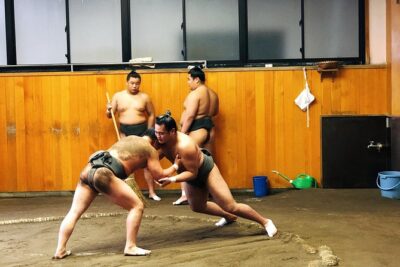
Browse the lists this tour appears in