
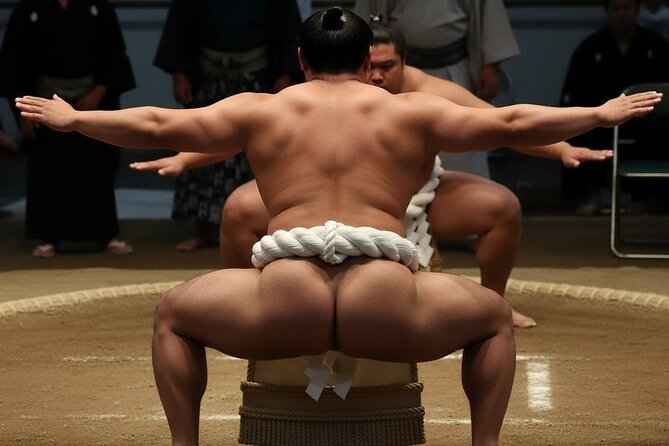
REVIEW · SUMO PHOTO EXPERIENCES
Tokyo Shinjuku Sumo Show & Experience with Photo
The best part of this Shinjuku experience is the close look at sumo beyond the collision itself. You’ll see two professional wrestlers perform, learn why they throw salt and stomp the ring, then watch the sport become wonderfully playful when audience members step onto the dohyō for a friendly challenge.
I like the bilingual explanations, which make the rituals and rules easy to follow, and the strong audience involvement. Children can take part, adults can ask questions, and the photo session gives you a personal moment with the wrestlers. The main consideration is that this is a theatrical introduction, not a formal tournament, so serious sumo fans may want a real competition instead.
Key points to know before booking
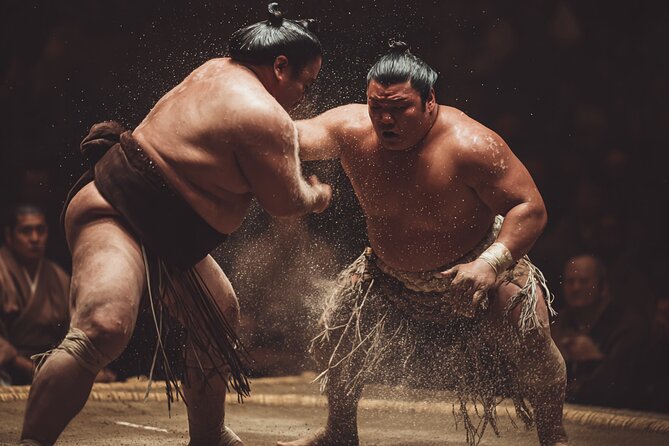
- Two live wrestlers perform up close: You see their size, speed, technique, and sense of humor from a short distance.
- The rituals are explained clearly: Salt throwing, ring stomping, and pre-match movements have meaning, not just visual drama.
- Audience participation is central: You may get to try a friendly bout or watch children wrestle in inflatable sumo suits.
- Hosts make the sport accessible: Bilingual MCs such as Shane, Manny, and Mr. So have guided different sessions with humor and clear explanations.
- The visit lasts about 90 minutes: That makes it easy to fit into a Shinjuku day or evening.
- The price is $79.59 per person: It is a fair value if you want entertainment, cultural context, and a photo opportunity in one stop.
What the Shinjuku Sumo Club experience is really like
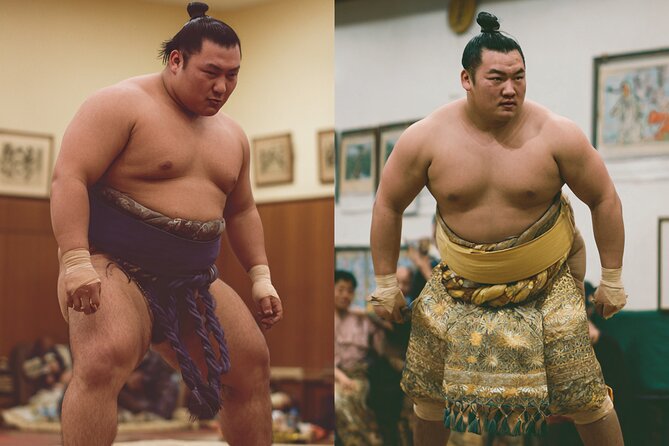
This is built as a friendly introduction to sumo, not a stripped-down version of a professional tournament. The venue has a traditional-style feel, and the focus stays on the wrestlers, the ring, and the meaning behind the sport.
You’ll watch two wrestlers demonstrate the basic structure of a bout. The action is real enough to show their strength and skill, but the tone is light. The wrestlers play to the room, answer questions, and show plenty of personality. That mix matters because sumo can look mysterious if you only see a few seconds of it on television.
The bilingual MC keeps the program moving. Different sessions have featured hosts named Shane, Manny, and Mr. So, so the exact presenter can vary. The important point is that the explanations are given in an easy, lively way rather than as a formal lecture.
Expect laughter, clapping, and plenty of interaction. This is one of those Tokyo activities where you do not simply sit quietly and watch a performance. You are invited to pay attention, ask questions, and possibly put your own balance to the test.
More sumo shows in Tokyo:
- Tokyo: Sumo Show Experience with Chicken Hot Pot and a Photo
★ 4.8 · 6,678 reviews - Tokyo: Sumo Show and Dining Experience
★ 4.8 · 2,742 reviews - the SUMO show
★ 5.0 · 1,960 reviews
Why the opening rituals matter
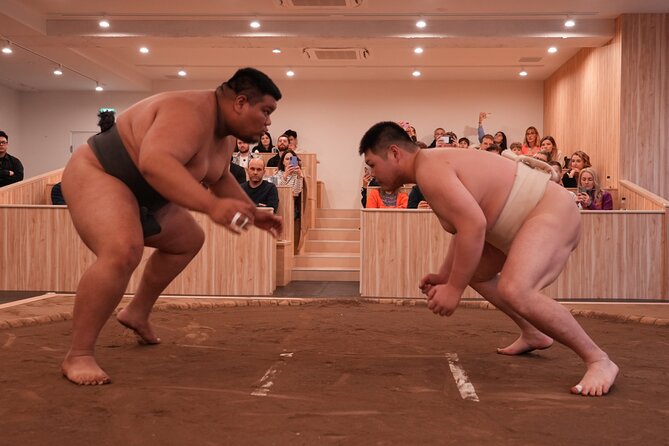
Before the physical contest begins, the MC explains the symbolic actions that define sumo. You’ll see salt thrown into the ring and wrestlers stomp their feet before facing one another.
For a first-time visitor, this is where the experience earns its cultural value. Without explanation, these movements can seem like colorful theater. With context, they become part of a sport tied to ceremony, discipline, and respect.
You’ll also learn about the pre-match routine and the basic rules. The show explains how wrestlers use movement, position, and tactics rather than relying only on brute force. That is useful because the bouts can be over quickly. Once you understand what to watch for, a short exchange becomes much more interesting.
I especially like that the explanations give you something to carry into the rest of your time in Japan. If you later see sumo on television or attend a tournament, you’ll recognize the salt, the stomping, and the measured preparation before the clash.
The program is not trying to teach every technical detail of the sport. Instead, it gives you a workable foundation: where the bout takes place, how a wrestler can win, what the rituals mean, and why sumo holds such an important place in Japanese culture.
Watching two wrestlers perform
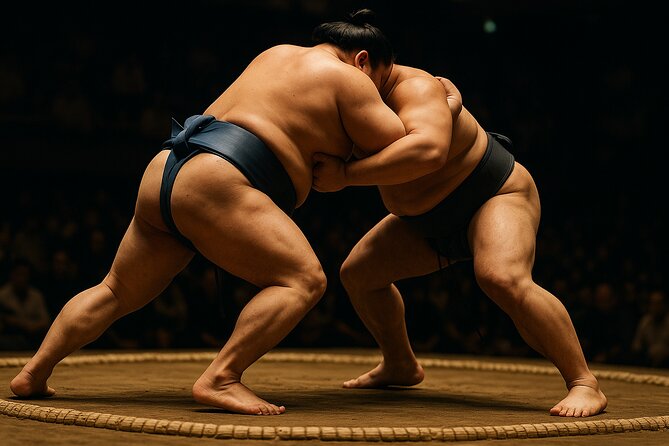
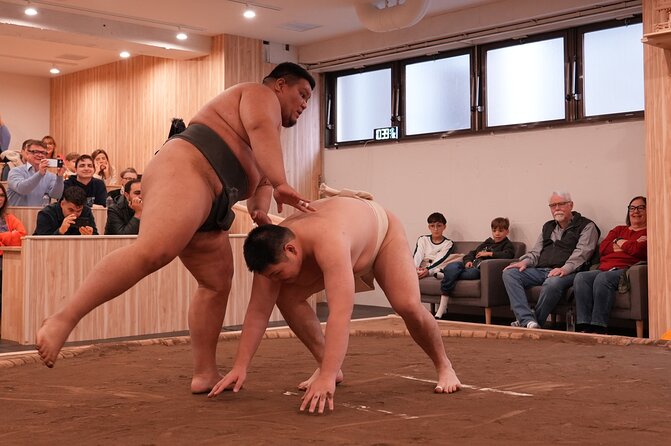
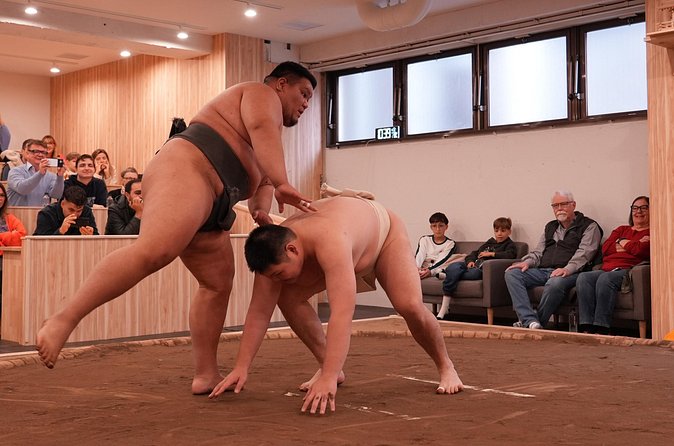
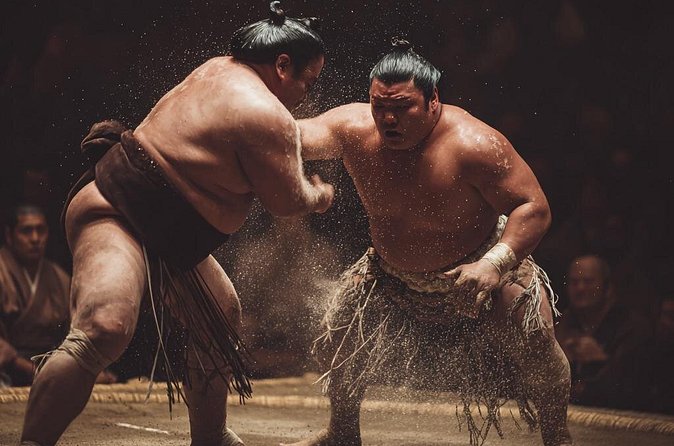
The main performance features two real sumo wrestlers. You get a close view of their large frames, quick footwork, powerful pushes, and carefully controlled movements.
That contrast is one of the show’s pleasures. Sumo wrestlers look slow only until they move. The demonstrations help you see how quickly they can shift their weight and respond to an opponent. You’ll also get a sense of the discipline behind their size and strength.
The wrestlers are not presented as distant sports stars. They interact with the room and use humor to keep the atmosphere relaxed. Names mentioned in different sessions include Ogawa, Tani, Gucci, and George, but the exact pair may change. What remains consistent is the chance to see the athletes at close range and hear them respond to the crowd.
Do not expect a long series of formal tournament bouts. The demonstrations are designed for people who want to understand and enjoy sumo, including children and adults with no prior knowledge. The wrestlers perform, explain, and entertain.
That approach will suit most first-time visitors. If your main goal is intense, official competition with a serious tournament atmosphere, this is not the right substitute. If you want to understand the sport and meet the people performing it, the format works well.
The audience challenge is the comic highlight
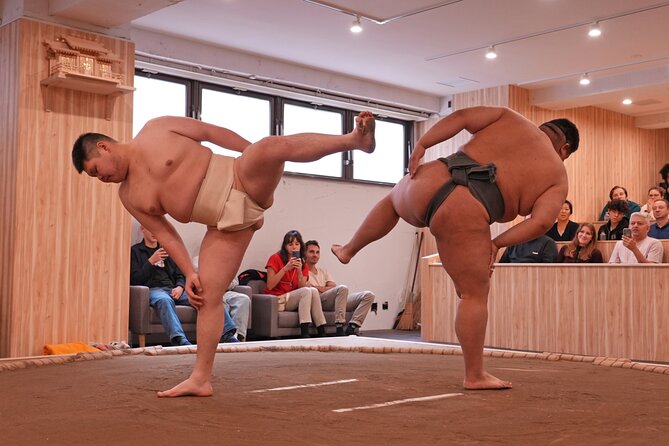
After watching the professionals, audience members may be invited onto the dohyō for a friendly sumo challenge. This is the part that turns the show from a presentation into a shared activity.
Children may be given inflatable sumo costumes, creating a safe and funny way to test the basics of the sport. Seeing a child in an oversized suit face a full-sized wrestler is clearly played for laughs, but it also helps explain the central ideas of balance, stance, and pushing your opponent out of the ring.
Adults can join too, although participation is not the reason to book if you dislike being the center of attention. You can enjoy the challenge from your seat if you prefer. The tone is playful rather than intimidating, and the MC helps keep the action moving.
This section works especially well for families. It gives children something active to look forward to and prevents the 90-minute program from feeling like a museum talk. Couples and groups of friends may also enjoy the chance to cheer for someone from their party.
The challenge is not a serious test of strength. It is a way to show how difficult it is to move a trained wrestler, even in a friendly setting. You’ll quickly understand that sumo depends on timing and technique as much as raw power.
More photo experiences in Tokyo:
- Tokyo Sumo Entertainment Show with Chicken Hot Pot and Photo
★ 5.0 · 1,205 reviews - Tokyo Ryogoku Sumo Morning Practice + Photo Shoot with Wrestlers
★ 4.5 · 277 reviews - Tokyo: Exclusive Access to Sumo Morning Practice with Photos
★ 4.8 · 107 reviews - Tokyo: Sumo Practice Tour with Ring-Side Seat and Photoshoot
★ 4.7 · 103 reviews
Photos, questions, and a more personal meeting
The photo session gives you time to stand with the wrestlers and capture the occasion. That matters because the performers are not just seen from a distance. You can ask questions and get a closer look at their size, clothing, and physical presence.
The question period also humanizes the sport. Sumo can seem highly formal from the outside, but direct answers and a little humor make the athletes easier to understand as people. The MC helps translate the cultural details and keeps the exchange clear for an international audience.
You should think of the photo as part of the experience, not the sole reason to pay the admission price. The real value comes from the combination of live demonstrations, explanations, audience participation, and personal contact.
For families, the picture can become a useful memory of the day. For first-time visitors, it records the moment you got close to an important part of Japanese culture without needing to attend a full tournament.
Is $79.59 good value?
At $79.59 per person, this is not a cheap filler activity. It costs more than a quick attraction or a casual visit to a neighborhood shrine. The question is what you want from your money.
I consider it reasonable if you want several things in one compact program: a live performance, a cultural explanation, audience participation, and a photo with the wrestlers. The 90-minute duration also helps. You are not committing half a day, and the central Tokyo location makes it practical to combine with other plans.
The value is strongest for first-time visitors who would like to understand sumo but do not want to arrange a tournament visit. A formal tournament offers genuine competition, but it also requires attention to dates, tickets, and the rules of the event. Here, you get a clear introduction in a set format.
The value is weaker for people who already know sumo well or want only serious bouts. You may find the humor and audience games too light. The show is designed to be welcoming and entertaining, so it does not aim for the tension of an official match.
Food and drinks are not the main focus. You can buy drinks and snacks during the performance, and one experience included a bottled water per person. If you expect a broad choice of included drinks, check the current terms before booking.
Who will enjoy this most
This is a strong choice for families. The explanations are easy to follow, the performers interact well with children, and the inflatable-suit challenges give younger visitors a clear role in the program.
It also suits couples and solo visitors who want a cultural activity with a social feel. You can learn without needing prior knowledge, and the humor keeps the subject from becoming too formal.
I would recommend it to anyone who has wondered what the rituals mean but has never watched sumo closely. The bilingual presentation removes much of the language barrier, and the host can explain small details while the action is happening.
It is less suitable if you are seeking a quiet, traditional ceremony or a full professional contest. The room is lively, the MC encourages participation, and the tone is deliberately upbeat. Think cultural show with real athletes, not a tournament hall.
Getting there and planning your time
The venue is in Shinjuku and near public transportation. It is described as easy to find when arriving by train, but you should still allow extra time. One evening was affected by heavy traffic, and arriving about 30 minutes early is sensible if you have a tight schedule.
The mobile ticket makes entry simple, and confirmation is provided when you book. Most people can participate, and the activity is designed for a broad audience.
Try not to place this immediately after a long cross-town transfer. Shinjuku traffic can slow you down, and arriving late may mean missing the opening explanation of the rituals. Build in a cushion, especially if you are coming from another Tokyo district.
The 90-minute length makes the activity easy to pair with dinner or an evening walk through Shinjuku. It can also fill a gap in your schedule without taking over the whole day.
Free cancellation is available if you cancel at least 24 hours before the start time. Changes or cancellations made within 24 hours are not accepted for a refund, and the cut-off follows local Tokyo time.
What makes the experience memorable
The strongest feature is the blend of education and comedy. You learn about the origins, practices, lifestyle, tactics, and rules of sumo, but you are not asked to absorb the information in a serious classroom setting.
The wrestlers carry much of the charm. They are powerful athletes, yet they also know how to respond to an audience. That combination lets you appreciate both sides of sumo: the honorable sport and the entertaining spectacle.
The MC is just as important. Shane and Manny have been praised for smooth, clear presentations, while Mr. So has been noted for his humor. Since the host can vary, you should expect the same general format rather than a specific personality.
I also like the sense of proportion. The program does not pretend to replace a tournament. It gives you a window into the sport, then lets you have fun with it. That honesty makes it easier to decide if the activity matches your interests.
Should you book the Shinjuku Sumo Club?
Book it if you want an approachable, family-friendly introduction to sumo with real wrestlers, clear explanations, and plenty of audience interaction. It is especially useful if you have never watched the sport and want more than a photo outside a stadium.
I would also choose it for a short Tokyo itinerary. The 90-minute format, Shinjuku location, and mobile ticket make it easy to fit around other plans, provided you leave extra time for transport.
Skip it if you want a formal tournament or a highly serious sporting event. For everyone else, the $79.59 price buys a lively cultural lesson, a close look at Japanese sumo, a chance to join the action, and a personal photo that is hard to replicate elsewhere.
FAQ
How long does the Tokyo Shinjuku Sumo Show last?
The experience lasts approximately 1 hour and 30 minutes.
Where does the sumo experience take place?
It takes place at Shinjuku Sumo Club in Tokyo, Japan.
How much does the experience cost?
The listed price is $79.59 per person.
Are the explanations given in English?
A bilingual MC guides the experience and explains the rituals, history, rules, and demonstrations in an accessible way.
Can I participate in a sumo challenge?
Audience members have the chance to step onto the dohyō for a friendly sumo challenge. Children may also take part in inflatable sumo costumes.
Can I take photos with the wrestlers?
Yes. The experience includes a photo opportunity with the sumo wrestlers.
Is the venue easy to reach by public transportation?
Yes. The venue is near public transportation and is described as easy to find when arriving by train.
Can I cancel for a full refund?
You can cancel for a full refund if you cancel at least 24 hours before the experience start time. Cancellations or changes made less than 24 hours before the start time are not refunded.
Newest sumo experiences in Tokyo
- Tokyo 6hr Private Guided Tour & Sumo Show Lunch★ 5.0 · 3 reviews
- Tokyo Grand Sumo Tournament Viewing Tour★ 5.0 · 2 reviews
- Tokyo Sumo History Tour with Chanko Nabe Lunch★ 5.0 · 3 reviews
- Tokyo Highlights Tour: Sumo, Sushi, Tea, and Tokyo Tower★ 5.0 · 2 reviews
- Tokyo: Know about Hokusai and Sumo culture in 2.5 hours★ 5.0 · 2 reviews
- TOKYO , No1 Yokozuna Stable Morning Practice in Ryogoku★ 4.5 · 3 reviews
- Tokyo Sumo Practice Watching & Visit Town from Samurai era★ 5.0 · 8 reviews
- Unique Afternoon Live Sumo training tour in Tokyo★ 5.0 · 6 reviews
Sumo Photo Experiences, compared.
Sumo Show Experience with Chicken Hot Pot and a Photo
Read our review →
Tokyo Sumo Entertainment Show with Chicken Hot Pot and Photo
Read our review →
Sumo Stage Show with Bento or Snack + Fight & Photo
Read our review →
Tokyo Ryogoku Sumo Morning Practice + Photo Shoot with Wrestlers
Read our review →
Exclusive Access to Sumo Morning Practice with Photos
Read our review →
Sumo Practice Tour with Ring-Side Seat and Photoshoot
Read our review →
Tokyo Sumo Morning Practice Tour w/ Ring-Side Seat + Photo Shoot
Read our review →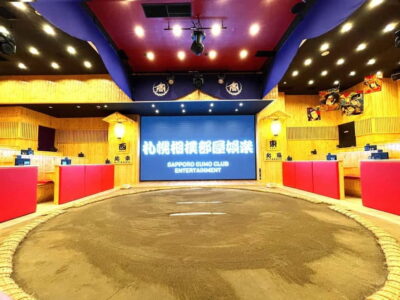
Browse the lists this tour appears in