
REVIEW · SUMO STABLE VISITS
Up-Close Sumo Experience at Ochi Stable: Wear Kimono in Osaka
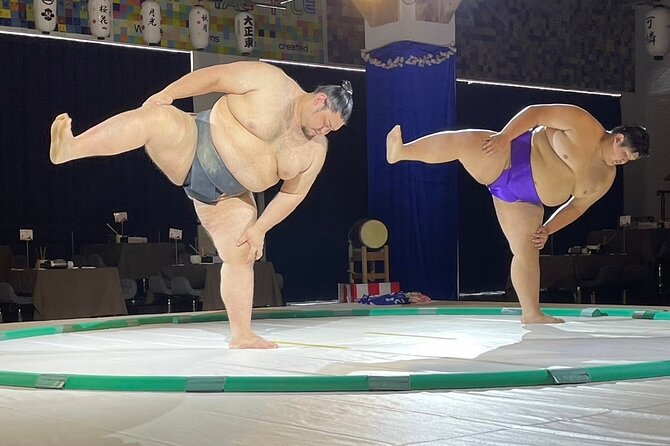
The best part of this Osaka-area experience is that you do not only watch sumo. You get close to the retired wrestlers, learn how the sport works, and may even face one in a friendly ring match. Audience participation turns a short show into something you will remember.
I like the hearty chanko nabe meal, the hotpot traditionally associated with sumo wrestlers. I also like the chance to wear a kimono in the Ochiizumi Room, a simple extra that gives the visit a more Japanese feel.
The main thing to weigh is the length of the wrestling show. One family said the actual sumo portion was fairly short, even though the interactive part was excellent. At $76.23 per person, this is best for people who want a hands-on cultural activity, not a long professional tournament.
Key points before you book
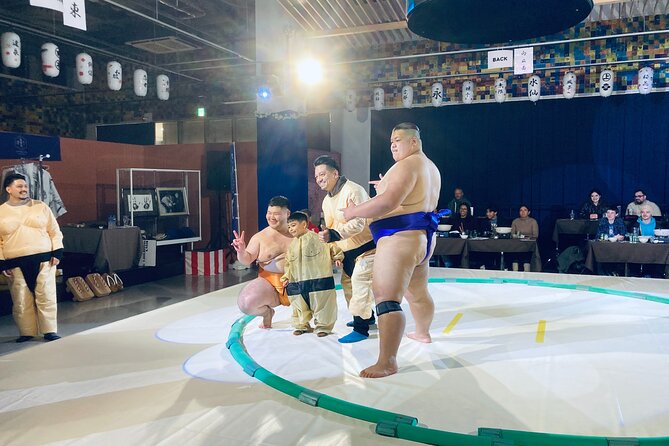
- Retired wrestlers enter the ring: You watch friendly matches and may be invited to wrestle with them yourself.
- The 90-minute visit includes food: Chanko nabe gives the experience more substance than a short demonstration alone.
- Audience participation is central: Expect to be involved, not seated quietly for the full session.
- Kimono wear is available: Ask the staff about wearing one in the Ochiizumi Room.
- Families can take part: The activity was especially well received by one family whose four-year-old child enjoyed it.
- Izumisano location: You will find the venue at 3 Rinkuoraiminami, near public transportation in Osaka Prefecture.
Meeting sumo at Ochiizumibeya in Izumisano
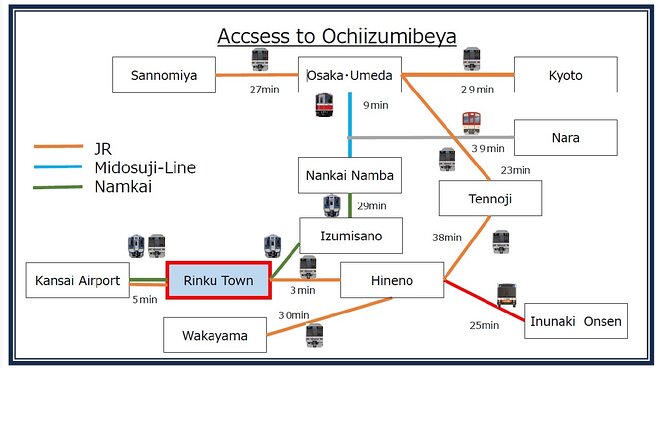
The experience takes place at Sumo Restaurant Ochiizumibeya, at 3 Rinkuoraiminami in Izumisano. This is in Osaka Prefecture, rather than in central Osaka, so check your route before you set out. The venue is near public transportation, but the information provided does not name a specific station or give walking directions.
That location matters because the activity is not a quick add-on beside Osaka Castle or Dotonbori. You will need to plan time to reach Izumisano and return afterward. If you are staying near Rinku, the venue may fit naturally into your day. If you are based in central Osaka, allow extra time around the 90-minute program.
The attraction is called a sumo restaurant, and that tells you something about the format. You are not entering a large stadium for a formal tournament. Instead, you are visiting a smaller setting built around food, explanation, performance, and close contact with the wrestlers.
That makes the experience easier for first-time sumo fans. You do not need to understand every rule before arriving. The presentation explains the sport, its traditions, and the daily life of the wrestlers before asking you to follow the action.
More stable visits in Japan:
- Tokyo Sumo Morning Practice Tour at Stable
★ 5.0 · 298 reviews - Watch Sumo Morning Practice at Stable in Tokyo
★ 4.0 · 268 reviews - Tokyo: Sumo Morning Practice Viewing Tour at a Real Stable
★ 5.0 · 73 reviews
What happens during the 90-minute program
The session combines several parts rather than offering one long wrestling performance. You begin by learning about sumo and the disciplined life of its athletes. The introduction covers the background and rules, giving you useful context before the matches begin.
This explanation is valuable because sumo can look simple from a distance. Two wrestlers push, pull, and try to force each other out of the ring, but the sport has its own rules, customs, and sense of dignity. A short introduction helps you understand what you are seeing instead of treating it as a generic strength contest.
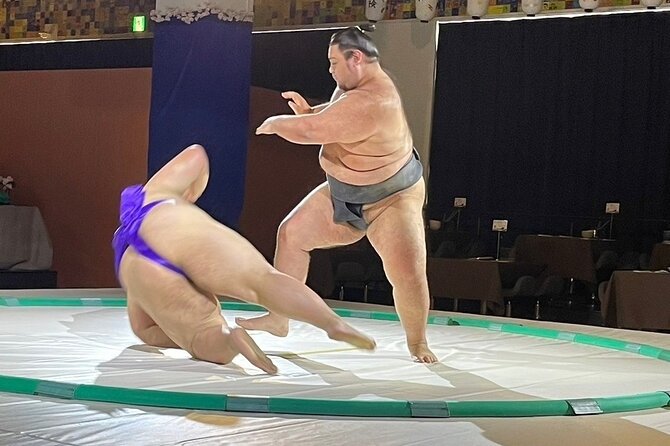
Next comes the sumo show, featuring retired wrestlers. The matches are described as friendly, but they still have the physical force and drama that make sumo fun to watch. You can expect the audience to play a role, with the wrestlers involving people in the room rather than keeping the action entirely on the mat.
The show itself may feel brief if you are hoping for a long series of bouts. One family specifically noted that the wrestling was short. The good news is that the rest of the format adds interaction, explanation, photographs, and food, so you are not paying only for minutes of wrestling.
After the show, you can take pictures with the wrestlers. This is one of the strongest parts for families and groups of friends because the photograph captures the unusual scale and character of the encounter. It also gives you a calmer moment after the lively ring activity.
The program also allows you to fight with a sumo wrestler. The wording suggests a friendly, supervised match rather than a serious contest. Still, you should expect physical participation if you choose to join in. If you prefer to watch, the experience also works from the audience.
The value of joining a friendly match
The hands-on portion separates this from a standard cultural presentation. You are not just hearing about sumo or watching a demonstration. You may test your balance and strength against a retired wrestler, with the fun coming from the obvious mismatch.
That contrast is part of the joke and part of the lesson. Sumo depends on more than size. Position, timing, force, and ring awareness all matter. Even a short match can help you understand why the sport is so demanding.
You should also be realistic about what participation involves. The program is active, and the experience description says you can fight with a sumo wrestler. Most people can participate, but you should use your judgment if you have an injury or do not want physical contact. Service animals are allowed, and the activity is described as suitable for most people.
For families, the interactive design is a major advantage. A formal lecture about sumo may lose a young child quickly. Here, the wrestlers, the ring, the food, and the chance to see people from the audience take part create several points of interest. A four-year-old boy was reported to have had a particularly good time, though every child has a different comfort level with the noise and physical activity.
For a group, the format may work even better. A party of 12 family members and friends enjoyed the chance to take part together. If your group is large, be aware that not everyone will necessarily wrestle, so the experience may involve watching friends and relatives take their turn.
Chanko nabe gives the visit a real meal
Chanko nabe is the traditional hotpot associated with sumo wrestlers, and it is included as part of the experience. The dish is hearty and steaming, making it a natural match for a program centered on the wrestlers’ food and training culture.
Food adds real value here. Without it, a 90-minute activity built around a short show might feel expensive. The meal gives you time to sit, eat, and continue the social side of the visit after the ring action.
The exact ingredients are not provided, so you should ask the staff if you need detailed dietary information. A vegetarian option is available if requested, but it is best to state that need when booking rather than waiting until you arrive.
One of the strongest food-related impressions was that the meal was excellent and that the owner was very nice. That points to a visit shaped as much by hospitality as by the wrestling. You are buying an encounter with a local venue, not simply a ticket to a stage act.
If you have a large group, the shared hotpot style also makes sense. It gives everyone something to do together, even when only one or two people are in the ring. For children, it can provide a quieter break between the demonstrations and photographs.
More Japanese culture experiences in Japan:
- Osaka: Sumo Show & Experience w/ Optional Kimono & Hot Pot
★ 4.5 · 609 reviews - Tokyo Sumo Culture Tour with Chanko-Nabe Lunch in Ryogoku
★ 5.0 · 26 reviews - Tokyo Walking Tour : Sumo, Sushi, Tea, Temples and Tokyo Tower
★ 5.0 · 21 reviews - Chair Seat Guaranteed SUMO Practice +Photo +Culture Option
★ 4.5 · 17 reviews
Wearing a kimono in the Ochiizumi Room
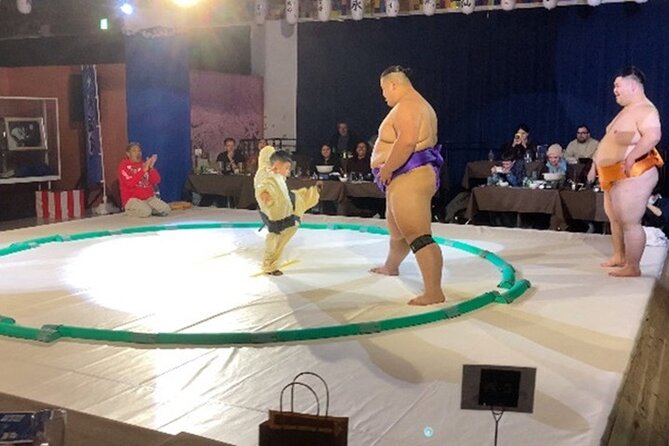
The kimono option is easy to miss, but it may be one of the most appealing extras for visitors who want a stronger visual connection to Japan. You can wear a kimono while in the Ochiizumi Room, but you need to ask the staff.
This is not described as a separate formal kimono lesson, so set your expectations accordingly. Think of it as an opportunity to dress for the setting and take photographs, rather than a full lesson in putting on, tying, or caring for a kimono.
I would ask about it as soon as you arrive. That gives the staff time to explain what is available and when you can use the room. Since the kimono option is not presented as automatic, do not assume it will be arranged unless you request it.
For families, the kimono can make the photo session more memorable. For couples or friends, it adds another activity without requiring a separate booking. It is also a useful feature for anyone who wants more than a meal and a quick performance.
Is $76.23 a fair price?
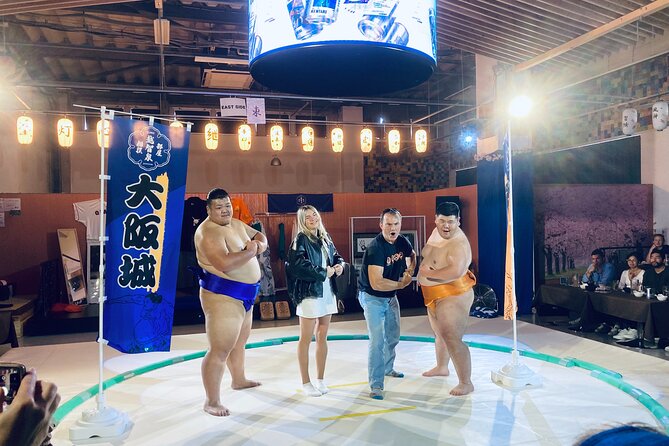
At $76.23 per person, the cost is not bargain-level for a 90-minute activity. The price makes more sense when you count the full package: a sumo introduction, retired wrestlers, a live show, audience participation, the possibility of a friendly match, photographs, and chanko nabe.
The value depends on what you want from sumo. If your priority is watching a long sequence of serious bouts, this is not the right substitute for a tournament ticket. The performance is short, and the tone is friendly and interactive.
If you want personal contact and a cultural activity that works for a mixed-age group, the price is easier to justify. You receive more than a demonstration, and the meal makes the visit feel like a complete outing rather than a 20-minute show.
The strongest value comes for people who will actually use the interactive elements. Ask about the kimono, join the audience activities if you are comfortable, and take the photo opportunity. If you only sit and watch, you may find the cost harder to defend.
The activity is also booked an average of 35 days ahead, so it is not something to leave until the final day of your Osaka trip. That booking pattern suggests that planning early is sensible, especially if your dates are fixed or you are traveling with a group.
Who will enjoy this most?
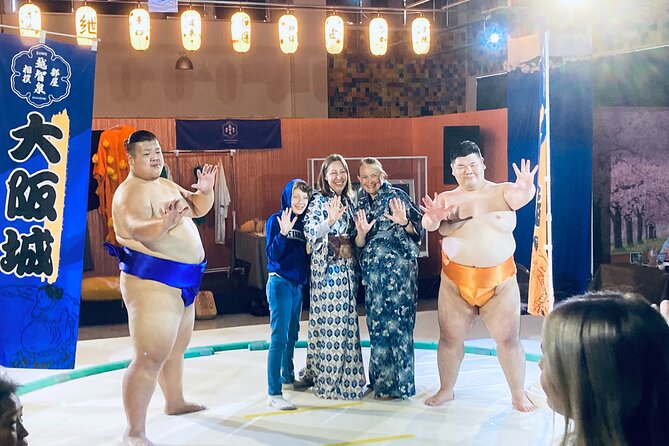
I would recommend this to families, first-time sumo fans, and groups looking for an activity that does not depend on advanced Japanese cultural knowledge. The explanation of the rules helps beginners, while the interaction keeps the pace friendly and social.
It also suits people who want photographs with wrestlers. The photo session is not an afterthought for many visitors. It gives you a clear memory of the encounter and lets children or group members take part even if they do not want to wrestle.
Food-focused visitors have another reason to consider it. Chanko nabe connects the meal to the athletes and gives the venue a stronger identity than a standard restaurant with a performance attached.
I would be more cautious if you want a quiet, formal cultural event. The audience is involved, and the activity may include physical contact and lively moments. It may also disappoint anyone expecting a long, serious sumo tournament.
The kimono option makes it appealing for visitors who want a traditional Japanese photo, but remember to ask staff about it. It is a feature you request, not one you should assume is automatically included in the schedule.
Practical details that affect your day
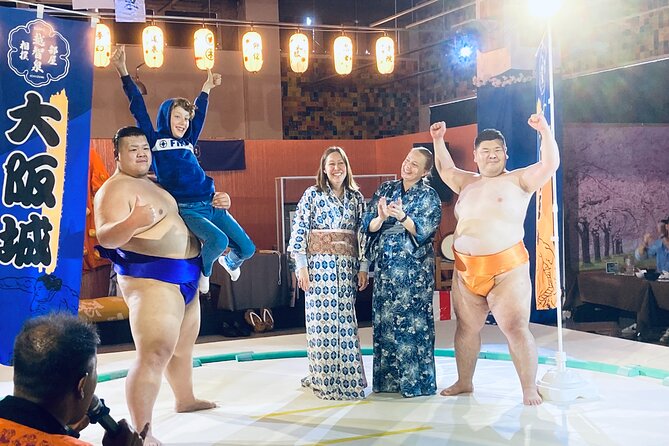
The experience lasts about one hour and 30 minutes. That is short enough to fit into a wider Osaka-area itinerary, but the trip to and from Izumisano will add to your total time.
The venue is near public transportation, which helps, though no exact station information is provided. Use the full address, 3 Rinkuoraiminami, Izumisano, Osaka Prefecture 598-0047, when planning your route.
You receive a mobile ticket, so keep your booking accessible on your phone. Confirmation is provided at the time of booking. If your plans change, free cancellation is available up to 24 hours before the local start time. Changes or cancellations inside that window are not accepted for a refund.
Most people can participate, and service animals are allowed. If you need a vegetarian meal, request it in advance. These details are small, but they matter when you are arranging a family outing or coordinating a group.
Should you book the Ochiizumibeya sumo experience?
Book it if you want contact with the wrestlers, a friendly audience activity, and a meal that connects directly to sumo culture. The chance to join a match, take photographs, and ask about wearing a kimono gives you several ways to take part.
Think twice if your main goal is a long professional sumo contest. The wrestling show is relatively short, and the $76.23 price relies on the full mix of food, explanation, interaction, and photos.
For families, groups, and first-time visitors, I think the format offers good value when you participate fully. Plan your transport to Izumisano, request a vegetarian meal if needed, ask about the kimono early, and treat the experience as an interactive cultural meal with sumo at its center.
FAQ
Where does the sumo experience take place?
It takes place at Sumo Restaurant Ochiizumibeya, 3 Rinkuoraiminami, Izumisano, Osaka Prefecture 598-0047, Japan.
How long does the experience last?
The activity lasts approximately one hour and 30 minutes.
How much does it cost?
The listed price is $76.23 per person.
Is the activity available with a mobile ticket?
Yes. A mobile ticket is provided.
Do I get to watch sumo matches?
Yes. The program includes friendly sumo matches with retired wrestlers.
Can I wrestle with a sumo wrestler?
Yes. The experience includes the chance to fight or play wrestle with a sumo wrestler in a friendly match.
Is chanko nabe included?
Yes. The activity includes chanko nabe, a traditional hotpot associated with sumo wrestlers.
Can I wear a kimono?
You can wear a kimono in the Ochiizumi Room. Ask the staff about this option when you arrive.
Is there a vegetarian meal option?
Yes. A vegetarian option is available, but you should request it when booking.
Can I cancel for a full refund?
Yes. You can cancel at least 24 hours before the local start time for a full refund. Cancellations or changes made less than 24 hours before the start are not accepted for a refund.
Newest sumo experiences in Japan
- November Sumo Tournament tour in Fukuoka (Tickets Included)★ 4.5 · 76 reviews
- Kyushu Grand Sumo Tournament Viewing Tour with English Guide★ 5.0 · 22 reviews
- Kyushu Fukuoka Grand Sumo Tournament Viewing Tour★ 4.5 · 4 reviews
- Tokyo Highlights Tour: Sumo, Sushi, Tea, and Tokyo Tower★ 5.0 · 2 reviews
- Osaka: Sumo Show and Kimono Haori Experience★ 3.0 · 2 reviews
- Sumo Stable Intimate Morning Practice★ 5.0 · 2 reviews
- Tokyo: Know about Hokusai and Sumo culture in 2.5 hours★ 5.0 · 2 reviews
- Tokyo 6hr Private Guided Tour & Sumo Show Lunch★ 5.0 · 3 reviews
Sumo Stable Visits, compared.
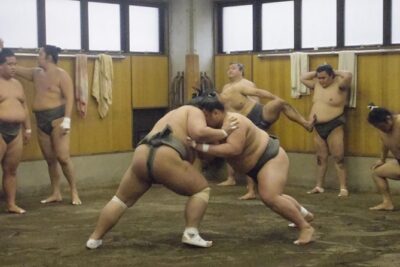
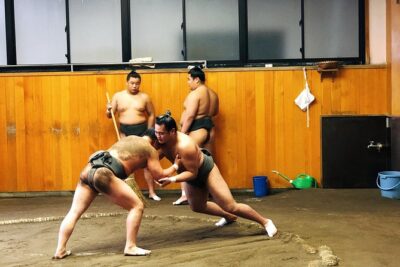
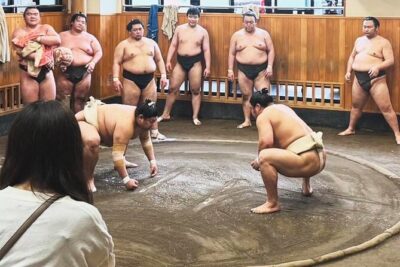
Sumo Morning Practice Viewing Tour at a Real Stable
Read our review →Sumo Morning Practice Viewing Tour at a Real Stable
Read our review →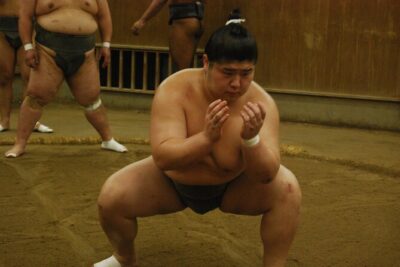
Sumo Morning Practice -Stable Visit Tour with a Guide
Read our review →Sumo Morning Practice -Stable Visit Tour with a Guide
Read our review →
Browse the lists this tour appears in