
REVIEW · GRAND SUMO TOURNAMENT TOURS
Sumo Tournament Experience in Osaka
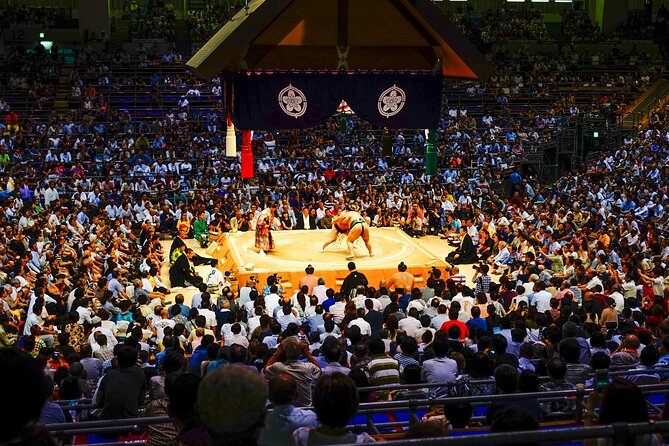
The main draw is simple: you get to watch Japan’s official March sumo tournament in Osaka, not a staged demonstration. Before the matches, an English-speaking sumo expert explains the rituals, rankings, and strict way of life behind the sport. I especially like the reserved seating and the audio headset, which lets you follow the guide without losing the action.
I also like the chance to greet wrestlers as they enter the arena and add a chanko hot pot dinner afterward. The catch is timing: you may wait before entering, the group can include up to 24 people, and the most affordable D seats are high in the arena. Bring binoculars if you choose them.
Key Points
- One of Japan’s six official 15-day tournaments: Osaka hosts the March basho, held only once each year in the city.
- Reserved seats at EDION Arena Osaka: Choose from upper-balcony D seats, main-arena B or C seats, or front A and S seats.
- An expert guide makes sumo easier to follow: Learn about salt purification, rankings, stable life, rules, and famous wrestlers.
- A useful audio headset is included: You can hear the explanation while the arena remains loud and lively.
- Optional chanko dinner adds local flavor: Choose sumo stew, sukiyaki, or a vegetarian meal with advance notice.
- Book early and arrive early: Group tickets are released only four to seven weeks before the date, and late arrivals may be left behind.
Why Osaka’s March Basho Is Worth Your Time
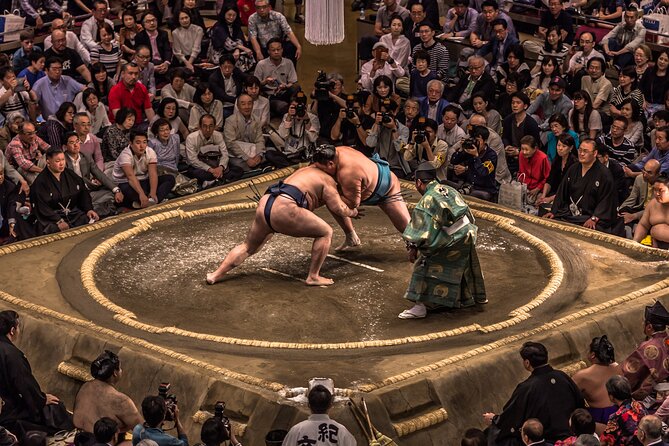
Sumo is not just two large men pushing each other out of a ring. It is a formal sport shaped by ritual, rank, etiquette, and centuries of custom. The match itself may last only moments, but the ceremony around it gives the event its special character.
The Osaka tournament is part of the official professional sumo calendar. Six major tournaments take place each year, each lasting 15 days. January, May, and September are held in Tokyo. July goes to Nagoya, November to Fukuoka, and March to Osaka. If your trip does not line up with March, you will not find this same official tournament experience in Osaka at another time of year.
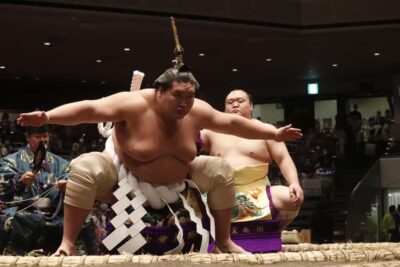
I like that this tour treats sumo as both sport and culture. You learn why wrestlers throw salt into the ring, how rankings work, and how the wrestlers live in communal training stables called heya. Their meals, clothes, schedules, and daily routines are closely controlled. That background helps you understand the people you are watching, not just the physical contest.
More tournament tours in Japan:
- Tokyo: Sumo Tournament Tour with Chair Seat Tickets
★ 4.6 · 753 reviews - Tokyo Grand Sumo Tournament Viewing Tour with Tickets
★ 5.0 · 692 reviews - Tokyo Sumo Wrestling Tournament Experience
★ 5.0 · 660 reviews
Meeting Near EDION Arena Osaka
The tour begins at about 2:00 pm, with the exact meeting point sent by email at least one week before the date. You should arrive at least 10 minutes early. This matters because the group cannot always wait for late arrivals, and the tour may continue without you.
The arena is near public transportation, but the supplied details do not name a specific station or exit. Check the final meeting instructions carefully rather than relying on a general map pin. You receive the guide’s phone number before the tour, which helps if you are delayed and need to meet the group at the next location.
The group size can reach 24 people, with at least 15 required for the tour to operate. That is large enough to feel organized rather than private. It also explains why the guide may need to keep the group moving, especially around crowded areas such as the Sumo Museum.
The guide on one recent departure was Yuka, who was easy to find near the arena and gave clear, friendly help. Guide assignments can change, but the format stays the same: an English-speaking local sumo expert leads the group and provides an audio headset.
Understanding the Ritual Before the First Match
The best part of having a guide is the context you would otherwise miss. Sumo has highly controlled rules and traditions, but they are not always obvious when you first sit down. The guide explains what is happening before, during, and around the matches.
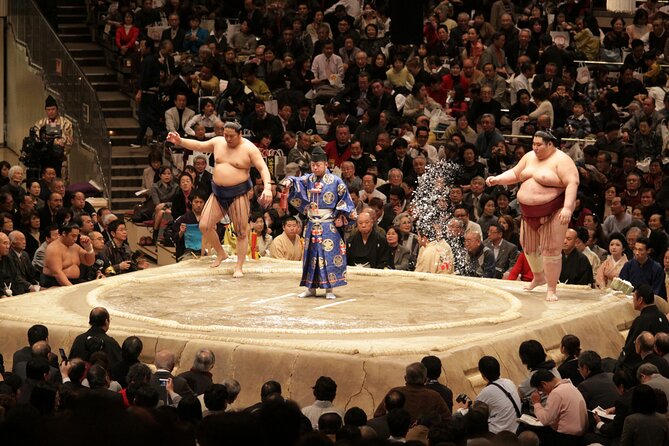
You learn about purification with salt and the formal actions that prepare wrestlers for the bout. You also receive a banzuke-hyo, the official table of rankings. Keep it handy. It gives you a useful way to understand the status of the wrestlers and the importance of each match.
The audio headset is a practical touch. A live arena is not a quiet classroom, and the crowd noise can rise quickly when a popular wrestler appears. With the headset, you can hear the explanation while still watching the ring and following the crowd’s reaction.
The guide also discusses famous wrestlers from the past and present. That makes the bouts easier to follow, especially if you know little about sumo before arriving. You will not become an expert in four hours, but you should leave with a working grasp of the basic rules, rituals, rankings, and personalities.
Greeting Wrestlers Outside the Arena
One of the more unusual parts of the experience comes before you settle into your seat. You may have the chance to cheer for and greet famous wrestlers as they enter the stadium for their matches.
This is not a private meeting or a guaranteed photograph with a particular wrestler. It is a public arrival moment, with local fans gathered to welcome the competitors. The value is in seeing the excitement build before the matches begin and noticing how much attention the wrestlers receive as they approach the arena.
For a first-time visitor, this helps set the tone. Sumo is a serious professional sport, but it also has a strong fan culture. The cheers, recognition, and formal entrance process show that the wrestlers are public figures with loyal followings.
More sumo experiences in Japan:
- Tokyo: Sumo Show Experience with Chicken Hot Pot and a Photo
★ 4.8 · 6,678 reviews - Tokyo: Sumo Show and Dining Experience
★ 4.8 · 2,742 reviews - the SUMO show
★ 5.0 · 1,960 reviews - Tokyo Shinjuku Sumo Show & Experience with Photo
★ 5.0 · 1,750 reviews
Choosing Between D, B, C, A, and S Seats
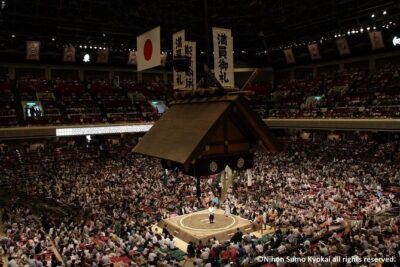
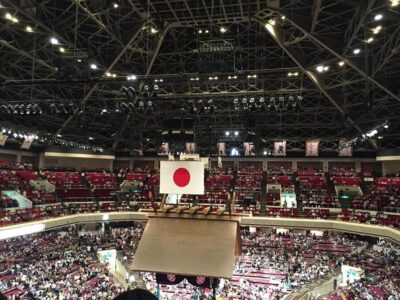
Your ticket category makes a real difference. The arena is compact, so even the upper D seats provide a full view of the ring, but the wrestlers will look distant. Binoculars are recommended for D seats and are also useful in the B and C sections.
Here is how the seating works:
- D seats: Upper corners of the arena. You get a complete view of the ring, but from a distance. These are the basic option.
- B or C seats: Main-arena chair seats with a better mix of action and atmosphere. These are the standard option.
- A or S seats: Front sections closest to the ring. These offer the strongest view and the most direct sense of the matches.
The standard B or C option is likely the best balance for many people. You sit close enough to see the action clearly while keeping the price below the front sections. The premium A or S seats make more sense if sumo is a major reason for your trip and you want the closest possible view.
The basic D seats can still work well for a budget-conscious visitor, particularly because the arena is compact. Just do not expect to study every movement with the naked eye. Bring binoculars, or plan to focus more on the overall ceremony and crowd than on fine details.
All seats are reserved in advance according to the option you select. You are not left searching for a place once inside, which removes one common source of stress at a major sporting event.
A Four-Hour Visit, With Some Waiting Built In
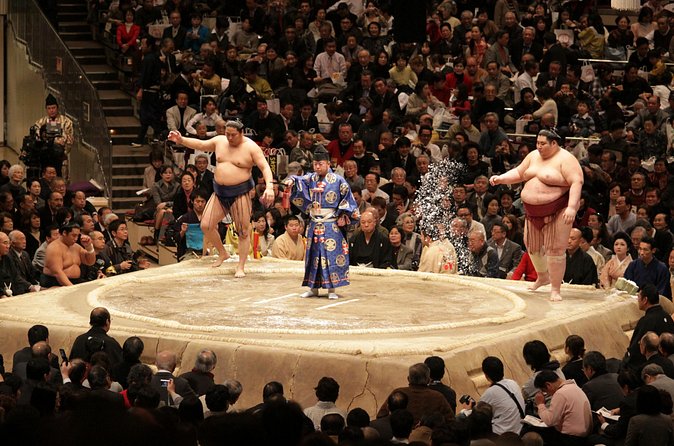
The main experience lasts about four hours. You should not assume that every minute is spent watching a match. There can be a wait before seating because the group may need to wait for earlier bouts to finish before entering.
That delay is a practical point to understand before booking. It is not a sign that the tour is poorly arranged. The organizers are working around the tournament schedule and group seating, but the pace may feel slower than a standard sightseeing tour.
The Sumo Museum can also become crowded. In that case, the guide may ask you to visit on your own because moving a large group through a tight space is difficult. If you prefer to hear every explanation together, stay close to the guide and follow instructions. If the museum is too congested, you may get a better look by moving independently.
Once seated, you can watch the matches, listen to the guide, and cheer with the local crowd. The event has a clear rhythm, with formal movements, short bursts of action, and periods of preparation. That rhythm is part of the experience. Sumo is not designed like a nonstop modern sports broadcast.
Adding Chanko Nabe After the Tournament
At checkout, you can select dinner at a local chanko hot pot restaurant. Chanko nabe, often called sumo stew, is associated with the food served to wrestlers. It usually contains a chicken-stock base, vegetables, and other ingredients in a large communal pot.
The meal fits the theme without pretending that one dinner reproduces a wrestler’s full diet. Chanko is practical food for a training stable because a large amount can be cooked at once and shared by many hungry people. The dish is tied to the Ryogoku area and to the daily life of sumo wrestlers.
Chanko is the default dinner if you select the meal option. Sukiyaki or a vegetarian choice can be requested, but you need to provide that request at least one week in advance. Traditional chanko broth often uses pork or chicken, and the restaurant may substitute the broth for a vegetarian meal.
Drinks are not included. Special dietary needs belong in the booking request, and changes may not be possible during the week before the tour once the restaurant has accepted the request. If dinner matters to you, make the choice early rather than trying to adjust it at the last minute.
What the $142.40 Price Really Covers
The listed price is $142.40 per person. That is not a cheap arena ticket, but it covers more than admission. You are paying for a reserved seat, ticket-handling service, a local English-speaking sumo guide, the audio headset, a sumo information pamphlet, and the ranking sheet.
The value depends heavily on your seat category and interest in sumo. If you already understand the sport and only want the cheapest available ticket, the tour may cost more than arranging a basic seat alone. If sumo is unfamiliar to you, the guide can prevent the event from becoming four hours of unexplained rituals and short matches.
The dinner option changes the total cost, and meals and drinks are not included unless you select dinner at checkout. Food and drinks are available for purchase inside the arena, but outside food and drinks are not allowed.
Group discounts are available, so families or friends should check the final price for their party. A group of 15 or more is also important for the tour to operate, though the overall group can be as large as 24 people.
Who Should Book This Sumo Experience
I would choose this tour if you are in Osaka during the March basho and want help making sense of sumo. It works especially well for first-time visitors, families with older children, and anyone who wants cultural explanation along with a major sporting event.
The experience also suits you if you value a reserved chair seat. You avoid the uncertainty of finding a ticket and get a seat category chosen in advance. The standard B or C seats offer the most sensible compromise for many people.
You might skip it if you dislike fixed schedules, group tours, or possible waiting. The minimum group requirement also means the experience can be canceled if enough people do not book. If that happens, you are offered another date or experience, or a full refund.
The tour is not a private lesson and does not promise a personal meeting with a specific wrestler. Its strength is access to the official tournament, clear explanations, and a more informed view of the action.
Booking Early and Avoiding Common Problems
Book as early as you can. Three months before your travel date is ideal, and one month is the minimum suggested planning window. Restaurant arrangements, guides, and group tickets all take time.
The Sumo Association releases group tickets only four to seven weeks before the tournament date. If tickets cannot be obtained, the operator says it will notify you within four weeks of the tour and offer another date or a full refund.
The cancellation rule is strict: the experience is non-refundable and cannot be changed for any reason after booking. Planning work may begin as soon as your reservation is received, including ticket purchases, restaurant requests, and guide arrangements. Only book once your Osaka dates are firm.
Should You Book the Osaka Sumo Tournament Experience?
Book it if the March tournament fits your schedule and you want more than a distant look at the ring. The guide, headset, ranking sheet, and reserved seat solve the main problems first-time spectators face: not knowing what is happening, missing the explanation in the noise, and arriving without a good ticket.
I would choose standard B or C seating for the best balance of price and view, then add the chanko dinner if you want the day to end with a food experience tied to sumo culture. Choose D seats only if you are comfortable sitting high and bringing binoculars. Choose A or S seats when the closest view is worth the extra cost.
For an Osaka visit in March, this is a strong pick for sports fans and curious first-time visitors. Just arrive early, book well ahead, and treat the possible waiting and group pace as part of the deal.
FAQ
When does the Osaka sumo tournament take place?
The official Osaka tournament takes place in March. It lasts 15 days, with the start and end dates falling on Sundays.
How long is the sumo tournament experience?
The experience lasts approximately four to five hours. The arena portion is described as a four-hour experience.
What time does the tour start?
The stated start time is 2:00 pm. You should arrive at least 10 minutes before the designated meeting time.
Where does the tour meet?
The meeting point is near EDION Arena Osaka. The exact meeting details are sent by email at least one week before the tour date.
What seating options are available?
Basic tickets use D seats in the upper corners. Standard tickets use B or C seats in the main arena. Premium tickets use A or S seats in the front arena section.
Are meals included?
Meals and drinks are not included unless you select the dinner option at checkout. Chanko hot pot is the default dinner, with sukiyaki or a vegetarian option available by request.
Can I bring food and drinks into the arena?
No. Outside food and drinks are not allowed, but food and drinks can be purchased from vendors inside the arena.
How far ahead should I book?
Booking three months before your travel date is recommended. One month ahead is the minimum suggested planning period, though group tickets are released only four to seven weeks before the tournament date.
What happens if I cancel?
The experience is non-refundable and cannot be changed for any reason. If the operator cancels because the minimum number of participants is not reached, you are offered another date or experience, or a full refund.
Newest sumo experiences in Japan
- November Sumo Tournament tour in Fukuoka (Tickets Included)★ 4.5 · 76 reviews
- Kyushu Grand Sumo Tournament Viewing Tour with English Guide★ 5.0 · 22 reviews
- Kyushu Fukuoka Grand Sumo Tournament Viewing Tour★ 4.5 · 4 reviews
- Tokyo Highlights Tour: Sumo, Sushi, Tea, and Tokyo Tower★ 5.0 · 2 reviews
- Osaka: Sumo Show and Kimono Haori Experience★ 3.0 · 2 reviews
- Sumo Stable Intimate Morning Practice★ 5.0 · 2 reviews
- Tokyo: Know about Hokusai and Sumo culture in 2.5 hours★ 5.0 · 2 reviews
- Tokyo 6hr Private Guided Tour & Sumo Show Lunch★ 5.0 · 3 reviews
Grand Sumo Tournament Tours, compared.
Tokyo Grand Sumo Tournament Viewing Tour with Tickets
Read our review →
Ultimate Sumo Tournament: Tokyo, Osaka, Nagoya, Fukuoka
Read our review →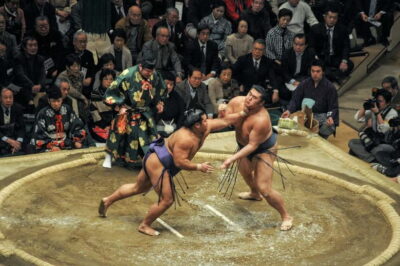
Sumo Tournament with Guide & Assigned Reserved Seat
Read our review →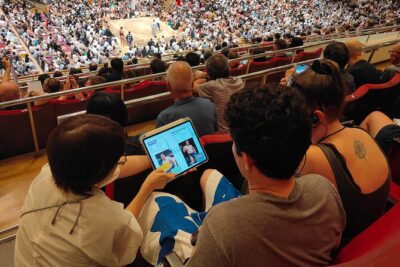
Sumo Wrestling Tournament with Chair Seat Tickets
Read our review →November Sumo Tournament tour in Fukuoka (Tickets Included)
Read our review →Browse the lists this tour appears in