
REVIEW · SUMO MORNING PRACTICE TOURS
Tokyo: Sumo Keiko Training Tour with Audio Guide & Photo
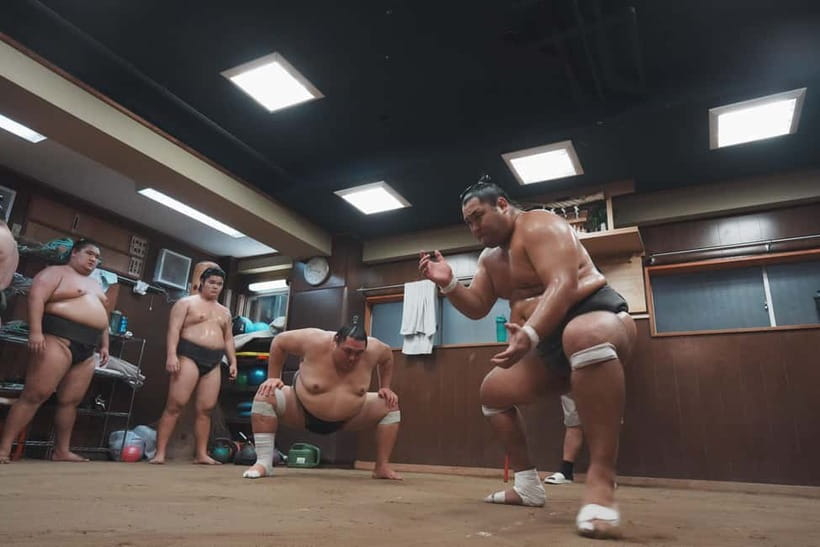
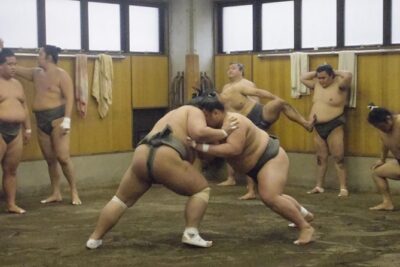
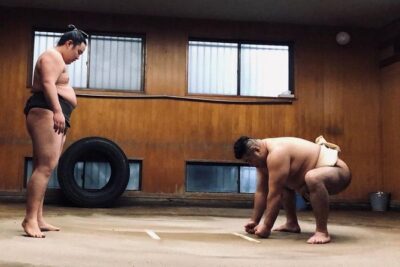
The most exciting part of this Tokyo experience is the chance to watch real sumo training, not a staged demonstration. At Nakamura-beya Sumo Stable, you sit close to the practice area and see wrestlers work through the strength, balance, and discipline that make sumo so unusual.
I like the easy location, just two minutes from JR Ryogoku Station, and I like the useful mix of a live guide with a multilingual audio guide. The photo with the wrestlers adds a personal touch, while the nearby Sumo Museum gives you a good way to continue the subject afterward.
The main drawback is comfort. Bench chairs are limited, and most people sit on cushions for about 1.5 hours. You must also watch quietly, arrive on time, avoid flash photography, and use the restroom before practice begins.
Key points to know before booking
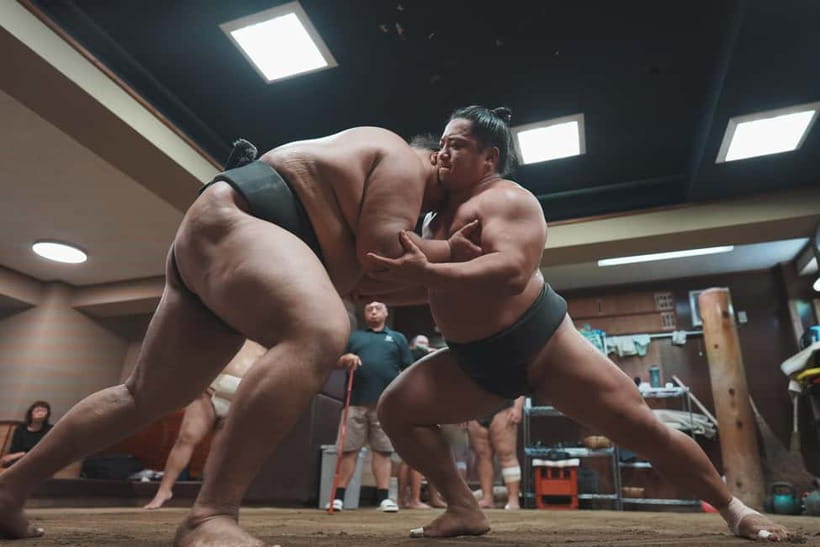
- Real training at Nakamura-beya: You watch professional wrestlers practice in their own stable, close to Ryogoku Kokugikan.
- Audio support in many languages: Commentary covers sumo history, ranks, and training methods through your phone.
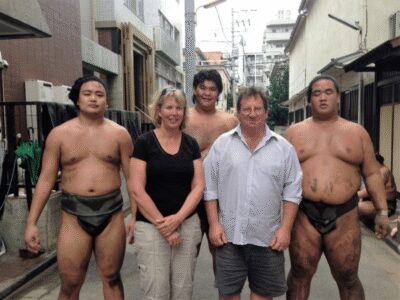
- Photo with sumo wrestlers included: You leave with a keepsake that goes beyond simply watching practice.
- Simple access from JR Ryogoku: The stable is about two minutes from the station and next to the national sumo arena.
- Quiet viewing matters: Talking is discouraged during practice, and flash photography is not allowed.
- Comfort is basic but practical: The room has air-conditioning, free Wi-Fi, charging stations, and limited bench seating.
Why a practice session feels different from a sumo tournament
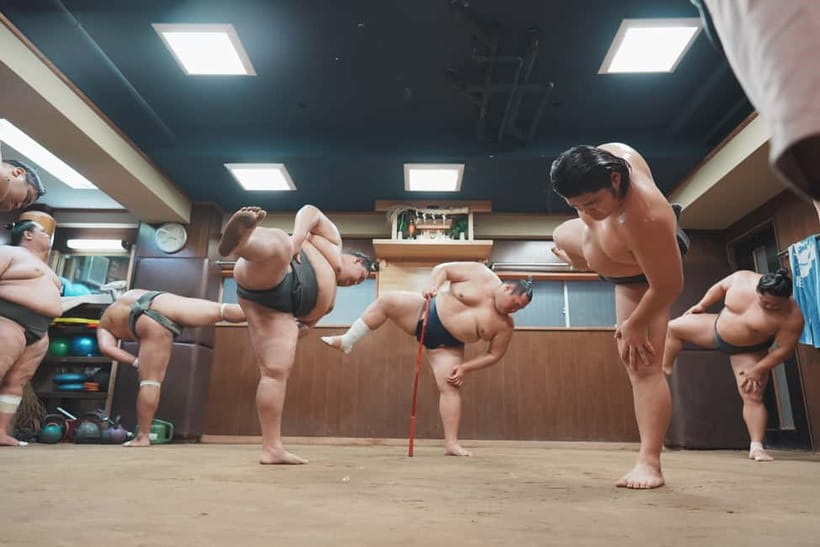
A sumo tournament is polished and public. A training session is more direct. You are watching wrestlers repeat movements, build power, and prepare their bodies without the ceremony of a formal bout.
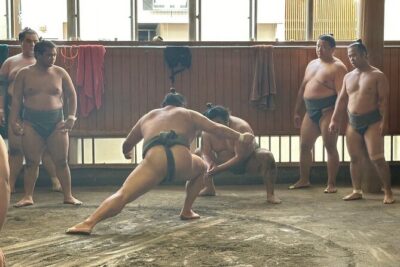
That difference is the reason I find this experience appealing. You get a look at the work behind the sport. The athleticism is not limited to the few seconds when two wrestlers collide. It also appears in repeated exercises, controlled movement, balance, and the strict quiet of the room.
The supplied pamphlet helps you follow what is happening, while the audio guide explains the structure of sumo. You can learn about ranks, the sport’s history, and training techniques instead of simply watching large men push each other.
The practice setting also requires a different attitude from a stadium event. You are asked to speak as little as possible and watch quietly. That may feel restrictive if you want a lively show, but it is important here. The wrestlers are training, not performing for an audience.
More morning practice tours in Tokyo:
- Tokyo: Sumo Morning Practice Viewing Tour
★ 4.8 · 570 reviews - Tokyo: Sumo Morning Training Visit
★ 4.4 · 370 reviews - Tokyo: Visit Sumo Morning Practice with English Guide
★ 4.7 · 343 reviews
Arriving at Nakamura-beya near Ryogoku Kokugikan
The meeting point is one of the strongest practical features. Nakamura-beya Sumo Stable is about two minutes from JR Ryogoku Station, next to Ryogoku Kokugikan National Sumo Arena.
I would plan to arrive early. Late arrivals lose part of their viewing time, and the session does not get extended to make up for it. This is especially important because the advertised duration can range from 40 to 90 minutes, while the full visit is described as lasting about 1.5 hours.
The short walk makes this easy to fit into a Tokyo day. You do not need a hotel pickup or a private transfer, and pickup and drop-off are not included. If you are already visiting eastern Tokyo, the location saves a lot of effort.
The nearby arena also gives you a useful landmark. After the session, you can walk to the Sumo Museum and explore the Tokyo waterfront. I would treat the tour as part of a Ryogoku half-day rather than making a long trip only for a short appointment.
What happens during the 40 to 90 minute visit
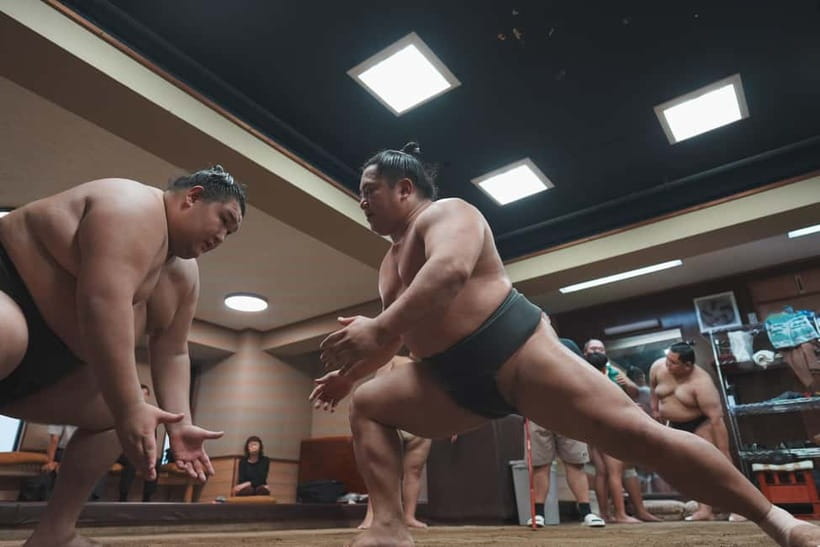
The visit begins and ends at Nakamura-beya. Once inside, you settle into the viewing area and receive the material needed to follow the session.
The exact schedule depends on the available starting time, so you should check the booking calendar before planning other activities. The visit may last 40 to 90 minutes, and the provided itinerary describes a 1.5-hour stop. Allow enough time for the full window rather than booking a museum entry immediately afterward.
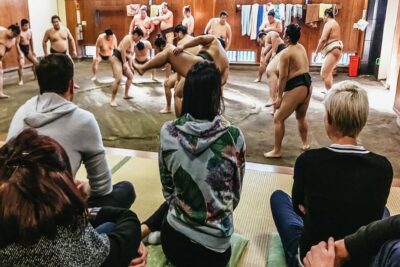
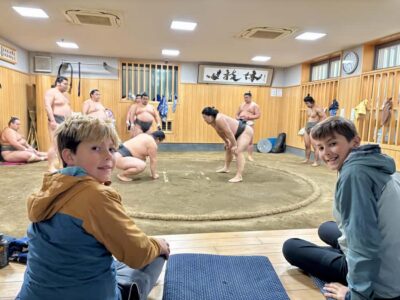
During practice, you watch the wrestlers train at close range. The special value is proximity. You are not watching from a distant arena seat, and the experience is not built around theatrical explanation. The focus is on seeing sumo practice in progress.
The guide can speak English, Japanese, and Korean. The audio guide is available in Chinese, English, French, German, Hindi, Italian, Japanese, Korean, Polish, Spanish, and Portuguese according to the supplied language information. Bring your own earphones so you can listen on your phone. If you do not have earphones, a pair can be lent to you.
The combination works well for different types of visitors. You can listen for background information while watching, or use the pamphlet to understand the basic terms and return your attention to the practice. If you already know a lot about sumo, the close view of training still gives the session value. A verified booking from the United States described it as an up-close experience that increased appreciation for the wrestlers, which is exactly where this tour is strongest.
The quiet rules are part of the experience
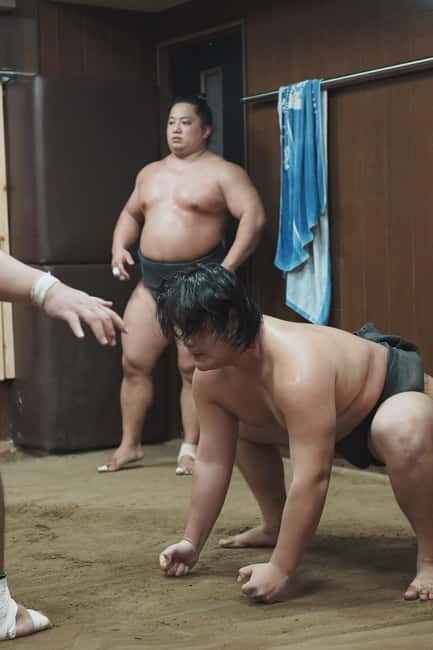
This is not a casual stop where you can chat, snack, and take pictures whenever you like. You are expected to watch quietly during practice.
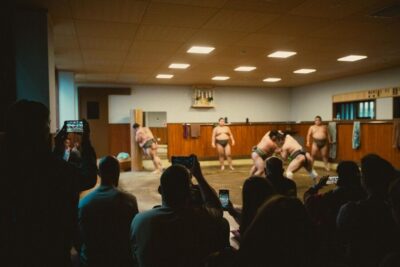
Do not use flash photography. Photography is allowed, but the no-flash rule matters because you are inside an active training setting. Sunglasses and bare feet are also not allowed.
Use the restroom before joining. The instructions specifically recommend this, so I would follow it. The viewing period can be lengthy, and the setting is organized around uninterrupted practice rather than frequent breaks.
These rules may be less convenient for young children or anyone who needs to move around often. The minimum age is six, and children under six cannot join. Older children who can sit quietly may enjoy the rare access, but parents should explain the rules before arrival.
More photo experiences in Tokyo:
- Tokyo: Sumo Show Experience with Chicken Hot Pot and a Photo
★ 4.8 · 6,678 reviews - Tokyo Shinjuku Sumo Show & Experience with Photo
★ 5.0 · 1,750 reviews - Tokyo Sumo Entertainment Show with Chicken Hot Pot and Photo
★ 5.0 · 1,205 reviews - Tokyo Ryogoku Sumo Morning Practice + Photo Shoot with Wrestlers
★ 4.5 · 277 reviews
Seating, air-conditioning, and basic comfort
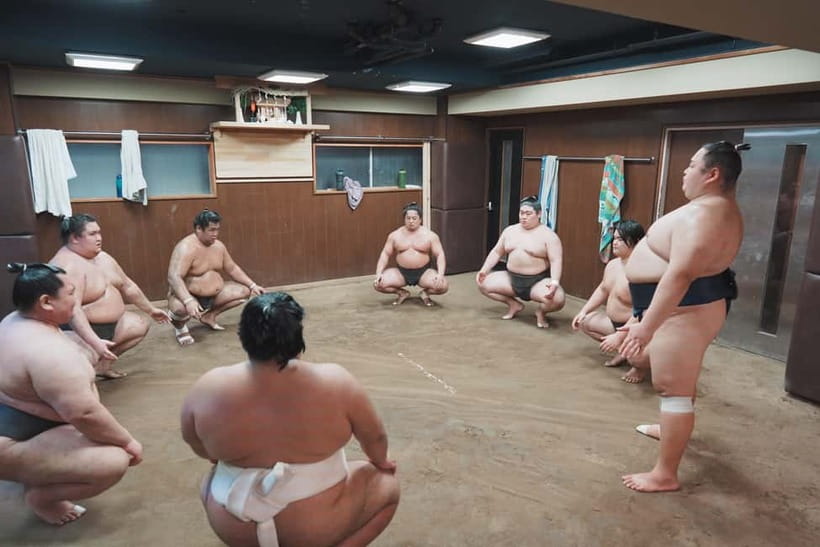
The venue is air-conditioned, which is welcome in Tokyo’s warmer months. Free Wi-Fi and charging stations are also available, practical touches if you are using your phone for the audio guide or managing a full day of sightseeing.
Seating is the main comfort issue. There are only a limited number of bench chairs, with priority given to visitors with disabilities. Other people sit on cushions for about 1.5 hours.
I would not book this expecting padded theater seating. Cushion seating may be perfectly manageable for many people, but it can be uncomfortable if you have knee, hip, or back concerns. If you need a bench chair, contact the provider before booking rather than assuming one will be available.
The air-conditioning, Wi-Fi, and charging service do not turn the stable into a luxury venue. They simply make the visit easier. For me, that is the right way to view them: useful practical support around an authentic activity, not the main reason to book.
The photo with the wrestlers
The included photo gives the experience a clear finish. After watching the training, you have a chance to take a picture with sumo wrestlers.
This matters because the visit is otherwise quiet and observational. You are not guaranteed a long personal meeting or an extended question-and-answer session in the information provided. The photo is a brief but memorable way to mark the visit.
Follow the photography rules here as well. Flash is not allowed. Keep your phone or camera ready, but do not interrupt the practice session or speak loudly while the wrestlers are working.
If you are visiting Tokyo with children aged six or older, the photo may be the part they remember best. Adults who already follow sumo may value it as a record of being inside a real stable rather than at a standard tourist attraction.
The audio guide and pamphlet add useful context
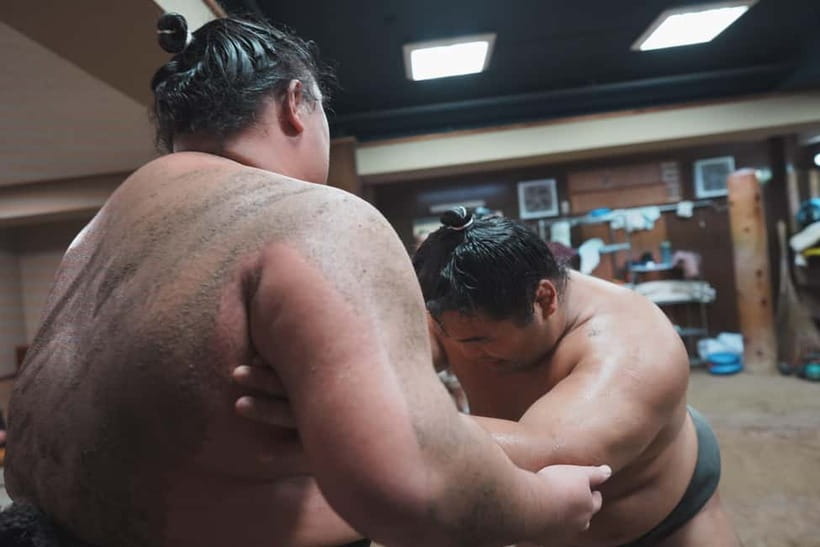
Sumo has its own vocabulary, rank system, rituals, and training methods. Without context, a practice session can become a series of powerful but unfamiliar movements.
The audio guide helps explain what you are seeing. It covers sumo history, ranks, and training techniques, and the available languages make it useful for families and mixed-language groups. You listen on your phone, so bring earphones or use the loan pair if needed.
The practice pamphlet gives you another way to follow along. I like having both options because live sports can move quickly. You can glance at printed information without relying entirely on a guide speaking at the exact moment you want an explanation.
The live guide speaks English, Japanese, and Korean. That is useful if you prefer to ask something directly or want a human introduction before the quieter observation begins. The audio system is better suited to detailed background in your preferred language.
Is $85 a fair price?
At $85 per person, this is not the cheapest short activity in Tokyo. The session may last less than 90 minutes, and transportation, food, and hotel pickup are not included.
The value depends on what you want. If you only need a quick photo near the arena, the price will feel high. If you want access to an actual training session, an explanation of the sport, multilingual support, and a photo with wrestlers, the package makes more sense.
The location improves the value. You can combine the visit with Ryogoku Kokugikan, the Sumo Museum, and the nearby Tokyo waterfront without spending more time crossing the city. That turns a short tour into one part of a larger day.
I would also compare it with the cost and timing of attending a formal sumo tournament. Tournament tickets, dates, and seating can be harder to arrange. This experience gives you a different look at the sport without requiring a full competition schedule.
The strongest value is access. You are paying for a setting that is normally part of a wrestler’s daily work, not for a broad sightseeing route. Anyone deeply interested in sumo may find that distinction worth the price.
Who will enjoy this most
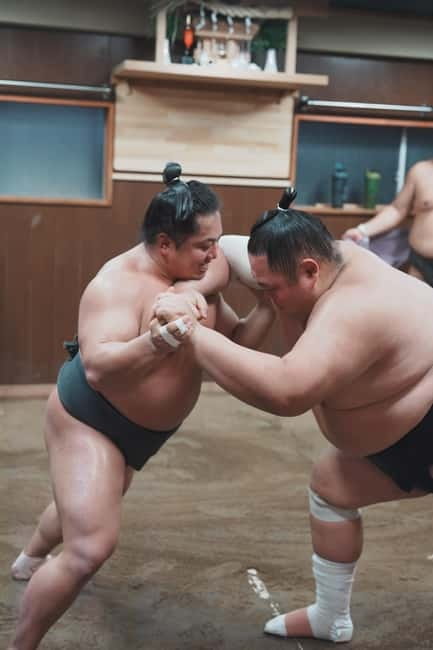
I would recommend this to first-time Tokyo visitors who want a cultural activity with a clear local connection. It also suits people who already know sumo and want to see training rather than only a public match.
It is a good choice for:
- Sumo fans who want a close look at practice
- Families with children aged six and older who can remain quiet
- Visitors staying near Ryogoku or building a day around the arena
- People who value multilingual explanations
- Photographers who can work without flash
- Anyone looking for a short activity that fits beside other Tokyo plans
I would be cautious if you dislike floor seating, need a flexible arrival time, or want a lively performance with narration throughout. This is a disciplined viewing experience. You need to respect the room and accept that the wrestlers’ practice comes first.
Making a half-day of Ryogoku
Because the stable is next to Ryogoku Kokugikan, I would pair the session with nearby sights. The Sumo Museum is the obvious follow-up for anyone wanting more background, and the Tokyo waterfront is within walking distance for a change of scenery afterward.
Leave space in your schedule. The start time varies, the viewing period can be as short as 40 minutes or as long as 90, and late arrival cuts into your visit. I would avoid booking a timed attraction immediately after unless you have checked the exact duration and built in walking time.
The station location makes the area easy to reach and easy to leave. That flexibility is useful in Tokyo, where a short train ride can connect you with many other districts.
Should you book this sumo experience?
Book it if you want to see the daily work behind sumo, can sit quietly on a cushion, and value close access more than a long sightseeing program. The strongest points are the real training session, the location by Ryogoku Kokugikan, the multilingual audio support, and the included wrestler photo.
Skip it if you need guaranteed bench seating, cannot arrive on time, or want a theatrical show. At $85, the price is justified by the setting and access, not by the length of the visit. For a sumo fan, that access is the whole point.
Cancellation is flexible up to 24 hours before the activity for a full refund, and you can reserve now and pay later. Those terms make it easier to fit the session into a changing Tokyo schedule.
FAQ
Where does the sumo training tour meet?
The meeting point is Nakamura-beya Sumo Stable, about two minutes from JR Ryogoku Station and next to Ryogoku Kokugikan National Sumo Arena.
How long does the activity last?
The stated duration is 40 to 90 minutes. The itinerary describes a visit of about 1.5 hours, so check the available starting time and allow room for the longer visit.
Is hotel pickup included?
No. Pickup and drop-off are not included. You meet directly at Nakamura-beya Sumo Stable.
What languages are available?
The live guide speaks English, Japanese, and Korean. The audio guide is available in Chinese, English, French, German, Hindi, Italian, Japanese, Korean, Polish, Spanish, and Portuguese.
Do I need to bring earphones?
You should bring your own earphones to listen to the audio guide on your phone. If you do not have earphones, a pair can be lent to you.
Can I take photographs during practice?
Yes, photography is allowed, but flash photography is not. Sunglasses and bare feet are also not allowed.
Is seating provided?
A limited number of bench chairs are available, with priority for visitors with disabilities. Other people sit on cushions for about 1.5 hours.
What is the minimum age?
The minimum age is six years old. Children under six cannot take part.
Newest sumo experiences in Tokyo
- TOKYO , No1 Yokozuna Stable Morning Practice in Ryogoku★ 4.5 · 3 reviews
- Tokyo 6hr Private Guided Tour & Sumo Show Lunch★ 5.0 · 3 reviews
- Tokyo Grand Sumo Tournament Viewing Tour★ 5.0 · 2 reviews
- Tokyo Sumo History Tour with Chanko Nabe Lunch★ 5.0 · 3 reviews
- Tokyo Highlights Tour: Sumo, Sushi, Tea, and Tokyo Tower★ 5.0 · 2 reviews
- Tokyo: Know about Hokusai and Sumo culture in 2.5 hours★ 5.0 · 2 reviews
- Tokyo: Watching Sumo and Ryogoku Area Walking Tour★ 4.0 · 5 reviews
- Tokyo Sumo Practice Watching & Visit Town from Samurai era★ 5.0 · 8 reviews
Sumo Morning Practice Tours, compared.
Tokyo Ryogoku Sumo Morning Practice + Photo Shoot with Wrestlers
Read our review →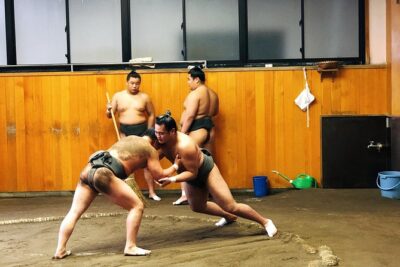
Browse the lists this tour appears in