
REVIEW · SUMO MORNING PRACTICE TOURS
Tokyo: Sumo Morning Practice with Photo Banzuke and Guide
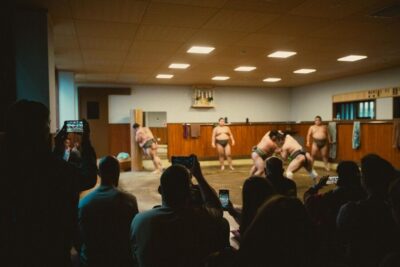
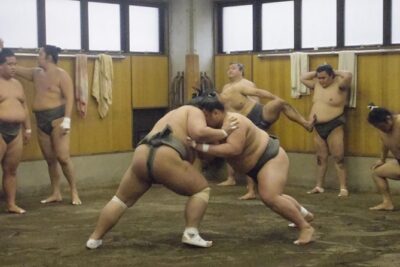
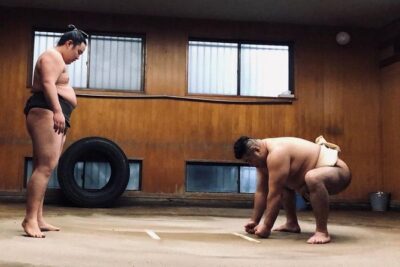
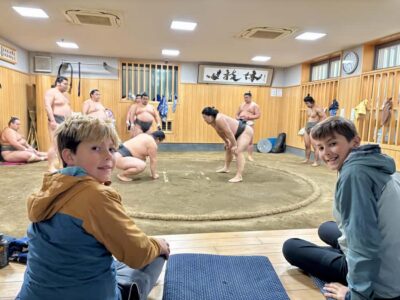
Sumo practice is not a staged show. It is a working morning session where Japan’s largest athletes repeat throws, shoves, footwork, and ritual movements inside a traditional stable. You sit in chairs close to the action, with no weight classes to soften the contest. The physical force is real, but so is the discipline behind it.
I like two things especially: the rare chance to see sumo outside the short tournament season, and the English presentation that gives meaning to what you are watching. The small group, limited to nine people, also helps keep the visit personal. The main drawback is the length. The advertised experience lasts seven hours, and one past participant found it hard to fit into a busy day, especially after a slow start caused by late arrivals.
What Makes This Morning Worth Your Time
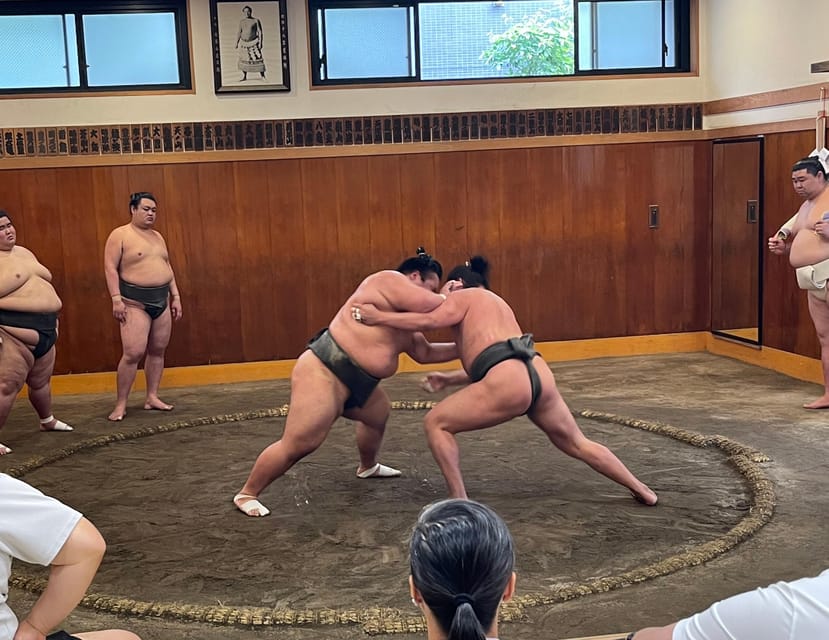
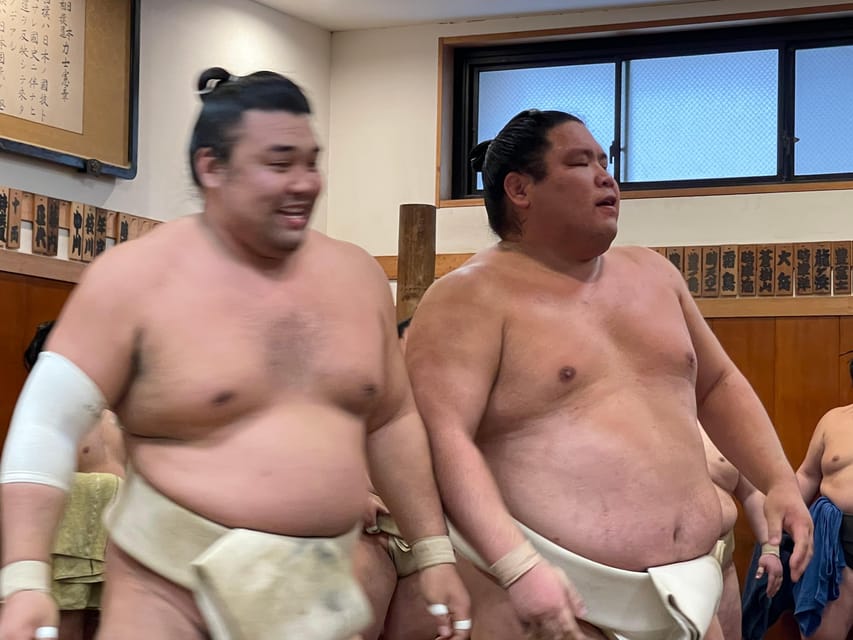
- A working sumo stable: Watch wrestlers train where their daily preparation actually takes place, rather than seeing only a tournament bout.
- Chairs close to the practice: You do not need to stand for the session, which makes the long observation period easier.
- No weight classes: The sport’s size differences make every collision and technique easier to appreciate.
- An English-speaking guide: A short lesson after practice helps explain the basics instead of leaving you to guess what each movement means.
- A small group of up to nine: This is a more manageable setting than a large sightseeing group.
- Kiyosumi-Shirakawa access: The meeting point is at Exit B1, near a FamilyMart, and the stable is about 14 minutes from Otemachi or Tokyo Station.
Why Morning Practice Feels Different From a Tournament
A sumo tournament gives you formal bouts, rankings, spectators, and a packed schedule. This experience offers something else: a look at preparation. You see wrestlers working through the movements that build strength, balance, timing, and stamina before the next major match.
That difference matters. A tournament is polished and easy to follow. Practice can be quieter, more repetitive, and less predictable. Yet those repeated movements show the work behind the spectacle. You may watch a wrestler push hard against an opponent, reset, and do it again. The appeal is not just the impact. It is seeing how much effort goes into making a few seconds in the ring count.
Sumo tournaments are held only 90 days a year, so a morning practice provides access during much of the remaining calendar. Only a limited number of Japan’s 44 operating sumo stables allow people to observe training. That makes this a useful option if your visit does not line up with tournament dates.
The setting also changes your perspective. In an arena, you watch from a seat among a crowd. At a stable, you are closer to the working side of the sport. You should still remember that this is a practice session, not a performance arranged around your schedule. Quiet attention and punctuality are part of the deal.
More morning practice tours in Tokyo:
- Tokyo: Sumo Morning Practice Viewing Tour
★ 4.8 · 570 reviews - Tokyo: Sumo Morning Training Visit
★ 4.4 · 370 reviews - Tokyo: Visit Sumo Morning Practice with English Guide
★ 4.7 · 343 reviews
Meeting at Kiyosumi-Shirakawa Exit B1
Your day begins at Exit B1 of Kiyosumi-Shirakawa Station, near a FamilyMart convenience store. This detail is important because the station has a clear meeting point, but the meeting instructions still require care. Look for the guide outside the exit, rather than wandering around the station or waiting inside the shop.
The operator asks you not to be late. That is more than a polite request. This is a small group visit to a working stable, and the group needs to arrive together. If you are delayed, contact the operator as soon as possible. The guide may try to accommodate you, but the group’s schedule comes first.
Allow extra time for the Tokyo train system and station exits. Even if you plan to take a taxi, the meeting point remains the station exit. The fact that a taxi can bring you there does not make a late arrival easier to absorb.
The meeting point is near central Tokyo. The stable is described as about 14 minutes from Otemachi or Tokyo Station, though your complete day includes walking and the guided program. The meeting area also has a practical advantage: FamilyMart gives you a clear landmark if you need to get your bearings quickly.
The Walk to the Stable and the Opening Explanation
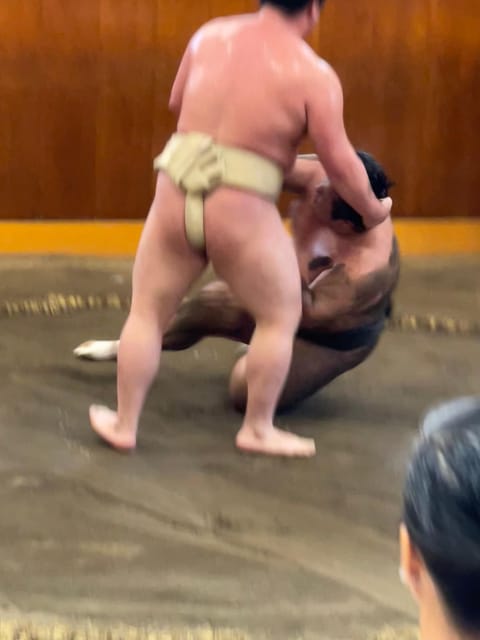
The first guided section lasts about 15 minutes. This is likely the point where your guide gathers the group, explains the conduct expected at the stable, and leads you to the practice location. Since the stable is a working place, not a normal sightseeing attraction, listen carefully to the instructions.
You will want comfortable shoes. The experience includes walking sections of about 10 minutes each, and you may spend a substantial part of the morning seated and watching rather than moving around. Bring a camera if you want photographs, but be ready to follow the guide’s directions about when photography is suitable.
The small group size helps here. With no more than nine people, it should be easier to hear the guide and stay together during the walk. It also reduces the chance that you will be hidden behind a large crowd when you sit down.
Sitting Close to the Training Session
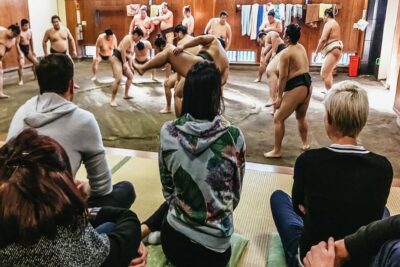
The main guided portion lasts about two and a half hours. That is a long time to watch practice, but it gives the session room to unfold. You are not rushing in for a quick photograph and leaving. You have time to see the physical work, pauses, repetitions, and different matchups.
You sit in chairs while watching. This is one of the most useful practical details in the whole experience. Sumo practice may look simple from a distance, but the session can involve extended observation. A chair makes the difference between staying focused and spending the morning shifting from one foot to the other.
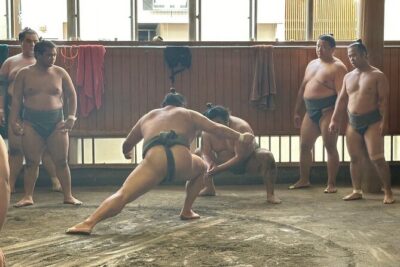
Expect strong physical contact. Sumo has no weight class, so size and body mass are part of the sport’s drama. At the same time, the sport is not simply about being the biggest wrestler. Balance, timing, position, and technique decide what happens in the ring. Your guide’s explanation should help you notice those details rather than seeing only two large bodies colliding.
The stable setting is also the reason to behave with restraint. Do not treat the practice like a loud show. The wrestlers are training for competition, and the value of the visit comes from watching that work without turning it into a staged event.
This is where the experience earns its price. You are paying for access to a side of sumo that is not available every day, plus a guide who can explain what you are seeing. If you only want a quick taste of Japanese sport, two and a half hours may feel long. If you enjoy watching technique develop through repetition, the time gives you a much fuller look.
More photo experiences in Tokyo:
- Tokyo: Sumo Show Experience with Chicken Hot Pot and a Photo
★ 4.8 · 6,678 reviews - Tokyo Shinjuku Sumo Show & Experience with Photo
★ 5.0 · 1,750 reviews - Tokyo Sumo Entertainment Show with Chicken Hot Pot and Photo
★ 5.0 · 1,205 reviews - Tokyo Ryogoku Sumo Morning Practice + Photo Shoot with Wrestlers
★ 4.5 · 277 reviews
Making Sense of Sumo After the Practice
After the session, the guide gives a short presentation on the basics of sumo. This is a useful order. First you watch the wrestlers move, then you receive the framework for understanding the sport.
You can use the presentation to connect the visual details to the larger tradition. Sumo is Japan’s national sport, but you do not need prior knowledge to enjoy this visit. The guide is there to explain the basic ideas so you return home with more than a set of close-up photographs.
The best value comes from paying attention during practice and saving questions for this part. Notice how wrestlers approach one another, how they use their feet, and how a bout can turn quickly. Then ask the guide about the movements you found hardest to understand.
The guide speaks English, and the group is limited to nine people. That combination should make it easier to ask a question than it would be in a large coach tour. The available information does not provide a guide’s name, so you cannot request a particular person in advance.
The Photo Stop and Walks Back
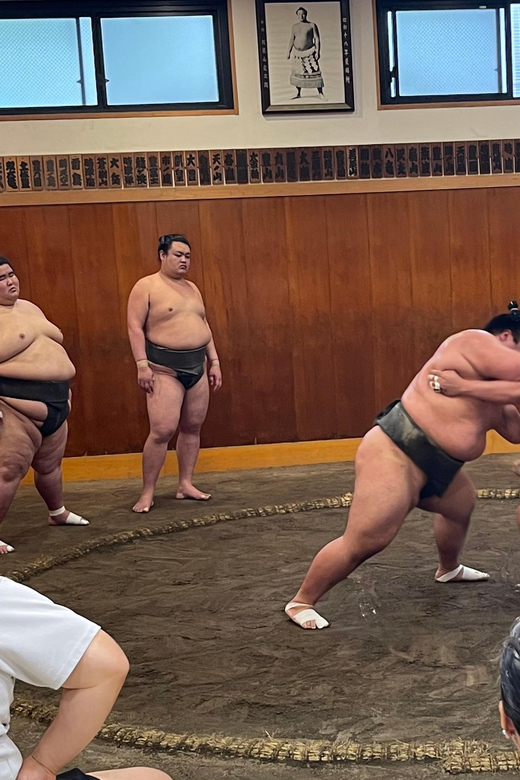
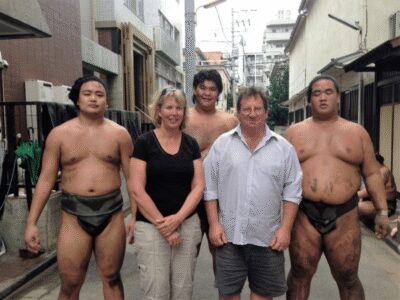
The schedule includes a 15-minute photo stop after the practice, followed by two walking sections of about 10 minutes each before returning to Kiyosumi-Shirakawa Station. The activity title also refers to a photo banzuke, so photography is part of the experience’s identity, not an afterthought.
The exact photo arrangements are not specified, so keep your expectations sensible. This is not advertised as a professional portrait session or a long sightseeing stop. Bring your camera, use the available time, and follow the guide’s instructions about where and when photographs can be taken.
The walks give the day a gradual finish, but they also explain why shoes matter. You are not spending every minute inside the stable. If you have mobility concerns, the activity is listed as wheelchair accessible, but it is still wise to confirm the walking arrangements before booking if you need specific support.
The full duration is listed as seven hours. The individual schedule describes a 15-minute guided section, a two-and-a-half-hour guided practice period, a 15-minute photo stop, and two 10-minute walks. Those timed items do not add up to seven hours, so allow the full advertised period rather than planning another appointment soon after the listed practice. This is especially important if you want to leave early. Tell the guide in advance rather than slipping away without explanation.
Is $115 a Fair Price?
At $115 per person, this is not a cheap way to fill an hour in Tokyo. The value depends on what you are buying. You are paying for access to a stable that accepts only a limited number of observers, a small English-speaking group, a local guide, a long practice session, and a short explanation of the sport.
The price makes more sense if you have a real interest in sumo or Japanese traditions. A casual sightseer may find the long morning harder to justify, particularly if the practice feels repetitive. But a tournament ticket does not necessarily give you the same view of daily preparation, and tournament schedules cover only part of the year.
The small group is another part of the calculation. A maximum of nine people is far more personal than a large bus outing. You are also not paying for a broad city tour packed with unrelated stops. The day has one clear purpose: getting you close to sumo practice and helping you understand it.
Flexible booking terms help if your Tokyo plans are still moving. You can reserve and pay later, and cancellation is free up to 24 hours before the activity for a full refund. Those terms do not make lateness harmless, though. A late arrival can affect the whole group even if you still hope to join.
Who Will Enjoy This Most?
I would choose this for adults and older children who can sit quietly, follow instructions, and stay interested during a long practice session. Children under nine are not accepted. The experience suits you best if you want an authentic working setting, not a staged demonstration.
It is also a good pick if your trip falls outside a sumo tournament period. You get a closer look at the daily training culture and a guide who can explain the basic rules afterward.
You may want to skip it if your schedule is tightly packed. Seven hours is a major block in a Tokyo itinerary, and the practice can feel long if you mainly want a photograph. A sunny day may tempt you toward other city sights, so plan this on a morning when sumo is one of your main priorities.
The activity is listed as wheelchair accessible, but the walking portions and stable arrangements are not described in detail. If you use a wheelchair, confirm the exact access details before you commit.
Practical Advice for a Smooth Visit
Arrive early at Exit B1. Find the FamilyMart landmark, wait outside the exit, and keep the operator’s contact information handy. Do not assume a taxi or a last-minute train connection will save you from a late arrival.
Wear comfortable shoes and bring a camera. Dress for a long morning out, but the available information does not specify stable temperature or seating beyond the provision of chairs, so avoid relying on the visit for a place to change or store belongings.
Keep your phone quiet and watch the guide for instructions. You are entering a working training environment, not an attraction built around visitor movement. The calmer you are, the more you will notice.
Finally, leave room in your schedule after the activity. The day is advertised as seven hours, and the exact timing may depend on the practice and the group. If you know you must depart early, say so at the start.
Should You Book This Sumo Experience?
Book it if you want to see sumo at work rather than only at a tournament. The close seating, limited group size, English explanation, and access to a traditional stable give you a useful look at the discipline behind the spectacle.
Skip it if you want a short, fast Tokyo activity or if a seven-hour commitment feels excessive. At $115, the experience needs your full attention to feel worthwhile. For sumo fans, culture-minded visitors, and anyone visiting outside tournament dates, it is a strong choice. For everyone else, the long practice may be more time than the sport deserves in your itinerary.
FAQ
Where does the sumo practice experience begin?
It begins at Exit B1 of Kiyosumi-Shirakawa Station, near a FamilyMart convenience store.
How long does the activity last?
The advertised duration is seven hours. You should allow the full period when planning your day.
How long is the actual sumo practice observation?
The guided practice portion is listed as two and a half hours.
Can I sit during the practice?
Yes. Chairs are provided for observing the wrestlers in action.
Is the tour conducted in English?
Yes. The activity includes an English-speaking live guide.
How large is the group?
The group is limited to nine participants.
Is the experience suitable for children?
Children under nine are not accepted.
What should I bring?
Bring comfortable shoes and a camera.
Is the activity wheelchair accessible?
Yes, it is listed as wheelchair accessible. The available information does not provide further details about the walking sections or stable access.
Can I cancel for a refund?
You can cancel up to 24 hours in advance for a full refund. You can also reserve now and pay later.
Newest sumo experiences in Tokyo
- TOKYO , No1 Yokozuna Stable Morning Practice in Ryogoku★ 4.5 · 3 reviews
- Tokyo 6hr Private Guided Tour & Sumo Show Lunch★ 5.0 · 3 reviews
- Tokyo Grand Sumo Tournament Viewing Tour★ 5.0 · 2 reviews
- Tokyo Sumo History Tour with Chanko Nabe Lunch★ 5.0 · 3 reviews
- Tokyo Highlights Tour: Sumo, Sushi, Tea, and Tokyo Tower★ 5.0 · 2 reviews
- Tokyo: Know about Hokusai and Sumo culture in 2.5 hours★ 5.0 · 2 reviews
- Tokyo: Sumo Keiko Training Tour with Audio Guide & Photo★ 4.8 · 5 reviews
- Tokyo: Watching Sumo and Ryogoku Area Walking Tour★ 4.0 · 5 reviews
Sumo Morning Practice Tours, compared.
Tokyo Ryogoku Sumo Morning Practice + Photo Shoot with Wrestlers
Read our review →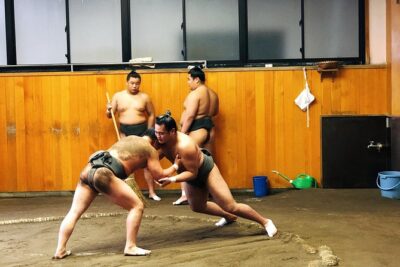
Browse the lists this tour appears in