
REVIEW · CHANKO NABE EXPERIENCES
The SUMO Show & Experience with Hot pot lunch
The best part of this two-hour experience is that sumo is not left behind a railing. You hear the slap of bodies, learn why wrestlers toss salt, and then step onto a real clay dohyo yourself. The final challenge, in which a volunteer tries to push a 160-kilogram wrestler while wearing padding, turns Japan’s national sport into a very funny lesson in raw strength.
I like the clear bilingual hosting and the chance to work with two former wrestlers, rather than only watching a staged demonstration. I also like the hotpot lunch, especially because vegetarian, vegan, halal, gluten-free, and allergy-related requests can be handled with advance notice. The main consideration is price: at $97.55 per person, this is not a quick look at sumo, but a fairly full family activity with lunch, and children under five do not receive a meal at the child rate.
Key points before you book
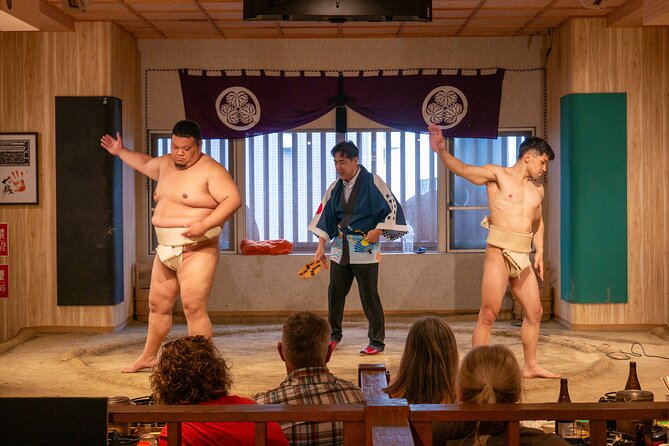
- Real ring in Ryogoku: The event takes place at Hana no Mai Edo Tokyo Museum, in a sumo-themed restaurant with a genuine clay ring.
- Former wrestlers lead the action: A bilingual MC introduces shiko, teppen, and suriashi, while two former wrestlers demonstrate and coach.
- You can enter the dohyo: Join the footwork and push drills, or watch from the side and take photographs.
- The padded-suit finale is the comic highlight: A volunteer tests their strength against a 160-kilogram wrestler in a safe challenge.
- Lunch is built in: You receive a mini chanko nabe, the hotpot associated with sumo wrestlers, with dietary requests made at least 48 hours ahead.
- Simple morning timing: The activity begins at 10:00 a.m., lasts about two hours, and returns you to the same meeting point.
Ryogoku puts sumo at the center of the morning
Ryogoku is the right part of Tokyo for a sumo activity. The meeting point is Hana no Mai Edo Tokyo Museum at 1-chōme-1-15 Kamezawa, Sumida City. You meet there at 10:00 a.m., and the event ends at the same place, so you do not need to arrange a second pickup or find your way across the city after lunch.
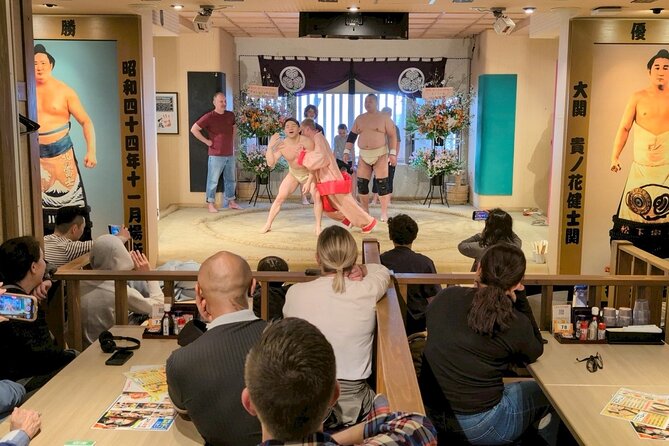
The setting is a sumo-themed restaurant with a real clay ring. That matters. A ring inside a sports hall can feel like a simple theater prop, but the clay dohyo gives the demonstrations a more convincing sense of place. You are close enough to see how carefully the wrestlers move their feet and how much control is needed before the collision even begins.
The event is designed as a family workshop, not a formal tournament. Adults and children can take part, while parents or other companions can stay at the edge and watch. That flexibility is useful if one person in your group wants the full physical challenge and another would rather take photographs.
The group can include up to 40 people. That is large enough to create an audience for the demonstrations, but it also means this is not a private lesson. If you want one-on-one attention throughout, this is not the right format. If you want a lively shared activity where several people can volunteer, the size works well.
More chanko nabe experiences in Tokyo:
- Tokyo: Sumo Show Experience with Chicken Hot Pot and a Photo
★ 4.8 · 6,678 reviews - Tokyo Sumo Entertainment Show with Chicken Hot Pot and Photo
★ 5.0 · 1,205 reviews - Tokyo Sumo Experience: Chanko & Mochi with a Former Pro
★ 4.8 · 567 reviews
Salt, stomps, and sliding feet
A bilingual MC explains the rituals before the physical demonstrations begin. You learn about salt tossing and the shiko leg stomp, a forceful movement associated with driving away evil spirits. These details give the action meaning. Without them, sumo can look like two huge people pushing until one loses balance. With them, you begin to see the ring as a formal space with its own rules and gestures.
Two former wrestlers demonstrate three parts of sumo training:
- Shiko: the raised-leg stomp, performed with control and balance.
- Teppen: a push drill that shows how wrestlers generate force.
- Suriashi: sliding footwork that keeps the feet close to the clay.
You may join the wrestlers in the ring to try these movements. If you prefer not to participate, you can watch, take pictures, and let the people in your group have the turn. The activity does not demand that every person become a volunteer, which makes it easier for mixed-age families and guests with different comfort levels.
The footwork is a useful reminder that sumo is not simply about body weight. The wrestlers train to stay grounded, move without crossing their feet, and push from a strong position. You will not become a sumo athlete in one morning, but you will understand more about balance and technique than you would from a short ringside viewing.
The live match brings the lesson to life
After the demonstration, professional wrestlers face each other in a live match. This is the moment when the workshop shifts from explanation to spectacle. You can hear the body collisions at close range, see the quick change in balance, and watch how quickly a match can end.
The scale is striking. Sumo wrestlers look slow only until the collision begins. The match helps you connect the ritual movements to the competitive sport. The salt, stomps, and sliding steps are not random warmups. They form part of a larger physical and ceremonial system.
The experience is especially suited to children and teenagers who learn by doing. A 12-year-old or 15-year-old can follow the action, volunteer for a drill, and then see professionals use the same basic movements at full force. Younger children can watch from the side, though the information provided does not give a minimum age for participation.
A note for quiet observers: the event is built around audience interaction. You do not have to step into the ring, but expect the MC to encourage participation. If you are traveling with someone who dislikes public attention, decide in advance whether they want to volunteer or simply watch.
The 160-kilogram challenge is safe, silly, and revealing
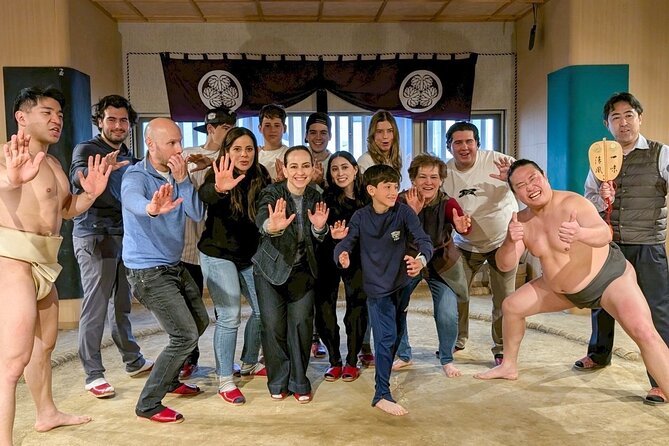
The final challenge supplies the biggest laugh. A volunteer puts on a padded suit and tries to push a 160-kilogram wrestler. The padding keeps the contest safe, while the size difference shows you how much strength and balance are involved in real sumo.
This is not a serious bout, and it is not meant to prove that an ordinary person can defeat a professional. The point is to feel the resistance firsthand. Even a determined push does not make a 160-kilogram opponent move easily.
The challenge works well for families because it is physical without being dangerous by design. The wrestlers are described as gentle with children, and the format lets adults decide who takes the turn. You should still follow the MC’s instructions and treat the padded suit as a controlled activity, not an invitation to roughhouse.
If you are hoping for a long professional match or a detailed athletic workshop, keep your expectations measured. The demonstrations and challenges are short parts of a two-hour program that also includes photos and lunch. The payoff is contact and humor, not a deep training course.
More sumo shows in Tokyo:
- Tokyo: Sumo Show and Dining Experience
★ 4.8 · 2,742 reviews - the SUMO show
★ 5.0 · 1,960 reviews - Tokyo Shinjuku Sumo Show & Experience with Photo
★ 5.0 · 1,750 reviews - Tokyo: Sumo Show and Experience in Shinjuku
★ 4.8 · 1,001 reviews
Photos help you grasp the scale
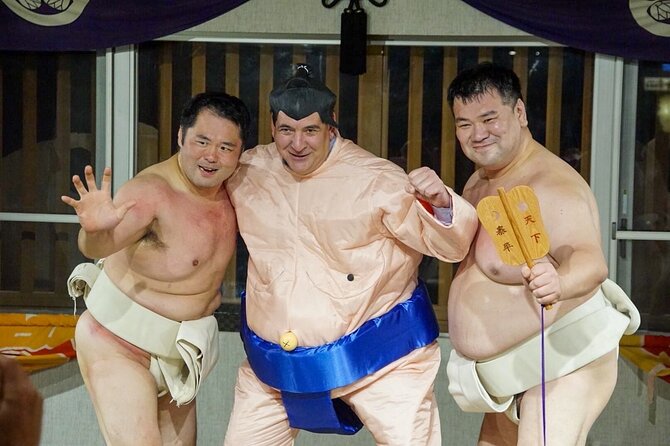
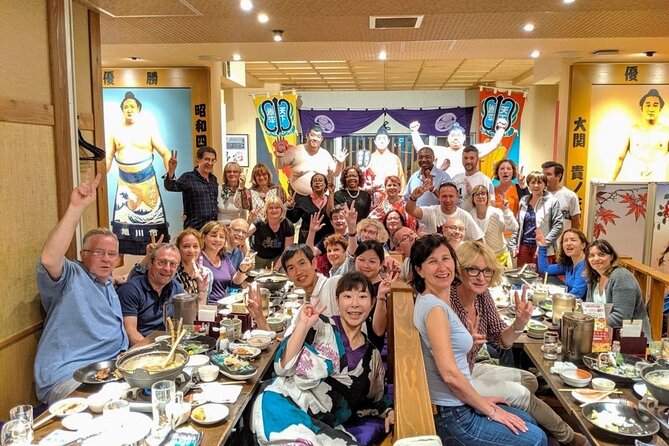
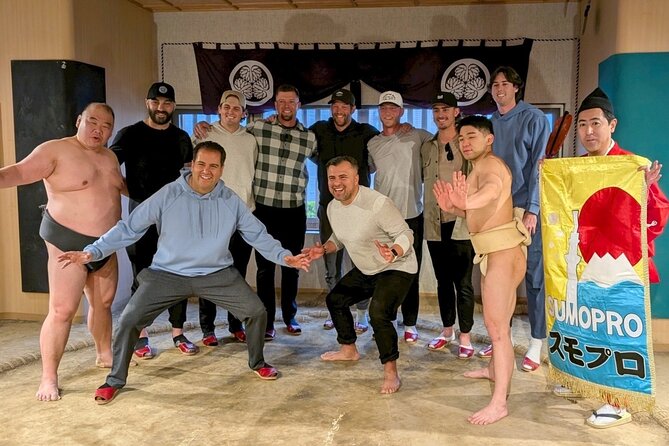
After the ring activities, you have a photo session with the wrestlers. This is more useful than it may sound. A sumo wrestler’s size is difficult to judge from a distance, while standing beside one gives you an immediate visual comparison.
The photographs also create a calmer pause after the match and challenge. You can pose side by side, take group pictures, and preserve a memory that is more distinctive than a standard restaurant meal. If you have children in the group, this may be the image they remember most clearly from the morning.
Since the group can reach 40 people, photo time may involve some waiting. Keep your camera or phone ready, and decide before the session how you want your group arranged. The information does not promise professional photography, so plan to take your own pictures.
Chanko nabe makes lunch part of the lesson
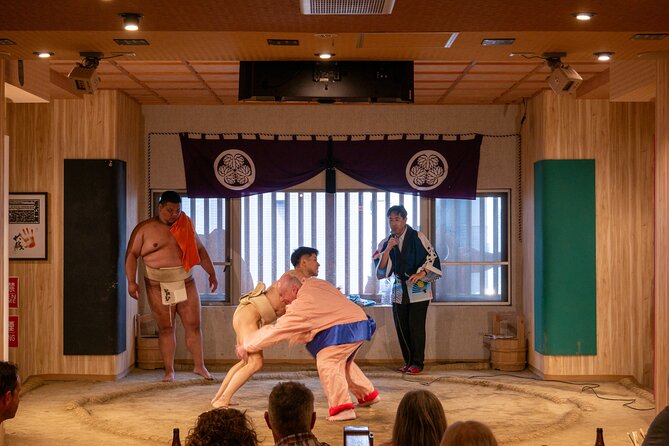
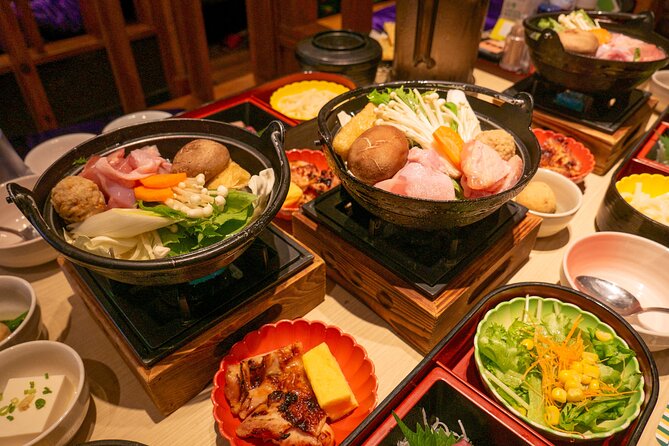
The included meal is a mini chanko hotpot. Chanko nabe is closely associated with sumo stables, where filling meals help wrestlers build and maintain their large physiques. Here, it gives you a taste of the food culture connected to the sport rather than sending you elsewhere for lunch.
The meal is listed as protein-rich and made with fresh ingredients. One meal arrangement described a chicken hotpot, and sashimi was also provided on that occasion, but the core inclusion to count on is the mini chanko hotpot. Alcohol and extra menu items cost more and are ordered at the venue.
Dietary planning is one of this activity’s stronger practical points. Vegetarian, vegan, halal, gluten-free, and allergy-friendly requests can be accommodated, but you must provide the details at least 48 hours before the start time. Do not wait until you sit down. The kitchen needs advance notice, and ingredient substitutions are not guaranteed at the last minute.
The meal portion is described as a mini hotpot, not an unlimited feast. It should refuel you after the workshop, but people with large appetites may want to budget for additional menu items. Children under five do not receive a meal under the child rate. If a young child needs lunch, book that child at the adult rate.
Is $97.55 a fair price?
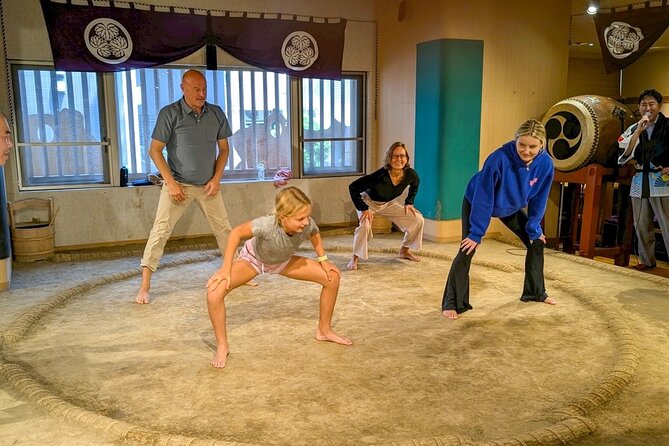
At $97.55 per person, the value depends on what you want from a sumo outing. You are paying for a roughly two-hour program, a bilingual introduction, demonstrations by two former wrestlers, a live match, participation in the ring, a padded challenge, photographs, and lunch. That is a fuller package than simply buying a meal at a sumo-themed restaurant.
The price makes the most sense for a family or small group that will take part. If three or four people volunteer, the workshop becomes an active shared memory rather than a performance watched by one person. It is also useful for visitors who have limited time in Tokyo and want a scheduled introduction to sumo without having to understand tournament dates or find a separate venue.
The value is weaker if you only want to watch professional sumo. This is not a tournament ticket, and the event includes playful participation as much as serious sport. The lunch is included, but alcohol and additional dishes are not.
The activity had been booked more than five times in the previous week, so popular dates may fill. The mobile ticket is convenient, and confirmation is provided at booking. Public transportation is nearby, but no specific station or route is supplied, so check your route to the exact restaurant address before leaving.
Who should choose this sumo experience?
I would point families toward this activity first. Children can see the rituals, try footwork, and watch a professional match without needing to sit quietly through a long formal program. Teenagers have a real chance to interact with the wrestlers, and adults can join the padded challenge or simply take pictures.
It also suits multigenerational groups. One person can watch while another participates, and the experience has enough visual action for people who do not know sumo rules. A senior guest can enjoy the demonstrations and lunch without being required to wrestle.
The English-language format is another advantage. The MC explains what is happening in English, so you are not left guessing why the wrestlers stomp, slide, or throw salt. That makes the experience more useful for first-time visitors who want context rather than only photographs.
You should think twice if you want a quiet, private activity. The group size can reach 40, and the workshop depends on volunteers and audience energy. You should also reconsider if your schedule cannot allow for a morning start at 10:00 a.m. or if you need a guaranteed full-sized meal for a small child.
Free cancellation is available when you cancel at least 24 hours before the start time. Changes or cancellations inside that window are not accepted for a refund. The provider may also cancel if the minimum number of participants is not met or if weather conditions require cancellation, in which case you are offered another date or a full refund.
Should you book it?
Book this experience if you want hands-on sumo, a friendly English-language introduction, and lunch in the same two-hour visit. The strongest reasons are the real clay ring, the former wrestlers, the close-up match, and the chance to test yourself against a 160-kilogram opponent in a padded suit.
Skip it if you want a formal tournament, private coaching, or a large restaurant meal rather than a compact hotpot lunch. For families, first-time visitors, and anyone curious about the customs behind sumo, $97.55 is a reasonable price for an activity that combines explanation, comedy, physical contact, photographs, and food.
FAQ
Where does the sumo experience take place?
It takes place at Hana no Mai Edo Tokyo Museum, 1-chōme-1-15 Kamezawa, Sumida City, Tokyo 130-0014, Japan.
What time does the activity begin?
The activity starts at 10:00 a.m.
How long does the experience last?
The experience lasts approximately two hours.
Does the activity end at the meeting point?
Yes. The activity ends back at the same meeting point.
Is lunch included?
Yes. A mini chanko hotpot lunch is included.
Are alcoholic drinks included?
No. Alcoholic drinks and additional menu items are not included and can be ordered on site.
Can dietary requests be accommodated?
Vegetarian, vegan, halal, gluten-free, and allergy-friendly options are available with advance notice. Send your dietary request at least 48 hours before the tour.
Do children under five receive lunch?
Children under five do not receive meals under the child rate. If a meal is needed, book the child at the adult rate.
How many people can join the activity?
The maximum group size is 40 people.
Can I cancel for a full refund?
Yes, if you cancel at least 24 hours before the experience start time. Cancellations or changes made less than 24 hours before the start time are not refunded.
More sumo tours with a meal in Tokyo
- Tokyo:Luxury Sumo Show Experience & Japanese cuisine & Drink
★ 4.7 · 577 reviews - Tokyo: Sumo Experience and Chanko Nabe Lunch
★ 4.8 · 257 reviews - Tokyo: Family Sumo Workshop & Live Wrestling Show with Lunch
★ 4.9 · 99 reviews - Tokyo: Authentic Sumo Wrestling Experience with Lunch
★ 4.9 · 88 reviews
Newest sumo experiences in Tokyo
- Tokyo 6hr Private Guided Tour & Sumo Show Lunch★ 5.0 · 3 reviews
- Tokyo Grand Sumo Tournament Viewing Tour★ 5.0 · 2 reviews
- Tokyo Sumo History Tour with Chanko Nabe Lunch★ 5.0 · 3 reviews
- Tokyo Highlights Tour: Sumo, Sushi, Tea, and Tokyo Tower★ 5.0 · 2 reviews
- Tokyo: Know about Hokusai and Sumo culture in 2.5 hours★ 5.0 · 2 reviews
- TOKYO , No1 Yokozuna Stable Morning Practice in Ryogoku★ 4.5 · 3 reviews
- Grand Sumo Tournament Tour w/an English Guide ,Tokyo January 2026★ 5.0 · 3 reviews
- Sumo Training Watching Experience in Tokyo★ 4.5 · 8 reviews
Chanko Nabe Experiences, compared.
Sumo Show Experience with Chicken Hot Pot and a Photo
Read our review →
Tokyo Sumo Entertainment Show with Chicken Hot Pot and Photo
Read our review →
Sumo Show & Experience w/ Optional Kimono & Hot Pot
Read our review →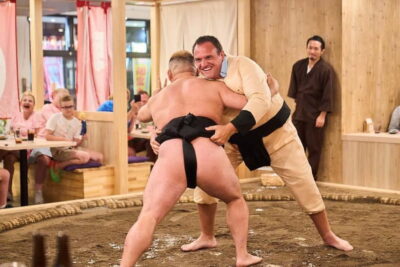
Tokyo Sumo Experience: Chanko & Mochi with a Former Pro
Read our review →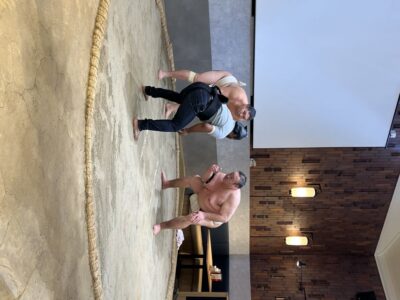
Tokyo Sumo Culture Tour with Chanko-Nabe Lunch in Ryogoku
Read our review →
Browse the lists this tour appears in