
REVIEW · SUMO MORNING PRACTICE TOURS
Tokyo: Not a show- a professional sumo practice with experts
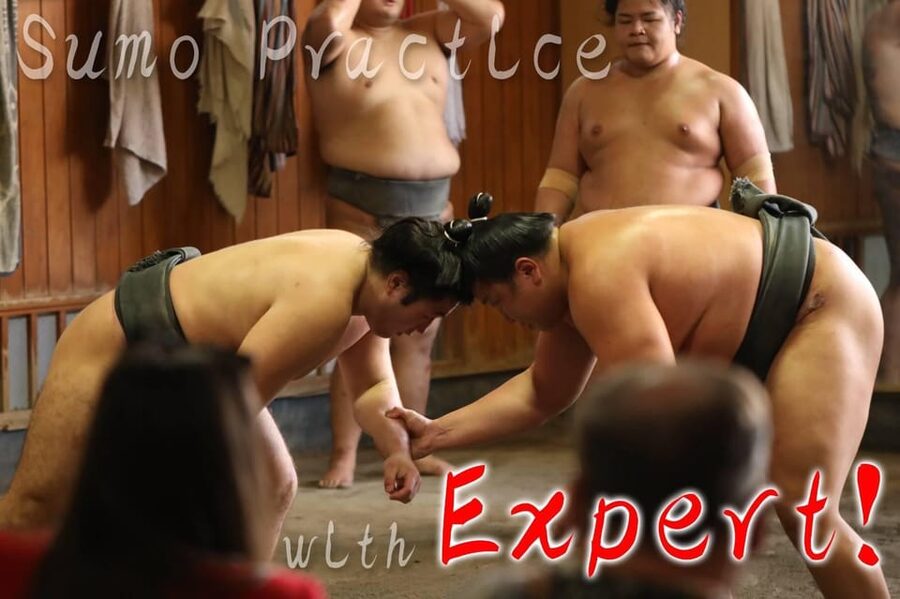
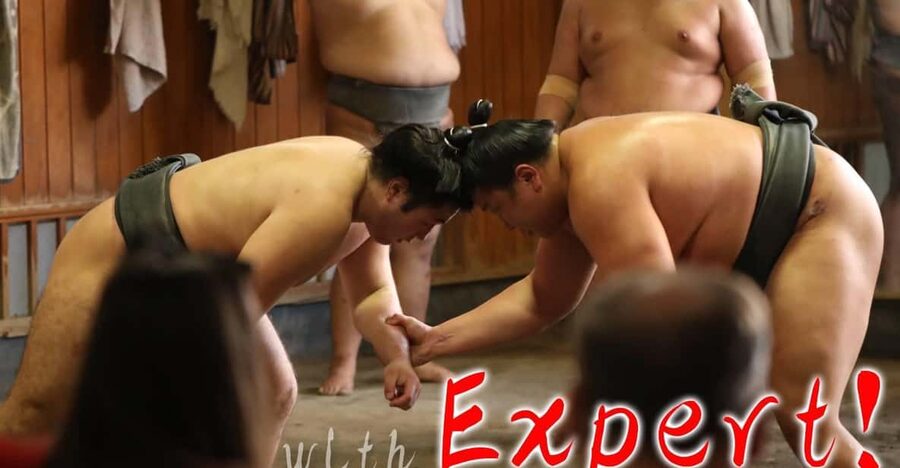
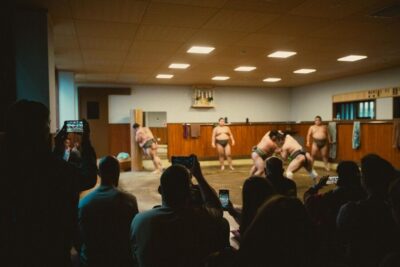
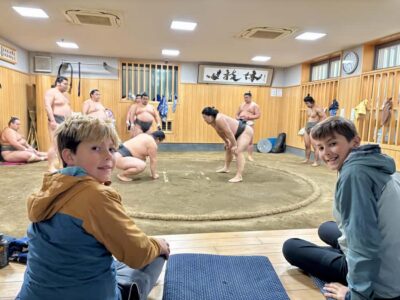
This is not a staged sumo show with comic costumes and tourists pushed into the ring. You sit quietly inside a working sumo stable, often just a few feet from professional wrestlers as they warm up, spar, train, and cool down. The physical force is startling, even when you know you are watching practice.
I like the close access to a genuine stable and the chance to ask detailed questions of Shinya, a sumo specialist and former national newspaper journalist. I also like the small group, capped at 10 people, which makes the visit feel more personal. The main drawback is practical: you sit on the floor for a long stretch, and the small cushions or stools may be uncomfortable if you have stiff knees, a larger frame, or limited mobility.
Key points to know before booking
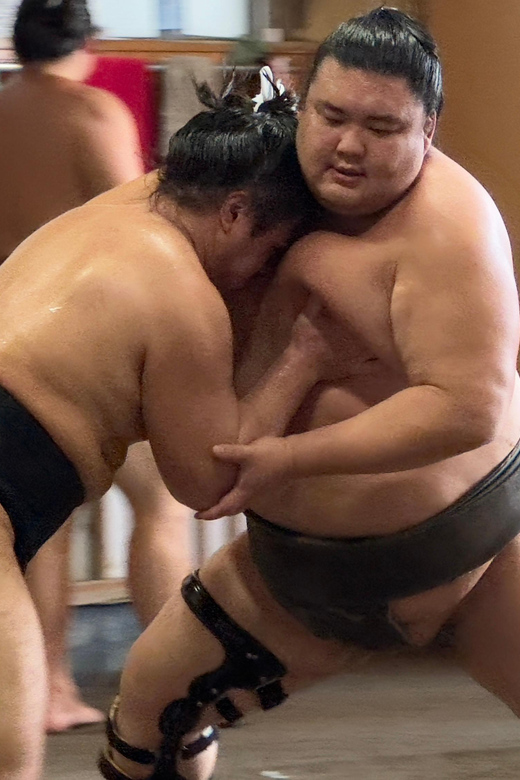
- You watch working professionals, not a tourist performance: The wrestlers follow their normal training routine.
- Shinya adds unusual insight: His background as a sumo reporter gives the explanations real depth, including tournament and wrestler details.
- The stable visit lasts about two hours: Expect warm-ups, training bouts, rituals, and cool-downs at very close range.
- Silence and good manners matter: You are entering an active training space, so phones should be turned off and conversation kept low.
- The rest of the morning stays in Ryogoku: You visit the Kokugikan area and Ryogoku Edo NOREN before finishing near Ryogoku Station.
- The $103 price buys access, not spectacle: You are paying for rare entry, a specialist guide, and a small-group setting rather than a long list of attractions.
Why real practice beats a staged sumo show
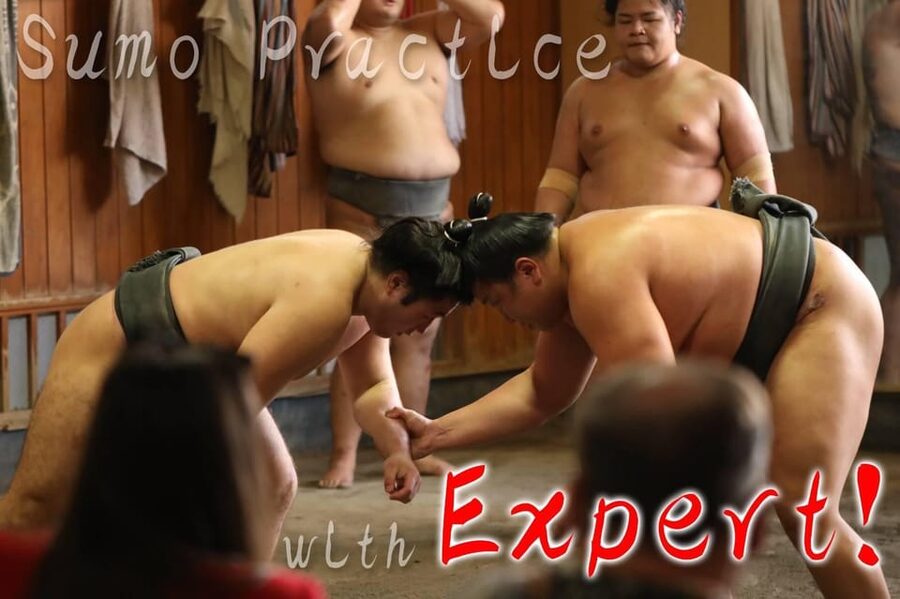
Tokyo offers several sumo-themed activities, but they are not all alike. Some are built as entertainment packages. This one takes you into Takasago-beya, a working heya, or sumo stable, where wrestlers train as part of their normal daily routine.
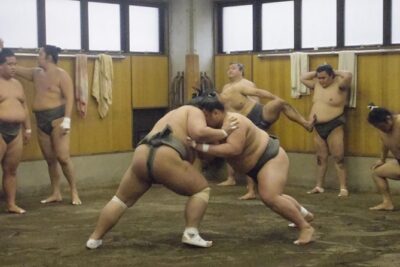
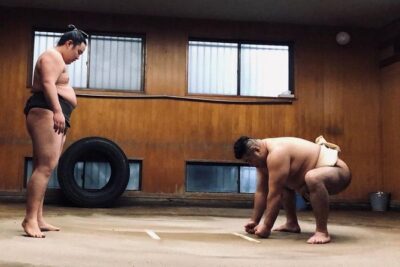
That difference matters. You do not get a tidy performance designed around applause. Training can look repetitive, quiet, severe, or suddenly explosive. A wrestler may spend time stretching, practicing a movement, or repeatedly pushing against another wrestler before a hard bout begins.
The attraction is seeing the discipline behind the public matches. You can watch younger wrestlers learn from more experienced men, observe how the group works together, and see the intensity that does not always come through on television. One visitor described being close enough to see the action from only a few inches away. That distance gives you a far better sense of the impact than a seat high in a tournament arena.
The trade-off is that you may not understand everything while it is happening. Training is not presented with constant commentary, and the wrestlers are not stopping to explain each ritual. The guide covers much of the meaning before and after the session, but you should be comfortable watching first and asking questions later.
More morning practice tours in Tokyo:
- Tokyo: Sumo Morning Practice Viewing Tour
★ 4.8 · 570 reviews - Tokyo: Sumo Morning Training Visit
★ 4.4 · 370 reviews - Tokyo: Visit Sumo Morning Practice with English Guide
★ 4.7 · 343 reviews
Meeting near Ryogoku Station
The meeting point is near Toei Oedo Line Ryogoku Station, Exit A2, at ground level. It is also about a five-minute walk from the east exit of JR Ryogoku Station.
The operator sends final meeting details before the date, so check those messages carefully. Tokyo station areas can be confusing, particularly if you are changing between JR and subway lines. Give yourself time to reach the correct exit.
From the meeting point, the group walks to Takasago-beya. The walk is short, but one person noted that the pace and traffic-light crossings felt brisk. Stay with the guide and do not assume the group will wait while you take photographs or search for directions.
The group limit of 10 is a useful feature here. A large crowd would be awkward inside a stable, where quiet and order are part of the etiquette. A smaller group also gives you a better chance to hear the guide and ask a question without turning the visit into a lecture for a busload of people.
Inside Takasago-beya, close enough to feel the impact
The stable is the heart of the experience. You remove yourself from the usual sightseeing rhythm and enter a place where the athletes are working, not posing.
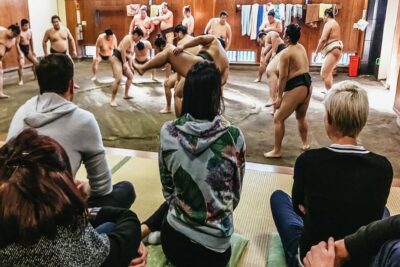
The viewing area uses floor seating. A floor cushion is provided, but this is still a sitting-on-the-floor experience. Expect to remain in position for a substantial part of the visit, potentially 90 minutes or more. A visitor who had plenty of sumo experience still warned that the seating became difficult after a long period, especially with small stools and limited room to shift position.
This is the most important comfort point to consider. If you have trouble sitting on the floor, ask the operator ahead of time what arrangements may be possible. The supplied information does not promise accessible seating, so do not assume that a standard chair will be available.
Once practice begins, you may see several stages of the morning routine:
- Warm-ups and stretching
- Technique drills
- Practice bouts
- Training between more experienced and less experienced wrestlers
- Cool-down work
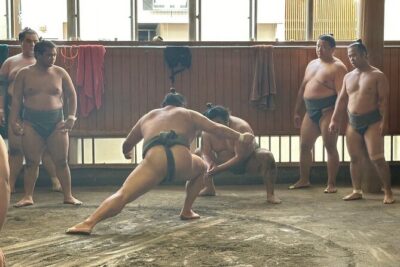
The rhythm can change quickly. One moment the room is quiet. Then two wrestlers collide with tremendous force, and the sound carries through the building. It is a useful reminder that sumo is not simply a contest of size. Balance, timing, footwork, grip, posture, and repeated conditioning all matter.
You should not expect every ritual or technique to be explained at the instant it appears. The stable is not a theater, and commentary during practice could disturb the wrestlers. Keep your voice low, follow the guide’s instructions, and turn off your phone. Smoking indoors is not permitted.
This restraint is part of the value. You are being admitted as an observer into a professional setting. The experience works best when you accept that you are there to watch respectfully, not to interact with the athletes whenever you wish.
Shinya’s explanations add the missing context
The guide is a major part of the experience. Shinya is described as a sumo specialist and former sports journalist who covered the sport closely. His background lets him explain more than basic rules.
You can ask about training customs, tournament life, wrestlers, stable routines, and details that are easy to miss from the stands. His explanations also help connect the physical work in the stable to the wider culture of professional sumo.
This is especially useful if you know little about the sport. Sumo has its own vocabulary, ranking system, rituals, and etiquette. A short explanation can change a bout from a confusing collision into a contest with clear tactical choices.
It also works for people who already follow sumo. One participant with substantial sumo knowledge came prepared with difficult questions and found that the guide could answer them. That is a strong sign that the tour is not limited to simple introductions.
Shinya’s style appears to be enthusiastic and conversational. His English is understandable, though not every explanation may be perfectly polished. His value comes from experience and access to the subject, not from delivering a scripted museum speech. You may also find him happy to talk about baseball, another sport he follows.
More sumo shows in Tokyo:
- Tokyo: Sumo Show Experience with Chicken Hot Pot and a Photo
★ 4.8 · 6,678 reviews - Tokyo: Sumo Show and Dining Experience
★ 4.8 · 2,742 reviews - the SUMO show
★ 5.0 · 1,960 reviews - Tokyo Shinjuku Sumo Show & Experience with Photo
★ 5.0 · 1,750 reviews
Photos with wrestlers, handled with respect
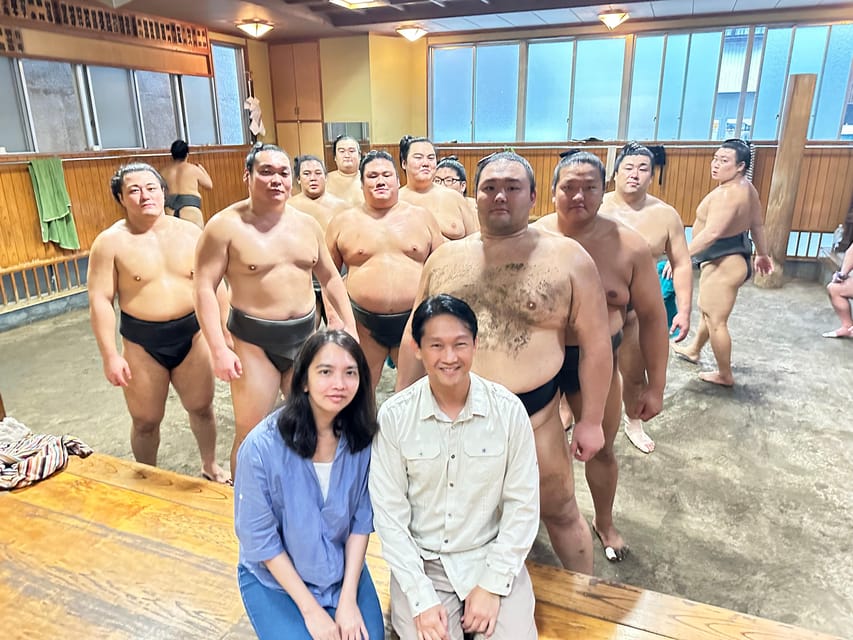
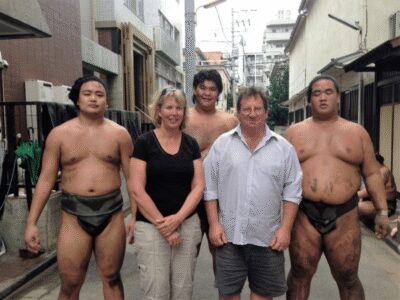
A photo with a sumo wrestler is included. This gives you a personal souvenir, but the setting remains a working stable rather than a photo studio.
The best approach is to follow the guide’s directions and keep the photo moment brief. The wrestlers have training to complete, and the respectful tone of the visit matters more than collecting a long series of poses.
This is one reason the experience feels different from a staged sumo event. You are not buying a performance built around audience participation. You are receiving a limited opportunity to meet athletes connected to a real stable after seeing them work.
Ryogoku Kokugikan and the sumo district
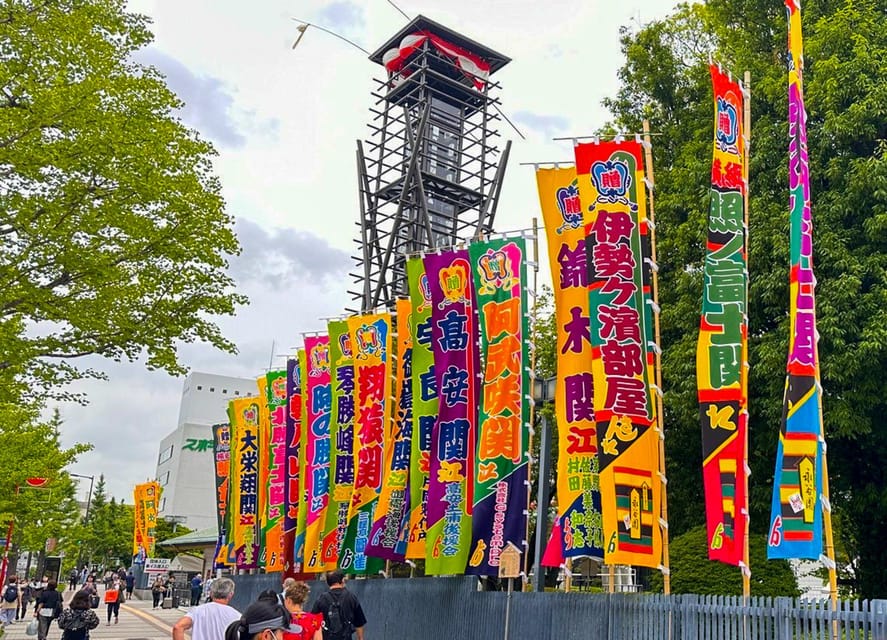
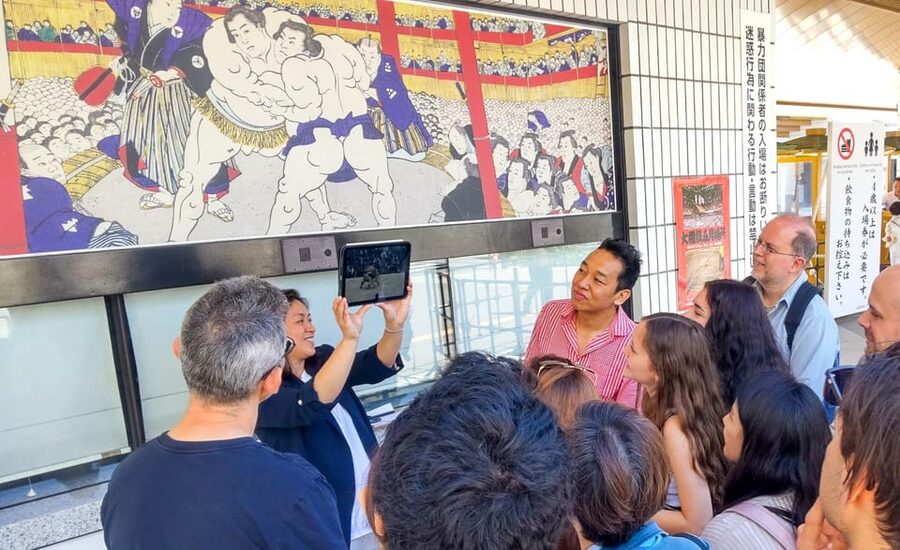
After the stable visit, the tour continues with a short guided visit around Ryogoku Kokugikan, Tokyo’s famous sumo arena. The scheduled visit is about 15 minutes, so think of it as an orientation rather than a full museum tour.
The arena helps place the morning in context. You have just watched wrestlers train, and now you see the public setting where professional bouts take place during tournament periods. The contrast is useful: the stable is private and functional, while the Kokugikan represents the sport’s public stage.
Do not book this experience expecting a tournament ticket. Entry to a live tournament is not included. The stable visit is the main event, and the arena stop is a brief add-on.
Ryogoku Edo NOREN and the final half hour
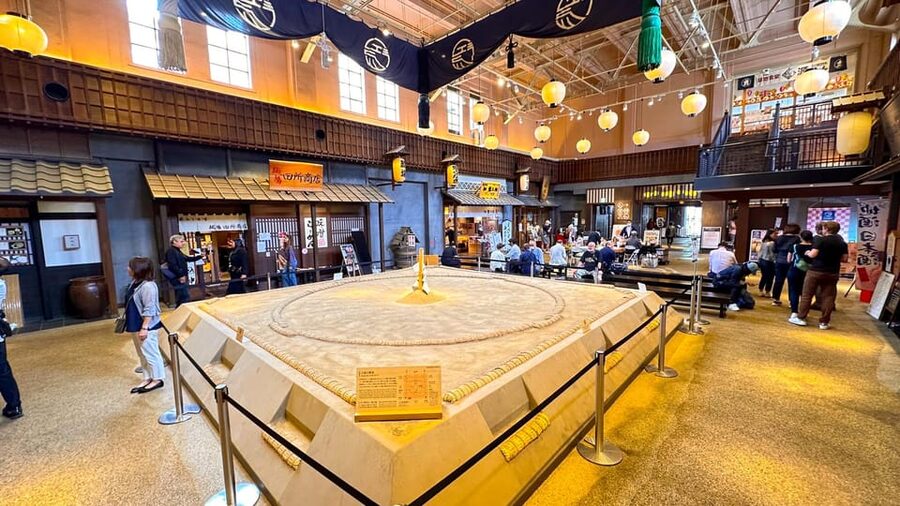
The final part of the route takes you to Ryogoku Edo NOREN. The itinerary allows about 15 minutes for a guided look, followed by roughly 30 minutes for shopping and sightseeing.
This gives you time to continue exploring the neighborhood after the intense focus of the stable. It is also a practical place to browse before finishing at Ryogoku Station.
The stop is not the reason to book the tour, but it rounds out the morning. You get a little local orientation, time to look around, and a clear finish near public transportation. Food and drinks are not included, so plan to buy anything you want separately.
Is $103 a fair price?
At $103 per person, this is not a cheap way to fill three hours in Tokyo. The value depends on what you want from a sumo experience.
If your main goal is low-cost entertainment, you can find less expensive activities. If your goal is access to a real stable, a small group, a photo with a wrestler, and detailed guidance from a former sumo journalist, the price is easier to justify. The stable permission is the important part. This is not simply a neighborhood walk with a sumo-themed stop.
You are paying for rarity and organization. The operator arranges entry into a place that many people, including locals, may never see. You also avoid the uncertainty of trying to locate or approach a stable on your own, which would not provide the same explanation or structured visit.
The experience is particularly good value for someone who has already failed to get tournament tickets. It does not replace a tournament, but it shows the work behind the spectacle. Several hours of professional bouts in an arena can be exciting, while a stable visit gives you a more intimate look at how wrestlers prepare.
Who will enjoy this most?
I would recommend this to adults and older children who are genuinely curious about sumo, Japanese customs, or professional sports training. Children under five are not suitable for the activity.
It is also a strong choice for visitors who dislike artificial tourist shows. The setting is quiet, serious, and based on normal practice. You need to enjoy watching rather than constantly being entertained.
Fans of sumo should find enough specialist detail to make the visit worthwhile. Beginners will benefit from the guide’s explanations, though you may want to ask questions clearly and save some for the discussion after practice.
Families can attend, but parents should prepare children for the etiquette. They must sit quietly, avoid disturbing the wrestlers, and manage the floor seating. The experience is not designed around games or hands-on activity.
Timing, etiquette, and comfort tips
The tour lasts three hours, with the stable visit taking about two hours and the Ryogoku stops filling out the rest of the morning. Starting times vary, so check availability when booking.
Wear clothes that allow you to sit comfortably. The information provided does not specify a dress code, but modest, practical clothing is sensible for a quiet traditional setting.
Keep your phone off during practice, not merely on silent if the guide gives stricter instructions. Do not smoke indoors, and avoid casual conversation while the wrestlers are working.
Bring questions. You can ask about rituals, rankings, training, tournament life, and the athletes you see. The guide’s expertise is one of the strongest reasons to choose this experience, so make use of it.
The tour offers free cancellation up to 24 hours before departure and allows you to reserve now and pay later. Those options help if your Tokyo schedule is still shifting, but you still need to check the final meeting instructions before the date.
Should you book this Tokyo sumo practice?
Book it if you want real sumo rather than a staged show, can sit on the floor, and value expert explanation. The combination of a working stable, very close viewing, wrestler photos, and Shinya’s reporting background is unusual.
Skip it if you need accessible chair seating, want a full tournament, or prefer a fast-moving sightseeing tour with constant commentary. The practice may be quiet between bouts, and the stable’s customs require patience.
For the right visitor, this can be one of Tokyo’s strongest sports experiences. You see the strength, repetition, hierarchy, and discipline that make the public matches possible. Just remember what you are booking: not a performance, but a respectful window into professional training.
FAQ
Where does the sumo practice tour meet?
The meeting point is near Toei Oedo Line Ryogoku Station, Exit A2, at ground level. It is about a five-minute walk from the east exit of JR Ryogoku Station.
How long does the experience last?
The complete experience lasts three hours. The visit to Takasago-beya takes about two hours, followed by short guided stops at Ryogoku Kokugikan and Ryogoku Edo NOREN.
Is this a sumo show?
No. You watch professional wrestlers during a real morning practice at a sumo stable. It is not presented as a staged tourist performance.
Who leads the tour?
The experience includes an English and Japanese speaking guide. Shinya is identified as a sumo specialist and former national newspaper journalist who provides detailed explanations and answers questions.
Can I take a photo with a sumo wrestler?
Yes. A photo with a sumo wrestler is included.
Can I ask questions about sumo?
Yes. A question and answer session with a long-time sumo expert is included. You can ask about the sport, customs, wrestlers, and training.
Do I sit on the floor?
Yes. Customers sit on the floor to watch practice, and a floor cushion is available. The seating may become uncomfortable during the longer stable visit.
Is the tour suitable for young children?
The tour is not suitable for children under five years old.
Are food and drinks included?
No. Food and drinks are not included. Tips are also not included.
Can I cancel the booking?
You can cancel up to 24 hours in advance for a full refund. The activity also offers a reserve-now, pay-later option.
Newest sumo experiences in Tokyo
- Tokyo 6hr Private Guided Tour & Sumo Show Lunch★ 5.0 · 3 reviews
- Tokyo Grand Sumo Tournament Viewing Tour★ 5.0 · 2 reviews
- Tokyo Sumo History Tour with Chanko Nabe Lunch★ 5.0 · 3 reviews
- Tokyo Highlights Tour: Sumo, Sushi, Tea, and Tokyo Tower★ 5.0 · 2 reviews
- Tokyo: Know about Hokusai and Sumo culture in 2.5 hours★ 5.0 · 2 reviews
- TOKYO , No1 Yokozuna Stable Morning Practice in Ryogoku★ 4.5 · 3 reviews
- Tokyo: Watching Sumo and Ryogoku Area Walking Tour★ 4.0 · 5 reviews
- Tokyo Sumo Practice Watching & Visit Town from Samurai era★ 5.0 · 8 reviews
Sumo Morning Practice Tours, compared.
Tokyo Ryogoku Sumo Morning Practice + Photo Shoot with Wrestlers
Read our review →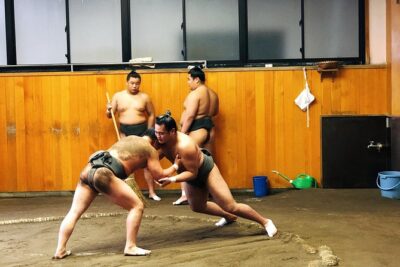
Browse the lists this tour appears in