
REVIEW · SUMO MORNING PRACTICE TOURS
Tokyo: Morning Sumo Practice Viewing
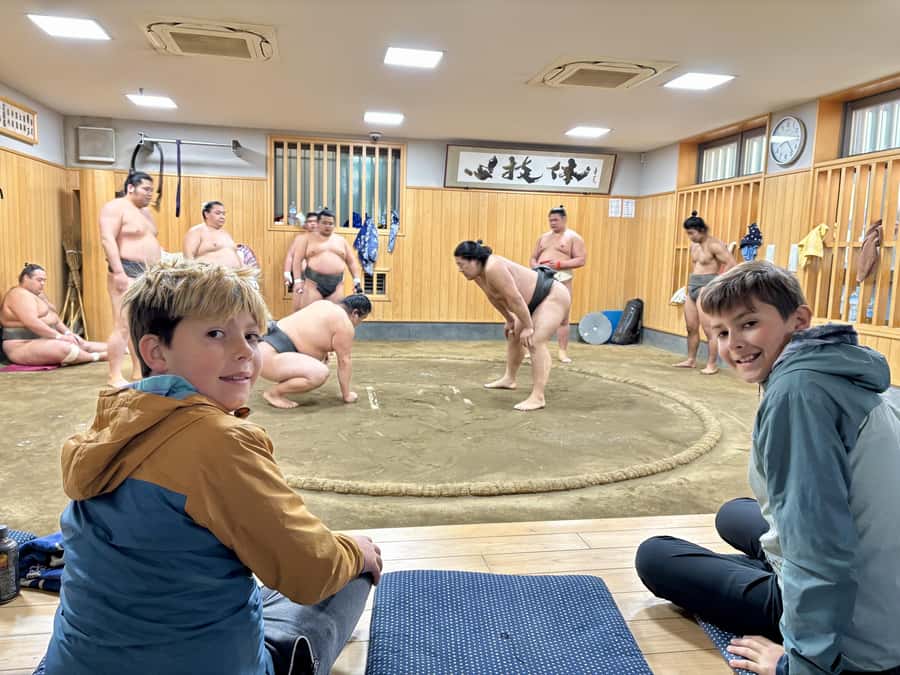
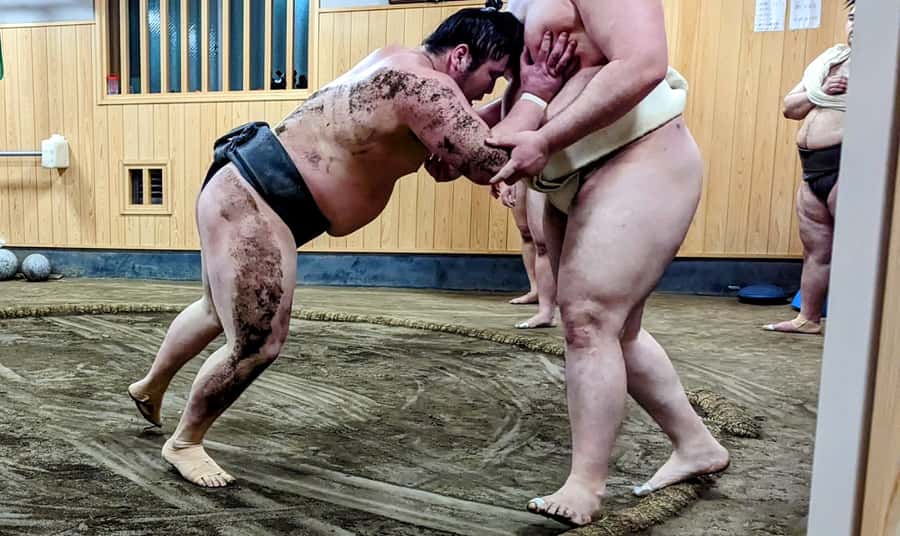
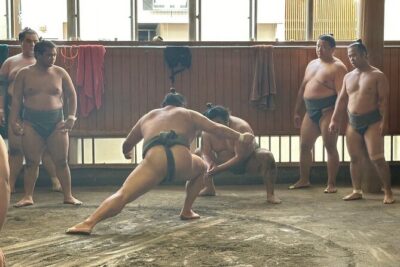
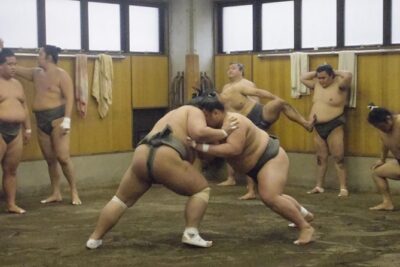
The key difference here is simple: this is real professional sumo practice, not a staged show. Inside the stable, wrestlers are not performing for visitors. They are repeating hard drills, testing one another, and working to improve their rank before the next grand tournament.
I like the close view and the small group, limited to eight people. I also like the guides, including Aki, Jeff, Taka, Dawn, Sue, Yasu, and Akimi, who explain the rules and customs before you enter. The main drawback is the seating: you sit on a cushion on a flat floor, and you must stay quiet and still during practice.
Key points to know before booking
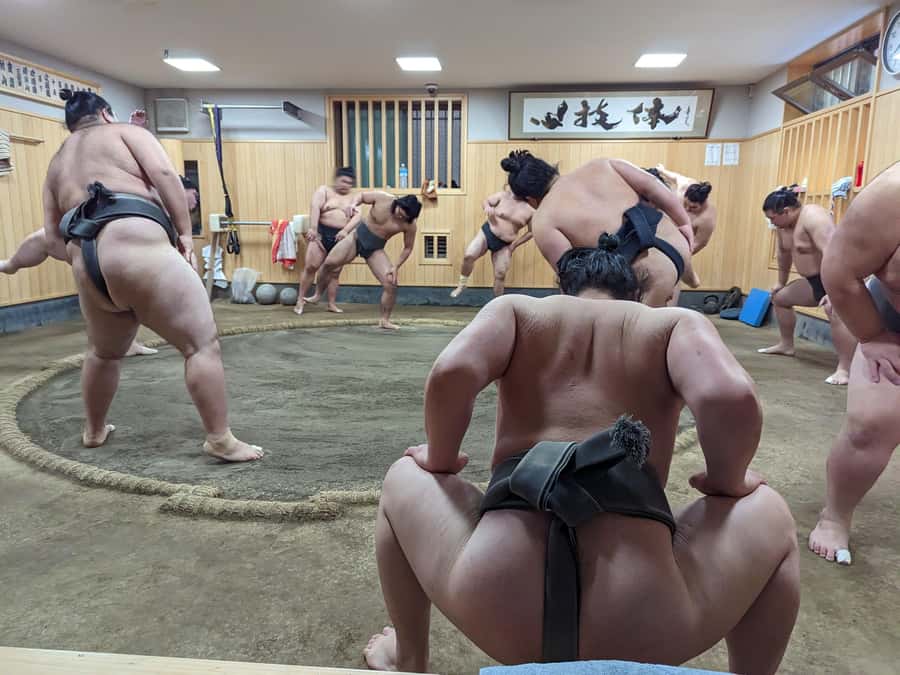
- Watch two top-division wrestlers train: Lower-ranked rikishi work hard to challenge established athletes in the stable.
- See sumo without the theater: The practice is serious, quiet, and focused on the wrestlers’ daily work.
- Learn the culture before entering: Your English-speaking guide explains stable etiquette, rankings, salaries, rituals, and tournament structure.
- Sit very close to the action: The front-row view gives you a sharp sense of the wrestlers’ speed, balance, and flexibility.
- Meet the wrestlers afterward: Once practice ends, the atmosphere relaxes and commemorative photos may be possible.
- Plan for floor seating: Cushions are provided, but the stable has no chairs, so this is not a good choice for wheelchair users or anyone who cannot sit on the floor.
Why a morning stable visit feels different from a sumo show
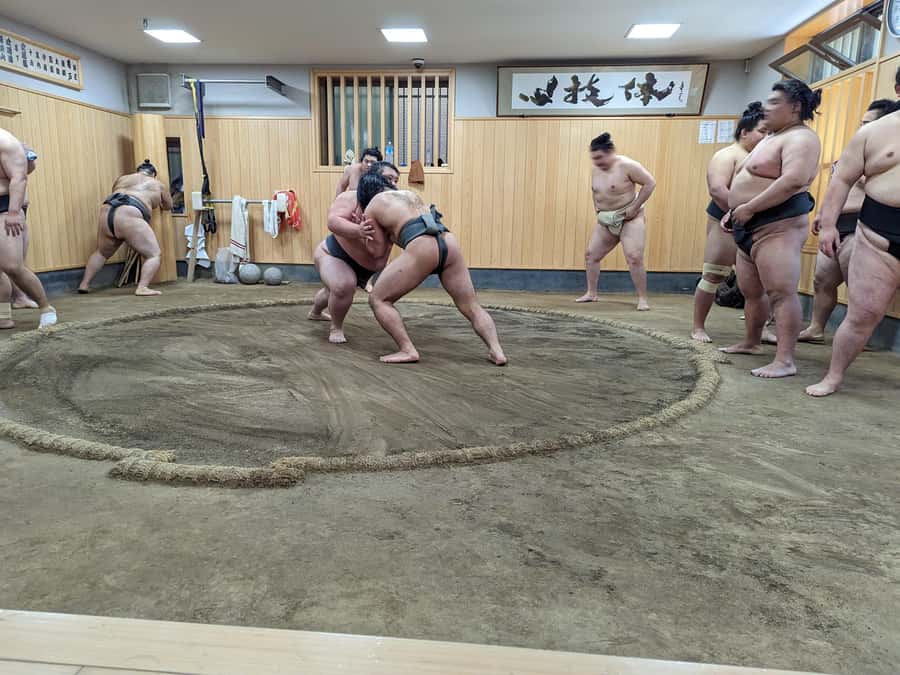
A sumo show is designed to entertain you. It may include comic demonstrations, explanations, and chances for audience members to challenge the performers. That can be a fun introduction, but it is not the same thing as watching wrestlers who belong to Japan’s official professional sumo system.
At this stable, the men in the ring are members of the Japan Sumo Association. They compete in the six grand tournaments held each year. During practice, they are not trying to make you laugh or explain what they are doing. Their attention is on strength, technique, balance, and rank.
That difference changes the mood as soon as you enter. You are expected to behave more like a quiet observer than a show spectator. The stable is a working place, and your guide will tell you where to sit, when to remain silent, and how to behave near the ring.
I find this restraint part of the appeal. The experience asks you to watch carefully rather than wait for a performance aimed at tourists. You see the repetitive work behind the public bouts, including the less glamorous effort required of lower-ranked wrestlers who hope to move up.
More morning practice tours in Tokyo:
- Tokyo: Sumo Morning Practice Viewing Tour
★ 4.8 · 570 reviews - Tokyo: Sumo Morning Training Visit
★ 4.4 · 370 reviews - Tokyo: Visit Sumo Morning Practice with English Guide
★ 4.7 · 343 reviews
Meeting at Tokyo Skytree Station
The meeting point is Hanami Zaka Square at Tokyo Skytree Station, Tobu Skytree Line station TS02. The supplied coordinates are 35.71030044555664, 139.80880737304688.
Allow time to find the square before the meeting. One useful feature is the clear meeting information, and a past group that became lost was personally helped by the guide. Even so, Tokyo station areas can be confusing, especially if you are arriving on a tight schedule.
From the meeting point, the stable is only a short walk according to the tour information. Your guide leads the group and gives an introduction before you go inside. This walk is not a sightseeing stop, but it gives you a few minutes to settle in and hear about the stable, the wrestlers, and the rules you will need to follow.
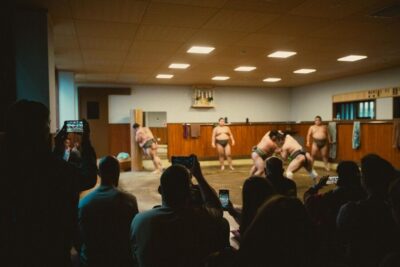
The group is small, with a maximum of eight participants. That matters here. A large crowd would feel intrusive in a serious training room, while a small group makes it easier to hear the guide and see the ring from a close position.
The briefing covers more than basic sumo rules
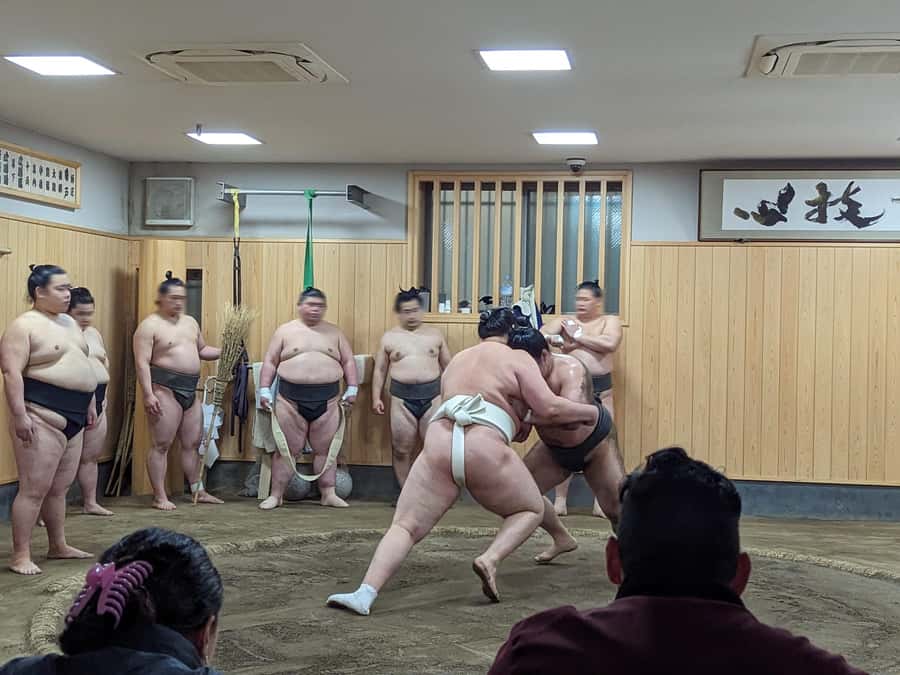
Before you sit down, your guide explains how the training works and what you are likely to see. Guides have included Aki, Jeff, Taka, Dawn, Sue, Yasu, and Akimi. The strongest praise has gone to guides who combine clear English with a real interest in sumo.
Expect background on the Japan Sumo Association, the six annual tournaments, and the ranking system. Dawn has also explained how wrestlers enter a stable, how the divisions work, and how salary levels differ. That context makes the practice far easier to understand.
Without an introduction, you may see two large men collide and miss the point. With some background, you can watch the difference between a top-division wrestler and a lower-ranked challenger. You begin to notice how a bout is built around position, timing, footwork, and the attempt to force an opponent out of the ring.
The guides also explain etiquette. This is one of the most useful parts of the experience, because the stable is not arranged as a visitor attraction. You need to know when to sit, when not to speak, and how to avoid distracting the wrestlers.
Sitting ringside on a cushion
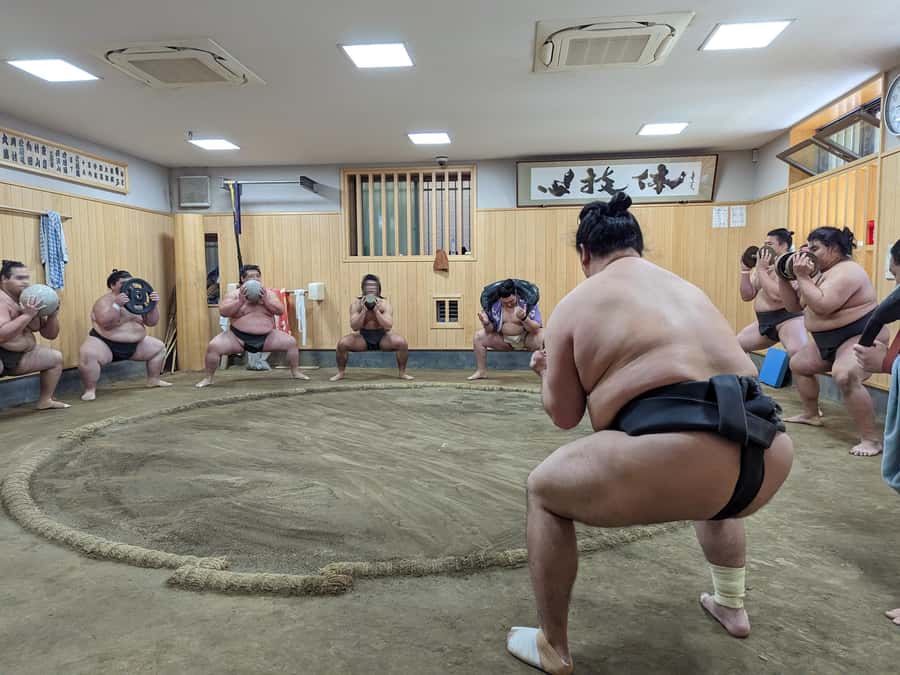
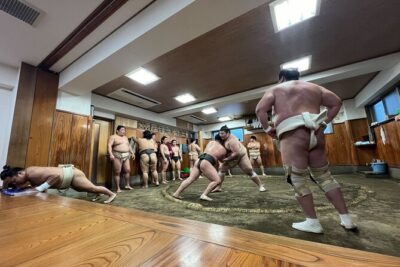
Inside, you sit on a cushion on the flat floor. There are no chairs supplied by the stable, so consider your own comfort before booking. One person who had trouble with floor seating noted that the view was excellent, but sitting for an extended period was physically difficult.
You may be able to leave for the restroom or ask about a chair, but the stated arrangement is floor seating. Do not treat this as a minor detail if you have stiff knees, limited flexibility, or difficulty getting up from the floor.
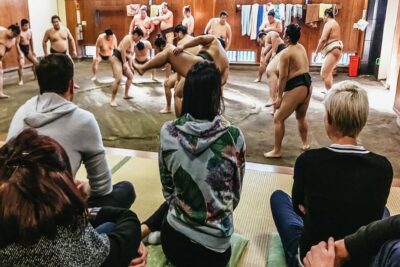
The benefit is a close view. You are not watching from a distant grandstand. You sit near enough to appreciate how quickly the wrestlers move, how controlled their footwork is, and how flexible they are despite their size.
The quiet can feel unusual at first. You must not talk with other participants during the practice, and you should remain still. This is not the time for a running conversation, snacks, or casual phone use. Your guide handles questions before or after the session.
More sumo experiences in Tokyo:
- Tokyo: Sumo Show Experience with Chicken Hot Pot and a Photo
★ 4.8 · 6,678 reviews - Tokyo: Sumo Show and Dining Experience
★ 4.8 · 2,742 reviews - the SUMO show
★ 5.0 · 1,960 reviews - Tokyo Shinjuku Sumo Show & Experience with Photo
★ 5.0 · 1,750 reviews
Watching the lower ranks challenge the established wrestlers
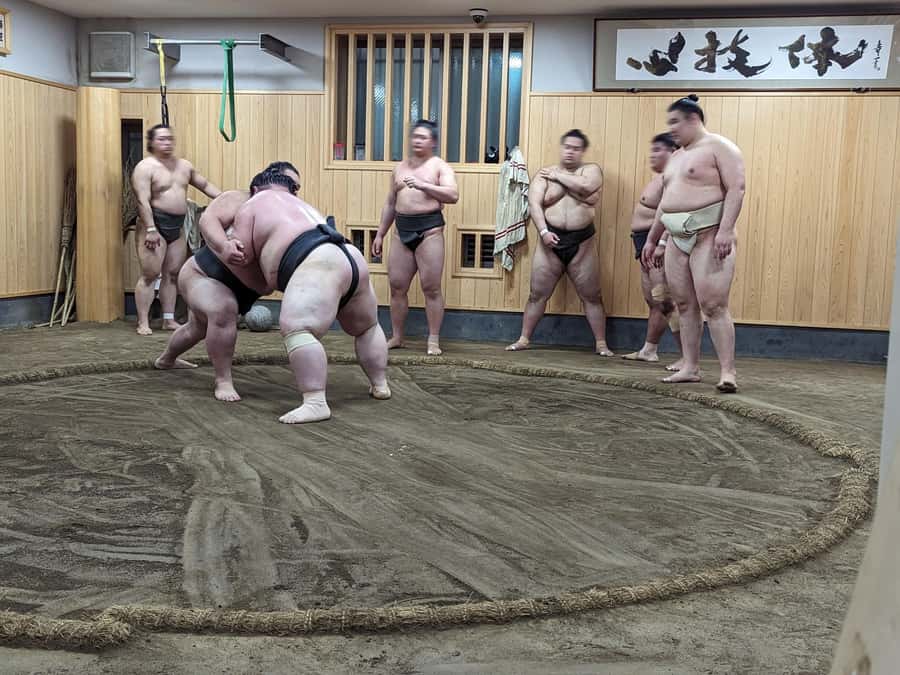
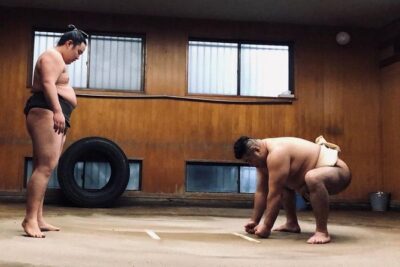
The stable has two top-division wrestlers. Their presence gives the practice a clear focus, but the lower-ranked wrestlers are just as important to watch.
You will see them work to challenge the men who already hold stronger positions. The training is not presented as a neat sequence of matches for your benefit. It is a demanding routine in which wrestlers repeat movements, collide, recover, and try again.
That raw repetition is the best reason to choose this experience over a staged performance. You see how much work happens before a wrestler steps into an official tournament bout. The practice also gives you a better sense of the stable as a team, with senior wrestlers and younger men sharing the same space but holding very different ranks.
A few reviews specifically point to the athletes’ flexibility and speed as surprises. Those qualities are easy to miss if you only think of sumo as mass and force. Up close, you can see that the wrestlers need control, balance, and quick reactions as well as power.
The viewing period is part of a three-hour experience, which includes the meeting, walk, briefing, practice, and time afterward. The exact practice schedule can vary, so check the available starting time when you book.
The serious atmosphere is the main attraction
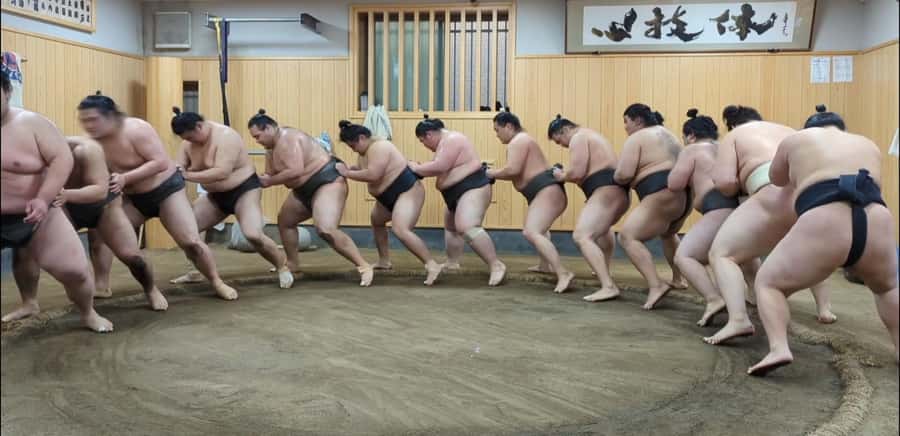
The mood inside the stable is tense and focused. That can feel stark compared with a show, but it is precisely what gives the visit its value.
You should not expect the wrestlers to chat with you while they train. They are there to work. Their lack of attention to the audience is not poor hospitality; it is a sign that the practice is not being altered for visitors.
This also means the experience may not suit someone who wants constant explanation or entertainment. The guide provides useful context, but the central activity is silent observation. You need to be comfortable letting the action speak for itself.
I like that arrangement. You are given access to a daily routine, then asked to respect it. The stable keeps its own rhythm instead of becoming a temporary theater.
Meeting the rikishi after practice
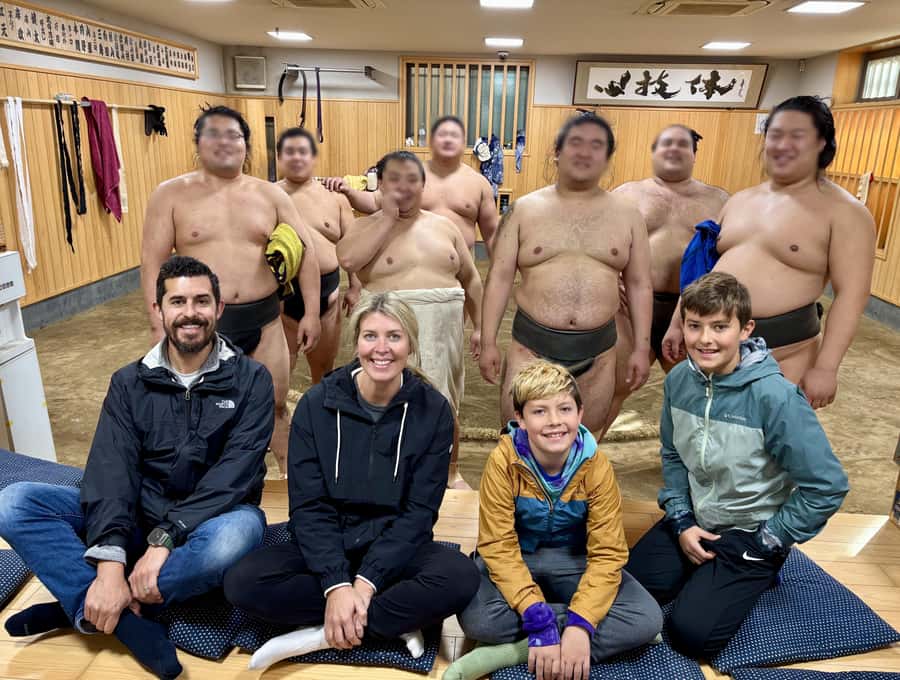
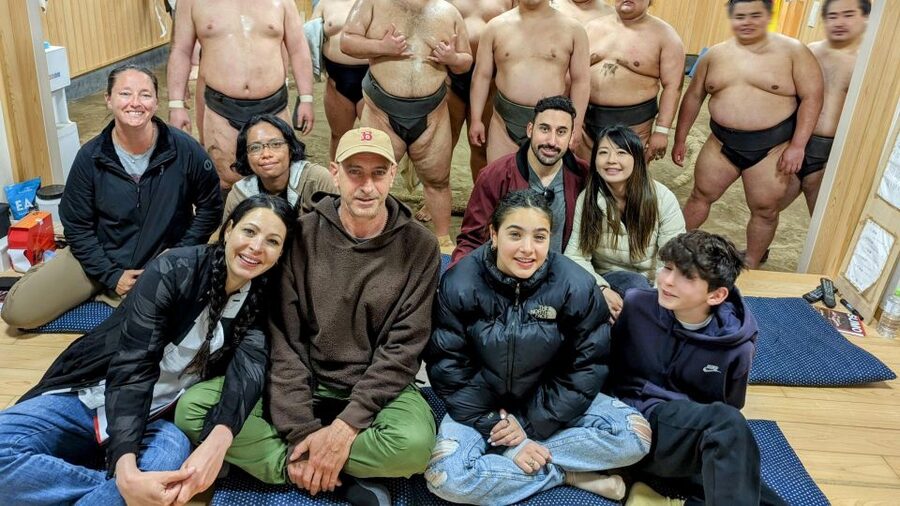
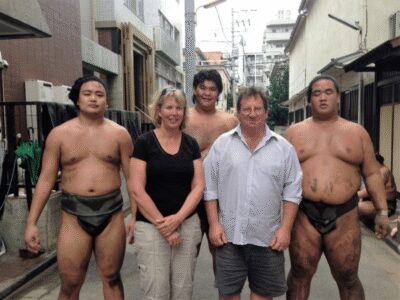
Once the practice ends and the wrestlers are off the ring, the mood becomes more relaxed. The information says that the professionals are approachable after training, and commemorative photos may be possible.
This is the right time for questions and a picture. Do not assume the photo opportunity is the main part of the visit, though. The real value comes from watching practice without interruption. The personal interaction is a pleasant close, not a substitute for the training session.
The contrast is worth noticing. During practice, the wrestlers maintain an unapproachable focus. Afterward, they can be friendly with visitors. That change helps you understand that the stern mood belongs to the work, not necessarily to the people.
One useful detail from the experience is that visitors have been able to learn about the stable’s wrestlers and later recognize its athletes at the sumo stadium. If you plan to attend an official tournament, a stable visit can give faces and context to the bouts you watch there.
How the guides shape the experience
Guide quality matters because most of the visit is observation. You need someone who can explain what you are seeing without turning the session into a lecture.
Aki has been praised for clear information and enthusiasm. Jeff has explained current sumo culture, tournament structure, and stable customs while leaving room for questions. Taka has been noted for patient English and a kind manner. Dawn has offered detailed background on stable life, divisions, and salaries.
Sue has brought strong personal interest in sumo, while Yasu has explained rituals and traditions. Akimi has also received praise for helping visitors understand the practice. The named guides differ by date, so you should not book expecting one particular person unless the operator confirms it.
The best guides prepare you before you enter, then let you watch. That balance matters. Too little explanation leaves you lost. Too much talking during the practice would break the stable’s rules.
Value compared with a tournament or show
No price is provided here, so I cannot judge the cost against a specific ticket. I can still explain where the value lies.
A tournament gives you official competition, a larger venue, and the excitement of a public event. A show gives you a more relaxed, humorous format. This morning visit offers something different: an intimate look at the training that supports the public sport.
It may be especially useful if you are visiting Tokyo outside the grand tournament dates. One visitor chose it during the off-season and found it a strong alternative to an official match. You do not get the spectacle of a tournament, but you do see professional athletes at work in their own stable.
The small group also improves the value. Your guide can answer questions before and after practice, and you are not one face in a large crowd. The close view makes the physical detail far more apparent than it would be from distant tournament seats.
For a casual visitor who only wants a quick photo with a sumo wrestler, a show may be simpler. For you if you want to understand the discipline behind sumo, this stable visit offers more substance.
Who should book this experience
I would recommend it to first-time visitors who want a serious introduction to sumo, especially if you are curious about Japanese sporting traditions and daily training.
It suits you if you can:
- Sit quietly on a floor cushion
- Follow instructions without interrupting practice
- Watch the same demanding movements for an extended period
- Accept that the wrestlers are not performing for the audience
- Walk from Tokyo Skytree Station to the stable
It is less suitable if you need a wheelchair, cannot sit on the floor, or want a lively show with audience participation. The activity is not designed as an accessible seated tour, and the stable does not provide chairs as standard.
Families and older visitors should think carefully about floor seating. The small group and clear guide support help, but they do not change the physical setup.
Practical booking advice for a smoother morning
Meet at Hanami Zaka Square rather than trying to go directly to the stable. The guide leads the group from there, and the stable is a working space rather than a public attraction with a normal ticket counter.
Arrive early enough to locate Tokyo Skytree Station and the square. Keep your phone quiet and follow the guide once you enter. Wear clothing that lets you sit comfortably on the floor, and avoid planning a rushed appointment immediately afterward.
English is the stated tour language. The experience lasts three hours, but the exact start time depends on availability. Booking can be made with pay later flexibility, and cancellation is free up to 24 hours in advance for a full refund.
The most important preparation is mental, not logistical: you are going to observe a real practice. The quieter and more respectful you are, the better the experience will be for everyone, including the wrestlers.
Should you book the morning sumo practice?
Book this if you want authentic training rather than a staged performance, and if you are willing to sit quietly on the floor for a close look at professional sumo.
Skip it if you need chair seating, wheelchair access, or a show built around jokes and audience participation. For everyone else, this is one of the clearest ways to understand the strength, flexibility, repetition, and rank structure behind sumo. The short walk from Tokyo Skytree Station, small group, English guidance, and possible photos afterward make it an easy cultural addition to a Tokyo morning.
FAQ
Where does the sumo practice tour meet?
The meeting point is Hanami Zaka Square at Tokyo Skytree Station, Tobu Skytree Line station TS02. The provided coordinates are 35.71030044555664, 139.80880737304688.
How long does the experience last?
The experience lasts three hours. Starting times vary, so check availability for the date you want.
Is the practice performed by professional sumo wrestlers?
Yes. The wrestlers belong to the Japan Sumo Association and take part in the grand sumo tournaments held six times each year.
Will I see top-division wrestlers?
The stable has two top-division wrestlers. You will also see lower-ranked wrestlers training and challenging them.
Can I take photos with the wrestlers?
Commemorative photos may be possible after practice, when the wrestlers are away from the ring. You must not interrupt the training session.
Do I sit on chairs during the practice?
No. Participants sit on cushions on a flat floor, and the stable does not provide chairs as standard.
Is the activity suitable for wheelchair users?
No. The activity is listed as unsuitable for wheelchair users.
Is the tour conducted in English?
Yes. The experience includes a live English-speaking guide. Guides have included Aki, Jeff, Taka, Dawn, Sue, Yasu, and Akimi.
Newest sumo experiences in Tokyo
- TOKYO , No1 Yokozuna Stable Morning Practice in Ryogoku★ 4.5 · 3 reviews
- Tokyo 6hr Private Guided Tour & Sumo Show Lunch★ 5.0 · 3 reviews
- Tokyo Grand Sumo Tournament Viewing Tour★ 5.0 · 2 reviews
- Tokyo Sumo History Tour with Chanko Nabe Lunch★ 5.0 · 3 reviews
- Tokyo Highlights Tour: Sumo, Sushi, Tea, and Tokyo Tower★ 5.0 · 2 reviews
- Tokyo: Know about Hokusai and Sumo culture in 2.5 hours★ 5.0 · 2 reviews
- Tokyo: Sumo Keiko Training Tour with Audio Guide & Photo★ 4.8 · 5 reviews
- Tokyo: Watching Sumo and Ryogoku Area Walking Tour★ 4.0 · 5 reviews
Sumo Morning Practice Tours, compared.
Tokyo Ryogoku Sumo Morning Practice + Photo Shoot with Wrestlers
Read our review →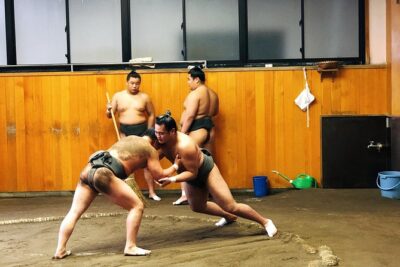
Tokyo Sumo Morning Training/ Sumo Practice with Wrestlers
Read our review →Browse the lists this tour appears in