
REVIEW · SUMO MORNING PRACTICE TOURS
Morning Sumo Practice Viewing in Tokyo
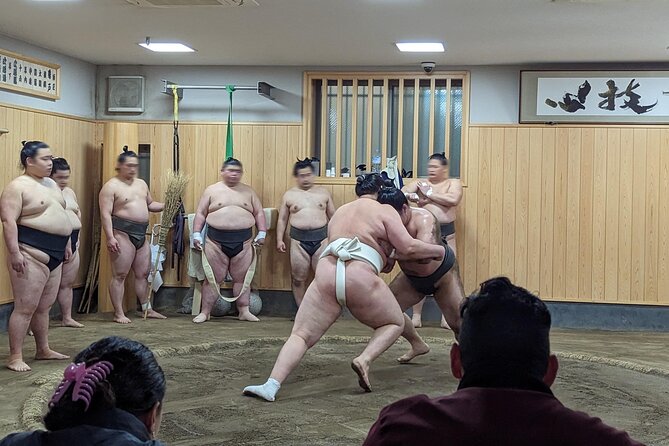
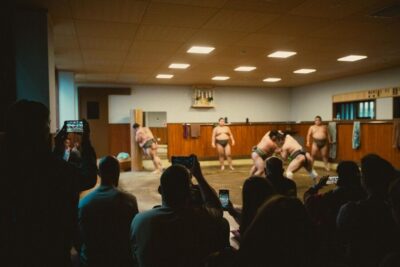
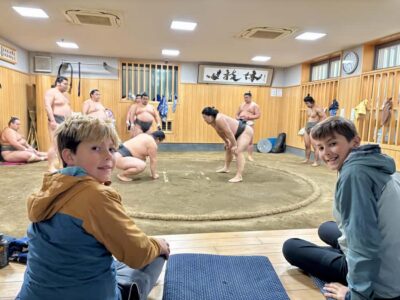
Watching sumo practice from a few feet away is the main event here. You sit inside a working stable as wrestlers warm up, collide in practice bouts, and follow rituals rooted in Shinto tradition. It is far more intimate than a tournament seat. You see training, not a polished show, so the pace and mood feel real.
I like the small group of no more than 10 and the clear introduction before you enter. Guides such as Joji, Dawn, Jeff, and Aki have helped guests follow the rules, moves, and customs. I also like that your fee includes a donation to the stable. The catch is simple: you sit on a cushion on the floor for about two hours, with no chairs and no toilet inside.
Key points at a glance
- 7:30 am start at Tokyo Skytree: Meet in Oshiage, then get a short briefing before heading to the stable.
- Close-range practice at Naruto-beya: Watch wrestlers train from inside the stable in Sumida.
- Small group access: The tour accepts a maximum of 10 people, which helps you hear the guide and see the action.
- English guidance before and during practice: Learn basic rules, moves, rituals, and the Shinto roots of sumo.
- Possible photo session: You will most probably have a chance to take photos with wrestlers afterward.
- Floor seating is required: Bring patience for a long seated session, since no chairs are available.
Why morning practice feels different from a sumo tournament
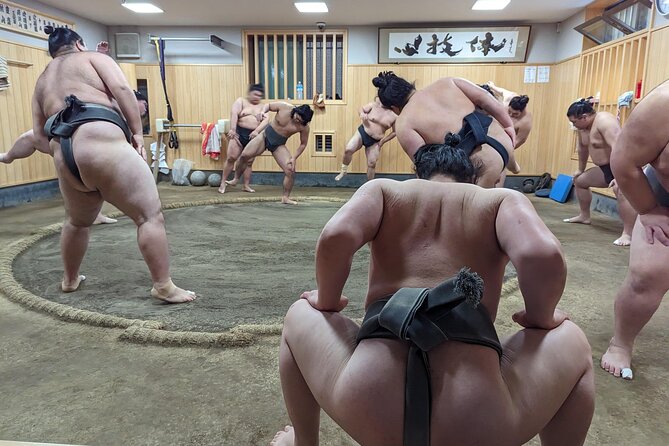
A tournament gives you formal bouts, a large crowd, and the full spectacle of professional sumo. This morning visit gives you the working side of the sport. You watch wrestlers prepare their bodies, repeat techniques, and test one another in a place where training is the point.
That difference matters. The session may not follow a neat performance schedule for your benefit. You may see long stretches of preparation, bursts of hard physical contact, and rituals that make more sense after your guide explains them. The lack of showmanship is part of the appeal.
Sumo is tied to Shinto customs, and the guide introduces those traditions before you enter. You also get help with basic rules and moves, so you can tell what is happening when two wrestlers face each other. Without that briefing, the action can look like a series of short shoves. With it, you can pay attention to footwork, timing, balance, and the way a bout begins and ends.
The setting also gives you a better sense of scale. Sumo wrestlers look enormous in photographs, but sitting close to the practice area makes their movement and physical control easier to appreciate. You are not watching from a distant arena seat. You are observing a daily training routine from inside the stable.
More morning practice tours in Tokyo:
- Tokyo: Sumo Morning Practice Viewing Tour
★ 4.8 · 570 reviews - Tokyo: Sumo Morning Training Visit
★ 4.4 · 370 reviews - Tokyo: Visit Sumo Morning Practice with English Guide
★ 4.7 · 343 reviews
Meeting at Tokyo Skytree at 7:30 am
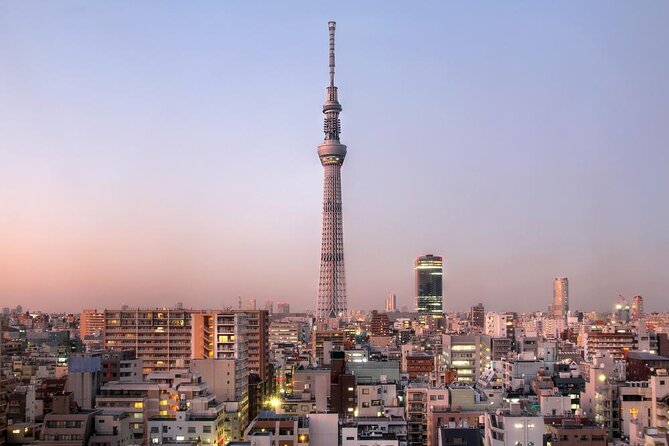
The tour begins at Tokyo Skytree Station, at 1-chome-1-4 Oshiage in Sumida City. The meeting time is 7:30 am, so plan your morning around an early start. This is one of those Tokyo activities where the first logistical challenge is simply getting out of bed and arriving on time.
The first stop is Tokyo Skytree, where the guide gives a roughly 30-minute explanation of what you are about to see. The tower itself is not an admission stop on this tour. You are using the area as a meeting point and orientation spot, so do not expect time to go up the tower.
This briefing is useful, not filler. You learn basic sumo rules, what behavior is expected inside the stable, and how to watch the practice without disturbing it. Guides named Joji, Dawn, Jeff, and Aki have each been praised for explaining the sport clearly and preparing people before they enter.
I would pay close attention here. Once practice begins, you need to watch the wrestlers rather than constantly ask what each movement means. A short lesson at the start lets you follow more of the action on your own.
Entering Naruto-beya in Sumida
From the Skytree area, the experience continues to a sumo stable in Sumida, Naruto-beya, at 1-chome-22-16 Mukojima. The visit ends at the stable, and hotel pickup and drop-off are not included. You need to make your own way to the meeting point and arrange your onward transportation after the session.
Access to a stable is difficult to arrange independently. These are working spaces, not regular sightseeing sites with a public ticket desk. The guide handles the visit and helps you enter in a way that respects the stable’s rules.
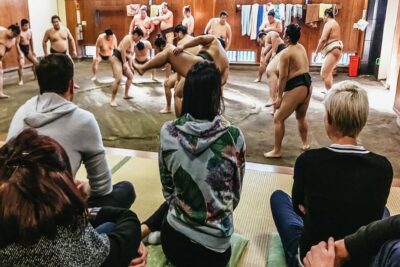
Inside, you sit on a cushion on a flat floor. No chairs are provided. The practice lasts about two hours, and the floor seating is the biggest physical issue to consider. If sitting cross-legged or kneeling becomes uncomfortable, this may not be a good fit for you.
The stable itself is important to the experience. You are not sitting in a tourist attraction designed for a crowd. You are in a place where wrestlers train and live within a strict sumo routine. Keep your voice low, follow the guide’s instructions, and treat the room as a working environment.
There are no toilets available during the seated practice, so use facilities before entering if you can. The early start, floor seating, and lack of toilet access are small details, but they have a big effect on comfort.
Seeing warmups, practice bouts, and ritual
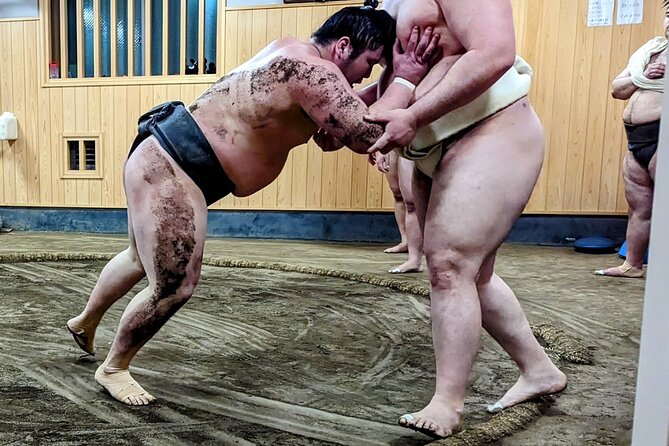
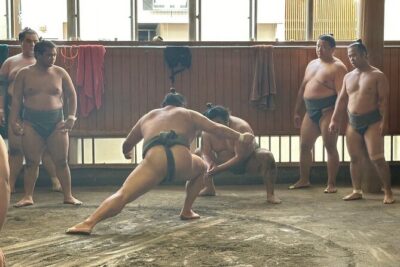
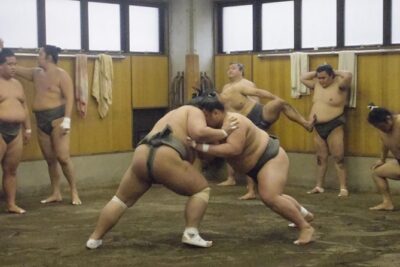
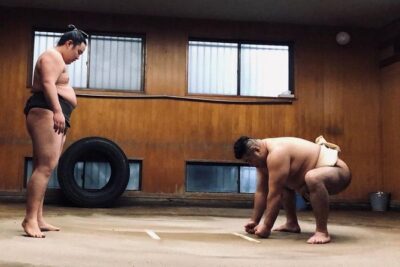
The practice begins with wrestlers warming up and preparing their bodies. You may then see practice bouts, with the wrestlers facing off repeatedly. The exact order and length of each part can vary, since this is training rather than a performance built around a fixed public timetable.
That unpredictability is worth accepting. You may not get constant action for two hours, but you do get to see how sumo is practiced. The close view lets you notice the force of the initial charge, the quick search for balance, and the effort required to stay upright when a bout turns against you.
The guide helps put the movements into context. You learn enough about the sport to recognize basic actions and understand why certain rituals matter. The Shinto connection also gives the practice a cultural setting beyond strength and competition.
This is especially useful if you have never watched sumo before. A tournament can be confusing at first because the bouts are short and the rules are not obvious. Here, the advance explanation makes it easier to follow the stable’s routine and understand what you are seeing.
You should also prepare for a quiet, serious atmosphere. The stable is not a theater. The wrestlers are working, and the audience is expected to observe respectfully. That can feel more meaningful than a loud public event, but it also means you should not expect constant narration or a staged interaction.
More sumo experiences in Tokyo:
- Tokyo: Sumo Show Experience with Chicken Hot Pot and a Photo
★ 4.8 · 6,678 reviews - Tokyo: Sumo Show and Dining Experience
★ 4.8 · 2,742 reviews - the SUMO show
★ 5.0 · 1,960 reviews - Tokyo Shinjuku Sumo Show & Experience with Photo
★ 5.0 · 1,750 reviews
Photos and the possible chanko nabe lunch
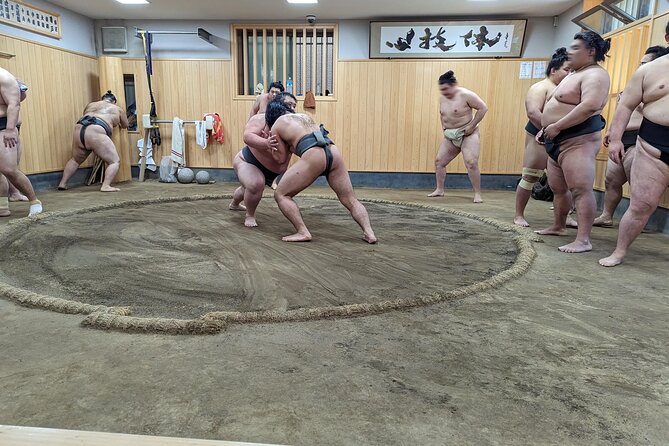
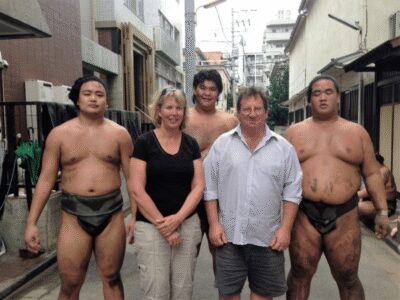
After practice, you will most probably have a chance to take photos with the wrestlers. The word most probably matters. The photo session is described as likely, not guaranteed, so do not book this solely for a posed picture.
If photos happen, they can be a memorable end to the visit because you have already watched the wrestlers train. The interaction follows the practice rather than replacing it. Still, respect the stable’s instructions and accept that the schedule or athletes’ duties may affect what is possible.
The tour description also says you will probably refuel with chanko nabe, the hot pot associated with sumo wrestlers. Chanko nabe is a fitting meal after a morning devoted to the sport, and it adds a food connection to the cultural side of the visit.
There is an important point to check before booking: the detailed included-items section lists the stable donation and English guiding, but does not clearly list lunch as an included item. I would confirm whether chanko nabe is provided, and whether any meal cost is separate, before you pay. The same caution applies to the photo session.
What the $99.08 price gets you
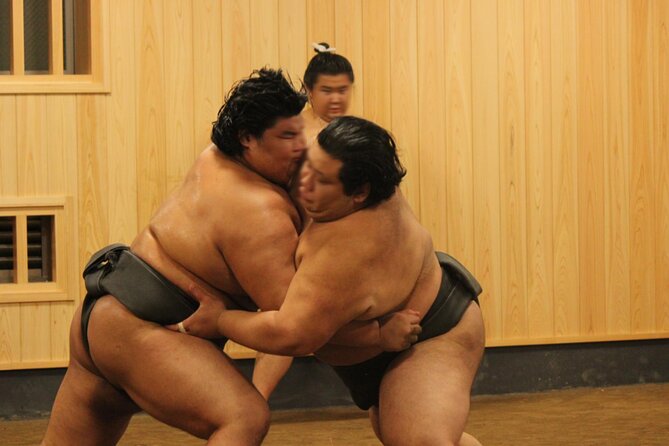
At $99.08 per person, this is not the cheapest way to spend a Tokyo morning. You are paying for access that is hard to arrange alone, a local certified English-speaking guide, a small group, and a donation to the stable.
The value depends on what you want. If your goal is simply to see sumo, a tournament ticket may offer more bouts and a bigger sense of occasion. If your goal is to understand how wrestlers train and enter a working stable, this visit offers something a tournament cannot.
The group limit of 10 helps the price make more sense. A large crowd would reduce the value of a close-range activity. With a small group, the guide can explain things before practice and help people find a place where they can see.
The private-tour wording suggests personalized attention, while the stated maximum is 10 participants. I would treat this as a small-group experience unless your booking confirmation specifically says the entire visit is private. Either way, the limited size is helpful.
Another part of the price is convenience. You do not need to contact stables yourself, negotiate access, or work out the customs of a private training space on your own. You arrive at the meeting point, receive the cultural briefing, and follow the guide into the stable.
The floor seating is the real test
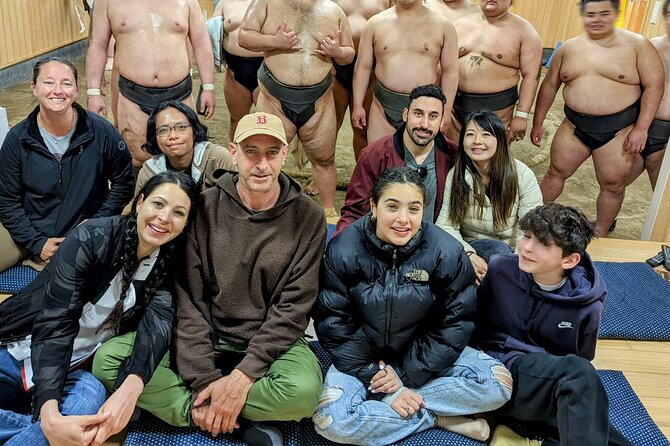
The main drawback is not the early hour. It is the seating. Everyone must sit on a cushion on a flat floor, with no chairs, for roughly two hours.
Some people will manage this without trouble. Others may find the position tiring, especially during a long period of quiet observation. You should think honestly about your knees, hips, back, and general comfort before booking.
The stable setting does not appear designed for easy movement during practice. Once you are seated, you should avoid shifting around or leaving unless necessary. Use the toilet before the session and keep your belongings compact.
This is not a suitable choice if you need a chair or regular access to facilities. It can still work well for families and older adults who are comfortable sitting on the floor, but the physical requirement should be clear before you commit.
How the early start shapes the day
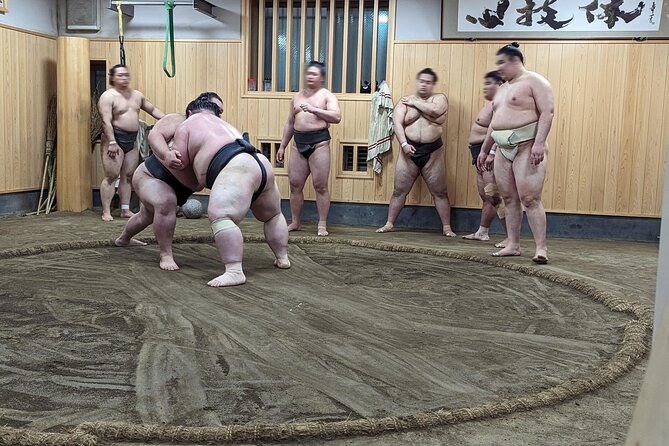
A 7:30 am meeting gives you a full day after the tour, but it also requires careful planning. You may be traveling across Tokyo before the city feels fully awake. Give yourself enough time to reach Tokyo Skytree Station without rushing.
The early hour has one benefit beyond scheduling. You arrive for a real morning training session rather than a later demonstration arranged for sightseeing. The first light over Tokyo and the quiet trip toward Sumida can become part of the experience.
The tour itself lasts about three hours, with 30 minutes at the Skytree meeting point and about two hours inside the stable. The remaining time allows for the transition between the two locations. Since the activity ends at Naruto-beya, plan your next stop from Mukojima rather than from Skytree.
The experience is also a good fit for a final morning in Tokyo if your departure schedule allows it. One description of the visit mentions people waking early on their last day, but you should only do this if you can reach the airport comfortably afterward. The tour has an early finish, but airport transfers can still take time.
Who will get the most from this visit
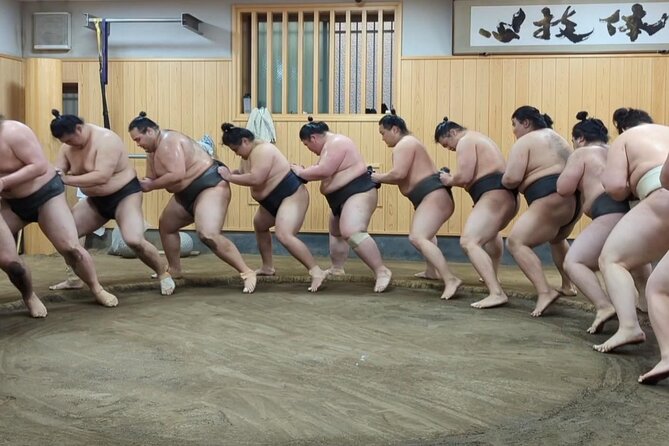
I would choose this for you if you have a real interest in Japanese culture, traditional sports, or the daily discipline behind professional competition. It works especially well if you want context and access rather than a quick photo at a public attraction.
It is also a strong choice for anyone who has found sumo confusing. The opening lesson covers the basic rules and moves, and the guide explains the cultural background before you watch. You do not need to arrive as a sumo expert.
Families with older children may enjoy the close view and short, forceful bouts. The physical setting is the limiting factor, not the subject matter. Young children who cannot sit quietly for a long period may struggle in a working stable.
I would be more cautious if you want a relaxed late-morning outing, a guaranteed lunch, guaranteed photos, or comfortable seating. Those expectations do not match the details provided.
The English guiding is another strong reason to book. Guides including Joji, Dawn, Jeff, and Aki have been described as clear and prepared, with handouts and profiles of wrestlers used to help people follow the practice. The exact guide is not guaranteed, but the format gives you more than a silent viewing session.
Booking details and cancellation
Confirmation is provided when you book, and the activity is near public transportation. Group discounts are available, and you receive a mobile ticket.
Free cancellation is available if you cancel at least 24 hours before the local start time. Changes or cancellations inside that 24-hour window are not accepted for a refund.
The stated policy also says the activity requires good weather. If poor weather causes cancellation, you are offered another date or a full refund. Since the practice takes place indoors, check the operator’s instructions if the forecast is poor.
Should you book the Naruto-beya morning practice?
I would book this if you want one of Tokyo’s more direct cultural encounters and you can handle floor seating. The chance to watch wrestlers train from inside a stable, with an English explanation of the rules and rituals, is the main reason to choose it.
The $99.08 price is fair for hard-to-arrange access, a small group, and a stable donation, but it is not a bargain if you only want to see a few bouts. Confirm the lunch details and understand that photos are likely rather than guaranteed.
My practical verdict: book it for the close view, the working setting, and the chance to understand sumo before you watch it. Skip it if you need chairs, a guaranteed meal, or a flexible morning. For the right person, this is a memorable way to see sumo as a daily discipline, not just a sport on a tournament schedule.
FAQ
Where does the sumo practice tour start?
It starts at Tokyo Skytree Station, at 1-chome-1-4 Oshiage, Sumida City, Tokyo. The meeting time is 7:30 am.
Where does the tour end?
The tour ends at Naruto-beya Sumo Stable at 1-chome-22-16 Mukojima, Sumida City. Hotel pickup and drop-off are not included.
How long does the activity last?
The experience lasts about three hours. The itinerary includes about 30 minutes at the Tokyo Skytree meeting point and about two hours watching practice inside the stable.
Do I need to sit on the floor?
Yes. All participants sit on a cushion on a flat floor, and no chairs are available. The practice viewing lasts about two hours.
Is lunch included?
The experience description mentions chanko nabe, the traditional food of sumo wrestlers, but the detailed included-items information does not clearly list lunch. Confirm this point before booking.
Can I cancel for a full refund?
Yes, if you cancel at least 24 hours before the experience start time. Cancellations or changes made less than 24 hours before the start are not refunded. If poor weather causes the operator to cancel, you are offered another date or a full refund.
Newest sumo experiences in Tokyo
- Tokyo 6hr Private Guided Tour & Sumo Show Lunch★ 5.0 · 3 reviews
- Tokyo Grand Sumo Tournament Viewing Tour★ 5.0 · 2 reviews
- Tokyo Sumo History Tour with Chanko Nabe Lunch★ 5.0 · 3 reviews
- Tokyo Highlights Tour: Sumo, Sushi, Tea, and Tokyo Tower★ 5.0 · 2 reviews
- Tokyo: Know about Hokusai and Sumo culture in 2.5 hours★ 5.0 · 2 reviews
- TOKYO , No1 Yokozuna Stable Morning Practice in Ryogoku★ 4.5 · 3 reviews
- Tokyo: Sumo Keiko Training Tour with Audio Guide & Photo★ 4.8 · 5 reviews
- Tokyo: Watching Sumo and Ryogoku Area Walking Tour★ 4.0 · 5 reviews
Sumo Morning Practice Tours, compared.
Tokyo Ryogoku Sumo Morning Practice + Photo Shoot with Wrestlers
Read our review →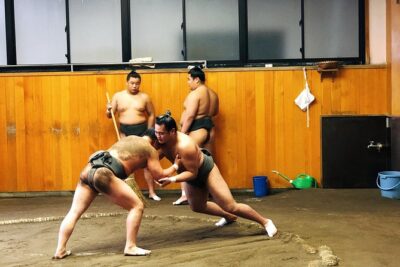
Browse the lists this tour appears in