
REVIEW · SUMO MORNING PRACTICE TOURS
Sumo Morning Training Watch in Tokyo,Hotel-pickup w/English guide
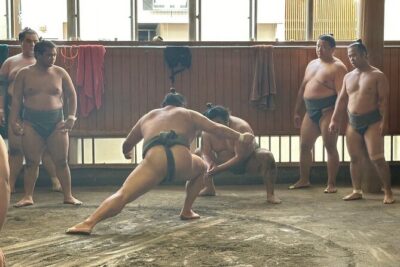
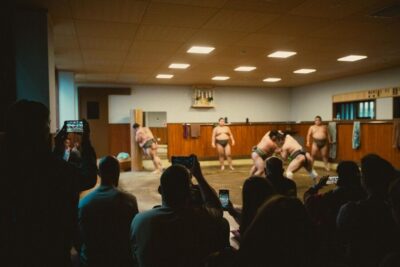
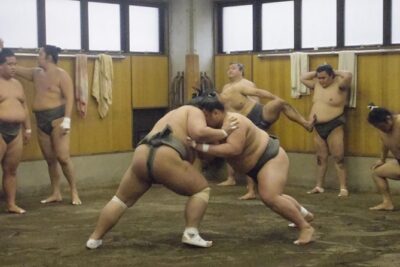
The best part of this early-morning Tokyo outing is simple: you sit just a few feet from professional sumo wrestlers doing real training, not a tourist show. You may watch leg exercises, hard practice bouts, stretching, and coaching inside an active stable. The room stays quiet, so your guide explains the action before and after, or uses notes during the session.
I like the hotel pickup and the small maximum of 15 people. Getting to a sumo stable can be confusing, and guides such as Koichiro, Hiro, Mari, Midori, and Hiromi have helped visitors manage trains, buses, and local streets. I also like the chance to see a neighborhood shrine or local sights along the way. The main drawback is that this is an early start, with no hotel drop-off, food, or guaranteed photo session.
Key points to know before booking
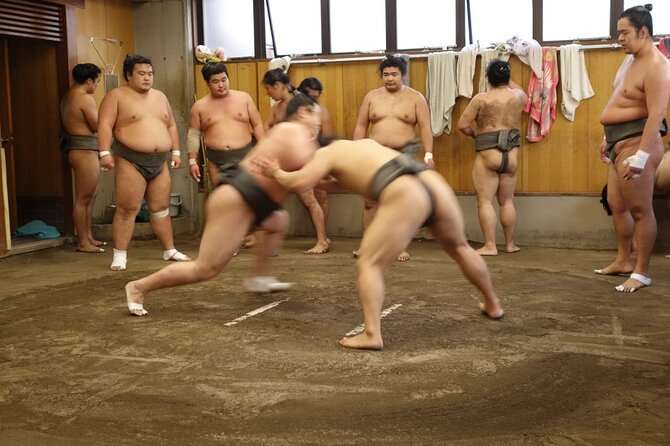
- Real training inside a sumo stable: Watch wrestlers exercise, drill, and face one another in practice bouts.
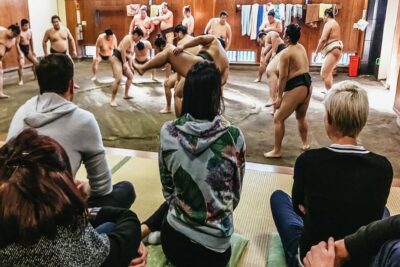
- Very close seating: Some groups sit on cushions near the ring, close enough to hear the force of the collisions.
- Quiet during practice: You cannot chat freely inside the stable, but you can write questions for your guide.
- Public transport is part of the trip: Hotel pickup means your guide meets you, then usually leads you by train or bus.
- Photos may be possible afterward: A picture with wrestlers depends on the stable’s schedule and permission.
- The date matters: Training is not offered during the listed 2025 unavailable periods, and availability is confirmed after booking.
Sitting beside the ring at 7:30 in the morning
This experience begins early, with a listed start time of 7:30 a.m. Your English-speaking guide meets you at your hotel and takes charge of the route. That help matters in Tokyo, especially when a stable is on a quiet residential street rather than beside a major tourist attraction.
The ride to the stable may include trains, buses, and walking. You pay for the convenience with an early morning and a little legwork, so wear comfortable shoes. One practical tip from the experience: carry a loaded Suica card or another simple way to pay for public transport. Hotel pickup is included, but the cost of local transportation is not specifically listed as included.
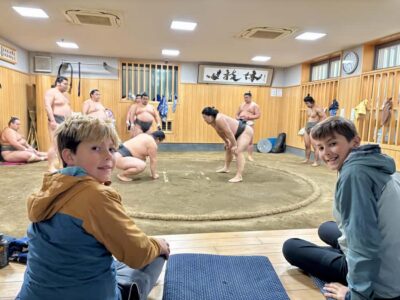
The stable itself is not a theater. It is a working place where wrestlers train under the direction of their stable master. You may sit on floor cushions close to the practice area. Low chairs may be available, though getting up from them can be awkward if your knees or hips are troublesome. Most people can take part, but this is not the right morning for anyone who needs a slow, fully step-free outing.
The room is quiet during practice. That rule protects the wrestlers’ concentration and gives the session a serious feel. It also means your guide cannot provide a running lecture in a normal speaking voice. The strongest guides solve this by explaining the rules beforehand, pointing out wrestlers and techniques, or writing on a board during breaks.
More morning practice tours in Tokyo:
- Tokyo: Sumo Morning Practice Viewing Tour
★ 4.8 · 570 reviews - Tokyo: Sumo Morning Training Visit
★ 4.4 · 370 reviews - Tokyo: Visit Sumo Morning Practice with English Guide
★ 4.7 · 343 reviews
What the wrestlers actually do
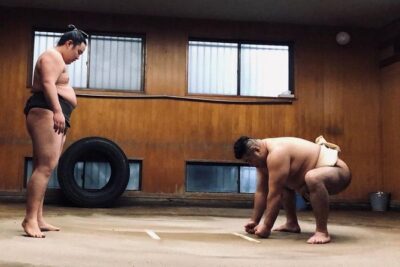
The session usually opens with basic sumo exercises. You may see movements designed to build the legs, hips, and upper body, along with repeated drills for strength and balance. These exercises can look simple at first, but their repetition shows how much work sits behind a short bout in a tournament.
The guide helps you notice details that are easy to miss. A stomp, stretch, bow, or movement around the ring can have a place in sumo tradition. The point of this tour is not only to watch large athletes collide. It is to understand the rules, discipline, rituals, and physical demands that shape the sport.
Practice bouts are the main event. Two wrestlers face each other at a time, and the action can be startlingly forceful at close range. Other wrestlers may continue stretching or working on drills nearby. This gives you a fuller picture of the stable, since the room is not arranged only for your entertainment.
The practice is genuine. There is no promise that every bout will be dramatic, and the training schedule can change. If you attend during a tournament period, the work may be lighter on some mornings. That is part of the bargain: you are seeing the athletes prepare, not attending a polished public match with a fixed program.
Why an English-speaking guide adds real value
Without help, you might understand the spectacle but miss much of the meaning. Sumo has its own vocabulary, ranking system, customs, and signals. A licensed English-speaking guide gives you a framework before the wrestlers begin, then helps connect what you see to the sport’s traditions.
The best use of the guide is to ask questions. Hiro, for example, has been described as using a dry-erase board so visitors could ask questions without disturbing the room. He also pointed out which wrestlers were making progress and explained small details during the bouts. Other guides have used sketches and written notes when speaking was not allowed.
Guides named in the experience include Hiromi, Koichiro, Sumi, Midori, Atsushi, Tadashi Umebayashi, Yuka, Mari, Kyoko, and Hiro. Guide assignments vary, so you cannot book a specific person from the information provided. Still, the repeated pattern is clear: the guide is most useful not as a translator alone, but as your link to a sport that can be hard to read from the outside.
Some guides also add local context on the route. You might stop at a small shrine, temple, supermarket, or neighborhood street after the training. These extras are not guaranteed, but they can turn a narrow sports visit into a wider look at ordinary Tokyo.
There is one caution. One outing had a guide who gave only a short explanation and did not offer much help during the training. That matters because silence in the stable can leave you unsure about what is happening. Ask questions before entering, and bring a small notebook or use your phone notes if your guide gives permission.
The possible photo with a wrestler
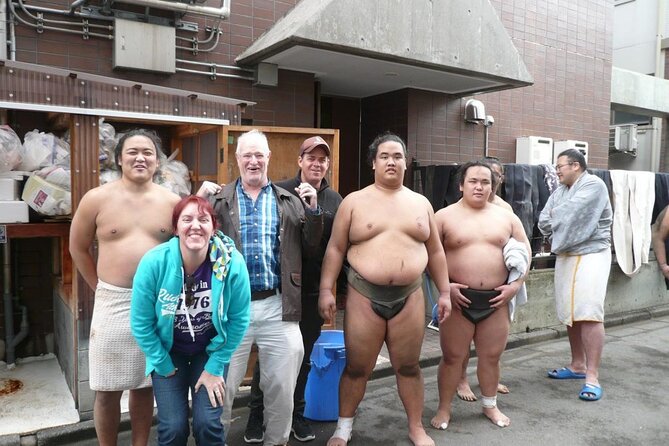
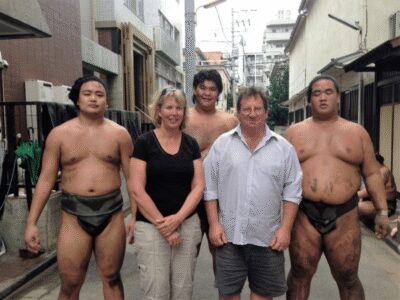
After practice, you may have a chance to take pictures with one or more wrestlers. This is one of the most memorable parts of the morning, but it is not guaranteed. The stable’s schedule, the wrestlers’ availability, and local rules control what happens.
The photo opportunity should be treated as a courtesy, not a paid meet-and-greet. Keep it brief and respectful. You are entering a place where the athletes live and train, and the main purpose of the visit is to observe their work.
A few groups have had photos with wrestlers at the end, while others found that the timing worked differently. Your guide may arrange the picture if the stable permits it. Bring a camera or phone with enough battery, but do not assume you will be able to take photographs throughout the practice.
More English-guided sumo tours in Tokyo:
- Tokyo: Visit Sumo Morning Practice with English Guide
★ 4.5 · 22 reviews - Grand Sumo Tournament Tour w/an English Guide ,Tokyo January 2026
★ 5.0 · 3 reviews - Kyushu Grand Sumo Tournament Viewing Tour with English Guide
★ 5.0 · 22 reviews - Nagoya: Visit Sumo Morning Practice with English Guide
★ 4.9 · 5 reviews
A three-hour morning, with no return to your hotel
The advertised duration is about three hours. That includes hotel pickup, the journey to the stable, the training visit, and the return journey toward the train system or another point in Tokyo. Hotel drop-off is not included, so plan the rest of your day from the final location rather than assuming you will be delivered back to your room.
This setup can work well for a full sightseeing day. You finish in the morning and can continue to another Tokyo neighborhood, museum, or meal. It is less convenient if you have a tightly timed reservation immediately afterward, since the precise training length and public transport route can vary.
No food or drinks are included. Eat before pickup if you need breakfast, or plan a meal after the session. The early start is useful for seeing the stable at work, but it can be rough after a long flight or a late night. If this is your first morning in Japan, the guide can make the train journey much easier, though you still need enough energy for walking and transfers.
The group maximum is 15 people. A smaller group may feel more personal, especially when the room is quiet and questions are handled one at a time. Group size can also affect how easily everyone sees the ring. The most intimate outings have had only a few participants, but that is not promised.
Is $159.88 a fair price?
At $159.88 per person, this is not a cheap way to see sumo. You are paying for access to a genuine training environment, an English-speaking licensed guide, hotel pickup, and the planning needed to reach a stable that can be difficult to find.
The value is strongest if you would struggle with Tokyo’s transport system or cannot read Japanese instructions. Your guide handles the route and gives you cultural context that a self-guided visit may not provide. You also get a close view of training rather than a distant seat in a large tournament venue.
The price is harder to justify if you only want to watch sumo for a few minutes, avoid early mornings, or prefer to make your own way around Tokyo. There is no meal, no hotel return, and no guaranteed photo. You should also understand that you are paying for access to a working practice session, not a fixed show.
For someone with a real interest in Japanese culture, sports, or photography, the cost can make sense. The close seating changes the experience. You notice the physical impact, the repeated drills, the stable’s quiet discipline, and the way the athletes prepare when there is no public tournament crowd.
What to pack and how to behave
Wear shoes suitable for walking and public transport. The route may include streets, stations, stairs, and transfers. Clothing should be comfortable for sitting close to the floor, especially if you may use a cushion rather than a standard chair.
Arrive ready to be quiet. You may need to keep questions for a break or write them down. Do not expect to move around freely or photograph every moment. Follow the guide’s instructions, since each stable may set its own rules.
A small gift is not required, and nothing in the program says you must bring one. Still, one person wished they had brought a small gift from home when saying goodbye. If you choose to bring anything, keep it modest and offer it only if your guide says it is appropriate.
The most important packing item is patience. Training may include long periods of repetition, stretching, or preparation before the hardest bouts begin. That slow build is part of seeing sumo as a sport rather than a quick attraction.
Who will enjoy this most?
I would choose this for you if you have even a passing interest in sumo, Japanese customs, martial arts, or serious athletic training. You do not need to know the rules in advance. A good guide can bring you up to speed quickly.
It also suits first-time visitors who want help with Tokyo transport. The hotel meeting point removes much of the morning stress, and the route itself may introduce you to a local shrine or residential area.
Families with older children may enjoy the close action, provided everyone can sit quietly and follow the stable’s rules. Sports fans will appreciate the physical intensity, while culture-focused visitors may care more about the rituals and daily discipline.
I would hesitate if you need guaranteed accessibility, a relaxed late start, or a fixed end time. The program is also not ideal if your main goal is a tournament match. Training is less formal, and the schedule can vary.
Dates, booking, and cancellation
Confirmation is sent within 48 hours of booking, subject to availability. The activity is not available during these listed 2025 periods: May 10 to June 5, June 26 to August 6, September 13 to October 8, and October 23 to December 3.
Free cancellation is available until 24 hours before the experience start time. A cancellation made less than 24 hours before the start, or a late change, is not refundable. The cutoff uses Tokyo local time, so check the clock carefully if you are booking from another country.
Should you book this sumo morning?
Book it if you want the real working side of sumo, close seating, and an English guide who can explain what your eyes cannot. The strongest parts are the access to an active stable, the chance to see hard practice up close, and the practical help with trains and local streets.
Skip it if you want a public tournament, a guaranteed photo, hotel drop-off, or a flexible morning. The experience asks you to wake early, travel by public transport, stay quiet, and accept that the training schedule belongs to the stable.
For the right person, this is one of Tokyo’s more unusual cultural outings. You leave with a better sense of how much repetition, strength, ritual, and restraint sit behind a sport that can appear to last only seconds.
FAQ
What time does the sumo morning training experience start?
The listed start time is 7:30 a.m.
Is hotel pickup included?
Yes. Hotel pickup by an English-speaking guide is included. Hotel drop-off is not included.
How long does the experience last?
The activity lasts approximately three hours.
Is transportation to the sumo stable included?
Your guide accompanies you from the hotel using public transportation, which may include trains, buses, and walking. The supplied details do not state that transportation fares are included.
Can I take photos with the sumo wrestlers?
You may have a chance to take photos with the wrestlers after training, depending on the stable’s schedule. A photo opportunity is not guaranteed.
Is food or drink included?
No. Food and drinks are not included.
What is the cancellation policy?
You can cancel at least 24 hours before the start time for a full refund. Cancellations or changes made less than 24 hours before the start are not accepted for a refund.
Newest sumo experiences in Tokyo
- Tokyo 6hr Private Guided Tour & Sumo Show Lunch★ 5.0 · 3 reviews
- Tokyo Grand Sumo Tournament Viewing Tour★ 5.0 · 2 reviews
- Tokyo Sumo History Tour with Chanko Nabe Lunch★ 5.0 · 3 reviews
- Tokyo Highlights Tour: Sumo, Sushi, Tea, and Tokyo Tower★ 5.0 · 2 reviews
- Tokyo: Know about Hokusai and Sumo culture in 2.5 hours★ 5.0 · 2 reviews
- TOKYO , No1 Yokozuna Stable Morning Practice in Ryogoku★ 4.5 · 3 reviews
- Unique Afternoon Live Sumo training tour in Tokyo★ 5.0 · 6 reviews
- Sumo Training Watching Experience in Tokyo★ 4.5 · 8 reviews
Sumo Morning Practice Tours, compared.
Tokyo Ryogoku Sumo Morning Practice + Photo Shoot with Wrestlers
Read our review →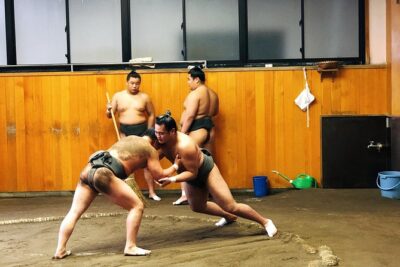
Browse the lists this tour appears in