
REVIEW · SUMO WRESTLER MEET AND GREET
Tokyo Sumo Experience with Live Show & Audience Challenge
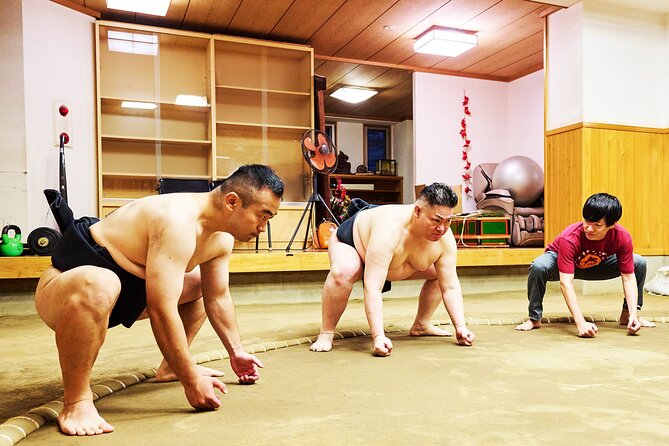
The best part of this Tokyo experience is the setting: you watch sumo inside an authentic sumo stable, not from a distant stadium seat. Retired wrestlers explain the sport, perform a one-round match, and invite willing participants into the ring for a lighthearted challenge.
I like the clear mix of culture and entertainment, and I like that the session works for families as well as adults. The main drawback is important: women cannot enter the ring, and the 90-minute visit gives you a lively introduction rather than a full study of sumo.
Key Points to Know Before You Go
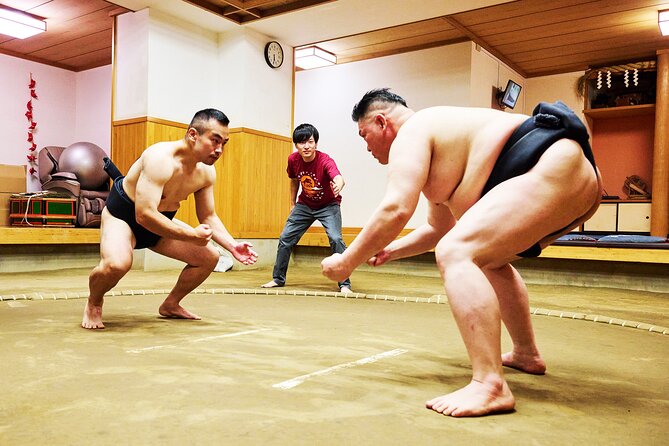
- Watch a one-round match performed by retired sumo wrestlers in a traditional stable.
- Learn the customs and history of sumo through an English-speaking guide.
- Join the ring for a challenge if you are eligible and willing to get your clothes dirty.
- Women cannot enter the ring, following the stable’s traditional rules.
- Plan for 90 minutes and meet at the Kiyosumi address in Koto City.
- Pay $84.78 per person for the show, guide, and interactive elements, with meals and private transport extra.
A Real Sumo Stable, Not a Stadium Spectator Seat
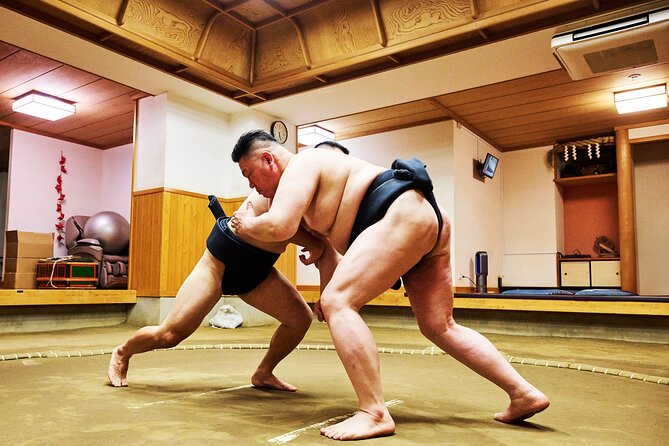
Sumo is easy to recognize but harder to understand from the outside. You see the huge wrestlers, the stamping, the salt, and the dramatic stare-downs. Yet the customs around the bout can seem mysterious if nobody explains them.
This experience fixes that problem in a compact format. You enter a sumo stable founded by one of Japan’s legendary champions, sit close to the action, and learn what the wrestlers are doing before the match begins. The session is performed by retired wrestlers, so you are not watching current professional athletes during their active careers. Still, the setting and presentation connect you with the working traditions of sumo.
I especially like the stable setting because it gives the visit a sense of place. A stadium tournament can show you sumo at its grandest, but this smaller room lets you focus on the people, rituals, and physical skill. You are close enough to see the force behind each movement.
The experience is also designed to be understandable for first-time visitors. An English-speaking guide provides the background, and the format combines explanation with demonstrations. That balance matters. Too much talk would make the visit feel like a lecture, while too little context would leave you watching a series of unfamiliar gestures.
More chances to meet a wrestler in Tokyo:
- Tokyo Ryogoku Sumo Morning Practice + Photo Shoot with Wrestlers
★ 4.5 · 277 reviews - Tokyo Sumo Morning Training/ Sumo Practice with Wrestlers
★ 5.0 · 135 reviews - Tokyo Sumo Morning Practice: Viewing & Exclusive Interaction
★ 4.9 · 74 reviews
What Happens During the 90-Minute Visit
The entire activity lasts about one hour and 30 minutes, and it takes place at one location in Tokyo. There is no multi-stop sightseeing schedule to manage. You arrive at the stable, take part in the presentation, and finish back at the meeting point.
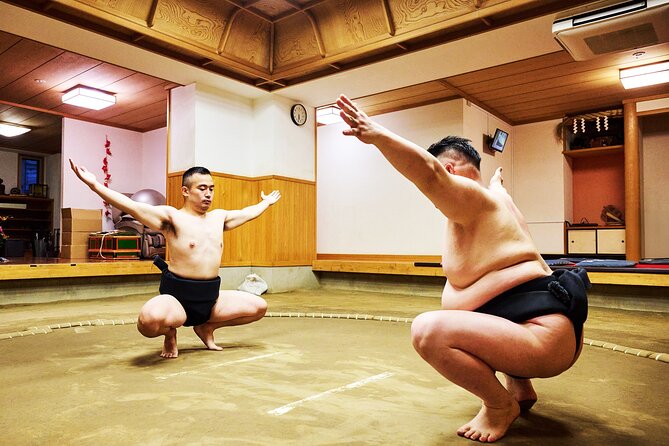
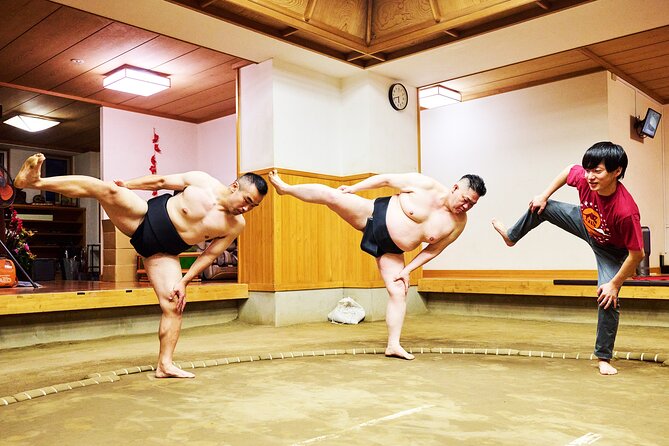
The opening portion focuses on sumo’s history, customs, and training. You learn more about how wrestlers prepare and why particular movements and rituals matter. The available details do not provide a minute-by-minute schedule, so the exact order can vary, but the session is built around explanation, live demonstrations, a match, and audience participation.
That order works well for a short activity. You first receive enough context to follow what you see. Then the wrestlers show the physical side of the sport, and the presentation builds toward a one-round match.
The one-round bout is the main performance. It gives you the noise, speed, balance, and controlled aggression that make sumo so exciting. Because this is a demonstration by retired wrestlers, you should think of it as a cultural show and hands-on introduction, not a professional tournament match.
Afterward, eligible audience members can try sumo in the ring. This is the part that gets the biggest laughs and makes the experience more than a sit-down talk. You do not need to participate to enjoy the session, but watching the challenge adds a friendly, comic turn after the intensity of the match.
If you plan to enter the ring, wear clothing that can get dirty. That advice is practical, not decorative. Sumo takes place close to the floor, and the activity can be physical. Choose comfort over polished sightseeing clothes.
The Ring Challenge Has One Important Rule
The ring challenge comes with a firm traditional restriction: women cannot enter the ring. This rule may be disappointing for some families and groups, especially when children or women want to take part.
You can still watch the demonstrations, match, and challenges from outside the ring. The presentation is not limited to people who participate. Several parts of the experience focus on the sport’s culture, training, and history, so nonparticipants still have plenty to follow.
Men who meet the activity’s participation expectations can volunteer for the challenge. The supplied information does not specify age, weight, fitness, or clothing requirements beyond the warning that clothes may get dirty. If you have concerns about participating, you can simply watch rather than assume the challenge is required.
For families, I would explain the rule before booking. Children may find the wrestlers’ large personalities and physical demonstrations funny and memorable, but the ring restriction can affect how a family experiences the interactive part. The show remains suitable for most participants, but the participation is not equal for everyone.
Why the Cultural Explanation Matters
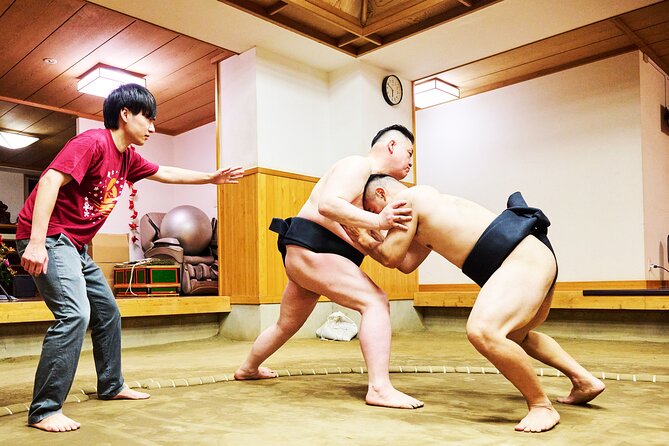
Sumo is often reduced to a quick joke about size and strength. This visit gives you a better frame. The guide explains the sport’s customs and history, while the retired wrestlers show how training and ritual fit together.
That cultural side is one of the strongest reasons to book. You are not only watching two men push each other out of a circle. You are learning why the sport is treated as Japan’s national sport and how tradition shapes the event.
The cultural content also makes the experience useful for people who have no interest in wrestling. You can appreciate the ceremony, discipline, and setting even if the athletic contest is not your main reason for visiting Tokyo.
The amount of history has limits. At 90 minutes, the session cannot cover every era, rule, rank, and aspect of sumo life. One description of the experience specifically points to a stronger focus on culture than wrestling, which will suit some people and disappoint anyone hoping for nonstop bouts.
I see that as a fair trade for a short Tokyo activity. You get enough background to understand what you are seeing, then enough live action to keep the presentation lively.
More sumo shows in Tokyo:
- Tokyo: Sumo Show Experience with Chicken Hot Pot and a Photo
★ 4.8 · 6,678 reviews - Tokyo: Sumo Show and Dining Experience
★ 4.8 · 2,742 reviews - the SUMO show
★ 5.0 · 1,960 reviews - Tokyo Shinjuku Sumo Show & Experience with Photo
★ 5.0 · 1,750 reviews
A Friendly Format for Families and First-Time Visitors
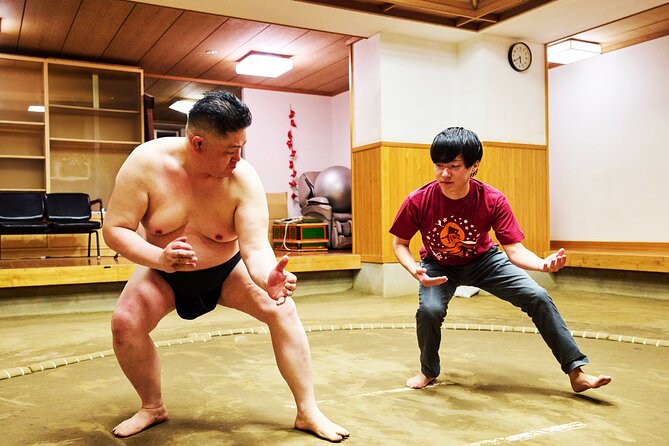
The tone is intended to be educational and entertaining. The wrestlers are described as having large, entertaining personalities, and the audience challenge adds laughter to the lesson.
That mix makes this a good choice if you are traveling with children, adults who want an unusual cultural activity, or anyone who prefers learning through a live demonstration. It also works well when you have only a few hours free and want something more distinctive than a standard museum visit.
The experience is not aimed only at serious sumo fans. You do not need prior knowledge of the sport. The English-speaking guide explains the basics, and the action gives you a visual example of what the explanation means.
At the same time, serious sumo followers should keep their expectations in check. This is not a visit to an active training session, and it does not present current professional wrestlers. The wrestlers are retired, and the show is designed for a broad audience.
If your priority is to watch an official tournament, you need a different plan. If your priority is to understand sumo in an intimate setting and see a lively demonstration, this format makes sense.
Meeting in Kiyosumi, Koto City
The meeting point is listed at 2-chōme 8-3, Kiyosumi, Koto City, Tokyo, postal code 135-0024, at the Esperanza Taiho building. The activity is near public transportation, but private transportation is not included.
You should allow enough time to find the exact building. Tokyo addresses can feel confusing, and the meeting point includes a building name and Japanese address details. Keep the mobile ticket available on your phone, and check the meeting instructions before leaving your hotel.
The activity begins and ends at the same meeting point. That is useful if you are planning another Tokyo stop afterward. Since the visit lasts about 90 minutes, you can fit it into a half-day plan, but do not add a tightly timed attraction immediately afterward until you have allowed for finding the location and leaving the stable.
There is no meal included. You can eat before or after in your own plan, but the supplied information does not identify a restaurant or refreshment service connected with the experience.
The maximum group size is 40 people. That is not a private visit, and the audience may feel full when everyone is watching the match or waiting for the challenge. Still, a group of this size keeps the event manageable while allowing enough people to create a lively audience.
Is $84.78 a Fair Price?
At $84.78 per person, this is not a bargain-priced sightseeing stop. The value depends on what you want from your Tokyo schedule.
The price covers the sumo show and an English-speaking guide. It also buys access to a traditional stable setting, live demonstrations by retired wrestlers, a one-round match, and the chance to participate in the ring. You are paying for a hosted cultural presentation, not simply admission to a room.
I think the price is reasonable if you value close access and explanation. A casual look at sumo from outside would tell you far less, and a large tournament requires different timing, tickets, and planning. This experience gives you a predictable 90-minute introduction.
The value is weaker if you only want to watch high-level competitive sumo. The match is part of a show, and the wrestlers are retired. You should not compare the price directly with a seat at a professional tournament.
It is also worth remembering that private transportation and meals are not included. Since the activity is near public transportation, you can handle the journey independently, but your total cost will be higher than the listed ticket if you add taxis or a meal.
The strongest value comes for people who want a cultural activity with a physical, funny element. If you are happy to listen, watch, and possibly take part, the ticket covers several kinds of experience in one short visit.
Photos, Respect, and Appropriate Behavior
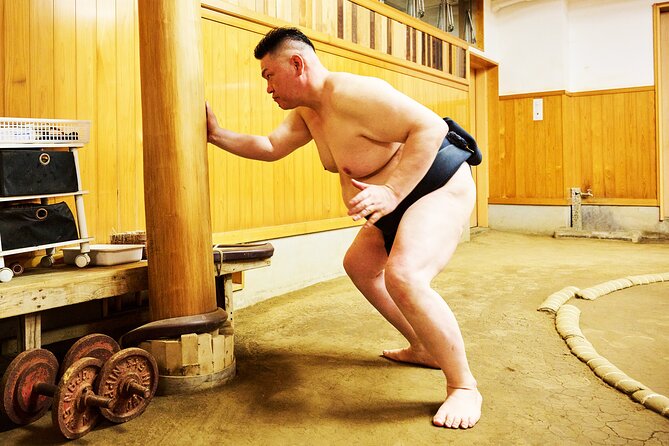
Photos are allowed, but you are asked not to post them online out of respect for the culture. That request matters because the setting is a working traditional space, not just a stage built for tourist photographs.
You can bring your phone for the mobile ticket and photographs, but use it with restraint. Follow the guide’s instructions, avoid interrupting the match, and do not assume that every image should be shared publicly.
The stable preserves traditional customs, so the visit calls for a little more care than a standard entertainment show. You are being welcomed into a place connected to sumo practice and tradition. Listen closely when the guide explains the rules around the ring.
This respectful approach improves the experience for everyone. You can still take home memories, but the emphasis stays on the people and customs in front of you rather than on collecting content.
Who Should Book This Sumo Experience?
I would recommend it to first-time visitors who want a clear introduction to sumo without committing to a full tournament outing. It is also a strong fit for families, especially if the adults explain in advance that women cannot enter the ring.
You are likely to enjoy it if you like:
- Short activities with a clear start and finish
- Cultural demonstrations with an English-speaking guide
- Live performances rather than displays behind glass
- A chance to laugh and participate
- Unusual Tokyo experiences away from the standard sightseeing route
I would hesitate if your main goal is to see current professional wrestlers or a serious series of competitive bouts. I would also think twice if the ring restriction creates a major problem for your group.
The host may vary by date. A provider response identifies Ayaka as the host for one session, while another review refers to Aika, so do not book on the assumption that a particular guide will lead your visit. The consistent feature is an English-speaking guide.
Booking, Changes, and Practical Details
Confirmation is sent at the time of booking, and the activity uses a mobile ticket. Keep the ticket easy to access, since there is no need to print it unless your booking instructions say otherwise.
Most people can participate, and the activity has a maximum of 40 participants. The information does not list special accessibility details, so contact the provider before booking if you have mobility needs or require a specific arrangement.
Cancellation is free up to 24 hours before the local start time. Cancel at least 24 hours ahead for a full refund. Cancellations and changes made within 24 hours are not accepted for a refund.
Should You Book It?
Book this experience if you want sumo explained up close, with a live demonstration, a one-round match, and a chance to test the ring for yourself. The stable setting and retired wrestlers give the visit a personal feel that a stadium seat cannot provide.
Skip it if you want an official tournament, current active wrestlers, or a longer and more technical study of sumo. Also check the ring rule before booking with a mixed group.
For most first-time Tokyo visitors, the best reason to choose this activity is its balance. You get history, ritual, physical action, and humor in 90 minutes. Just arrive ready to listen, dress for the possibility of getting dirty, and treat the stable as a traditional place rather than a photo set.
FAQ
How long does the Tokyo sumo experience last?
The experience lasts approximately one hour and 30 minutes.
Where does the activity take place?
It takes place at a sumo stable in Kiyosumi, Koto City, Tokyo, at the Esperanza Taiho building, postal code 135-0024.
Does the activity include a live sumo match?
Yes. The presentation includes an intense one-round match performed by retired sumo wrestlers.
Are the wrestlers active professional sumo wrestlers?
No. The show is performed by retired sumo wrestlers.
Can I enter the sumo ring?
Some participants can enter the ring and try sumo with a wrestler. Women cannot enter the ring because of the stable’s traditional rules.
Should I wear special clothing?
Wear clothes that can get dirty if you plan to join the ring challenge.
Is the experience suitable for children?
Most travelers can participate, and the experience is described as suitable for adults and children. The ring restriction for women still applies.
Is an English-speaking guide included?
Yes. An English-speaking guide is included.
Are meals or private transportation included?
No. Meals and private transportation are not included.
How many people can join the activity?
The maximum group size is 40 participants.
Can I take photographs?
Photos are allowed, but you are asked not to post them online out of respect for the culture.
Can I cancel for a full refund?
Yes. You can cancel at least 24 hours before the local start time for a full refund. Cancellations within 24 hours are not refunded.
Newest sumo experiences in Tokyo
- Tokyo Highlights Tour: Sumo, Sushi, Tea, and Tokyo Tower★ 5.0 · 2 reviews
- Tokyo: Know about Hokusai and Sumo culture in 2.5 hours★ 5.0 · 2 reviews
- TOKYO , No1 Yokozuna Stable Morning Practice in Ryogoku★ 4.5 · 3 reviews
- Tokyo 6hr Private Guided Tour & Sumo Show Lunch★ 5.0 · 3 reviews
- Tokyo Grand Sumo Tournament Viewing Tour★ 5.0 · 2 reviews
- Tokyo Sumo History Tour with Chanko Nabe Lunch★ 5.0 · 3 reviews
- Tokyo Sumo Tournament Chair Seat Ticket with Entrance Assistant★ 4.0 · 4 reviews
- Tokyo: Sanctuary Authentic Grand Sumo Experience & Training★ 5.0 · 7 reviews
Sumo Wrestler Meet and Greet, compared.
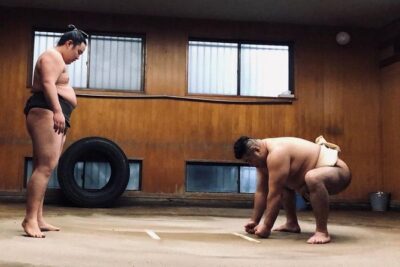
Tokyo Ryogoku Sumo Morning Practice + Photo Shoot with Wrestlers
Read our review →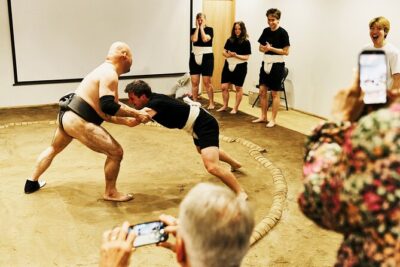
Osaka Sumo Experience with Live Show and Audience Challenge
Read our review →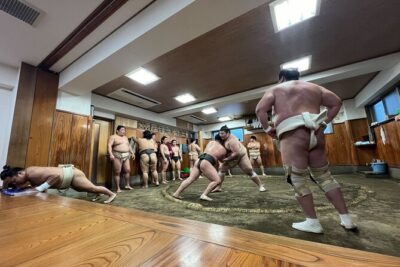
Tokyo Sumo Morning Training/ Sumo Practice with Wrestlers
Read our review →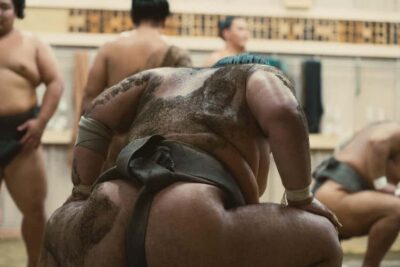
Tokyo Sumo Morning Practice: Witness the Life of a Wrestler
Read our review →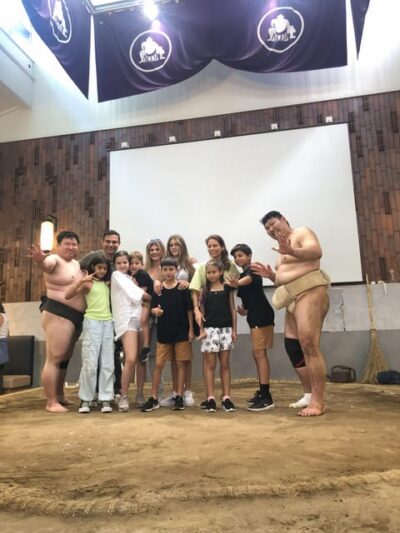

Sumo Wrestlers Morning Practice Tour – Tokyo Sumida District
Read our review →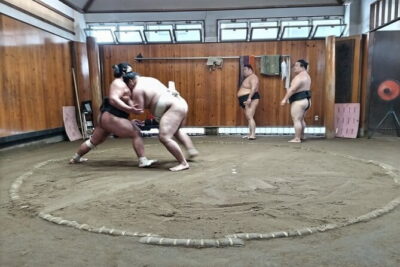
Sumo Practice Viewing Guided Tour and Photo with Sumo Wrestlers
Read our review →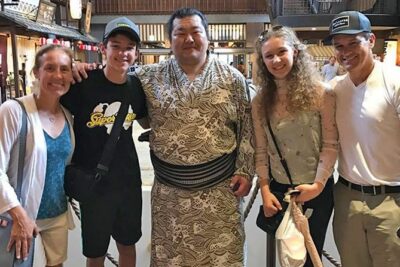
Private Ryogoku Walking Tour with Sumo Wrestler and Master Guide
Read our review →Browse the lists this tour appears in