
REVIEW · SUMO WRESTLER MEET AND GREET
Tokyo: Challenge Sumo Wrestlers and Enjoy Meal
Former sumo wrestlers bring the sport close enough to feel the force of it. You watch a demonstration in the dohyo, learn the meaning of familiar sumo terms, then pull on a padded costume and test your balance against an expert. It is part cultural lesson, part comedy, and part friendly contest.
I like the hands-on format, especially for families who cannot attend a sumo stable training session. I also like the clear meal choice: tonkatsu at lunch or sukiyaki at dinner. The main drawback is that the meal and show take place at a restaurant rather than during an official grand tournament, and the advertised 1.5-hour schedule can feel short for all the activities.
Key points at a glance
- Former professionals lead the show: You meet retired sumo wrestlers, watch their techniques, and ask questions.
- You can enter the ring: A padded sumo costume lets you try a friendly bout without taking the sport too seriously.
- English explanation is provided: The host explains sumo customs and terms in English, with Japanese also available.
- Lunch and dinner differ: Choose tonkatsu for the lunch option or sukiyaki for the dinner option when booking.
- Kikukawa Station is the practical gateway: The venue is about a 5 to 8-minute walk from Exit A1 on the Shinjuku Line.
- Plan your seat carefully: Earlier bookings receive the best available seating, and front tables make the commentary easier to hear.
Why this Tokyo sumo experience works so well
Sumo can look simple from a distance: two enormous men push, shove, and try to force one another out of a ring. In person, even a short demonstration shows how much ritual, timing, balance, and technique sit behind those few seconds.
This experience gives you that close view without requiring a tournament ticket or a visit to a training stable. The wrestlers are retired professionals, so you see people who understand the sport from the inside. They also know how to present it to an international audience, with English explanations and a light touch.
I see this as an introduction rather than a complete lesson in sumo. You will not follow an entire tournament day or observe a working stable. What you do get is a friendly, accessible way to understand the sport, meet former wrestlers, and take part yourself.
The activity is especially useful if your Tokyo schedule does not match one of the official grand tournaments. It also suits families. Children can watch the demonstrations, ask questions, and join the playful costume bout rather than sitting quietly through a long formal performance.
More chances to meet a wrestler in Tokyo:
- Tokyo Ryogoku Sumo Morning Practice + Photo Shoot with Wrestlers
★ 4.5 · 277 reviews - Tokyo Sumo Morning Training/ Sumo Practice with Wrestlers
★ 5.0 · 135 reviews - Tokyo Sumo Morning Practice: Viewing & Exclusive Interaction
★ 4.9 · 74 reviews
Arriving at Kikukawa Station
The meeting point is near Kikukawa Station on the Shinjuku Line. From Exit A1, allow about 5 to 8 minutes on foot. The activity begins and ends at the same place, so you do not need to arrange a separate ride back to your hotel.
That return to the starting point makes planning easy. You can continue to another Tokyo neighborhood afterward, although the details provided do not include hotel pickup, drop-off, or transportation between the venue and your accommodation. Build those costs and travel time into your day.
Give yourself enough time to find Exit A1 and walk over. Tokyo station exits can put you on the wrong side of a road if you rush, and a short buffer is wise when a timed activity is involved.
The introduction to sumo customs and language
The session begins with an explanation of sumo and its place in Japanese culture. You learn commonly used words while watching the wrestlers prepare and demonstrate their moves.
That introduction matters because sumo has its own vocabulary and rules. Without it, the action can look like a brief collision. With a little context, you start to notice the wrestlers’ stance, the attempt to control balance, and the importance of pushing an opponent outside the ring.
The English explanation is one of the strongest practical features here. You are not left to guess what is happening, and the question-and-answer portion gives you a chance to ask about the sport directly. The host or greeter speaks English and Japanese.
The presentation is designed to be light-hearted, but it is not just a staged joke. The former wrestlers are still impressive athletes, and the humor helps make the rules easier to follow. A short activity like this benefits from a host who can keep the pace moving, especially when children are present.
Watching former wrestlers clash in the dohyo
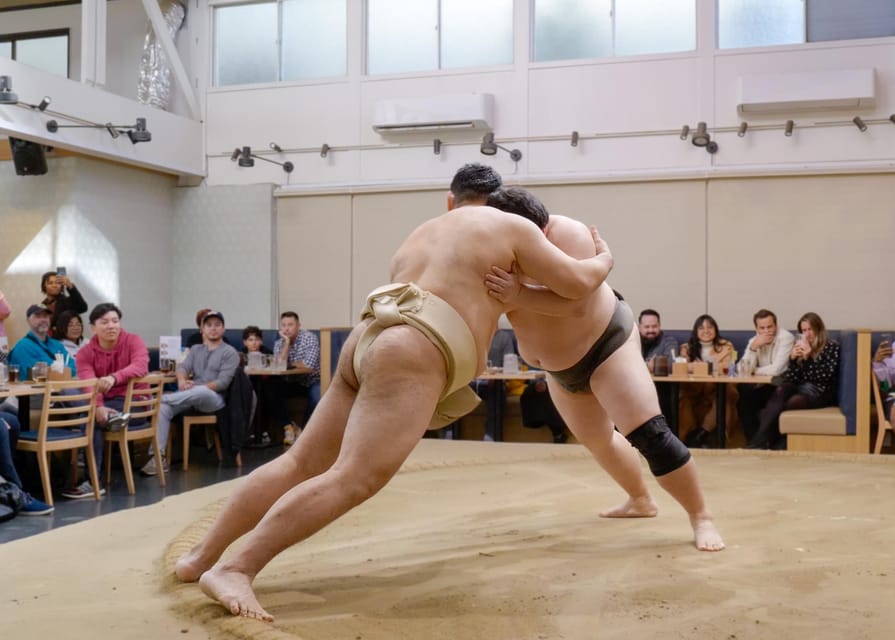
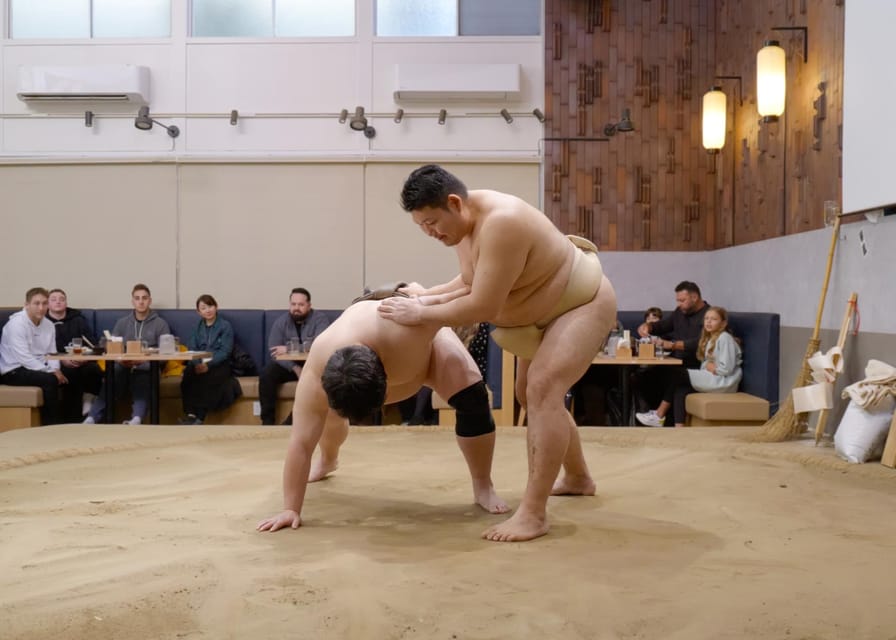
The main demonstration puts two former sumo wrestlers into the ring. You see the size and force of the competitors at close range, but the more useful lesson is how quickly a match can turn.
A sumo bout may last only moments. The wrestler who appears to have the advantage can lose balance in an instant. That makes the demonstration more than a photo opportunity. It gives you a sense of why positioning, footwork, and timing matter so much.
The venue is a restaurant, so this is not the formal atmosphere of a major tournament hall. That is a limitation if you want the full pageantry of professional sumo. It is also part of the appeal: you sit close to the action, hear the explanation, and see the wrestlers at a conversational distance.
Seat location matters. The best available seats are assigned in booking order. A front table may not change the basic view, but it can make a real difference when you want to hear the commentary and questions. Loud conversation from other people in the room can make parts of the explanation harder to catch, so book early and choose a forward seat when possible.
Depending on the size of your party, you may be seated at separate tables. That is worth knowing if your group hopes to remain together throughout the meal and presentation.
More sumo tours with a meal in Tokyo:
- Tokyo: Sumo Show and Dining Experience
★ 4.8 · 2,742 reviews - Tokyo:Luxury Sumo Show Experience & Japanese cuisine & Drink
★ 4.7 · 577 reviews - Tokyo Sumo Experience: Chanko & Mochi with a Former Pro
★ 4.8 · 567 reviews - Tokyo: Sumo Experience and Chanko Nabe Lunch
★ 4.8 · 257 reviews
Putting on the costume and facing a sumo wrestler
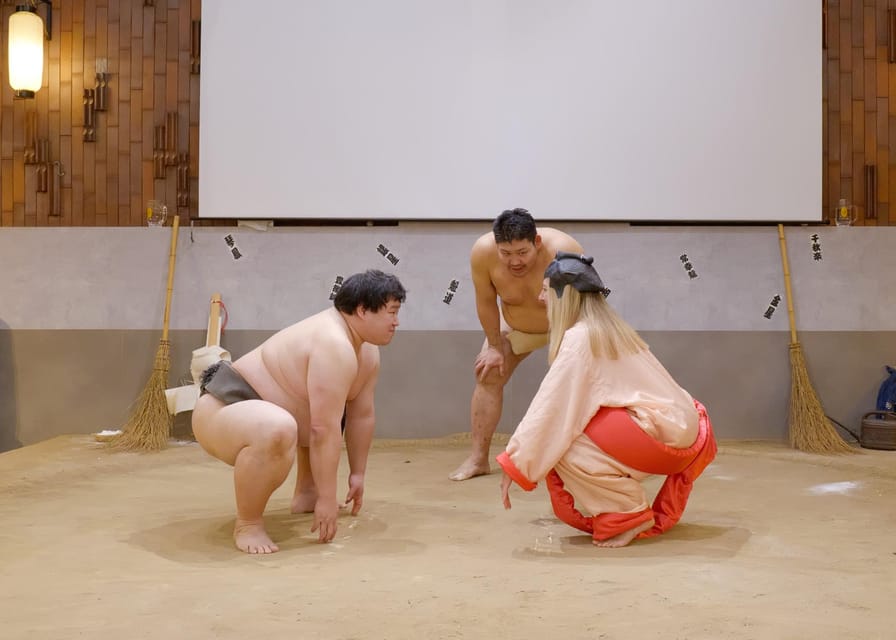
After the demonstration, you get your turn. You put on a sumo costume and step into the ring for a friendly challenge against one of the former wrestlers.
This is the moment that turns a passive show into a personal memory. You feel how difficult it is to move a much larger opponent, even in a playful setting. The experience is not meant to turn you into a sumo wrestler in one afternoon. It is meant to give you a small sense of the sport’s physical demands and plenty of laughs.
The wrestlers are described as kind and accommodating, which is important during the interactive part. You should still follow staff instructions and use good judgment. The venue can ask anyone to leave for troublesome behavior, with no refund, so treat the bout as a supervised cultural activity rather than a chance to prove something.
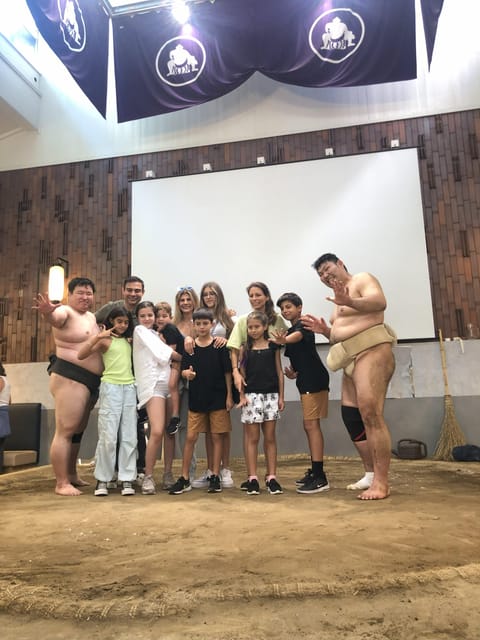
You do not need to wrestle to receive a photograph. A useful tip is to save your energy if you only want a picture. Everyone has a photo opportunity with the wrestlers at the end, so taking part in the bout is optional from a memory-making point of view.
For children, the costume challenge may be the highlight. A six-year-old or eight-year-old can enjoy the spectacle without needing to understand every rule. Infant rates apply when an infant does not occupy a seat, but infant meals are not included.
The meal: tonkatsu at lunch or sukiyaki at dinner
Food is included, but the meal depends on the time and option you select.
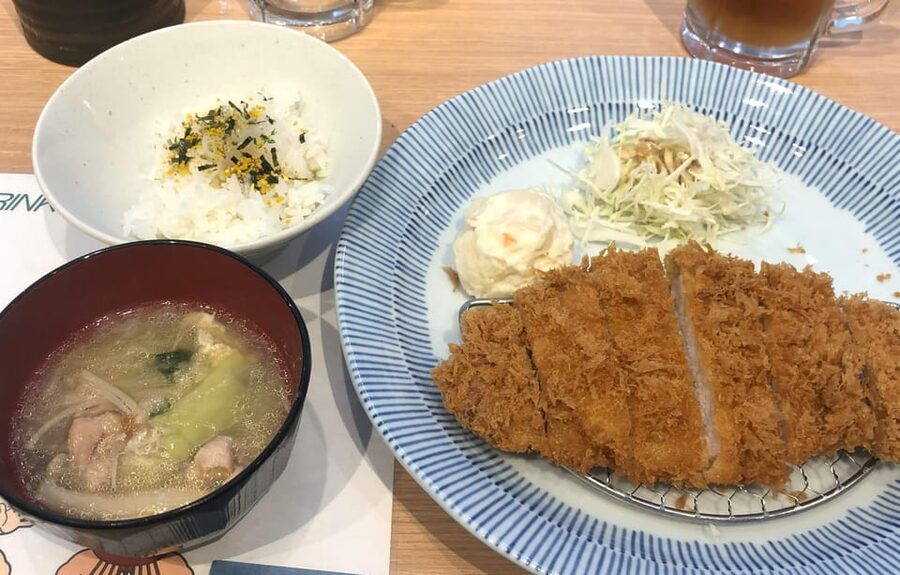
The lunch choice is tonkatsu, a Japanese pork cutlet coated and deep-fried. It is familiar enough for many first-time visitors, yet still feels distinctly Japanese when served as part of a local meal. The dinner choice is sukiyaki, a hot pot of beef and vegetables cooked in a sweetened soy-based broth.
The food adds value because you are not paying only for a short performance. You get a sit-down meal alongside the cultural program. Some lunch arrangements may feature a boxed meal, and one lunch account praised a Genghis Khan-style meal, so check the exact option shown for your chosen booking time rather than assuming every session serves the same menu.
Additional food and drinks are not included. You may bring your own food and drink, and you should advise the provider of dietary requirements in advance. The supplied details do not promise that every dietary need can be met, so specific requests are best raised before you pay.
The meal also gives the session a natural pause. You watch, try the costume, take photos, and eat rather than rushing from one short activity to the next. Still, the official duration is 1.5 hours, and the full sequence can run closer to two hours depending on the day’s format. Leave some space in your schedule instead of booking a train or show immediately afterward.
Photos, questions, and the final personal touch
The closing photo session gives everyone a chance to stand with the wrestlers. It is a simple feature, but it matters because the costume and the ring make the picture more distinctive than a standard group photo.
The question-and-answer time is another worthwhile part of the visit. You can ask the wrestlers about their experience and clarify terms introduced during the demonstration. The session has been presented in English for international participants, and the host’s English is intended to make the explanations accessible.
This is also when the personal side of the activity becomes clearest. You are not only watching a display of Japanese sport. You are meeting people who once trained and competed in that world, then hearing them explain it in a relaxed setting.
The $117 price and what you receive
At $117 per person, this is not a cheap meal with entertainment attached. You are paying for a scheduled cultural presentation, access to former professionals, English explanation, the demonstration, the costume challenge, photographs, and lunch or dinner.
I consider the price reasonable for someone who wants an organized sumo encounter without trying to arrange separate tickets, translation, and a visit to a stable. The value is strongest when you take part in the ring activity and use the question period. If you only want to watch a bout, the cost may feel high compared with a basic meal or a standard museum visit.
The price also makes more sense for families and small groups. A child gets a clear activity rather than a long explanation, and adults have enough context to understand what they are seeing. Keep in mind that transportation to and from the venue, extra food, and extra drinks are not included.
The non-refundable cancellation policy deserves attention. Confirm your Tokyo schedule before booking, particularly if your plans depend on weather, a flight connection, or a changing itinerary. Confirmation is sent within 24 hours, subject to availability.
Who should book this sumo activity?
I would point this experience toward several kinds of visitors:
- First-time Japan visitors who want a clear introduction to a major Japanese tradition.
- Families with children who need something interactive rather than a long, quiet cultural visit.
- Visitors outside tournament dates who still want to see sumo in person.
- Food and culture fans who like pairing a performance with a Japanese meal.
- Small groups that want a shared photo and a chance to compete playfully.
It is less suitable if you want to attend an official grand tournament, observe active wrestlers during early-morning training, or receive a full behind-the-scenes look at professional sumo. This is a staged demonstration led by retired wrestlers, not a working stable visit.
You should also think about the physical side. You can watch without wrestling, but the costume challenge involves stepping into the ring and following staff instructions. If you would rather not participate, the photo opportunity remains available.
Practical advice for a smoother visit
Book early if seating position matters to you. Seating is arranged by booking order, and the front makes the English commentary easier to hear.
Tell the provider about dietary requirements before the activity. The lunch and dinner menus differ, and infant meals are not included.
Do not plan this as a tightly timed 90-minute appointment. The stated duration is 1.5 hours, but the complete flow can include the introduction, demonstration, costume challenge, photographs, meal, and questions. Allow extra time afterward.
Finally, remember that sumo is both sport and ceremony. Listen to the explanations, watch the small movements, and do not treat the ring as a free-for-all. You will get more from the experience if you let the wrestlers guide the pace.
Should you book it?
Book this experience if you want an approachable, family-friendly introduction to sumo with a meal and a chance to take part. The former professionals, English explanation, costume bout, and final photograph give the activity more substance than a simple demonstration.
Skip it if your main goal is an official tournament or a quiet visit to an active stable. For everyone else, especially visitors who cannot fit tournament dates into a Tokyo itinerary, the combination of sport, humor, food, and direct contact makes the $117 price defensible. Choose your meal option carefully, request dietary help early, and aim for an early booking so you can hear the presentation from a good seat.
FAQ
Where does the sumo experience meet?
Meet near Kikukawa Station on the Shinjuku Line. The venue is about a 5 to 8-minute walk from Exit A1.
How long does the activity last?
The stated duration is 1.5 hours. The complete program may take closer to two hours depending on the demonstrations, meal, photos, and question period.
Is transportation included?
No. Hotel pickup, hotel drop-off, and transportation to or from the restaurant are not included.
What meal is served?
The lunch option includes tonkatsu, a deep-fried Japanese pork cutlet. The dinner option includes sukiyaki, a hot pot with beef and vegetables in a sweetened soy broth.
Is the explanation available in English?
Yes. English explanation is included, and the host or greeter can speak English and Japanese.
Do I have to wrestle in the costume?
No. The costume challenge is part of the interactive program, but you can still take a photograph with the wrestlers without trying the bout.
Can I bring food or request a special diet?
You may bring your own food and drink. You should advise the provider of specific dietary requirements in advance. Infant meals are not included.
Newest sumo experiences in Tokyo
- Tokyo Sumo History Tour with Chanko Nabe Lunch★ 5.0 · 3 reviews
- Tokyo Highlights Tour: Sumo, Sushi, Tea, and Tokyo Tower★ 5.0 · 2 reviews
- Tokyo: Know about Hokusai and Sumo culture in 2.5 hours★ 5.0 · 2 reviews
- TOKYO , No1 Yokozuna Stable Morning Practice in Ryogoku★ 4.5 · 3 reviews
- Tokyo 6hr Private Guided Tour & Sumo Show Lunch★ 5.0 · 3 reviews
- Tokyo Grand Sumo Tournament Viewing Tour★ 5.0 · 2 reviews
- Tokyo Ginza : Sumo and Mikoshi Experience,Open from Sep.★ 5.0 · 8 reviews
- Complete Sumo Experience in Tokyo★ 4.5 · 3 reviews
Sumo Wrestler Meet and Greet, compared.
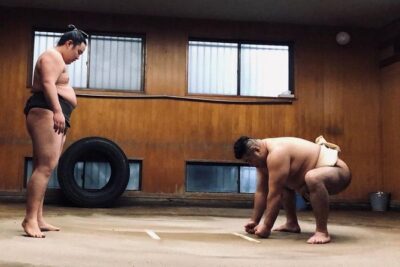
Tokyo Ryogoku Sumo Morning Practice + Photo Shoot with Wrestlers
Read our review →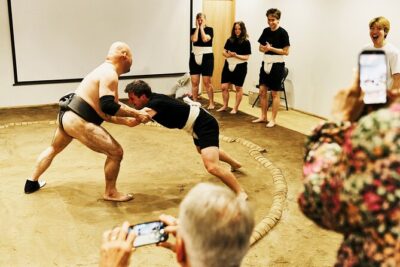
Osaka Sumo Experience with Live Show and Audience Challenge
Read our review →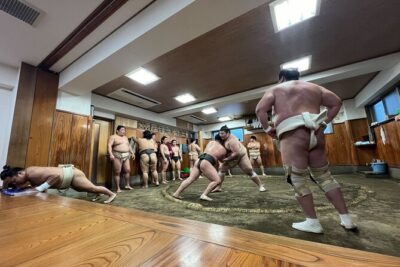
Tokyo Sumo Morning Training/ Sumo Practice with Wrestlers
Read our review →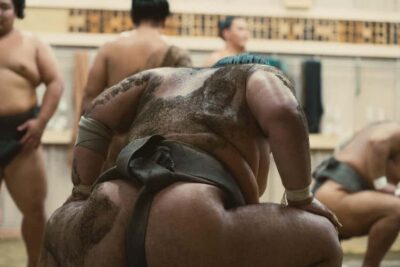
Tokyo Sumo Morning Practice: Witness the Life of a Wrestler
Read our review →
Sumo Wrestlers Morning Practice Tour – Tokyo Sumida District
Read our review →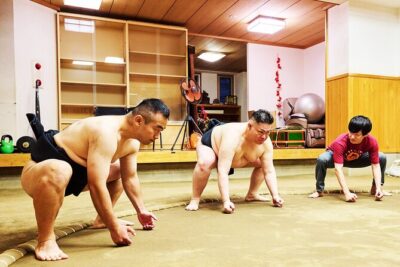
Tokyo Sumo Experience with Live Show & Audience Challenge
Read our review →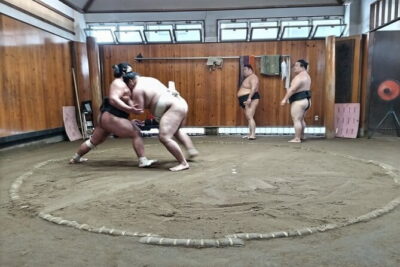
Sumo Practice Viewing Guided Tour and Photo with Sumo Wrestlers
Read our review →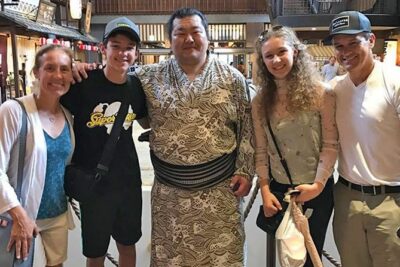
Private Ryogoku Walking Tour with Sumo Wrestler and Master Guide
Read our review →Browse the lists this tour appears in