
REVIEW · SUMO MORNING PRACTICE TOURS
Tokyo: Exclusive Access to Sumo Morning Practice with Photos
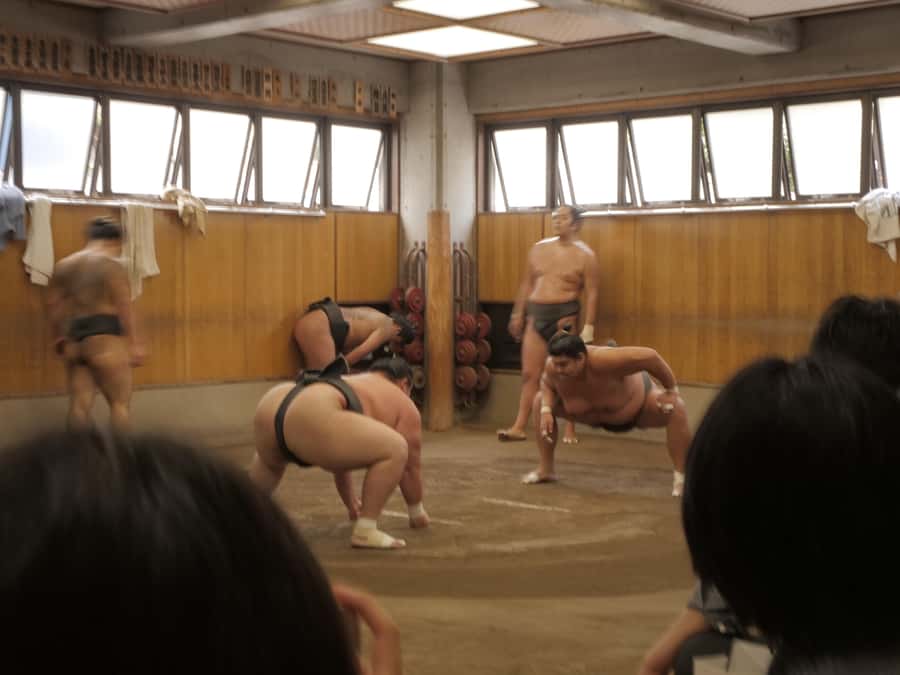
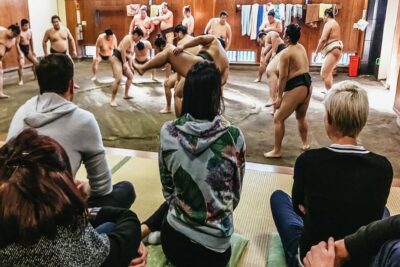
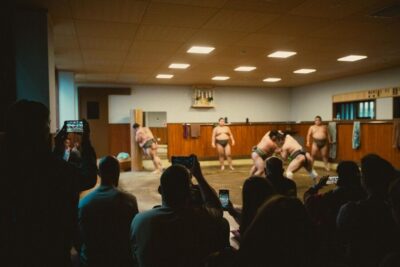
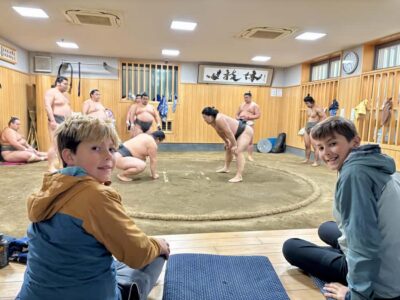
Sumo morning practice gives you something a stadium match cannot: a close view of the wrestlers at work. You sit on tatami near the training ring and watch the practice as it unfolds, rather than from a distant arena seat. I like the small group, limited to 10 people, and the way guides such as Marie, Kazu, Ken Take, and Max explain the rituals, rules, food, and daily life around the sport.
I also like that this feels more like a working stable than a staged show. The main caution is practical: practice can be shortened or canceled, photography depends on the stable, and two hours on the floor can be hard on your knees and legs.
Key points to know before you book
- Watch from close range: You sit near the ring and see the force of training at a distance a stadium usually cannot offer.
- Small groups help: The tour is limited to 10 people, though seating is first-come and groups may sometimes be split.
- Photos are possible, not guaranteed: After practice, you may meet wrestlers and take photos if the stable permits it and the wrestlers are available.
- The setting is authentic: You enter a real sumo stable while morning practice is taking place, not a performance arranged only for visitors.
- Prepare for floor seating: There are no chairs, and the full session may leave your legs numb.
- Age and timing rules are strict: It is for ages 12 and over, and late arrivals cannot join or reschedule.
Why morning practice is different from a sumo tournament
A sumo tournament has the drama of a formal event, with crowds, ceremony, and bouts scheduled one after another. But even a good arena seat can leave you watching small figures across a large room. At morning practice, the setting is quieter and far more personal.
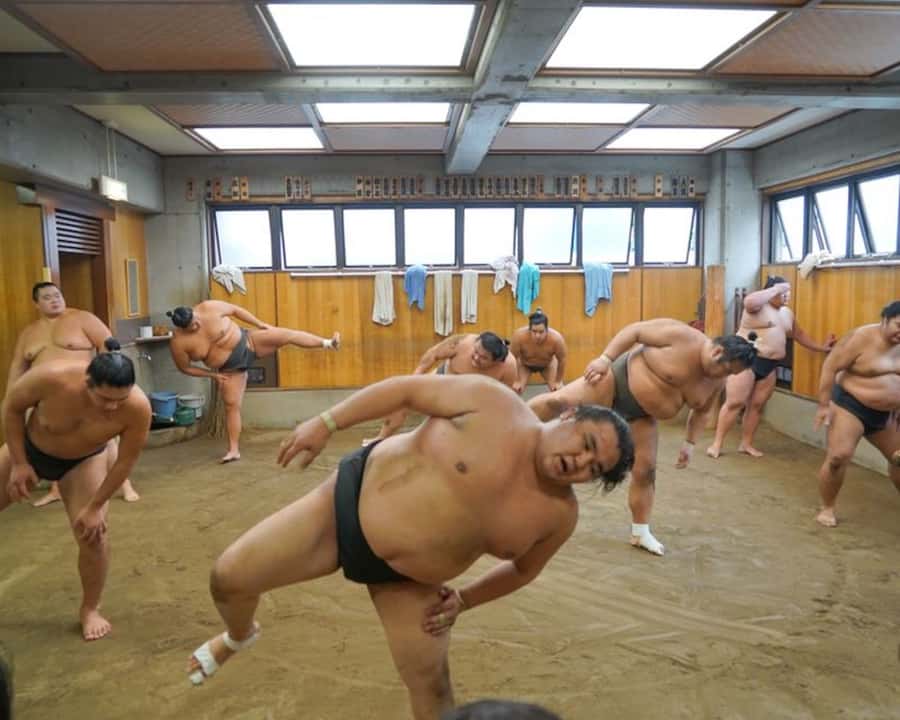
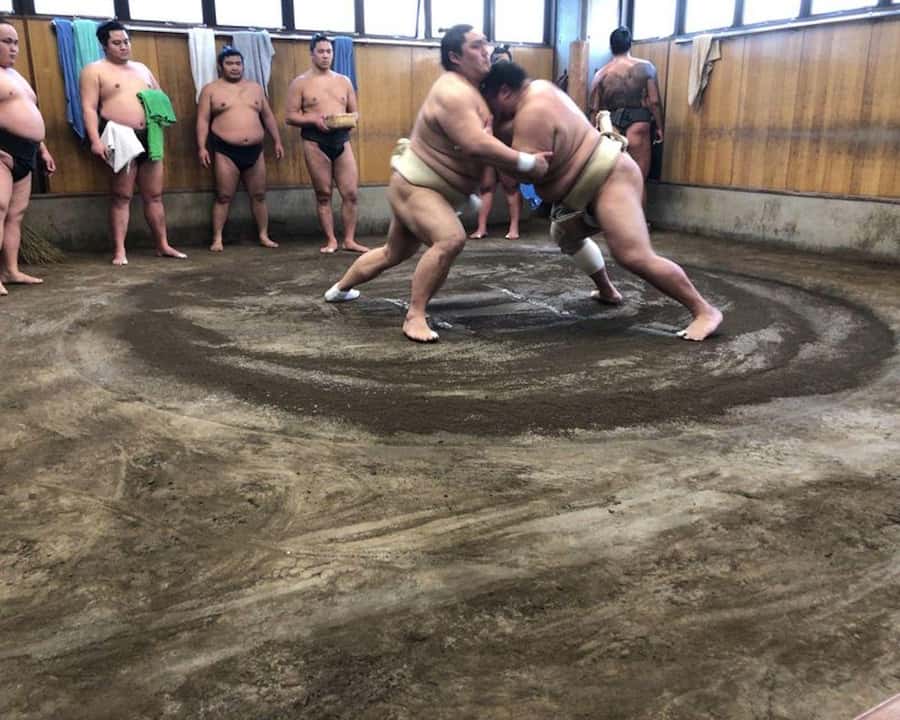
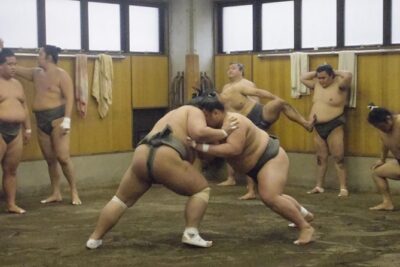
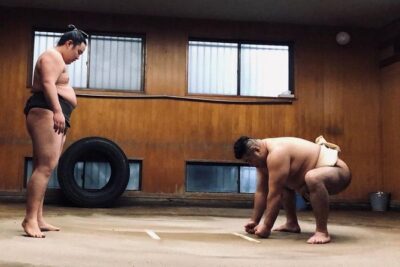
You see wrestlers repeat movements, push themselves, and respond to instruction at close range. The point is not to watch a polished contest. It is to see the daily work behind one. That makes this a useful choice if you want to understand sumo as a way of life, not simply as a sport on a tournament schedule.
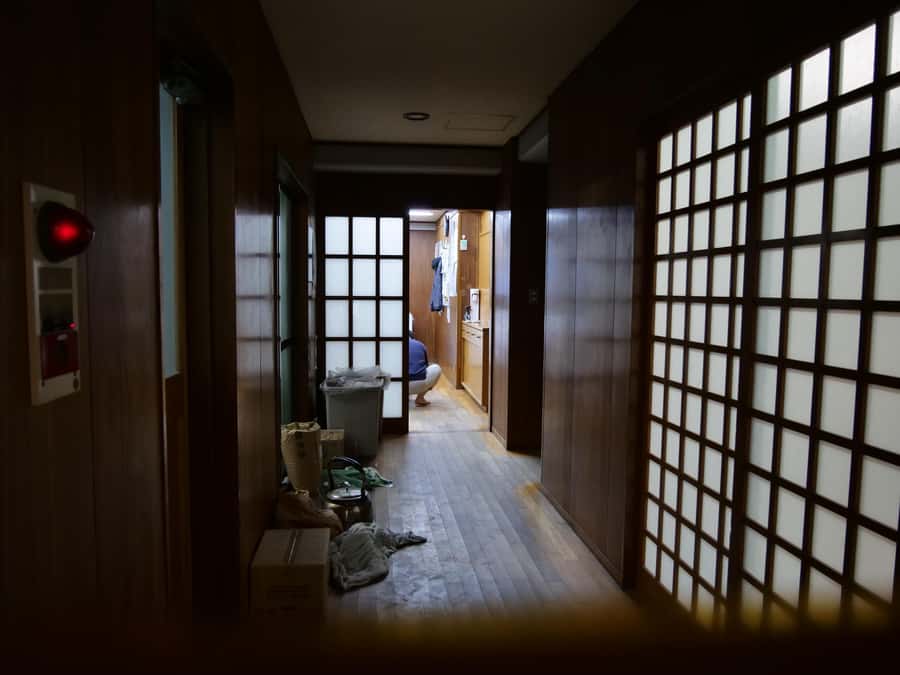
The practice takes place inside a real stable in Tokyo. You enter quietly, take your place, and watch the training already in progress or about to begin. The group is expected to respect the stable’s rules and avoid restricted areas. This is important: you are being allowed into someone’s workplace, so the visit depends on calm behavior and close attention to instructions.
I particularly like the fact that the tour does not turn the practice into a noisy presentation. One of the strongest aspects of the experience is simply sitting quietly for a long stretch and watching. Your guide provides context before and after, but the wrestlers remain focused on their own routine.
More morning practice tours in Tokyo:
- Tokyo: Sumo Morning Practice Viewing Tour
★ 4.8 · 570 reviews - Tokyo: Sumo Morning Training Visit
★ 4.4 · 370 reviews - Tokyo: Visit Sumo Morning Practice with English Guide
★ 4.7 · 343 reviews
Meeting at Oshiage Station by Tokyo Skytree
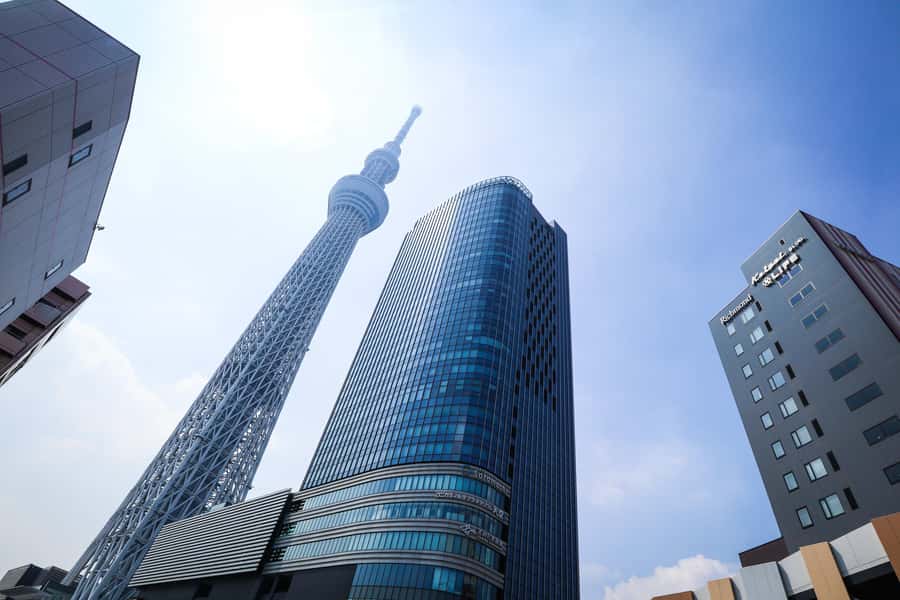
The meeting point is in front of the Oshiage taxi stop, on the ground level outside Exit B3 of Oshiage Station. Do not wait somewhere underground or at the top of the station exit. From the correct spot, you can see Tokyo Skytree along with signs for Uniqlo, LIFE, and Sizzler.
Your guide holds a red or orange sign marked Magical Trip. This makes the meeting point easier to identify, but I would still arrive early. The tour starts on time, and late arrivals cannot join or move to another departure. That rule matters here because the group enters a private stable together.
The taxi stand is only the starting point. The main visit lasts about two hours, after which you return to the same general meeting area. The activity does not include a full sightseeing tour of Oshiage, so plan any Skytree visit or shopping for before or after the sumo session.
Entering the stable and getting settled on tatami
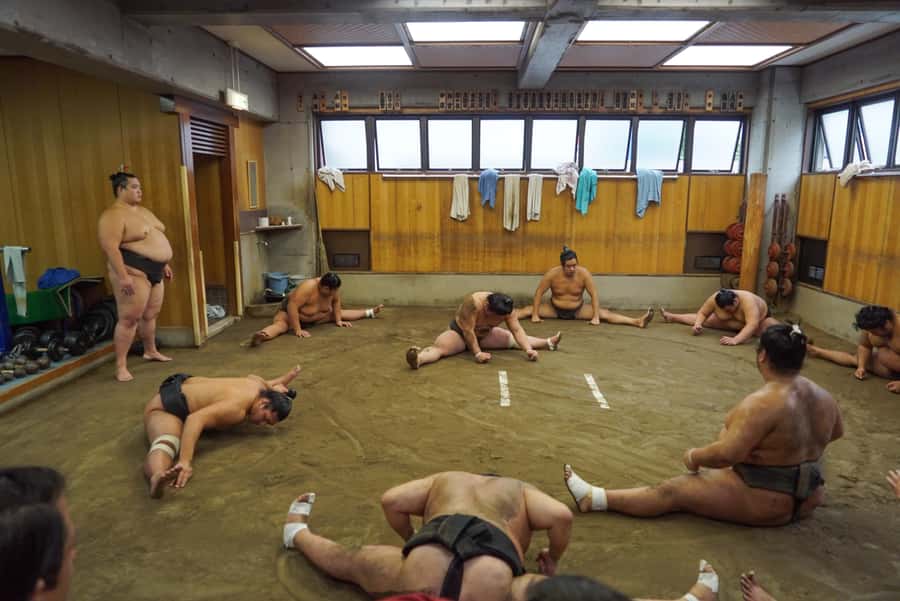
Once inside, you remove yourself from the usual Tokyo sightseeing rhythm. This is not a large attraction with a ticket hall and a marked visitor route. You enter a working sumo environment, sit on tatami, and watch the training from the space assigned to your group.
No chairs are provided. You may sit cross-legged or in another position that the stable allows, but you should expect to remain on the floor for much of the visit. One practical problem is that legs can go numb, especially during a longer practice. If floor seating is difficult for you, think carefully before booking.
Seating is first-come, first-served. Even with a small group, your exact position is not guaranteed. Groups may also be split, depending on the stable and the conditions that morning. The small size still helps, but it does not mean every person gets an identical view.
Some stables are not suitable for wheelchairs or strollers. The tour is also limited to people aged 12 and over. Children under 12 will be refused entry without a refund, so this is not a family activity for younger children.
Watching the wrestlers train up close
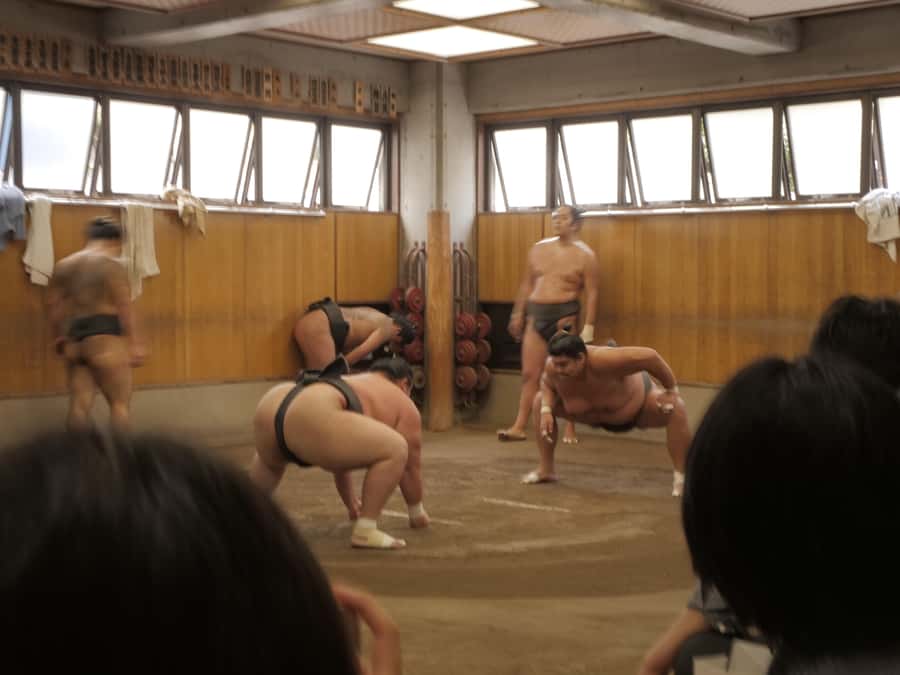
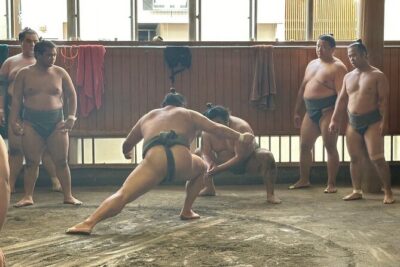
The practice itself is the main reason to book. You see the wrestlers work through training at very close range, with the size and physical force of the athletes becoming much clearer than they would from stadium seats.
The atmosphere can be intense. Training is repetitive and demanding, but it is not presented as a show for the group. That distinction gives the visit its value. You are watching a real morning session, and the stable’s own schedule comes first.
Practice length can vary. Some visits have offered well over an hour of viewing, while another session lasted less than an hour and felt rushed for the price. The advertised activity lasts two hours, but that includes meeting, preparation, explanations, movement into and out of the stable, and the possible photo opportunity. Do not assume that every minute will be spent watching bouts or drills.
Your guide uses visual cards and quizzes to explain what you are seeing. Topics include the rules of sumo, training customs, the wrestlers’ diet, and the wider culture around the sport. Guides have included Marie, Kazu, Ken Take, and Max, and the strongest guide experiences have been marked by clear explanations and an ability to answer questions about the rituals and daily routine.
The amount of explanation can vary by guide and by how the practice develops. If you want a detailed lesson in sumo history, this may feel light. If you mainly want enough background to understand the action without sitting through a long lecture, the balance works well.
More photo experiences in Tokyo:
- Tokyo: Sumo Show Experience with Chicken Hot Pot and a Photo
★ 4.8 · 6,678 reviews - Tokyo Shinjuku Sumo Show & Experience with Photo
★ 5.0 · 1,750 reviews - Tokyo Sumo Entertainment Show with Chicken Hot Pot and Photo
★ 5.0 · 1,205 reviews - Tokyo Ryogoku Sumo Morning Practice + Photo Shoot with Wrestlers
★ 4.5 · 277 reviews
The possible photo with the wrestlers
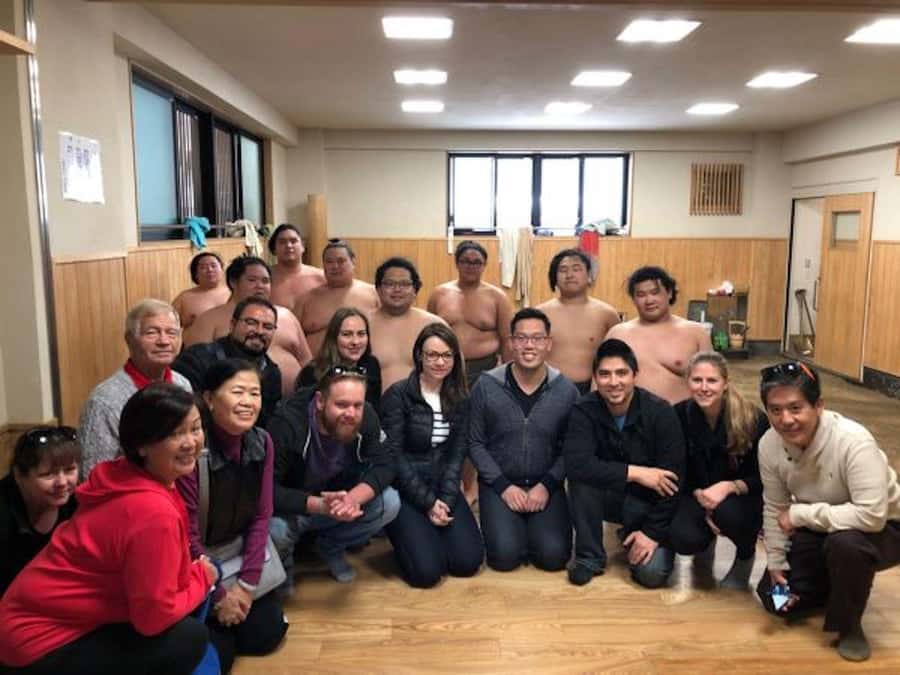
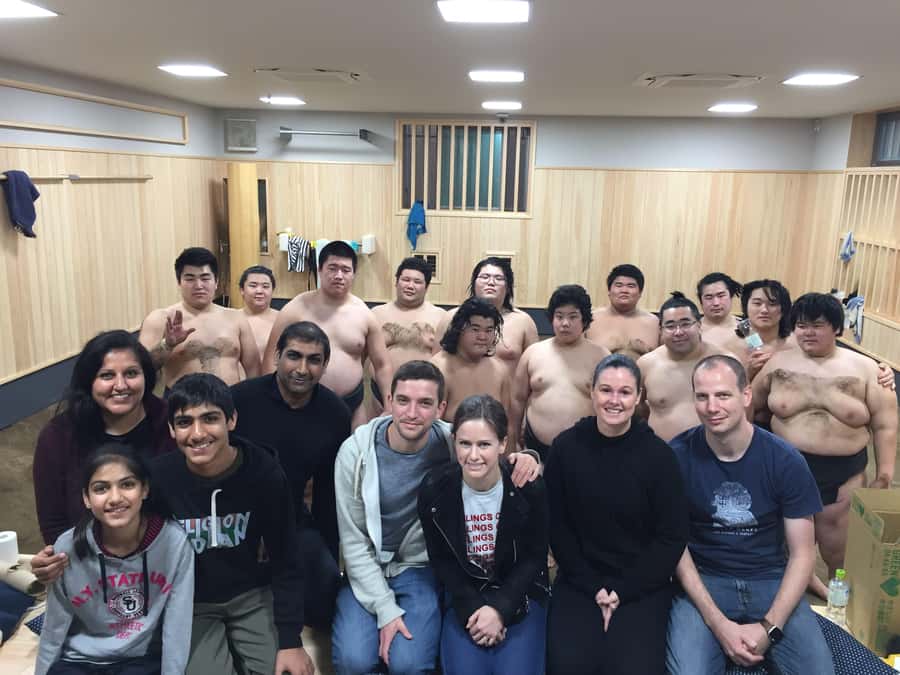
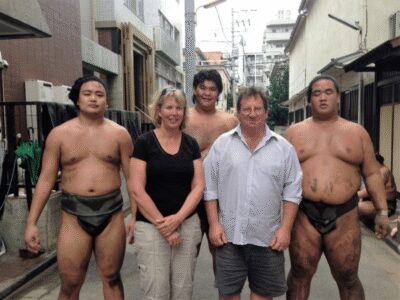
After practice, there may be a chance to meet some of the wrestlers and take photos. A photo session with the coach and team has been part of some visits, and it can be a memorable finish to the morning.
Keep the word possible in mind. The photo opportunity depends on the stable, the wrestlers’ condition, the schedule, and the rules in force that day. Photography may be limited or prohibited, and the activity cannot promise a particular wrestler or a particular length of time with the team.
That uncertainty is reasonable. The wrestlers have just completed practice, and the stable is not a photo studio. If the opportunity goes ahead, follow the guide’s instructions closely and keep the moment brief and respectful. Do not treat the photo as the main product. The training itself is the heart of the experience.
What the guide adds to the morning
A good guide helps you read the scene. Without context, you may see powerful athletes moving through exercises but miss the meaning behind the rituals and the structure of the training.
The guide explains basic match rules, the wrestlers’ diet, and how the stable functions. Visual cards and quizzes make the information easier to follow while you are sitting quietly. You can also ask questions before or after the practice, though the time available for questions depends on the day.
The guides named in past sessions include Marie, Kazu, Ken Take, and Max. Their roles are not identical, since the guide assigned to your date can change. Still, the experience is designed for English speakers, and the guide is there to connect what you see with the broader culture of sumo.
I would book this for someone who wants an introduction rather than a specialist seminar. You will learn enough to understand the practice and appreciate the discipline involved. If you already know a great deal about sumo history, you may want to use the visit mainly for the close view and ask focused questions.
Is $96 a fair price for two hours?
At $96 per person, this is not a bargain activity by Tokyo standards. The price covers entry to the morning practice, an English-speaking local guide, the small-group format, a special Sumo Guidebook, and the possible photo session.
The value comes from access. A normal stadium match does not usually put you this close to the wrestlers, and you may not be able to get a seat near the ring. The stable visit provides a view that is difficult to arrange independently, along with help understanding what you are seeing.
The price feels strongest when the practice runs for a good length, the guide provides useful context, and the photo session is possible. It feels less convincing when training is short or the explanations are brief. One person found a session of less than an hour too short for the cost, while others considered the close access one of the highlights of a Japan visit.
I would compare it with the cost of attending a formal tournament before booking. If your priority is a grand public spectacle, save for the arena. If your priority is proximity and a look at everyday training, the stable visit offers something different and potentially more personal.
Practical details that can make or break the visit
Use the toilet before meeting the group. There are no restrooms during the tour, and leaving early does not allow re-entry. You should also dress for the weather, since parts of the experience involve getting to and from the stable, but no special extra fee is required.
Arrive early at Exit B3. The strict start time is one of the most important rules. A late arrival is not allowed to join, and there is no rescheduling for that missed start.
Respect the stable’s instructions at all times. Disruptive behavior or entering restricted areas can result in removal without a refund. This is not the place for loud conversation, wandering around to improve a photo, or treating the wrestlers as entertainers on demand.
The activity is available in English and uses a small group of no more than 10 people. Bookings can be canceled up to 24 hours in advance for a full refund, and you can reserve now and pay later. Practice itself can be canceled or shortened without notice. If the stable cancels the session, a full refund is provided.
Who will enjoy this most?
I would recommend this to a first-time Japan visitor who wants a cultural experience beyond temples, shopping, and food. It is also a good match for anyone curious about how athletes train when no tournament crowd is watching.
It suits adults and older teenagers who can sit quietly on tatami and follow strict instructions. The small group is helpful for questions and close viewing, though first-come seating means you should not expect a guaranteed front position.
I would hesitate to recommend it to anyone who needs chair seating, has difficulty sitting on the floor, or wants a fully predictable schedule. It is also a poor choice if you need wheelchair or stroller access, since some stables cannot accommodate them.
Should you book the sumo morning practice?
Book it if close access matters more to you than a guaranteed show. The chance to watch real training from near the ring, with a guide explaining the rules and customs, is the experience’s strongest feature. The possible photo with the wrestlers is a welcome extra, not something to count on.
Skip it if you want a long, formal history lesson, a guaranteed photo session, or the polished drama of a tournament. For everyone else, especially a first-time visitor willing to sit on the floor and respect the stable’s rules, $96 buys a rare look at sumo as daily work rather than distant spectacle.
FAQ
How long does the sumo morning practice experience last?
The stated duration is two hours. The actual practice may be shorter or longer within that visit, and the session can be shortened without notice.
Where is the meeting point?
Meet at the Oshiage taxi stop on the ground level in front of Exit B3 at Oshiage Station. Tokyo Skytree and signs for Uniqlo, LIFE, and Sizzler are visible from the meeting area.
How do I identify the guide?
The guide holds a red or orange sign marked Magical Trip.
Is the tour conducted in English?
Yes. The activity includes a live English-speaking guide.
Can I take photos with the sumo wrestlers?
A photo session may be available after practice, depending on the stable, the wrestlers’ condition, and the rules that day. Photography may be limited.
Are chairs provided during the practice?
No. You sit on tatami, and chairs are not provided.
Can children join the tour?
Only people aged 12 and over can join. Children under 12 will be denied entry without a refund.
What happens if the practice is canceled?
If the practice is canceled, a full refund is provided. You can also cancel your booking up to 24 hours in advance for a full refund.
More private sumo experiences in Tokyo
- Tokyo:Luxury Sumo Show Experience & Japanese cuisine & Drink
★ 4.7 · 577 reviews - Tokyo Sumo Morning Practice: Viewing & Exclusive Interaction
★ 4.9 · 74 reviews - Exclusive Sumo Morning Practice in Tokyo with Photo Opportunity
★ 5.0 · 68 reviews - Tokyo Sumo Morning Practice: Viewing & Exclusive Interaction
★ 4.5 · 59 reviews
Newest sumo experiences in Tokyo
- Tokyo Highlights Tour: Sumo, Sushi, Tea, and Tokyo Tower★ 5.0 · 2 reviews
- Tokyo: Know about Hokusai and Sumo culture in 2.5 hours★ 5.0 · 2 reviews
- TOKYO , No1 Yokozuna Stable Morning Practice in Ryogoku★ 4.5 · 3 reviews
- Tokyo 6hr Private Guided Tour & Sumo Show Lunch★ 5.0 · 3 reviews
- Tokyo Grand Sumo Tournament Viewing Tour★ 5.0 · 2 reviews
- Tokyo Sumo History Tour with Chanko Nabe Lunch★ 5.0 · 3 reviews
- Tokyo: Sanctuary Authentic Grand Sumo Experience & Training★ 5.0 · 7 reviews
- The SUMO Show & Experience with Hot pot lunch★ 5.0 · 4 reviews
Sumo Morning Practice Tours, compared.
Tokyo Ryogoku Sumo Morning Practice + Photo Shoot with Wrestlers
Read our review →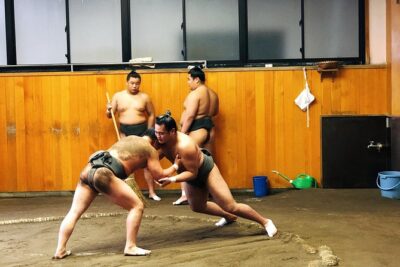
Browse the lists this tour appears in