
REVIEW · SUMO STABLE VISITS
Tokyo Sumo Morning Practice Tour at Stable
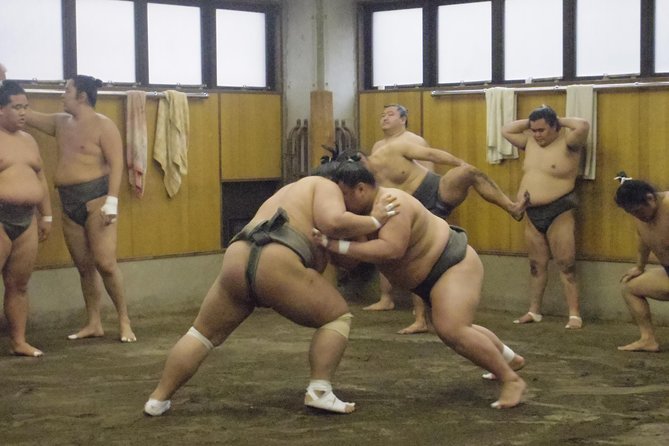
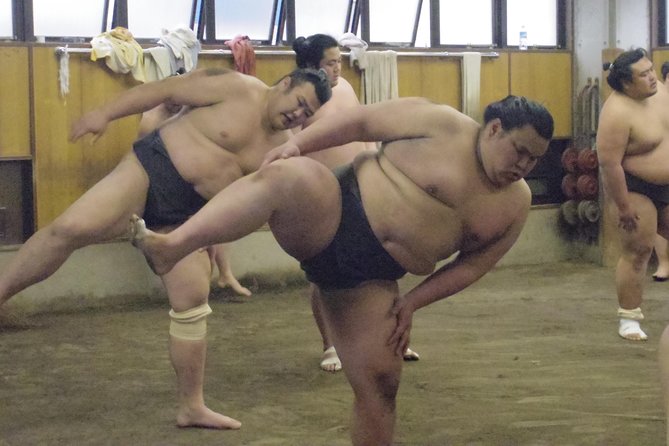
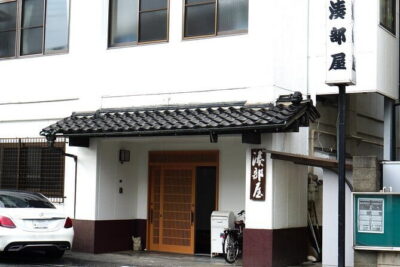
The best part of this morning tour is the setting: you watch professional sumo wrestlers train inside a real stable, not on a stage built for tourists. The wrestlers repeat drills, practice bouts, and hard physical exercises at close range while you sit quietly nearby. This is sumo as work, not just the polished show you see during a tournament.
I like two things in particular. First, the practice can offer far more action than a formal tournament, where ceremony fills much of the day. Second, the guide helps make sense of rankings, rituals, Shinto links, and the six annual Grand Tournaments. The main drawback is that commentary can be hard to hear through the headsets, and seating position may affect your view.
Key points to know before booking
- Real stable access: You observe a working morning practice rather than a staged performance.
- Early start: Meet near Ryogoku Station at 7:45am, with the exact meeting point depending on your booking option.
- Close but quiet viewing: You sit near the practice area and must not speak loudly, use flash, film, or step onto the sacred ring.
- Strong cultural context: Guides explain sumo rankings, Shinto traditions, training, and Japan’s six major tournaments.
- Small-group feel: The group limit is 20 people, though the best seats may go to those who arrive early.
- Summer warning: The stable has no air conditioning. Bring water or a sports drink in summer, plus a cold towel or ice pack.
Why a sumo stable beats a polished dinner show
Tokyo offers several ways to see sumo, from formal tournaments to restaurant performances. This experience takes you somewhere more serious: a stable where wrestlers live and train for competitions held around Japan.
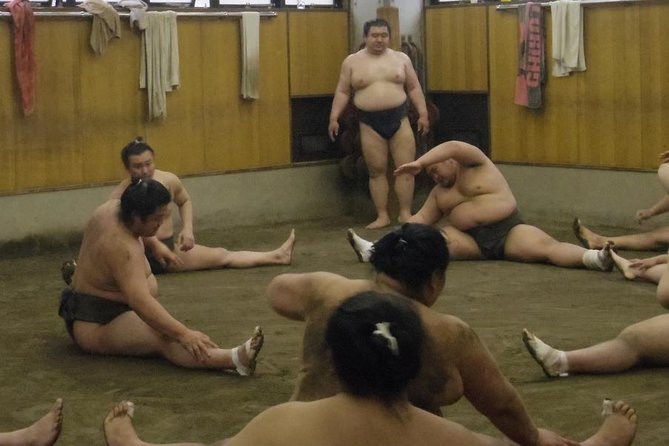
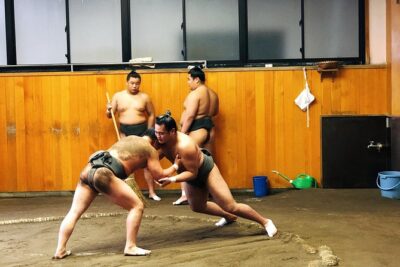
You will not see a theatrical program with a neat beginning and end. You may watch wrestlers stretch, practice foundational movements, clash in repeated bouts, and work through demanding drills. The pace depends on the stable’s schedule, so the practice may finish a little earlier or later than expected.
That unpredictability is part of the appeal. A sponsor or important visitor may lead to a longer session, with more intense sparring by senior wrestlers. On another morning, the training may be shorter or less dramatic. You are observing real preparation, not buying a guaranteed highlight reel.
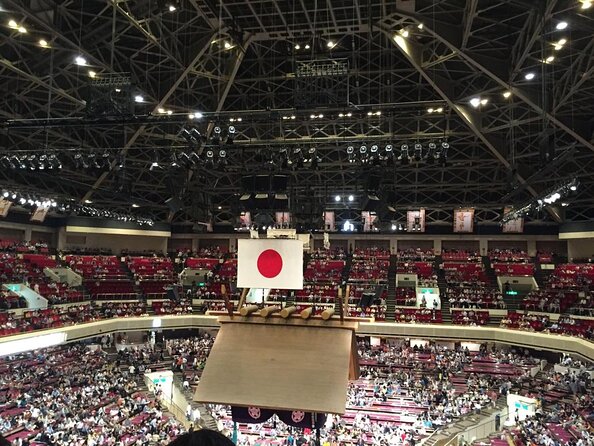
I also like the contrast with a Grand Tournament. Official competitions include ceremony, introductions, and long stretches between bouts. At a stable, you may see dozens of practice matches in a compact period. If your main goal is to watch wrestlers work hard and often, this can offer more action than a tournament ticket.
More stable visits in Tokyo:
- Watch Sumo Morning Practice at Stable in Tokyo
★ 4.0 · 268 reviews - Tokyo: Sumo Morning Practice Viewing Tour at a Real Stable
★ 5.0 · 73 reviews - Tokyo: Sumo Morning Practice Viewing Tour at a Real Stable
★ 4.9 · 32 reviews
Meeting near Ryogoku Station at 7:45am
The morning begins early. The stated meeting point is Ryogoku Station Gallery at 7:45am, followed by a walk or train ride to the stable. Depending on the option you book, the meeting place may differ, so check your confirmation carefully rather than relying only on a general map pin.
This is one part of the experience where precision matters. One participant had trouble finding the meeting point, and map directions were reported to be off by about a block. I would arrive early, keep the confirmation email open, and avoid treating the station as a casual meeting area where you can wander in at the last minute.
The guide leads the group from the station to the stable. Names associated with this experience include Seiji, Yumi, Cameo, Noriko, and Nobu. You may not receive any one of them, but the guide’s role is important. You need help understanding what is happening before you enter, and you need someone to explain the rules without interrupting the wrestlers.
Use the restroom before meeting the guide. Once practice begins, leaving is discouraged, and once you leave the stable, you cannot re-enter. The tour is about two hours overall, with roughly 15 minutes for the meeting and introduction and about 90 minutes inside the stable, though the exact timing can change with the practice.
Learning the rules before the wrestlers begin
Before you take your seat, the guide explains the basic structure of sumo. This is useful even if you already know the broad idea of pushing an opponent out of the ring. Sumo has a ranking system, formal rituals, specific training habits, and a way of life that reaches far beyond the bout itself.
You will hear about the sport’s links to Shinto, Japan’s native religious tradition. Sumo preserves rituals that connect the ring, purification, gestures, and respect for the space to older religious customs. The roots of sumo are often traced back at least 1,500 years, while the modern sport has developed into a major spectator event with a strong professional structure.
The guide also introduces the six annual Grand Tournaments. Three take place in Tokyo, with one each in Osaka, Nagoya, and Fukuoka. Each tournament usually lasts 15 days. Knowing this schedule helps you place the stable practice in context: these athletes are preparing for regular competitions, not simply performing for your morning visit.
The strongest guides make complicated ideas approachable. Yumi has been praised for quiet, informed explanations through an earpiece, while Noriko has been noted for explaining the stable visit clearly before the group sat down. Cameo has also been associated with a useful question period after practice. The quality of the experience depends partly on how well your guide balances background information with the need to let you watch.
One fair criticism is that some people find it hard to listen and watch at the same time. A headset can be helpful, but static or weak volume may make the commentary frustrating. I would treat the guide’s introduction as the main place to absorb history and rules, then focus on the wrestlers once the practice gets intense.
Sitting close to serious morning training
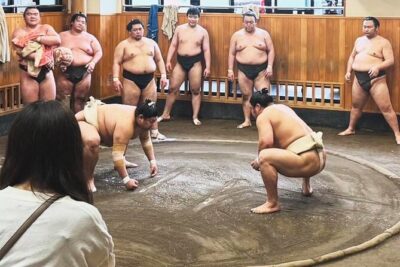
Inside the stable, you sit near the practice area and watch in silence. Seating has varied between low stools and floor-level arrangements, and the exact position can affect how clearly you see the action. The front area may be reserved for sponsors or other people connected with the stable, so arriving early can help you secure a better place behind them.
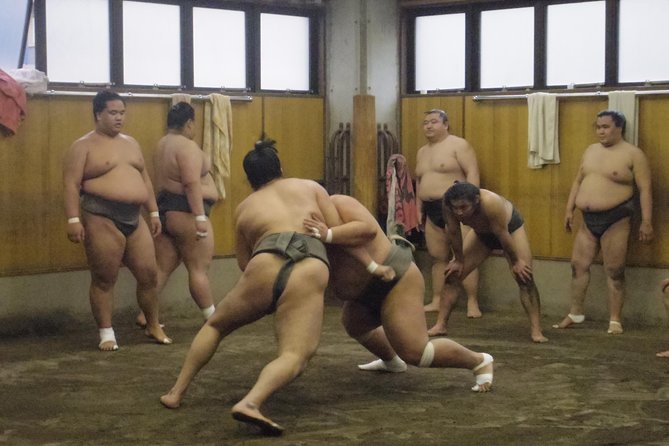
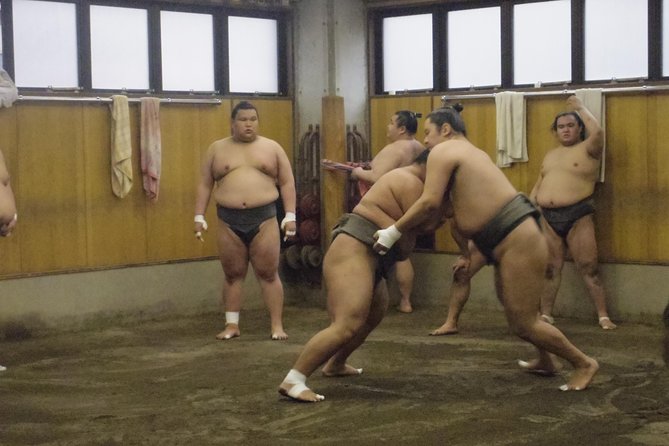
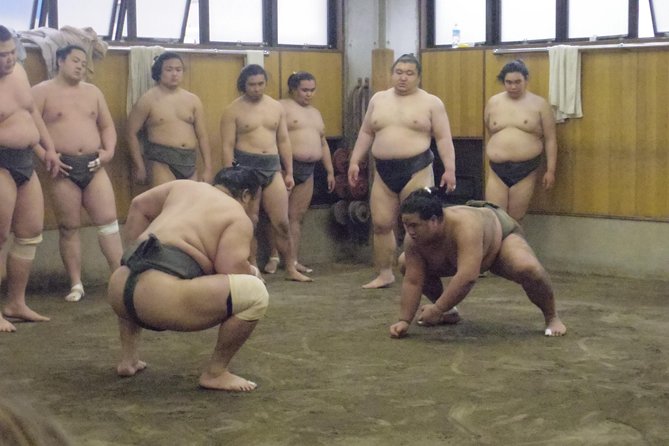
Even from farther back, the viewing is close enough to reveal the effort involved. Sumo is not only about size. You can watch balance, timing, footwork, grip, leverage, explosive force, and the ability to keep working after a hard collision.
The wrestlers repeat movements that may look simple at first. Squats, stretches, pushes, and practice bouts build the strength and control needed for competition. The room is quiet apart from the sounds of training, which makes each clash feel more direct than it would in a large arena.
Your job is to observe without getting in the way. Keep your cellphone on silent. Photos are allowed only without flash or shutter sounds, and videos are not permitted. You must not step onto the ring or sandy practice area. The ring is sacred to the wrestlers, so do not stretch your legs toward it or point the soles of your feet at the practice space.
You also cannot ask wrestlers for photographs while training continues. Do not call out, wave, or try to attract attention. The stable is a workplace, and the athletes need to keep their focus.
More morning practice tours in Tokyo:
- Tokyo: Sumo Morning Practice Viewing Tour
★ 4.8 · 570 reviews - Tokyo: Sumo Morning Training Visit
★ 4.4 · 370 reviews - Tokyo: Visit Sumo Morning Practice with English Guide
★ 4.7 · 343 reviews - Tokyo: Sumo Morning Practice Tour at Sumida City
★ 4.8 · 308 reviews
What the practice can reveal about sumo
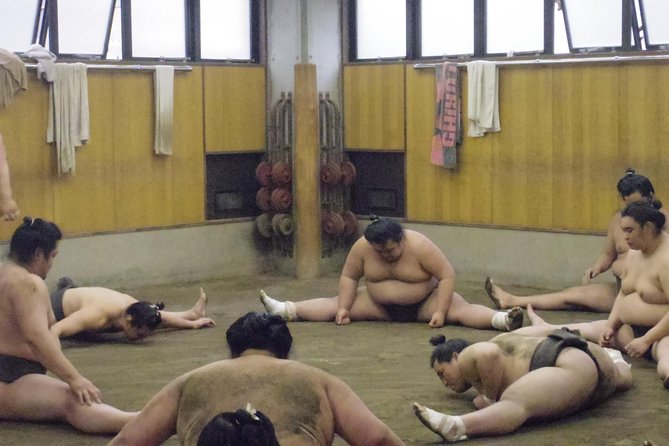
A tournament gives you the finished product. A stable visit lets you see the process that produces it.
You may watch newer or lower-ranked wrestlers train alongside more experienced athletes. The practice can show differences in confidence, technique, pace, and physical control. You might also see senior wrestlers involved in longer and more forceful exchanges, especially if the morning schedule includes extra sparring.
This is where the experience can change your view of sumo. The wrestlers’ size is immediately striking, but the real lesson is the discipline. They repeat demanding movements, absorb impact, and continue working toward improvement. The guide can connect these scenes to rankings and tournament performance, giving you a better sense of why each practice matters.
Do not expect the guide to explain every move in real time. Some visitors prefer commentary that points out a special technique or explains a specific exchange. Others want a steady introduction to the sport. If you have questions, save them for a pause or the end rather than trying to speak during a bout.
A short question period may be available after practice, depending on the guide and stable arrangements. It is worth preparing a few questions in advance, especially about rankings, stable life, or the route from training to tournament competition. The format does not promise an extended interview, so keep your expectations modest.
The photo opportunity and the quick exit
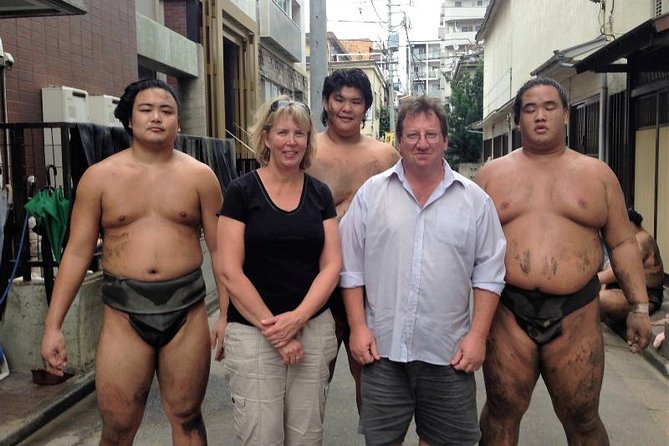
Some sessions finish with a short chance to take photographs with wrestlers. This can be a memorable ending, particularly after sitting close to the action for more than an hour. The photo period may last only a few minutes, and it is not wise to treat it as the main reason to book the experience.
Follow the guide’s instructions. Ask only when the practice has ended, and be prepared to move along when the stable staff signals that the visit is over. You may be asked to leave quickly, and you cannot go back inside once you exit.
The brief ending also explains why you should not expect a long personal conversation with the athletes. The value is in observing training, not meeting celebrities. If photographs happen, consider them a bonus.
Heat, etiquette, and comfort inside the stable
There is no air conditioning in the stable. Tokyo summers can be very hot, and the heat may feel stronger when you are sitting still indoors for a long period. During summer, water and sports drinks are allowed, but eating is not. Bring a cold towel or small ice pack if you know heat bothers you.
Outside summer, the same etiquette still applies. Hats and sunglasses are not allowed inside. Cellphones must remain silent, and photography cannot use flash or shutter sounds. If you feel unwell, do not join the tour.
The group can include up to 20 people. That is small enough for a guide to manage, but it does not guarantee that every person will have the same sightline. Arriving early is sensible, especially if you care about sitting near the front. You should also be ready to sit quietly for the practice rather than move around to improve your view.
This is not a good choice for a casual, noisy morning out. The stable expects respect. You are entering a private training environment, and the rules are there to protect the athletes’ concentration and the stable’s customs.
Is $83.57 a fair price?
At $83.57 per person, the tour is not cheap for two hours. You are paying for access to a working stable, a guide, translation and explanation, and the chance to watch professional wrestlers at close range. You are not paying for a full tournament ticket, a meal, or a long meet-and-greet.
The value is strongest if you would struggle to understand sumo on your own. A tournament can be confusing if you do not know the ranking system, rituals, or purpose of the warmups. Here, the guide gives you a framework before you watch, and the close setting makes the physical work easy to appreciate.
The value is weaker if you mainly want a guaranteed photo, a long question period, or polished entertainment. Commentary problems have affected some visits, and a poor seat can make the morning feel expensive. The practice length also changes, so you are buying access to a real schedule rather than a fixed show.
I would compare this price with your alternatives. If you can attend a Grand Tournament during your dates, that offers the excitement of official competition and the full arena setting. If you want to understand how wrestlers prepare and see repeated bouts without long tournament ceremony, this stable visit may be the better fit.
Free cancellation is available if you cancel at least 24 hours before the start time. Changes or cancellations inside that window are not accepted for a refund.
Who should book this early-morning experience?
I would recommend it to first-time visitors who want a cultural activity with real rules and a strong sense of place. You do not need prior sumo knowledge. The guide’s explanations are designed to help beginners, while the close practice gives experienced fans details they may not see from arena seats.
It also suits people who value authentic access over comfort. You will sit quietly, follow strict rules, and possibly deal with summer heat. In exchange, you get a direct look at professional training in a setting that is not built around a tourist show.
Families should note the minimum age. Children 11 and under cannot enter the stable, and the minimum age is 12. The tour is also a poor match for anyone who needs to leave frequently, dislikes confined indoor heat, or wants an interactive activity during the practice.
Should you book the Tokyo Sumo Morning Practice Tour?
Book it if you want to see sumo as a daily discipline rather than a simple spectacle. The close view, repeated practice bouts, guide commentary, and chance to understand the ranking system give you more context than a quick photo stop.
Go in with clear expectations. Arrive early for the best possible seat, confirm the meeting point, use the restroom first, and bring heat protection in summer. Accept that the audio may not be perfect, the practice may vary in length, and the photo moment may be brief.
For me, the strongest reason to choose this tour is the stable itself. You are not watching a rehearsed dinner show. You are sitting quietly near athletes who are training for real competition. If that kind of access matters more to you than comfort and polish, $83.57 can be a fair price for a memorable Tokyo morning.
FAQ
Where does the tour meet?
The stated meeting point is near Ryogoku Station, at Ryogoku Station Gallery, at 7:45am. The exact location can differ by booking option, so check your confirmation email carefully.
How long does the tour last?
The experience lasts about two hours. The introduction and travel to the stable take about 15 minutes, while the practice itself is listed at around 90 minutes. The total time can vary depending on the morning’s training.
How old must children be to enter?
The minimum age is 12. Children 11 and under cannot enter the sumo stable.
Can I take photographs or videos?
Photos are allowed without flash or shutter sounds. Videos are not allowed. You cannot request photographs with wrestlers while practice is still underway, and any images must respect privacy and image rights.
Can I eat or drink inside the stable?
Eating and drinking are not allowed in general. During the summer months, water and sports drinks are permitted because Tokyo can be very hot. A cold towel or ice pack is also recommended.
Can I leave during the practice?
You should avoid leaving during practice and remain until the end if possible. Once you leave the stable, you cannot re-enter.
What happens if I need to cancel?
You can receive a full refund if you cancel at least 24 hours before the experience starts. Cancellations or changes made less than 24 hours before the start time are not accepted for a refund.
Newest sumo experiences in Tokyo
- Tokyo Sumo History Tour with Chanko Nabe Lunch★ 5.0 · 3 reviews
- Tokyo Highlights Tour: Sumo, Sushi, Tea, and Tokyo Tower★ 5.0 · 2 reviews
- Tokyo: Know about Hokusai and Sumo culture in 2.5 hours★ 5.0 · 2 reviews
- TOKYO , No1 Yokozuna Stable Morning Practice in Ryogoku★ 4.5 · 3 reviews
- Tokyo 6hr Private Guided Tour & Sumo Show Lunch★ 5.0 · 3 reviews
- Tokyo Grand Sumo Tournament Viewing Tour★ 5.0 · 2 reviews
- Tokyo Ginza : Sumo and Mikoshi Experience,Open from Sep.★ 5.0 · 8 reviews
- Complete Sumo Experience in Tokyo★ 4.5 · 3 reviews
Sumo Stable Visits, compared.
Sumo Morning Practice Viewing Tour at a Real Stable
Read our review →Sumo Morning Practice Viewing Tour at a Real Stable
Read our review →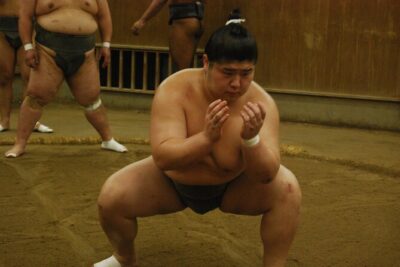
Sumo Morning Practice -Stable Visit Tour with a Guide
Read our review →Sumo Morning Practice -Stable Visit Tour with a Guide
Read our review →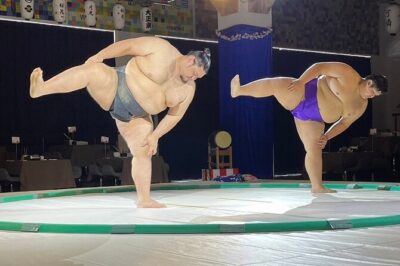
Up-Close Sumo Experience at Ochi Stable: Wear Kimono in Osaka
Read our review →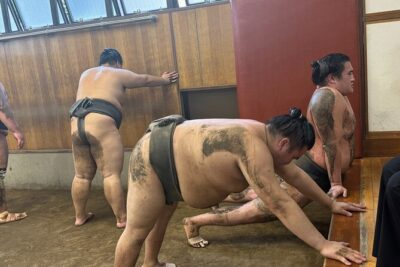
Browse the lists this tour appears in