
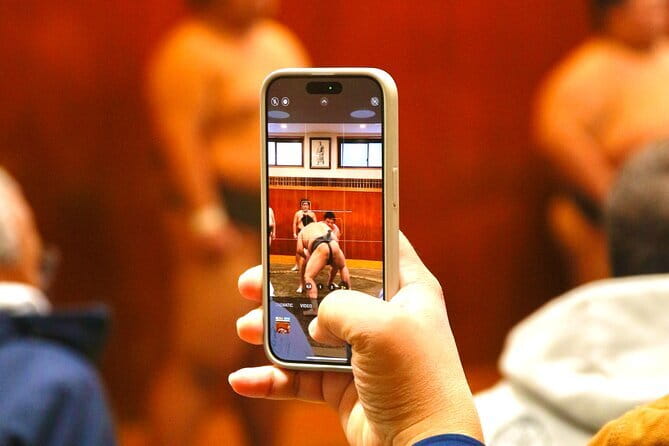
REVIEW · SUMO WRESTLER MEET AND GREET
Tokyo Sumo Morning Practice: Viewing & Exclusive Interaction
The most striking part of this Tokyo experience is the access. You are not watching a staged dinner show. You sit quietly inside an active sumo stable while current wrestlers warm up, collide, and spar in a serious morning workout. I especially like the front-row zabuton cushions, plus stools at the back for anyone who dislikes sitting on the floor. The chance to speak with wrestlers afterward is another real strength.
I also like the careful introduction in Narihira Park, where guides such as Haru, Momo, Sana, Sarah, and Ryoko explain the rules and manners before you enter. The main consideration is timing and behavior: you must stay quiet during practice, follow seating instructions, and accept that photography, not video, is allowed. During Grand Sumo Tournament periods, practice starts earlier and viewing lasts about an hour.
Key Points To Know Before You Go
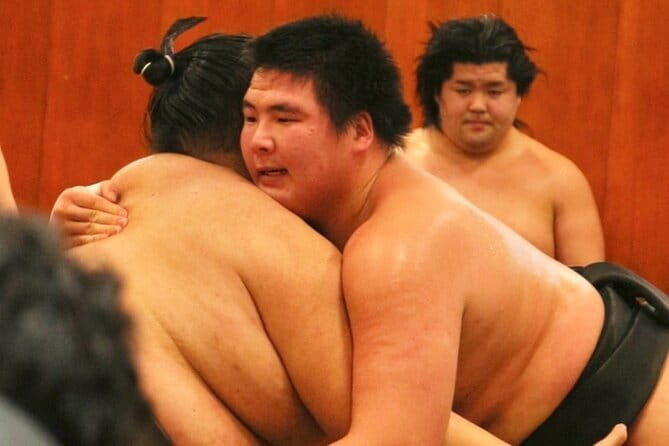
- Watch genuine morning training: See current wrestlers warm up, practice, and spar inside an operating sumo stable.
- Choose your seat: Sit close to the action on a traditional zabuton or use a stool toward the back.
- Talk with active wrestlers: Ask about training, daily life, and the mental side of sumo through the guide.
- Keep your camera ready, but quiet: Photography is allowed, while flash, video, and audio recording are not.
- Take home a banzuke: Receive an official sumo ranking sheet in a souvenir folder.
- Finish near Tokyo Skytree and Asakusa: The 3-hour morning schedule ends around 11:00 AM, leaving the rest of the day open.
Inside a Working Sumo Stable
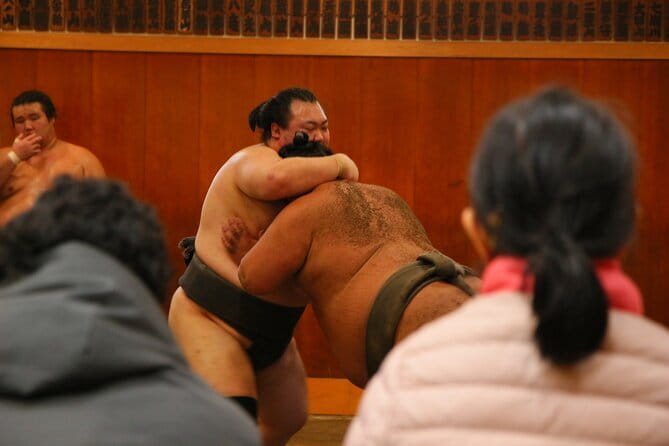
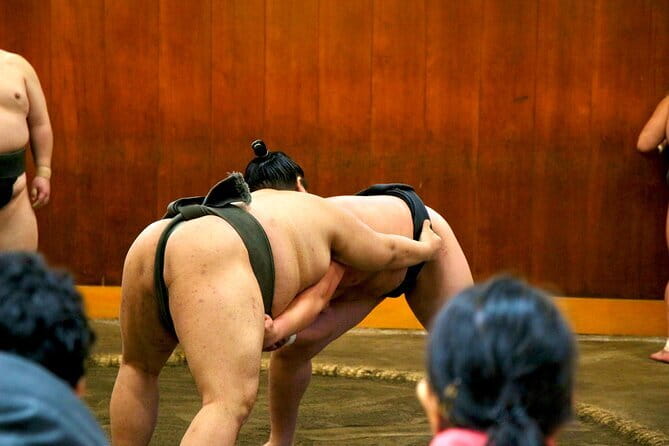
Sumo is often presented through tournaments, ceremonies, and colorful wrestler rankings. This tour shows the less polished side: the daily practice that prepares wrestlers for those public contests. You watch bodies collide at close range, hear the force of the training, and see that sumo is built on repetition, discipline, and ritual.
The stable, known as a heya, is not a theater. That distinction matters. The wrestlers are there to train, not to perform a special show for a visiting audience. You need to treat the space as a working place of sport and tradition, which means keeping your voice low and following instructions from the guide.
The morning session may include warmups, practice drills, and sparring. The exact rhythm depends on the stable and the day, so you should not expect a fixed performance with a predictable running order. That uncertainty is part of the appeal, but it also means this is better for someone who values real access over a polished presentation.
You may find the atmosphere intense at first. Sumo training can look simple from a distance, but the close view makes the effort clear. The wrestlers repeat movements, brace against one another, and work through demanding physical exchanges. The experience gives useful context to the brief, explosive bouts you see during a tournament.
More chances to meet a wrestler in Tokyo:
- Tokyo Ryogoku Sumo Morning Practice + Photo Shoot with Wrestlers
★ 4.5 · 277 reviews - Tokyo Sumo Morning Training/ Sumo Practice with Wrestlers
★ 5.0 · 135 reviews - Tokyo Sumo Morning Practice: Viewing & Exclusive Interaction
★ 4.5 · 59 reviews
Starting at Narihira Park
The meeting point is near the multipurpose restroom at Narihira Park. Arrive ready to begin there, since transportation to the meeting point is not included. Your guide checks your name, distributes sumo-related materials, and explains the rules you will need to follow inside the stable.
This opening is more useful than a quick greeting at the door. Sumo has its own vocabulary, customs, and etiquette, and the guide gives you a basic framework before the practice begins. You can learn what you are watching instead of seeing only a series of powerful collisions.
The guide also explains practical matters such as where to sit, when photography is acceptable, and why silence is important. Guides who have led this experience include Haru, Momo, Sana, Sarah, and Ryoko. The precise guide for your booking can vary, but the English and Japanese language support makes the introduction accessible.
Narihira Park also gives the group a calm place to gather before entering the stable. The park is near the Tokyo Skytree and within reach of Asakusa, so the location works well for a morning plan. After the tour, you can continue sightseeing instead of losing a full day to a single activity.
Floor Cushions, Stools, and the View
Inside, you can choose between traditional floor cushions and stools. The zabuton cushions place you close to the practice and offer the most direct view, but sitting on the floor is not comfortable for everyone. If your knees or hips object to floor seating, choose a stool toward the back.
This seating choice is a small detail with a large effect on the morning. A visitor who is physically uncomfortable will have a harder time paying attention to the training. The stools provide a practical alternative without forcing everyone into the same style of seating.
The front position is best if you want to feel close to the action, but you must still respect the stable’s rules about seating and movement. You cannot treat the space like a sports arena, wandering around for a better picture. Listen to the guide and remain settled during practice.
Photography is allowed, but you need to keep it discreet. Flash photography is prohibited, as are video and audio recordings. You can take commemorative pictures at the appropriate time, but this is not the place to hold up a phone throughout the training.
What the Training Reveals About Sumo
A major strength of the visit is the chance to see how much work happens before a public bout. Sumo matches may last only seconds, yet the morning practice shows the physical preparation behind those brief contests.
You can watch the wrestlers warm up and work through exercises before the more forceful exchanges. The practice offers a clearer sense of how balance, timing, strength, and concentration come together. Your guide helps explain the rituals and rules, so the movements do not remain a blur of bodies and noise.
The experience also changes your view of sumo as a sport. It is not only about size or pushing an opponent outside the ring. The training reflects technique, control, patience, and a strict daily routine. Seeing wrestlers continue through hard practice gives you a better understanding of the commitment required.
There is no guarantee that every session will look the same. One morning may include more sparring, while another may give you a longer look at warmups and drills. That is a reason to choose this tour for its setting and access, not for a promised sequence of exact exercises.
More morning practice tours in Tokyo:
- Tokyo: Sumo Morning Practice Viewing Tour
★ 4.8 · 570 reviews - Tokyo: Sumo Morning Training Visit
★ 4.4 · 370 reviews - Tokyo: Visit Sumo Morning Practice with English Guide
★ 4.7 · 343 reviews - Tokyo: Sumo Morning Practice Tour at Sumida City
★ 4.8 · 308 reviews
The Wrestler Q&A and Photo Session
After practice, the tone becomes more relaxed. You can ask active wrestlers about their training, daily lives, and mindset, with the guide helping translate or frame questions when needed. This is where the tour moves beyond simple observation.
The Q&A gives you a chance to ask the things that are difficult to understand from a seat on the floor. You might ask about the demands of the routine, how wrestlers prepare mentally, or what daily life inside the sumo world is like. The information is more personal than anything you would get from a museum display.
Photos with the wrestlers are also part of this closing interaction. Some sessions have included an invitation for male audience members to try a brief wrestle with a professional. This is not something you should assume will happen every time, but it has added a playful moment to some visits.
The athletes are still at work, so courtesy matters. Keep your questions respectful, wait your turn, and follow the guide’s instructions for photos. The opportunity is special because it is direct and personal, not because it turns the wrestlers into entertainers.
The Banzuke and the Final Park Session
After leaving the stable, the group returns to Narihira Park. You receive an official banzuke, the ranking sheet used in the sumo world, inside a specially designed souvenir folder.
This is a better keepsake than a generic printed ticket. A banzuke connects the morning to the formal structure of professional sumo and gives you something useful to look at later. If you have attended a tournament or plan to attend one, the ranking sheet also helps connect the wrestlers and divisions to what you see in competition.
The final session is a Deep Q&A with the guide. Instead of rushing you toward a meal or ending at the stable door, the guide stays in the park to answer remaining questions. You can ask about customs you noticed, clarify rules, or get personalized suggestions for the rest of your Tokyo visit.
That closing time is particularly valuable if you are new to sumo. The first explanation at the park prepares you for the stable, while the second lets you make sense of what you just watched. The format has a clear beginning, middle, and useful wrap-up.
Is $93 a Fair Price?
At $93 per person, this is not a budget activity. The price includes the stable visit, an English-speaking guide, and the banzuke souvenir, but not your transportation to Narihira Park.
I think the price is reasonable if you value access and explanation. You are paying for entry to a place that is normally closed to the public, a guided introduction to a specialized sport, a direct Q&A with active wrestlers, and a three-hour morning program. The personal interaction is the part that separates this from simply watching a sumo video or visiting a tournament on your own.
The value is weaker if you only want a quick look at wrestlers training. Practice is quiet and rule-bound, and the viewing period is shorter during the Grand Sumo Tournament period. You also cannot record the session, so visitors who want extensive video footage should choose another activity.
For many people, the cost works because the experience combines several pieces that are hard to arrange independently. You get access, interpretation, photographs, a souvenir, and a chance to ask questions in one morning. I would compare it with the price of staged sumo entertainment, keeping in mind that this visit is less polished but more genuine.
Timing, Tournament Dates, and Practical Rules
The standard program lasts about three hours and wraps up around 11:00 AM. That makes it easy to pair with Tokyo Skytree or Asakusa afterward. An early start is part of the deal, so do not book it if you want a slow morning.
During the Grand Sumo Tournament periods, which occur for about two weeks in January, May, and September, practice starts 30 minutes earlier. Viewing time is about one hour during those periods. Check the available start time carefully when booking, since the tournament schedule changes the shape of the morning.
The basic rules are simple:
- Do not bring food into the stable.
- Do not bring or consume alcohol or drugs.
- Do not use flash photography.
- Do not make video or audio recordings.
- Stay quiet during practice.
- Follow directions about seating and photography.
Children under six are not permitted. The activity is best for older children, teenagers, and adults who can sit quietly and respect a working training space.
You can cancel up to 24 hours in advance for a full refund, and reserve now while paying later. Those policies are useful if your Tokyo schedule is still moving, but you still need to plan your transportation to the meeting point.
Who Will Enjoy This Morning Most?
I recommend this experience to first-time sumo spectators who want help understanding what they are seeing. The guide’s opening explanation prevents the practice from feeling like an unfamiliar ritual with no context.
It also suits repeat visitors to Tokyo who have already seen the major sights and want something less packaged. The stable visit takes you into a part of the city’s culture that most sightseeing routes skip.
Sports fans should appreciate the physical side of the training, while culture-focused visitors will value the etiquette and daily customs. The wrestler Q&A helps both groups, since you can ask either technical questions about the sport or personal questions about life as a professional athlete.
I would be more cautious about booking if you need constant narration, a theatrical show, or permission to film. This is a quiet observation experience with rules. You may also want to skip it if sitting on the floor or rising early would make the morning unpleasant, though stools are available.
Should You Book the Sumo Morning Practice?
Book it if you want to see real training rather than a staged performance. The strongest reasons are the close view of practice, the flexible seating, and the chance to speak with current wrestlers afterward. Guides such as Haru, Momo, Sana, Sarah, and Ryoko have been praised for clear explanations and friendly support.
The experience also gives you a well-planned morning: meet at Narihira Park, learn the basics, walk to the stable, watch practice, speak with wrestlers, collect your banzuke, and finish with questions before 11:00 AM.
Skip it if your priority is filming, a long tournament bout, or a relaxed late start. For everyone else, especially anyone curious about the discipline behind sumo, this is a thoughtful use of three hours and a worthwhile $93 cultural experience.
FAQ
Where does the sumo morning tour meet?
The meeting point is near the multipurpose restroom at Narihira Park. The guide checks your name, provides sumo-related materials, and explains the manners and rules before the stable visit.
How long does the activity last?
The standard activity lasts three hours and finishes around 11:00 AM. Check the available starting times when booking.
What languages are available?
The tour is offered with English and Japanese language support.
Can I sit on the floor?
Yes. You can sit on a traditional zabuton floor cushion near the front. Stools are also available toward the back if you prefer not to sit on the floor.
Can I take photos or record video?
Photography is allowed if you remain quiet and follow the rules about flash and seating. Flash photography, video recording, and audio recording are not allowed.
What happens during the Grand Sumo Tournament period?
During the tournament periods in January, May, and September, practice starts 30 minutes earlier and viewing lasts about one hour.
Is the tour suitable for young children?
Children under six are not permitted to join the activity.
More private sumo experiences in Tokyo
- Tokyo:Luxury Sumo Show Experience & Japanese cuisine & Drink
★ 4.7 · 577 reviews - Tokyo: Exclusive Access to Sumo Morning Practice with Photos
★ 4.8 · 107 reviews - Exclusive Sumo Morning Practice in Tokyo with Photo Opportunity
★ 5.0 · 68 reviews - 1.5 Hour VIP Sumo Event in Tokyo
★ 4.5 · 24 reviews
Newest sumo experiences in Tokyo
- Tokyo Grand Sumo Tournament Viewing Tour★ 5.0 · 2 reviews
- Tokyo Sumo History Tour with Chanko Nabe Lunch★ 5.0 · 3 reviews
- Tokyo Highlights Tour: Sumo, Sushi, Tea, and Tokyo Tower★ 5.0 · 2 reviews
- Tokyo: Know about Hokusai and Sumo culture in 2.5 hours★ 5.0 · 2 reviews
- TOKYO , No1 Yokozuna Stable Morning Practice in Ryogoku★ 4.5 · 3 reviews
- Tokyo 6hr Private Guided Tour & Sumo Show Lunch★ 5.0 · 3 reviews
- Unique Afternoon Live Sumo training tour in Tokyo★ 5.0 · 6 reviews
- Private Ryogoku Walking Tour with Sumo Wrestler and Master Guide★ 4.5 · 7 reviews
Sumo Wrestler Meet and Greet, compared.
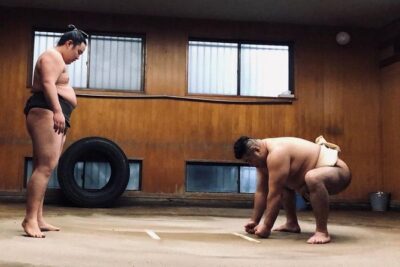
Tokyo Ryogoku Sumo Morning Practice + Photo Shoot with Wrestlers
Read our review →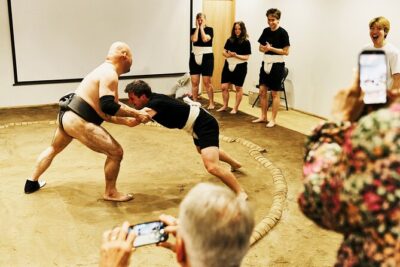
Osaka Sumo Experience with Live Show and Audience Challenge
Read our review →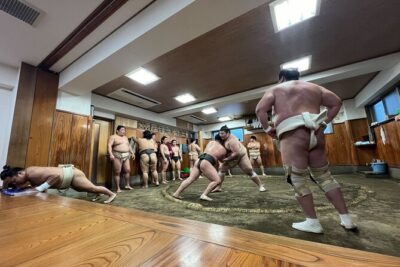
Tokyo Sumo Morning Training/ Sumo Practice with Wrestlers
Read our review →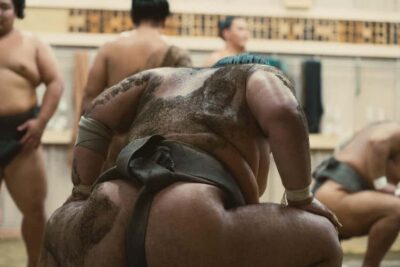
Tokyo Sumo Morning Practice: Witness the Life of a Wrestler
Read our review →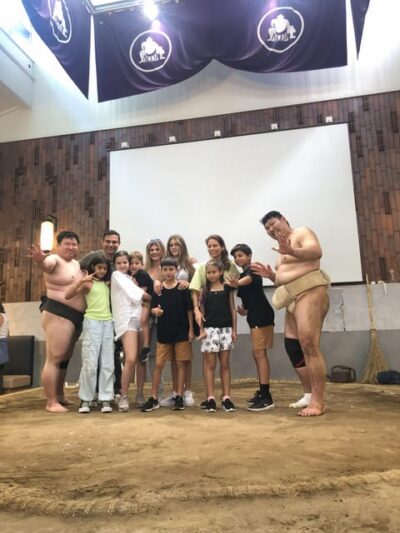

Sumo Wrestlers Morning Practice Tour – Tokyo Sumida District
Read our review →
Tokyo Sumo Experience with Live Show & Audience Challenge
Read our review →
Sumo Practice Viewing Guided Tour and Photo with Sumo Wrestlers
Read our review →Browse the lists this tour appears in